

In short
- What’s here: A clickable map of the 20 arrondissements, plus grids for attractions, hotels and apartments in each one.
- Number of arrondissements: Twenty, in a spiral that starts at the Louvre and ends at Père Lachaise.
- How to identify a district: The last two digits of the postal code, for example 75011 is the 11th arrondissement.
- Largest and smallest: The 12th is the largest thanks to the Bois de Vincennes, and the 2nd is the smallest.
- Transit maps: The metro map and bus map, both linked to RATP.
- Who it’s for: Anyone planning a trip who wants to understand which area suits them.
The map of Paris is divided into twenty districts called arrondissements in French. The districts are arranged in the shape of a snail shell, with the first districts forming the inner part of the “shell” while the last districts sit on its outer edge.
In this article, you’ll learn about each of these districts, and you’ll easily find places to stay, attractions and restaurants, which will make planning your trip especially easy.
Attractions in Every Paris Arrondissement
I’m guessing you didn’t come to this article just looking for a map of Paris (if that’s the case, Google Maps does a great job), but because you’re planning a trip to the City of Light. So I decided to show you the key attractions in every district, which you’ll find if you scroll down a bit.
- 1the Louvre
- 2the Bourse and the covered passages
- 3the northern Marais
- 4the southern Marais
- 5the Latin Quarter
- 6Saint-Germain
- 7the Eiffel Tower
- 8the Champs-Élysées
- 9the Opera
- 10Canal Saint-Martin
- 11the Bastille
- 12the Bois de Vincennes
- 13Chinatown
- 14the Catacombs
- 15the Montparnasse Tower
- 16the Trocadéro and the Bois de Boulogne
- 17Batignolles
- 18Montmartre
- 19La Villette
- 20Père Lachaise
The Arrondissements of Paris: How Were They Created?
As you can read in my series of articles about the history of Paris, Paris has existed in one form or another for more than 2,000 years. The city grew out of the Île de la Cité and spread across both banks of the Seine. This is how different neighborhoods gradually took shape, like the Latin Quarter or the Marais, each developing its own distinct character.
In 1795, it was decided to divide Paris into 12 districts, numbered from west to east, with districts 1-9 on the Right Bank and districts 10-12 on the Left Bank. Following the massive expansion of Paris under Napoleon III (1852-1870) and the annexation of a number of villages such as Passy, Belleville and Montmartre, it was decided to add 8 more districts to Paris, and that’s how we got the map of Paris arrondissements we know today.
A Fun Anecdote
Few people know that when the new districts were being added, it was decided that the western district near the Bois de Boulogne (what’s known today as the 16th arrondissement) would be called the 13th arrondissement. This caused an enormous scandal among the residents of that district, which led to a change in the numbering of the districts.
You might ask, why did it bother them so much to be called the 13th arrondissement? Was it because the number is considered unlucky, as in Friday the 13th? Not at all! The answer is much more interesting.
One of the most popular expressions from the era when Paris had only 12 districts was “to get married in the 13th arrondissement.” This meant sleeping with someone without marrying her, since the 13th arrondissement didn’t actually exist.
The residents of the western neighborhood of Paris were already wealthy, respectable bourgeois at the time, and they would not accept their sons and daughters “getting married in the 13th arrondissement” under any circumstances. In the Saint-Marcel neighborhood, in the south of Paris, mostly poor people lived. Since either nobody cared or nobody actually asked them, it was decided to change the numbering of Paris’s districts so that their neighborhood became the 13th arrondissement, while the wealthy bourgeois neighborhoods became the 16th arrondissement.
And that’s how we ended up with the district numbering that’s still with us today.
Two Important Maps of Paris
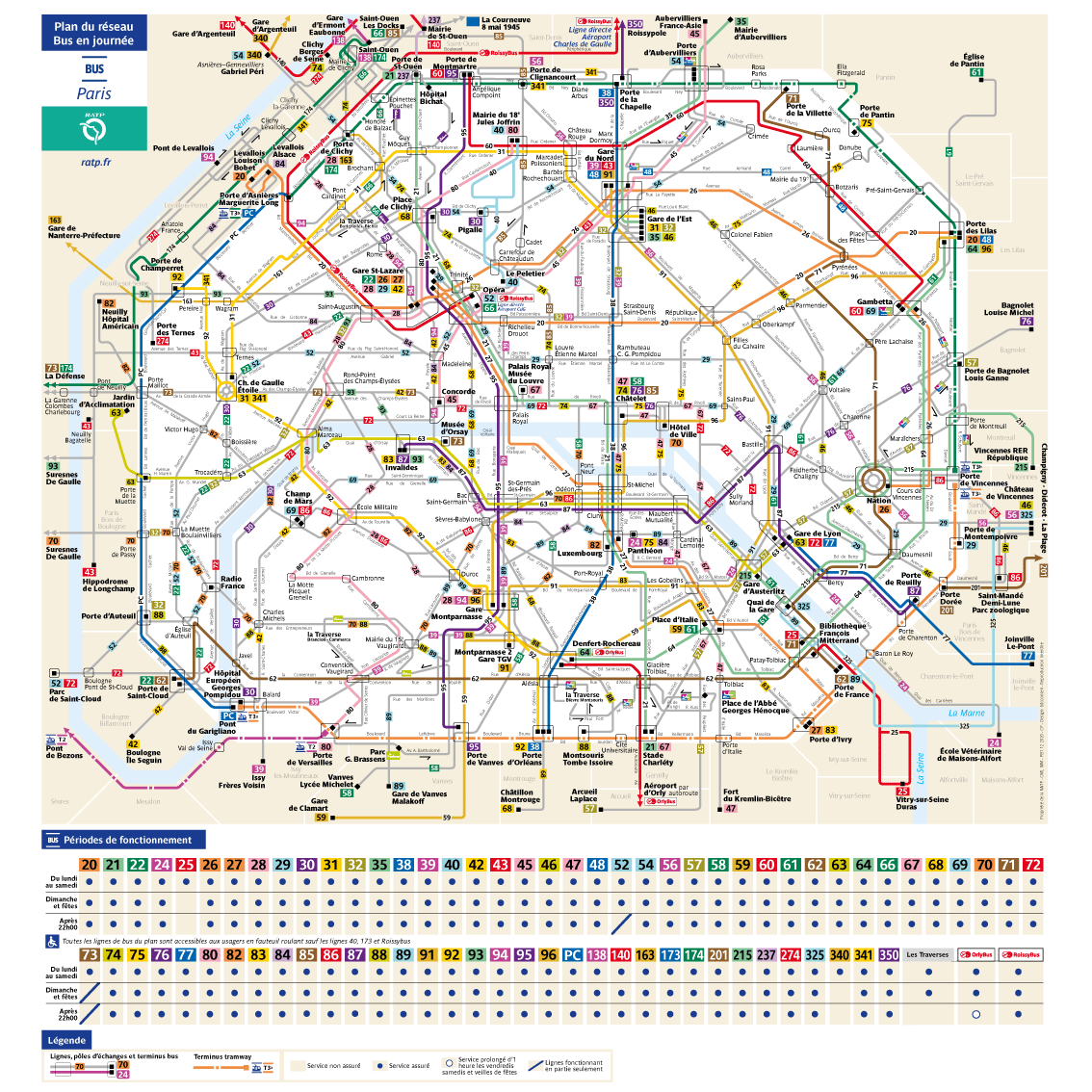
In my opinion, the most important map of Paris is the public transportation map. So the first map I’d recommend getting to know is the city’s metro map. Feel free to click on it to go to the website of RATP, the Paris metro company.

If you’d rather not travel underground, this bus map can help you.
Recommended Places to Stay in Every District
If you haven’t chosen a hotel or vacation rental in Paris yet, click the links below to get recommendations for places to stay in each district. If you’re torn and don’t know which district is right for you, I highly recommend reading my article on where to stay in Paris.
- 1the Louvre
- 2the Bourse and the covered passages
- 3the northern Marais
- 4the southern Marais
- 5the Latin Quarter
- 6Saint-Germain
- 7the Eiffel Tower
- 8the Champs-Élysées
- 9the Opera
- 10Canal Saint-Martin
- 11the Bastille
- 12the Bois de Vincennes
- 13Chinatown
- 14the Catacombs
- 15the Montparnasse Tower
- 16the Trocadéro and the Bois de Boulogne
- 17Batignolles
- 18Montmartre
- 19La Villette
- 20Père Lachaise
More Articles to Help You Plan Your Trip to Paris
Now that you know where each district is, here are my guides organized by topic instead of location:
Museums in Paris
Temporary exhibitions
Cabarets and shows
Attractions for kids
Seine cruises
Tourist bus
Culinary tours
Creative workshops
Day trips from Paris
Walking itineraries in Paris
Recommended restaurants
Food markets
Parks and gardens
Shopping in Paris
Interesting Facts About the Districts of Paris
Here are some interesting trivia facts about the different districts of Paris:
- Hidden Village: In the 20th arrondissement, there’s a hidden gem called “La Campagne à Paris” (the countryside in Paris). It’s a cluster of picturesque houses on paved streets, offering the feel of an odd little village tucked inside the bustling city. Originally, this area was developed as affordable housing for working-class Parisians, but it’s now a sought-after pocket of calm in the urban landscape.
- Underground Catacombs: The 14th arrondissement is home to the famous Catacombs of Paris, an underground network holding the remains of more than six million people. The Catacombs were created at the end of the 18th century to deal with the city’s overcrowded cemeteries. It’s a maze of tunnels and chambers filled with bones arranged with great care, and it has become a macabre tourist attraction.
- The 11th arrondissement is the most densely populated of all the districts in Paris, even though it’s not the smallest in area.
- Smallest and Largest: The 2nd arrondissement is the smallest in land area, while the 16th arrondissement is the largest.
- Artistic Hub: The 18th arrondissement is home to Montmartre, which was historically a hub for many famous artists like Picasso, Van Gogh and Renoir. The bohemian atmosphere still lingers in its narrow streets and cabarets.
- The Oldest Tree: A black locust tree was planted in 1601 in Square René Viviani, located in the 5th arrondissement, and it’s considered the oldest tree in Paris.
- The iconic Eiffel Tower, one of the most recognizable structures in the world, is located in the 7th arrondissement.
- Not Just Land: The 12th arrondissement is unique because it includes part of the Seine River. The Île de la Cité, one of the two natural islands remaining in the Seine within Paris, is split between the 1st and 4th arrondissements.
- Where’s the Money? The 8th arrondissement of Paris is considered the most prestigious and expensive district in the city. It sits on the Right Bank of the Seine, and it’s home to the Champs-Élysées and the affluent “Golden Triangle.” The district is known for its luxury boutiques, cultural landmarks like the Grand Palais and the Élysée Palace, and some of the most expensive real estate in the city, not to mention luxury hotels and Michelin-starred restaurants.
