

In short: Louvre tickets, hours and entrances
- Location: the 1st arrondissement, on the bank of the Seine.
- 2026 ticket price: €32 for visitors who are not EU citizens or residents. EU residents pay €22, and teens under 18 get in free.
- When it went up: The price rose on January 14, 2026 from €22 to €32, a 45 percent increase, part of a tiered pricing policy that also applies to Versailles and Sainte-Chapelle.
- Opening hours: 09:00 to 18:00, and on Wednesdays and Fridays until 21:45. Closed every Tuesday, and also on January 1, May 1 and December 25.
- Recommended entrance: not the pyramid. Carrousel du Louvre, via 99 Rue de Rivoli or the Tuileries Garden, with a much shorter wait.
- Tickets: you must book ahead with a set time slot. The on-site ticket counters are busy and most of the time have no same-day tickets.
- When to go: avoid 11:00 to 15:00, the busiest hours. A Wednesday or Friday evening is the most comfortable time to visit.
- Bags: no entry with a bag larger than 55 by 35 by 20 centimeters.
The Louvre is, without a doubt, the most famous museum in France, and maybe in the whole world. As such, it’s a must-see attraction (especially if this is your first time in Paris). Walking through the Louvre’s vast halls naturally joins the city’s essential experiences, right alongside visiting the Eiffel Tower or heading out for a romantic evening cruise on the Seine.
That said, it’s important to understand that this is the largest and most visited museum in the world, drawing around 10 million visitors a year. The numbers here are simply hard to grasp: the display space covers about 60,000 square meters, spread across 403 rooms that showcase no fewer than 35,000 breathtaking works of art created across thousands of years of history, from ancient Egypt to 19th-century France. To put it in perspective, if you spent just one minute on each piece, it would take you 64 straight days to see everything the museum has to offer without closing your eyes once.
But here’s the catch: the museum’s sheer size and the sheer number of important works inside it can turn a visit into a relentless sprint from room to room, until you catch what I call “art poisoning” and leave the Louvre exhausted and frustrated.

Does that mean I don’t recommend visiting the Louvre? Of course not! But you have to do it smart, and that’s exactly the point of this page. You’ll find practical, up-to-date 2026 information here (tickets, location, which entrances are worth using to skip the lines, security rules) as well as a rundown of which works are truly worth seeing, so you can stay focused. So say hello to the pyramid, ignore the Mona Lisa (just kidding, you really can’t), and let’s get started.
Louvre Museum Tickets (Skip the Line!)
Since many of you came here looking for Louvre admission tickets, let’s start with the most important news for 2026. Important: as of January 14, 2026, the Louvre raised its admission prices by 45% for all visitors who are not citizens of an EU country. A standard ticket now costs €32 per person. If you hold a European passport, the price stays at €22 (you’ll need to show ID at the entrance). The museum’s management says the goal of this move is to thin out the enormous crowds of tourists a bit, but demand is still at its peak, so booking ahead is more critical than ever. By the way, contrary to rumors, the Louvre does not charge extra for entering the Mona Lisa room, at least not in the near future.
| Ticket Type | Updated Price (2026) | Main Advantage | Who It’s For |
|---|---|---|---|
| Basic admission ticket | €32 (free under 18) | The cheapest and most direct option, skips the counter line | Independent travelers who want to explore at their own pace |
| Guided tour (Mona Lisa) | Varies (depends on provider) | Especially fast entry with precise guiding and no wasted time | First-time visitors who are short on time |
| Paris Pass (museum pass) | Based on number of days used | Includes admission to dozens of other attractions around Paris | Families and “museum buffs” planning packed days |
Tickets and Tours
Good to know: if you just want a plain Louvre admission ticket, you’ll need to get it through the museum’s official website. The problem is that these tickets tend to sell out early, and when that happens, your only option is to book a ticket that includes a guide. To help you pick the right ticket, I’ve put together a list here from TIQETS, one of the most reliable and user-friendly sites I know. You’ll find Louvre-only tickets there, as well as tickets that combine Louvre admission with other attractions in Paris.But there’s a way around it: the “Hosted Access” option lets you enter through a side door, skip the regular line, and go straight to the painting with an escort who knows the shortest route.
Louvre secrets: which entrance is best?
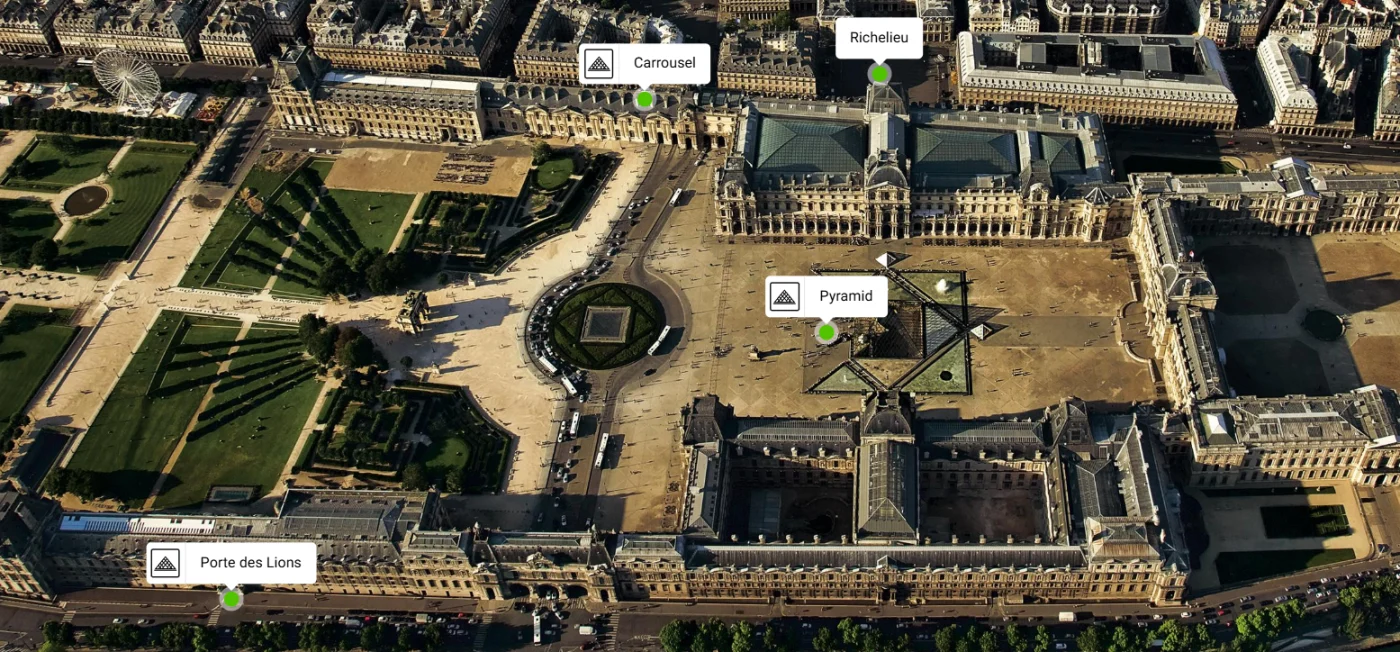
One of the most common mistakes tourists make in Paris is arriving at the Louvre and getting in line at the first one they see, usually in front of the glass pyramid. The Louvre actually has several different entrances, and knowing about them ahead of time can save you a lot of precious time standing in the sun or the rain.
- The Glass Pyramid: this is the main, most famous, and busiest entrance. The line is split by color: the green line is for people with pre-booked tickets and Museum Pass holders (average wait of 20 to 30 minutes), while the orange line is for those who show up without a ticket, a line that really, truly isn’t recommended, since the wait can run over an hour and chances are there won’t be any tickets left at the counter anyway. The blue line is reserved for visitors with disabilities.
- Passage Richelieu: this is the real “secret” among guides and locals! This gate sits in the alley connecting the Louvre courtyard to Rue de Rivoli, and usually offers a wait time of close to zero, between 0 and 10 minutes. However, note that this entrance is currently limited to small guided tours with a licensed guide and holders of special membership cards.
- Carrousel du Louvre: an entrance located inside the underground shopping mall (enter via 99 Rue de Rivoli or the Tuileries Garden). Its huge advantage is that you can reach it directly from the metro station without ever stepping out onto the street, which makes it perfect for rainy or cold days. Wait times are estimated at 30 to 45 minutes and require a pre-booked ticket.
- Porte des Lions: a side entrance located in the south wing, very close to the Seine and the Tuileries Garden. Guides used to recommend it warmly because tourists barely knew about it, but today it’s considered a tricky option since museum management frequently closes it due to staff shortages, often without advance notice. There’s no coat check there.
Visitor Information (Hours, Food, and Bags)
Where is the Louvre and how do you get there?
The address of the Louvre Museum is… the Louvre Palace, located in the 1st arrondissement, between the Seine and the famous Rue de Rivoli. Actually, it doesn’t have a “normal” street-and-number address. The easiest way to get there is on metro lines 1 and 7, which stop at the Palais Royal-Musée du Louvre station. You can also reach the Louvre by bus using the following lines: 21, 27, 39, 67, 69, 72, 74, 85, and 95. These days, you can simply open your navigation app and follow the thousands of other tourists.
What days and hours is the Louvre Museum open?
The Louvre is open almost every day of the week from 9:00 a.m. to 6:00 p.m. Note: the museum is closed on Tuesdays! (a very common mistake travelers make is planning a visit on that day). In addition, on Wednesdays and Fridays the Louvre runs “Nocturnes” hours and stays open until 9:45 p.m. Last admission is always about an hour before closing, and security staff start clearing the rooms about half an hour before lockup. The museum is fully closed on January 1, May 1 (Labor Day), and December 25.
When should you visit, and what are the new security rules?
In terms of crowds, the Louvre is always busy. The busiest hours, when it can be hard to even move through the main galleries, are between 11:00 a.m. and 3:00 p.m. If you want a calmer experience, I recommend booking the first morning time slot (9:00 a.m.) and being among the first to enter the Denon wing, or taking advantage of Friday evenings, when the lighting in the galleries becomes dramatic, the crowds thin out, and the overall atmosphere is much more relaxed. As for days of the week, Thursday is considered the quietest day.
Security rules for 2026: museum management has tightened its rules. Large bags, small suitcases (trolleys), or backpacks larger than 55x35x20 cm are completely forbidden inside the museum. Smaller backpacks and shoulder bags are allowed in, but must pass through an X-ray scanner and a metal detector. As for food, the cafés and restaurants inside the Louvre are fairly pricey and tend to get crowded, so it’s worth bringing a sealed water bottle and a snack or sandwich of your own. Very important: eating or drinking inside the exhibition rooms is strictly forbidden, in order to protect the works of art. That said, you’ll find seating areas and benches in the main hall under the pyramid where you can eat your packed food. As for photography: feel free to shoot photos, but be sure to turn off your flash, and leave tripods and selfie sticks back at the hotel.
Which works of art are worth seeing at the Louvre?
If this is your first time, here’s a short list of the mainstream flagship works that most visitors come to the Louvre to see, and that you should check off your list (most of them are grouped in the Denon and Sully wings):
The Mona Lisa

Probably the most famous painting in the world, the work of the Renaissance man Leonardo da Vinci. The painting is known for its subject’s mysterious smile and its unique sfumato technique. A heads up: the painting is significantly smaller than you’d expect (about 77 by 53 cm) and it’s protected behind thick bulletproof glass. The room is usually packed with dozens of visitors trying to snap a photo. My advice? Don’t start with the Mona Lisa the moment you walk in; save it for later so you don’t get worn out by the crowd right at the start.
Venus de Milo

A breathtaking ancient Greek marble statue from around 100 BCE, believed to represent Aphrodite, the goddess of love. The statue was discovered on the island of Milos with its arms missing, a mystery that only added to its universal fame.
Winged Victory of Samothrace
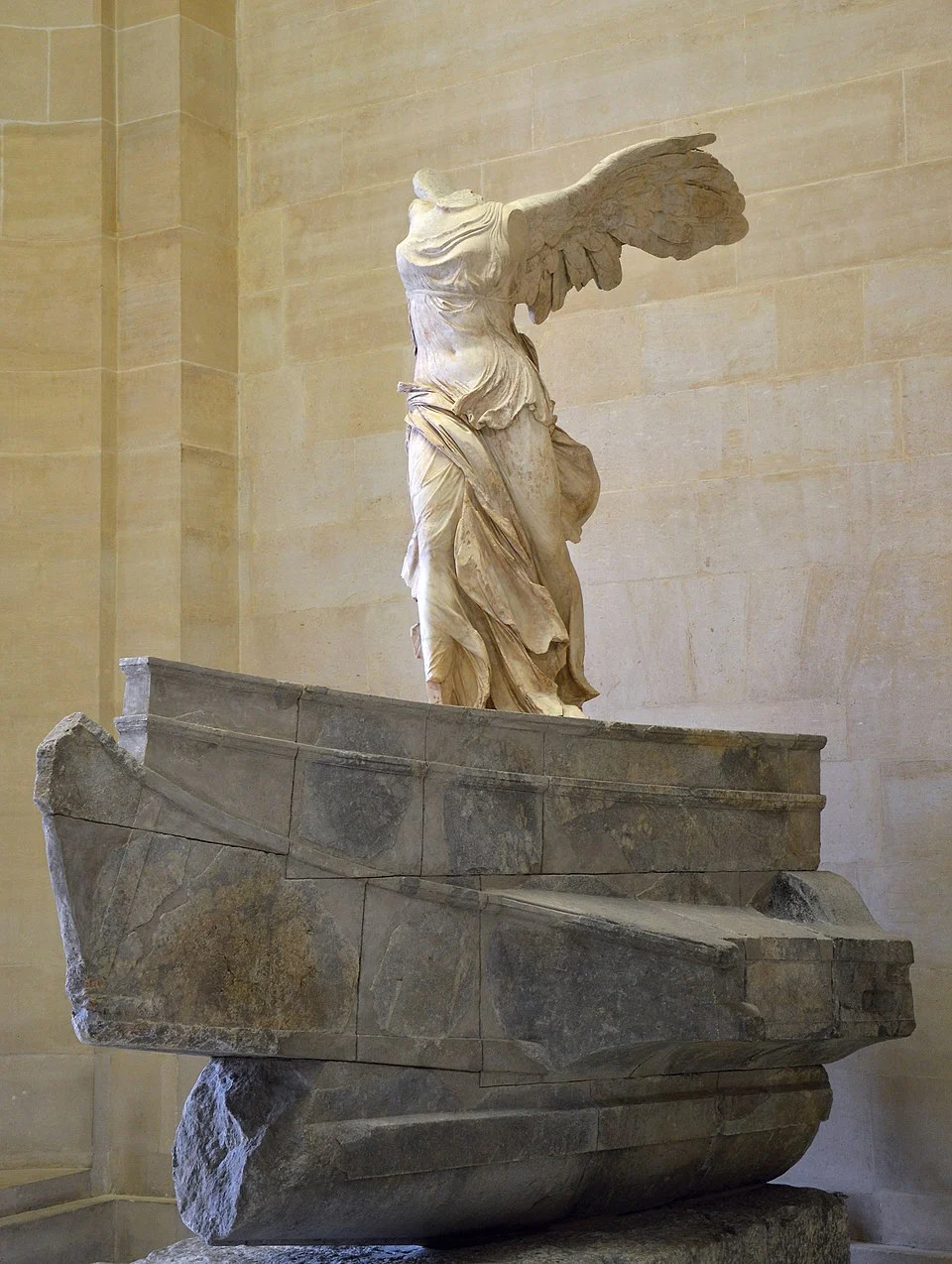
A masterpiece from the Hellenistic period in Greece (2nd century BCE). The statue depicts the Greek goddess of victory, her wings spread wide, standing on the bow of a ship. It’s placed dramatically at the top of a wide staircase (the Daru staircase), and it’s hard not to stand before it in awe at the illusion of wind blowing through the thin, wet-looking fabric draped over her body.
The Raft of the Medusa
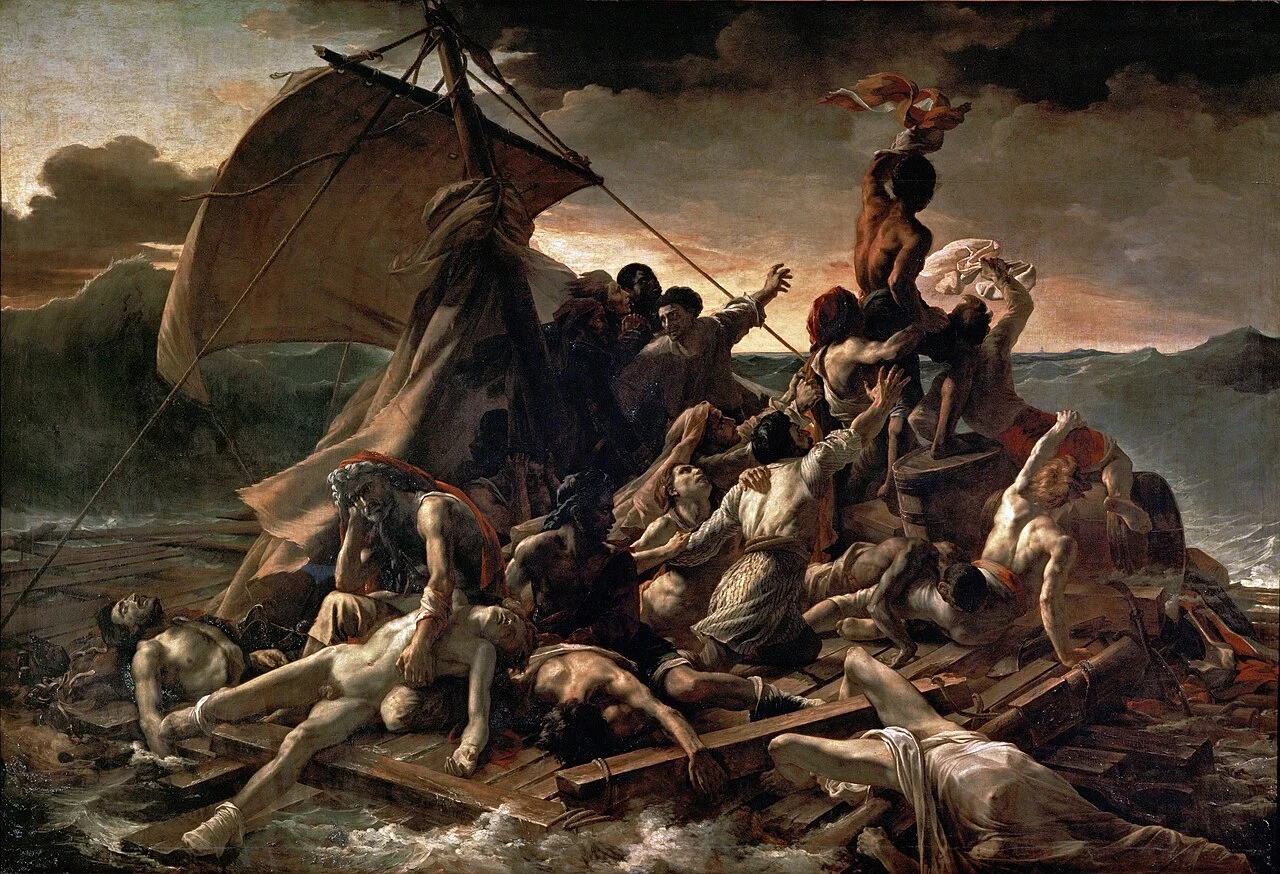
A huge, tragic Romantic painting by the artist Théodore Géricault, based on a true and horrifying story of a shipwreck and the survivors who tried to stay alive at sea while losing their humanity.
The Coronation of Napoleon

A massive, striking canvas by the emperor’s official painter, Jacques-Louis David. The work documents the historic moment in 1804 when Napoleon took the crown from the Pope’s hands and crowned his wife Joséphine. Take a minute to study the delicate details of the silk and velvet clothing worn by the hundreds of figures.
Liberty Leading the People

Eugène Delacroix’s iconic painting commemorating the July Revolution of 1830, showing the goddess of liberty waving the tricolor flag over the barricades of Paris.
Works of art for advanced Francophiles
If you’re an advanced Francophile and sophisticated enough not to stand in line in front of the Mona Lisa, I have a completely different suggestion for you. I asked my friend Dr. Efi Ziv which works of art he considers absolutely unmissable (the kind that fewer tourists crowd around). You can find his fascinating answer in the article 10 Must-See Works at the Louvre Museum (and Not a Word About the Mona Lisa).
The Louvre’s Layout: How Not to Get Lost in the Wings
If you try to wander around the Louvre randomly, you’ll quickly get lost among the dozens of kilometers of hallways and galleries. The Louvre is divided into three main wings (Sully, Denon, Richelieu) that connect to each other and surround the central pyramid. I strongly recommend downloading an updated map to your phone, or picking up a printed map from the information desk right after the security check.
- Denon Wing: the south wing, facing the Seine. This is without a doubt the busiest and most popular wing, since it houses the Mona Lisa, the Winged Victory of Samothrace, and masterpieces of Italian and French painting. If you’re short on time and just want to check off the big hits, this is the wing for you.
- Sully Wing: the eastern and central wing, built around the Cour Carrée (Square Courtyard). This wing holds the palace’s ancient history; on the lower level, you can actually walk among the foundations of the old walls. You’ll find the stunning Egyptian antiquities collection here, along with the Venus de Milo statue.
- Richelieu Wing: the north wing. Crowds here tend to be smaller: you’ll find Near Eastern antiquities, light-filled sculpture courtyards, and Flemish paintings. In my opinion, the real treasure in this wing is the Napoleon III Apartments (Appartements Napoléon III), which preserve the almost unbelievable splendor of France’s Second Empire.
The Louvre itself was a royal residence before it became a museum, so entire wings still look and feel like a genuine luxury palace. Take, for example, the 18th-century furniture wing, which Ronen Sas, a fellow Francophile, loves so much. Take a look at this video and see the splendor and beauty for yourself:
I definitely agree with my friend that this wing is a must-see, but if you have to pick just one wing to soak in the royal atmosphere, in my opinion the most impressive one is the Napoleon III wing. Take a look at this video and judge for yourself:
Accessibility at the Louvre Museum (Information for Visitors with Disabilities)
Fortunately, despite being a huge and ancient historic building, the Louvre Museum is excellently accessible for visitors with physical disabilities and wheelchair users. Right from the entrance, there’s no need to wait in the long lines. At the glass pyramid, there’s a marked blue line (Blue Line) reserved specifically for staff and visitors with disabilities (and one companion each), which allows quick access via a special elevator that goes straight down to the main reception hall beneath the pyramid.
On level -2 of the main hall, near the information desk, there’s a “Visitor Assistance Area.” There, you can borrow wheelchairs, folding chairs for resting, walking canes, and even strollers or front baby carriers free of charge (backpack-style baby carriers are banned in the Louvre to prevent accidental damage to the artworks). All that’s required is leaving an ID as a deposit.
Special elevators and lifts (which sometimes require assistance or need to be opened by museum staff, so don’t hesitate to ask for their help) connect all floors across the various wings. In addition, the Louvre has been investing in recent years in accessibility for visually impaired visitors as well, and there’s a dedicated “Tactile Gallery” in the Denon wing where you can feel replicas of famous statues. I highly recommend asking the information desk for the Louvre’s special “accessibility map” (which you can also check on the official accessibility page), which clearly marks all elevator routes, ramps, and accessible restrooms.
Recommended Hotels Near the Louvre
Staying near the Louvre (in Paris’s 1st arrondissement) has two huge advantages. The first is the ability to get to the museum quickly, right around its opening time in the morning, which lets you skip a good chunk of the lines. The second, and more important, advantage is the location itself: you’re right at the heart of Paris, within a short walk of the Tuileries Garden, the Marais, the Left Bank, and most of the city’s major attractions. Here are a few hotels I particularly like in the area, sorted by budget:
Indulgence and Luxury
Hôtel Regina Louvre
- A perfect location right across from the Louvre, you’ll feel like royalty.
- Classic, luxurious French design (5 stars) that hasn’t lost its charm.
- Very high price, suited to celebrations or a honeymoon.
Hôtel Brighton
- A stunning, unforgettable view of the Tuileries Garden and the Eiffel Tower.
- Genuine Parisian chic that produces amazing photos.
- Very high demand, book months in advance.
Hôtel de Lille
- An intimate, charming, and quiet boutique hotel.
- Located on the Left Bank, but just a bridge away from the Louvre.
- Rooms in Paris tend to run small, and this one is no exception.
Good Value for the Price
Hôtel Montpensier
- A perfectly reasonable price for a super-central location near the Palais-Royal.
- A clean, tidy, functional hotel for travelers who are there to explore.
- Very basic design, without the special indulgences of luxury hotels.
Drawing Hotel
- Cool, modern design dedicated to modern art and illustration.
- A young atmosphere, a cute bar, and a great location.
- Less suited to fans of the classic look of chandeliers and heavy drapes.
Louvre Montana
- Located right across from the Tuileries Garden, steps from the corner of Rue de Rivoli.
- A small, charming, and welcoming Parisian hotel.
- Rooms are very small, pack light.
None of these hotels available? No worries, I have more great hotels to recommend
If these hotels are too pricey for you (the 1st arrondissement is an upscale, expensive area), I highly recommend clicking one of the links above and using the Booking.com map that opens to search for hotels a bit farther out (for example, around the Opéra, in the 2nd arrondissement) that fit your budget. If you’d rather have a more spacious, local-style living experience, it’s worth checking out a vacation apartment near Place de la Concorde, about a 10-minute pleasant walk along the gardens.
Frequently Asked Questions
Was the Louvre always a museum?
Not at all. It started as a fortress that King Philippe Auguste (r. 1180-1223) built in 1190 to defend Paris from the west, against the English kings who also ruled Normandy. You can still see the remains of the old fortress in the museum’s basement (in the Sully wing). It later became a magnificent royal palace where the kings of France lived, and only after the French Revolution did it officially become a museum open to the public.
How long does it take to see everything in the Louvre?
The Louvre is the largest art museum in the world. It holds more than 35,000 pieces displayed across 60,000 square meters! If you spent just one minute on each piece, with no breaks for food or sleep, it would take you 64 straight days to see it all. A typical tourist visit lasts between 3 and 4 hours, so it’s well worth focusing in advance on a specific wing or following a route of must-see works.
Has the Mona Lisa ever been stolen?
Yes, absolutely! Over the years the Louvre has fallen victim to several thefts, but the most famous by far was the theft of the Mona Lisa in August 1911 by museum employee Vincenzo Peruggia. The painting was missing for almost two years and caused a worldwide sensation (which actually contributed a great deal to the painting’s current cult-like fame), until it was recovered. Today the painting is secured to an unprecedented degree.
Are you allowed to bring food and drinks into the Louvre?
You’re allowed to bring sealed water bottles and snacks or sandwiches in your bag, and it’s actually a good idea, since the lines and prices at the indoor cafés run high. That said, eating or drinking inside the exhibition rooms themselves is strictly forbidden, to protect the canvases and statues from damage. If you want to eat, you can do so in the designated rest areas scattered outside the galleries or under the pyramid.
Are you allowed to take photos inside the museum?
Yes, you’re allowed to take photos for personal use in most of the museum’s display spaces. That said, you must turn off your flash. In addition, tripods of any kind and selfie sticks are strictly banned, due to the risk of physical damage to the artworks and to other visitors.
Can you leave the museum and come back the same day?
No. The museum’s current rules state that once you leave the exhibition area (past the security gates), you cannot use the same ticket to re-enter, even on the same day. So make sure you’ve done everything you wanted to do (and eaten, if needed, in the rest areas) before you head out.
