
In short
- ETIAS: The European electronic travel authorization is expected to start in 2027, and for now there’s no need to get one before your flight.
- How many days: Three to five days in the major cities, or seven to ten days of a hub-and-spoke trip in the countryside with a rental car.
- Regions covered: Paris and Île-de-France, Normandy, Lorraine, Alsace, Brittany, the Loire Valley, Burgundy, Lyon, the Alps, Périgord, Bordeaux, Provence, Occitanie and Corsica.
- What to book in advance: Accommodation, tickets to sites, a rental car and public transportation tickets.
- Practical information on this page: Weather and the best seasons, getting around between regions, and currency and budget.
- Why France: The largest country in the European Union by area, with culture in Paris, history in Normandy, châteaux in the Loire Valley and beaches in Provence.
France is the largest country in the European Union by area. You’ll find magical landscapes, ancient cities and picturesque villages that look like something straight out of a fairy tale. Add a grand culinary tradition, a fascinating history, a rich culture and a huge territory, and you get an endless source of enjoyment.
It’s no surprise you’ve chosen France for your next vacation (otherwise, you wouldn’t be reading this right now, would you?).
Welcome to my France travel guide. It was born out of the enormous love I have for this wonderful country and its culture. Its main goal is to help you plan your trip by putting all the relevant information in one place.
France is a huge country, and no single guide can cover all of it. As you’ll see, that doesn’t scare me off. Like someone chasing the end of a rainbow, I’ll probably never finish my quest to discover the secrets of France.
What does this mean for you? You might find I have a ton of information on certain French regions (Brittany, for example) and less on others. But don’t worry: I haven’t stopped traveling and I haven’t stopped writing, so if you come back to this article in the future, there’s a good chance you’ll find what you were looking for.
How is this guide organized? I start with a map of the regions, so you can choose where to go. From there I move on to a list of all 18 regions of France, the ten largest cities and the five rivers every French child can recite (you’ll soon see why five and not fifteen). After that I cover what is new for travelers in 2026, practical tips for planning your vacation and everything worth booking before you leave.
With that short introduction out of the way, let’s get started. I’ll help you build the perfect trip to France, the most charming country in the world.
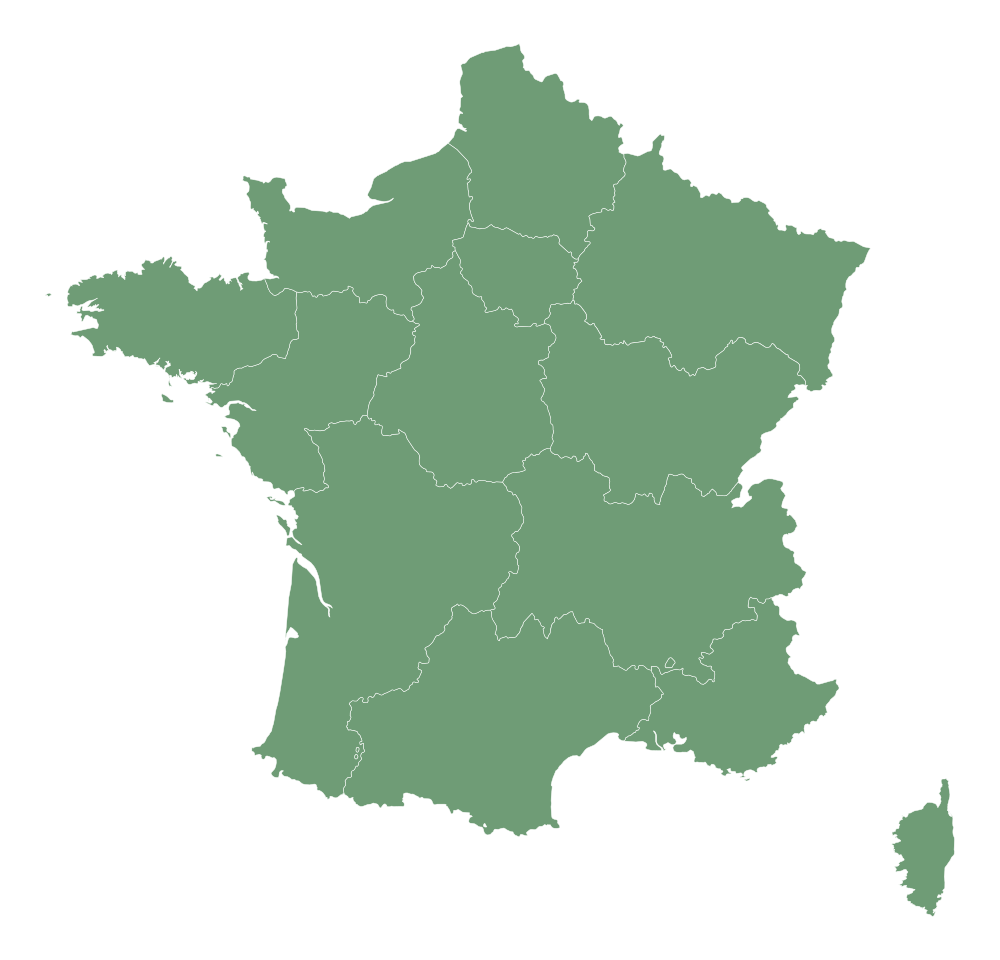
Map of France and its regions: where would you like to travel?
The first step of any trip to France is choosing which region to visit. On the map below, click any area to reach its full guide.
 Normandy
Paris
Lorraine
Alsace
Île-de-France
Brittany
Loire Valley
Burgundy
Lyon
French Alps
Périgord
Bordeaux
Provence
Not sure what to choose? Here is a quick summary of the regions I recommend:
- Paris and Île-de-France: On the tourist map of France for 2026, the Île-de-France region, with Paris at its heart, is still the perfect choice for a city break, both for first-time visitors and for those coming back. Besides its exceptional concentration of historic monuments and famous palaces, the region draws families from all over the world thanks to Disneyland Paris, one of the most popular attractions in the country. Whether you’re planning a hub-and-spoke trip or a focused vacation, it pays to plan the highlights of this region in advance.
- Normandy and Brittany: A winning combination of wild coastlines (including the historic D-Day beaches), excellent seafood and cider, and breathtaking heritage sites like Mont-Saint-Michel.
- The Loire Valley: A classic family vacation. The area is full of fairy-tale Renaissance châteaux, wineries and vineyards, making it perfect for a hub-and-spoke road trip.
- Provence and the Alps: The sunny south offers villages perched on cliffs, colorful markets and lavender fields in summer, while the French Alps are an ideal destination for a winter ski vacation.
All the regions of France: 13 on the mainland, 5 overseas
The map above shows where each area sits, but it doesn’t answer a question I get a lot: how many regions does France have, and what are they called? The territorial reform that took effect on January 1, 2016 cut mainland France from 22 regions to 13, and on top of those there are 5 overseas regions: Guadeloupe, Martinique, French Guiana (Guyane), La Réunion and Mayotte. That makes 18 regions in total, divided into 101 departments.
| Region | Capital | What you will find there |
|---|---|---|
| Île-de-France | Paris | The most populated region of France, home to Paris and Versailles. The full guide to the region |
| Auvergne-Rhône-Alpes | Lyon | The capital of French cuisine and the big ski area. Lyon and around, the French Alps |
| Provence-Alpes-Côte d’Azur | Marseille | Lavender, markets, cliff-top villages and the beaches of the Riviera. Provence itineraries, the French Riviera |
| Occitanie | Toulouse | Fortified Carcassonne, the Pyrenees and the Canal du Midi, which crosses the south from the Atlantic to the Mediterranean |
| Nouvelle-Aquitaine | Bordeaux | The largest region of mainland France by area. Bordeaux and around, Périgord and the Dordogne |
| Grand Est | Strasbourg | Alsace, Lorraine and Champagne, with European Union institutions in Strasbourg. Alsace, Lorraine |
| Hauts-de-France | Lille | The Flemish north, the battlefields of World War I and the Channel coast |
| Normandie (Normandy) | Rouen | The D-Day beaches, Mont-Saint-Michel, Étretat and the cider villages. My Normandy guide |
| Bretagne (Brittany) | Rennes | A rocky coast, medieval towns and a Celtic identity. Brittany |
| Pays de la Loire | Nantes | The Loire estuary, Angers and Les Sables-d’Olonne. Some of the Loire châteaux actually sit here |
| Centre-Val de Loire | Orléans | The heart of the Loire Valley: Chenonceau, Chambord, Amboise. The Loire Valley |
| Bourgogne-Franche-Comté | Dijon | The world-famous wine route, abbeys and quiet towns. Burgundy |
| Corse (Corsica) | Ajaccio | The island where Napoleon was born, with mountains that drop straight into the sea |
Watch out for a difference that confuses many travelers: a region (région) is the large administrative unit, and a department (département) is the unit below it. The names you know from trip planning, like the Loire Valley, Provence or Périgord, are tourist and historic areas, not necessarily administrative regions. Périgord, for example, lies entirely inside Nouvelle-Aquitaine.
The largest cities in France: the top 10 by population
When people ask me what the largest city in France is, my first question back is always: how are you measuring it? The answer depends on that. The table here counts residents within the city limits, what the French call the population municipale, which is the official figure used to compare one city with another. The numbers come from the 2023 census of the national statistics institute (INSEE), which took effect on January 1, 2026. And if what you really want to know is which French city suits your trip, not just which one is biggest, the last column shows why you would stop in each.
| # | City | Residents | Why stop there |
|---|---|---|---|
| 1 | Paris | 2,119,412 | On its own it has more residents than any of the next nine cities, each taken separately. Everything I have on Paris |
| 2 | Marseille | 892,391 | The great Mediterranean port, the oldest city in France and the gateway to the Calanques. My Marseille guide |
| 3 | Lyon | 523,314 | The culinary capital of France, with an entire Renaissance quarter and a traditional bouchon on every corner. Lyon and around |
| 4 | Toulouse | 519,940 | The Pink City, the aerospace industry and a handy base for Carcassonne and the Pyrenees |
| 5 | Nice | 360,710 | The unofficial capital of the Riviera, with an old town and a long seafront promenade. The French Riviera |
| 6 | Nantes | 332,515 | The Château des ducs de Bretagne and the mechanical elephant of the Île de Nantes |
| 7 | Montpellier | 313,712 | The fastest-growing of the big French cities, with an ancient school of medicine |
| 8 | Strasbourg | 296,552 | The cathedral, the Petite France quarter and the Christmas market. Alsace |
| 9 | Bordeaux | 271,552 | A city center that’s a UNESCO World Heritage site in its entirety, with wine routes all around. Bordeaux and around |
| 10 | Lille | 240,109 | One hour from Paris by train, a Flemish atmosphere and a huge flea market in September |
Here are two notes that explain why this table can be misleading. First, Lyon and Toulouse are fewer than 4,000 residents apart, so third place may change hands at the next census. Second, the figure counts only the city limits: Lille shows up here in tenth place, but the metropolitan authority around it passes one million (1,063,720 residents in 2023), which in practice makes it the fifth-largest urban area in France. Bordeaux also climbs many places when you measure the metro area instead of the city.
The main rivers of France: the 5 that flow into the sea
The French language makes a distinction between a fleuve (a river that flows directly into a sea or ocean) and a rivière (a river that flows into another river). That distinction is why a French child recites five rivers and not fifteen: mainland France has five fleuves, and all the others, including the Marne, the Saône, the Cher and the Allier, are their tributaries.
| River | Length | From source to mouth | Cities on its banks |
|---|---|---|---|
| The Loire | 1,020 km | From the Massif Central to the Atlantic Ocean | Nevers, Orléans, Blois, Nantes. The longest of them all, and the one the châteaux sit on: the Loire Valley |
| The Seine | 776 km | From Burgundy, not far from Dijon, to the English Channel | Troyes, Paris, Rouen, Le Havre |
| The Rhône | 812 km, 522 of them in France | From the Alps in Switzerland to the Mediterranean, through the Camargue delta | Lyon, Valence, Avignon, Arles. The most powerful river in France by flow |
| The Garonne | 650 km | From the Pyrenees in Spain to the Atlantic Ocean, through the Gironde estuary | Toulouse, Agen, Bordeaux |
| The Rhine (Rhin) | 1,320 km, 180 of them in France | From eastern Switzerland to the North Sea, along the French-German border | Strasbourg |
What is new for travelers in France in 2026?
To help you stay up to date, here are the main events and changes happening in France this year:
- The Impressionism centenary: France marks 100 years since the death of Claude Monet (1840-1926). Paris and Normandy are at the center of the celebrations, with special art exhibitions and tours in the footsteps of the great painters.
- ETIAS travel authorization: The European Union is about to launch an electronic travel authorization system, which will require travelers from visa-exempt countries to fill in an online form before the flight. The system is expected to start in 2027, and for now there’s no need to apply. For more, read my full guide to visas for France and ETIAS.
- Metro expansion, line 18: Part of the new line 18 of the Grand Paris Express is opening, making the area south of Paris much easier to reach and simplifying day trips out of the city.
- The Year of the Normans: Normandy is holding major historical celebrations to mark a thousand years of Norman heritage.
Practical information: tips for planning a vacation in France
Weather and the best seasons in France
France is worth visiting in any season, but the ideal seasons for scenery and cities are spring (April to June) and fall (September to November). Summer is hot and perfect for the coast, while winter is especially good for a ski vacation or a visit to the Christmas markets of Alsace.
Transportation and getting around
For traveling between major cities, the high-speed train network (TGV) is by far the most comfortable and efficient option. For in-depth trips in the countryside (the Dordogne, Provence, the Loire Valley), a rental car is a must if you want to reach the hidden gems.
Currency, budget and costs
The currency is the euro. France is very advanced when it comes to digital payments, but I still recommend carrying a little cash for local markets and small towns, where card payments sometimes have a minimum.
A trip to France: what should you book in advance?
-

🏨 Hotels and apartments
My top recommended hotels and apartments in Paris and across the regions of France.
-
🎟️ Booking tickets
Secure your spot at the most popular attractions and skip the long lines.
-
🚗 Car rental
Everything you need to know about renting a car in France, price comparison and driving tips.
-
🚆 Public transportation
Booking train tickets (TGV), metro information and smart ways to get around.
All my articles about France

FAQ
Why rely on the information on Francophiles Anonymous?
Because it’s written by someone who has been in love with France for decades and has studied its culture in depth. Everything here is based on personal experience.
To learn more, visit the About me page.
What are the best months for a trip to France?
For skiing, December to March. For the beach, the summer months in regions like Brittany. For a general trip, spring (April to June) and fall (September to November) are ideal.
What is there to do in France besides Paris?
A whole world! From the châteaux of the Loire Valley to the beaches of Normandy and the lavender fields of Provence. My guide to each region will give you all the answers.
Is it true that the French are rude and unfriendly?
Not at all. Basic politeness, a smile and a word in French will open every door. Read more in my article how not to annoy the French.
Traveling around France: by car or by public transportation?
For a city trip, public transportation. For a trip in the countryside (like the Loire Valley or Périgord), a car is essential for the full experience.
What time is it in France?
France is on Central European Time (UTC+1), and on summer time (UTC+2) from the last Sunday of March to the last Sunday of October. For most of the year that’s six hours ahead of New York.
Is it easy to combine France with a wider trip in Europe?
Absolutely. Thanks to its central location, you can easily add a visit to Belgium, Germany, Switzerland, Italy and Spain.
How many regions does France have?
18 regions: 13 in mainland France and 5 more overseas (Guadeloupe, Martinique, French Guiana, La Réunion and Mayotte). This has been the official count since January 1, 2016, when mainland France was cut from 22 regions to 13, and the regions are divided into 101 departments.
What is the largest city in France?
Paris, with 2,119,412 residents according to the 2023 INSEE census, which took effect on January 1, 2026. It’s followed by Marseille (892,391), Lyon (523,314), Toulouse (519,940) and Nice (360,710). The official figure counts residents within the city limits only, which is why Lille looks relatively small even though the metropolitan authority around it passes one million.
How many rivers does France have, and what are they called?
Mainland France has five rivers that flow directly into a sea or an ocean: the Loire (1,020 kilometers, the longest of them all), the Rhine (1,320 kilometers, 180 of them in France), the Rhône (812 kilometers, 522 of them in France), the Seine (776 kilometers) and the Garonne (650 kilometers). All the others, like the Marne and the Saône, are tributaries that flow into another river.