

In short
- What’s there: Notre-Dame cathedral, Place des Vosges, the Maison de Victor Hugo, the Île Saint-Louis, the Hôtel de Ville, the Hôtel de Sully and the Jewish quarter.
- Location: the Right Bank, the southern Marais, plus the Île Saint-Louis and the eastern Île de la Cité.
- Tickets: most of the sites are free, including the cathedral itself. Climbing the towers of Notre-Dame is paid.
- Good to know: the Centre Pompidou is closed for renovation from September 2025 until 2030.
- Markets: the Marché Baudoyer on Wednesdays and Saturdays, and the flower market on the Île de la Cité every day.
- Restaurants: 13 recommendations in the arrondissement, from an 1864 brasserie to updated Ashkenazi cooking.
- Walking itineraries: three take place in the arrondissement, four more cross it together with the 3rd, and another six pass through it.
The 4th arrondissement is the most packed arrondissement in central Paris, at least in terms of what fits inside it. It holds the southern Marais with Place des Vosges and the Jewish quarter, the Paris city hall, the quiet Île Saint-Louis, and the eastern part of the Île de la Cité, where Notre-Dame stands.
For a visitor this means the 4th is the place where you spend a whole day on foot without going down into the metro even once. It’s also the arrondissement where most of the sites are buildings you can see from the outside for free, and only a few of them need a ticket.
So before we set off, here is what you’ll find on this page: first the hotels and apartments I recommend in the arrondissement, then the attractions one by one, the restaurants I send people to, the arrondissement’s markets with their days and hours, and finally the walking itineraries that pass through here.
Recommended Hotels in the 4th Arrondissement of Paris
This is the arrondissement to sleep in if you’re coming to Paris for three days and want to walk around from morning until night. If you’re not sure what suits you, answer three questions and I’ll pick from my recommendations:
My personal pick
Which hotel in the 4th arrondissement suits you?
One short question, and I will pick out of the places I already checked and wrote about on the site the ones that fit the trip you are planning.
One moment, I am going over my recommendations to find what fits you…
Prefer to go through all my recommendations yourself, with photos and details on every hotel? Here is my page of hotels in the southern Marais and the Île Saint-Louis.
Recommended Apartments in the 4th Arrondissement of Paris
An apartment in the 4th puts you within walking distance of Notre-Dame, Place des Vosges and the Jewish quarter, and in terms of location that’s an area that’s hard to beat. Here too, you can let me choose:
My personal pick
Which apartment in the 4th arrondissement suits you?
One question about the area, and I will filter the apartments I checked and wrote about on the site. The apartments I recommend directly get booked very fast, so I added excellent Booking.com apartments that I hand-picked for my readers.
One moment, I am going over my recommendations to find what fits you…
Want to go through all the apartments I recommend, with photos and details? Here is my page of recommended apartments in the 4th.
Attractions and Museums in the 4th Arrondissement of Paris
These are the sites I recommend in the 4th, and most of them are free. Note one detail that changes the planning: the Centre Pompidou is closed for renovation and won’t reopen before 2030.
-
Must see

Notre-Dame de Paris
The cathedral where Paris begins, and entry is free.
The cathedral took about two hundred years to build, and on the square in front of it is Point Zéro, the point from which distances in France are still measured. Entry to the cathedral itself is free, but it’s well worth booking a time slot ahead on the official website, otherwise you’ll find yourself in a very long line. Climbing the towers is a separate, paid ticket.
-
Free entry

Place des Vosges
The first public square in Paris, and to me still the most beautiful of them all.
The square was built on the initiative of Henri IV (reigned 1589–1610) and inaugurated in 1612, and all thirty-six houses around it were built to the same exact design. That’s the idea behind it: not one big palace, but a uniform facade wrapped around a garden. Galleries and cafés run under the arcades, and in its southeastern corner is the house where Victor Hugo lived.
-
Free entry
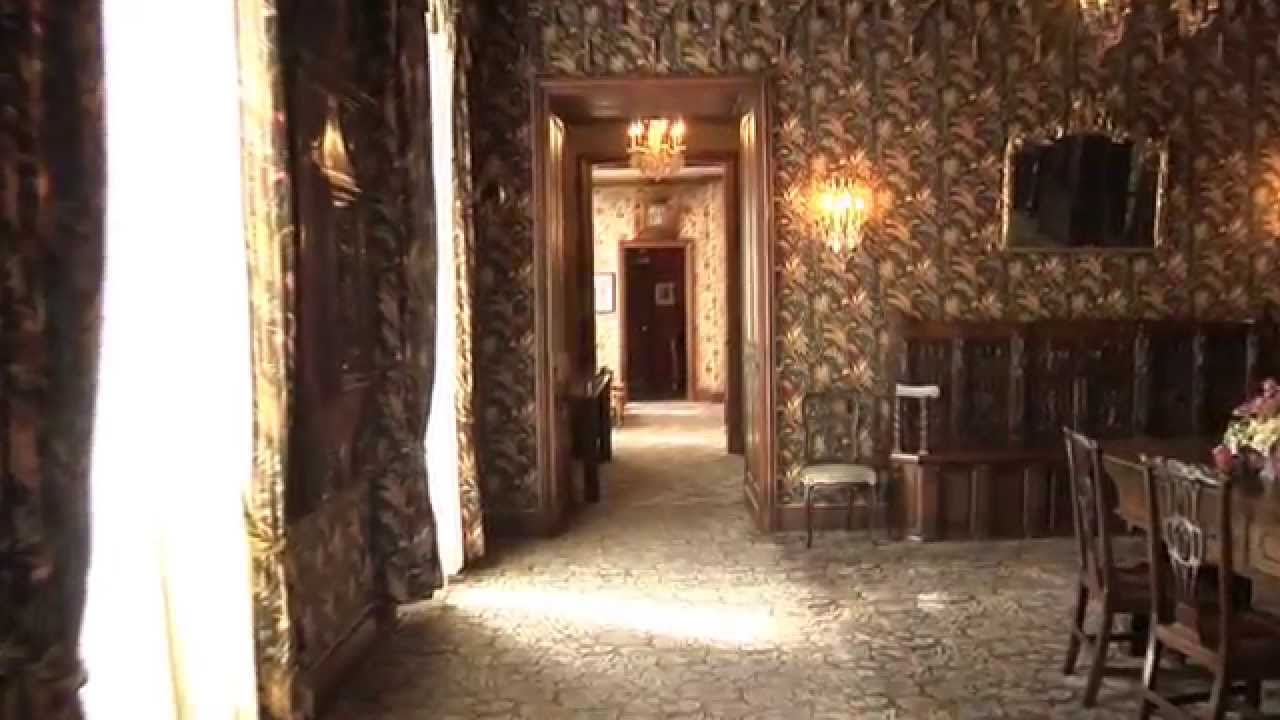
Maison de Victor Hugo
The apartment where Victor Hugo (1802–1885) lived for sixteen years, on the second floor above the arcades of Place des Vosges.
Hugo lived here from 1832 to 1848, and it was in this apartment that he began writing Les Misérables. The Chinese salon he designed with his own hands for Juliette Drouet (1806–1883), his mistress, was moved here in one piece, and it’s the surprising part of the visit. The permanent collection is free, as in all the City of Paris museums.
-
Free entry

Île Saint-Louis
The quiet island of Paris, and the place I escape to when the center becomes unbearable.
The island was built in the 17th century as a single project, which is why it looks uniform in a way that’s rare in Paris: one main street running along its length, and private mansions facing the Seine. The obvious stop is the ice cream at Berthillon, and the stop I recommend even more is on the steps that lead down to the riverbank.
-
Free entry

Hôtel de Ville
The Paris city hall, and a building that looks more like a palace than a municipal office.
The building you see today is a reconstruction from the end of the 19th century, after the previous one burned down during the Commune in 1871. The square in front of it is one of the places most charged with history in Paris. Temporary exhibitions with free entry are held inside.
-
Free entry

Hôtel de Sully
A 17th-century mansion with a hidden passage that leads straight to Place des Vosges.
Few visitors know that you can walk into the courtyard from Rue Saint-Antoine, cross the small garden behind it and come out right on Place des Vosges. It’s the beautiful way to reach the square, and it saves you the walk around the block. The mansion itself houses the Centre des monuments nationaux, with an excellent bookshop.
-
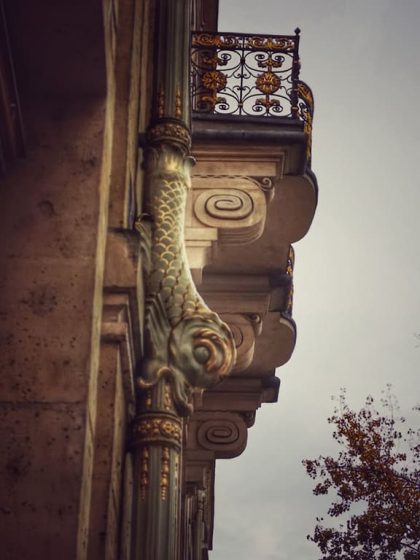
Hôtel de Lauzun
A mansion on the bank of the Île Saint-Louis, with one of the most lavish 17th-century interiors to survive.
The mansion belongs to the City of Paris and today houses a research institute, so it isn’t open to visitors on a regular basis, but its facade on the quai is worth a stop in itself. In the 19th century Charles Baudelaire (1821–1867) and Théophile Gautier (1811–1872) lived here, and it was the meeting place of the Parisian Club des Hashischins.
-
Closed until 2030

Centre Pompidou
The building has been closed for renovation since September 2025, and the reopening is planned for 2030. You can’t visit it at the moment.
The renovation includes asbestos removal, the renewal of all the facades and upgrades to safety and accessibility standards. In the meantime the collection is shown elsewhere in France and around the world, under a program called Constellation. The square in front of the building and the Stravinsky Fountain next to it are still open, and the building itself is still worth a look from the outside.
More Attractions in the 4th Arrondissement Worth Knowing
These are places I haven’t written a separate article about yet, but if you’re walking around the arrondissement it’s worth knowing they’re there:
| The place | Address | Why stop there |
|---|---|---|
| Rue des Rosiers and the Jewish quarter | Rue des Rosiers | The heart of the Jewish quarter of Paris, with bakeries, Judaica shops and the famous falafel stands |
| Tour Saint-Jacques | Square de la Tour Saint-Jacques | All that’s left of a church demolished in the Revolution. Blaise Pascal (1623–1662) is said to have carried out air pressure experiments here |
| Saint-Paul-Saint-Louis church | 99 Rue Saint-Antoine | A Baroque church built on the initiative of Louis XIII (reigned 1610–1643), with a painting by Eugène Delacroix (1798–1863) |
| Maison Européenne de la Photographie (MEP) | 5-7 Rue de Fourcy | The main photography center of Paris, with changing exhibitions. Paid |
| Mémorial de la Shoah | 17 Rue Geoffroy-l’Asnier | An archive, a museum and the Wall of Names. Entry is free |
| Village Saint-Paul | Between Rue Saint-Paul and Rue des Jardins-Saint-Paul | A network of inner courtyards with antique shops, and next to it a remnant of the wall of Philippe Auguste (reigned 1180–1223) |
| Marché aux fleurs Reine Elizabeth II | Place Louis-Lépine | A covered flower market on the Île de la Cité, open every day and free to walk through |
Tours and Activities in the 4th Arrondissement You Might Enjoy
Show me more activities in Paris
And if you’re looking for attractions in other arrondissements of the city, my Paris attractions page brings them all together in one place.
My Recommended Restaurants in the 4th Arrondissement of Paris
The southern Marais is full of restaurants, which is exactly why it’s also full of tourist traps. These are the places I send people to:
| The restaurant | Type | Address | Why |
|---|---|---|---|
| Bofinger | Historic brasserie | 5-7 Rue de la Bastille | An Alsatian brasserie from 1864 with a glass dome. Ask for a table under the dome |
| Camille | French classic | 24 Rue des Francs-Bourgeois | A corner bistro in the middle of the Marais, with outdoor tables that are worth the wait |
| Bombance | French classic | 40 Rue des Blancs-Manteaux | Modern French cooking on a quiet street behind the crowded ones |
| Le Colimaçon | French classic | 44 Rue Vieille-du-Temple | A 17th-century building with a spiral staircase that gave the restaurant its name |
| Bistrot des Vosges | French classic | 31 Boulevard Beaumarchais | A neighborhood bistro that hasn’t gone touristy, a short walk from Place des Vosges |
| Les Bougresses | French classic | 6 Rue de Jarente | A small wine restaurant on a quiet square most visitors miss |
| L’Atelier Entrecôte & Volaille | French classic | 21 Boulevard Beaumarchais | Entrecôte and fries with the house sauce, a local take on the Parisian classic |
| La Propriété Française | French classic | 84 Rue Saint-Martin | French produce from named growing regions, near the Pompidou |
| Boubalé | Modern Ashkenazi | 6 Rue des Archives | Updated Ashkenazi cooking in the heart of the Jewish quarter, and to me the idea works |
| Baobar | Asian | 42 Rue Sainte-Croix-de-la-Bretonnerie | Bao and Vietnamese dishes in a small, buzzing spot |
| Hanoï | Asian | 41 Rue Sainte-Croix-de-la-Bretonnerie | Vietnamese cooking on the same street as Baobar, and both are worth it |
| Pamela Popo | On the radar | 15 Rue François-Miron | A place with character on the street where the two oldest timber-framed houses in Paris stand |
| L’Ébouillanté | Café | 6 Rue des Barres | Tables on a sloping street facing the Saint-Gervais church, and that view is why you come |
Looking for restaurants in other arrondissements? My page of recommended restaurants is organized by type of cuisine and by arrondissement.
The Food Markets of the 4th Arrondissement of Paris
There’s one municipal food market in the 4th, and it works in two completely different formats: on Wednesdays it’s an afternoon market that runs into the evening, and on Saturdays it’s a regular morning market.
| The market | Address | Days and hours | Metro |
|---|---|---|---|
| Marché Baudoyer | Place Baudoyer | Wednesday 10:00 a.m. to 8:00 p.m., Saturday 7:00 a.m. to 2:30 p.m. | Hôtel de Ville or Pont Marie |
| Marché aux fleurs Reine Elizabeth II | Place Louis-Lépine | Every day, a covered market and not a food market | Cité |
And if you’re in the area on another day, the Marché des Enfants Rouges in the 3rd arrondissement is within walking distance, and it’s open six days a week. On my markets page you’ll find the recommended markets in the rest of the city’s arrondissements.
Walking Itineraries in the 4th Arrondissement of Paris
The 4th is a special case, because it holds half of the Marais and both islands. That’s why some of the Marais itineraries start in the 3rd and end here, and I’ve sorted them by where most of the walking happens.
Itineraries That Take Place in the 4th Arrondissement
Marais Itineraries That Pass Through the 4th and the 3rd
Itineraries That Pass Through the 4th and Continue Further
Want all the itineraries I’ve written, by arrondissement and by theme? My page of walking itineraries in Paris brings them all together.
The History of the Marais
The 4th is the southern part of the Marais, and it shares the same history with the 3rd to its north. What saved the neighborhood is that Napoleon III left it alone, so its mansions and alleys survived while Georges-Eugène Haussmann (1809–1891) rebuilt the rest of Paris. The southern part is also where you’ll find Place des Vosges, the first planned square in Paris, and Rue des Rosiers, with the Jewish chapter that is still present there today.
Read my full article on the history of the Marais
The Next Step in Your Trip
The 4th is the southern half of the Marais, and if you keep heading north you’ll reach the 3rd arrondissement, with the Musée Picasso and the Marché des Enfants Rouges. You’ll find both halves together on my Marais page, and if you’re interested in the history of the neighborhood from the marshes to the present day, I’ve written about it separately.
And if you want to be ready ahead of time for every scenario, my complete Paris guide brings together everything I’ve learned. Have a wonderful trip, and don’t forget to sit for a moment on the steps of the Île Saint-Louis for me.
