

In short
- What’s there: the Musée Picasso, the Musée Carnavalet, the Musée Cognacq-Jay, the Musée de la Chasse et de la Nature, the Hôtel de Soubise and the Marché des Enfants Rouges.
- Location: the Right Bank, the northern part of the Marais.
- Tickets: the permanent collections of the Carnavalet and the Cognacq-Jay are free. For the Musée Picasso, book ahead.
- Good to know: most of the museums and the market are closed on Mondays.
- Food market: the Marché des Enfants Rouges from 1615, Tuesday to Sunday, a covered market that is also open in the evening.
- Restaurants: 16 recommendations in the arrondissement, more than in any other arrondissement of Paris.
- Walking itineraries: eight itineraries take place mostly in the arrondissement, and two more pass through it.
The 3rd arrondissement is the northern Marais, and to me it’s the more interesting half of the Marais. While the southern Marais is packed with visitors, the 3rd has kept quieter streets, and its private mansions from the 17th and 18th centuries stand at a density that’s hard to find anywhere else in the city.
It’s also an arrondissement that rewards anyone who loves small museums. The Musée Picasso is the big name here, but next to it sit three more museums, two of them free for the permanent collection, and few visitors bother to go in. And by the way, the 3rd is also the strongest arrondissement in central Paris for food, with a historic covered market and sixteen restaurants I recommend.
So before we set off, here is what you’ll find on this page: first the hotels and apartments I recommend in the arrondissement, then the museums and attractions one by one, the restaurants I send people to, the arrondissement’s food market with its days and hours, and finally the walking itineraries that pass through here.
Recommended Hotels in the 3rd Arrondissement of Paris
The northern Marais is an excellent place to stay: central enough to walk everywhere, and quiet enough to sleep at night. If you’re not sure what suits you, answer three questions and I’ll pick from my recommendations:
My personal pick
Which hotel in the 3rd arrondissement suits you?
One short question, and I will pick out of the places I already checked and wrote about on the site the ones that fit the trip you are planning.
One moment, I am going over my recommendations to find what fits you…
Prefer to go through all my recommendations yourself, with photos and details on every hotel? Here is my page of recommended hotels in the northern Marais.
Recommended Apartments in the 3rd Arrondissement of Paris
In this arrondissement an apartment makes particular sense, because the Marché des Enfants Rouges and Rue de Bretagne are right here, and you can buy cheese and vegetables three minutes from your door. Here too, you can let me choose:
My personal pick
Which apartment in the 3rd arrondissement suits you?
One question about the area, and I will filter the apartments I checked and wrote about on the site. The apartments I recommend directly get booked very fast, so I added excellent Booking.com apartments that I hand-picked for my readers.
One moment, I am going over my recommendations to find what fits you…
Want to go through all the apartments I recommend, with photos and details? Here is my page of recommended apartments in the 3rd.
Attractions and Museums in the 3rd Arrondissement of Paris
These are the sites I recommend in the 3rd. Note one detail that changes how you plan the day: most of the museums here are closed on Mondays.
-
Must see

Musée Picasso
The largest collection of works by Pablo Picasso (1881–1973) in the world, in a 17th-century private mansion. Book your ticket ahead, the lines here are long.
The building is called the Hôtel Salé (“Salted Mansion”), and that amusing name comes from the fact that its first owner got rich collecting the salt tax. The collection was built from what the family handed over to the state in lieu of inheritance tax, so it also includes works Picasso kept for himself and never sold. I recommend combining the visit with my walking itinerary in the footsteps of Picasso, which links the Montmartre of his early years with the Marais of the museum.
-
Free entry

Musée Carnavalet
The museum of the history of Paris, and to me the best museum in the city. The permanent collection is free.
The museum spreads over two private mansions joined by a gallery, and it tells the story of Paris from Roman times to the present day. The part everyone talks about is the rooms from the Revolution, and the room where the bedroom of Marcel Proust (1871–1922) has been reconstructed. The permanent collection is free, as in all the City of Paris museums, and the temporary exhibitions are paid.
-
Free entry
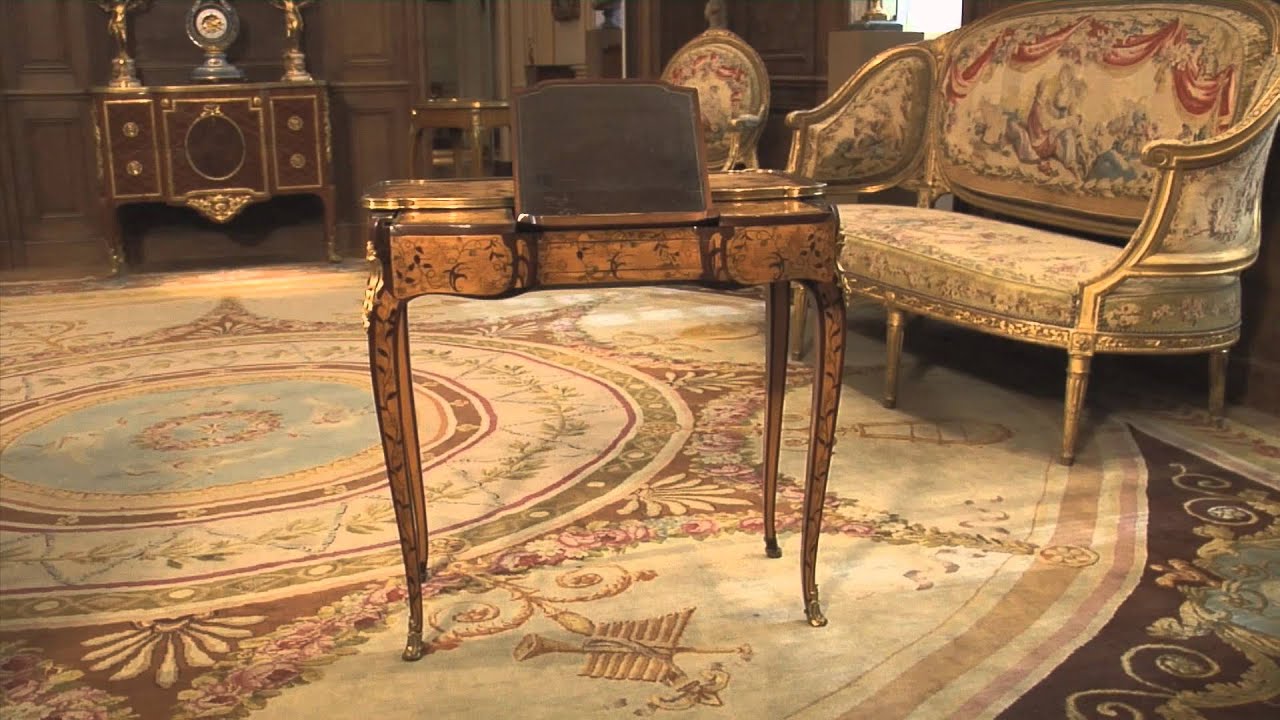
Musée Cognacq-Jay
The museum of the 18th century, in a small Renaissance mansion, and few visitors even know it’s there.
The collection was built by Ernest Cognacq (1839–1928) and his wife Marie-Louise Jaÿ (1838–1925), the founders of the La Samaritaine department store, and it was left to the City of Paris in 1928. In the rooms you’ll find paintings by François Boucher (1703–1770), Jean Siméon Chardin (1699–1779) and Jean-Honoré Fragonard (1732–1806), signed furniture and a porcelain collection. The permanent collection is free, although during a temporary exhibition some of the wings become paid. To me it’s the most rewarding half hour in the Marais.
-
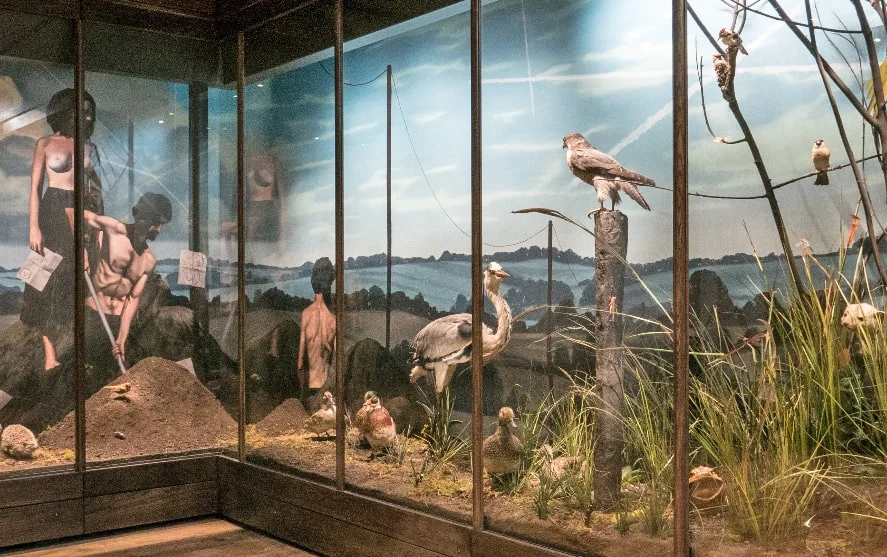
Musée de la Chasse et de la Nature
A strange and fascinating museum about the relationship between people and animals, and not quite what the name (“Museum of Hunting and Nature”) suggests.
The museum reopened after a renovation and expansion, and it sits in two adjoining private mansions. The display mixes taxidermy, decorated hunting weapons, wallpapers and paintings with works by contemporary artists, and the result is closer to a cabinet of curiosities than to a natural history museum. Note that admission is paid and the ticket desk takes cards only.
-
Architecture
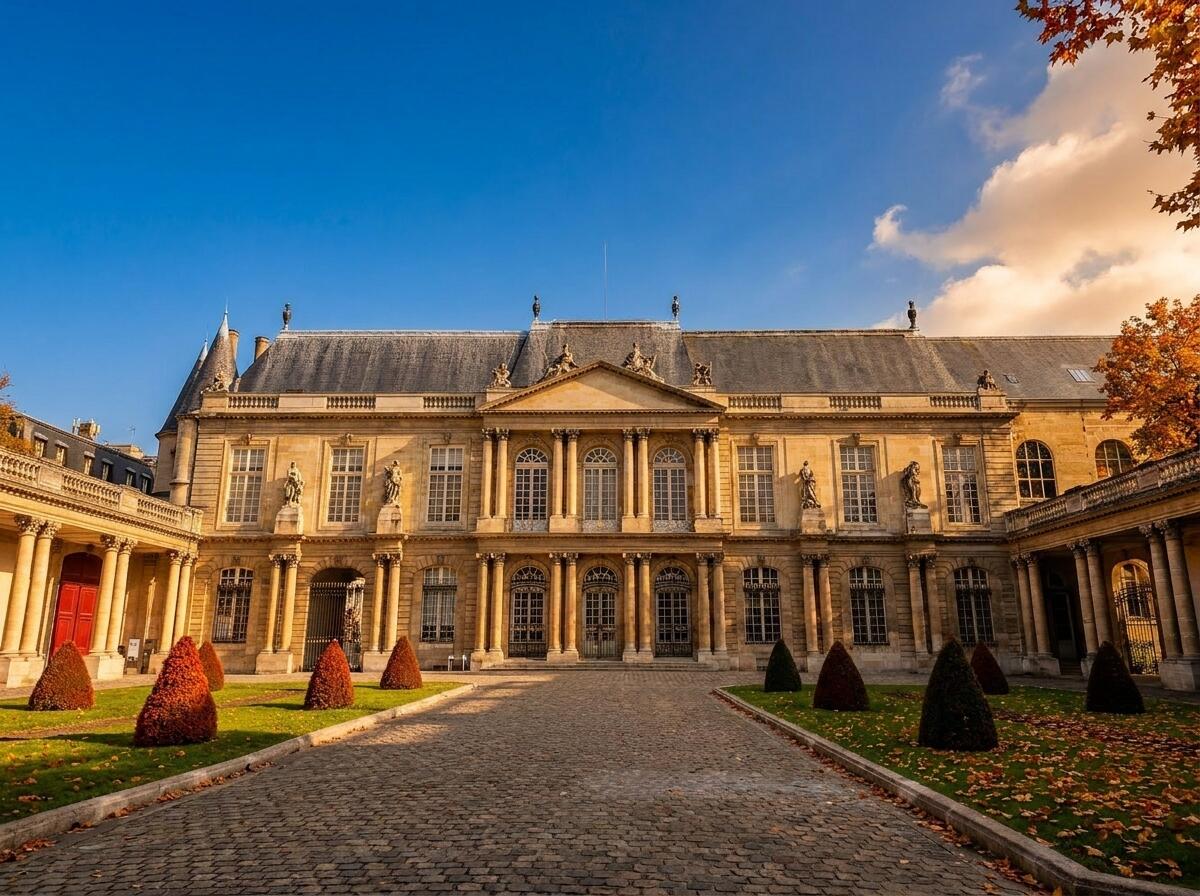
Hôtel de Soubise and the National Archives
One of the grandest mansions in the Marais, and its courtyard is one of the corners I keep coming back to.
The mansion belonged to the Rohan-Soubise family, and today it houses the National Archives of France. The facade on Rue des Francs-Bourgeois opens onto a courtyard lined with a colonnade, and inside, the Rococo apartments of the prince and princess have been preserved. Entry to the courtyard is free, and the displays inside the mansion need a ticket.
More Sights in the 3rd Arrondissement Worth Knowing
These are places I haven’t written a separate article about yet, but if you’re wandering around the arrondissement, it’s worth knowing they’re there:
| Place | Address | Why stop there |
|---|---|---|
| Musée des Arts et Métiers | 60 Rue Réaumur | The French museum of inventions, with the pendulum of Léon Foucault (1819–1868) hanging in a medieval church. Paid |
| Museum of Jewish Art and History (mahJ) | 71 Rue du Temple | In the Hôtel de Saint-Aignan, with one of the most important collections of Judaica and Jewish art in Europe. Paid |
| Rue de Bretagne | Rue de Bretagne | The food street of the northern Marais, with the Marché des Enfants Rouges at its eastern end |
| Carreau du Temple | 4 Rue Eugène Spuller | An iron and glass building from 1863 that was once a clothes market and today hosts events and sports |
| Saint-Denys-du-Saint-Sacrement church | 68 bis Rue de Turenne | A quiet neoclassical church with a painting by Eugène Delacroix (1798–1863) that few bother to see |
| Impasse Berthaud | Impasse Berthaud | A hidden alley next to the Centre Pompidou that was home to a small doll museum, and the alley itself is worth a peek |
Tours and Activities in the 3rd That Might Interest You
Show me more activities in Paris
And if you’re looking for attractions in other parts of the city, my Paris attractions page brings them all together in one place.
My Recommended Restaurants in the 3rd Arrondissement of Paris
This is the arrondissement where I have the most to recommend, and that’s no coincidence. The streets around Rue de Bretagne and Rue des Gravilliers are full of small restaurants where locals eat, and the Asian food here is some of the best in central Paris.
| Restaurant | Type | Address | Why |
|---|---|---|---|
| Ambassade d’Auvergne | Classic French | 22 Rue du Grenier-Saint-Lazare | The place for aligot (a purée of cheese and potatoes) and the country cooking of the Auvergne |
| Café des Musées | Classic French | 49 Rue de Turenne | A small bistro right between the Picasso and the Carnavalet, so it’s the logical stop between the two museums |
| Derrière | Classic French | 69 Rue des Gravilliers | Designed like a Parisian apartment, with rooms where you can eat on a bed or at a ping-pong table |
| Bouillon République | Classic French | 39 Boulevard du Temple | A bouillon in the original style, with basic French dishes at prices that are hard to believe |
| Bouch | Classic French | 10 Rue Réaumur | Modern French cooking on the edge of the 2nd, good for lunch in the middle of a museum day |
| Nessia | Classic French | 6 Rue Charles-François Dupuis | A small, quiet restaurant on a side street, the kind you don’t find by chance |
| Café Charlot | Café | 38 Rue de Bretagne | The terrace of Rue de Bretagne, a great place to sit in the morning and watch the arrondissement wake up |
| Guefen | On my radar | 9 Rue du Vertbois | A young place that got onto my radar and hasn’t left it yet |
| Le Petit Commines | On my radar | 16 Rue Commines | A small neighborhood bistro between the Marais and the Bastille |
| DIMDIMSUM | Asian | 20 Rue du Grenier-Saint-Lazare | Very high-quality dim sum and excellent service. I ate here and loved it, a great place for a light meal |
| Song Heng | Asian | 3 Rue Volta | A tiny room with seven tables and one dish that matters: Vietnamese pho. Lunch only |
| Happy Nouilles | Asian | 95 Rue Beaubourg | Hand-pulled noodles, and you can watch them being made from your table |
| Trois Fois plus de Piment | Asian | 184 Rue Saint-Martin | Sichuan food that is truly spicy, and the name (“Three Times More Chili”) doesn’t promise in vain |
| Yansai 3 | Asian | 88 Rue des Gravilliers | Northern Chinese cooking in an area full of authentic Chinese restaurants |
| Sweetea’s | Asian | 61 Rue des Gravilliers | Bubble tea and Asian desserts, works well with kids |
| Le Hangar | Reader’s pick | 12 Impasse Berthaud | A tip I got from my reader Tamar Bar. In the alley next to the Pompidou, and it has no website. Reservations by phone |
Looking for restaurants in other arrondissements? My page of recommended restaurants is organized by type of cuisine and by arrondissement.
The Food Market of the 3rd Arrondissement of Paris
One city market operates in the 3rd, and it’s not just any market: the Marché des Enfants Rouges opened in 1615 and is the oldest covered market in Paris. The odd name (“Market of the Red Children”) comes from an orphanage that stood nearby, where the children wore red uniforms. Unlike the morning markets of the other arrondissements, this is a covered market open six days a week and into the evening, and in practice it works today as a food hall rather than a place to shop.
| Market | Address | Days and hours | Metro |
|---|---|---|---|
| Marché des Enfants Rouges | 39 Rue de Bretagne | Tuesday to Saturday 8:30 a.m. to 8:30 p.m. (Thursday until 9:30 p.m.), Sunday 8:30 a.m. to 5:00 p.m. Closed on Mondays | Filles du Calvaire |
If you’re in the arrondissement on a Monday, when the market and the museums are closed, the shops on Rue de Bretagne are still open, and you can put together a respectable picnic from a bakery, a cheese shop and a greengrocer. On my markets page you’ll find the recommended markets in the rest of the city.
Walking Itineraries in the 3rd Arrondissement of Paris
This is the arrondissement I’ve written the most walking itineraries about, because the northern Marais is made for walking. I’ve split them in two: those that take place mostly inside the arrondissement, and those that touch it and carry on.
Itineraries in the 3rd Arrondissement
Itineraries Through the 3rd and Other Arrondissements
Want all the itineraries I’ve written, by arrondissement and by theme? My Paris walking itineraries page brings them all together.
The History of the Marais
The reason the Marais looks the way it does is simple: Napoleon III didn’t touch it. While Georges-Eugène Haussmann (1809–1891) tore down and rebuilt much of Paris in the 19th century, the mansions and alleys of the Marais stayed in place and weren’t replaced by wide boulevards. What you see in this arrondissement is eight hundred years of layers: the Knights Templar who drained the marsh that gave the place its name (marais means marsh), the period when it was the royal quarter of Paris, and the Jewish chapter that is still present on Rue des Rosiers to this day.
Read my full article on the history of the Marais
The Next Step in Your Trip
The 3rd is only the northern half of the Marais, and if you head south across Rue des Francs-Bourgeois you’ll reach Place des Vosges, the Centre Pompidou and the Île Saint-Louis. You’ll find all of those on my Marais page, and if you’re interested in the history of the neighborhood from the marshes to the present day, I’ve written about it separately.
And if you want to be ready ahead of time for every scenario, my complete Paris guide brings together everything I’ve learned. Have a wonderful trip, and don’t forget to stop at the market for me.
