

In short
- What’s there: the Sacré-Cœur, the Musée de Montmartre, Dalí Paris, Au Lapin Agile and the cemetery.
- Location: northern Paris, from the hill up to the city gates in the north.
- Good to know: Place du Tertre is packed in the middle of the day, so go before nine or after seven in the evening.
- Food markets: five, among them the Marché Barbès with the cheapest prices in the city.
- Restaurants: five recommendations, all on the side streets and not on the hill.
- Who it suits: anyone looking for art, views and food at sensible prices.
- Walking itineraries: four take place in the arrondissement, and three more pass through it.
The 18th arrondissement is Montmartre, and it’s the only arrondissement in Paris where the name of the neighborhood is better known than the number of the arrondissement itself. What most visitors don’t know is that Montmartre is only the hill, and a whole arrondissement stretches out around it.
So on this page I bring together the attractions, restaurants and markets of the entire arrondissement, including five food markets that no tourist ever reaches. If you’re after the hill itself in depth, I have a separate page dedicated to Montmartre.
Before we set off, let’s talk about what you’ll find here: first the hotels and apartments I recommend in the arrondissement, then the attractions one by one, the five restaurants I send people to, the food markets with their days and hours, and finally the walking itineraries.
Recommended hotels in the 18th arrondissement of Paris
Sleeping in Montmartre is a completely different experience from sleeping in the center, and you should know that most hotels here are on a slope. If you’re not sure what suits you, answer three questions and I’ll pick from my recommendations:
My personal pick
Which hotel in the 18th suits you?
One short question, and I will pick out of the places I already checked and wrote about on the site the ones that fit the trip you are planning.
One moment, I am going over my recommendations to find what fits you…
Prefer to go through all the recommendations yourself, with photos and details on each hotel? See my page of recommended hotels in the 18th.
Recommended apartments in the 18th arrondissement of Paris
Montmartre is one of the best places in Paris to rent an apartment, because the neighborhood stays a residential neighborhood even after the tourists come down the hill. Here too, you can let me choose:
My personal pick
Which apartment in the 18th suits you?
One question about the area, and I will filter the apartments I checked and wrote about on the site. The apartments I recommend directly get booked very fast, so I added excellent Booking.com apartments that I hand-picked for my readers.
One moment, I am going over my recommendations to find what fits you…
Want to go through all the apartments I recommend, with photos and details? See my page of recommended apartments in the 18th.
Attractions and museums in the 18th arrondissement of Paris
These are the sites I recommend in the 18th, and two of them are free.
-
Free entry

The Sacré-Cœur
The church on the hill, at the highest natural point in Paris.
The church was built after the defeat in the war of 1870 and after the Commune, and from the start it was a political statement: atonement for what Catholics saw as the sins of France. The stone it’s built from whitens by itself when it rains, which is why the church has stayed white. The climb to the dome costs extra and is by stairs only, and from up there you see all of Paris.
-
My top pick
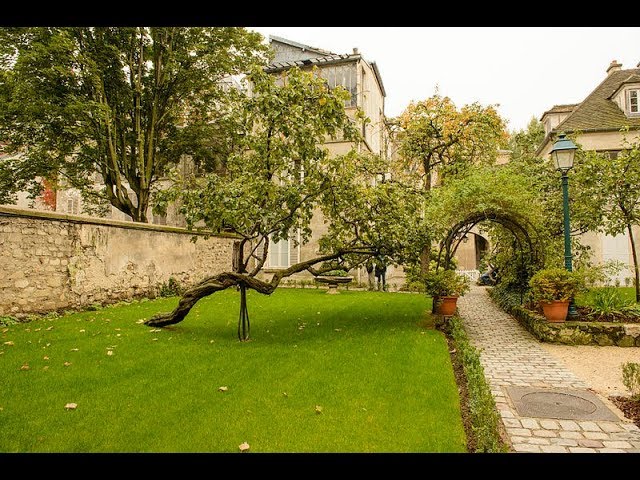
Musée de Montmartre
The old house on the hill, and the gardens behind it that Renoir painted.
Pierre-Auguste Renoir (1841-1919) lived in this house, and so did Suzanne Valadon (1865-1938) and her son Maurice Utrillo (1883-1955). What makes this museum special in my eyes isn’t the collection but the gardens: restored gardens where Renoir painted, with a swing and a view of the Montmartre vineyard. A completely quiet spot twenty meters from the bustle.
-
Free entry

Montmartre Cemetery
The cemetery under the bridge, and the resting place of some of the great names of Paris.
It’s the third largest cemetery inside Paris after Père Lachaise and Montparnasse, and it was laid out in an old quarry below street level. The Rue Caulaincourt bridge runs over it, so people walking up to Montmartre pass right above it without noticing. Edgar Degas (1834-1917), Vaslav Nijinsky (1889-1950), Stendhal (1783-1842) and Dalida (1933-1987) are buried here, and so are the Goncourt brothers, while Émile Zola (1840-1902) was buried here before he was moved to the Panthéon in 1908. I wrote about both separately.
-
Works with kids

Dalí Paris
A collection of sculptures and engravings by Dalí, minutes from Place du Tertre.
The museum focuses on the sculptures and engravings of Salvador Dalí (1904-1989) rather than his paintings, and that is exactly what makes it interesting for kids: the melting clocks, the lips-shaped sofa and the elephant on long legs. The museum is small and the visit takes about an hour, and it’s a few minutes from Place du Tertre and the Sacré-Cœur.
-
Historic cabaret
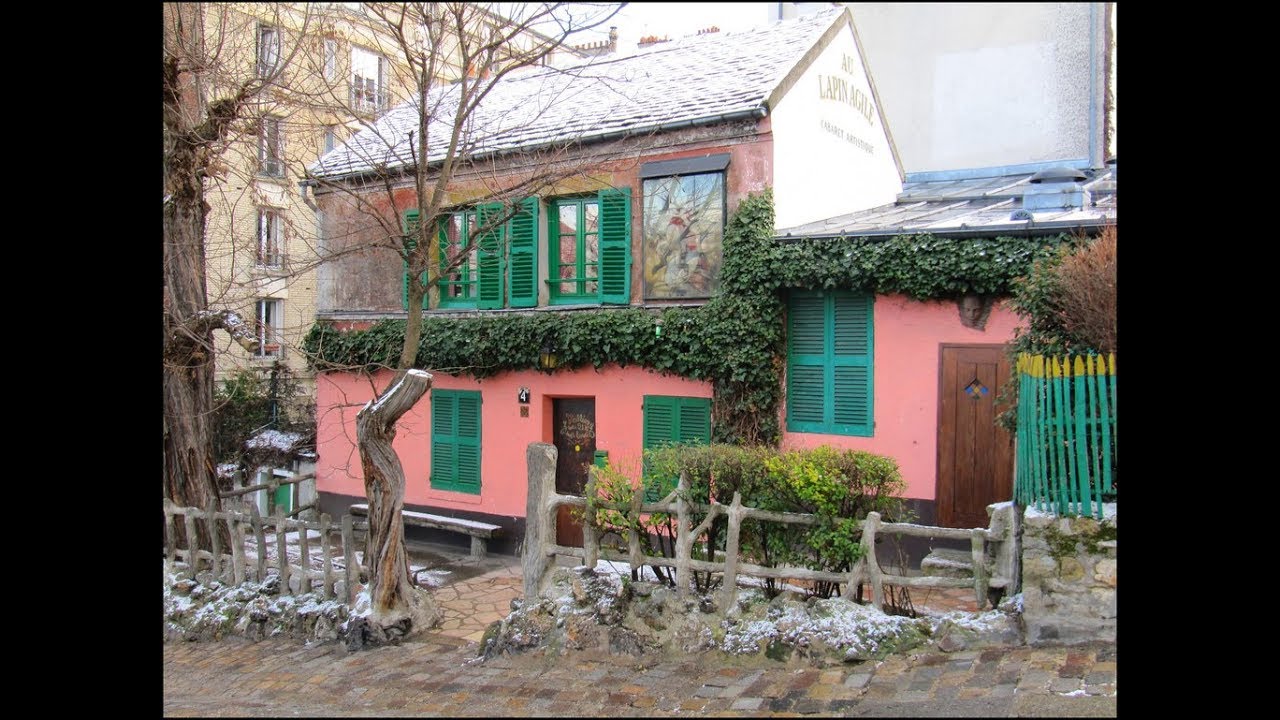
Au Lapin Agile
The oldest cabaret in Paris still in business, with no microphones and no photos.
The place has been around since the 1860s, and its regulars included Pablo Picasso (1881-1973), Guillaume Apollinaire (1880-1918), Paul Verlaine (1844-1896) and Amedeo Modigliani (1884-1920). Picasso gave the owner a painting in exchange for meals, and decades later it sold for a huge sum. The show is French songs with a piano in a tiny room, and the audience joins in. If you don’t understand French it still works, just less.
More attractions in the 18th worth knowing
These are places I haven’t written a separate article about yet, but if you’re wandering around the arrondissement, it’s worth knowing they’re there:
| The place | Address | Why stop there |
|---|---|---|
| Place du Tertre | Place du Tertre | The painters’ square of Montmartre. Best before nine in the morning or after seven in the evening |
| The Wall of Love (Le Mur des Je t’aime) | Square Jehan Rictus, place des Abbesses | A wall with “I love you” written in some 250 languages |
| Moulin de la Galette | 83 rue Lepic | One of the two windmills left out of some thirty, and Renoir painted its dance hall |
| Moulin Rouge | 82 boulevard de Clichy | The most famous cabaret in the world, in the same spot since 1889. Details on my shows and cabarets page |
| The Montmartre vineyard (Clos Montmartre) | Corner of rue des Saules and rue Saint-Vincent | The best-known vineyard in Paris, and the October harvest is a whole neighborhood festival |
| Saint-Ouen flea market | Porte de Clignancourt | A huge antiques and secondhand market, Saturday to Monday, just over the city border |
Tours and activities in the 18th that might interest you
Show me more activities in Paris
And if you’re looking for attractions in other parts of the city, my Paris attractions page brings them all together in one place.
My recommended restaurants in the 18th arrondissement of Paris
Montmartre has lots of restaurants aimed at tourists who climb the hill once in their lives, so my list sits on the side streets instead:
| The restaurant | Type | Address | Why |
|---|---|---|---|
| L’Atelier Ramey | French classic | 23 Rue Ramey | On the eastern slope of the hill, the side where people actually live |
| Adraba | Israeli chef | 40 Rue Véron | Israeli cooking in Montmartre, on a side street near Abbesses |
| Aléa | On my radar | 39 Rue Lamarck | A young place on Rue Lamarck that has caught my eye |
| Le Boréal | On my radar | 39 Rue Montcalm | North of the hill, in an area with no tourists at all |
| Le petit Moulin | French classic | 17 Rue Tholozé | On the street of the Moulin de la Galette. I couldn’t find a working official website |
Looking for restaurants in other arrondissements? My page of recommended restaurants is organized by type of cuisine and by arrondissement.
The food markets of the 18th arrondissement of Paris
The arrondissement has five food markets, and none of them is on the hill itself. The most interesting one in my eyes is the Marché Barbès, which runs under the elevated metro line and has the cheapest prices in the city. The hours below are from the City of Paris website, and for the covered market from the town hall of the 18th.
| The market | Address | Days and hours | Metro |
|---|---|---|---|
| Marché Barbès | Boulevard de la Chapelle, opposite the Lariboisière hospital | Wednesday 7:00 to 13:30, Saturday 7:00 to 14:30 | Barbès-Rochechouart |
| Marché Ornano | Boulevard Ornano, between rue du Mont-Cenis and rue Ordener | Tuesday and Friday 7:00 to 13:30, Sunday 7:00 to 14:30 | Simplon |
| Marché Ordener | Rue Ordener, between rue Montcalm and rue Championnet | Wednesday 7:30 to 13:30, Saturday 7:00 to 14:30 | Jules Joffrin |
| Marché Ney | Boulevard Ney, between rue Jean Varenne and rue Camille Flammarion | Thursday 7:00 to 13:30, Sunday 7:00 to 14:30 | Porte de Clignancourt |
| Marché couvert de l’Olive | 10 rue de l’Olive | Tuesday to Saturday 9:00 to 20:00, Sunday 8:30 to 13:30. Closed Monday | Marx Dormoy |
Besides these five, the Goutte d’Or neighborhood also has the Marché Dejean, an African street market with products you won’t see in the rest of the city. I couldn’t find official hours for it, so it isn’t in the table. On my markets page you’ll find the best markets in the rest of the city.
Walking itineraries in the 18th arrondissement of Paris
This is one of the arrondissements with the most itineraries on the site. I split them in two: those that take place entirely inside the arrondissement, and those that pass through it and carry on.
Itineraries that take place in the 18th
Itineraries that pass through the 18th and other arrondissements
Want all the itineraries I’ve written, by arrondissement and by theme? My Paris walking itineraries page brings them all together.
The history of Montmartre
The name Montmartre is usually explained as the mount of the martyrs, after Saint Denis, who according to tradition was beheaded here and kept walking with his head in his hands. Then came an abbey whose abbess, the story goes, became the mistress of a king of France, and after that the Montmartre of the Commune, of cheap wine and of la bohème. Until 1860 it wasn’t part of Paris at all but an independent village with windmills on the hill.
Read my full article on the history of Montmartre
The next step in your trip
If you want the hill in depth, with dozens of tips and stories, my Montmartre page brings it all together in one place. To the south waits the 9th, with the Opéra and the covered passages, and to the west Batignolles and the 17th.
And if you want to be ready in advance for every scenario, my complete Paris guide gathers everything I’ve learned for you. Have an amazing trip, and don’t forget to come down from the hill and wander around the arrondissement for me.
