
In short
- What’s there: A 12th-century church, cloister, chapter house, dormitory and forge, plus gardens awarded the “remarkable garden” label.
- Status: A UNESCO World Heritage Site since 1981, and a protected heritage site in France since the mid-19th century.
- Getting there: TGV train from Paris to Montbard station in about an hour and six minutes, then a taxi for about five kilometers.
- Hours: April 3 to November 1, 10:00 a.m. to 6:00 p.m.; the rest of the year, 10:00 a.m. to noon and 2:00 to 5:00 p.m.
- Tickets: 11.50 euros for a self-guided visit per the official price list, plus three euros for a guided tour.
- How long: Between half an hour and three hours at the abbey, and half a day with a walk in the valley.
- When to go: October, for the fall colors in the valley and the small crowds before the season closes on November 1.
Until the moment the road dove down into the valley, I couldn’t understand why anyone would choose to build a monastery right there. The road out of Montbard climbs between open fields, forks, narrows, and then descends. At the bottom, tucked between wooded hills that hide it from every direction, sits Abbaye de Fontenay. If you don’t already know it’s there, you won’t see it until you’re inside.
I got there in October 2026, during a trip through Burgundy (Bourgogne), in the afternoon, when the light is low and turns the stone golden. In October the leaves in the vallon (a narrow, wooded valley) change color while the lawns of the gardens are still completely green, and that combination is exactly why fall is, in my opinion, the right season to come. But what caught me wasn’t the color. It was the silence.
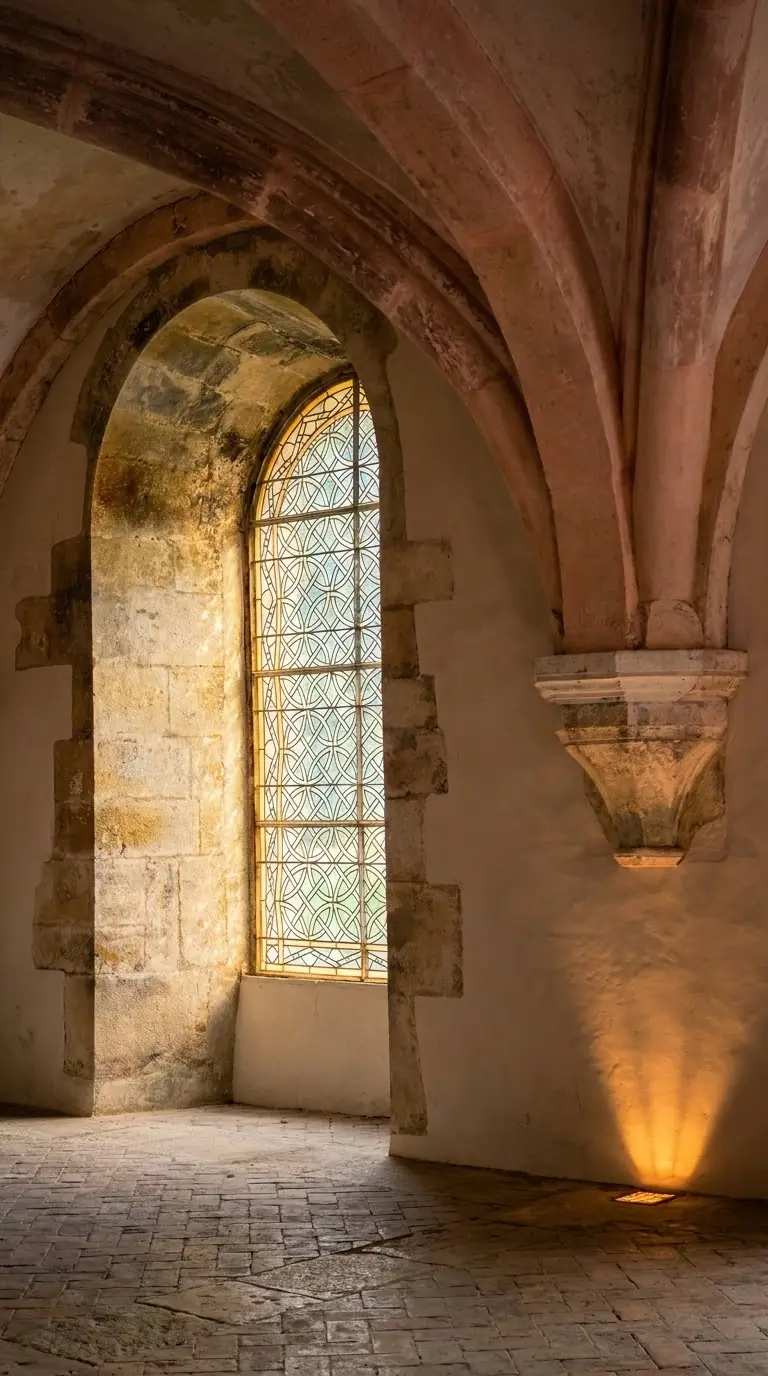
I arrived at Fontenay after visiting Château de Bussy-Rabutin, and the pairing works wonderfully for two reasons. The practical one: the abbey is about twenty minutes from the château, so it’s easy to visit both in the same day. The other is the contrast: Fontenay is the perfect opposite of a palace built by a womanizer exiled from court (who spent his years in exile decorating the walls). At Bussy-Rabutin the walls are covered in portraits and paintings and the rooms are full of art objects, while at Fontenay the walls are nearly bare, and the beauty is quiet, almost modern in its minimalism.
Fontenay is the oldest fully preserved Cistercian monastery in the world, according to its owners, and in 1981 it was added to the UNESCO World Heritage list, among the first French sites to receive that designation. The church, the cloister, the dormitory and the forge have all stood in place since the 12th century. Only the refectory is missing, and there’s a story behind that too. The strange part is the very reason everything survived: this abbey only made it through the centuries because it was turned into a paper mill.
In this article you’ll find everything you need for a visit to this remarkable place (hours, how to get there even without a car, tickets, what you absolutely have to see, and so on), and then we’ll get to the heart of it: nine hundred years of history, from the day Bernard de Clairvaux’s (c. 1090-1153) uncle gave his nephew a plot of marshland, to the moment it became the property of the family that still owns it today.
Practical information: hours, getting there, tickets and where to stay
Days and opening hours
Fontenay is open every day of the year, which is by no means a given in this part of the country. During the tourist season, from April 3 to November 1, the hours are 10:00 a.m. to 6:00 p.m. straight through, and that’s the window when you can either visit on your own or join a guided tour. The rest of the year, from November 2 to April 2, the abbey is open 10:00 a.m. to noon and then 2:00 to 5:00 p.m., which means there’s a two-hour lunch closure, and during those months the only options are a self-guided visit or a private guided tour booked in advance.
Pay attention to that cutoff date. A visit on November 2 looks a lot like a visit on November 1, but in practice it cuts three hours off your day and closes the abbey right when the light is at its best. The regular guided tours in French run every hour during the high season, at 10:00, 11:00, noon, 1:45 p.m., 2:45 p.m. and 4:00 p.m., no reservation needed, and each tour can take up to fifty people. There’s no audio guide at Fontenay, so if you don’t read French, it’s worth showing up with a bit of background (this article, for instance, and I say that without a trace of modesty).
Getting there by train, and the last kilometer
This is one of those rare cases where a World Heritage site in the middle of nowhere is remarkably easy to reach by public transportation. Montbard’s train station receives direct TGV trains from Paris’s Gare de Lyon, and the ride takes about an hour and six minutes. The abbey is about five kilometers from the station. In other words, you can leave Paris in the morning, visit Fontenay at a relaxed pace, and be back by evening, which makes it one of the most convenient heritage sites for a day trip from Paris.
It’s worth booking your train tickets ahead of time through Omio, which gathers all the train operators onto one screen and saves you the hassle of dealing with the French site directly. I recommend booking early, since TGV prices rise the closer you get to your travel date.
That leaves the last kilometer, and here things get a little tricky. There’s no bus line from the station to the abbey, but the official website publishes a list of five local taxi companies that work with the Montbard tourist office, noting that a ride from the station to the abbey or back runs between 18 and 24 euros. Here are the numbers listed on the site:
- Taxi Potet: 06 25 35 00 58
- Montbard Taxi: 06 08 82 20 61
- Allo Taxi: 06 08 26 61 55
- Taxi de l’Ermitage: 06 08 99 32 13
- Taxi Galozzo: 06 14 72 42 94
Another option is to rent a bicycle at the Montbard tourist office by calling 03 80 92 53 81. The abbey even holds an “Accueil Vélo” label for visitors who arrive on two wheels.
Remember this: book your taxi for the return trip before you go into the abbey. Fontenay sits down in a valley with no drop-in shuttle service, and there’s no café on site where you can wait an hour.
Getting there by car
In my opinion, this is the most convenient way to get there, and since I was already doing a loop trip around Burgundy, it’s also the way I chose. By car, it’s also easy to combine a visit with Château de Bussy-Rabutin, which is about twenty minutes from the abbey.
Take the A6 highway and exit at Bierre-lès-Semur, then continue on the D980 toward Montbard. It’s about 250 kilometers from Paris, and about 80 kilometers from Dijon. Parking on site is free, including for buses, which is rare enough in France to be worth mentioning.
A car is not a luxury in this area, it’s the difference between seeing one site a day and seeing three, since the distances between the gems of the Auxois are remarkably small. If you’re looking for more car rental options, I recommend checking out my toolkit, where you’ll find a few more recommended car rental sites.
Tickets, and what’s included
According to the price list published on the official website, a self-guided ticket costs 11.50 euros for adults, 9.50 euros for students, job seekers and people with disabilities, and 8.50 euros for children under 12, who also get a booklet of riddles (ages 7 to 12). Admission is free under age six. Adding three euros per adult gets you into the standard guided tour, and one euro for a child.
What I liked about Fontenay is that the ticket covers everything: the abbey, the gardens and the lapidary museum (musée lapidaire), a collection of sculpture fragments from the site. The only things charged separately are special events like concerts or candlelit evenings. There’s no need to book ahead for an individual visit, and according to the site, visitor numbers actually drop in the late afternoon in summer. You can also leave the grounds and come back the same day on the same ticket, which is handy if you decide to have lunch in Montbard and return to the gardens when the light is at its best.
Where to stay: Semur-en-Auxois
There’s no hotel at Fontenay itself. The obvious home base is Montbard, six kilometers away, but I chose differently, and I’m glad I did.
I stayed at Hotel Relais De La Cote D’or in Semur-en-Auxois, twenty-two kilometers from the abbey, and in my opinion that’s the right choice if you have a car. Semur is a fortified town perched on a ridge of pink granite within a bend of the Armançon river, with medieval gate towers, cobbled lanes, a fortress with four surviving round towers, and the Collégiale Notre-Dame, a gem of Burgundian Gothic architecture built between the 13th and 15th centuries. After a full day of Cistercian austerity, dinner in a town like this is exactly the correction you need.
What not to miss at Fontenay
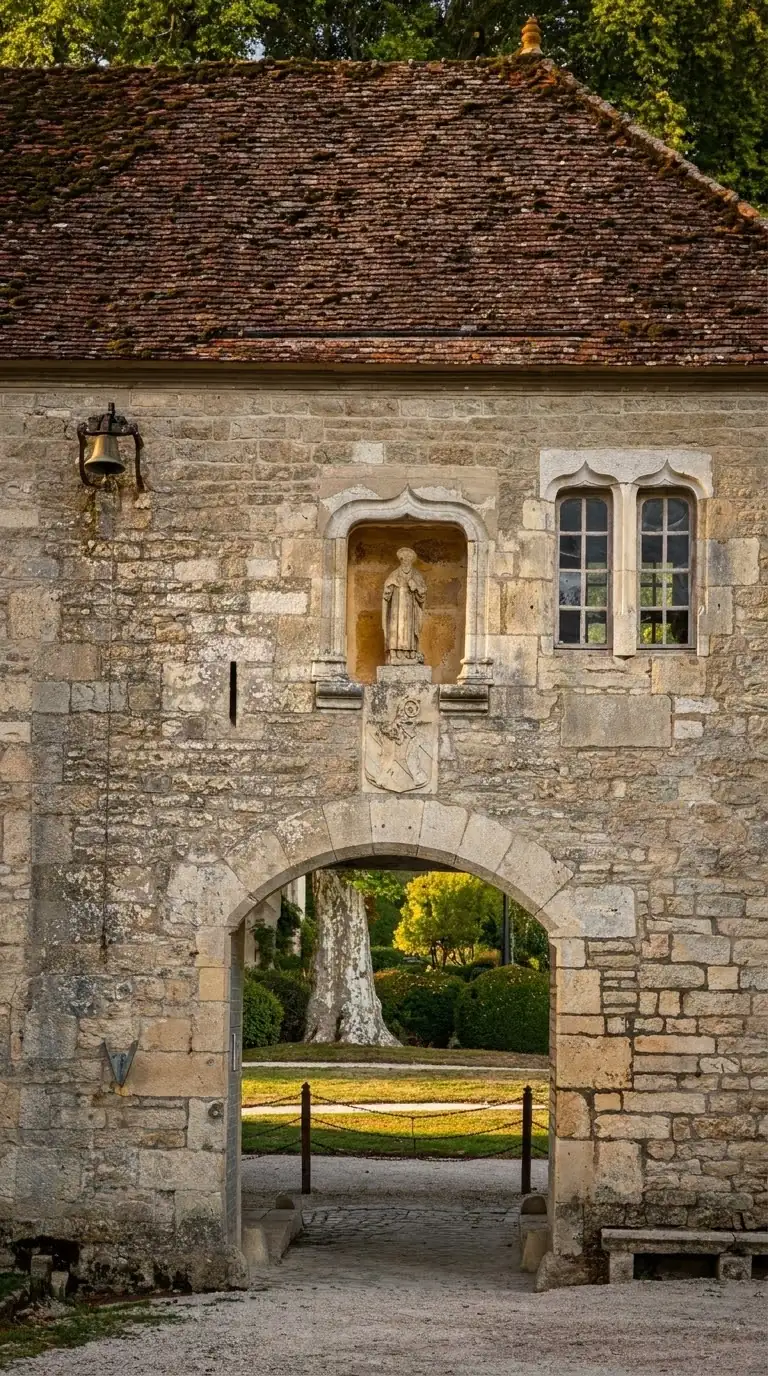
The visit begins at the gatehouse (porterie), the building you still pass through today exactly as visitors did in the 12th century, with an upper floor rebuilt in the 15th century. Look to the right of the stairs: there’s a small niche there, with a hole in the wall through which the gatekeeper’s dog used to stick its head.
The long building next to the gatehouse, which today houses the shop and the stone museum, was built in the 13th century and served as the guests’ chapel. Anyone who wasn’t a monk was not allowed to enter the abbey’s enclosure, so visitors prayed in their own chapel, outside it. At the north end of the building was the bakery, and its old cylindrical chimney still stands there today.
The church
The Cistercian church of Fontenay is a model of simple yet elegant construction. It is sixty-six meters long, laid out as a Latin cross, with a completely bare facade, column capitals carved with plain leaves, and only a single row of windows along the side walls. There’s no stained glass, no statues, no gold. Visitors arriving at Fontenay after touring the region’s cathedrals might think for a second that something is missing. After half a minute they realize that’s exactly the point: everything here was designed so that nothing would distract the eye during prayer.
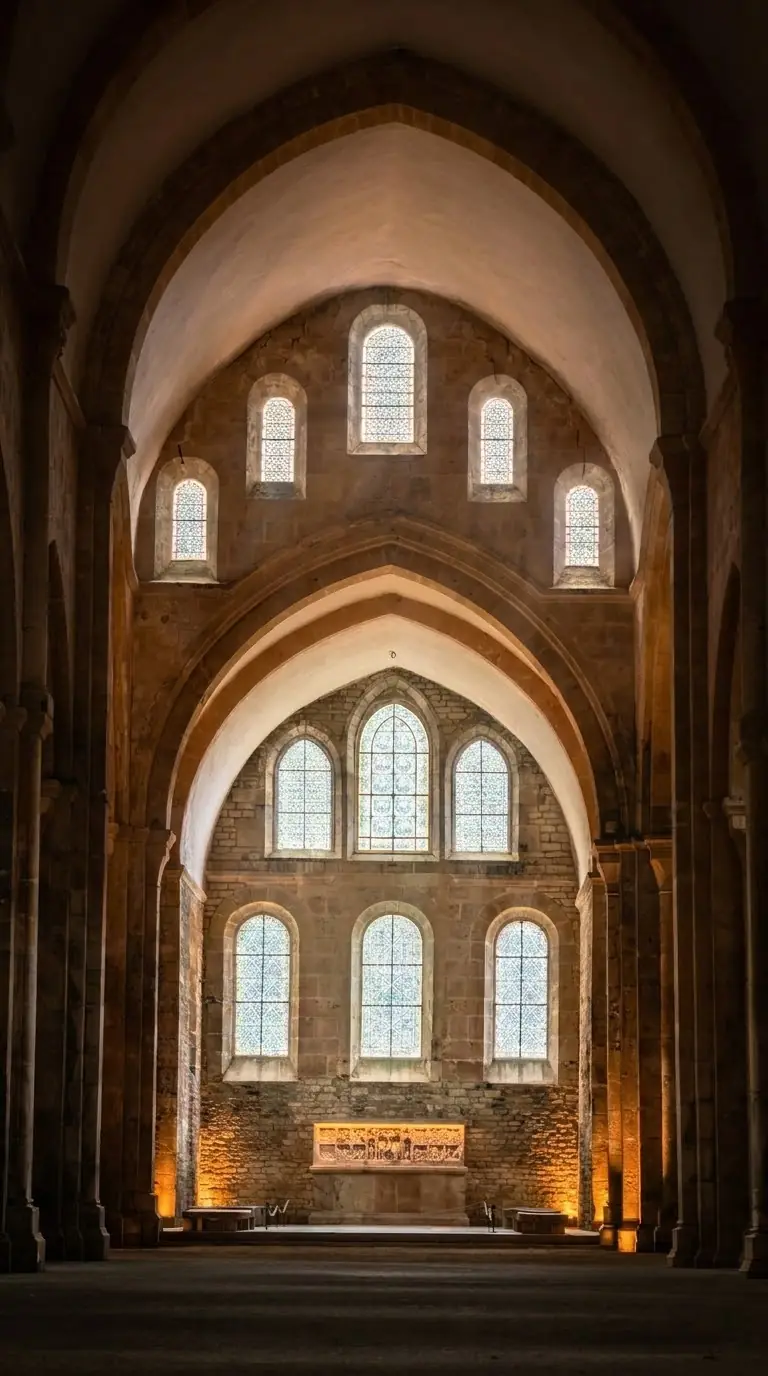
What you do get here is light. In a space with no decoration, the difference between morning and afternoon is the difference between two entirely different buildings, and the play of shadows on the stone changes with the hour and the season. Be sure to look down at the choir floor, covered with glazed ceramic tiles from the 12th and 13th centuries, and at the carved altarpiece from the 13th century.
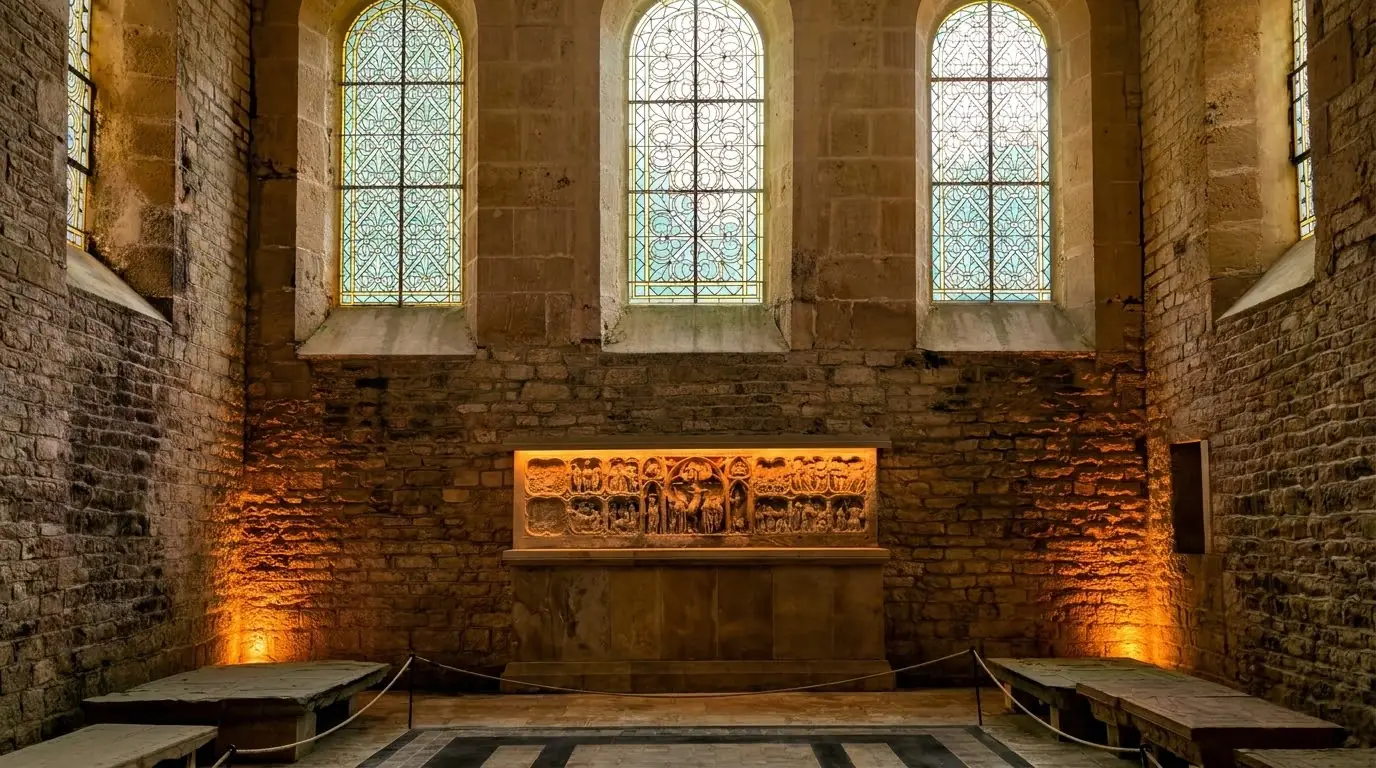
Also look for the statue of the Virgin and Child from the 13th century. For many years the statue stood in the cemetery of the nearby village of Touillon, exposed to the weather, and the child in Mary’s arms holds a dove in his hand. Behind the statue is the “door of the dead” (porte des morts), which opened onto the monks’ cemetery. There’s no furniture at all in the nave, because the Cistercians lived in poverty, and the original choir stalls were destroyed by dampness.
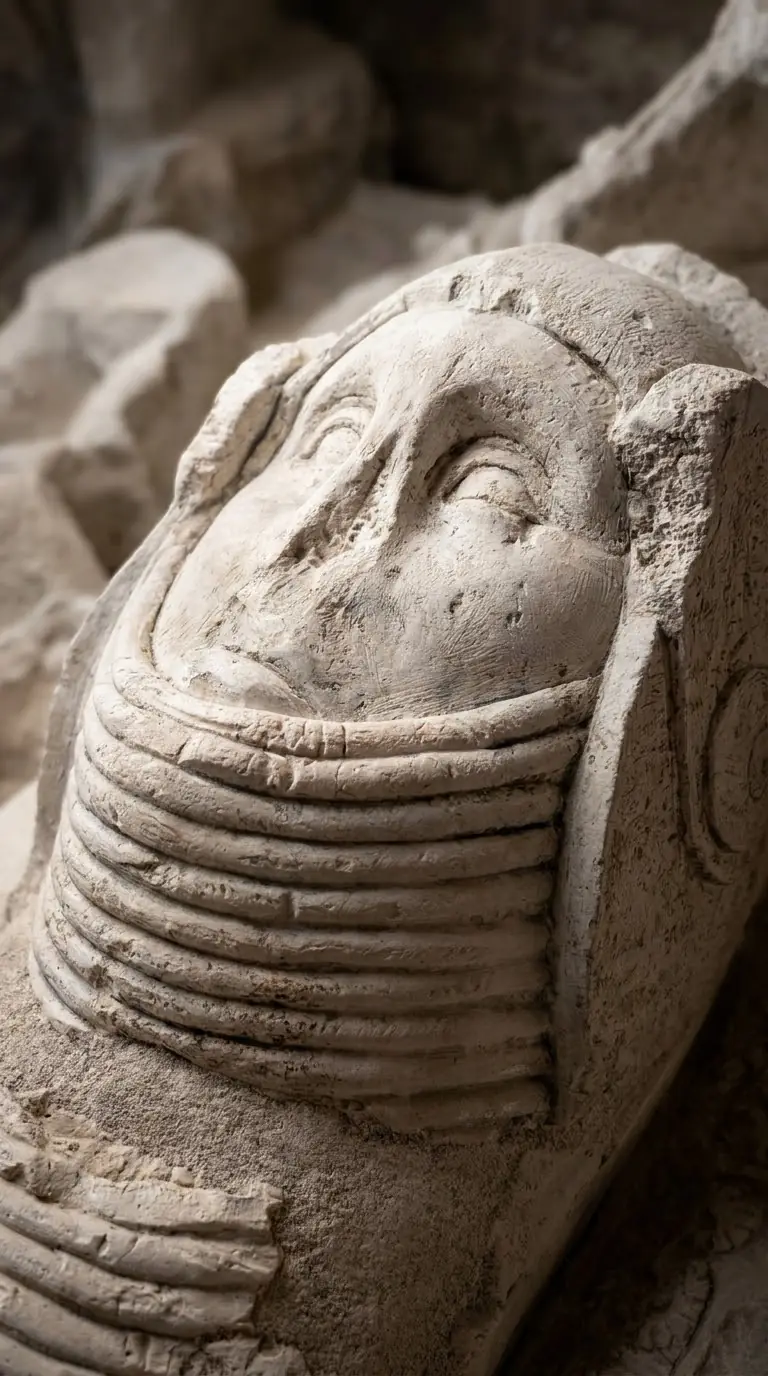
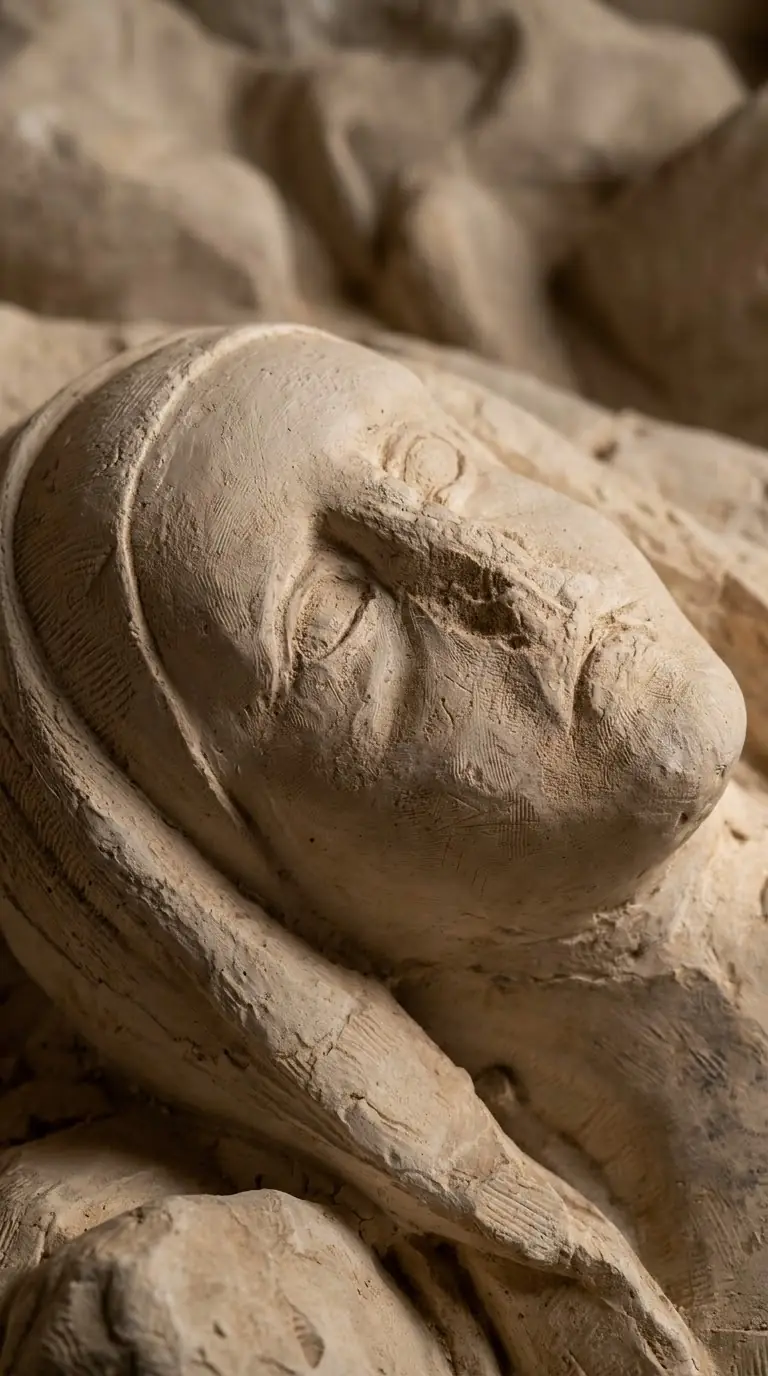
Also take a look at the collection of tombstones, including that of the English bishop who financed the church. Especially striking is the tomb of the knight Mello d’Époisses, a member of a Burgundian noble family, and his wife, both carved on it as reclining statues (gisants). Notice the folded veil that wraps around the woman’s chin and neck.
The cloister, the chapter house, and the monks’ hall
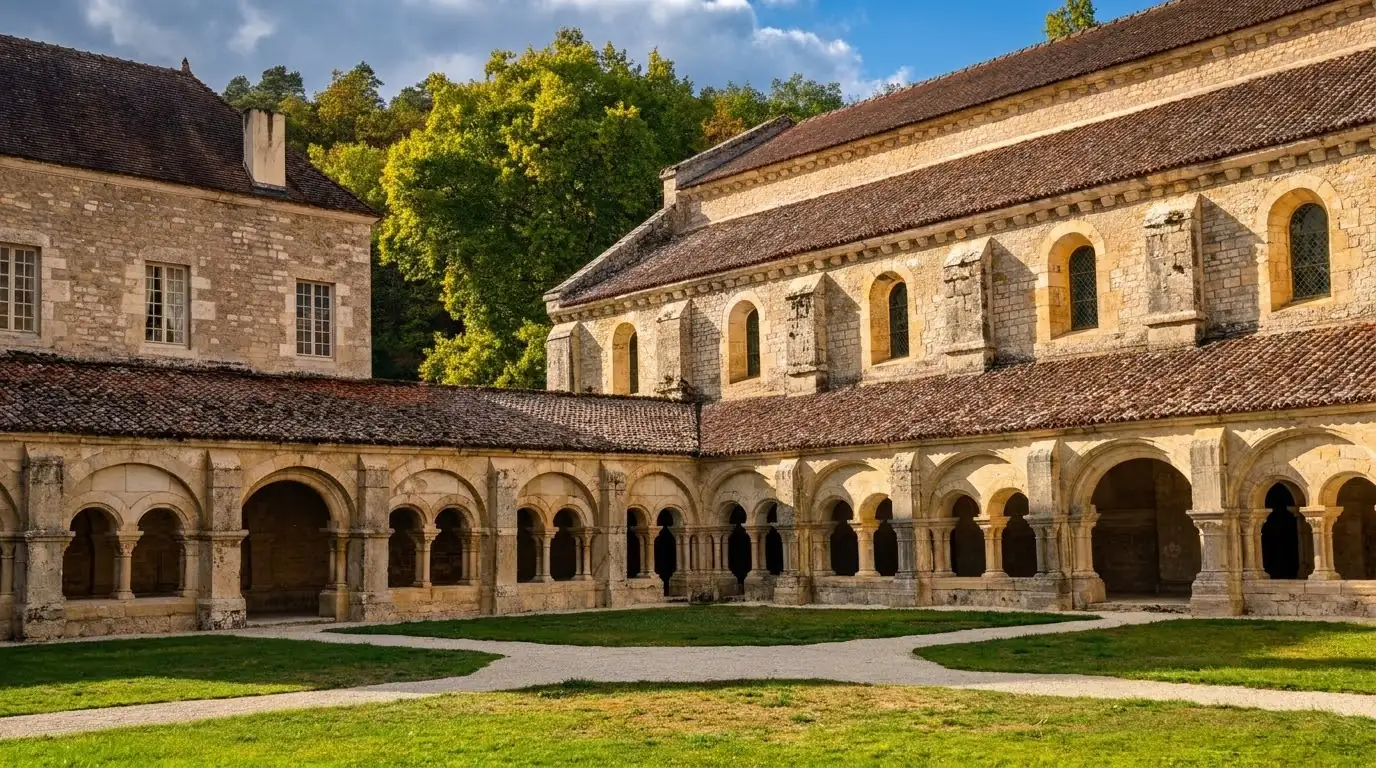
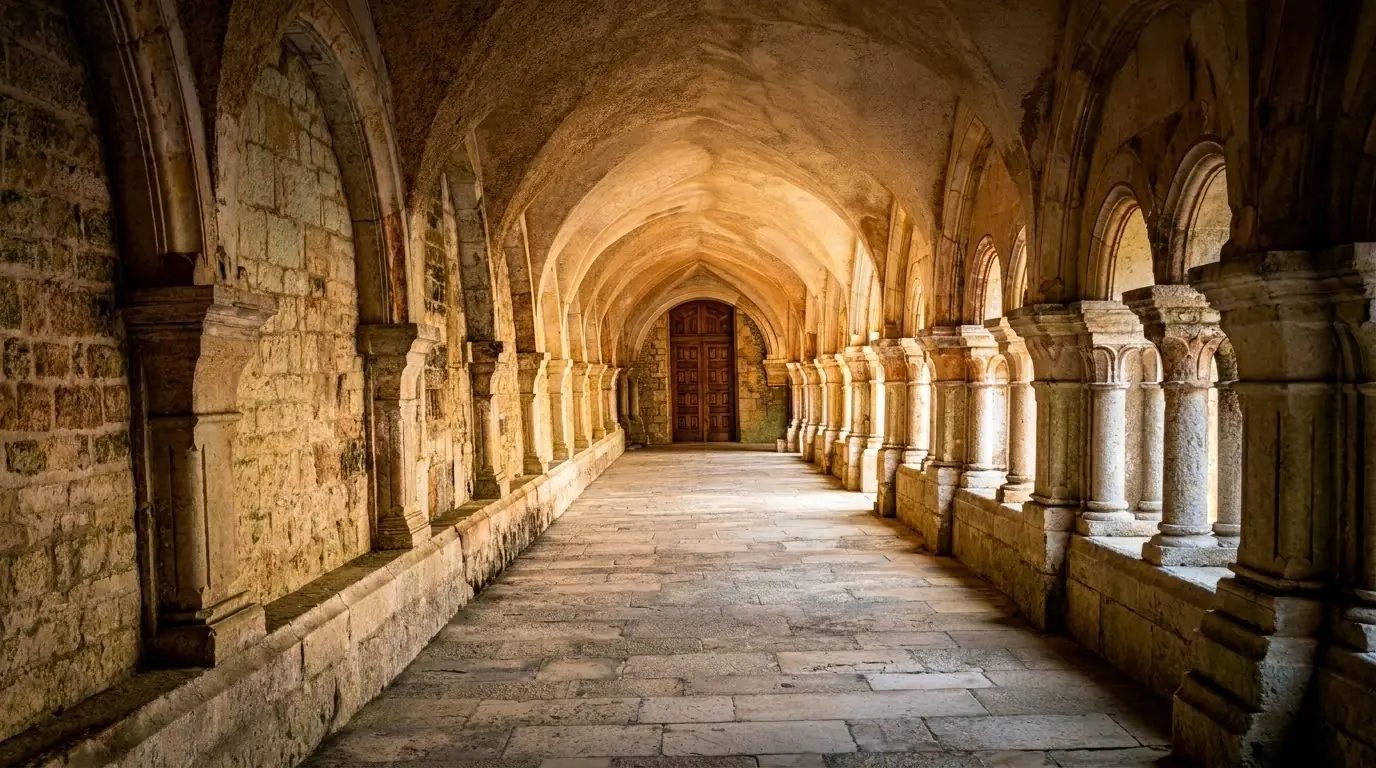
The cloister (cloître), the courtyard surrounded by four covered walkways, is in my opinion the strongest part of Fontenay, and it’s no coincidence that it has survived completely intact. It’s a square measuring thirty-six by thirty-eight meters, with eight openings on each side, and capitals that are each different from the others even though they all stick to a plant motif. The monks read here, walked here in processions, and the foot-washing ceremony took place here. During work carried out in 1911, workers discovered the armarium in the east walkway, a cupboard carved into the thickness of the wall where the prayer books used in daily services were kept. Also look at the paving of the south walkway, the oldest in the cloister, and at its old doorway, which once led to the refectory that the monks demolished in the 18th century.
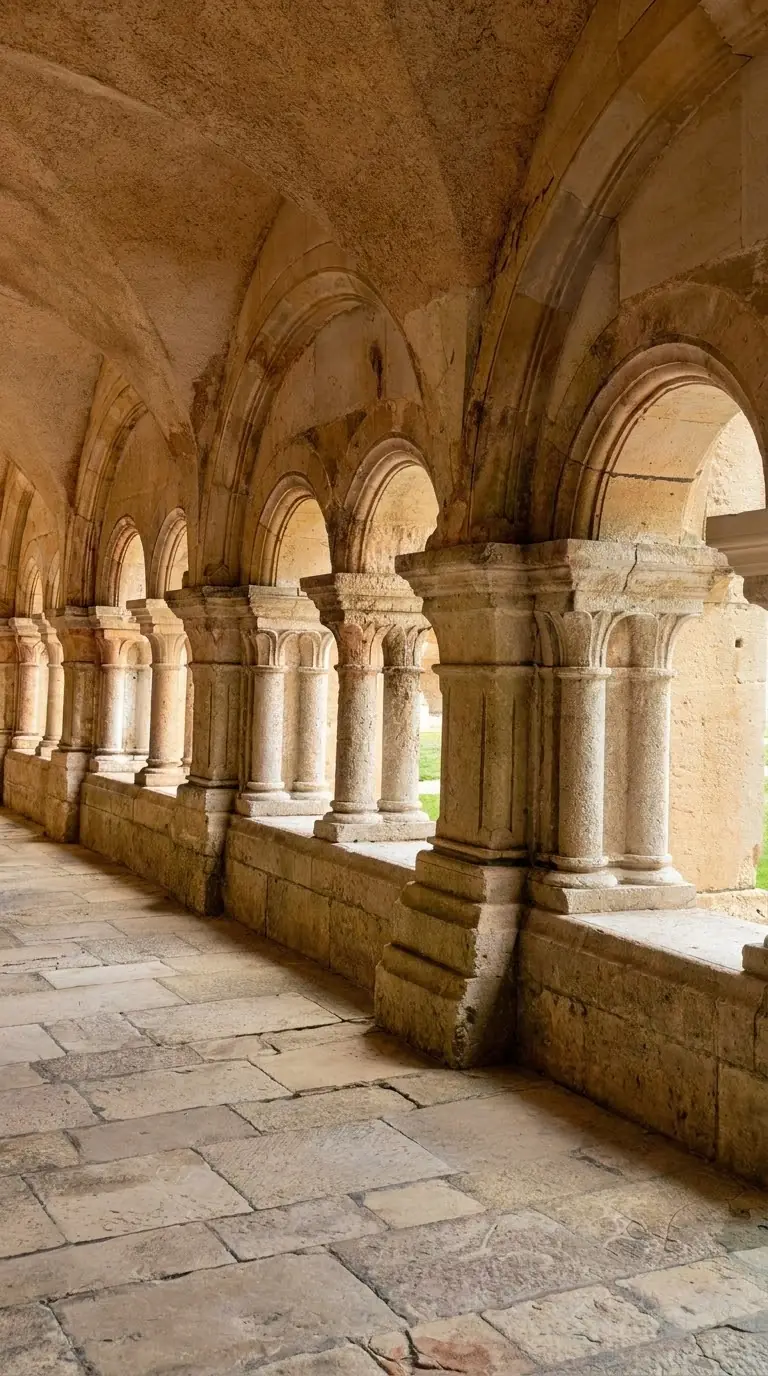
From the east walkway you enter the chapter house (salle capitulaire), the room where the community gathered every morning, listened to a chapter from the Rule of Saint Benedict (Règle de saint Benoît), and made decisions. Originally it was a perfect square with three openings, but the third was lost in a fire in the 15th century. Beyond it is the monks’ hall (salle des moines), a space thirty meters long covered by twelve rib vaults, part of which was probably where the monks who copied manuscripts did their work. By the way, the stone used for the main body of the buildings came from a nearby quarry, but the capitals and columns were carved from yellow and pink stone from the Massangis quarry, and the difference is visible to the eye.
The warming room and the dormitory
The warming room (chauffoir) is a small room that was one of the only places in the abbey where fire was allowed to be lit in winter, along with the kitchen and the infirmary. It’s worth understanding why that mattered: the temperature in the Fontenay valley regularly drops to twenty degrees below zero. From the cloister courtyard you can see two 12th-century chimney tops on the roof, and surprisingly, they’re designed in quite an elaborate style. The niches on either side of the chimneys were apparently meant to hold the inkwells of the monks who copied manuscripts, so the ink wouldn’t freeze. In the corner of the room is a door leading to a staircase that goes up to the dormitory, so the warm air rose and kept a relatively bearable temperature in both the dormitory and the adjacent monks’ hall.
From the ground floor, stairs lead up to the dormitory (dortoir), which takes up the entire upper floor of the east wing. The roof above it is a lattice of oak beams from the 15th century, which looks exactly like the hull of an upside-down ship, and it was put up after the original roof burned down. The monks slept here fully dressed, on simple straw mattresses, and the Rule required that everyone sleep in the same space. At the north end there’s a staircase that leads straight down to the church, because night prayer took place around 2:30 a.m. Standing there, it’s worth trying to picture it: dozens of men going down these stairs in the dark, in complete silence, at two thirty in the morning. What do you think that did to a person after forty years on the same schedule? Toward the end of the Middle Ages, private cells were installed here, and that’s actually the first sign that discipline had begun to loosen.
The forge and the hydraulic hammer
At the south end of the complex stands a building more than fifty meters long, supported by a row of heavy buttresses, built at the end of the 12th century. This is the forge, and archaeologists who have studied it along with the iron mines nearby consider it one of the oldest surviving metallurgical works in Europe. The monks mined iron from the hill above the abbey, diverted the Fontenay stream along the forge’s wall, and the power generated by the flow drove wheels and hammers. Selling the finished product was a major source of income for the abbey. It’s worth noting that not all researchers accept this identification, and some read the building as a brewery or a bakery instead.
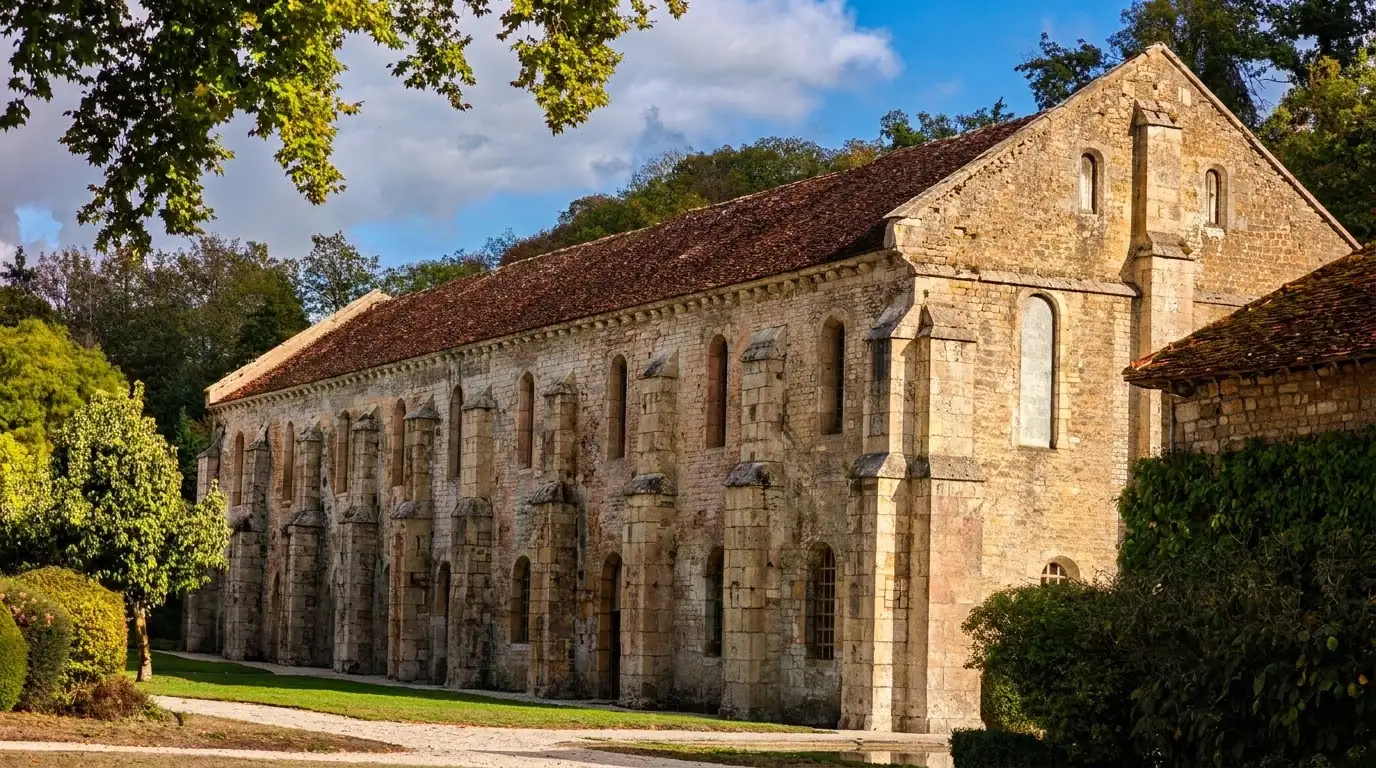
Inside the building stands a hydraulic hammer rebuilt in 2008, as part of a European project involving seven technical schools. It’s a working replica: a water wheel that harnesses the hydraulic system the monks built drives a hammer that refined iron blooms produced by low shaft furnaces (bas fourneaux, primitive smelting furnaces). This was the process that preceded the invention of blast furnaces, and it boosted output enormously. Anyone who thought Cistercian monks spent their days doing nothing but copying hymns should stand next to this hammer while it’s running.
The gardens and the valley
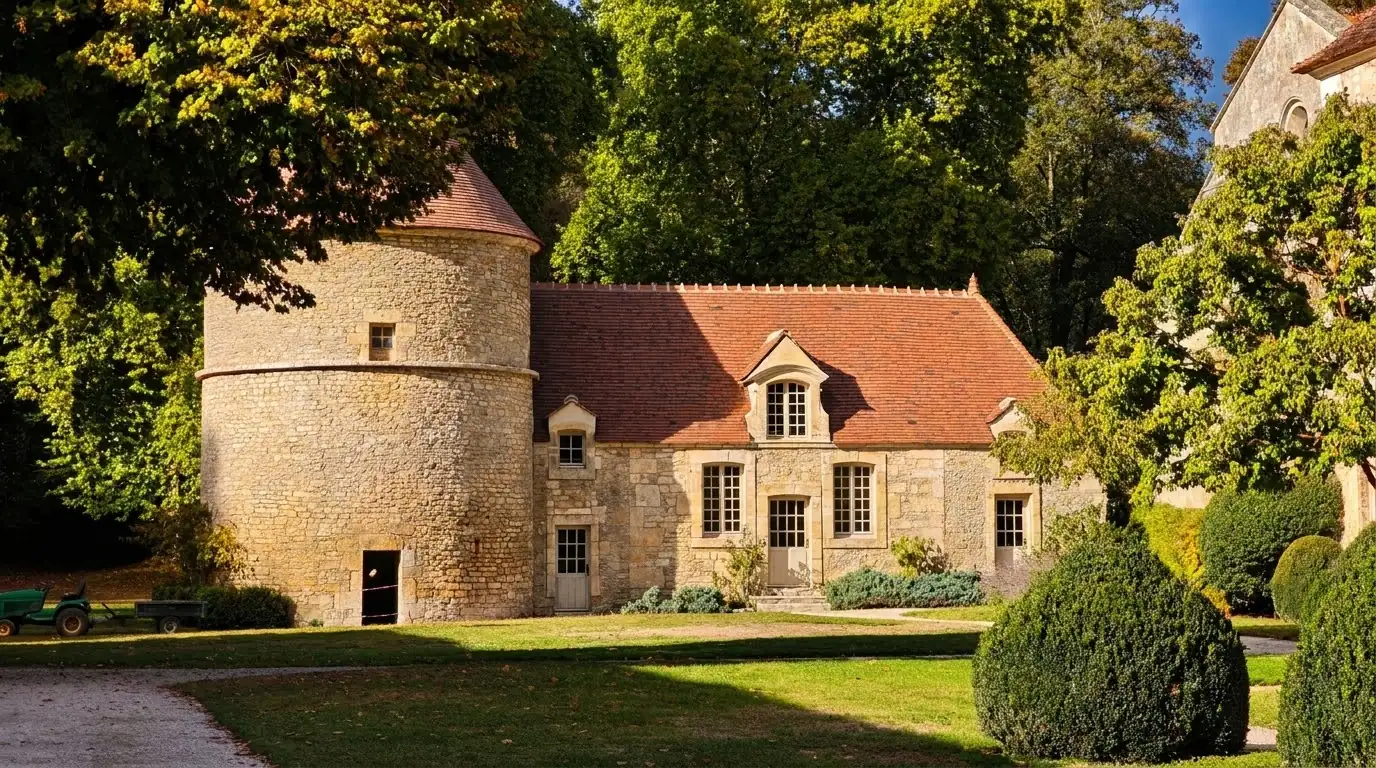
In 2004 the gardens of Fontenay received the national “Remarkable Garden” (Jardin Remarquable) label from the French Ministry of Culture, and they aren’t historic Cistercian gardens but a modern creation: in 1996 the owners of the site commissioned the British landscape gardener Peter Holmes to design the spaces between the buildings and behind the church. Three people maintain them year-round. At their center stands a plane tree planted in 1780, about forty meters tall and roughly six meters in circumference, meaning it was planted while the monks still lived here. Since 2022 a medicinal herb garden (jardin des Simples) has also been added, featuring medicinal, culinary and dye plants displayed in rotating exhibits. The monks themselves grew medicinal plants near the infirmary, where the sick were treated away from the rest of the community. You’ll see it as you step out to the garden through the door between the chapter house and the monks’ hall: a 17th-century building with a balcony, its walls as old as the abbey itself. Along the path leading to the church stands the round dovecote (pigeonnier) as well, which you can’t enter but can see well from the path. Its walls are more than a meter thick, and it was probably built in the 13th century. On the other side of the path stand two statues of dogs, marking the spot of the old kennel: here the hunting dogs of the Dukes of Burgundy were kept, when the dukes came to hunt in the forest surrounding the abbey (in other words, the abbey also served as a boarding kennel, in its ducal incarnation).
Don’t stop at the gate. The Cistercians were masters of hydraulics, and the site still has seven ponds and several streams, with the abbey maintaining two hundred hectares of gardens and valley. The official website offers three marked walking routes: the Étang de Saint Bernard loop, about 45 minutes; the Chemin des Munières, about an hour; and the full loop around the Fontenay valley, about three and a half hours. Keep in mind that there are several unfenced bodies of water on the site, which is worth considering if you’re traveling with small children.
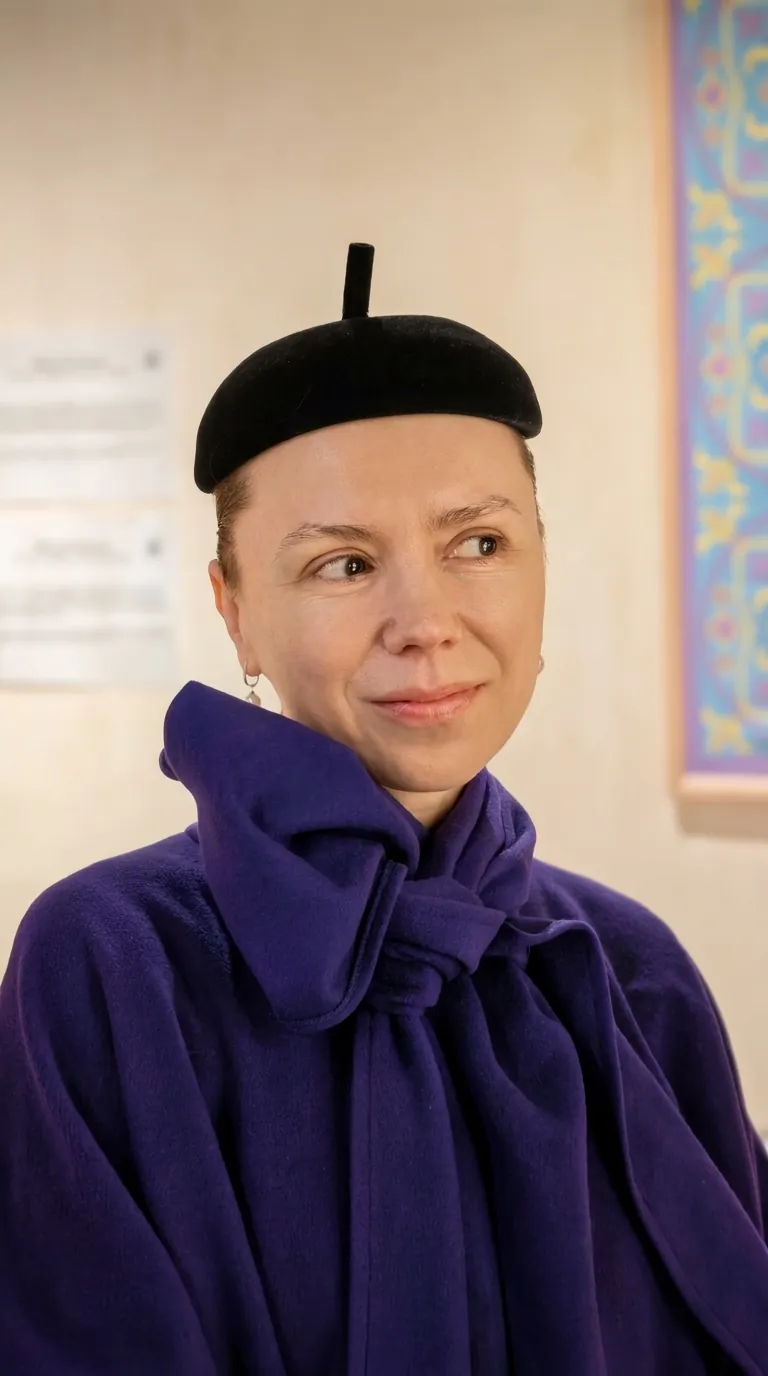
During my visit to the abbey I met Yaroslava, an artist from Ukraine living in Poland who, among other things, makes hats, and I was really struck by how elegant her outfit was. I asked her permission to photograph her, and she agreed. The next day I ran into her again, by chance, in Vézelay, and you can find the full story in the article about that village. You can find her on Instagram under madame.au.chapeau.
The History of Fontenay Abbey
The valley that was a swamp, and the English bishop who paid for a church
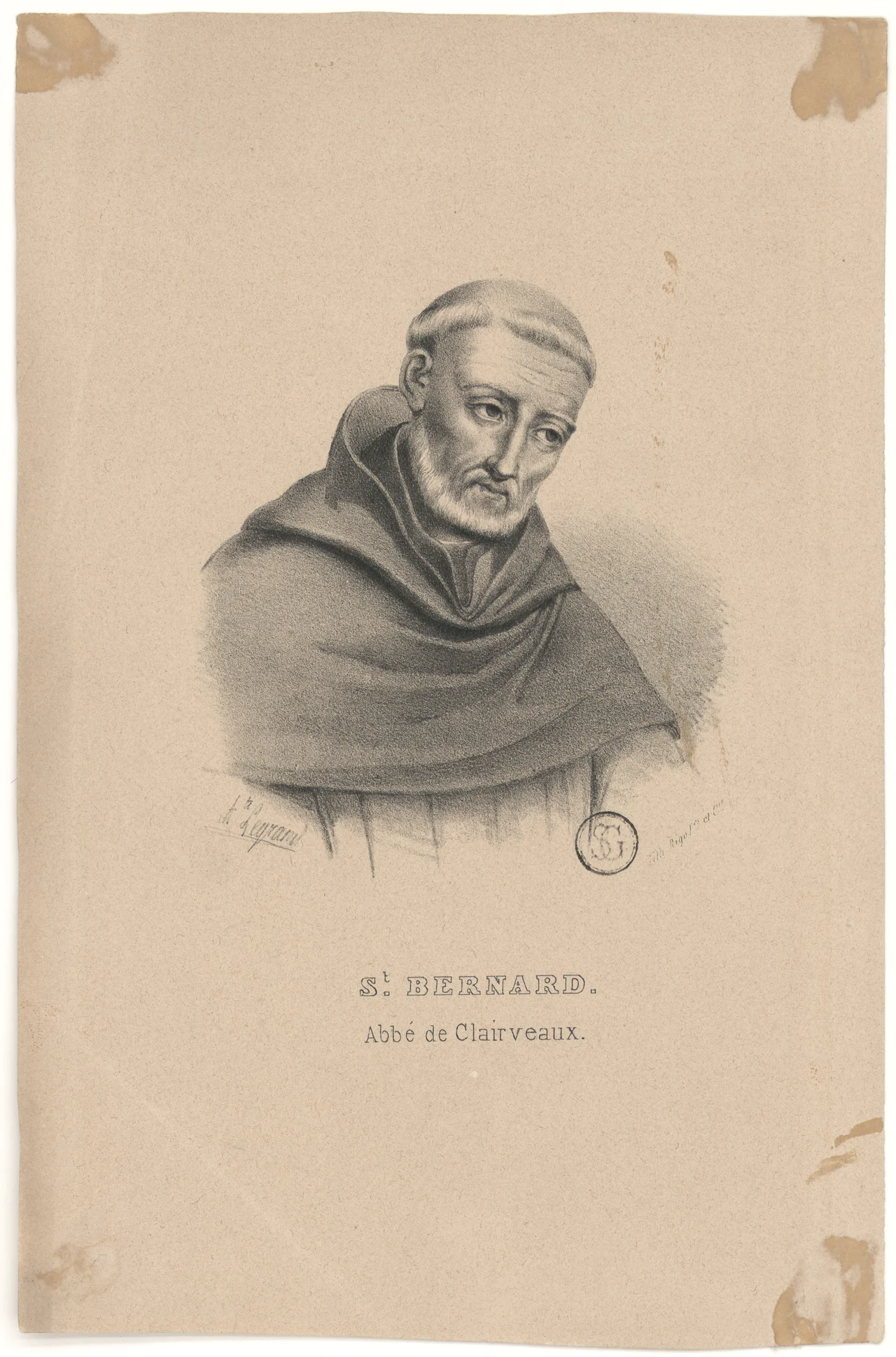
The story begins on a hill, not in a valley. The Cistercian order was founded in 1098 as a response to the splendor of the Benedictine order of Cluny, and in 1112 it was joined by a 23 year old from a Burgundian noble family, Bernard of Clairvaux (1090-1153). As the story goes, he brought more than thirty family members and friends with him into the order, and in doing so changed the fate of the young order. In 1115 he founded Clairvaux Abbey himself, and within six years that abbey sent out three daughter houses of its own: Trois-Fontaines in 1115, Fontenay in 1118, and Foigny in 1121.
Bernard’s family held land in the Montbard area, and his mother was the daughter of the lord who ruled the town. The uncle who donated the land was Raynard de Montbard, and the first abbot of the monastery was Geoffroy de La Roche-Vanneau (abbot between 1119-1126, died 1165), another relative who was among Bernard’s first companions.
According to tradition, two hermit monks named Martin and Milon had already settled in the spot before them. In 1130 the monks decided to move to the final site, lower in the valley, at the meeting point of two small valleys. They drained the swamp, cleared the forest, and built. The name Fontenay comes from the many springs on the site, and that detail is where everything starts: a monastery built on water became a monastery that used water for far more than drinking.
Construction of the church began in 1139, and this is where one of Fontenay’s more interesting stories comes in. Everard de Calne (bishop of Norwich between 1121-1145, died 1146) had been a court chaplain to Henry I (king of England between 1100-1135) and a very wealthy man. He gave up his post as bishop of Norwich and came to Fontenay. Why he left isn’t entirely clear: one version says he was fleeing persecution he had suffered in England, another suggests he wanted to atone for transferring church property into private hands. Either way, he devoted his fortune to building Fontenay’s church.
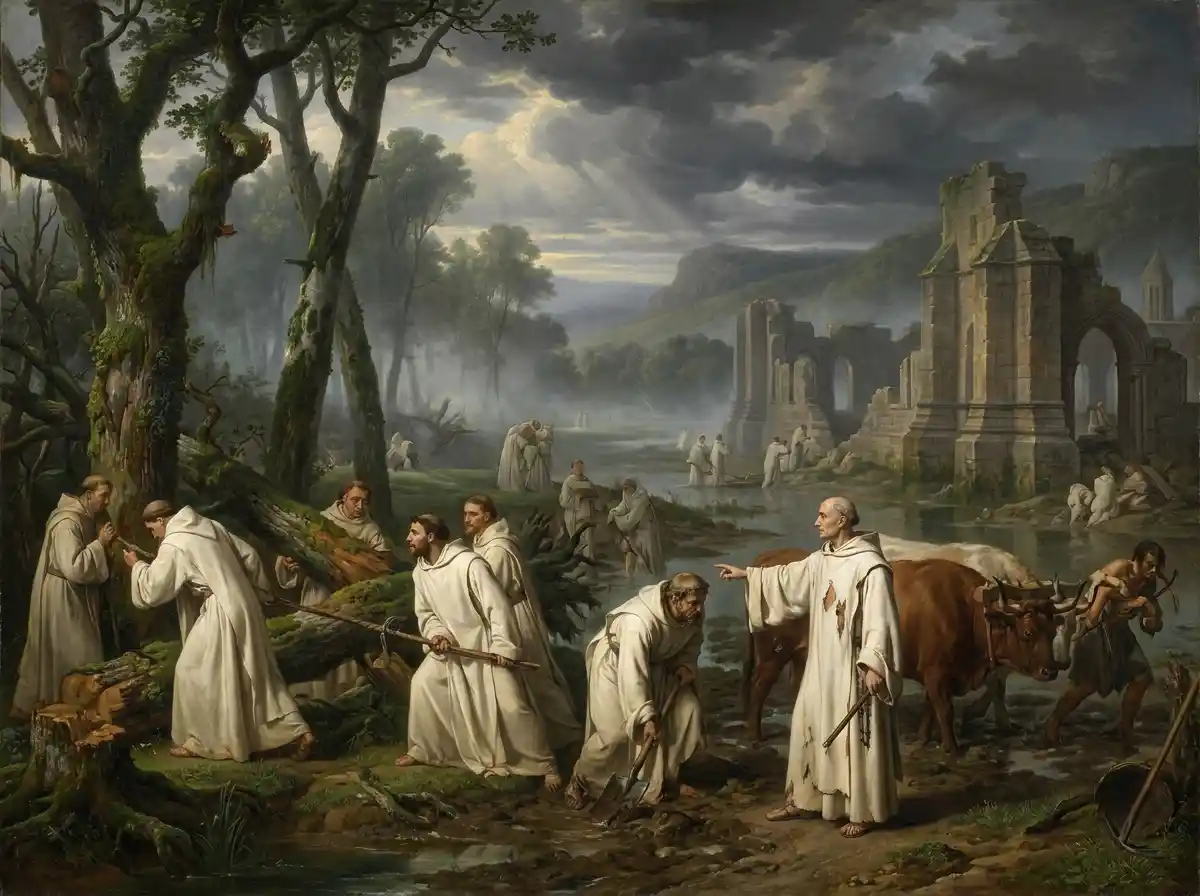
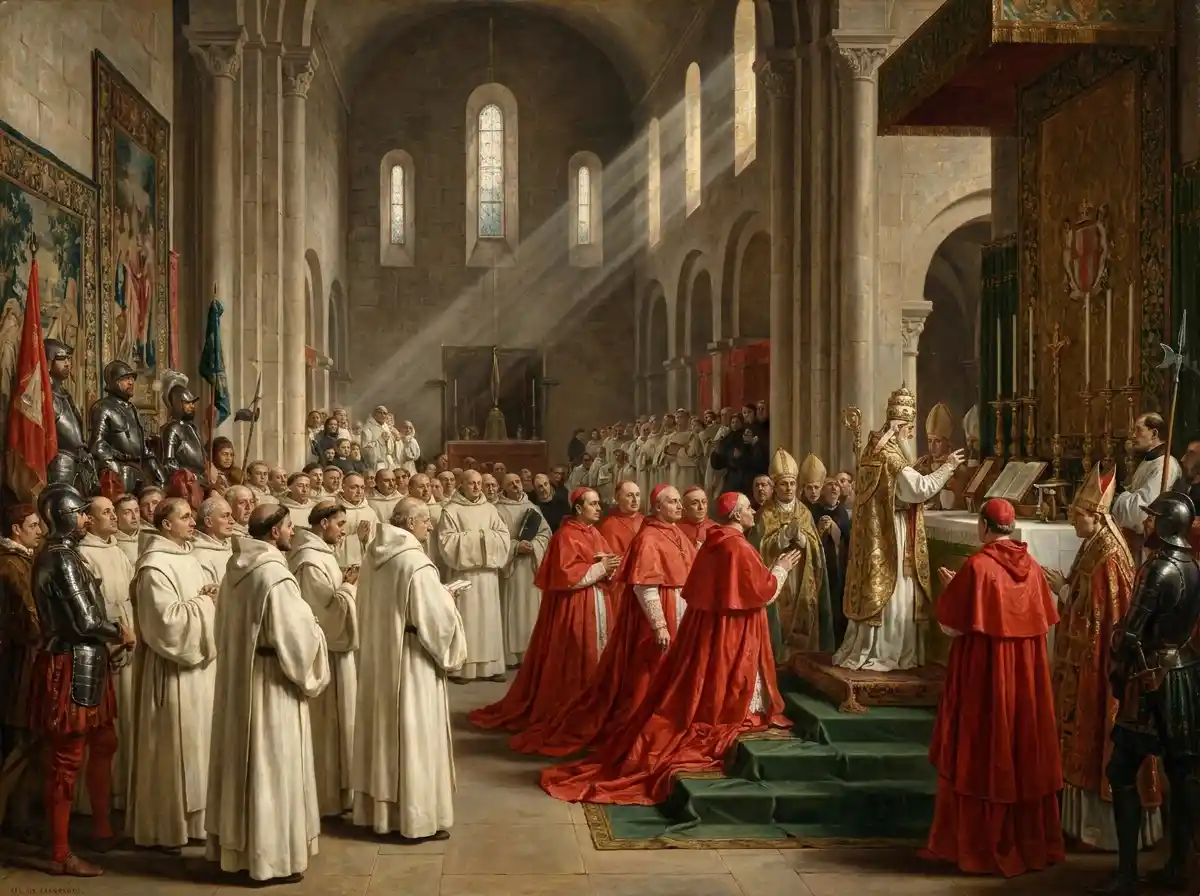
He never returned to England. Everard was buried in the church he had funded, and his tombstone still lies there today. Anyone who steps into that space is, in effect, standing inside the last will of an English bishop who abandoned his post. On September 21, 1147, Pope Eugenius III (reigned 1145-1153), the first pope to come from Cîteaux and a close friend of Bernard, consecrated the church in a ceremony attended, according to the sources, by ten cardinals, eight bishops, and many abbots of the young order. Beside the church stands a modest bell turret rather than a tower, and that was a statement: at Cluny, a massive tower rose in those same years, while at Fontenay they chose the minimum.
Iron, kings, and tax exemption: the 12th and 13th centuries
In 1170 a papal bull by Pope Alexander III (reigned 1159-1181) confirmed the abbey’s property and restored to the monks the right to choose their own abbot. These were the glory years. The monks drained swamps, farmed and harvested, and also mined and worked iron on site; the forge was built toward the end of the 12th century. By some estimates, the abbey reached its peak at around three hundred people living in the buildings and farms around it. In Montbard, a manor house was built for the abbot’s use, Petit Fontenet. Remember that house, I’ll come back to it later.
The French crown took notice. In 1259 Louis IX (Saint Louis, r. 1226-1270) exempted Fontenay from all taxes, and in 1269 the abbey was recognized as a royal monastery, a status confirmed by several kings afterward. That sounds like insurance against trouble. In practice it wasn’t worth more than the paper it was written on, as became clear in the following century.
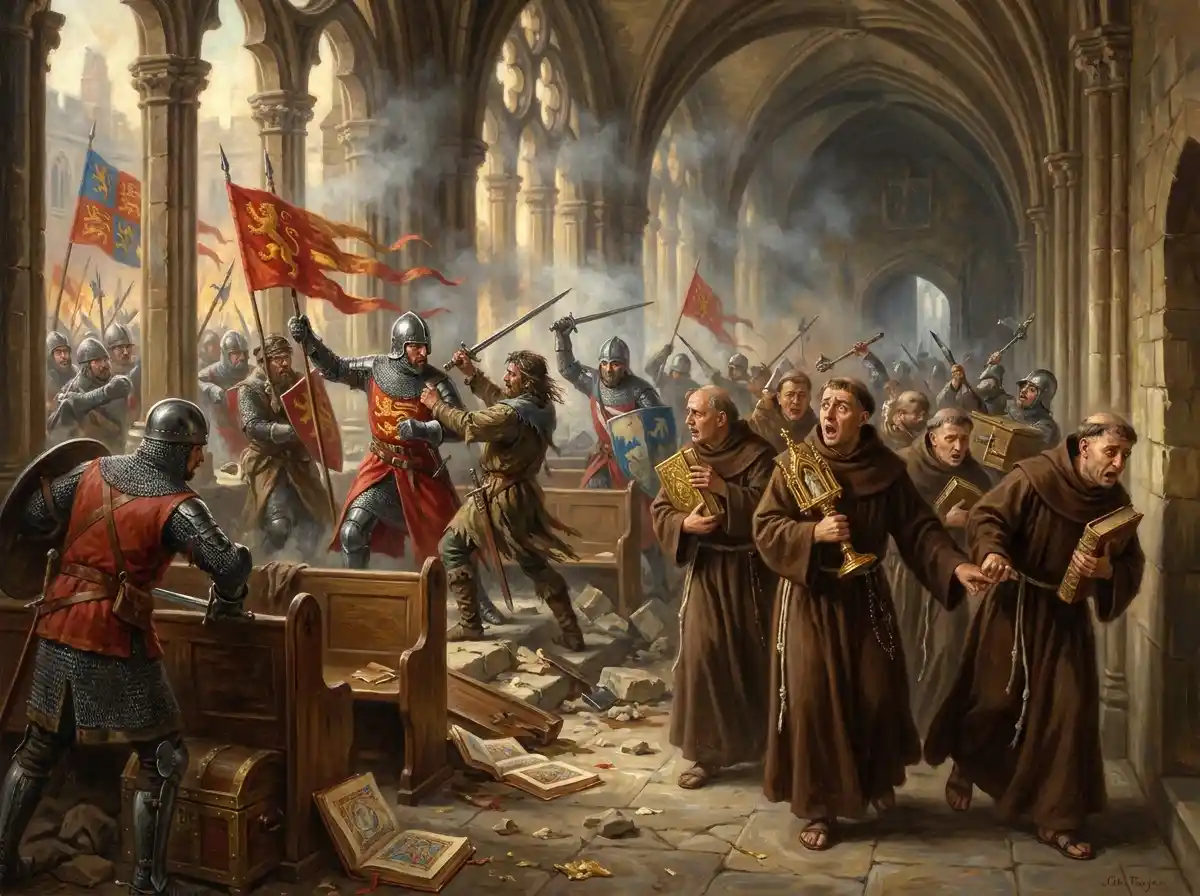
In the 14th century, the Hundred Years’ War reached even this secluded valley. In 1359 Fontenay was plundered by the armies of Edward III (king of England between 1327-1377), and in 1419 it was plundered again by bands of mercenaries and marauders roaming a devastated Burgundy. The abbey took the blows and rebuilt, took the blows and rebuilt again.
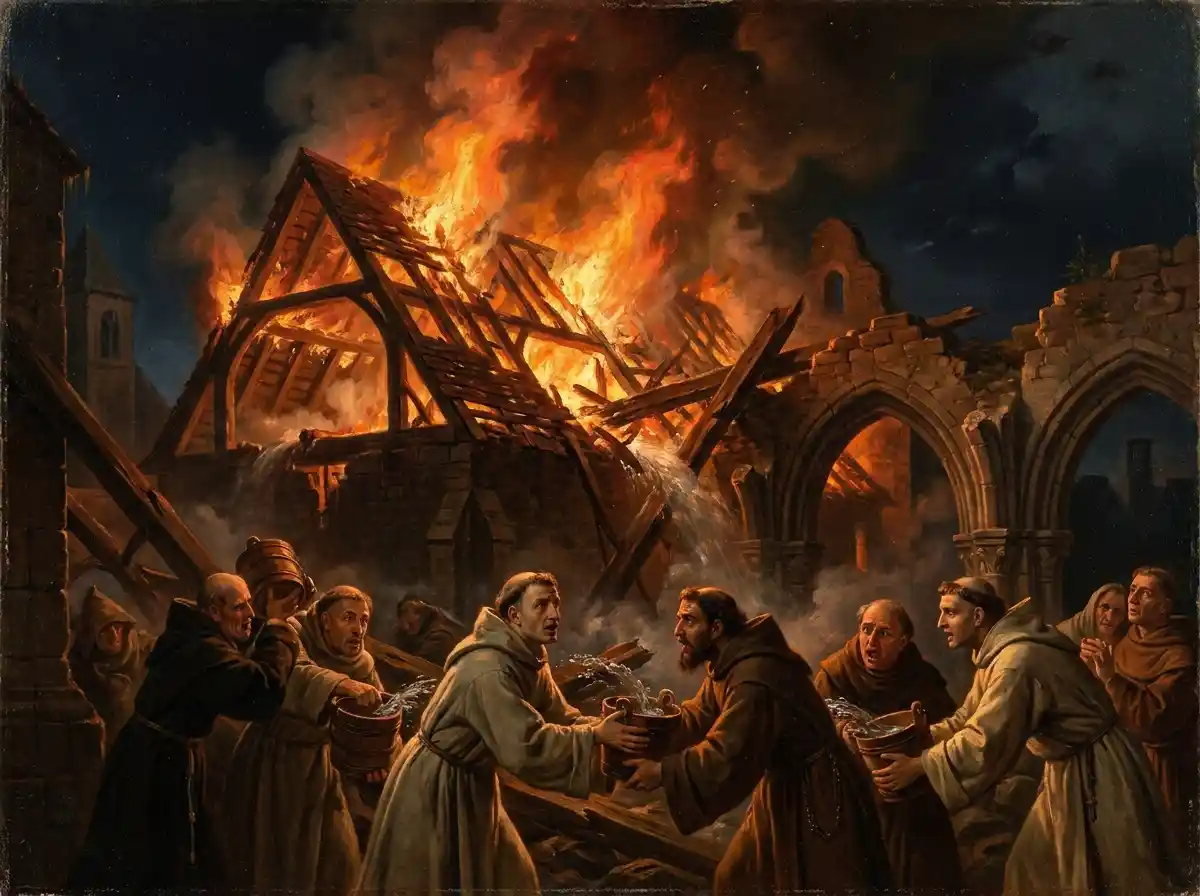
Around 1450 a fire broke out that destroyed the roof timbers of the dormitory, and the new roof was built under the direction of Abbot Jean Frouard de Courcelles (abbot 1460-1462 and 1466-1492). The inverted wooden framework you see today above the dormitory is, in fact, the result of that fire. The chapter house, also damaged, was restored in the second half of the 15th century after the war’s destruction, but its third bay was never rebuilt.
When the king started appointing the abbots
In 1547 Fontenay came under the “commende” system, under which the abbot was no longer elected by the monks but appointed by the king. The effect was simple and ugly: the title became a salary. Whoever received Fontenay was usually a senior churchman or a nobleman who lived somewhere else entirely, collected the income, and saw no reason to invest in the upkeep. Among those who held the title in the 16th century was Cardinal Louis de Lorraine (1527-1578), of the powerful House of Guise, one of the most dominant families in France at the time.
Around 1557, in the thick of the Wars of Religion, Fontenay was plundered again. From that century, a small, odd building known as the “enfermerie” still survives at the abbey, and its name has led some to conclude it was a prison, since the abbots held judicial authority over the abbey’s lands. Others believe it was instead where valuable property, books and liturgical objects, were locked away. The gable wall of this building is the only surviving trace of the 13th-century refectory.
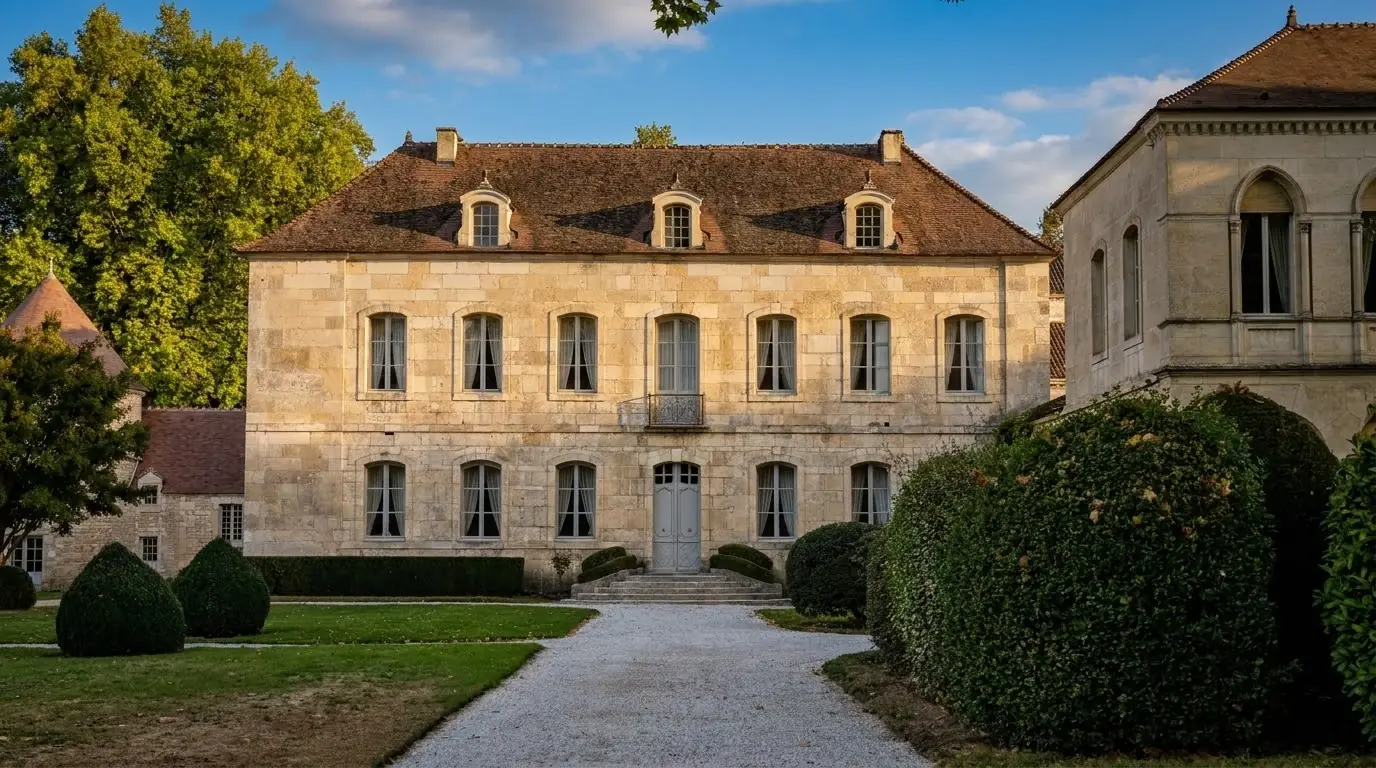
In the 17th century, Fontenay Abbey continued to decline. Charles de Ferrières de Sauvebœuf (abbot 1614-1679) held the title for sixty-five years, and left Fontenay mostly in neglect. Yet on the site of the former west wing, where the lay brothers (frères convers) had once lived, a grand house was later built for the commendatory abbots, an elegant building from the first half of the 18th century that stands worlds apart from Cistercian austerity. You can see it from the outside during a visit.
The figure who, to me, best symbolizes this era is the abbot who never showed up. Between 1735 and 1750, the title of abbot of Fontenay was held by the Polish bishop Józef Andrzej Załuski (1702-1774), who during those years lived in Lorraine, at the court of the exiled Polish king who had been deposed and fled to France. Załuski and his brother founded Warsaw’s first public library in 1747, which became the Polish National Library in 1780. I find it rather ironic that in the very years when Fontenay’s monks couldn’t afford to maintain their own buildings, their abbot’s title was held by one of the great book collectors of Europe, whose library in Warsaw kept growing while their refectory fell apart.
In 1745, for lack of money, the monks tore down the refectory, the kitchens, and the church’s narthex. The following year they raised the church floor by nearly a meter to deal with flooding. In 1768, the abbey’s house in Montbard, that same Petit Fontenet, was sold to the scientist the Comte de Buffon (1707-1788), who installed his library and his chemistry laboratory there. That same year, Buffon founded his great forge eleven kilometers away, a works considered the successor to Fontenay’s own forge. The monks’ iron, in effect, passed into the hands of science.
The Revolution, and afterward, a paper mill
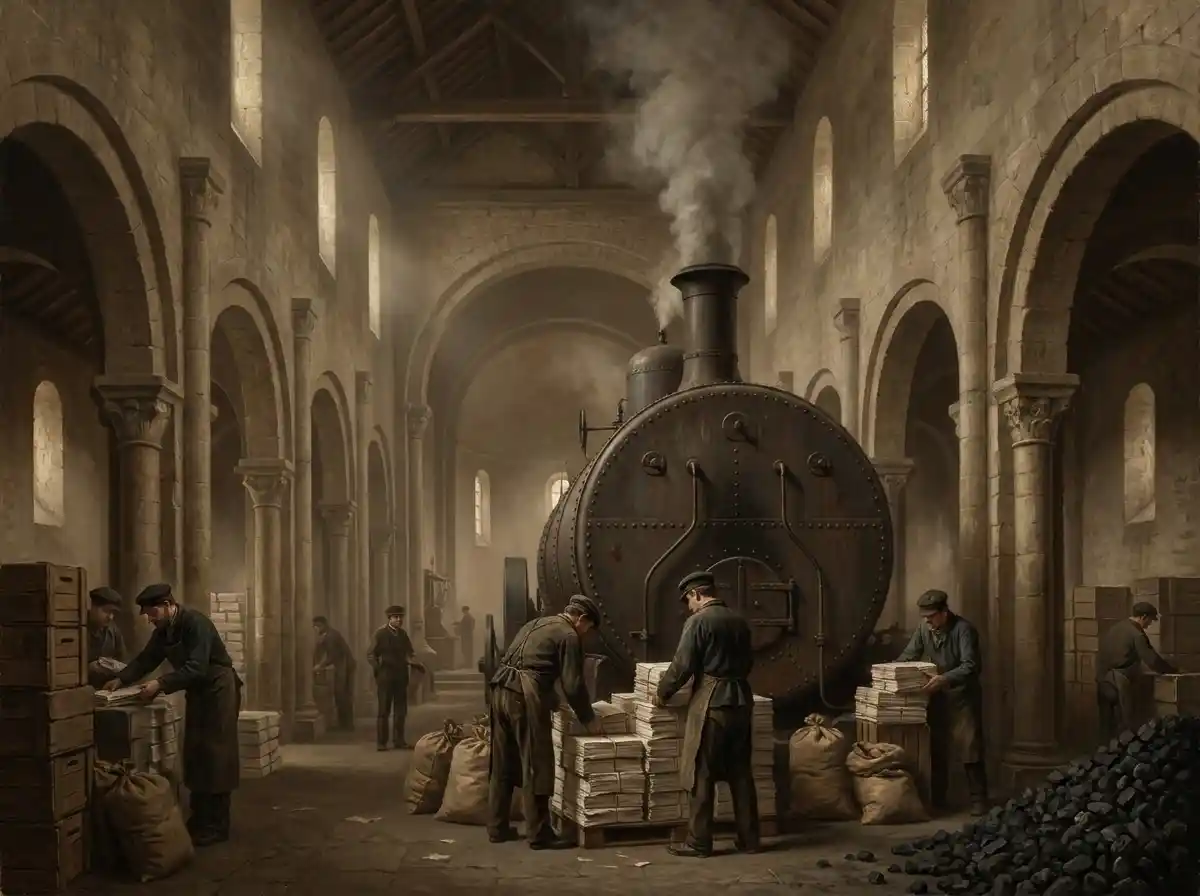
In 1790 the last eight monks left Fontenay. The abbey that at its peak had housed hundreds of people was left with a small community, and that too dispersed. In 1791 the revolutionaries sold the abbey, with all its lands, for seventy-eight thousand francs to Claude Hugot, who looked at the water system the monks had built and understood exactly what to do with it. He turned the abbey into a paper mill.
It’s worth pausing on that image. In the abbey church, that very space built so that nothing would distract the eye, a steam boiler was installed, and the building served as a warehouse. Photographs from the period show a tall chimney rising above the abbey. In 1820 the site was bought by the manufacturer Élie de Montgolfier (1784-1864), a nephew of the family famous for inventing the hot air balloon, who expanded the factory with his children.
From 1838 to 1868, Fontenay was the home of Marc Seguin (1786-1875), Montgolfier’s son-in-law, one of the fathers of the railway in France and the inventor of the tubular boiler and the steel cable suspension bridge. He lived at the abbey and carried out his research there. Think about that: the engineer whose inventions powered France’s railways sat and calculated inside a 12th-century Cistercian abbey. The wing that bears his name was built in 1850 on the site where the refectory and kitchens once stood. By the mid-19th century, the abbey was recognized as a protected historic monument (monument historique), and in effect, it was by then a working factory recognized as a heritage site.
The factory closed in 1905. Two factors finished it off: the war of 1870 and the industrial shift to coal, which made water power far less relevant. I find it rather ironic that it was precisely the sale to a private investor that saved Fontenay from the ruin of the Revolution, while other monasteries across France were quarried for building stone. The factory that defaced the site is also the factory that kept it standing.
Fontenay in the 20th Century
In 1906, Fontenay was bought by Édouard Aynard (1837-1913), a Lyon banker, member of parliament and art collector, who was married to Rose de Montgolfier (1845-1910), the daughter of the factory owner who had preceded him. He described his own mission in plain terms: to pull the old abbey out of its “industrial wrapping.” Aynard did not hire architects. He ran the work himself and poured part of his own fortune into it.
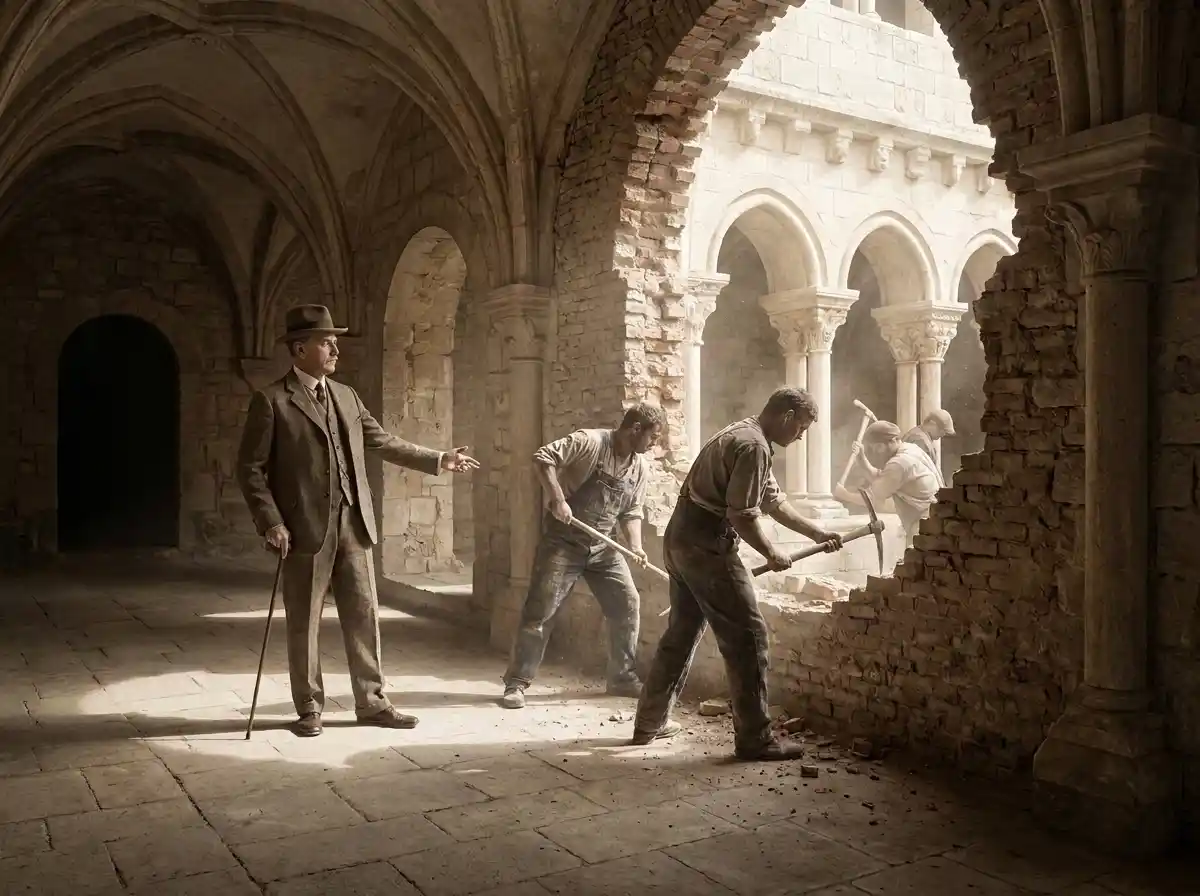
The results are still visible today. The industrial buildings were torn down, the church floor was dug down eighty centimeters to return to its original level, and the left wing of the cloister was taken apart and rebuilt, stone by stone. The armarium was found within the walls in 1911, in the middle of that same work. On that note, among the children who spent their summer vacations at this restored abbey was his granddaughter, Christine Aynard, known to the world as Andrée Putman (1925-2013), one of the most influential interior designers of the 20th century. Anyone familiar with her sharp, minimalist style is welcome to stand in Fontenay’s cloister and wonder how much of it started right there.
In 1960, the dormitory was restored by the next generation of the family, Pierre and Hubert Aynard. Starting in the 1970s, tourism began to grow, and it has since provided part of the resources for upkeep. In 1981, the abbey was added to the UNESCO World Heritage list, among the first French sites on it. In 1989, the number of visitors passed one hundred thousand, in 1995 the chapels at the eastern end of the church were restored, and in 2004 the gardens received their national garden label.
In 2018, Fontenay celebrated its nine hundredth anniversary, and a solemn mass was held there with the Archbishop of Dijon and the abbot of Cîteaux in attendance. It is not a routine mass there: there have been no monks at Fontenay since the Revolution, and there is no permanent religious presence, but one mass is held each year around September 21, the anniversary of the church’s dedication in 1147. Hubert Aynard (1924-2024), who owned the place on the day the abbey was listed by UNESCO, died at ninety-nine.
The abbey has stayed in the hands of the same family, and here it’s worth mentioning something the official website admits with surprising candor: Fontenay does not receive ongoing support from the state or from UNESCO, aside from contributions toward major, exceptional works, and taxes and fees make up on average about forty percent of the ticket price. The roofs cover about twenty thousand square meters, roughly a million and a half tiles, alongside two hundred hectares of gardens and woodland. Three to five staff members handle maintenance and gardening, depending on the season. Next time you hesitate over paying 11.50 euros for a ticket, remember the million and a half roof tiles.
And on that note, Fontenay is a sought-after filming location. Among the productions shot there are “The Three Musketeers” (Les Trois Mousquetaires, 1961), “Angélique, Marquise of the Angels” (Angélique, marquise des anges, 1964) and its two sequels, as well as “Cyrano de Bergerac” (1990). Standing in the cloister, it’s easy to understand why a director looking for the 17th century comes here instead of building a set.