
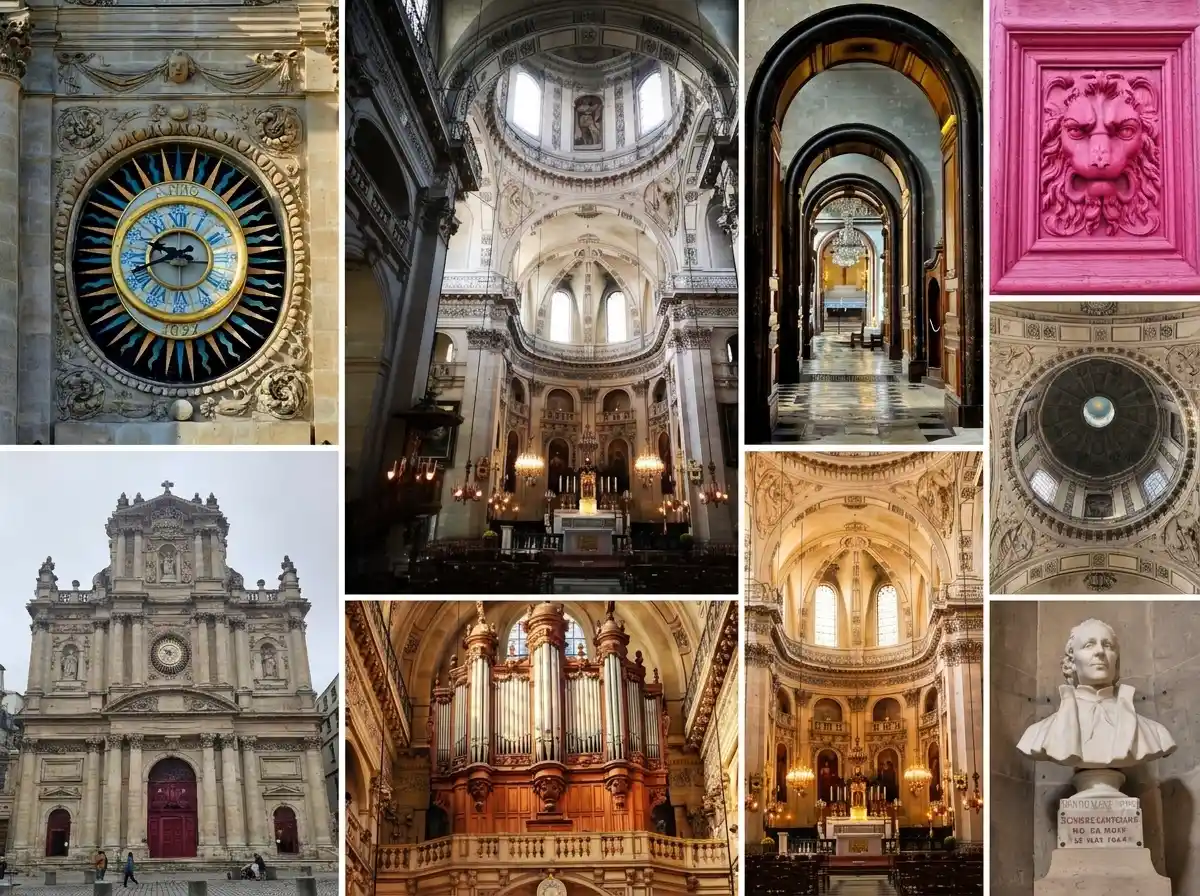
In short
- What’s there: a dome about 55 meters tall, the largest in Paris when it was built, Delacroix’s “Christ in the Garden of Olives,” Germain Pilon’s “Virgin of Sorrows,” and a clock from 1627 on the facade
- Status: a protected heritage site since 1887, and the property of the City of Paris since 1905
- Getting there: 99 rue Saint-Antoine, Saint-Paul metro (line 1) right across from the church
- Hours: daily from 8:00 to 20:00, no visits during services or on Sunday mornings
- Cost: free admission, no ticket and no advance booking
- Time needed: a few minutes for a quick look, about half an hour for a visit that includes the chapels
- History: cornerstone laid in 1627, first Mass celebrated by Richelieu on May 9, 1641, double name since 1803
- Bonus: holy water basins donated by Victor Hugo at his daughter’s wedding in 1843, and an inscription from the Commune on the second column on the right
The Saint-Paul-Saint-Louis Church stands on rue Saint-Antoine, one of the main streets of the Marais, and thousands of people pass by it every day on their way to Place de la Bastille or Place des Vosges. As a devoted fan of Baroque architecture, it’s no surprise that this is one of my favorite churches in Paris, and whenever I take people around the city, I bring them here. But beyond the artworks you’ll find inside, there are also some funny and surprising stories that make this church one of the “must-see churches” of Paris.
Here you’ll find two holy water basins donated by Victor Hugo, which tell a tragic story; a preacher who gave his name (unwillingly) to a chamber pot; an inscription carved into a column during the days of the Commune that survived a hundred and fifty years of cleaning; and more.
So, just before we set out to visit Saint-Paul-Saint-Louis, let’s talk about what you’ll find in this article. We’ll start with the practical information: hours, how to get there, and when it’s best not to come. Then we’ll move on to what you shouldn’t miss inside, followed by the full history from the Jesuits to today, and finally the nearby attractions and my recommendations for where to stay.
Practical Information for Visiting Saint-Paul-Saint-Louis Church
This is one of the easiest churches in Paris to fit into a day of sightseeing, but there are still a few things worth knowing in advance so you don’t arrive at exactly the wrong time.
Opening Hours of Saint-Paul-Saint-Louis Church
The church is open every day from 8:00 a.m. to 8:00 p.m., with no weekly closing day and no lunch break. The parish made a deliberate decision to keep it open twelve hours a day, which isn’t something you can take for granted in Paris.
Keep one restriction in mind: there are no visits, whether individual or in groups, during Mass or prayer services, and visits aren’t possible all Sunday morning either. Weekday Masses are held Monday at 6:45 p.m., Tuesday and Wednesday at 7:00 p.m., Thursday and Friday at 12:15 p.m. and 7:00 p.m., and Saturday at 12:15 p.m.. On Sundays there are three Masses: 9:30 a.m., 11:00 a.m., and 7:00 p.m..
If you want to hear the church, not just see it, you should know that from Tuesday to Friday there’s a sung morning prayer at 8:00 a.m., and on Monday evenings there’s a sung Gregorian evening prayer at 6:00 p.m., both outside of holiday periods.
How to Get to Saint-Paul-Saint-Louis Church
The address is 99 rue Saint-Antoine, in the 4th arrondissement. The Saint-Paul metro station (line 1) is right across from the church, less than a minute away, and the Bastille station (lines 1, 5, and 8) is about a five-minute walk to the east. If you’re coming from Île Saint-Louis or from the city hall, the walk along rue de Rivoli and rue Saint-Antoine takes about fifteen minutes.
The church also has a side entrance from passage Saint-Paul, the small lane that connects rue Saint-Paul to rue Charlemagne. Its golden gate was restored by the City of Paris in 2020, and during that restoration, an iron grille decorated with fleur-de-lis, hidden under layers of paint, was rediscovered.
Tours, admission, and cost
Admission is completely free, with no ticket and no advance reservation. There’s a donation box at the entrance, and the amount is entirely up to you. The parish reminds visitors that the upkeep, heating, and lighting of the church are funded by the parish itself, not by the state, and yet admission remains free for everyone.
Restoration of the stained-glass windows has been underway here for years now, one after another, funded by private donors through the Paris heritage foundation. If you arrive and find scaffolding inside one of the chapels, that’s why. In recent years, all the lower windows, the gallery stained glass, and the two tall choir windows have been restored.
How much time to set aside, and when to come
A quick walk-through takes a few minutes, and a proper visit that includes the side chapels takes about fifteen minutes, depending on your pace and how long you linger in front of the Delacroix. The best times are late morning and afternoon, when light pours in through the tall windows and reaches all the way up to the dome. On Sunday mornings, just don’t plan a visit at all.
The church fits nicely into a walking route. It sits on the line between Place des Vosges and the city hall, and any basic walking tour of the Marais passes just minutes away from it.
What Not to Miss at Saint-Paul-Saint-Louis Church
The church isn’t especially large, so it’s easy to pass through too quickly. Here are the things worth slowing down for.
The facade, the gate, and the clock that came from another church
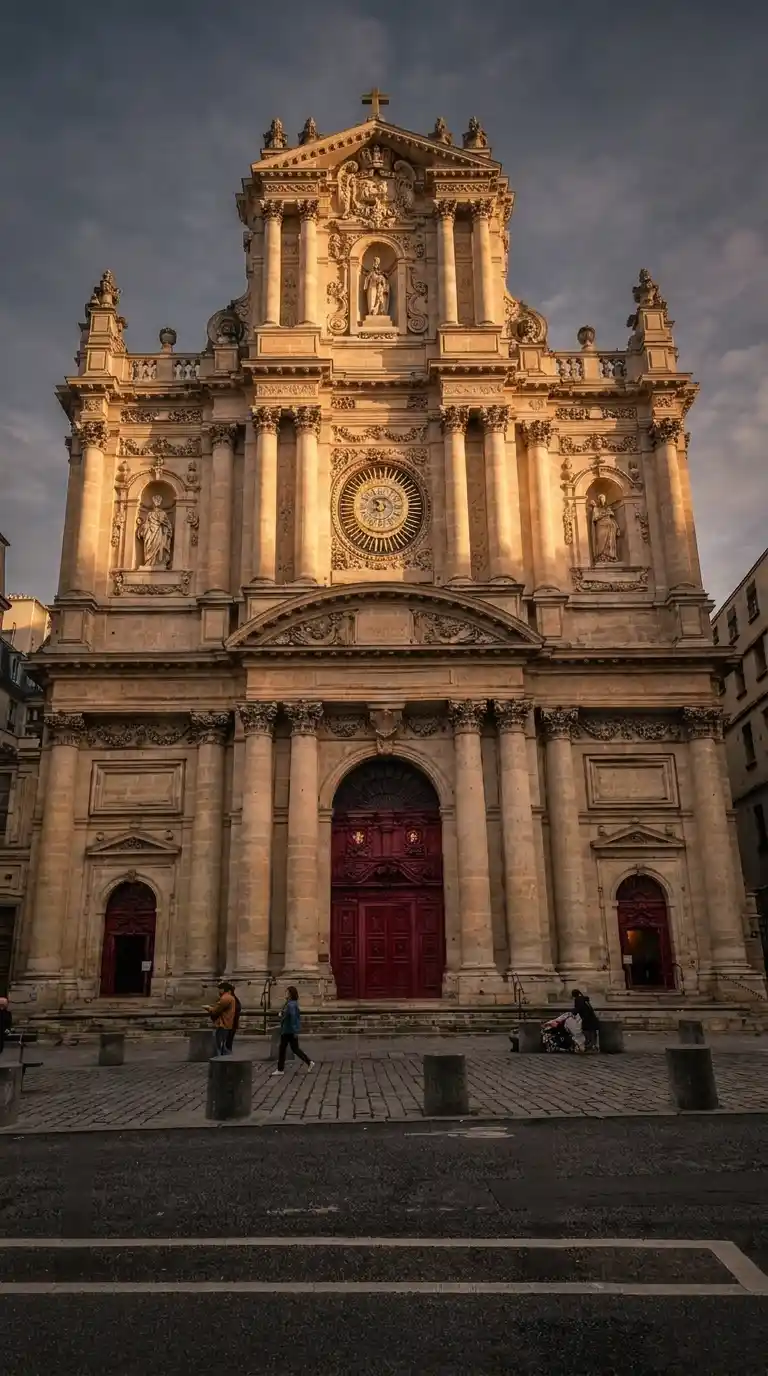
Before you go in, it’s worth crossing the street and looking at the facade from the sidewalk opposite. Only from there can you see all three stories in full, the statues in the side niches, and the cross on the roof. The lower stories are built in the Corinthian order, and the top one in the composite order.
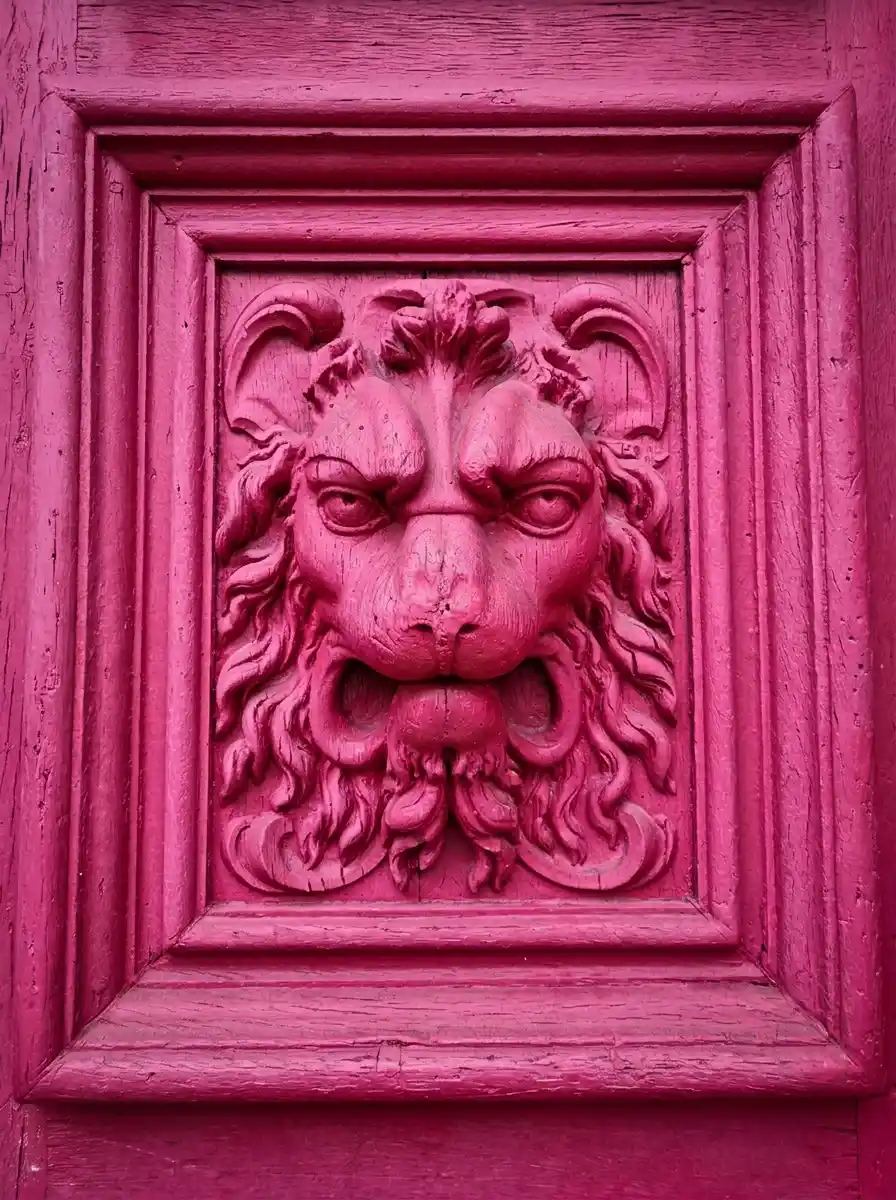
And then, right before the entrance, it’s worth pausing at the main gate itself. It’s painted a reddish-pink color that’s hard to miss, and carved into each of its frames is a lion’s head with a curled mane and a ring in its mouth. It’s a detail most visitors walk right past on their way in, and it’s one of the most beautiful on the whole facade.
The truly surprising detail on the facade is the clock. It wasn’t built for this church at all, but came from the old Saint-Paul church, the one that stood on the neighboring street and was demolished in 1797. The neighborhood residents wouldn’t accept the clock disappearing along with their church, and after the Revolution it was placed on the central stained-glass window of the facade, in the spot where the Jesuits’ IHS monogram used to be.
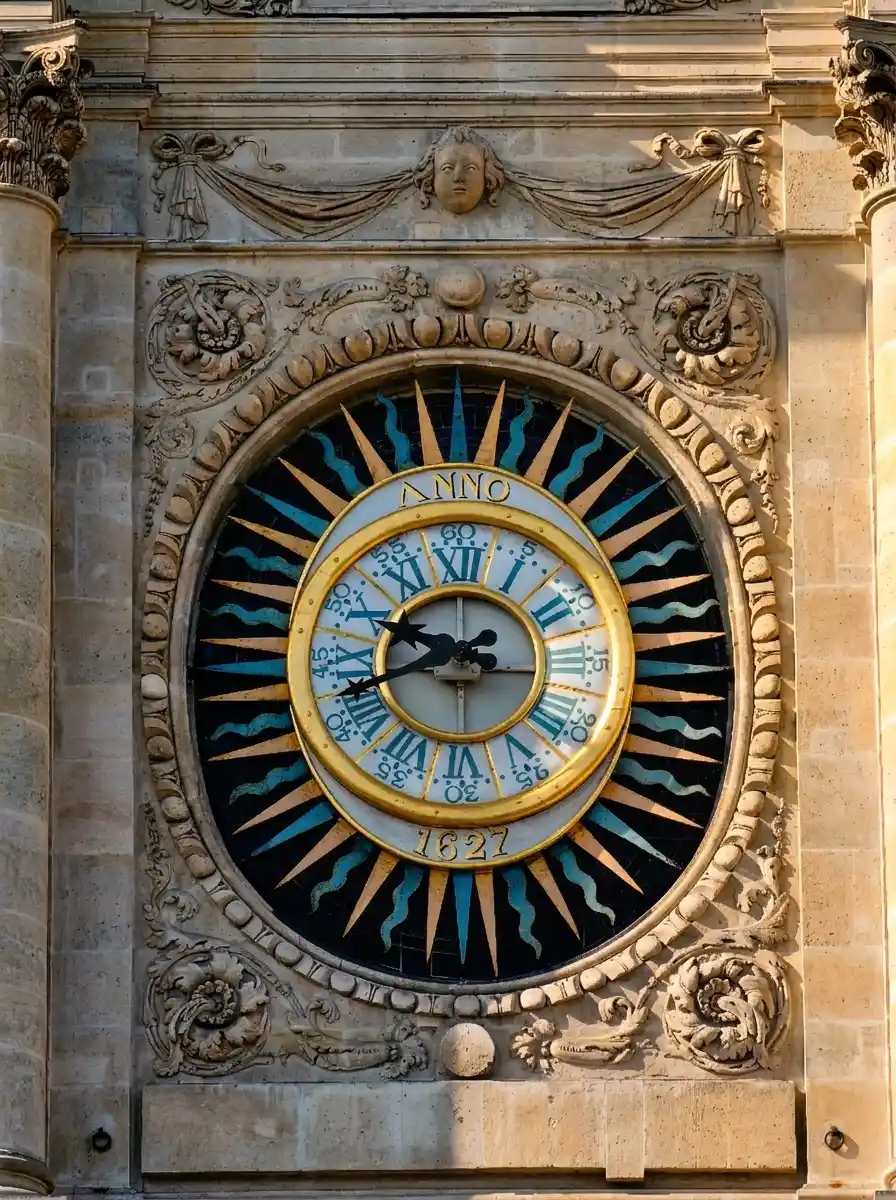
The dial shows the year 1627, the year the clock was made, which is also the year the cornerstone was laid for the church it now hangs on. A complete coincidence, and in my opinion one of the most beautiful in Paris. The clock was restored along with the facade in 2012, and the gold and blue rays around it are what make people stop and take photos.
And speaking of things that came from the old church: the single bell of Saint-Paul-Saint-Louis also came from there. The bell tower here was built only after the Revolution, for a simple reason: as long as the place was a Jesuit chapel and not a parish church, it had nothing to announce. The bells of the Jesuit house itself were later found in the attic of the school named for Charlemagne, next door.
The nave, the dome, and the light
The church’s layout is a compromise between two traditions. On one hand, a single nave surrounded by chapels, exactly like the Chiesa del Gesù in Rome, the Jesuits’ main church. On the other hand, a Latin cross with an elongated transept, which is the French habit. The result is wider and taller than its Italian model.
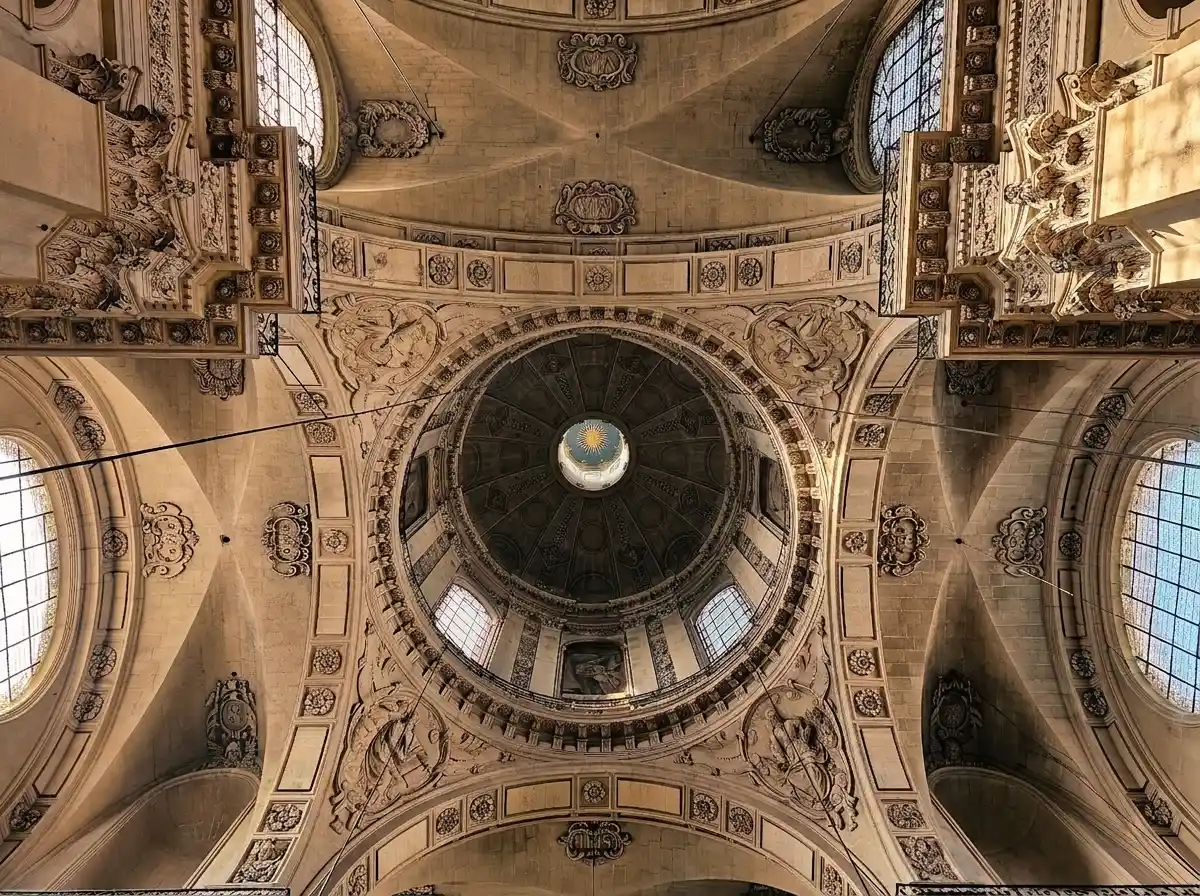
The dome above the crossing of the transept rises to about 55 meters, and the cross atop the lantern reaches 56. It isn’t the first dome built in Paris: it was preceded by the dome of Saint-Joseph-des-Carmes church on rue de Vaugirard, completed in 1620 and built of wood and plaster, and the dome of the church of the Visitandine convent right here on rue Saint-Antoine, today the Temple du Marais, completed in 1634 to the design of François Mansart (1598-1666). But both are far smaller, and the dome of Saint-Paul-Saint-Louis is the first in Paris on a monumental scale, and it became the model: the Sorbonne, the Val-de-Grâce, and Les Invalides followed. I recommend standing directly beneath it and looking straight up, because only from there do you understand why people of the time were so impressed.
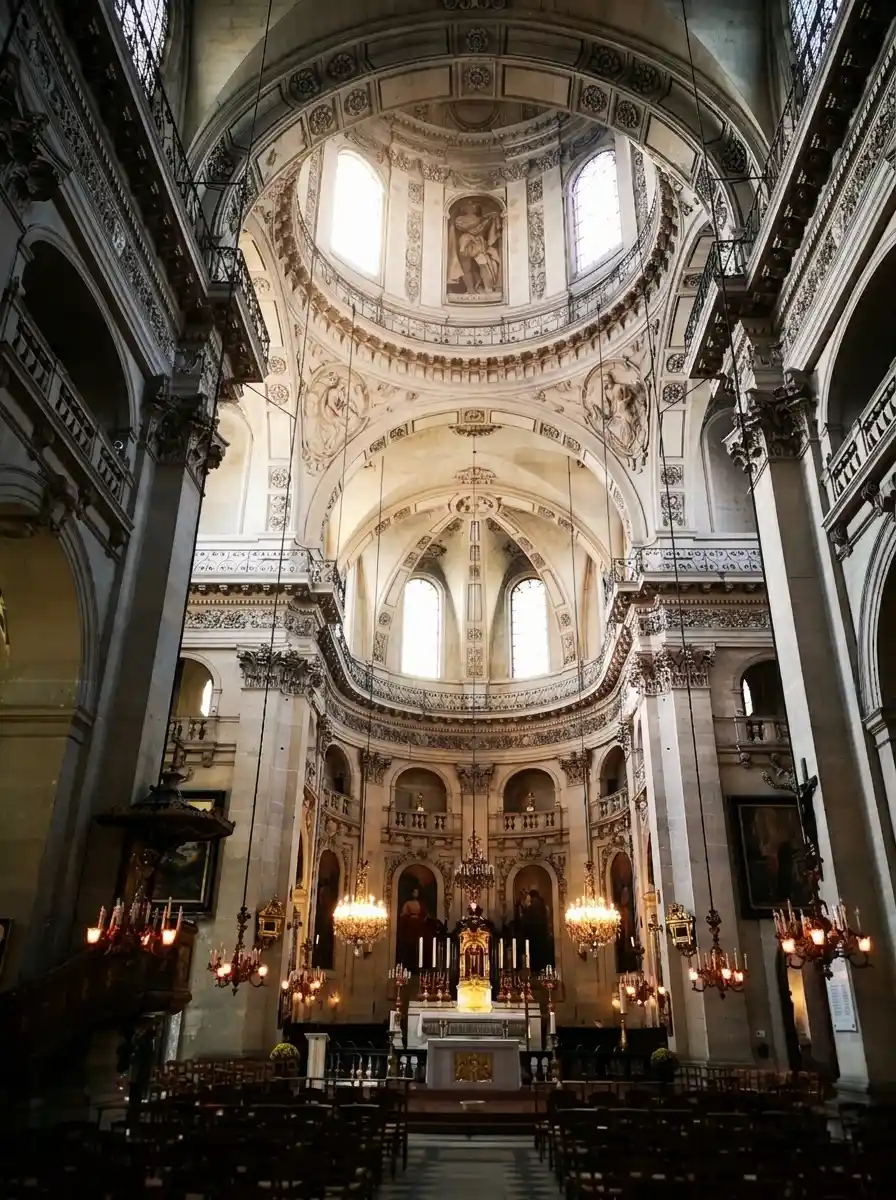
Notice the amount of light. The tall windows here are much wider than was typical in Parisian churches of the period, and that’s exactly what the Jesuits wanted: a bright space where the congregation could clearly see the preacher and the altar. The white marble of the main altar, which was moved and rebuilt under Louis-Philippe, was made from fragments of Napoleon’s original tomb at Les Invalides.
“Christ in the Garden of Olives” by Delacroix
In the left transept hangs the church’s most important painting, “Christ in the Garden of Olives” (Le Christ au jardin des Oliviers) by Eugène Delacroix (1798-1863). It’s enormous, about three by three-and-a-half meters, and one of the painter’s few religious works.
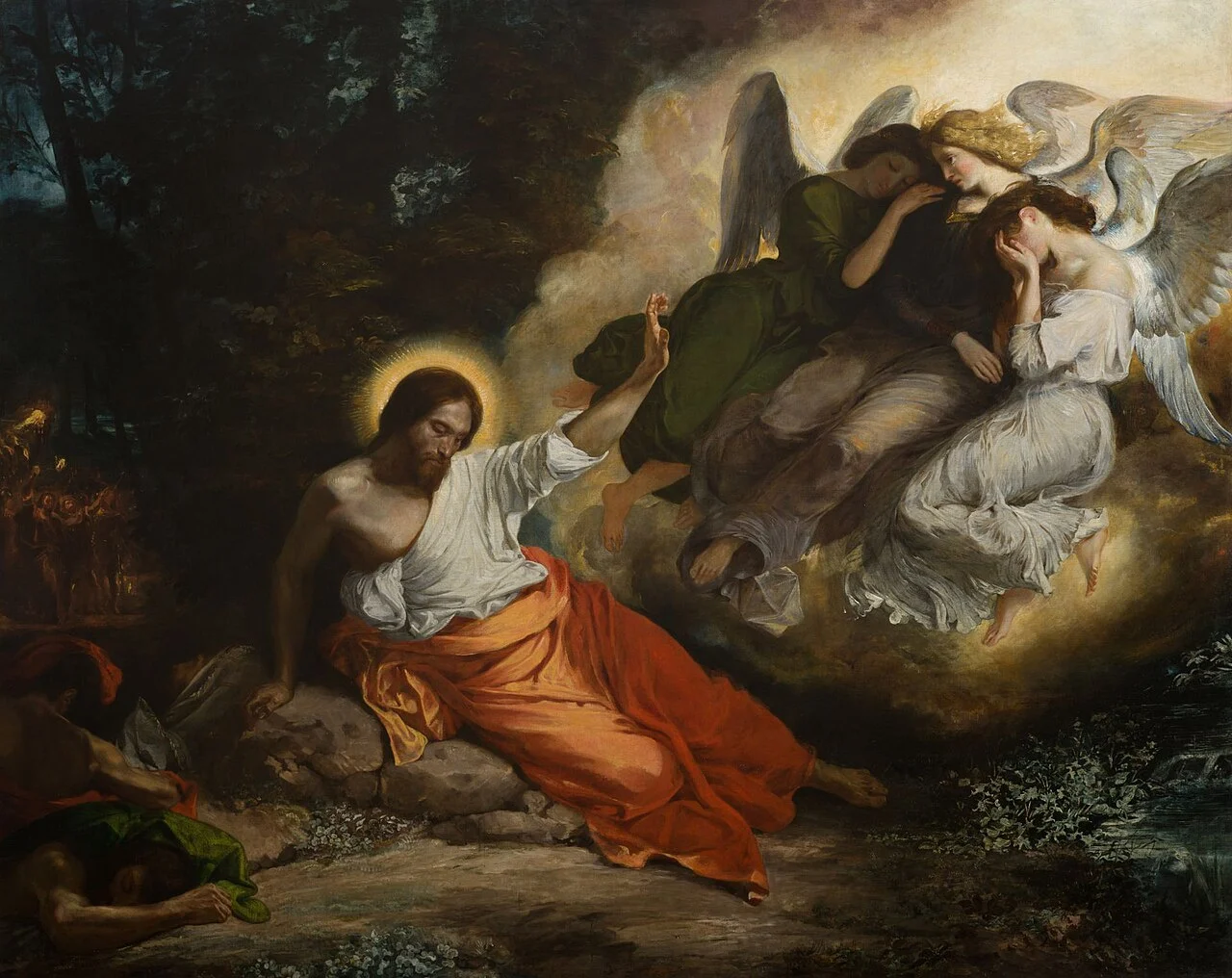
The scene is familiar: Jesus prays in Gethsemane before his arrest, the three disciples sleep behind him, and in the background a squad of soldiers is already approaching. Delacroix took one major liberty. Instead of the single angel who comforts Jesus according to Christian tradition, he painted a whole group of mourning angels, and in his journal he wrote that they cast a melancholy gaze on Christ. At the Salon of 1827, some critics claimed they looked too feminine.
The painting left here in 2018 for the major Delacroix exhibition at the Louvre, and afterward at the Met in New York, underwent a thorough restoration, and returned to its place. If you ever saw it behind a layer of grime and yellowed varnish, it’s worth another look.
“Virgin of Sorrows” by Germain Pilon
In the chapel of the Virgin sits a marble statue that made its way here by a roundabout path. “Virgin of Sorrows” (Vierge de douleur) was carved in 1586 by Germain Pilon (1537-1590), one of the great sculptors of the French Renaissance, and it was originally meant for the rotunda of the House of Valois at the Basilica of Saint-Denis, the giant royal burial monument that was never completed (you can still find the columns of that rotunda in Parc Monceau).
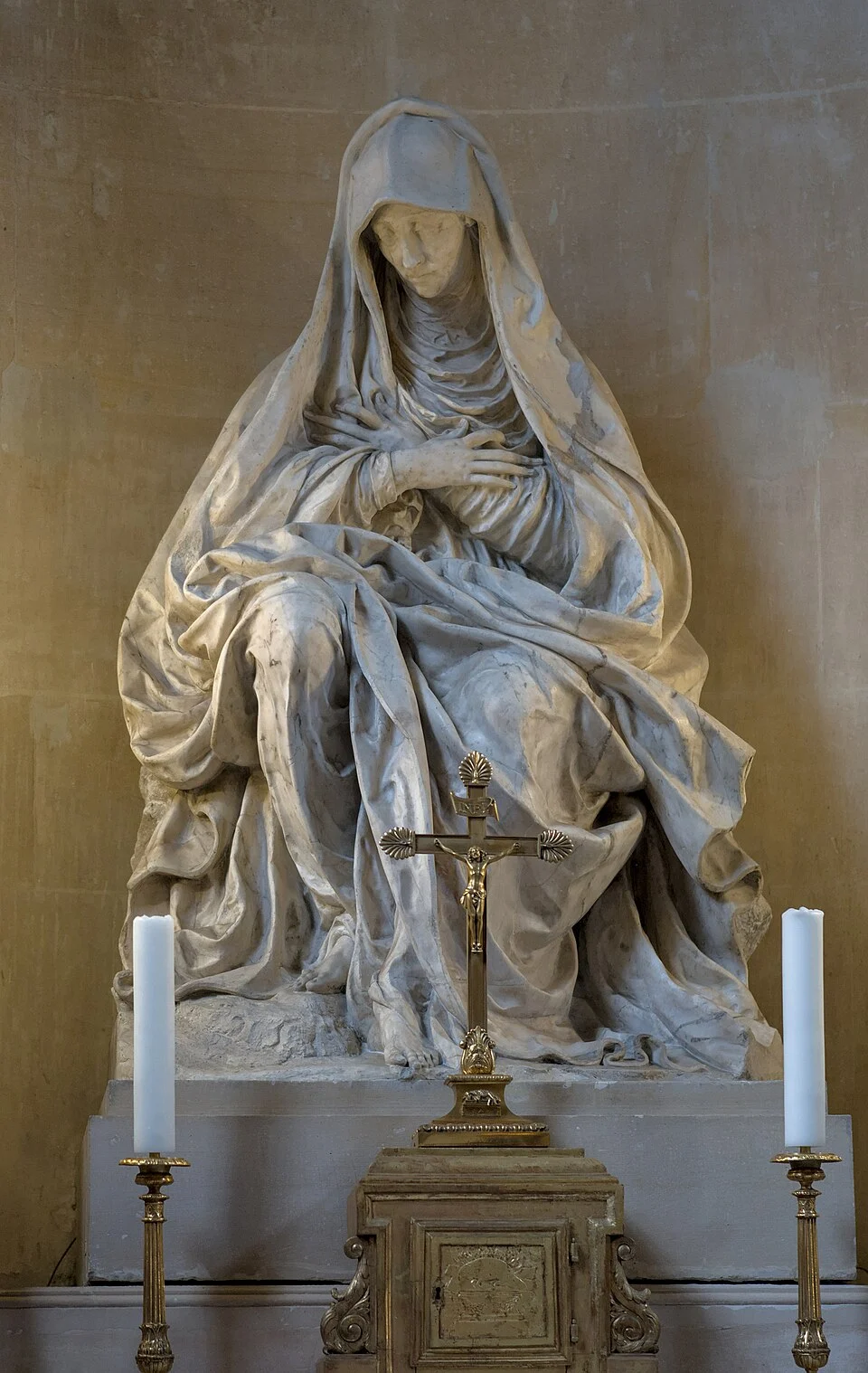
What makes the statue so unusual is that there’s nothing comforting or religious about it. Pilon sculpted a seated woman, her hands clasped, her face twisted with pain, the cloth on her head falling in heavy folds. It’s one of the most moving sculptures to survive from 16th-century Paris, and it stands here in complete silence while every other visitor heads for the Delacroix.
The organ, and the signature left by the builder of its predecessor
The organ case above the entrance was built in 1867 and is itself a protected heritage site. The instrument inside it was built in 1871 by the Martin workshop, restored in the 1970s and again in two stages, in the late 1990s and mid-2000s, and it has three keyboards and 40 voices.
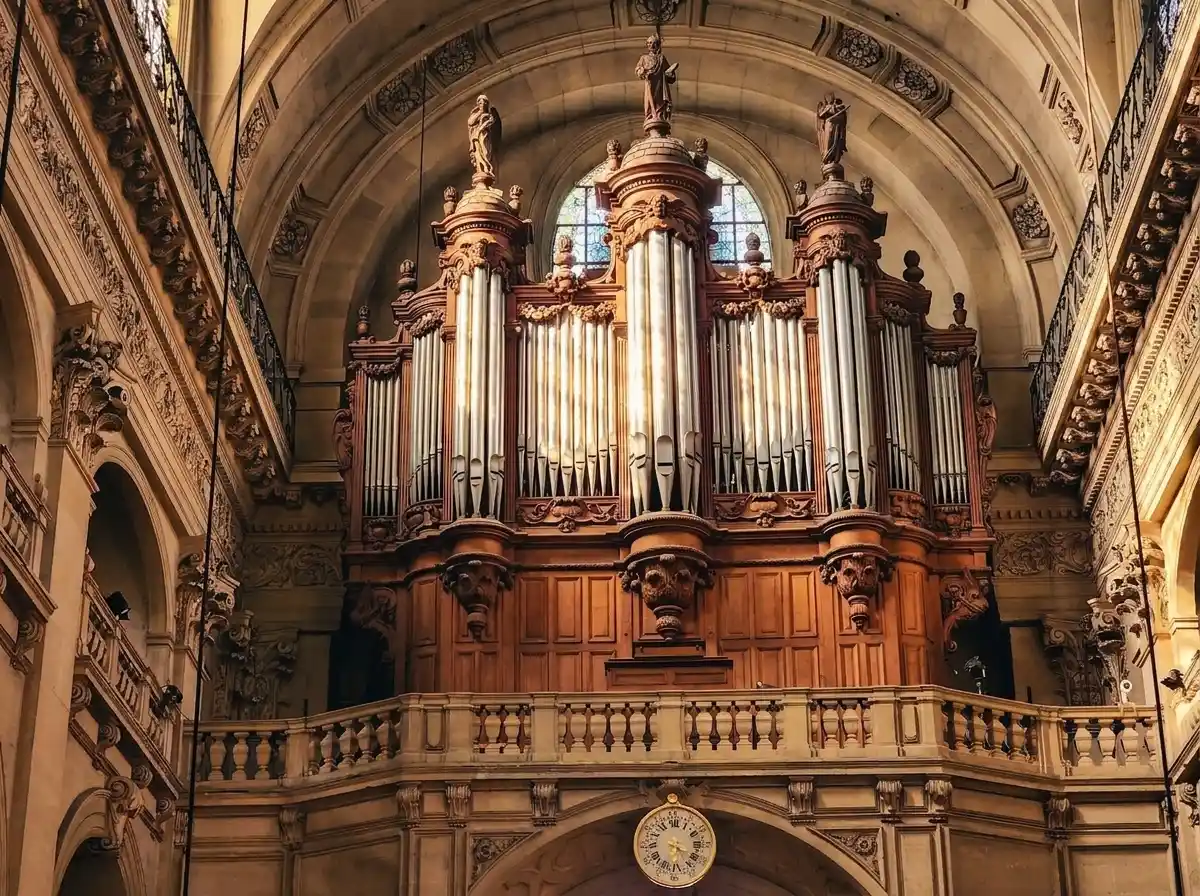
This isn’t the first organ here. The original instrument was built by the Clicquot workshop, France’s great dynasty of organ builders, and it was destroyed during the Revolution. What remains of it is a signature: carved into the gallery stones are many pieces of graffiti, among them the name Clicquot, written in the hand of the man who assembled the now-lost instrument. If the name caught your eye because you love Champagne, yes, it’s that same family, distantly related, from a winemaking dynasty in the Champagne region.
Classical music concerts take place in Parisian churches throughout the year, and Saint-Paul-Saint-Louis is one of the venues. You’ll find the full list of halls and churches worth catching a concert in, in my article on classical music in Paris.
The chapels, the statue of Saint Vincent de Paul, and the 1871 inscription
A chain of chapels runs along both sides of the nave, connected to each other by passages with arches, and walking through them is half the fun. The floor is checkered black and white, the arches are dark, and at the end of each passage a lit chapel opens up with its own altar.
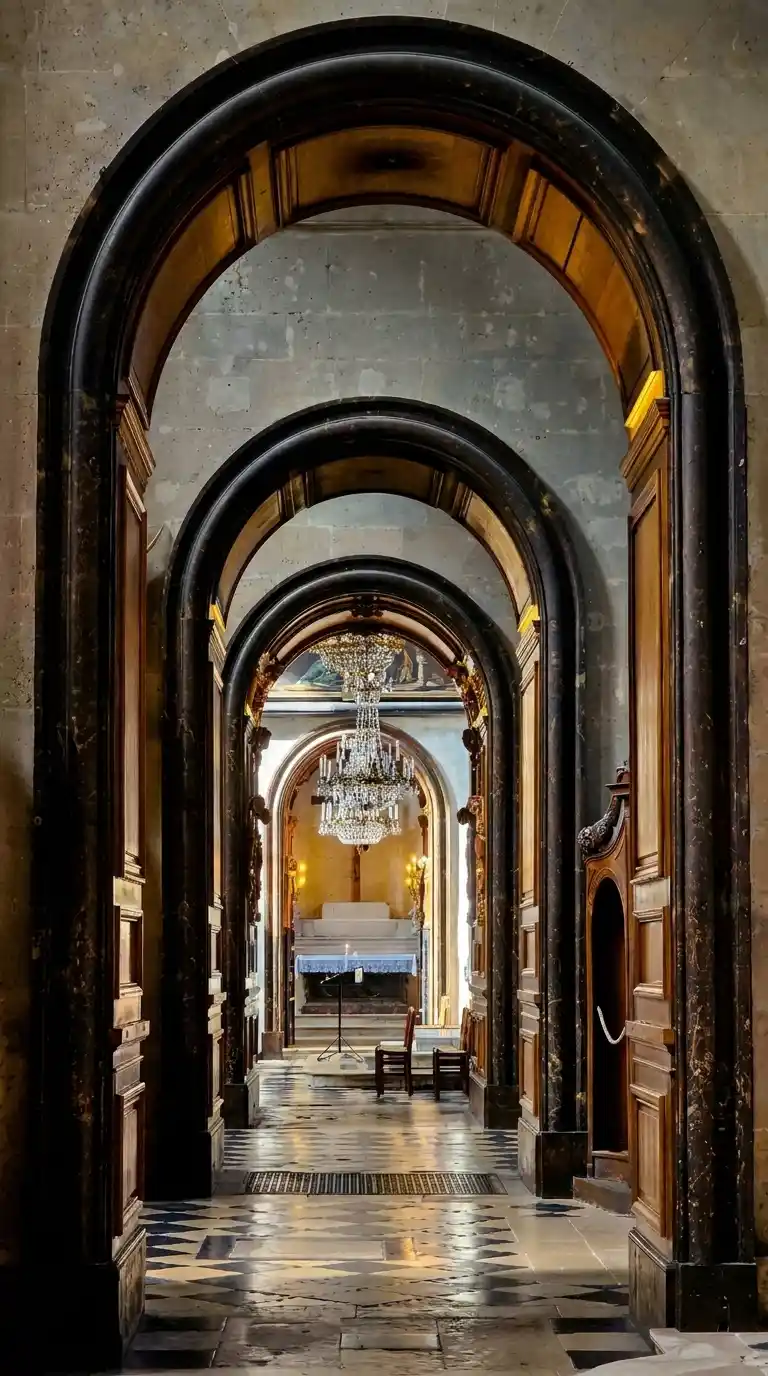
Inside the chapels and the passages around them, there are a few things you shouldn’t miss: the holy water basins donated by Victor Hugo, a plaque commemorating five priests of the Saint-Paul parish murdered in the September 1792 massacres, the gilded bronze altar with “Pilgrims at Emmaus” by François Anguier (1604-1669), and the catechism chapel, built in 1840 along the passage toward rue Charlemagne.
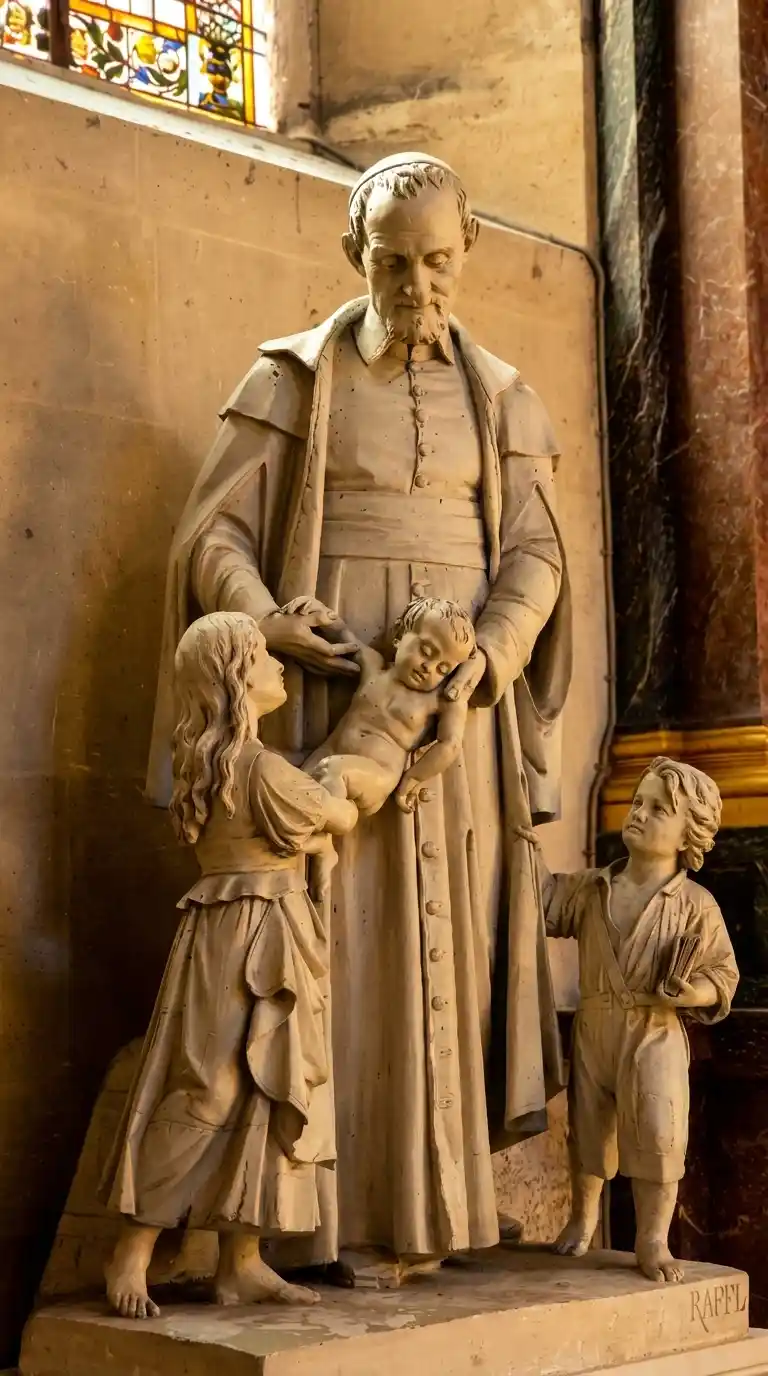
In one corner stands a statue of Saint Vincent de Paul, the priest who devoted his life to the poor of Paris and its abandoned children. He’s sculpted holding an infant in his arms, with a girl holding his hand and a boy carrying books pressed against his side, which is exactly how the 19th century liked to remember him.
And to finish, an interesting historical detail that everyone, myself included, missed (lucky that someone pointed it out to me). On the second column from the right, near the entrance, is carved the inscription “La république française ou la mort,” meaning “The French Republic or death.” It was carved by a unit of the Commune that called itself “the children of Père Duchêne,” between May 21 and 24, 1871, in the Commune’s final days, while the dome above their heads was burning. People have tried to clean it off again and again, and it’s still there.
The History of Saint-Paul-Saint-Louis Church
From 1580 to 1641: how the Jesuits got a church from the king
The story begins with an entirely different church. In the seventh century, around the year 632, a small chapel stood here, connected to a local cemetery called Saint-Paul-des-Champs, far outside the city among cultivated fields, to which the nuns of the Saint-Éloi convent on the Île de la Cité were brought. In 1125, the church that replaced the chapel became an independent parish, and it gave the entire neighborhood its name.
That parish was highly respected. Among those buried in the cemetery behind the church were the writer François Rabelais (died 1553) and the diplomat Jean Nicot (1530-1604), the man who brought tobacco to the French court and after whom nicotine is named. That church was demolished in 1797, and it vanished almost without a trace.
Meanwhile, in 1580, the Jesuits received a gift. Cardinal Charles de Bourbon (1523-1590) granted them the Hôtel Rochepot, a noble residence stretching from rue Saint-Paul to rue Saint-Antoine, and they built a small chapel there dedicated to Saint Louis. In that chapel, in 1626, a girl named Marie de Rabutin-Chantal was baptized; she would later become known as Madame de Sévigné (1626-1696).
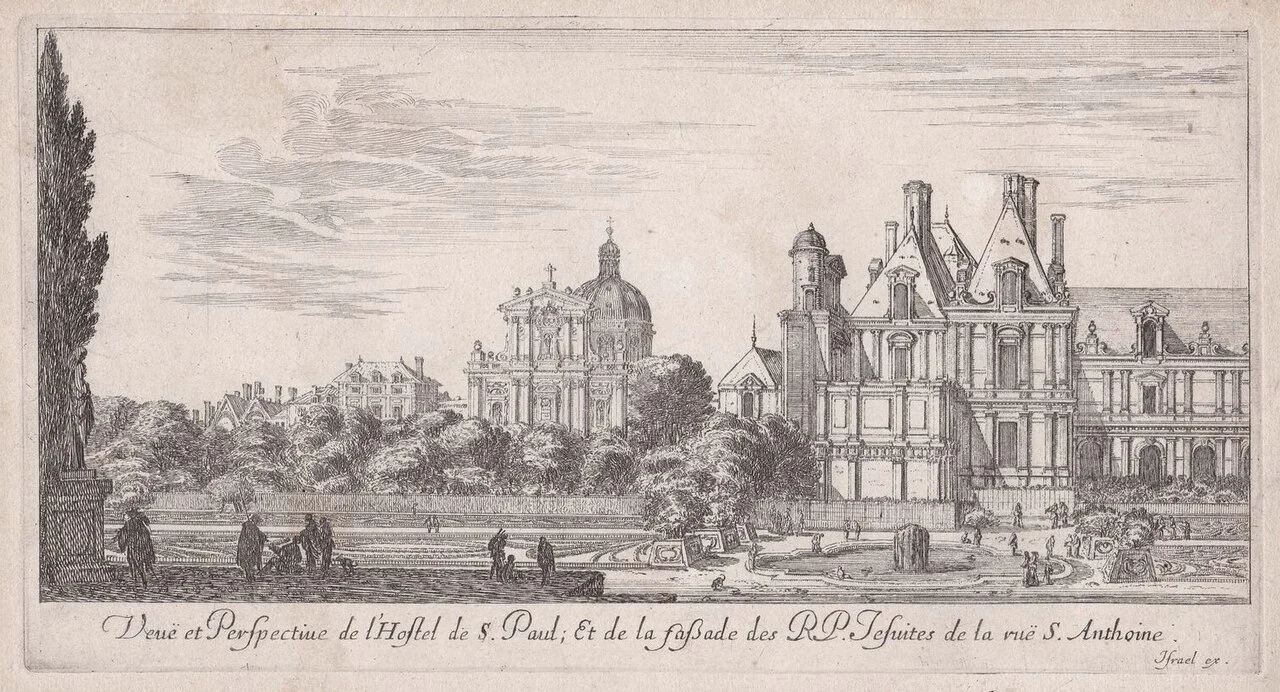
The Jesuits were expelled from France in 1595 and returned eight years later, only to find the chapel too small for them. In 1613, Louis XIII (king between 1610-1643) granted them land freed up by the demolition of the Philippe Auguste wall, and in 1629 they purchased more neighboring houses to expand the plot.
The cornerstone was laid in 1627, with funding from the king and from Cardinal Richelieu (Armand Jean du Plessis de Richelieu, 1585-1642) himself. The plans were drawn up by Étienne Martellange (1569-1641), a Jesuit architect who built more than 25 buildings across France, and he modeled it on the Chiesa del Gesù in Rome. The facade and the dome were designed by another Jesuit, François Derand (1588-1644), and the interior design was carried out by Charles Turmel.
On May 9, 1641, the feast of the Ascension, Richelieu celebrated the first Mass in the new church. Its name back then wasn’t the one you know today, but “the Church of Saint Louis of the Jesuit House,” named for Louis IX the Saint (king between 1226-1270), the ancestor of the king who funded it. The house itself, the Jesuit residence the church was attached to, is the building that today houses the Lycée Charlemagne.
What was built here was a statement. The Jesuits led the fight against the Protestants (the Counter-Reformation), and they needed a large, impressive building to draw in the crowds. They decided to abandon the Gothic style that prevailed in Paris at the time and build a Baroque church with a massive dome, one that had no rival in size anywhere in the city.
Sermons, music, and the hearts of two kings
For about one hundred and twenty years, the church was the Jesuits’ central stage in Paris, and in the 17th century, that was true in the literal sense. The sermon was a performance, and its stars drew crowds that competed for seats.
The greatest of them was Louis Bourdaloue (1632-1704), who preached here during Lent and Advent between 1669 and 1693. He preached with his eyes closed, like an actor who knows his lines by heart, and at the royal court they called him “the king of preachers and the preacher of kings.” In 1687, he delivered the eulogy here for the Grand Condé, and when he died on May 13, 1704, he was buried in the crypt beneath the choir.
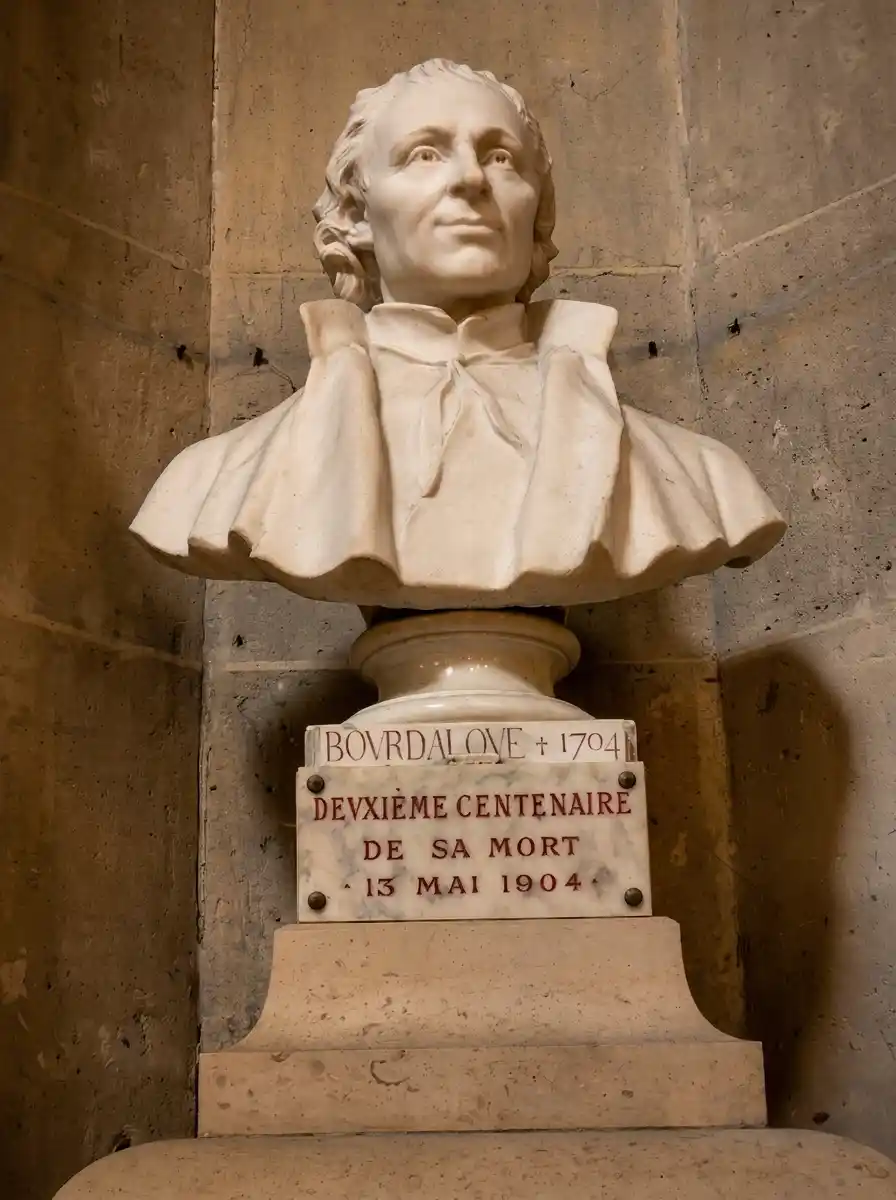
His bust still stands in the church today, and beneath it is an inscription noting that it was installed on May 13, 1904, the two-hundredth anniversary of his death. Madame de Sévigné, who, as mentioned, was baptized here, never missed one of his sermons.
And here comes the detail that kept his name alive in French to this day, though not in a context he’d have been proud of. His sermons ran two hours or longer, the high-society women sat in the front rows and couldn’t get up in the middle, and according to tradition they solved the problem with a small portable chamber pot hidden under their wide skirts. The object has been called a “bourdaloue” ever since; Alexandre Dumas tells the story too, in his memoirs, though in fairness, the direct connection to the preacher himself was never actually proven. His name also stuck to a type of ribbon worn on hats and to a pear tart with almond cream, and somehow it’s the chamber pot that stuck in the dictionary.
Bourdaloue wasn’t alone. Jacques-Bénigne Bossuet (1627-1704), France’s greatest orator, and Esprit Fléchier (1632-1710) also delivered sermons here. In music, the position of music director of the church was held between 1688 and 1698 by Marc-Antoine Charpentier (1643-1704), followed by Henri Desmarets, André Campra, Louis Marchand, and Michel-Richard de Lalande. That list of composers is close to a who’s who of French music during the reign of Louis XIV.
Here’s an example of one of the works written for this church:
The strangest detail in the church during those years hung above people’s heads. On either side of the choir, inside stone arches, hung two silver angels wrapped in vermeil, and inside them were the embalmed hearts of Louis XIII on the left and Louis XIV on the right. Both angels were created by the sculptors Jacques Sarazin (1592-1660) and Guillaume Coustou (1677-1746), and they’re the reason the kings of France treated this church as a family possession.
In the crypt, dozens of Jesuits were buried between 1580 and 1764, among them Father de la Chaise (François d’Aix de La Chaise, 1624-1709), Louis XIV’s personal confessor for more than thirty years. You know his name well, because Paris’s most famous cemetery is named after his country house.
In 1762, the end came. King Louis XV (king between 1715-1774) expelled the Jesuits from France, and the church was handed over to the priests of the Sainte-Catherine convent, which stood on the nearby Place Sainte-Catherine. They rearranged the choir, brought in a marble communion rail and the tomb monuments from their own chapel, and that’s how the mixed space you see today came to be.
From the Revolution to today: a temple of Reason, vanished hearts, and a wedding
During the French Revolution, the church became a Temple of Reason, and it was here that Robespierre (Maximilien Robespierre, 1758-1794) delivered a speech against the atheism of the Hébertists. Five priests of the Saint-Paul parish who refused to swear allegiance to the Civil Constitution of the Clergy were murdered in the September 1792 massacres, and a plaque in their memory still hangs in the church today.
In 1793, it was the silver angels’ turn. The architect Louis-François Petit-Radel (1740-1818) was tasked by the Committee of Public Safety with melting down the silver hearts and destroying the royal remains. The lead from the urns was melted, and the hearts themselves were bought up by painters.
The reason is exactly as strange as it sounds. At the time, painters used a sought-after brown pigment called “mummy brown,” made by grinding up dried organic matter with oil, which gave varnish a tone no mineral pigment could match. Martin Drolling (1752-1817) reportedly bought the heart of Louis XIII, and another painter received the larger of the two. What remained of them was returned during the Restoration to Louis XVIII, who deposited them at Saint-Denis, and Drolling received a gold snuffbox in exchange.
After the Revolution, the neighborhood was left without a parish church, since the old Saint-Paul had been demolished. The Concordat of 1802 restored Catholic worship, the parish moved into the empty Jesuit church, and in January 1803 the parish council asked the Cardinal de Belloy to attach the name Saint-Paul to the name Saint-Louis. That’s how the double name was born, and along with it came the clock and bell of the vanished church.
In 1824, the prefect of the Seine commissioned a promising young painter named Eugène Delacroix to create a painting for the left transept. The painting was shown at the Salon of 1827, the same year Delacroix caused a scandal with “The Death of Sardanapalus,” and from there it was moved to the church.
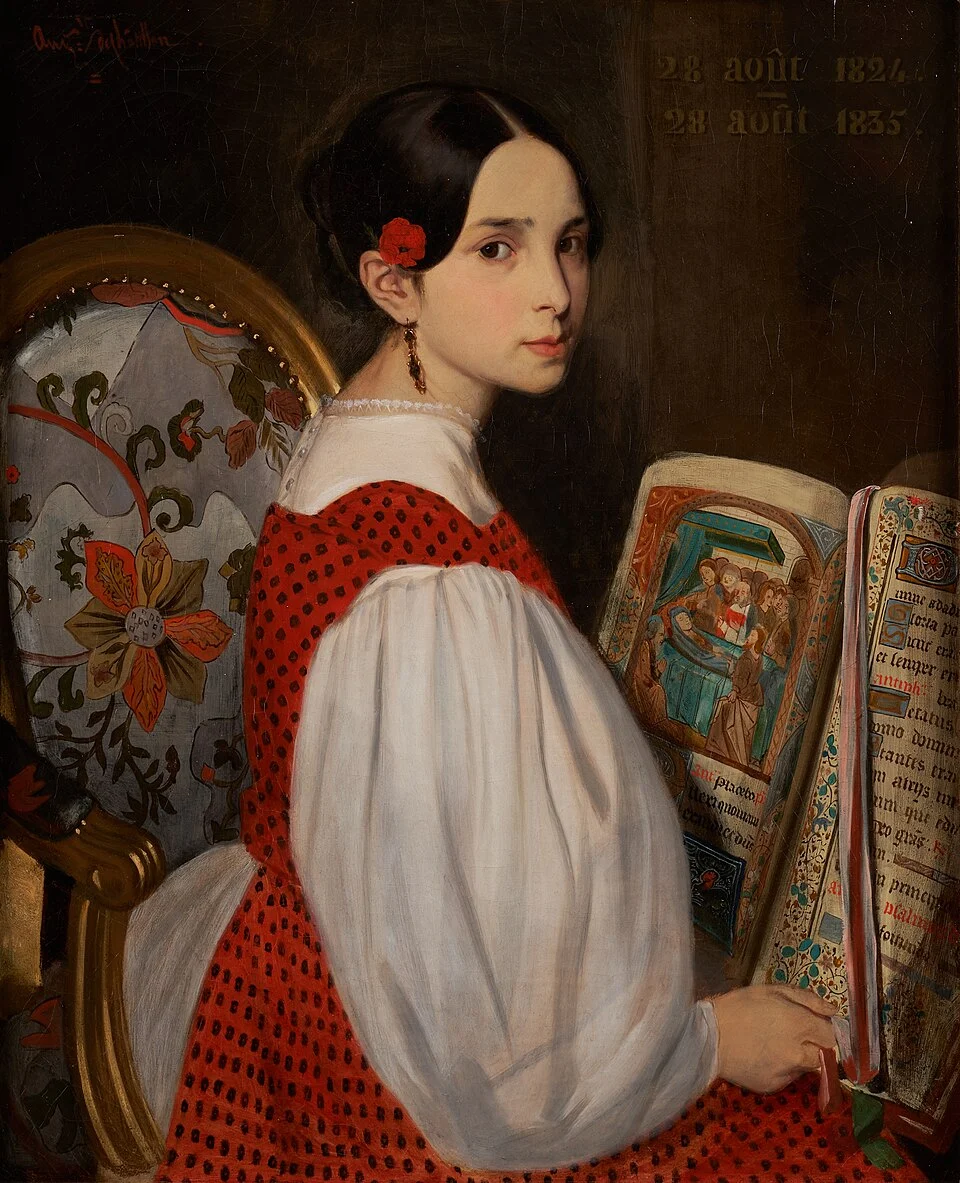
On February 15, 1843, a small, quiet wedding took place here: Léopoldine Hugo (1824-1843), the eldest daughter of Victor Hugo (1802-1885), married Charles Vacquerie (1817-1843). Normally parents don’t sign parish registers, but Léopoldine was a minor and needed her father’s consent, which is why Hugo’s own signature is preserved in the church’s records.
In honor of the wedding, Hugo donated two shell-shaped holy water basins to the church, and they’re still at the entrance today. Seven months later, on September 4, 1843, Léopoldine and her husband drowned in the Seine near the village of Villequier, and that grief stayed with Hugo for the rest of his life. Years later, he chose to have Cosette and Marius married in this very church in “Les Misérables.”
The 19th century dealt the church two major blows. During the revolution of 1830, it was ransacked, and in 1871, during the Bloody Week of the Commune, it was ransacked again and the dome caught fire. The inscription carved into the second column from the right is what remains from those days. On February 10, 1887, the church was declared a protected heritage site (monument historique), and since 1905 it has belonged to the City of Paris, which is responsible for preserving the building and the art treasures inside it. The facade was cleaned in 2011 and 2012, the cross and lantern above the dome were restored afterward, and restoration of the stained-glass windows has continued from 2017 to today.
Today it’s a fully active parish church, with daily Masses, a choir, youth groups, and a soup kitchen. It’s also one of the ten churches I recommend seeing in Paris.
Attractions Within Walking Distance of Saint-Paul-Saint-Louis Church
The church sits in the heart of the 4th arrondissement, one of those areas where you can skip the metro entirely. Here are the places I recommend pairing with your visit:
-
Free admission
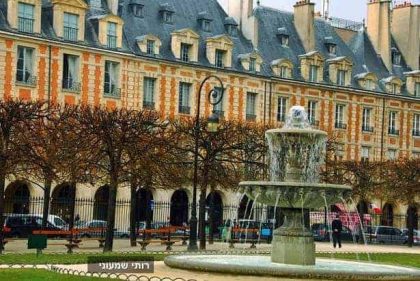
Place des Vosges
Five minutes’ walk east, and Paris’s first public square. If you go via rue de Birague, you’ll enter it through the archway under the King’s Pavilion.
-
Free admission to the courtyard
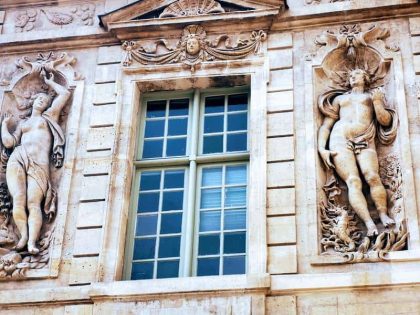
Hôtel de Sully
A 17th-century private mansion on the same street, with a carved courtyard and a back garden that leads through a secret passage straight to Place des Vosges.
-
Free admission to the permanent collection
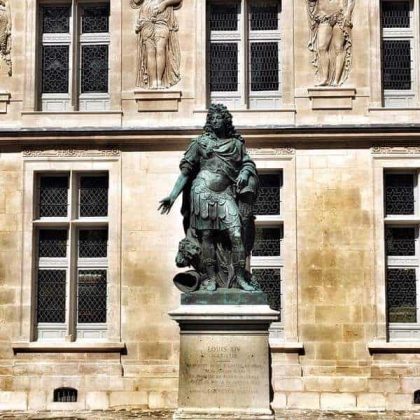
Musée Carnavalet
The museum of the history of Paris, and my favorite museum in the city. After the church, it fills in exactly the gaps, from medieval Marais to the Revolution.
-
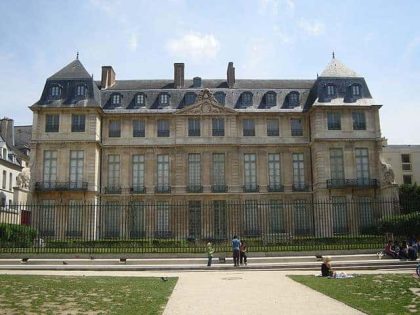
Musée Picasso
Picasso’s massive collection inside a 17th-century mansion. It’s worth booking a ticket in advance, since the line at the entrance is long even on ordinary days.
-
Free admission
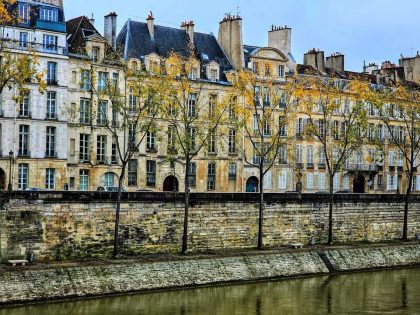
Île Saint-Louis
The quiet island in the middle of the Seine, with one main street, 17th-century mansions, and famous ice cream shops. A perfect walking route for a late afternoon.
You’ll find a full list of sites in the arrondissement on the 4th arrondissement of Paris page.
Where to stay near Saint-Paul-Saint-Louis
In my opinion, this area is one of the best in Paris to stay in: fully central, full of restaurants and shops, with a metro station on line 1 right at your door and everything that matters within walking distance. I myself stay in Udi’s apartments on most of my visits, and a few of them are less than a ten-minute walk from the church.
-
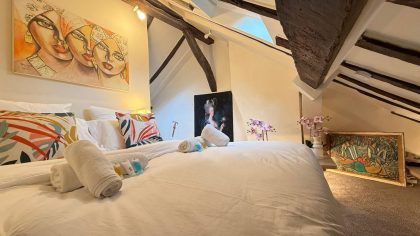
Udi’s apartment on Rue des Rosiers
The closest of Udi’s apartments to the church, in the heart of the Jewish Quarter and the same walking distance from Saint-Paul station. A stylish, well-equipped studio, perfect for a couple planning to spend most of the day out and about. Note that there’s no elevator in the building.
-
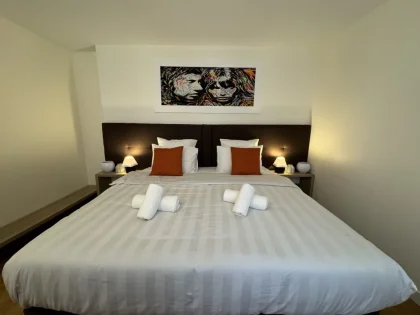
Udi’s apartment on Rue Sainte-Croix-de-la-Bretonnerie
The apartment sits on one of the busiest streets in the Marais, but all its windows face an inner courtyard and it’s remarkably quiet. There’s an elevator, and from here you can walk to the church, to the Hôtel de Ville and to the Île de la Cité.
-
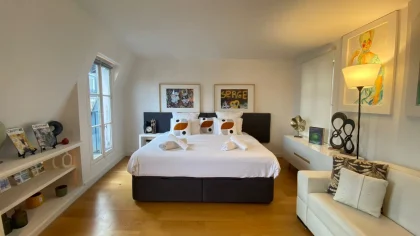
Udi’s apartments on Rue Simon le Franc
A preserved 19th-century building between the Marais and the Centre Pompidou, with three apartments of different sizes and an elevator, which is a rare commodity in Paris. This is the apartment I try to grab every time I visit, and I don’t always manage to.
And if you prefer a hotel, here are my recommendations in the 3rd and 4th arrondissements, from pricier to more affordable:
-
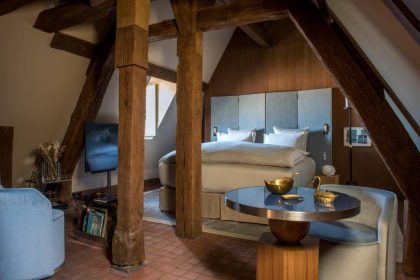
Cour des Vosges
Twelve rooms in a 17th-century mansion that sits right on Place des Vosges itself, all facing the square. There’s no reception in the usual sense: you ring a bell and someone opens the door for you. In the basement is a small Roman bath under vaulted ceilings, and upstairs a tea room. Very expensive, so I’d only recommend booking here if the room with the view of the square is available.
-
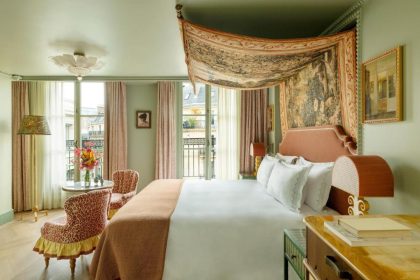
Le Grand Mazarin
61 rooms in a colorful, richly layered design by Martin Brudnizki, and in the basement an eight-meter pool under vaulted ceilings with a hand-painted fresco, along with a hammam and a jacuzzi. The downside: the restaurant and bar are a pilgrimage site for Parisians, and evenings can get noisy.
-
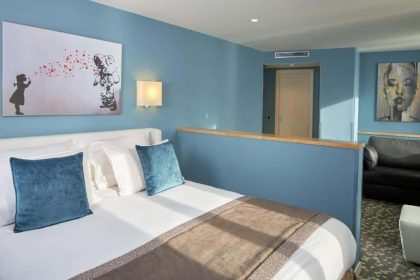
Grand Hôtel Malher
A family-run hotel for four generations now, 28 rooms, and one minute from Saint-Paul station. Breakfast is served in a 17th-century vaulted wine cellar, which is the loveliest part of the hotel. The elevator is tiny, so I recommend asking for a higher floor and packing light.
-
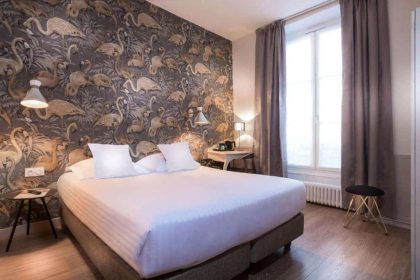
Hôtel Jeanne d’Arc
34 rooms on a tiny street that opens onto Place du Marché Sainte-Catherine, one of the most pleasant corners of the Marais. A giant mosaic mirror hangs in the breakfast room, and every room is decorated differently. The standard rooms are only 14 square meters, so it’s worth upgrading.
-
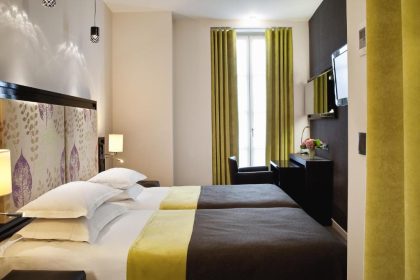
Hôtel Caron
Only 18 rooms, a free minibar restocked daily, L’Occitane products in the bathrooms, and air conditioning you control yourself. On the other hand, there’s no lobby and no bar, and the bathrooms are tiny. For a couple, I recommend a double room rather than a twin.
-
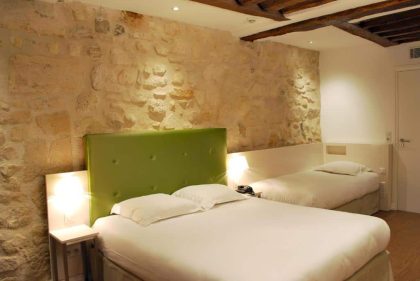
Hôtel De La Herse d’Or
28 rooms on the same street as the church, a hundred meters from the Bastille metro station. Breakfast is served in a room with exposed stone and original beams, and there’s a reading room and luggage lockers. Important warning: not all rooms have a private shower, so it’s worth checking with the hotel before you book.
You’ll find more options on the pages Recommended hotels in the 4th arrondissement, Recommended apartments in the 4th arrondissement, Hotels in the northern Marais and Apartments in the 3rd arrondissement. If you’re still deciding which area to stay in, read the article Where to stay in Paris.
FAQ about the Church of Saint-Paul-Saint-Louis
Answers to the questions I get most often about the church and the area:
