
In short
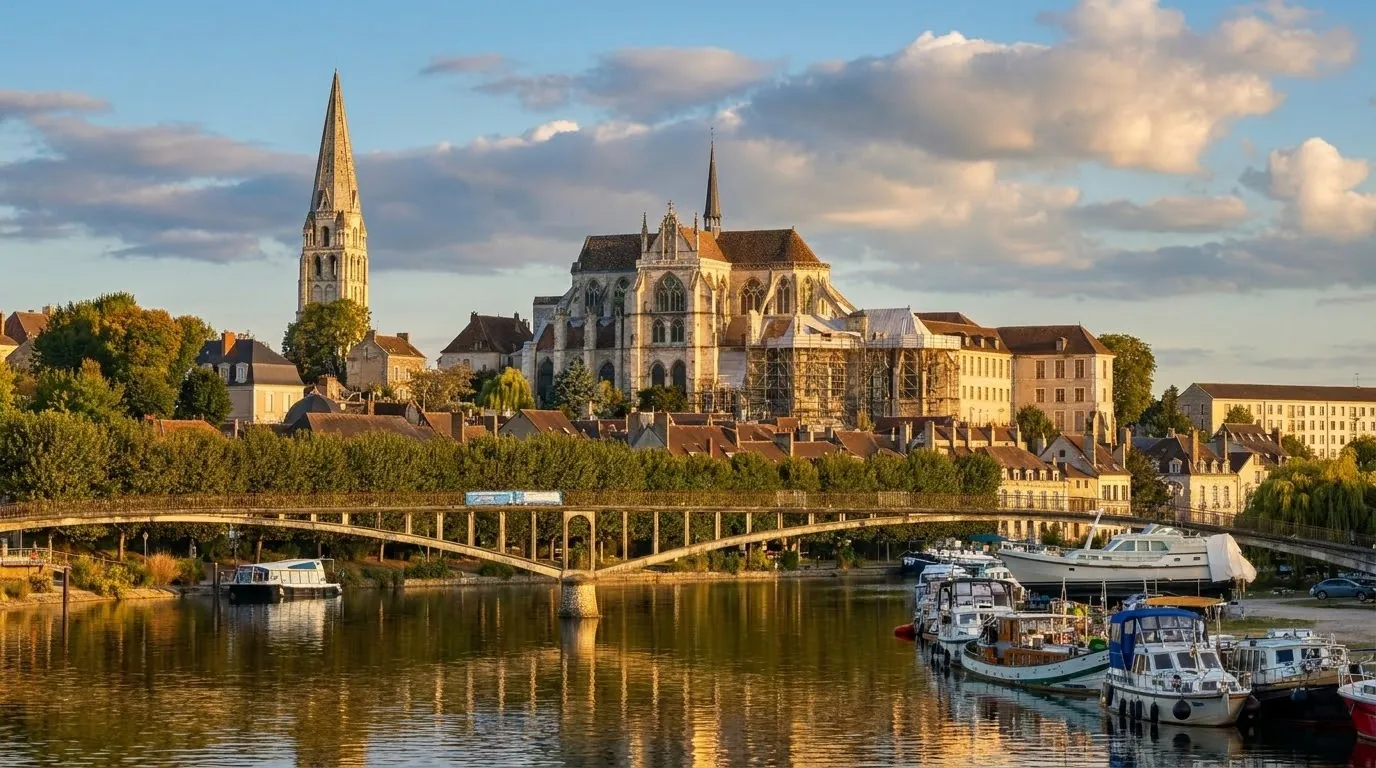
- What’s there: a Gothic cathedral with only one tower (the second was never finished), a ninth-century Carolingian crypt with the oldest wall paintings in France, an entire neighborhood of timber-framed houses, and riverside docks that were, for centuries, the town’s real livelihood.
- Status: it has held the “City of Art and History” label since 1995, the protected historic center covers sixty-seven hectares, and you can see it all on foot.
- Getting there: about two hours by direct TER train from Paris-Bercy station, or an hour and forty minutes by car from Paris on the A6 highway.
- How much time: a full day for the essentials, two days with the museums and cellars, three if you add Chablis too.
- When: spring and fall. In October the light on the Yonne and the color of the surrounding vineyards are something else entirely, and the lines are short.
- And by the way: it’s also the gateway to Chablis and the vineyards of the Auxerrois. If you’re doing the Burgundy wine route anyway, there’s no reason on earth to stay anywhere else.
Last October, on a trip through Burgundy, I set down my bags in Auxerre for a few days (at the Hôtel Les Maréchaux, you’ll find all the details in the hotels section) and made it my base. It’s a decision I highly recommend, and it led me to discover a city I had no idea was so packed with stories. Most travelers speed past Auxerre on the A6 highway on their way to Lyon or Provence without stopping, but it’s no mere pit stop. It’s a city where things happened.
Before anything else, since most of you are practical people, let me start with everything you need to get there, plan your days, and avoid showing up at a locked door. Then come the sights themselves, and at the end, hotels in every price range.
By the way, Auxerre was part of my Burgundy itinerary, where you’ll find every day of the trip, plus the hotels and restaurants.
How to Get to Auxerre, and What You Should Know Beforehand
By train from Paris. A direct TER train runs from Paris-Bercy station to Auxerre-Saint-Gervais station in about two hours. Keep in mind that Auxerre is the end of the line, so no trains pass through. From the station, you can walk everywhere in the historic center. The easiest way to book tickets in advance is through Omio, which brings the train operators together on one screen and saves you the hassle of the French website.
By car. According to the local tourist office, it’s an hour and forty minutes’ drive from Paris. If you’re already heading south on the A6 highway, it’s only a tiny detour.
By boat. Yes, really. Auxerre is the northern starting point of the Canal du Nivernais, which runs to Decize and handles the changes in elevation with more than a hundred locks. Several companies along the canal rent houseboats, and in most cases you don’t need a boating license for the smaller boats. If you have a week to spare and you’re looking for something other than yet another road trip, this is one of the most beautiful ways in France to see Burgundy from the water.
How much time. A full day covers the essentials at a reasonable pace. Two days leave time for the museums, the Maison Marie Noël, and the cellars outside the city. With three days you can fit in Chablis too.
When. Spring and fall. In October the light on the Yonne and the color of the surrounding vineyards are something else entirely, and the lines are short too.
And by the way, two small things that will save you some aggravation. The first: the X in the middle of the name is silent. It’s pronounced “oh-SAIR,” not “ock-SAIR,” and certainly not “ock-ZAIR” (the French forgive a lot of things, but not this). The second: many places in Auxerre close on days you wouldn’t expect. The cathedral’s crypt is closed on Sundays, the abbey closes on Tuesdays in the low season and for all of January, and the Musée Leblanc-Duvernoy is open to the public only from April through the end of September. Plan around this, because it decides which sight goes on which day.
A Brief History (and I mean brief)
Auxerre wasn’t founded so much as split off. In the third century the Romans decided to separate the southern part of the Senones’ territory and make it an independent city called Autessiodurum. That’s how the region’s second city was born, the one Sens always outranked. What made it a real city was the crossing of two routes: the Yonne river, navigable all the way to Paris, and the Via Agrippa, the Roman road that connected Lyon to the north. In the summer of 2025, during the construction of a bypass road three kilometers south of the city, archaeologists uncovered a Gallo-Roman villa with baths, marble and mosaics.
From here the story continues along three threads worth remembering as you walk around the city.
The church. Auxerre was the seat of a bishop from the fourth century on, and for centuries its bishop was the real ruler. The Huguenots looted the cathedral in 1567, the Revolution abolished the bishopric in 1790, and Auxerre never got it back.
The river. For three hundred years, massive log rafts from the Morvan floated through here on their way to heat Paris, and Auxerre was the transfer point. Then, in 1849, the railway from Paris stopped at Laroche-Migennes and never came into the city. Auxerre was left with a branch line and a terminus station, which is exactly why its historic center still stands today.
The vine. In the mid-19th century, the Yonne was Burgundy’s great wine department, with forty thousand hectares of vineyards. Phylloxera and the train that brought cheap wine from the south nearly wiped it out entirely, and official recognition for Auxerre’s wine didn’t return until 1992.
There are two anecdotes I can’t resist including, even in the short version. The first: until 1538 the cathedral held an Easter ceremony in which the clergy danced around the labyrinth on the floor and played with a large yellow ball (yes, inside the church). The second: on March 18, 1815, Marshal Michel Ney (1769-1815) met Napoleon here, after promising the king he’d bring him back in an iron cage, and according to witnesses he stood in the waiting room with tears in his eyes (the night before, Napoleon had slept at the Hôtel de la Poste in Avallon, 50 kilometers to the south, and I wrote a separate article about that).
I tell both of these anecdotes, and everything in between, in full in my article The History of Auxerre: From a Roman Villa to the French Championship. If you’re the type who reads the plaques, start there and come back here.
What not to miss in Auxerre (and all the practical information)
Cathédrale Saint-Étienne and the Romanesque crypt
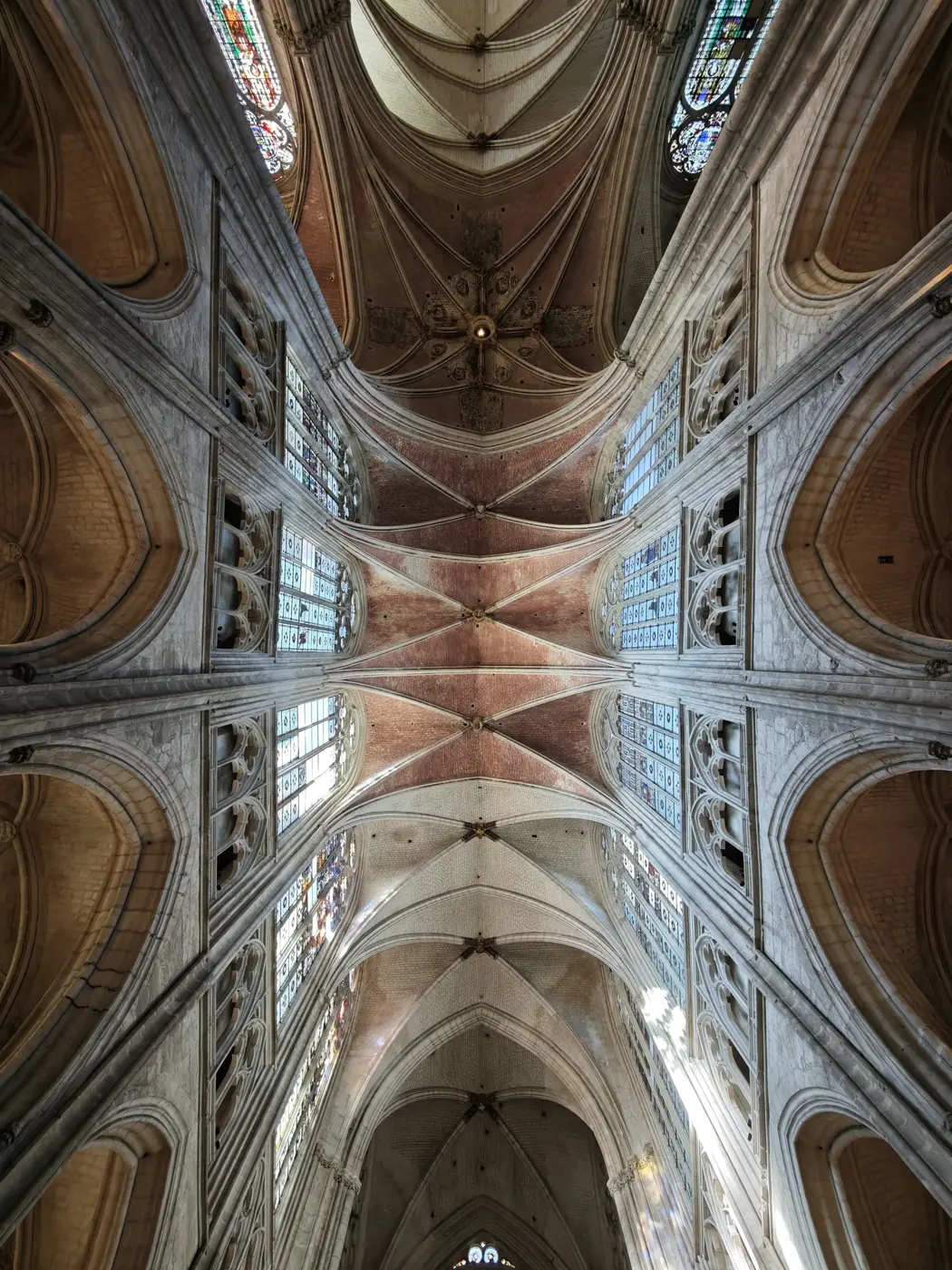
The Gothic cathedral you see today is the fifth building to stand on this spot since the fifth century (the first three burned down, one after another). Construction began in 1215 at the initiative of Bishop Guillaume de Seignelay (c. 1164-1223) and continued for nearly three hundred years. Look closely at the facade: there’s only one tower. The second one was never finished, which is what gives the cathedral the asymmetrical silhouette you see from the other side of the river.
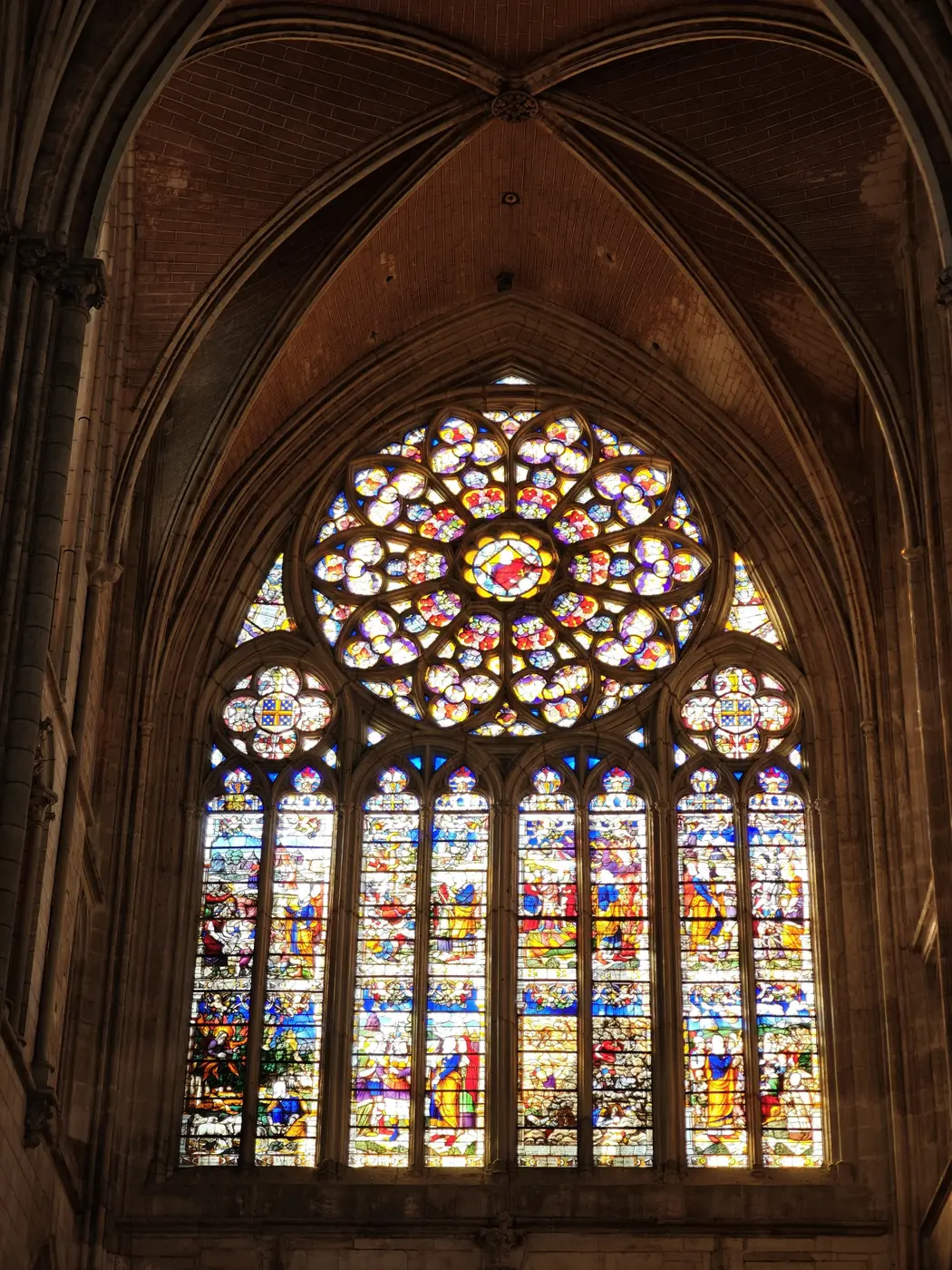
The portals tell the story of the Old and New Testaments, and the 13th-century stained glass in the choir’s ambulatory is among the finest in France. But the real reason to go inside is under the floor.
The crypt is all that remains of the 11th-century Romanesque cathedral. It runs about 37 meters long, and Eugène Viollet-le-Duc (1814-1879) restored it in the 19th century. In the central chapel, on the vaulted ceiling, you’ll find the wall painting known as “Christ on Horseback”: Jesus riding a white horse, surrounded by four mounted angels, around a large bejeweled cross. It’s a scene from the Book of Revelation, and it’s the only representation of its kind known in France. Scholars still argue over its origin. Stand under it for a quiet minute. It works.
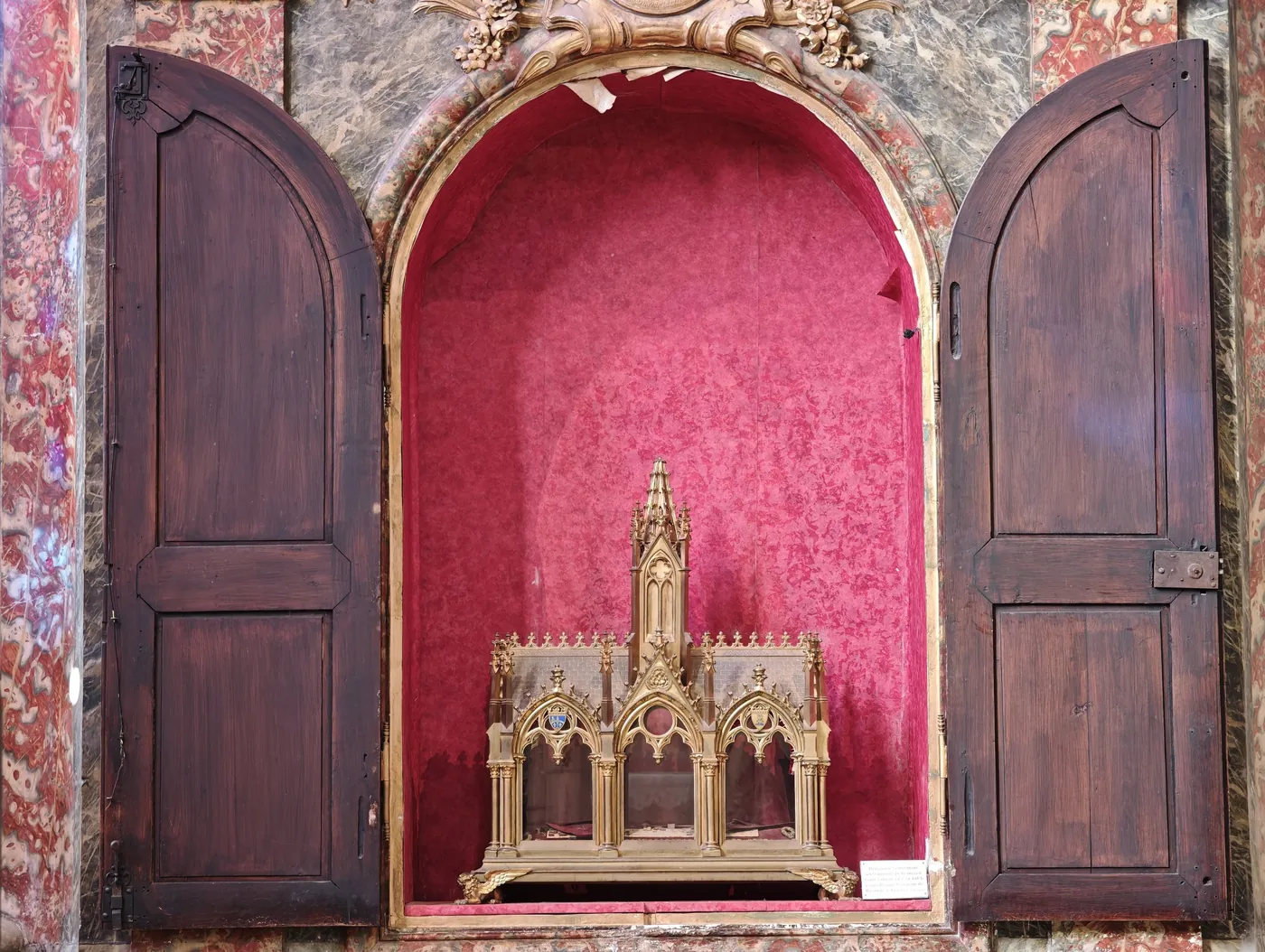
The same ticket also gets you into the treasury. The cathedral’s original treasury was scattered three times over the centuries: in 1359, when the English took the city during the Hundred Years’ War; in 1567, by the Protestants; and in 1790, during the Revolution. What you see today is a collection of about four hundred pieces bequeathed by a local collector named Germain Diry in 1869, including 13th-century Limoges enamels, carved ivories and illuminated manuscripts.
- Admission to the cathedral itself: free.
- Crypt and treasury: separate ticket, between 2 and 4 euros per person.
- Hours: the crypt and treasury keep their own hours, mostly in the afternoon, with extra morning hours during high season. Closed on Sundays and holidays. I recommend calling ahead on the day of your visit, since religious services can interrupt visits.
- Address: Place Saint-Étienne.
Abbaye Saint-Germain and the Carolingian crypts
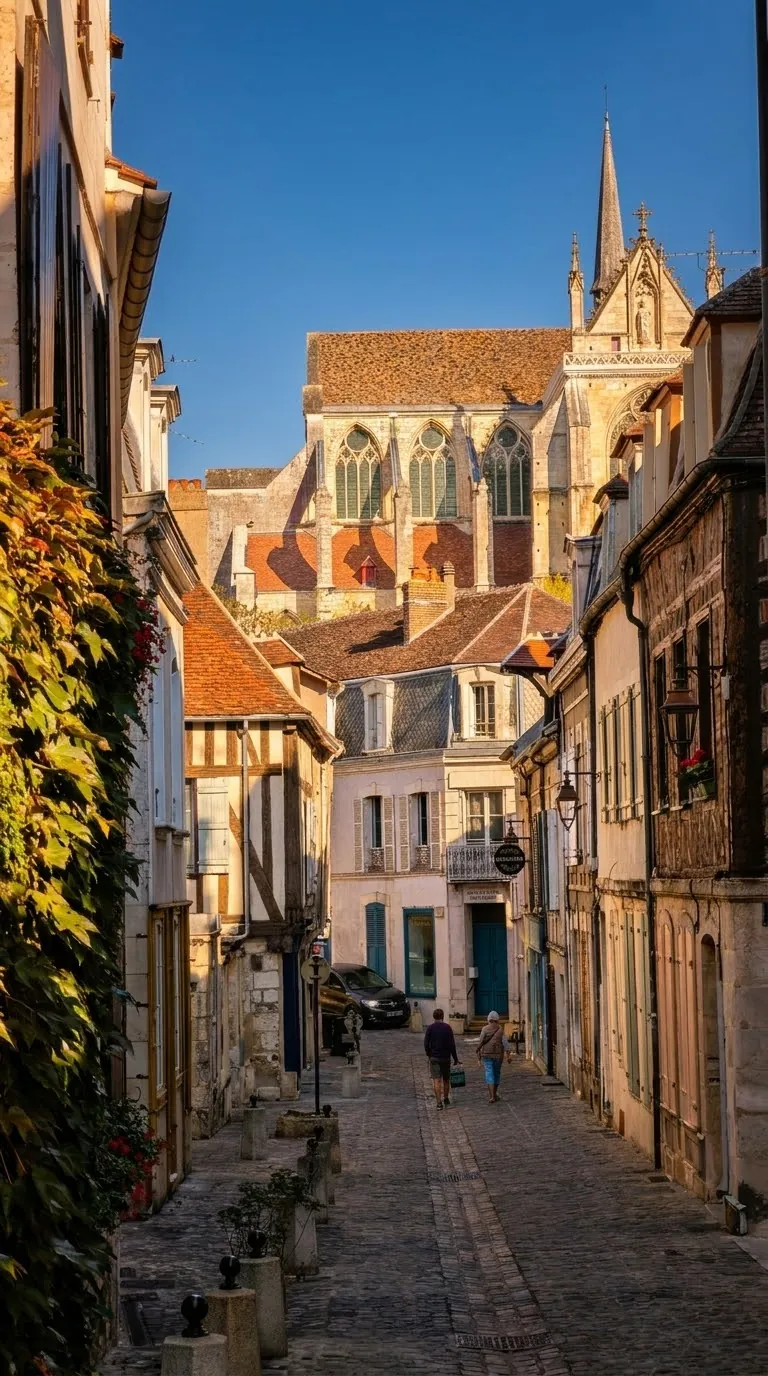
Five hundred meters north, along the riverbank, is the place that actually brought me to this city in the first place.
This abbey complex is almost complete, and it reads like a geological cross-section of fifteen hundred years: ninth-century Carolingian crypts, the 12th-century Romanesque Tour Saint-Jean with its octagonal stone spire, a chapter house from the same century, a 14th-century Gothic cellar, and a cloister with residential wings from the 17th and 18th centuries.
The crypt itself, built between 841 and 859, is the reason people make a special trip here. It has carved column capitals, two original ninth-century oak beams still bearing the weight above, and the oldest surviving wall paintings in France. The bishops of Auxerre are buried here, and this is where you’ll find the sarcophagus of Saint Germanus.
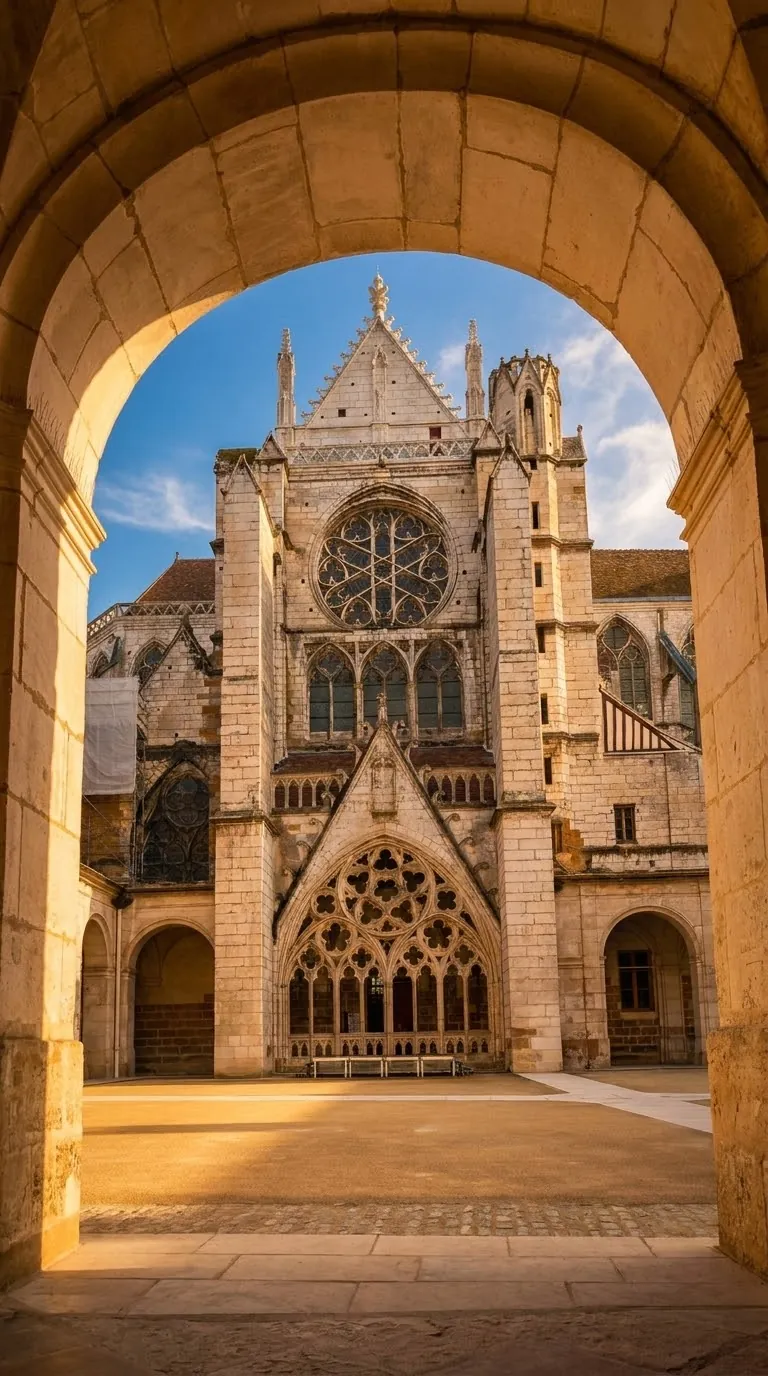
Important to know: you can only enter the crypt on a guided tour. You can’t visit it on your own.
- Hours for the complex: April 1 to October 31, every day, 10:00-13:00 and 14:00-18:00. February-March and November-December, every day except Tuesday, 10:00-12:00 and 14:00-17:00.
- Closed: May 1, December 25, and all of January.
- Self-guided visit to the complex and museum: free.
- Guided tour of the crypt: 8 euros per person, about 40 minutes.
- Extended tour “Paroles de moines”: 10 euros, an hour and a half, including the monastic spaces and the crypt.
- Address: 2 bis Place Saint-Germain. Book ahead through the abbey’s website or by phone.
My tip: if you only have one day in Auxerre, this is the place you have to visit. Book the crypt tour in advance, because the number of participants is limited.
The clock tower and the old quarter
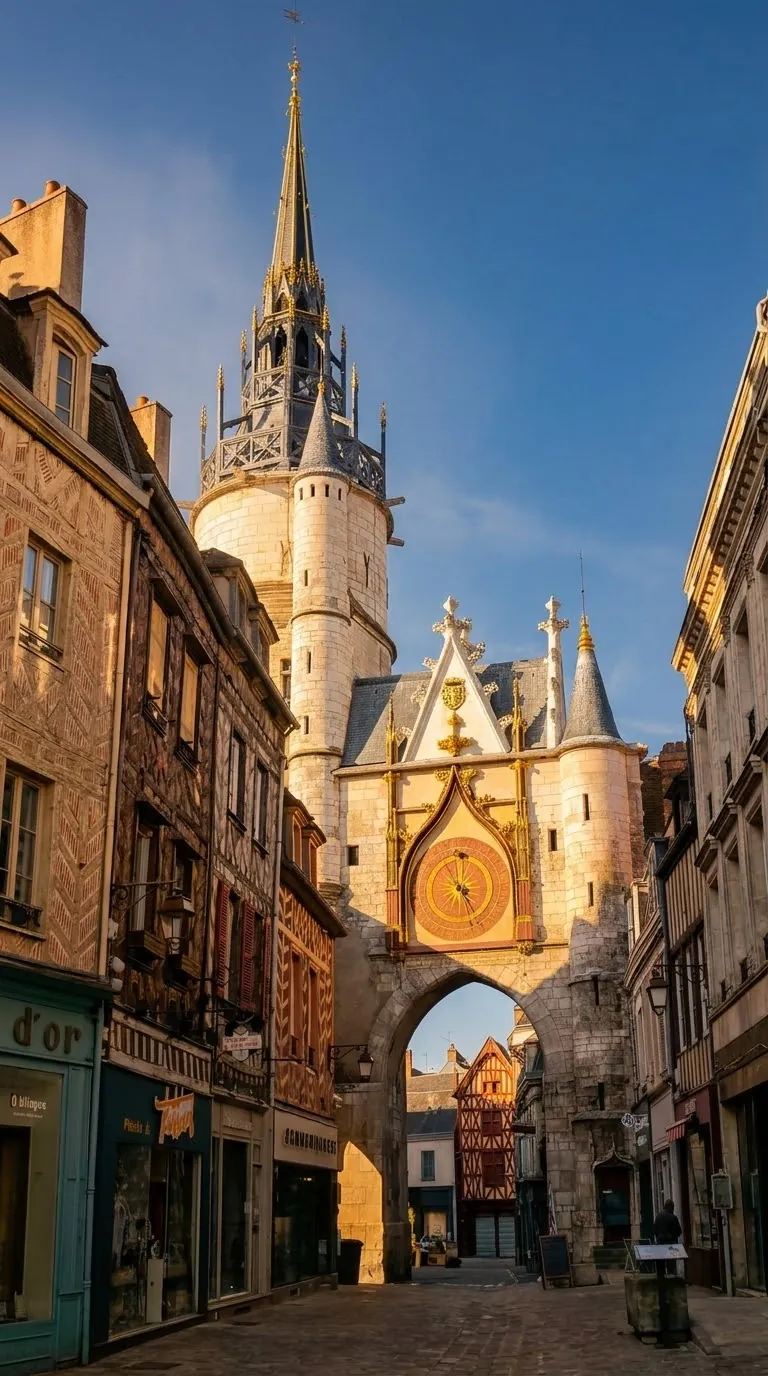
The Tour de l’Horloge was built in the 15th century on the base of a tower from the old Gallo-Roman wall. It started out as the count’s prison, and in 1483 it was converted, along with its bells, into the city’s clock tower and belfry, a symbol of municipal autonomy. A fire damaged it in 1825, and it was largely restored at the end of the 19th century.
The mechanism has been running since 1483 and has two hands. One is solar, completing a full turn each day, and the other is lunar, lagging behind it. The two align exactly at noon on the new moon and at midnight on the full moon. In other words, this clock shows both the time and the phase of the moon.
Important before you plan your visit: according to Auxerre’s tourist office, you can’t go inside the tower. It can only be seen from the outside.
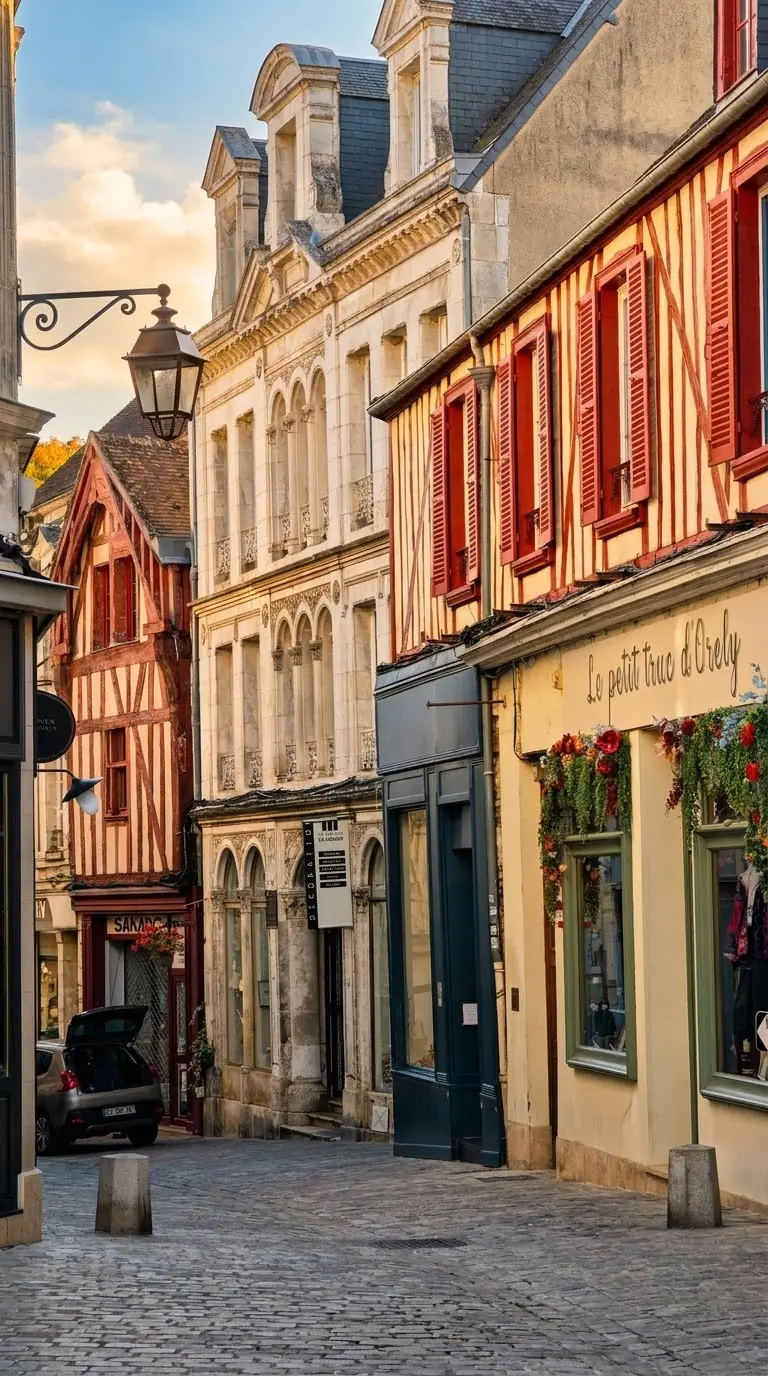
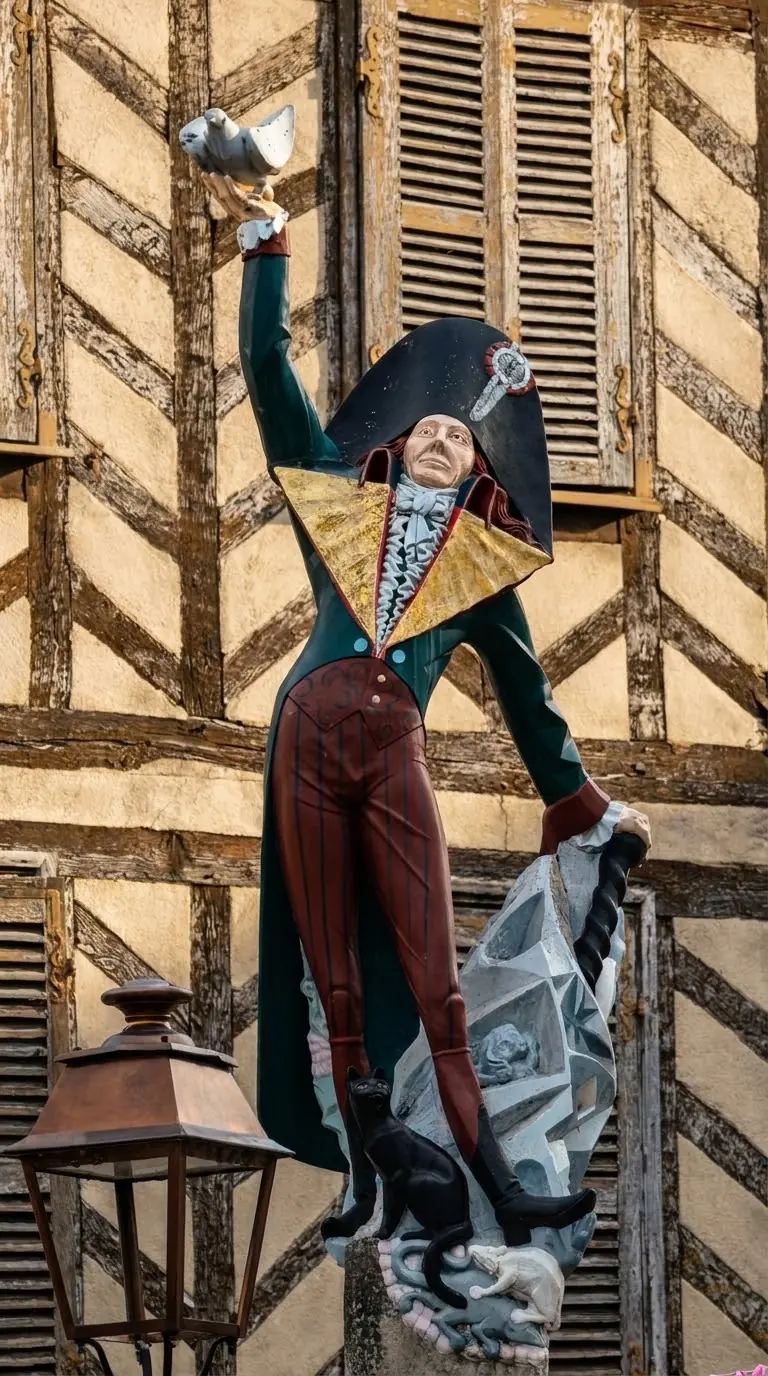
Around it you’ll find everything that makes Auxerre beautiful: cobblestone lanes, timber-framed houses with upper floors jutting out over the street, and, along the pedestrian streets, three wooden statues by the sculptor François Brochet (1925-2001). One of them, depicting Cadet Rousselle (1743-1807), stands above the fountain in place Charles Surugue. Another, of Restif de La Bretonne (1734-1806), is on rue de l’Horloge. Cadet Rousselle’s own house leans against the old gate next to the tower.
A suggestion: come here once during the day and once in the evening. It’s the same quarter, but two different cities.
The “In the footsteps of Cadet Rousselle” route, and the right way to wander
Here’s another way to get to know Auxerre, and it’s free too.
Set into the paving stones of the historic center are bronze markers tracing a five-kilometer walking route with sixty-seven points of interest. The tourist office hands out a free booklet explaining the route, in French, English, German, Italian and Dutch. You just follow the bronze markers at your own pace.
If you’d like a voice in your ear too, the tourist office offers an audio guide with a detailed map and twelve stops, from pont Paul-Bert to Abbaye Saint-Germain, passing through rue du Temple, the Cadet Rousselle statue and the clock tower. It costs five euros per person, with a fifty-euro deposit, and it’s available in French or English. There’s no time limit, so you set the pace.
And for those traveling with kids: there’s a version just for them called “Cadet’Chou”, a booklet of riddles that follows the same route. It turns two hours of stones and dates into a game, and I know enough parents to know that’s worth its weight in gold.
The tourist office itself is at number 7 on the town hall square, and it’s a good place to start.
The Quartier de la Marine, the quays and the river
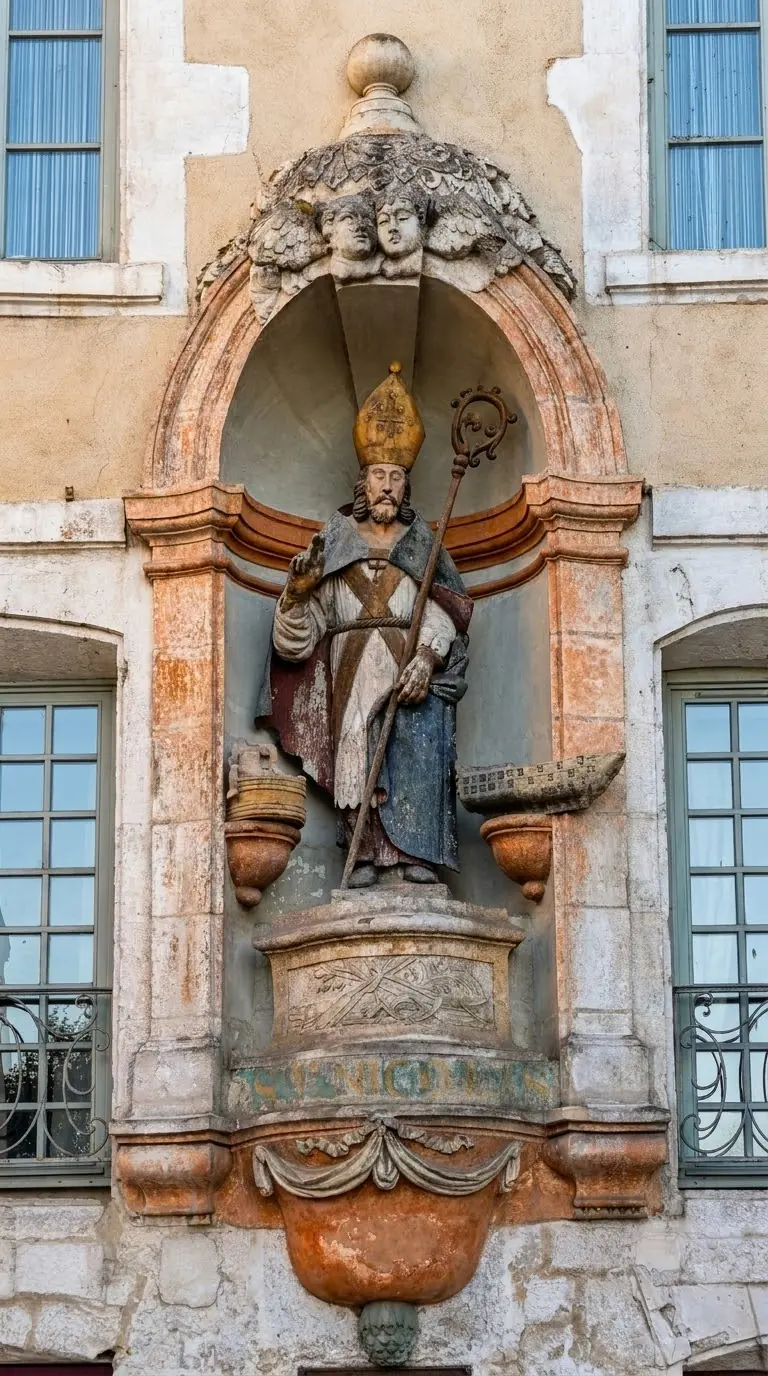
For centuries, place Saint-Nicolas, by the river, was the center of Auxerre’s real livelihood: boat traffic and trade on the Yonne. The statue of Saint Nicholas, patron of boatmen, sits in a niche on the corner of a 16th-century house, and a small fountain once supplied water to the quarter.
The statue was put here by the confrérie de Saint-Nicolas, the boatmen’s guild. Notice what stands on either side of it: a boat on the right, and a tub with children on the left, referring to the legend in which Saint Nicholas brought back to life three children murdered by a butcher and salted away in a barrel.
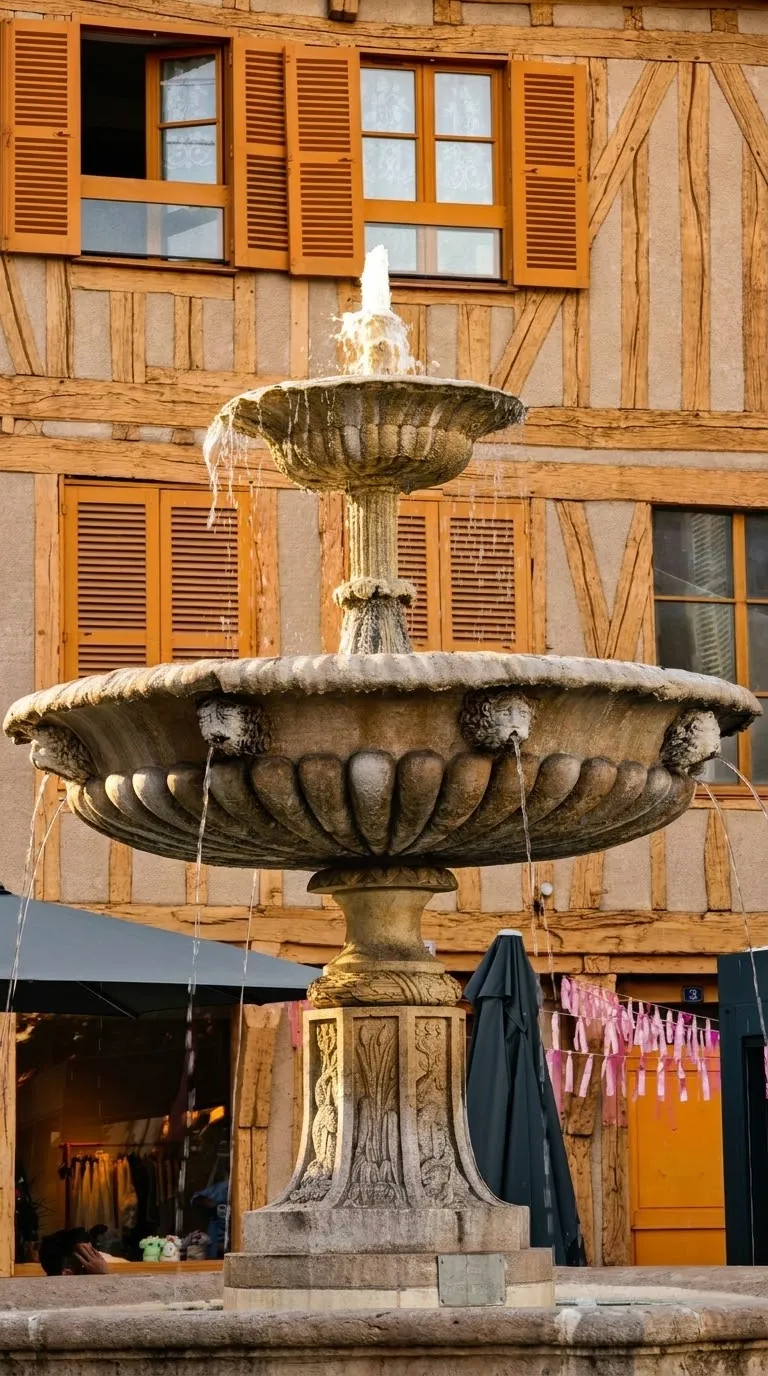
The basin of the fountain in the middle of the square was brought here in 1909 from place Charles Surugue, where the Cadet Rousselle statue now stands. Around the fountain spreads the terrace of Le Quai, a nice restaurant you’ll read about in the restaurants section.
This is also where the quays begin. Walk along the water after five in the afternoon, when the light is low and the cathedral stands above you on the cliff. The barges are moored here, and anyone with two days to spare can set off from here up the canal.
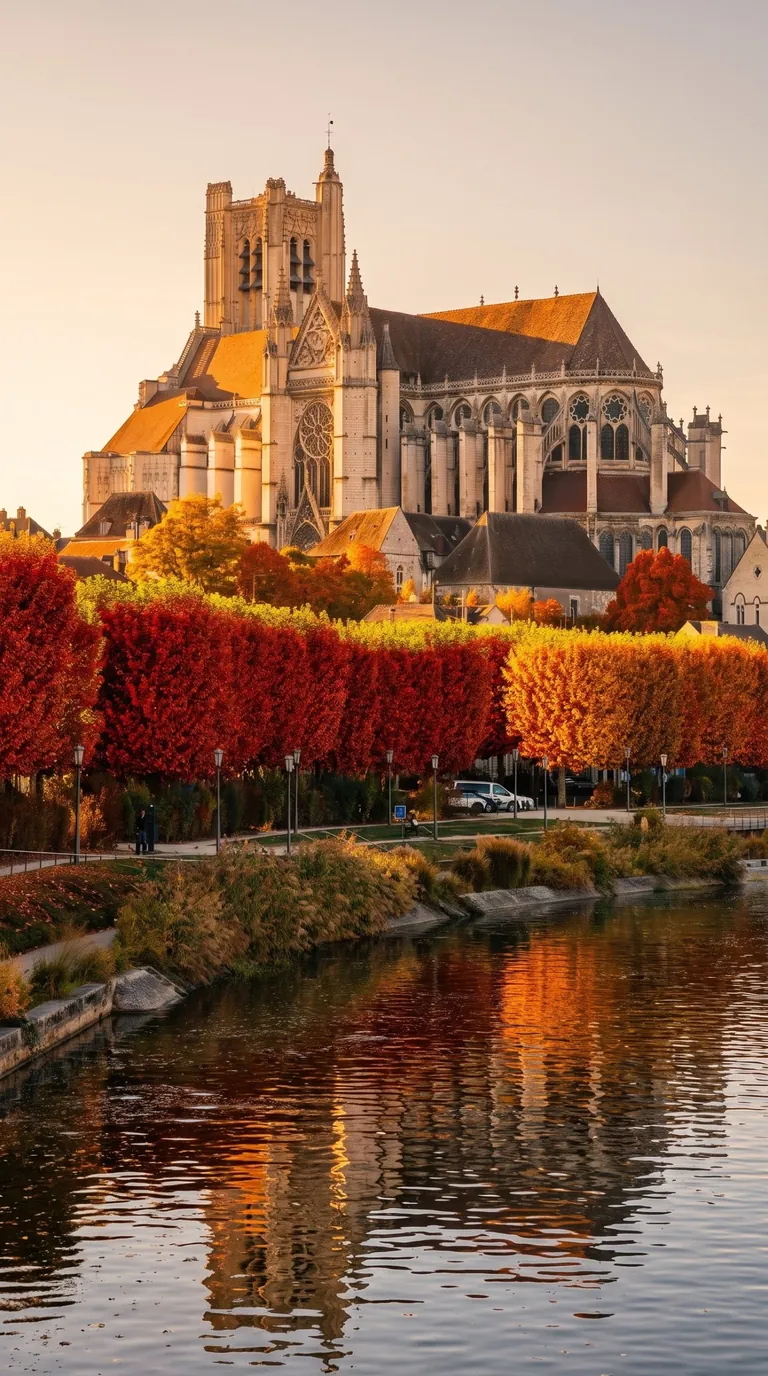
And if you’re in Auxerre on a day when you just don’t have it in you for a museum: get a coffee at one of the quays and look at the bridge. It’s the experience I remember best from this city, and it didn’t cost me a thing.
More attractions, if you have the time
If you have an extra day or two in Auxerre, consider at least a few of these attractions:
The churches nobody sends you to
After the cathedral and the abbey, most people stop looking. That’s a shame.
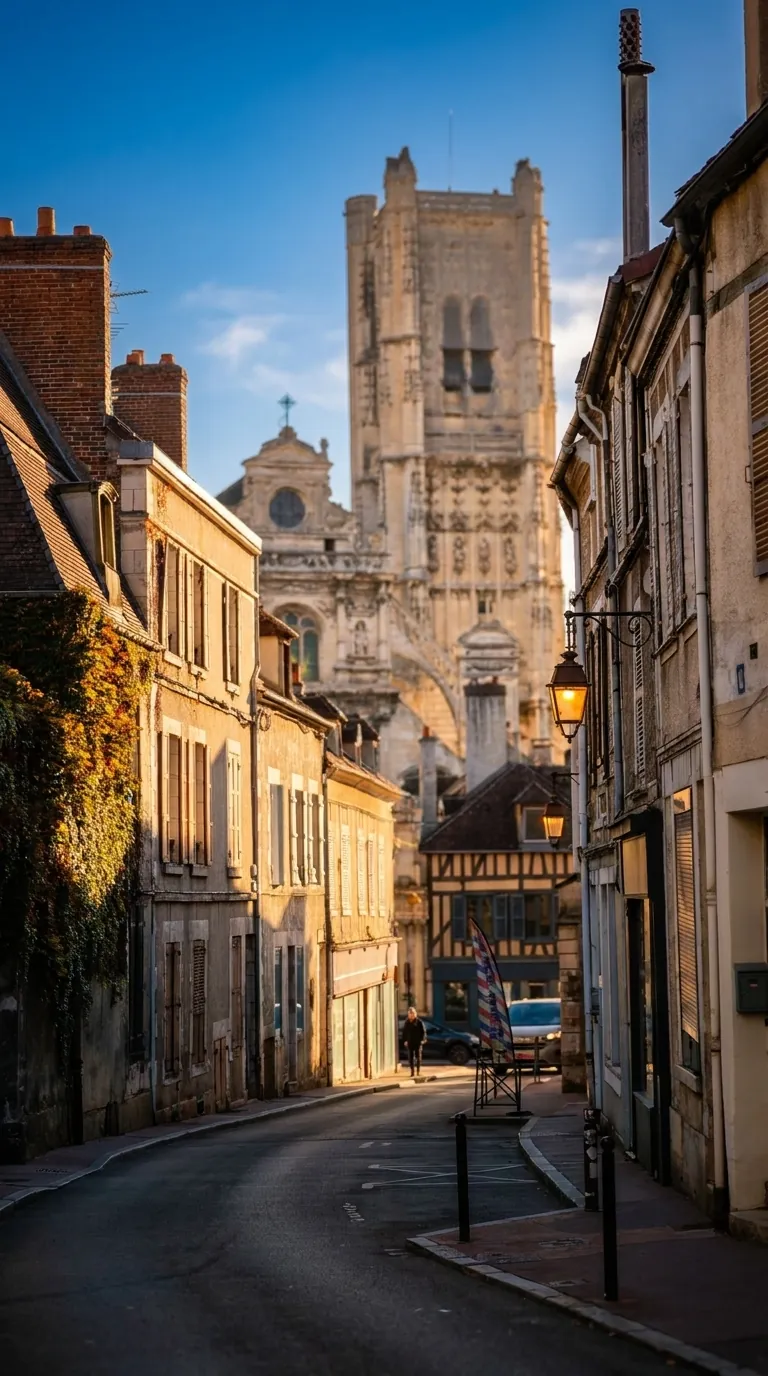
The Église Saint-Pierre, at the southern edge of the center, was built on the grounds of the Abbaye Saint-Pierre-en-Vallée, and the wine growers of Auxerre paid for its construction. This was their neighborhood, and it stayed that way until phylloxera destroyed the city’s vineyards.
The bell tower, in the late Gothic style (gothique flamboyant), was built in the 16th century, and it’s one of three towers that stand out on Auxerre’s skyline, alongside the cathedral and the Abbaye Saint-Germain.
The facade was built in the 17th century in a classical style, so in a single building you’ll find Gothic, Renaissance, and classical elements side by side. Standing on it are statues of the patron saints of the neighborhood’s two most important guilds, the wine growers and the butchers.
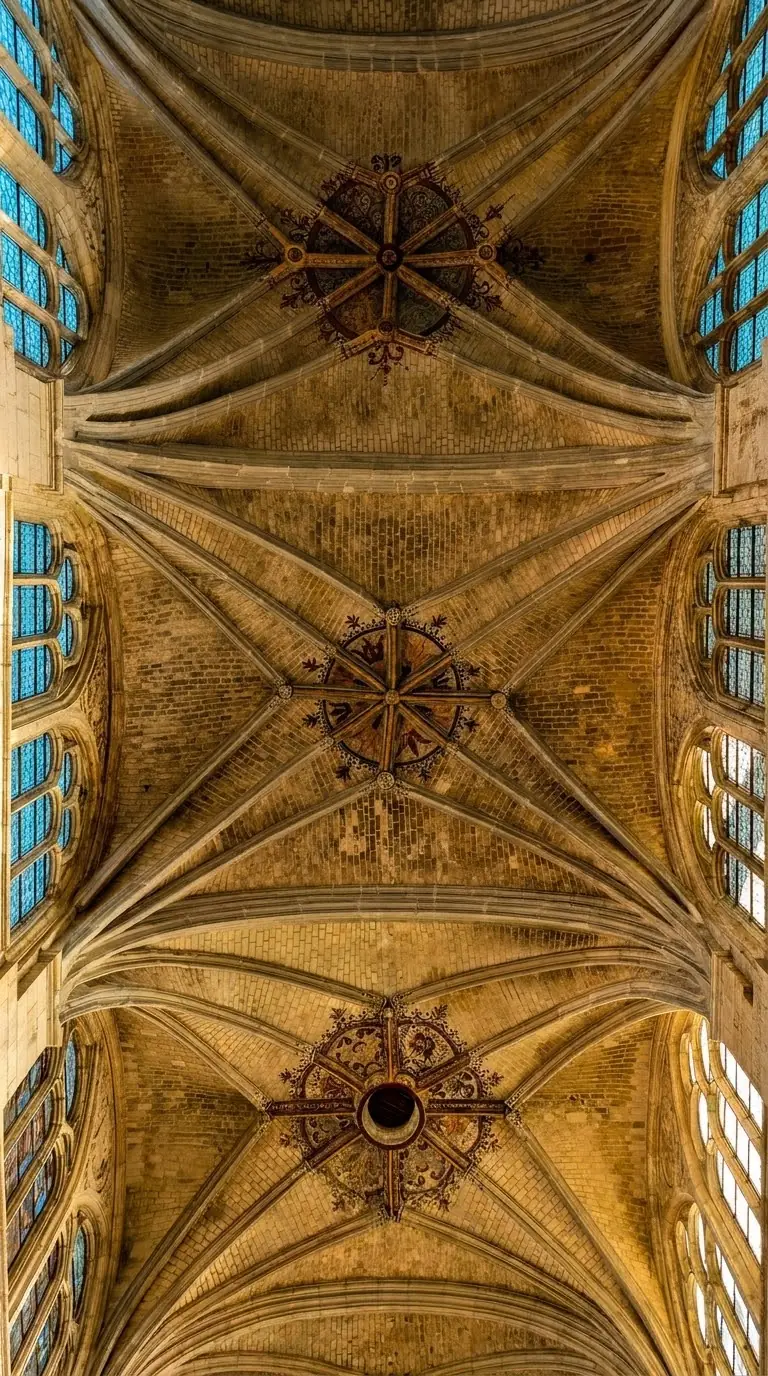
Inside, the church is built as a basilica with a central nave and two side aisles, with round arches resting on columns. The windows on the north side have 17th-century stained glass depicting saints. Don’t forget to look up: around the keystones, where the ribs of the vault meet, you’ll find colorful painted decorations.
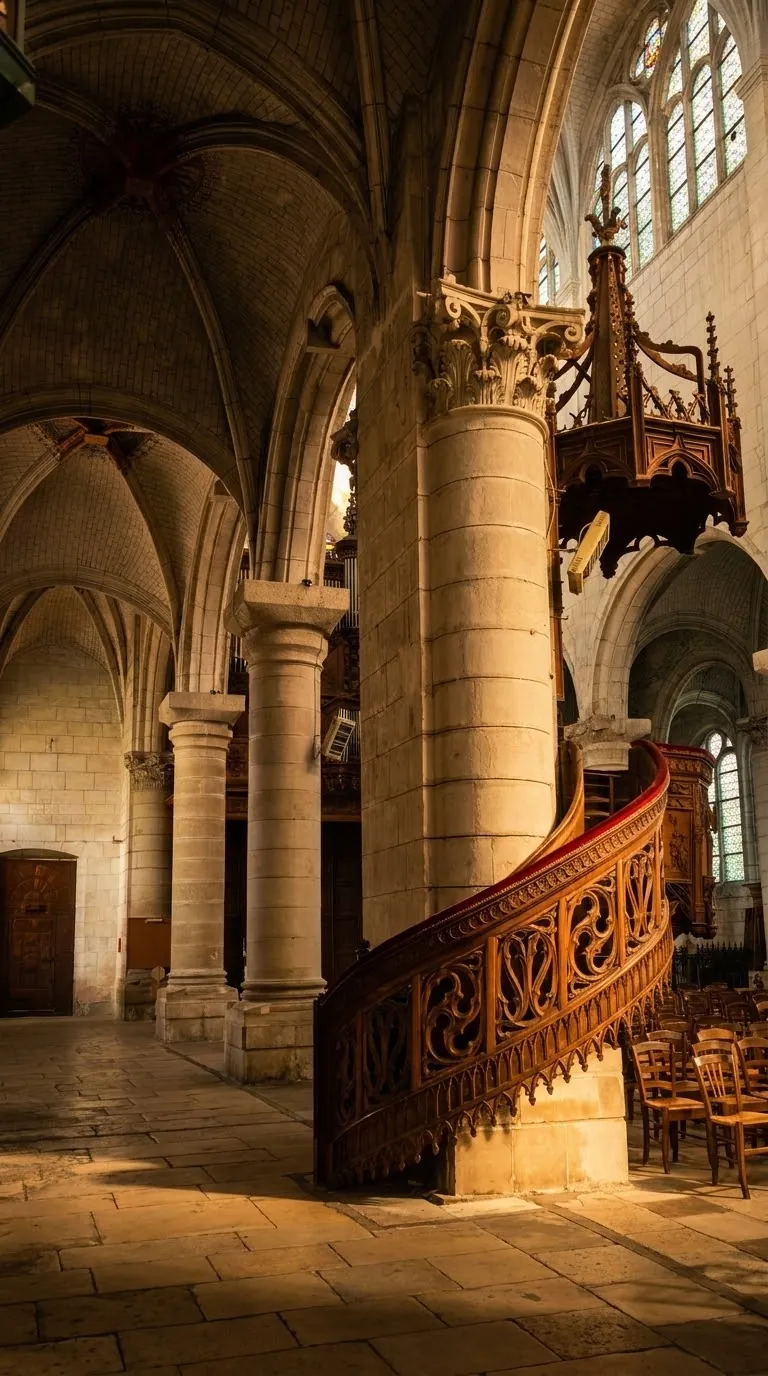
Attached to one of the columns is a wooden pulpit, carved with ornate detail. Its staircase winds around the column, and above it hangs a carved canopy meant to project the preacher’s voice back to the congregation (today, just to be safe, there’s a speaker next to it too).
When you step out, it’s worth stopping by rue Joubert, where the old abbey gate still stands. It was most likely built between 1530 and 1540, and it was clearly inspired by the entrance gate of the Castel Nuovo in Naples. Among the statues on it you’ll find Ceres, the Roman goddess of grain, and Noah, who according to the Book of Genesis planted a vineyard after the flood. The abbey’s chapter hall (salle capitulaire), from the late 13th century, also survives.
- Admission: Free.
- Address: 5 Place Saint-Pierre.
The second church is Saint-Eusèbe. During the Revolution it became a prison, and later a venue for the republican décadi ceremonies. It was returned to worship with the Concordat of 1801, and in the summer of 1944 its windows were damaged by bombing.
Neither of these is an attraction in the usual sense. They just stand there, and most visitors walk right past them on their way somewhere else. To me, that’s exactly the point.
Musée Leblanc-Duvernoy
This 18th-century townhouse was donated to the city in the 1920s, and it’s worth visiting mainly for two things. The first is the music salon, which has kept its original decor of tapestries from the Manufacture de Beauvais depicting episodes from the life of the Chinese emperor Kangxi (r. 1661-1722). The ensemble was declared a heritage site in 1951. The second is the ceramics collection: revolutionary-era faience, regional faience, and stoneware from the Puisaye region.
- Hours: April 1 through September 30, Wednesday through Sunday, 2:00-6:00 p.m.
- Outside the season: visits by appointment only.
- Price: Free admission.
- Address: 9 bis rue d’Egleny.
The Natural History Museum and its park
This is Auxerre’s pleasant surprise, especially if you’re traveling with kids.
A late-19th-century bourgeois house on boulevard Vauban is home to a museum that carries the “Musée de France” label. It holds one hundred sixty thousand natural history items that tell the story of the natural life of the Yonne region, past and present. Admission is free.
Around it is a park in the French garden style, with trimmed boxwood hedges, designed in the late 19th century. It has local trees alongside trees brought from Asia and North America, including a ginkgo biloba that’s gorgeous in the fall (its fruit, full disclosure, smells terrible), giant thuja trees, and magnolias that bloom in March and April.
- The park: Monday through Friday 8:30 a.m.-5:30 p.m., and Sundays 9:00 a.m.-12:30 p.m. and 2:00-5:30 p.m. Closed on holidays.
- Admission: Free.
- Address: 5 boulevard Vauban.
- Hours for the indoor exhibits vary depending on what’s on display, so it’s worth calling ahead.
Maison Marie Noël
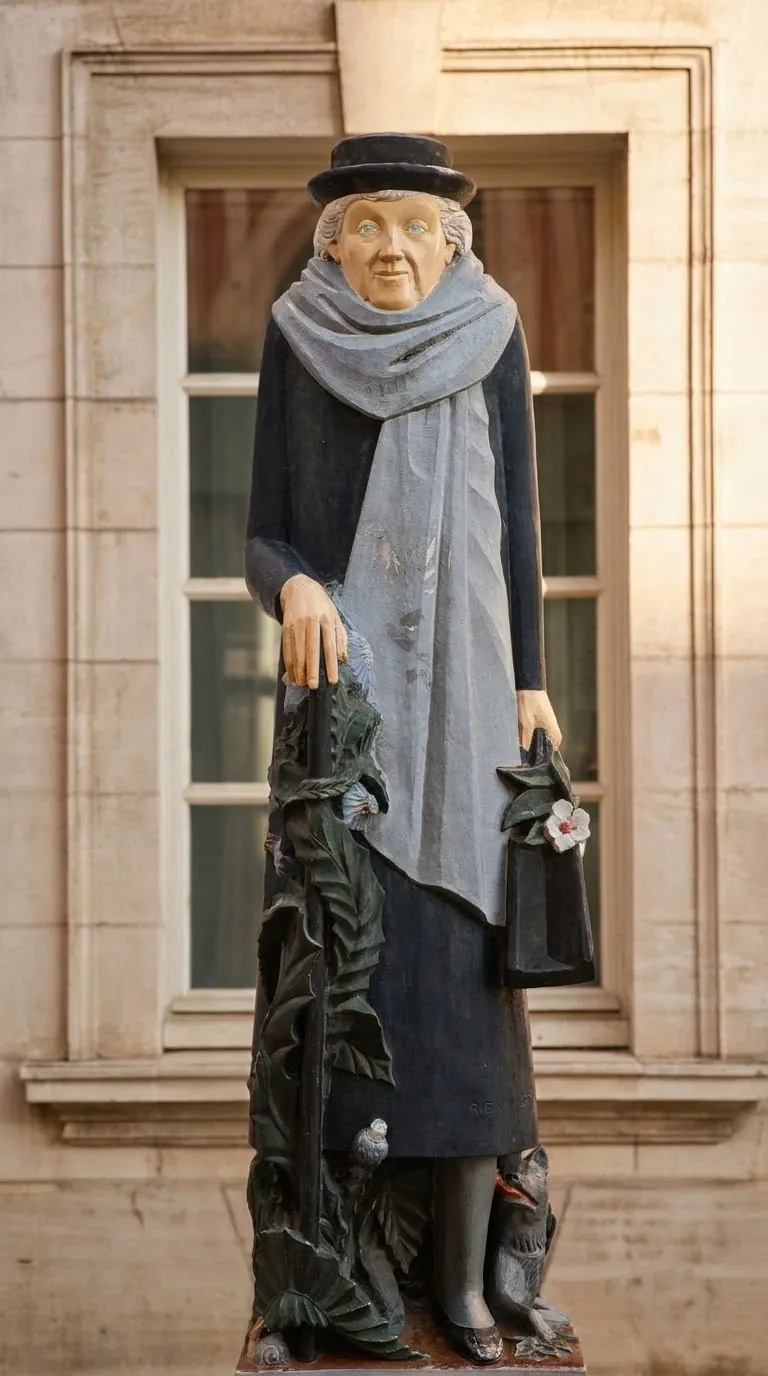
Marie Noël (1883-1967), who was born and died in Auxerre, was a poet her contemporaries held in high regard. Henry de Montherlant (1895-1972) called her the greatest living poet in France, and Colette (1873-1954), Louis Aragon (1897-1982), and Jean Cocteau (1889-1963) corresponded with her. The public called her “the recluse of Auxerre.”
She never married and lived an almost reclusive life in the city. Her younger brother was found dead in his bed the day after Christmas, and that’s where her pen name came from (noël is French for Christmas). She spent the rest of her life writing work that ranged from childlike verse to a difficult, tormented struggle with faith.
The 18th-century family home, in the center of town, now carries the label “Maison des Illustres.” Her apartment on the first floor has been preserved, including her bedroom, which remains exactly as it was on the day she died.
- Visit: By guided tour only, by appointment, about an hour.
- Usually Tuesday through Saturday, at 10:30 a.m. or 3:00 p.m., groups of up to 15 people.
- Address: 1 rue Marie-Noël.
Stade Abbé-Deschamps, for those who get it
Not everyone will understand why this is here, but those who do will get it right away.
In 1905, Father Ernest Deschamps (1868-1949), a vicar at the Cathédrale Saint-Étienne, founded a sports association for the community’s young people. That association grew into the soccer club of a city of thirty-five thousand people, which spent thirty-two consecutive seasons in France’s top division, won the double in 1996 (the French championship and the Coupe de France), and reached the quarterfinals of the Champions League in 1997. The stadium is named after its founder, and it sits on rue de Vaux, a short distance from the center.
I’m not much of a soccer person myself, but there’s something about a city whose team is bigger than the city itself.
The Bailly-Lapierre cellars, ten kilometers from the city
And if you’ve already come this far, this might be the most worthwhile detour in the whole region.
In Saint-Bris-le-Vineux there’s an underground quarry that’s been mined since the 12th century, and it’s the source of the stone that built churches and châteaux all across the region (the river, which flowed at its foot, did the hard work of hauling it). Between 1927 and 1972, mushrooms were grown in the tunnels. Since 1972, they’ve been used to make Crémant de Bourgogne, and this is the very place where the appellation was born.
It’s four hectares of tunnels, more than fifty meters underground, at a constant temperature of 12 degrees Celsius, with millions of bottles lying in the dark, quietly making their own bubbles. If you’re in the area anyway, it’s worth pairing this with the Burgundy wine route.
- The tour: an hour in total. About forty-five minutes of guided walking, and fifteen minutes tasting two crémants. You take the Champagne glass home with you.
- Important: tours for individual visitors only take place in the afternoon, according to a schedule published on their website. Book ahead.
- And bring a sweater. I’m serious. Twelve degrees Celsius in August is a lot colder than it sounds.
The markets, and where to buy food
This is the part most guides skip, and to me it’s half the point of a small French city. According to the town hall, Auxerre’s market schedule looks like this:
- Tuesday and Friday, place de l’Arquebuse, 7:00 a.m.-12:30 p.m. This is the main market and the biggest one.
- Wednesday, in the center of town, 8:00 a.m.-12:30 p.m.
- Saturday, place de l’Hôtel de Ville, 8:00 a.m.-12:00 p.m. A market of local producers.
- Sunday, place du Marché in the Sainte-Geneviève neighborhood, 7:00 a.m.-12:30 p.m., plus a smaller market on rue du Pont during the same hours.
The Saturday market at place de l’Hôtel de Ville is the one I’d go to. It’s all local producers, it’s in the historic center, and it ends early enough to leave time for a walk afterward.
Where to eat in Auxerre
I’m not going to give you a restaurant list that goes stale in six months. Here’s the general picture instead: for its size, the town has a genuinely respectable selection, and the Michelin guide lists a few addresses here.
On my first evening in Auxerre I ate at Le Sarment, a Bib Gourmand restaurant where two chefs cook a modern menu built on local ingredients (even though the dishes themselves aren’t classic Burgundian fare).
The food was very good and the service excellent, and two dishes stood out in particular: the octopus in pepper and grapefruit sauce, and the veal sweetbreads in a cream sauce with polenta. The duck was juicy too, and I really loved the carrot puree that came with it.
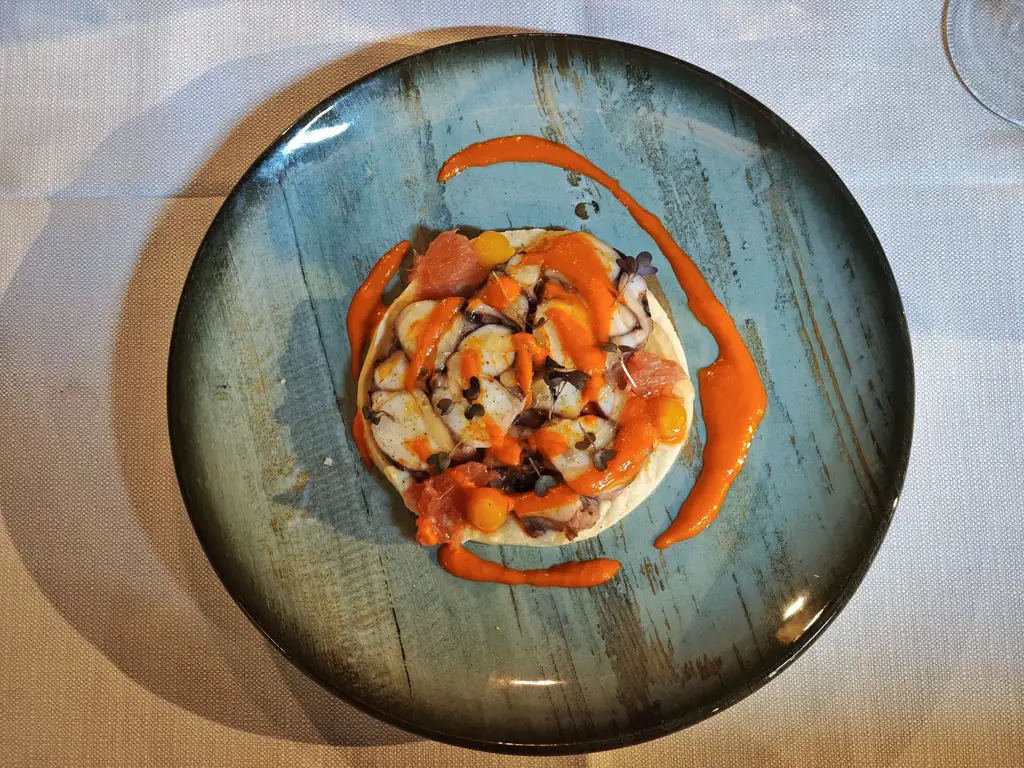
Address: 37 rue du Pont. The restaurant is open Tuesday through Saturday, for lunch 12:00-14:00 and dinner 19:30-21:30, and closed on Sundays and Mondays. Phone: +33 3 86 51 46 36. You can book a table on the restaurant’s website.
A restaurant I highly recommend is Au Grandgousier, run since 2008 by a lovely couple, with food that’s simply wonderful: local and seasonal. The restaurant takes its name from Grandgousier, father of the giant Gargantua in the book by François Rabelais (c. 1494-1553). The dishes I loved most were the snail mille-feuille and the venison roast in red wine sauce you see in the photo (yes, Zvi ate deer, and enjoyed every bite).
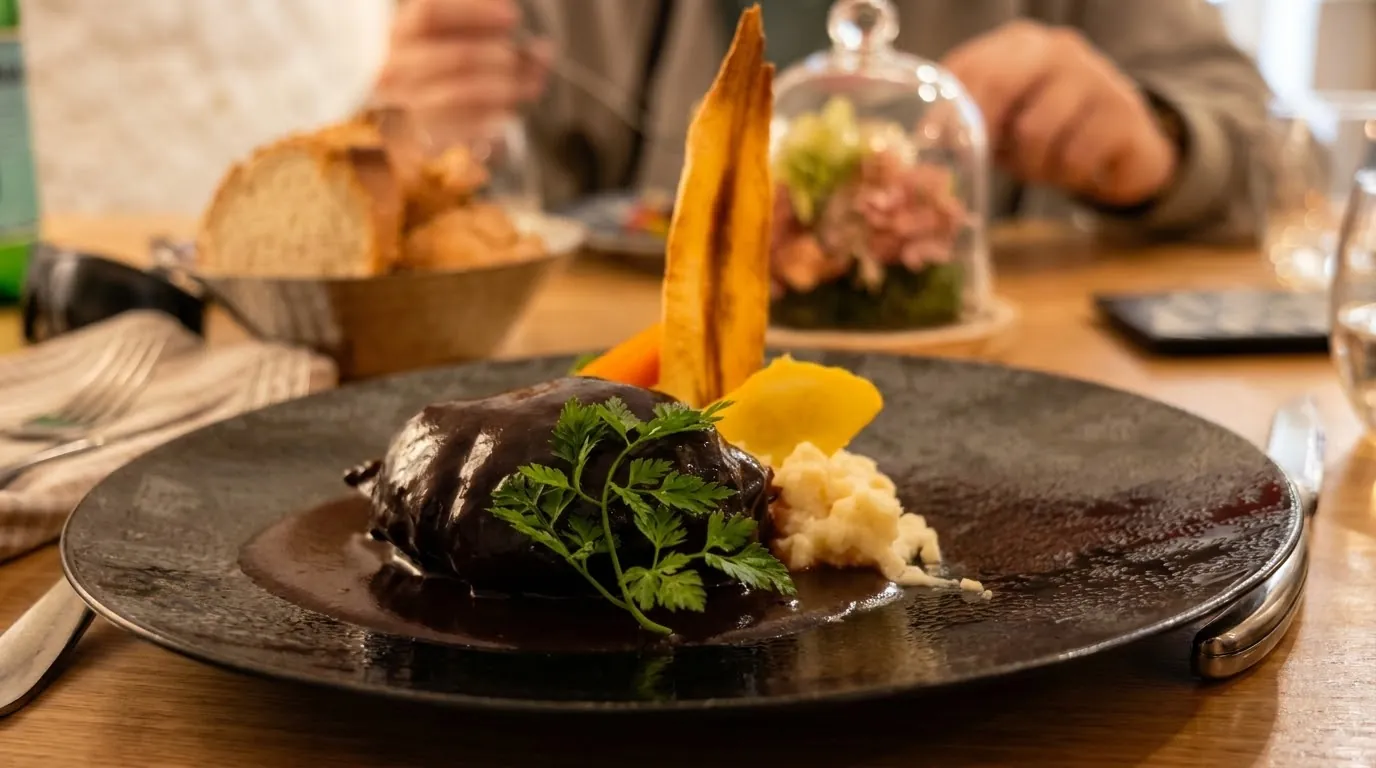
Address: 45 rue de Paris. The restaurant is closed on Wednesdays, and on Sundays it’s open only for lunch. I highly recommend booking ahead by phone: +33 3 86 51 04 80.
Another restaurant with a Bib Gourmand is L’Aspérule. It sits at the foot of the Église Saint-Pierre, in a historic townhouse, with a minimalist dining room. The chef is Japanese, and the kitchen pairs local produce with precise execution (Michelin describes, for example, trout in beurre blanc with celery root and nori seaweed, and pork ribs in a charcutière sauce). The lunchtime market menu is reasonably priced, and the evening menu is more ambitious. It’s worth calling ahead to reserve.
Besides these two Bib Gourmand restaurants, Michelin lists a few more addresses in Auxerre itself serving modern and traditional cuisine, and in the villages around it, in Chevannes and Coulanges-la-Vineuse, there are traditional restaurants in the same selection. And in Chablis, twenty kilometers from here, there are quite a few. If you’re planning one big meal for your trip, consider having it in Chablis rather than in town.

If you find yourself in Auxerre on a Monday evening, when a good chunk of the restaurants are closed, it’s worth knowing about Le Quai on Place Saint-Nicolas. It’s not haute cuisine and it’s probably not winning a Michelin star, but the food is decent and the service is warm. For dessert I had cassis and apricot ice cream there, and it was very good.
Address: Place Saint-Nicolas. The restaurant is open daily, for lunch from 11:00 and dinner from 18:00. Phone: +33 3 86 51 66 67. You can book a table by phone or on the restaurant’s website.
And a tip that isn’t a restaurant at all: buy cheese, sausage and a baguette at the Saturday market, and eat them by the river. In a town like this, that’s not a compromise. It’s the right choice.
What’s around Auxerre
Auxerre works great as a base, and that’s really my main recommendation in this article. Here’s what’s easily reachable from it:
- Chablis, twenty kilometers east. The famous capital of dry white wine, and also a lovely small town in its own right.
- Saint-Bris-le-Vineux, about ten kilometers southeast. A wine village with a view over the vineyards, the Bailly Lapierre cellars, and a rare local wine, Saint-Bris, made from Sauvignon.
- Coulanges-la-Vineuse and Irancy, to the south. This is the part of the Auxerrois that produces reds, and it’s a part far fewer people know about.
- Escolives-Sainte-Camille, to the south. The village where the second-century grape relief was found, the oldest evidence of vines in the region.
All of these require a car. I really wouldn’t recommend trying public transportation to reach the vineyards. If you haven’t sorted out a car yet, now’s the time.
Where to sleep in Auxerre: four hotels, four budgets
I chose four places in entirely different price ranges, and all of them meet one condition: a rating of 8 or above on Booking.com (the ratings are accurate as of my last check, and naturally they shift a bit).
Hôtel Le Maxime
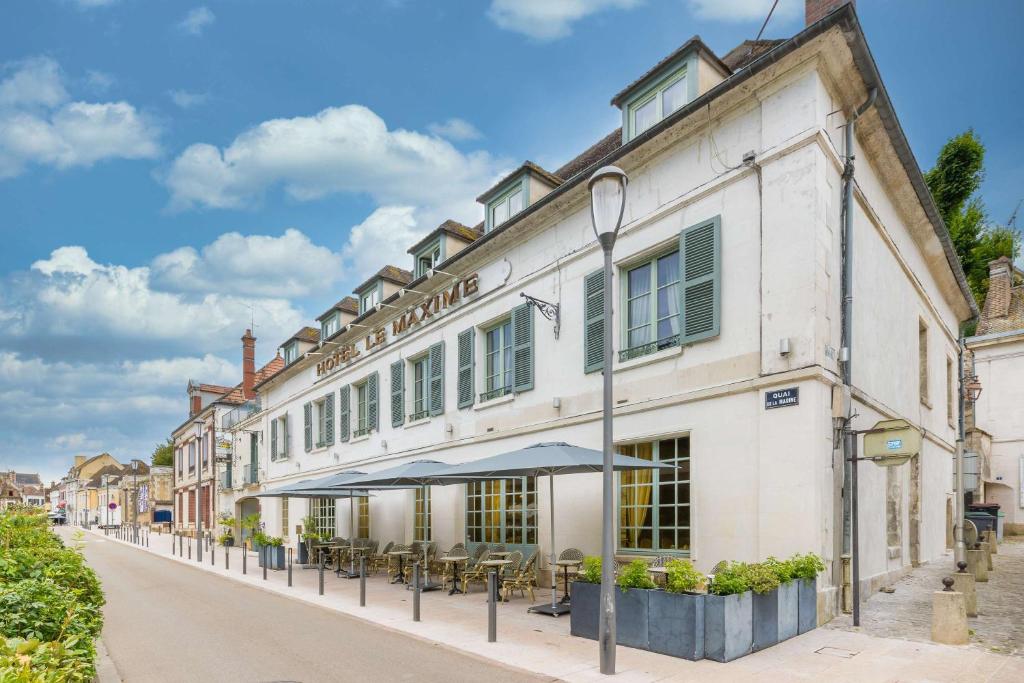
Four stars, on Quai de la Marine right across from the river, in a historic salt warehouse converted into a hotel. There are twenty-five rooms and a suite, some with a view of the river and some of the old town, plus a tasting cellar inside the hotel. Guests mention the location more than anything else, and rightly so: you’re right on the water, and a short walk up through the lanes takes you straight to the cathedral and the clock tower. Booking.com rating: 8.2. Address: 2 Quai de la Marine. Note that parking, across from the hotel, has to be arranged in advance.
Hôtel Les Maréchaux
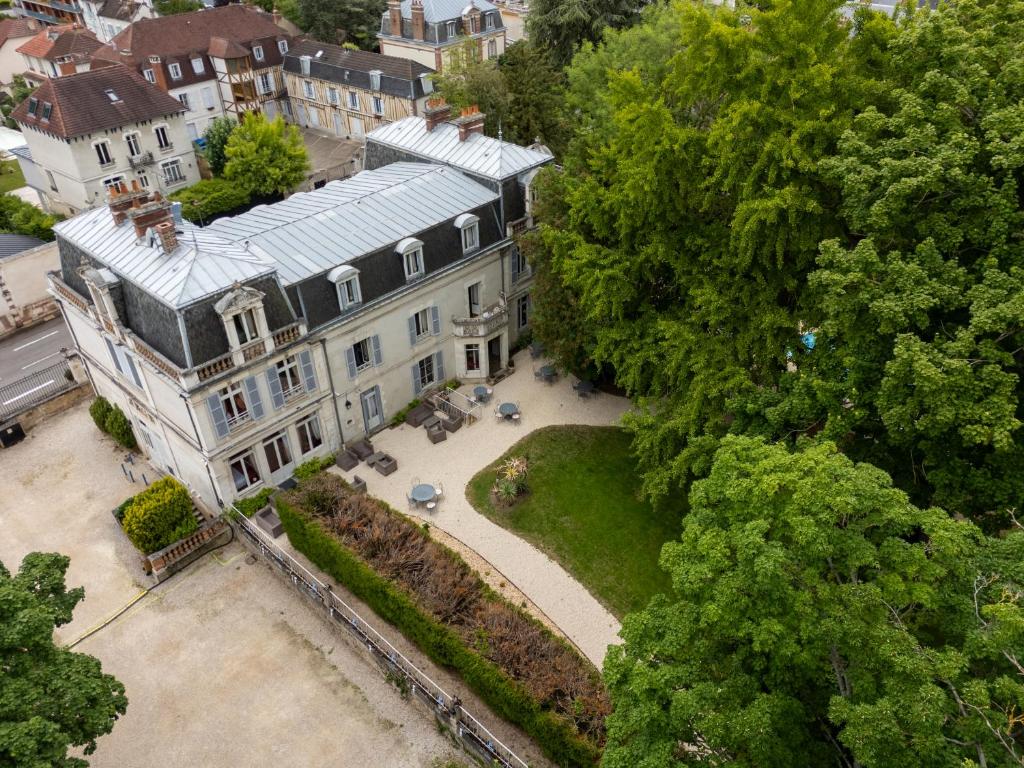
This is where I stayed during my time in Auxerre, and I highly recommend it. It’s an intimate three-star hotel run by a couple (he’s French, she’s Russian). The hotel is housed in a townhouse built in 1854 in the Napoleon III style, on a lovely avenue a short walk from the center.
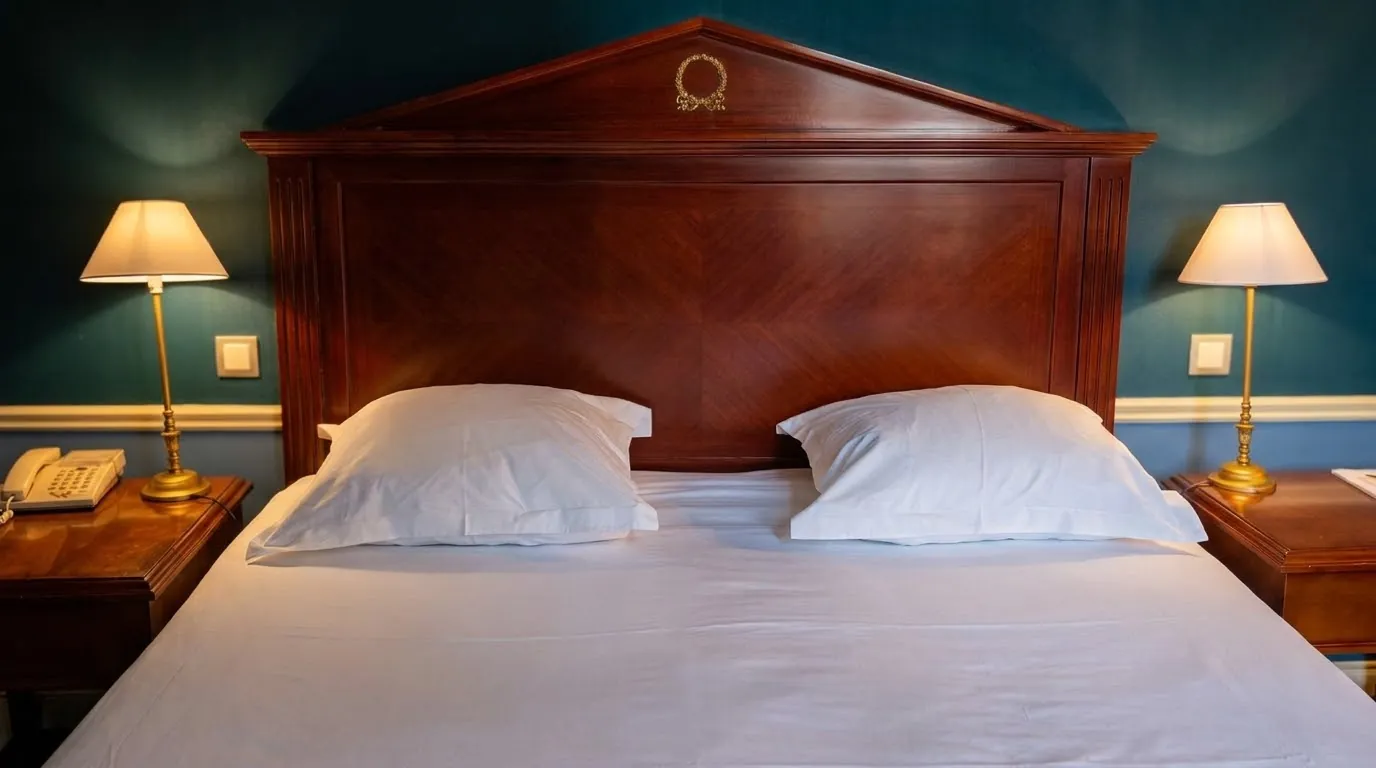
The 25 rooms are fairly spacious, comfortable and decorated in Empire style, and each one is named after one of Napoleon’s marshals. Around the house there’s a beautiful garden where you can have breakfast, a pool that’s heated in season, a bar and even a parrot.
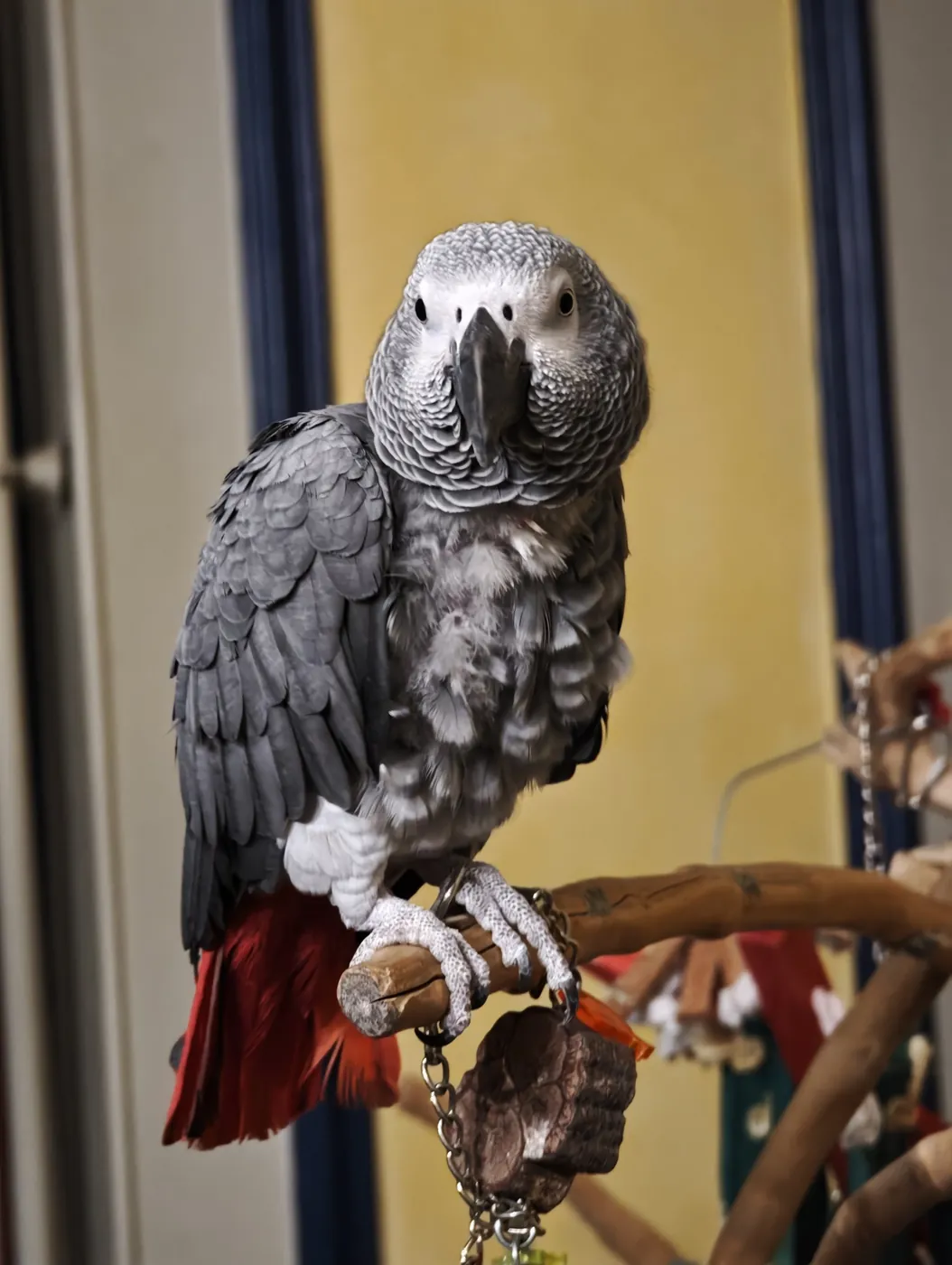
This adorable parrot belongs to the hotel’s owners. He’s here every day, and in the evening he goes home with them to their house on the hotel grounds, where he spends the night.
The couple takes the Napoleon theme quite seriously. When I asked the hotel’s owner where to get breakfast, she told me to “march toward the smell of the croissants” (in case you missed it, that’s a play on Napoleon’s famous line, “march toward the sound of the cannons”).
The hotel also tells its guests that Napoleon’s forces camped in 1815 on the exact ground it now stands on, near the Porte d’Égleny, in those very days when Marshal Michel Ney (1769-1815) wept behind a closed door. If you’ve read the history article, you’ll understand why I enjoyed this place so much.
Booking.com rating: 8.3. Address: 6 Avenue Foch.
B&B Le Relais des Saints Pères
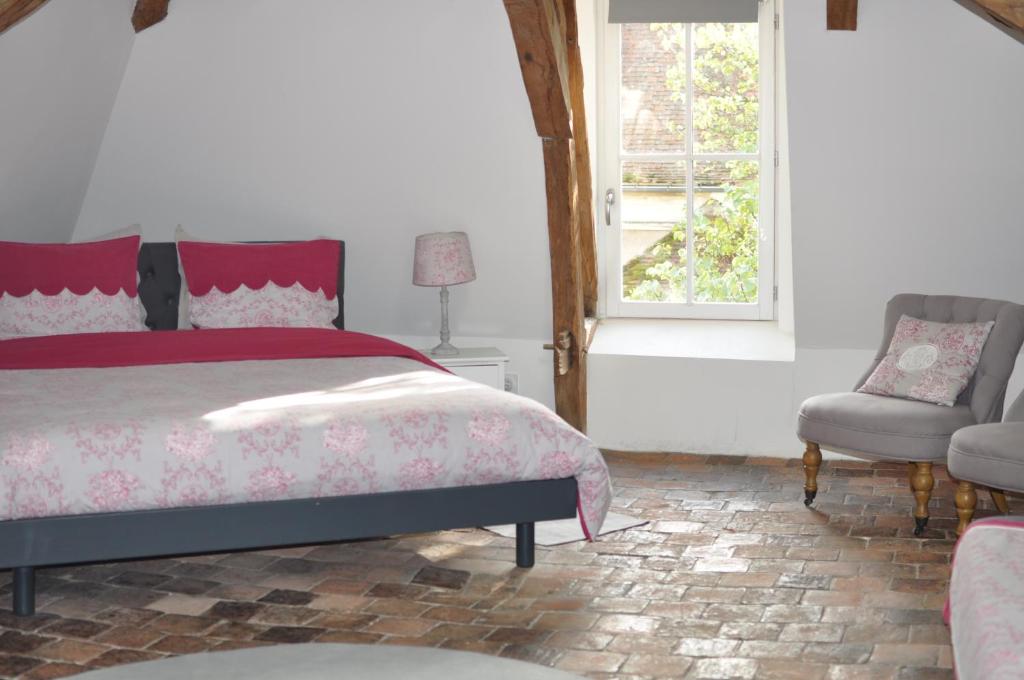
A 17th-century coaching inn renovated into a small guesthouse, in the heart of the old town, about two hundred meters from the clock tower. Large rooms, exposed wooden beams on the upper floor, a homemade breakfast with jams and fresh bread, and hosts who, according to every other guest, made them feel like family.
This is my pick if you’re a couple, if you want to head out in the morning without hunting for where you parked the car, and if you’d rather sleep inside the old stone walls than next to them.
ibis budget Auxerre Centre, for a tight budget
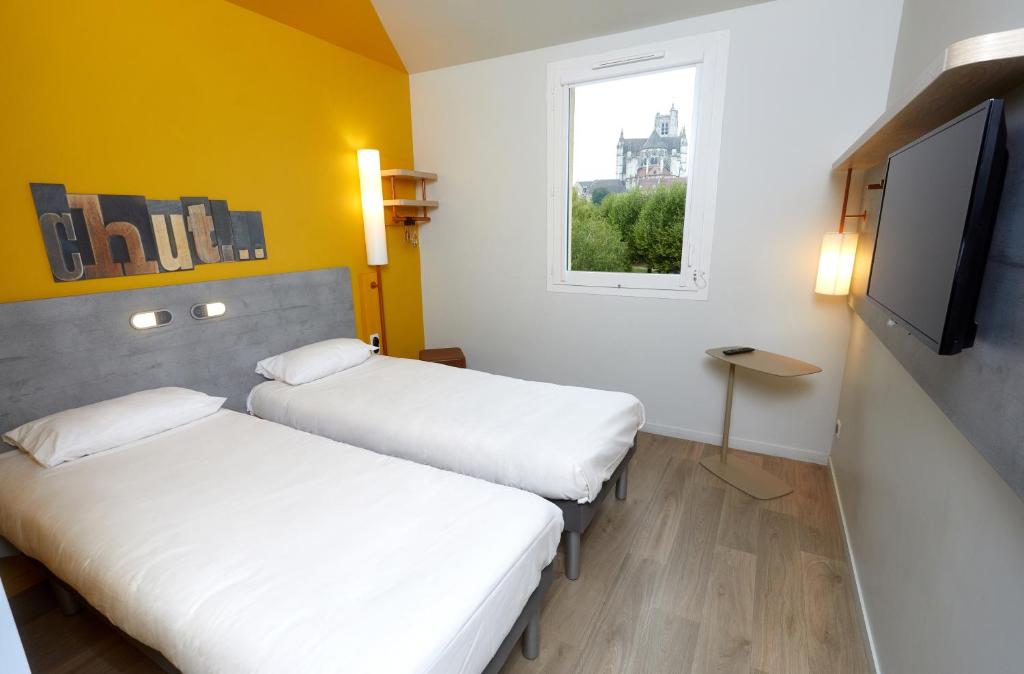
Two stars, on the right bank of the Yonne, right across from the old town. Cross a pedestrian bridge and you’re there. Small, simple rooms, but clean and air-conditioned, a decent breakfast, and free parking nearby. Some rooms have a view of the cathedral sitting above the river, and that’s a view worth far more than what you pay for it.
FAQ
How much time do you need for Auxerre?
A full day covers the essentials at a reasonable pace: the old town, the cathedral with its crypt, the abbey, and the riverside promenade in good light. Two days also let you fit in the museums, the Maison Marie Noël and the Bailly Lapierre cellars. I spent a few days there and never got bored for a moment, but then again, I’m the type who stops at every information panel.
Does Auxerre work as a day trip from Paris?
Definitely. Two hours on a direct train from Paris-Bercy and you’re there, and everything is reachable on foot from the station. Still, in my opinion that would be a shame. Auxerre is beautiful in the evening and early morning, and that’s exactly what you’d miss on a day trip.
When is the best time to visit Auxerre?
Spring and fall. In October the light on the Yonne and the color of the vineyards around town are something else entirely, and the lines are short too. Note that the abbey is completely closed in January, and the Leblanc-Duvernoy museum is open to the public only from April to September.
Do you need a car in Auxerre?
Not for the town itself. Yes if you want to reach Chablis, the vineyards and the Bailly Lapierre cellars, which are ten to twenty kilometers away and not convenient by public transportation.
Can you go up the clock tower in Auxerre?
No. According to the local tourist office, you can’t go inside the tower. It can only be seen from the outside. Don’t plan around it, and don’t trust websites that say otherwise.
What’s closed in Auxerre on Sundays?
The cathedral’s crypt and treasury are closed on Sundays and holidays. The abbey, on the other hand, is open on Sundays (and in low season it’s actually closed on Tuesdays). This is a point worth planning around, since it determines which day you set aside for what.
What can you do in Auxerre with kids?
Three things that work well. The “Cadet’Chou” riddle booklet from the tourist office, which turns the bronze trail into a game. The park and the natural history museum, which have free admission. And the riverside promenade, which is simply a good place to run around. The crypts might impress young children, and that’s usually also what they’ll remember.
How much does a day in Auxerre cost?
Less than you’d think. Admission is free to the cathedral, the abbey grounds, the Leblanc-Duvernoy museum and the natural history museum. The bronze trail and its booklet are free too. The only expenses you can’t avoid are the abbey crypt tour, the cathedral crypt, and food.