In short
- What it is: an iron tower opened in 1889 for the World’s Fair, about 330 meters tall, with more than 7 million visitors a year.
- Opening hours 2026: early September to mid-June: 09:30–23:00 (last ascent 22:45). Mid-June to early September: 09:00 to midnight.
- Tickets: the official site releases tickets 60 days in advance at 8:30 a.m. (Paris time), and they sell out within minutes. If you missed them, resellers like Tiqets and GetYourGuide hold reserved stock at a slightly higher price.
- Official prices (adult): stairs to the 2nd floor: about €14.80; elevator to the 2nd floor: about €23.50; elevator to the summit: about €36.70; stairs to the 2nd floor plus elevator to the summit: about €28. From January 11, 2027, prices go up slightly (€15.20 for the stairs, €37.70 for the summit by elevator).
- Good to know: the stairs only go up to the 2nd floor, and the stairs above it are closed to the public. To continue to the summit, you take the elevator from there with the combined ticket.
- New from September 29, 2026: groups of more than nine people must buy tickets online in advance. Individual visitors can still buy at the ticket office, including for the same day.
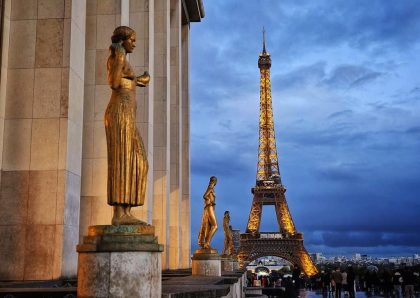
- Getting there: metro line 9 to Trocadéro gives you the most impressive photo spot. Line 6 to Bir-Hakeim and the RER C to Champ de Mars are physically closer.
- Before you go: there’s no left-luggage service at the tower and suitcases aren’t allowed. The 1st and 2nd floors are wheelchair accessible; the summit isn’t.
- Best timing: an hour before sunset: go up in daylight and come down when Paris is already lit up.
Let’s be honest for a moment: you can’t visit Paris without saying hello to the Iron Lady. Since 1889 she has been the city’s undisputed symbol, and with more than 7 million visitors a year, she is also one of its busiest sights. After dozens of visits to Paris, one trip to the top that I remember in every detail, and years of following prices, lines and policy changes, I’ve put together everything that really matters for 2026.
Let’s get practical: how to get tickets when the official site is sold out, why you shouldn’t show up with a big bag this year, which direction to arrive from for the perfect photo, and whether the restaurants inside are worth the money.
How to book your visit, in short
In short: the official site is the cheapest option (€14.80–36.70 for an adult, as of November 2026), but its tickets sell out about two months ahead. When the calendar is red, a reseller like Tiqets is the safe way to get in without standing in line at the ticket office.
I’ve put all the details on a separate page: the full prices by age, a comparison of the official site with Tiqets and GetYourGuide, the tickets I recommend, and answers to questions I’ve received from readers.
Already decided?
Every ticket type: stairs, elevator to the 2nd floor, elevator to the summit and the combined ticket.
Stairs or elevator?
In short: stairs = a shorter line and a lower price; elevator = comfort, but a much longer line.
This may be the question I get asked most, and the answer depends on just two things: how much time you have, and how much effort you’re willing to put in.
Good to know: the stairs only go up to the 2nd floor
The stairs take you to the 2nd floor only, because the stairs above it are closed to the public. If you want to continue to the summit, you take the elevator from there with the combined ticket (€28 for an adult).

The sporty option (stairs)
- The effort: 674 steps.
- The line: usually much shorter (15–30 minutes).
- The price: €14.80 for an adult.
The comfortable option (elevator)
- The line: very long (up to two hours if you haven’t booked ahead).
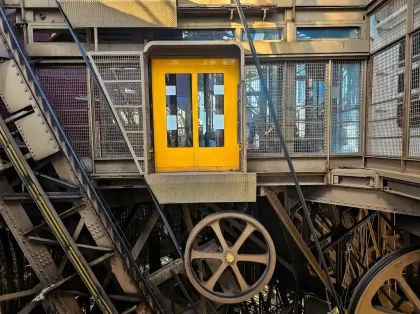
- The experience: you ride in comfort straight to the 2nd floor or the summit.
- The price: €23.50–36.70 for an adult.
Opening hours, weather and bags
In short: the tower is open every day of the year, until 11 p.m. in winter and until midnight in summer. There’s no left-luggage service, and in strong wind or thick fog the summit may close at short notice.
Eiffel Tower opening hours 2026
Early September to mid-June: 09:30–23:00, last ascent 22:45
Mid-June to early September: 09:00–00:00, until midnight
Bag policy
Important: There’s no left-luggage service. Suitcases aren’t allowed, only reasonably sized bags. There’s a security check at the entrance to the esplanade, so allow an extra 15 minutes.
Weather and sudden closures
In the rain the tower is open as usual, but the summit is another story: in strong wind, a thunderstorm or thick fog it sometimes closes with only minutes of notice. If you bought a summit ticket and the summit is closed, ask at the ticket office what they can offer you instead.
And my most useful advice: it’s always colder up there than it looks from below, and the wind on the open deck makes all the difference. Pack an extra layer, even in April and September.
Renovations and closures in 2026
In short: the tower is in the middle of its biggest renovation campaign in forty years, and the summit closes from time to time at short notice. Check the updates page on the official site the day before your visit.
Since 2019 the Eiffel Tower has been going through renovation and maintenance work on an unprecedented scale. According to the operating company (SETE), its most significant project in about four decades is expected to be completed by the end of 2026. The full program, which isn’t due to end until 2031, includes an investment of about €380 million in maintenance and restoration.
When the summit closes
Two things close the summit without advance notice. The first is maintenance work, which usually happens in January and February, the tower’s quiet season. The second is the weather: in summer heat waves the summit sometimes closes for a whole day (it happened most recently on August 14, 2026, when temperatures in Paris came close to 40°C), and also in strong wind and thunderstorms. In both cases the 1st and 2nd floors stay open, and visitors with a summit ticket are sent to the ticket office to sort out the difference. Check the updates page on toureiffel.paris on the morning of your visit.
The summit closes before the rest of the tower. Even on a perfectly normal day, the last elevator to the summit leaves an hour or more before the 1st and 2nd floors close. If you arrive in the last hour with a summit ticket, you may find that you only get as far as the 2nd floor.
And if you love history as much as I do: in January 2026 a list of 72 women scientists was published, proposed for engraving on the tower next to the 72 names of scientists (all of them men) that Eiffel had engraved there in 1889.
How to get to the Eiffel Tower
In short: Trocadéro station (line 9) gives you the most impressive view of the tower.
Once you have your ticket and time slot, there’s only one question left. You can see the Eiffel Tower from all over Paris, but arriving the right way is an art. Many people get off at the closest station, but the longer way gives you the biggest “wow”.
Metro line 9 (Trocadéro station)
When you come out of the station onto the Trocadéro esplanade, the tower appears in front of you in all its glory across the river. This is the classic photo spot.
Metro line 6 (Bir-Hakeim station)
It’s about a 10-minute walk along the riverbank. The big bonus: line 6 runs partly above ground, and the view of the tower from the train as it crosses the Seine is very impressive.
RER C (Champ de Mars station)
This is the closest station to the tower. Great if you’re coming from the Notre-Dame area or the Musée d’Orsay and want to save yourself some walking.
Where to photograph the Eiffel Tower
In short: the Trocadéro esplanade gives you the classic shot, but five more spots give you a photo that doesn’t look like everyone else’s. The most important rule: get there before 8 a.m. or after dark.
After dozens of visits I’ve learned that a good photo of the tower isn’t about the camera, it’s about the hour and the angle. Around midday, seen from the Trocadéro, the sun sits behind the tower and it comes out as a dark shape with no detail. Here are the five spots I keep going back to, in the order I’d do them.
From my camera. I took all the photos here myself, and the time in each caption is the time it was taken. Notice how much the hour changes the picture.
The Trocadéro esplanade (Place du Trocadéro)
The classic shot. The tower at its full height across the Seine, with the Trocadéro gardens in the center of the frame. The esplanade fills up around 9 a.m. and stays crowded until night, so I get there at 7 a.m. At that hour the sun lights the tower from the front, not from behind, and that makes all the difference.
Rue de l’Université
On the stretch of the street nearest the tower, the Iron Lady fills the narrow gap between the Haussmann-era buildings. This is the photo you’ve seen a hundred times on social media, and there’s a small line of cameras there by 8 a.m. Rue Saint-Dominique gives a very similar effect with far fewer people.
Bir-Hakeim Bridge (Pont de Bir-Hakeim)
This two-level Belle Époque bridge has a row of columns that create a perspective ending at the tower. If you’re lucky, the elevated metro will pass above you at exactly the right moment. Shoot from the north side of the bridge.
The Champ de Mars
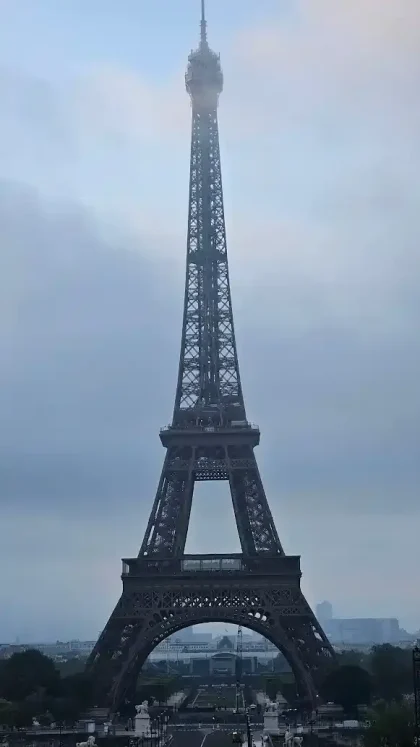
This one is from below, on the lawns. It’s the least impressive spot for a landscape shot, but the best one for photos with people: the tower rises above you while you sit on the grass. In summer it’s also the place for a picnic before you go up.
The Debilly footbridge (Passerelle Debilly)
This is the area’s little secret: a pedestrian-only bridge between the Trocadéro and the Pont de l’Alma, with a view of the tower above the Seine and the cruise boats passing underneath. It’s almost empty at any time of day, sunset included.
Not sure how to fit the tower into your first day in the city? My walking itineraries in Paris will help you plan the rest of the day.
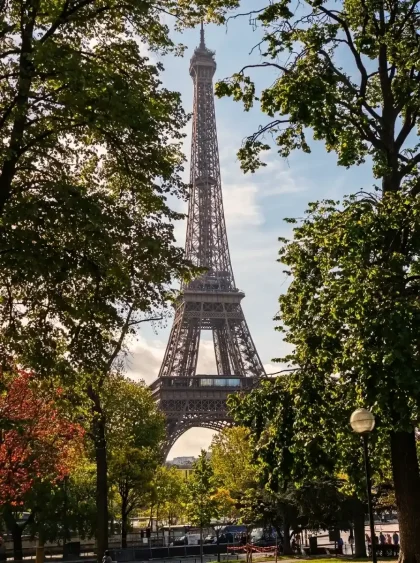
The Eiffel Tower at night
In short: the tower sparkles for five minutes every hour on the hour, from nightfall until the last sparkle of the night. Something most visitors don’t know: the tower’s night lighting is a work protected by copyright, while the structure itself is in the public domain.
There are two ways to see the Eiffel Tower, and most people only know one. By day it’s an impressive piece of engineering. By night it becomes a show, and in the legal sense even a work of art. It’s worth planning one evening around it.
The most beautiful way to see the tower lit up is actually from the water. The Seine cruise boats leave from right below it and pass in front of it just as it sparkles.
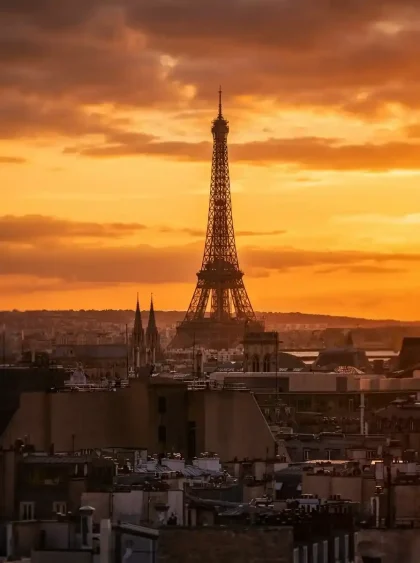
The sparkle (Scintillement)
About 20,000 flashing bulbs, installed for the year 2000, light up for exactly five minutes every hour on the hour, starting at nightfall. The last sparkle is at midnight, and when the tower stays open late, roughly from the end of June to early September, at 1 a.m. Be in place five minutes before the hour, not after it.
The beacon at the top
At the top of the tower two searchlights turn, sending a rotating beam of light over Paris, like a lighthouse. You can see it from quite far away, even outside the city, and it runs until the lights go off. If you’re staying in the 15th or 16th arrondissement with a window facing the right way, you’ll see it sweep across your wall.
The copyright on the lighting
The golden lighting, designed in 1985 by Pierre Bideau, is protected as a work of art. Publishing a night photo for commercial use requires permission from the operating company. A private photo that you post on social media isn’t a problem. The structure itself is in the public domain, because Gustave Eiffel died in 1923.
Scams around the tower
The ring and bracelet scams
Scammers will try to hand you a “gold ring they just found” or tie a string bracelet around your wrist, and then aggressively demand money. Keep your hands in your pockets, ignore them and keep walking.
The clipboard petition
Young women with a clipboard ask whether you speak English and want you to sign a petition for some cause. The second you look down at the clipboard, a hand (theirs or a partner’s) goes into your bag. Don’t stop and don’t take the pen.
Unofficial ticket sellers
People walk around the esplanade offering to sell you a ticket that someone canceled, or a skip-the-line entry for cash. There’s no such thing. Eiffel Tower tickets are tied to a set time and scanned at the entrance, and you’ll be left holding a worthless piece of paper.
Pickpockets on metro line 6 and the RER C
The two lines that take you to the tower are among the pickpockets’ favorites in Paris, precisely because most of the passengers are tourists with a phone in their hand. Keep your bag in front and your phone in an inside pocket, and pay extra attention the moment the doors close.
The little tower souvenirs
The sellers on the esplanade will start with an absurd price and then happily meet you halfway. It isn’t dangerous, just overpriced. If you really came for a souvenir, the official shops on the 1st and 2nd floors sell at fixed prices (and of a somewhat different quality).
Accessibility at the Eiffel Tower
In short: the 1st and 2nd floors are fully accessible by elevator, the summit isn’t accessible to visitors with reduced mobility, and there’s a reduced price for a visitor with a disability and one companion.
The Eiffel Tower is mostly accessible, but accessibility changes from floor to floor. Check the details below for the floor you plan to reach, before you buy.
What is accessible on the 1st and 2nd floors
The first two floors are fully accessible by the large elevators, including the restaurants and shops. Wheelchair users can reach them on their own using the elevators.
What is not accessible at the summit
The 3rd floor (the summit) is closed to visitors in a wheelchair or on crutches, for safety reasons: the emergency evacuation route from the summit runs down narrow spiral stairs. Note a detail many people miss: a visitor with a disability whose mobility isn’t affected may go up to the summit.
Tickets and discounts
There’s a reduced price for visitors with disabilities and for one companion (only one per visitor). You need to show an official document proving the disability, both when you buy and to the staff at the entrance. You can buy the reduced ticket in advance on the official site.
Priority access and accessible restrooms
Visitors with disabilities and their companion get priority access to the ticket offices and the pillars. Talk to a staff member on the esplanade as soon as you arrive. There are accessible restrooms on the ground level (behind the east pillar) and on the 1st and 2nd floors, and the 2nd floor has viewing windows at wheelchair height.
Inside the Eiffel Tower: what is on each floor
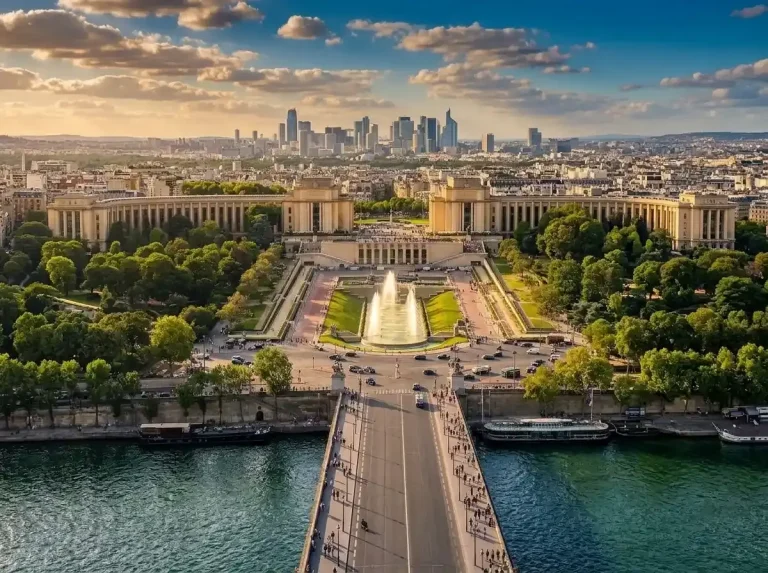
The summit
Gustave Eiffel’s restored office, a Champagne bar and a breathtaking bird’s-eye view.
2nd floor
The best view for photos. The height is perfect for picking out landmarks like the Louvre and Notre-Dame.
1st floor
A transparent glass floor (scary and cool!), and the Madame Brasserie restaurant.
Restaurants in the Eiffel Tower
In short: there are two official restaurants, both by reservation only. Madame Brasserie on the 1st floor is the affordable option, and Le Jules Verne on the 2nd floor is a Michelin-starred tasting menu. A reservation only takes you up to the restaurant’s floor; it doesn’t include a visit to the rest of the tower.
Madame Brasserie
Chef Thierry Marx’s restaurant on the 1st floor, 57 meters up, with floor-to-ceiling windows. Lunch menus start at around €70 per person and dinner menus at around €130 (as of August 2026; prices change often, so check the official booking site). Diners have a separate entrance that skips the line for the elevators. It’s also the right choice for families: there’s a kids’ menu.
2nd floorLe Jules Verne
Chef Frédéric Anton’s Michelin-starred restaurant on the 2nd floor, with a private elevator from the south pillar that skips all the lines. As of 2026 it serves tasting menus only: five courses from €295 and seven courses from €330 per person, before wine. There’s a dress code (no shorts and no sportswear), and ask for a window table when you book. If that’s out of your budget but you still want the experience, the Champagne bar at the summit sells a glass for about €24, no reservation needed.
Good restaurants within walking distance of the tower
The two restaurants above are inside the tower, and if you didn’t book ahead, you won’t get in. Here are eight restaurants I’ve checked out in the 7th arrondissement and nearby, in order of walking distance from the tower.
Au Bon Accueil
Open since 1870 and run by the same family for three generations. A seasonal menu of classic French dishes, and excellent desserts.
Aux Cerises
A small bistro with a short menu, which is a point in its favor. Fair prices, and good coffee to finish.
Les Cocottes
A French bistro with a serious wine list and traditional comfort food.
Zia
A family-owned café and restaurant, with one of the best breakfasts in the area.
Bistrot Belhara
Traditional and modern French cooking, good for a romantic meal. Midweek there’s a starter, main and dessert for about €36.
Le Café du Commerce
A lively neighborhood restaurant the locals love, with steaks and great fries.
Mokus l’Écureuil
Thin-crust pizzas, pasta and burgers: a great option for picky eaters.
Corso Kléber
Italian, with good pasta and gluten-free options, and breakfast too.
Where to stay near the Eiffel Tower
The 7th arrondissement (home of the tower) and its neighbors, the 15th and 16th, are considered among the most upscale and safest areas of Paris. I’ve gathered the apartments I’ve checked out in the area and the hotels with a view of the tower on my hotels near the Eiffel Tower page, and you’ll find more options in my guide to vacation apartments in the 7th arrondissement.
Why was the Eiffel Tower built?
The Eiffel Tower was built as the entrance gate to the 1889 World’s Fair in Paris, which marked the centennial of the French Revolution. The design came from the engineering firm of Gustave Eiffel (1832-1923), construction took just two years and two months, and the tower reached a height of 300 meters (330 meters today, with the antennas). For the full story, including who really drew it and why it was almost taken down after twenty years, read my article on the history of the Eiffel Tower.
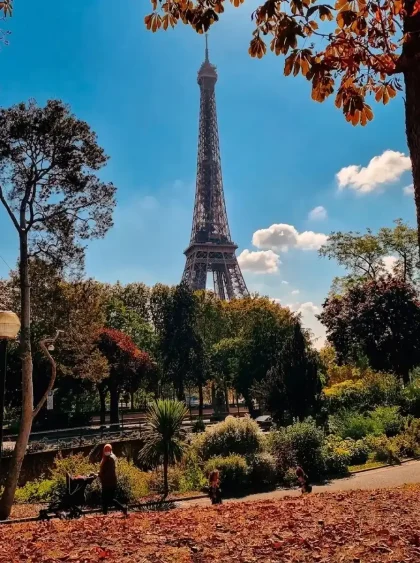
The Eiffel Tower in numbers
A few statistics to impress your travel companions (or just because they’re fascinating):
Attractions near the tower
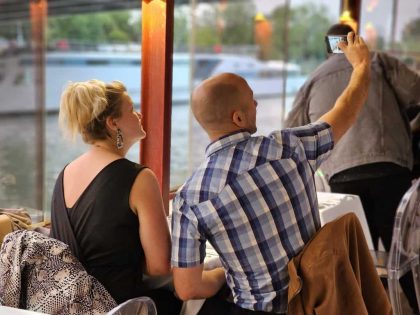
Seine cruise
The cruise boats (Bateaux-Mouches) leave from right below the tower. It’s a romantic, relaxed experience.

Musée du quai Branly
A museum of the arts of Africa, Asia, Oceania and the Americas, set in an enchanting garden a few minutes’ walk from the tower.
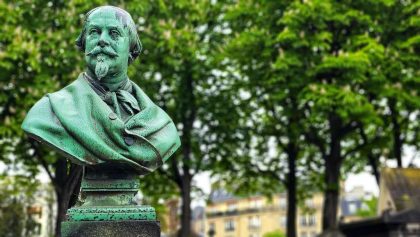 Free attraction
Passy Cemetery
A small, peaceful cemetery within walking distance, fascinating if you love history and Parisian architecture.
Walking tours near the tower
Want to explore the area in more depth? Here are four detailed walking routes in the 7th and 16th arrondissements that will enrich your visit:
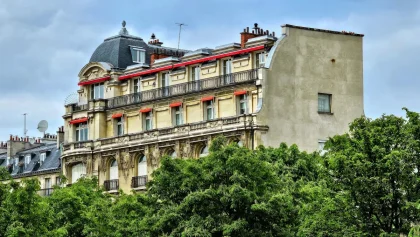 16th arrondissement
A walk through Passy
Discover the picturesque streets and historic buildings of quiet Passy, step by step.
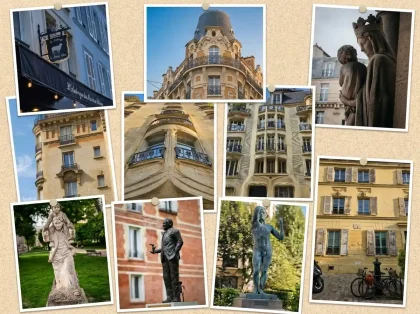 16th arrondissement
A walk through Auteuil
From the Jardin du Ranelagh, past the Art Nouveau buildings of Hector Guimard (1867-1942), to the inn Molière used to frequent in the heart of the neighborhood.
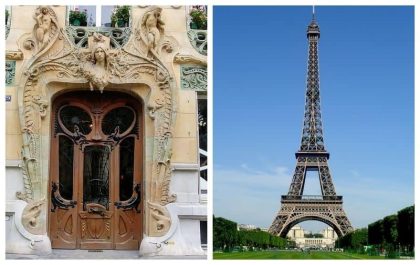 7th arrondissement
In the footsteps of Jules Lavirotte
Follow the masterpieces of the architect Jules Lavirotte (1864-1928), one of the leading names of Art Nouveau, in the 7th arrondissement.
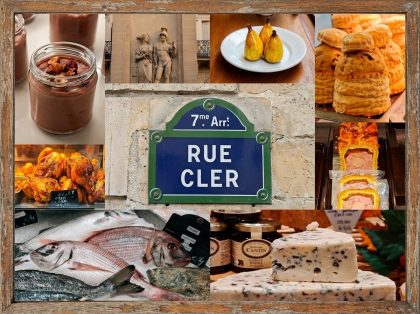 7th arrondissement
A food walk on Rue Cler
The market street of the 7th arrondissement: food shops, cheese and baked goods along the way, plus the story of the street.
Is the Eiffel Tower worth the line?
Search social media and you’ll find opinions ranging from “a once-in-a-lifetime experience” to “a crowded tourist trap”. So what’s the truth? I’ve been to the top only once, and that’s exactly why I remember it so well. Here is my honest review:
Yes, there are always crowds (keep a close eye on your wallet), and yes, the lines for the elevators can be frustrating. But when you stand on the second floor, or better still at the summit, with all of Paris spread out below you like a sparkling carpet… it’s a magical moment that’s hard to put into words. Is it worth the hassle? The answer is yes, but only if you’re smart and book ahead. If you arrive without a ticket and have to stand in line for two hours at the ticket office, the experience may well be spoiled.

Want to see what else is worth a visit in the city? I’ve gathered all the Paris attractions in one place, with visiting times, metro stations and what you need to book ahead.
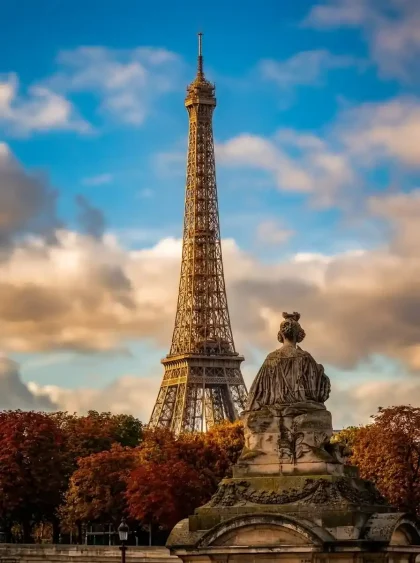
Questions and answers about the Eiffel Tower
How tall is the Eiffel Tower?
The Eiffel Tower is 330 meters tall (including the antenna on top). To put that in perspective, it’s about the height of an 81-story building!
How many floors does the Eiffel Tower have?
The tower has 3 levels open to visitors: the first floor (57 meters up), the second floor (116 meters up) and the summit (276 meters up).
How many steps does the Eiffel Tower have?
There are 674 steps open to the public, up to the second floor (in total the tower has 1,665 steps to the summit, but the upper ones are closed to the public for safety reasons).
Don’t feel like a workout on your romantic trip? Totally understandable (I’m not judging). This is the time to book an elevator ticket and skip the effort.
Which arrondissement is the Eiffel Tower in?
The tower is in the 7th arrondissement of Paris, considered one of the most upscale and safest in the city. If you dream of waking up to a view of the Iron Lady, take a look at my guide to recommended vacation apartments in the 7th arrondissement.
When does the Eiffel Tower sparkle?
The Eiffel Tower sparkles for five minutes every hour on the hour, from nightfall until midnight. In the season when the tower stays open late, roughly from the end of June to early September, the last sparkle is at 1 a.m.
Is there a left-luggage service at the tower?
Absolutely not. Don’t bring suitcases.
How long does a visit to the Eiffel Tower take?
An average visit takes an hour and a half to two hours if you go up to the second floor. If you choose to go all the way to the summit (3rd floor), plan at least two and a half to three hours, because of the extra lines for the inner elevator.
Do I need to print my tickets?
No. You can (and should) show your e-tickets on your smartphone at the entrance. Just make sure your battery lasts through the security check.
Is it worth the money?
On your first trip to Paris: yes. If you’ve been before and want a view that actually includes the tower, the Tour Montparnasse or the Arc de Triomphe will give you more for your money, and without the line.
What is the best time to visit?
To avoid the crowds: Tuesday, Wednesday and Thursday, early in the morning or late in the evening. For the views: about an hour before sunset, so you see the city by daylight, at sunset and then lit up at night.
Are there restrooms at the top?
Yes, there are restrooms on every level (1, 2 and the summit too).
How much is an Eiffel Tower ticket?
Going up the Eiffel Tower costs €14.80 to €36.70 for an adult, depending on the level and how you go up (from January 11, 2027: €15.20 to €37.70). Official adult prices in 2026: about €14.80 by the stairs to the 2nd floor, about €23.50 by elevator to the 2nd floor, about €36.70 by elevator to the summit, and about €28 for the combined ticket (stairs to the 2nd floor and the elevator to the summit). A reseller usually charges considerably more, in exchange for guaranteed availability.
Do children need a ticket for the Eiffel Tower?
Yes. Children under 4 get in free, but they must have a zero-euro ticket issued when you book. Children aged 4 to 11 pay about a quarter of the adult price, and those aged 12 to 24 pay about half.
How far in advance should I book Eiffel Tower tickets?
The official site releases tickets exactly 60 days in advance, at 8:30 a.m. Paris time, and they sell out within minutes. If you miss that window, resellers hold reserved stock until a few days before your visit.
Which floor of the Eiffel Tower is best?
The 2nd floor (116 meters) has the best view for photos, because at that height you can still pick out individual buildings. The summit (276 meters) gives you the sense of height and a bird’s-eye view, but the details blur and the line for the inner elevator adds at least half an hour.
When is the Eiffel Tower least crowded?
Tuesday to Thursday, at the first entry of the morning or after 10 p.m. The quietest months are January and February, but that’s exactly when the maintenance work that closes the summit tends to happen.
Can I go up the Eiffel Tower with a stroller?
Yes, strollers are allowed in the elevators and on the 1st and 2nd floors, which are fully accessible. You can’t take an open stroller to the summit; you have to fold it. Remember that there is no left-luggage service at the tower, so you can’t leave it downstairs.
Where is the best place to photograph the Eiffel Tower?
The five best spots are the Trocadéro esplanade, Rue de l’Université, the Bir-Hakeim Bridge, the Champ de Mars and the Debilly footbridge. Around midday, seen from the Trocadéro, the sun is behind the tower, so it’s better to shoot before 8 a.m. or after dark.
More about the Eiffel Tower on the site
The history of the Eiffel Tower
From the most hated monument in Paris to the symbol of France: the full story of Gustave Eiffel.
The dark side of the Eiffel Tower
What the tours don’t tell you: the swindles, the tragedies and the affairs the tower would rather forget.
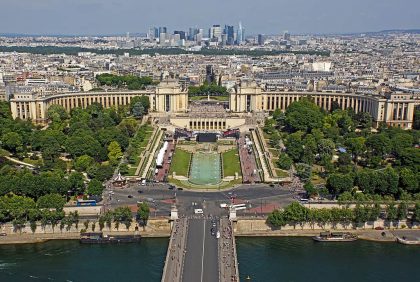
The Trocadéro gardens: the untold stories
Fountains, statues and an aquarium facing the tower, and the buildings that stood there before the Palais de Chaillot.
To plan the rest of your trip, head over to my complete Paris guide.
My walking itineraries in Paris
Free self-guided walking routes through the neighborhoods of Paris, with the sights and the stories along the way.