
In short
- 13th century: The lords of Bâgé rule the town, and in 1251 the residents receive their first charter of liberties.
- 1272: The marriage of Sibylle de Bâgé to Count Amadeus V brings Bresse under the House of Savoy.
- 1397: A judicial duel in Bourg-en-Bresse ends with the death of the poet Othon de Grandson.
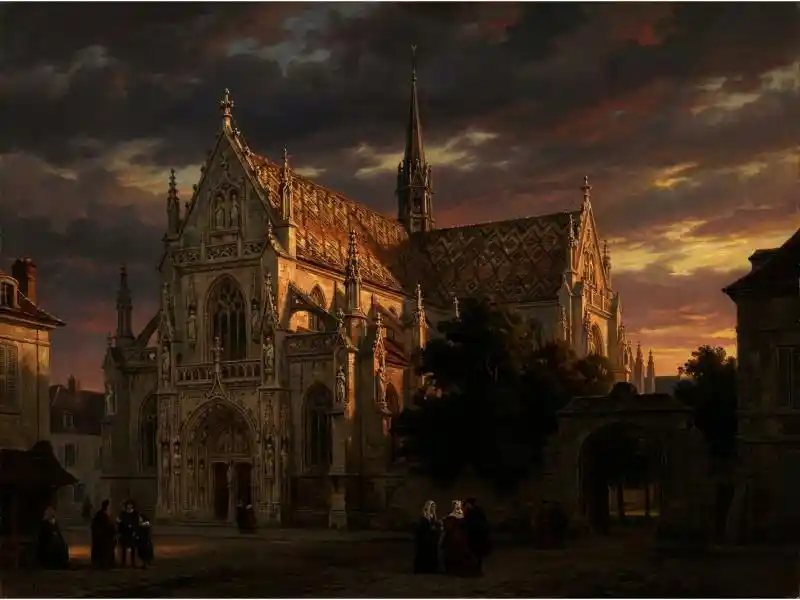
- 1506-1532: Margaret of Austria builds the Monastery of Brou as a mausoleum, directing construction from Mechelen.
- 1569-1601: Fort Saint-Maurice is built and later destroyed, and the Treaty of Lyon annexes Bresse to France.
- 1791-1922: The Revolution confiscates the monastery, Thomas Riboud saves it, and the town museum opens there.
- 1944: A Gestapo raid on July 10, and the town’s liberation without a fight on September 4.
- 2014: The Monastery of Brou is voted the French people’s favorite monument.
Bourg-en-Bresse looks today like a quiet French provincial town, but for three hundred years it was not French at all. It was the capital of Bresse under the House of Savoy, a border town that looked across the line at the Kingdom of France, with its own parliament, its own currency, and its own court system.
When I visited the town, I found that its history was far richer than I expected from a place of this size. There is a judicial duel that ended with a poet’s death, a vow that was never kept and was passed down through a family, a 24-year-old widow who decided to build herself a mausoleum and never saw it finished, a fortress considered almost impossible to conquer that was torn down for its stones eleven years after it was captured, and a revolution that nearly destroyed everything and was stopped by a clerk who knew how to draft a document.
So before we get going, let’s talk about what you’ll find in this article. I’ll start with the Gallo-Roman camp and the 1272 marriage that brought Bresse under the House of Savoy, move on to the 1397 duel, then to the Monastery of Brou and the story of Margaret of Austria, and finish with the 1601 annexation to France and everything that has happened here since.
From the Roman Camp to the 1272 Marriage Contract
This place was a crossing point as far back as antiquity. Excavations have uncovered two settlement centers from the Gallo-Roman period: a village at Brou, organized around a fanum, a sacred precinct for the gods, and a small fort that later became a castle, right where the place des Lices stands today.
Bourg itself grew up around the castle built on a hill. In the 13th century, the lords of Bâgé settled here and became the dominant local power, and in March 1251 the residents received a first charter of liberties that granted them a degree of municipal independence.
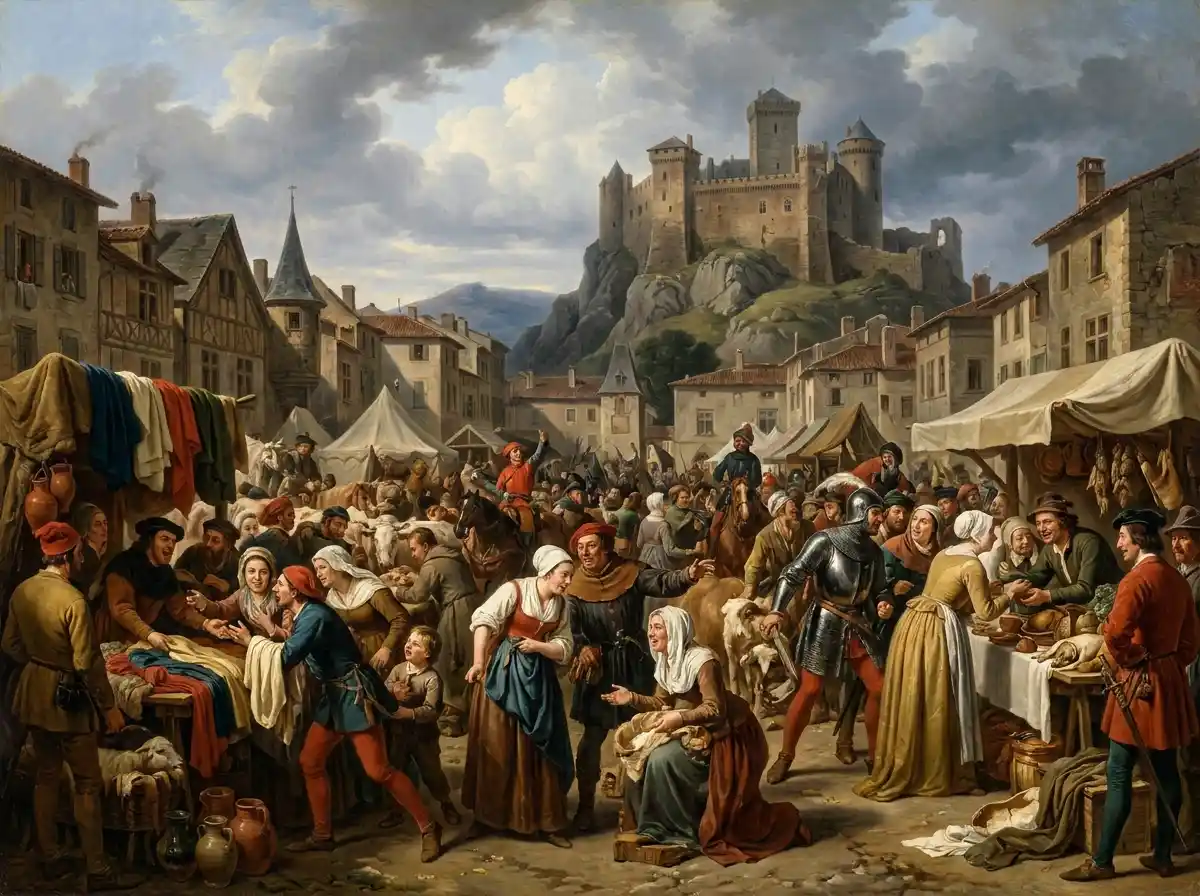
The turning point came with a marriage. In 1272, Sibylle de Bâgé married Count Amadeus V of Savoy (ruled 1285-1323), and Bresse passed into the hands of the House of Savoy. That marriage sealed the town’s fate for the next three hundred years. From that moment on, Bresse became a significant craft center, minted its own coins, and trade flourished there. By the 15th century it was already the regional capital of the dukes of Savoy, and three fortified walls surrounded the houses around the feudal castle. Not even the Black Death stopped the growth: the town held around four thousand residents, the markets kept running, and construction continued.
During those same years, about a mile and a half from the town, a far humbler site was developing. It was a small Benedictine monastery called Brou, which was not particularly successful, and its monks began abandoning it. In 1319 the monastery was handed over to the House of Savoy on one condition: that they keep a clergyman to serve it. No one could have known that two hundred years later, one of the most magnificent churches in France would be built on that very spot.
August 7, 1397: The Duel That Killed a Poet
In 1391, Count Amadeus VII of Savoy (ruled 1383-1391), known as “the Red Count,” went out hunting. He was injured, and died shortly after. His physician, Jean de Granville, and the apothecary Pierre de Lompnes were accused of poisoning him. Under torture, Granville implicated a very senior figure: Othon III de Grandson, a nobleman from the Vaud region.
Othon was close to the court, and that closeness cost him dearly. He was not without enemies, and his great wealth did not help him. His property was confiscated and he fled to England in 1392. In 1395, King Charles VI of France (r. 1380-1422) declared him innocent, and his property was restored to him. In 1396 he returned to Sainte-Croix, believing the matter was closed.
He was wrong. A minor, penniless nobleman from the Broye region, Gérard d’Estavayer, revived the accusation. The young Count Amadeus VIII (count 1391-1416), who was still a minor and lived in Bourg, ordered a judicial duel: in the absence of conclusive evidence, the sword would decide who was right. The council delayed the ruling in January 1397 given the scale the affair had taken on, and supporters of both sides were already walking the streets with provocative badges, a rake on the shoulder for some and straps at the tips of their shoes for others. The verdict was handed down on June 30 (which happens to be my own birthday).
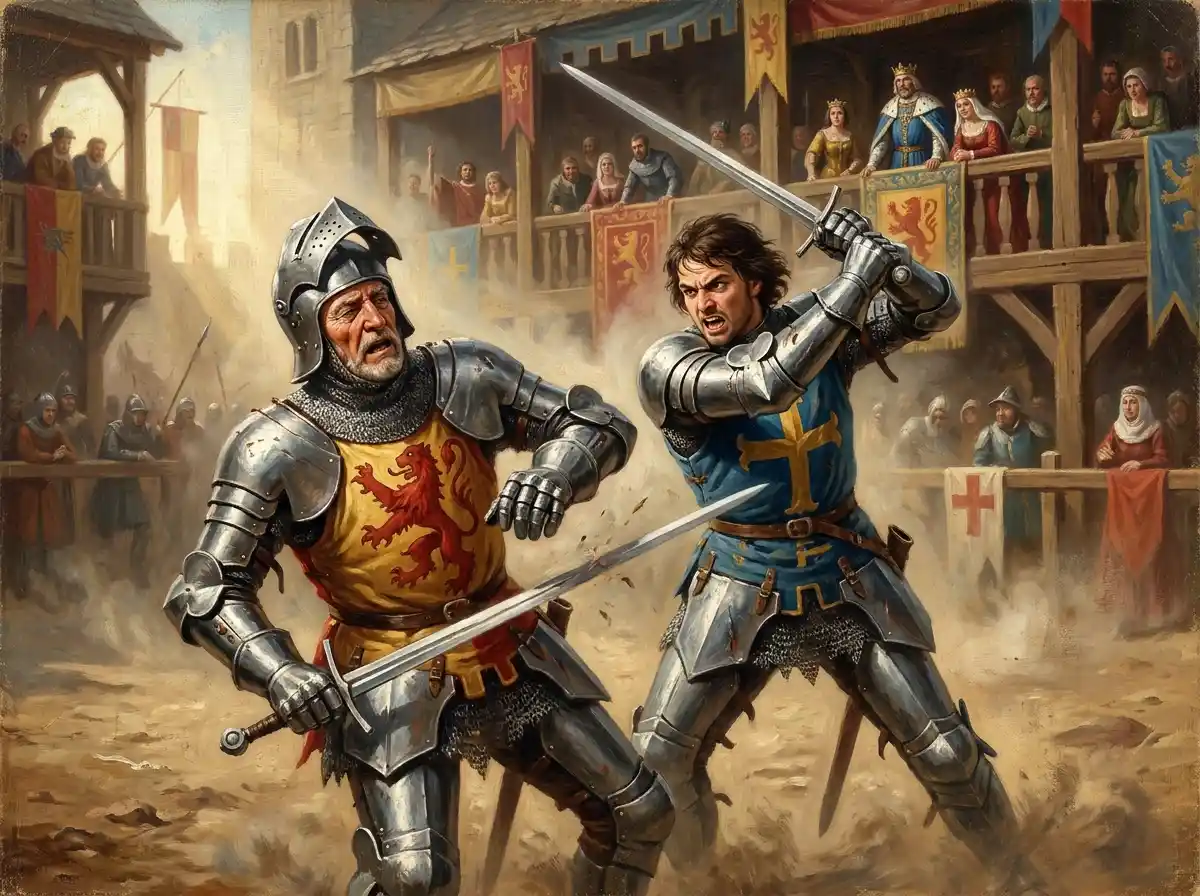
The duel took place in Bourg-en-Bresse on August 7, 1397, before the count, the nobility, and representatives of the subjects. Othon was close to sixty, the age past which one was exempt from dueling, and Estavayer was much younger than him. The outcome was quick and not surprising. According to the accounts, Othon was struck in the face and blinded when he raised his visor, and kept repeating to the end: “Je me rends à Dieu et à ma dame sainte Anne,” meaning “I surrender to God and to my lady Saint Anne.” A French marshal came forward to claim the body so it could be buried in consecrated ground, arguing that a knight who never surrendered was not truly defeated.
A detailed account of the duel survives in the chronicle of Olivier de la Marche, the “Livre de l’advis du gaige de bataille” (Book of Advice on the Wager of Battle). Othon lost his life and his property, and his estates passed to the lords of Chalon. The murder charge was never proven. And if you’re wondering what became of the young count who ordered the duel, Amadeus VIII later became the first Duke of Savoy, and afterward an antipope under the name Felix V.
1504-1532: The Vow, the Widow, and the Monastery
The story begins with a vow that was never kept. Marguerite de Bourbon, wife of Philip II of Savoy, known as “Philip Lackland,” promised to found a monastery if her husband recovered from an injury he suffered in a riding accident. He recovered, the monastery was never built, and she died in 1483 with the promise still unfulfilled.
Her son, Philibert the Handsome, Duke of Savoy from 1497 to 1504, married Margaret of Austria (1480-1530) on December 3, 1501.
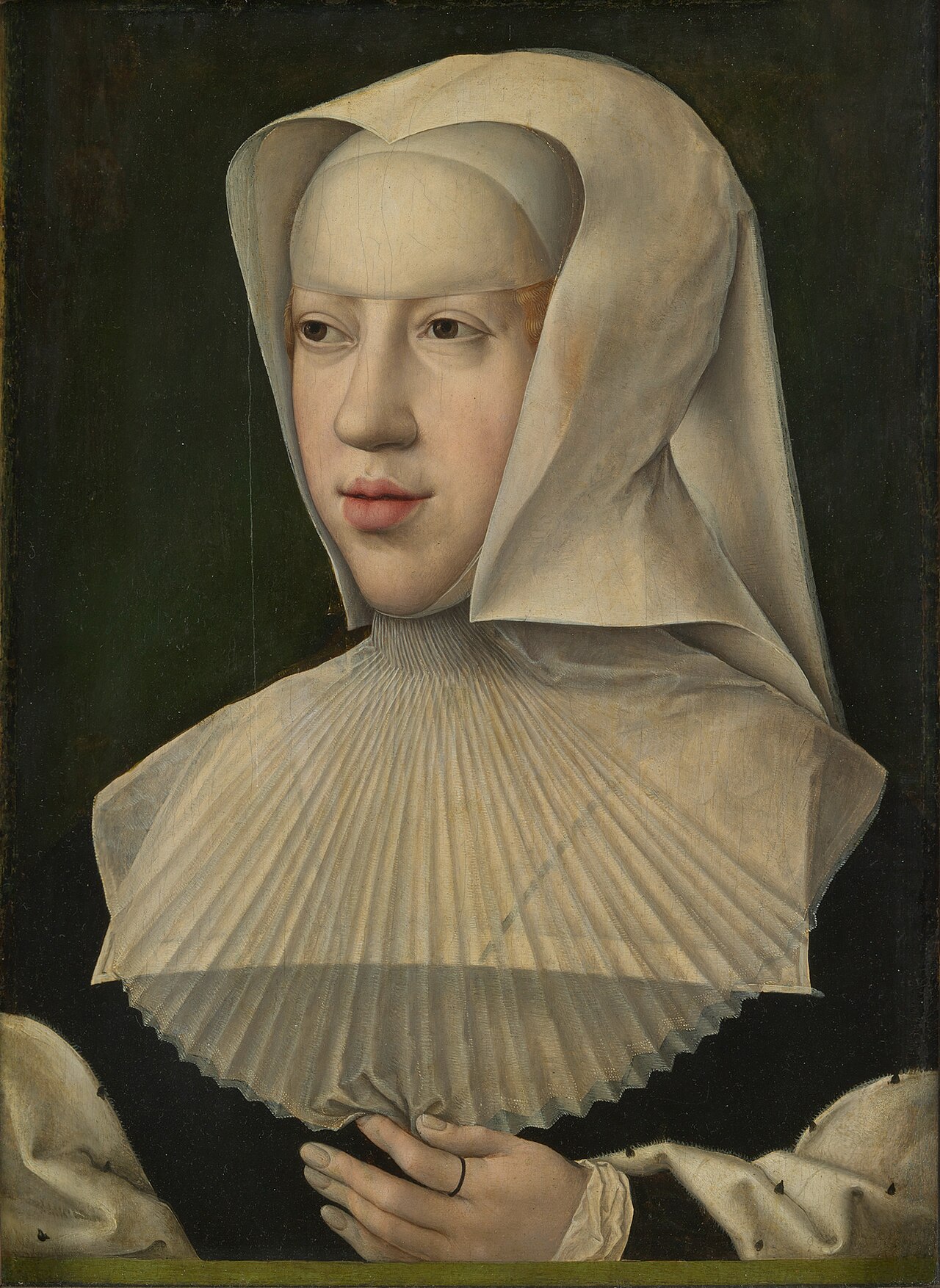
This same Margaret was meant to become Queen of France. It was decided when she was two years old that she would be betrothed to the dauphin Charles. But at age 11, the dauphin, who had by then become King Charles VIII (r. 1483-1498), decided instead to marry Anne de Bretagne.
In 1497 she married Juan de Asturias (1478-1497), the only son of the Catholic Monarchs, and he died seven months later. On her way to Spain, when her ship was caught in a storm on a March night, she suggested a game to the ladies of her court: each would compose her own epitaph in case they drowned. Hers survived, and it’s exactly the kind of humor that makes me fond of a woman who died five hundred years ago: “Ci-gît Margot, la gente demoiselle, Qu’eut deux maris et si mourut pucelle,” meaning “Here lies Margot, the fair maiden, who had two husbands and yet died a virgin.”
With Philibert, she was finally happy. He had no interest in running the duchy and left the reins to her, and she steered Savoy away from the French orbit and toward the Habsburg orbit of her father. The happiness lasted three years. On September 10, 1504, after a hunt on an especially hot day, Philibert drank ice-cold water from a spring, fell ill with pleurisy, and died at age 24. From that day on, Margaret adopted the motto “Fortune infortune fort une,” meaning “fortune and misfortune are one and the same,” and never remarried.
She connected the two events. The vow her mother-in-law never kept, and her own widowhood, seemed to her like one single chain of punishment. On August 10, 1506, she received permission from Pope Julius II (r. 1503-1513) to found a modest Benedictine monastery with a new church at the site, and on August 28 the cornerstone was laid. She dedicated the church to Saint Nicholas of Tolentino, an Italian Augustinian friar who was very popular in Savoy. In 1509 she decided that she too would be buried there, and from that point the project changed scale: it was no longer a memorial to a dead husband, but a mausoleum fit for a woman who had been heir to Burgundy and regent of the Low Countries.
The choice of location was not sentimental. The monastery was built in the spirit of the ducal oratory of Champmol near Dijon, the capital of the Duchy of Burgundy, which her family had lost upon the death of her grandfather Charles the Bold, Duke of Burgundy from 1467 to 1477. It was built in a border town, nearly on the French frontier, and it proclaimed in every direction the bond between Savoy and the lands of Burgundy, and the distance from France.
The pace of the work here is worth noting. In the early years, priority was given to the monks’ living quarters, because someone needed to be praying for the souls of the distinguished dead who would be buried here. The monastic buildings and the three cloisters were built between 1506 and 1512, and only on July 13, 1513 was the cornerstone of the new church laid. It was completed in 1532, that is, 26 years after the whole project began, which was considered very fast given the exceptional scale of the building and the construction technology of the time (by comparison, many Gothic cathedrals in Europe took two hundred years or more to build).
The monks brought here were Augustinians from Lombardy, followed later by barefoot French Augustinians who held on until the Revolution. Their financial comfort, which had been generous during Margaret’s lifetime, dwindled over the years, and maintaining the buildings became an ever heavier burden.
Here’s an interesting detail: Margaret never lived to see her church in its full glory. In that very same year, 1506, she was appointed regent of the Low Countries, first for her father and later for her nephew, Emperor Charles V (r. 1519-1556), and she managed the entire site remotely, from Mechelen in Brabant. She chose the construction managers, the painters, and the sculptors, bringing in the best of Europe, including the architect Loys van Boghem, who replaced Jean Perréal, and she insisted on approving every detail. In the 1520s she even had a larger apartment built for herself at Brou than the one she had in Mechelen.
It’s worth understanding who this woman really was beyond the story of her widowhood, because articles about her tend to narrow down to a tragic romance and miss everything else. Margaret of Austria was one of the sharpest political minds in Europe of her time. In 1508 she helped assemble the League of Cambrai against Venice, a move that secured years of calm for the Low Countries. She worked to secure her nephew Charles V’s election as emperor in 1519. And in 1529 she negotiated with Louise de Savoie (1476-1531), mother of Francis I, the Treaty of Cambrai, known as “the Ladies’ Peace” (la Paix des Dames), which restored calm between the emperor and the king of France. Two women settled a conflict between the two most powerful men in Europe, and that happened just a year before her death.
She was also a patron of the first order. At her court in Mechelen she supported writers like Erasmus and composers like Josquin des Prez, collected paintings by Jan van Eyck, Hieronymus Bosch, Rogier van der Weyden, and Hans Memling, and commissioned stained glass and tapestries on a grand scale. She herself played the organ, the harpsichord, and the spinet, and wrote poems and songs, some of which were published during her lifetime. Looking at Brou through that lens, it’s easier to understand why every detail there looks like someone checked it twice.
She died on December 1, 1530, at age 50. It was not a pleasant death: a leg wound, apparently caused by broken glass, became infected and turned gangrenous. The doctors bled her again and again, and finally decided to amputate the leg. According to the accounts, the dose of opium given to her before the operation was too large, and she never woke up. Her body was brought to Brou in May 1532 and laid beside her husband’s, six years and twenty-six years of construction after the cornerstone was laid. The monument she built to be remembered forever, she herself knew only from plans and reports.
From 1601 to Today: Annexation, Revolution, and the Museum
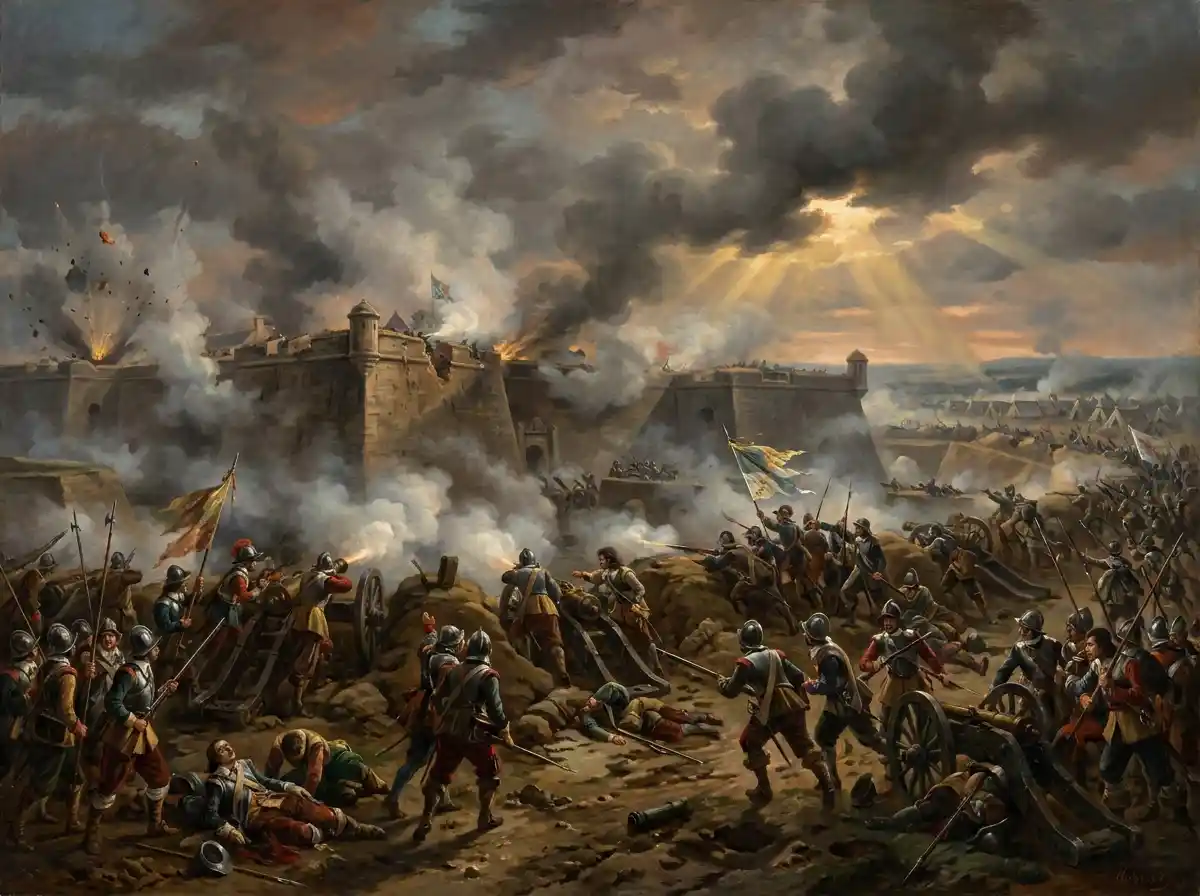
The 16th century brought repeated conquests to Bourg-en-Bresse. In 1536, Francis I (r. 1515-1547) entered the town and built a modern wall there with bastions and moats protecting 6,000 residents. But in 1559, under the Treaty of Cateau-Cambrésis, it was returned to Duke Emmanuel Philibert (Duke of Savoy, 1553-1580). In 1569 he began building a pentagonal fortress called Fort Saint-Maurice, with wide moats and five corner bastions. Thirty years of work and a fortune turned it into a place considered in Europe to be almost impossible to conquer.
Henri IV (r. 1589-1610) proved that was not quite true. On June 27, 1600, he sent the Duke of Savoy an ultimatum: vacate the disputed territory within three months, or forfeit your holdings west of the Rhône. The king did not wait three months. On August 12 he launched a campaign on three fronts himself: Marshal Biron attacked and sacked Bourg, Crillon (Louis des Balbes de Berton de Crillon, 1541-1615) advanced on Chambéry, which surrendered quickly, and Lesdiguières (François de Bonne de Lesdiguières, 1543-1626) attacked Montmélian. The fortress of Bourg held out for many months after the town itself fell, but it too surrendered in the end.
The solution came at the negotiating table. Peace talks were held in Lyon in the presence of a papal envoy, and on January 17, 1601, the Treaty of Lyon was signed: the Duke of Savoy paid 300,000 livres and handed over to France Bresse, the Bugey, the Valromey, and the Pays de Gex, while keeping for himself the marquisate of Saluzzo. It was the end of a full historical cycle. France gave up its claims to Italian territory, Lyon stopped being a border town, and the new territories were administratively annexed to Burgundy. From them, together with the Dombes, the department of Ain would be created in 1791.
The fortress was evacuated on March 9, 1601 and garrisoned by the Champagne regiment, and from 1611 it began to be demolished to make room for the town’s expansion. Think about that for a moment: thirty years of work and a fortune poured into a fortress considered impregnable, torn apart for its stones after only eleven years in French hands. The duke’s capital became a French administrative town, but its role as a judicial center actually grew stronger.
The 18th century changed the face of the town more than any other. Under Louis XV (r. 1715-1774), the marshes surrounding Bourg were drained, the streets were paved and lit, and local noble families built themselves houses of cut stone in the Bourgmayer and Tainier districts. In 1774, the administrators of the Sainte-Marie hospital, which could no longer handle the patients, decided to move it outside the walls, on the bank of the Reyssouze river and along the old road to Brou. The architect Pierre-Adrien Pâris (1745-1819) designed, between 1781 and 1787, an enormous building almost 80 meters long, with a neoclassical chapel and a dome at the center of the facade. That is the Hôtel-Dieu you visit today, and the pharmacy inside it is the one thing there that has never been moved from its original spot.
The French Revolution nearly destroyed Brou. The monks were expelled in 1791, the building was confiscated as national property, and the church was used as a fodder warehouse for the army while the monastic buildings became barracks and a prison for priests who refused to take the oath. What saved the site was a clever legal maneuver: Thomas Riboud, the public prosecutor of the departmental administration, obtained from the National Constituent Assembly a declaration naming Brou a national monument, which blocked any possibility of demolition.
Note that during the Revolution, entire monasteries were destroyed across France, and the great church of Cluny, once the largest church in Christendom, was dismantled for its stones and sold as building material. Brou survived not thanks to a love of art, but thanks to a clerk who knew how to draft a document. Using the church as a fodder warehouse was degrading, but it was also what kept it from being destroyed.
In 1823 the site was handed over to the Church, which ran a seminary there until 1907. In 1862 it was designated a protected heritage site, which permanently ended the risk of demolition. After World War I, the state transferred most of the monastery to the town of Bourg to establish a municipal museum, which opened in 1922, while the church itself remained a historic monument open to visitors. To this day, ownership is split between the state and the town, and both manage it together. That, by the way, is why a single ticket gets you into both the state-owned church and the town-owned museum, which was not a given.
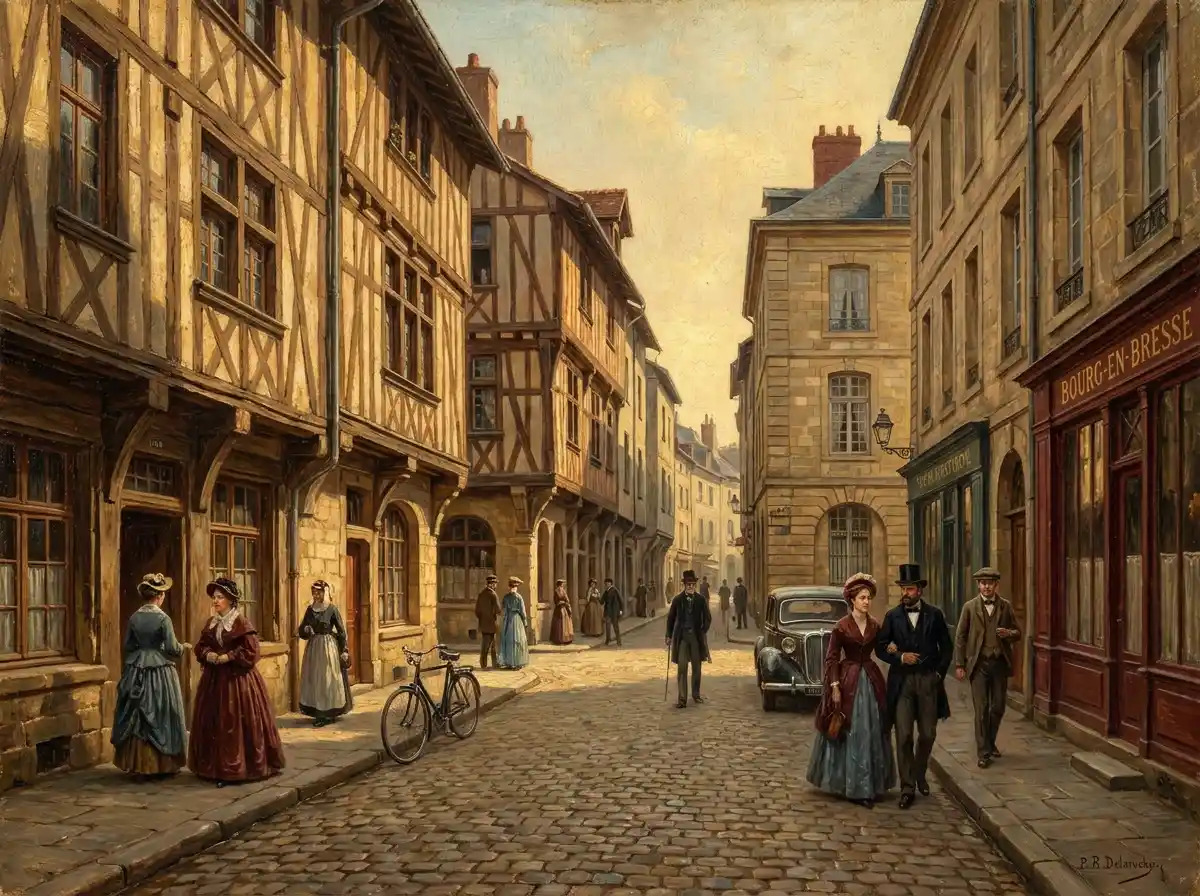
The 19th century shaped the town’s appearance as you see it today. The first prefecture sat in the building that today is the town hall, and already by 1853 the prefect decided the rooms were too cramped and a new, taller building was needed elsewhere in town. The departmental architect Charles Martin designed a classical U-shaped building around a courtyard of honor. In 1885 a fire destroyed the building, and it was rebuilt nearly identical by Tony Ferret, who had just been appointed the department’s architect. On the roof he placed a monumental clock flanked by two allegorical statues, Agriculture and Industry, and behind the building he designed an English-style park with a lake, a grotto, and a waterfall.
At the end of the century came organized urban planning. From 1895, the avenue Alsace-Lorraine was built at the initiative of mayor Jean-Marie Verne. It was a broad, modern avenue, with a central sewer system and elegant stone buildings featuring balconies and corner rotundas.
The 20th century left a scar here. On July 9, 1944, trucks carrying German soldiers arrived in Bourg-en-Bresse from Lyon and parked along the avenue Alsace-Lorraine. The next morning, July 10, Gestapo agents from Lyon under the command of Klaus Barbie (1913-1991), assisted by the militia, arrested 1,280 men between the ages of 17 and 45 in the streets. It was the opening move of Operation Treffenfeld against the resistance in the Ain. The detainees were gathered at three locations: the hospital, the avenue de Verdun, and the courtyard of the prefecture. Following the prefect’s intervention, the operation was suspended on July 13 and most were released, but twenty-five of them were shot. The town itself was liberated without a fight: on September 4, 1944, Maquis fighters and American forces entered, and the German army was already gone.
And the final chapter is, for once, a happy one. On September 20, 2014, the Monastery of Brou won first place in the first edition of the television program “The French People’s Favorite Monument,” hosted by Stéphane Bern, beating out 118 competing sites including Versailles and Chambord. The effect on the ground was immediate: 77,376 visitors in 2014, and 112,860 in 2015, a jump of 115 percent. Since then the number has stabilized at around 100,000 visitors a year. Between 2017 and 2018, the south facade and the three tombs were restored.
What Remains of All This Today
Everything you’ve read here still stands, and you can see most of it in a single morning. The tombs of Philibert and Margaret are in the choir of the church, the rood screen Margaret designed still crosses the space, the choir stalls from 1530 are still in place, and out of nine thousand original floor tiles, 200 survive. The pharmacy of the Hôtel-Dieu, built in the 1780s, is open for guided tours on Saturdays, and in the town center, 15th-century timber-framed houses survive alongside 18th-century noble residences.
I’ve put together the practical information in a separate article: the monastery’s opening hours, ticket prices, how to get there by train or by car, what not to miss at the site and in the old town, where to eat the famous Bresse chicken, and where to stay. You’ll find it all in the travel guide to Bourg-en-Bresse and the Monastery of Brou.
Related reading