
In short
- What’s there: Portraits of Louis XIV’s hounds by Desportes, Oudry’s “The Bitch Hound and Her Puppies,” salons from the 17th and 18th centuries, taxidermy animals and contemporary art
- Status: A private museum run by the Fondation François Sommer, in a building declared a protected heritage site in 1962
- Getting there: 62 rue des Archives, Metro Rambuteau, Arts et Métiers or Hôtel de Ville
- Hours: Tuesday to Sunday 11:00-18:00, until 21:30 on Wednesdays (not in July and August), closed Mondays and holidays
- Price: 11-13 euros, free under 18 and on the first Sunday of every month
- How much time: a little under an hour to see every room
- History: built 1652-1653, opened as a museum on February 21, 1967, expanded in 2007 and 2021
- Bonus: in the 17th century the house was rented to the financier Pennautier, arrested in 1676 in the Affair of the Poisons
The Musée de la Chasse et de la Nature sits on rue des Archives, right in the heart of the Marais, and I walked past it many times. When I stayed at Oudi’s apartments in the Marais, which are not far from it, I would pass its gate and keep walking. The reason was simple: I don’t like hunting, and to me it’s a barbaric act. But eventually I decided that a museum this important, in a building this beautiful, deserved an article on my site, so a few years back I walked in and bought a ticket.
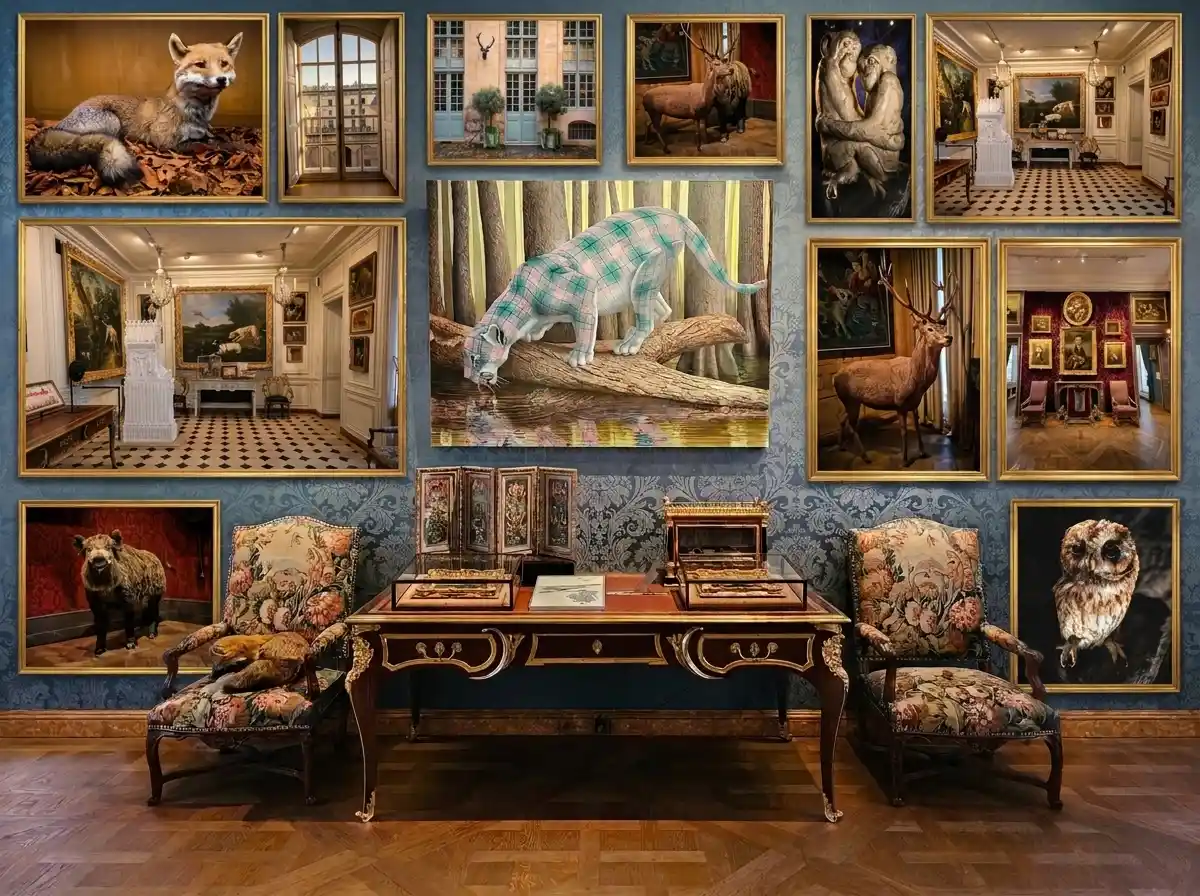
What I found inside was different from what I expected. It’s not a hall of rifles and stag heads on the walls, but rather the home of a collector: elegantly furnished salons, paintings of dogs commissioned by Louis XIV and Louis XV (r. 1715-1774), taxidermy animals resting on armchairs, and works by contemporary artists placed right alongside them. The building itself is the only surviving intact mansion designed by the architect François Mansart (1598-1666), even though it was nearly demolished in the late 1950s.
Before we head inside and visit the Musée de la Chasse et de la Nature, let me walk you through what’s in this article. We’ll start with the practical information: hours, getting there and tickets. Then we’ll move on to the rooms you shouldn’t miss, followed by the history of the building from Mansart’s time to today, and finally my recommendations for where to stay in the area and a FAQ.
Practical information for visiting the Musée de la Chasse et de la Nature
Opening hours of the Musée de la Chasse et de la Nature
The museum is open Tuesday through Sunday from 11:00 to 18:00, and closed on Mondays and on holidays. On Wednesdays it stays open until 21:30 in the evening, except in July and August, and on December 24 and 31 it closes early at 17:00. Keep two small details in mind: strollers aren’t allowed into the rooms and have to stay at the reception desk, and the ticket counter doesn’t accept cash.
Getting to the Musée de la Chasse et de la Nature
The address is 62 rue des Archives, in the 3rd arrondissement. The closest metro stations are Rambuteau (line 11), Arts et Métiers (lines 3 and 11) and Hôtel de Ville (line 1), and each one is a short walk away (from Arts et Métiers and Hôtel de Ville it’s a bit of a longer walk, in my opinion). On the same street, not far from the museum, is Hôtel de Soubise, home of the National Archives, so it’s easy to combine both in one morning. Another option is to pair a visit here with a stop at the Musée Picasso or the Musée Carnavalet, which are a bit further away but still a perfectly reasonable walk. The museum is also one of the stops on my walking route through the 3rd arrondissement, so you can easily fold a visit into a walk through the northern Marais.
Tickets and prices
A full ticket costs 13 euros while a temporary exhibition is on display, and 11 euros between exhibitions. The reduced ticket costs 11 or 9 euros respectively, and the temporary exhibition is included in the price either way. Admission is free under age 18, and free for everyone on the first Sunday of every month. By the way, holders of a hunting license also get a reduced rate (which, of course, didn’t help me).
I highly recommend booking your ticket in advance through this link.
How much time to set aside, and when to come
I spent a little under an hour at the museum, and that was enough to go through every room at a comfortable pace. If you like to stop in front of every painting and open every drawer in the cabinets, you might need more time, but it really depends on your own pace.
What not to miss at the Musée de la Chasse et de la Nature
The museum is laid out like a collector’s home rather than a standard museum, and each room is dedicated to an animal, a period or a theme. Here are the rooms and pieces worth seeking out.
The Dog Salon
The Dog Salon is filled with portraits of real dogs, some of them royal pets. Alexandre-François Desportes (1661-1743), the painter who accompanied Louis XIV on his hunts, painted the king’s favorite hounds in 1702, including Folle and Mite and Diane and Blonde. Their names are written on the canvas in gold letters, so there’s no doubt about who you’re looking at. The paintings belong to the Louvre, and have been on loan to the museum since it opened in 1967.
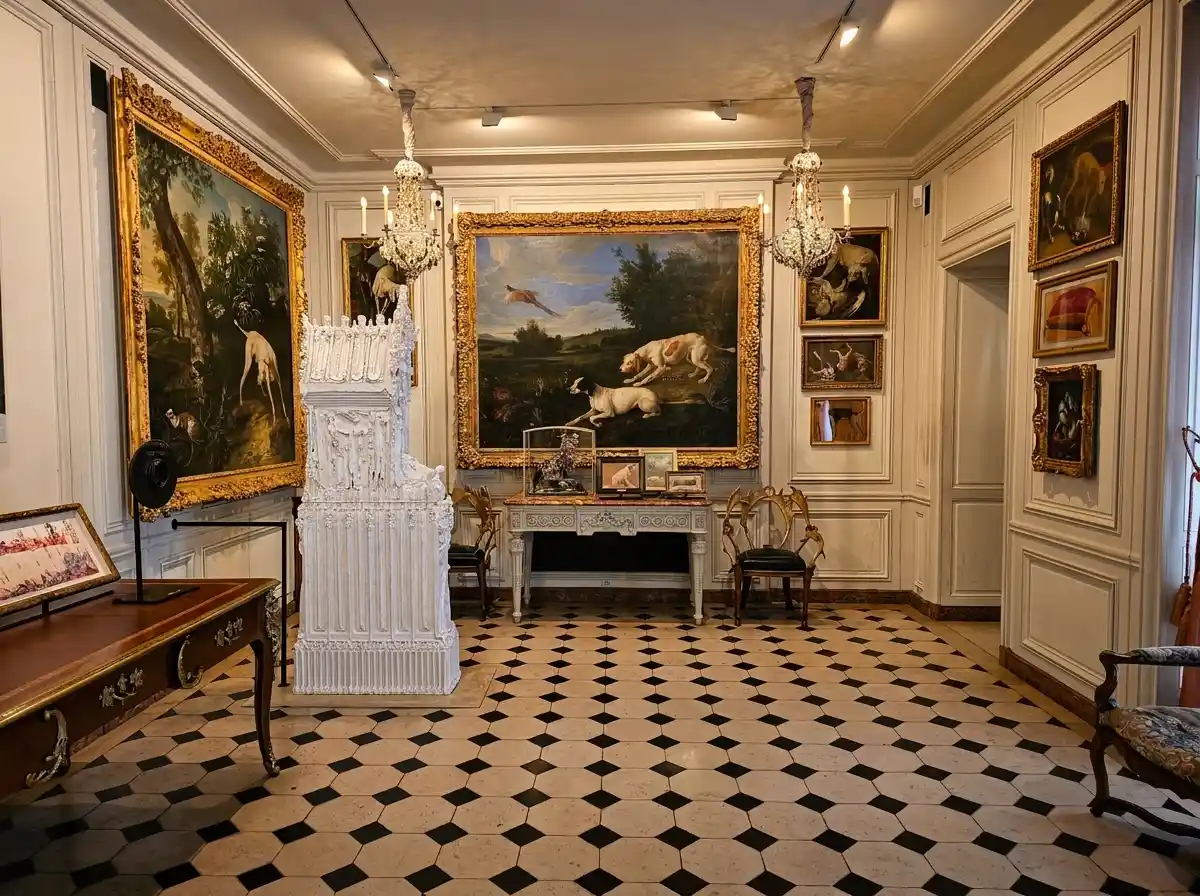
The most important work in the room, though, is of a dog with no name at all. “The Bitch Hound and Her Puppies” (La Lice et ses petits) was painted in 1752 by Jean-Baptiste Oudry (1686-1755), hunting painter to Louis XV. Baron d’Holbach (1723-1789) bought it at the Salon of 1753, and according to Denis Diderot (1713-1784), Oudry himself considered it his best painting. The dog is nursing six puppies and gazing at them tenderly, and at the time that was a real innovation: until then the prevailing idea, from René Descartes (1596-1650), held that animals were machines incapable of feeling anything.
Look closely for the signatures, too. Oudry, like Desportes before him, hid his signature on a stone in the painting’s path, so you have to search for it.
The Blue Salon
In the Blue Salon, with its blue damask wallpaper, hang two small paintings on copper that Oudry painted in 1747 for Louis XV (who reigned 1715-1774). On the back of each panel is engraved the dedication “PEINT POUR LE ROY” (“painted for the king”), and in one of them a dog stands alert facing two pheasants. These are rare pieces, since only six of Oudry’s works on copper are known to exist.
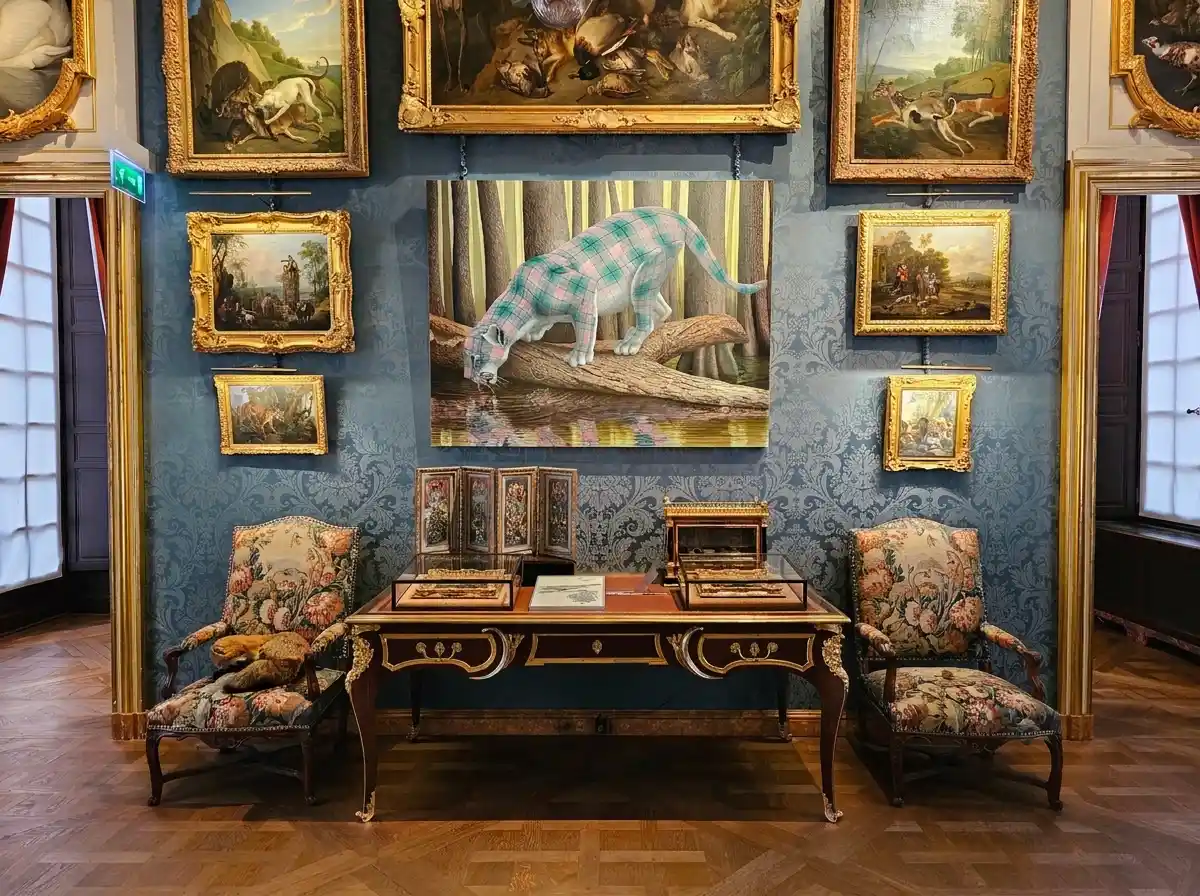
This is where the museum starts to play with its visitors. A stuffed fox lies curled up on a cushion in an upholstered armchair by the table, and at the center of the wall, right among the hunting scenes in their gilded frames, hangs a contemporary painting of a puma patterned in green and white squares, drinking from a stream in the forest. This mix of old art and work by contemporary artists has been the museum’s signature move since the 2007 renovation.
The Salon de Compagnie
The Salon de compagnie, with its red velvet walls and two chandeliers, is the floor’s most formal room. Among the works here is Oudry’s “Chien barbet gardant du gibier” (“Barbet Dog Guarding Game”) from 1728. The barbet, a dog with long, curly fur, was a hunting dog that swam well and helped retrieve ducks, and its smaller version is thought to be the ancestor of the poodle.
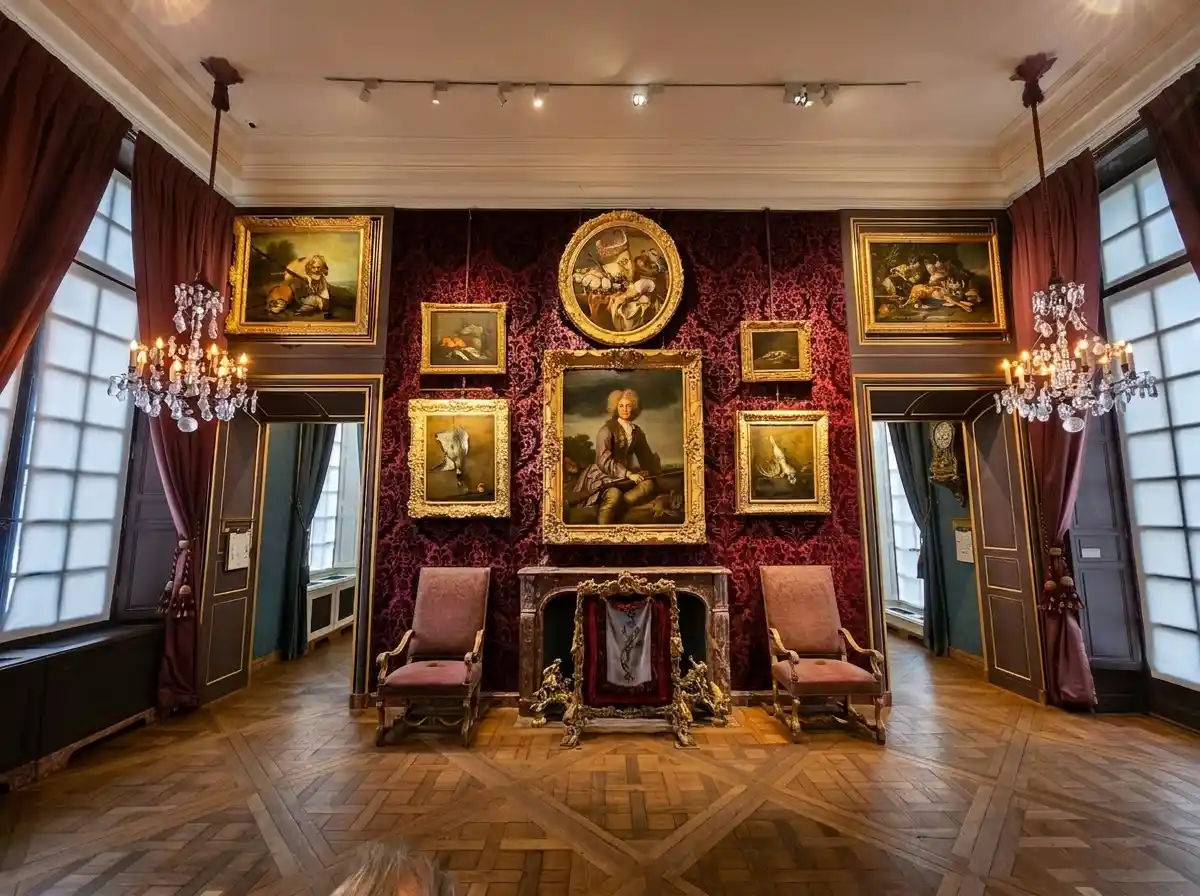
In both salons, the blue one and the red one, you’ll also find still-life paintings by Jean-Baptiste-Siméon Chardin (1699-1779), alongside 18th-century furniture that looks as though the owners just stepped out for a moment and will be back any second.
The Deer, the Boar and the Wolf
On the first floor, each room covers a different period in the relationship between humans and animals, from antiquity to the 18th century. In the medieval room stand the two animals that symbolized the forest at the time, the deer and the wolf, alongside tapestries depicting hunting scenes.
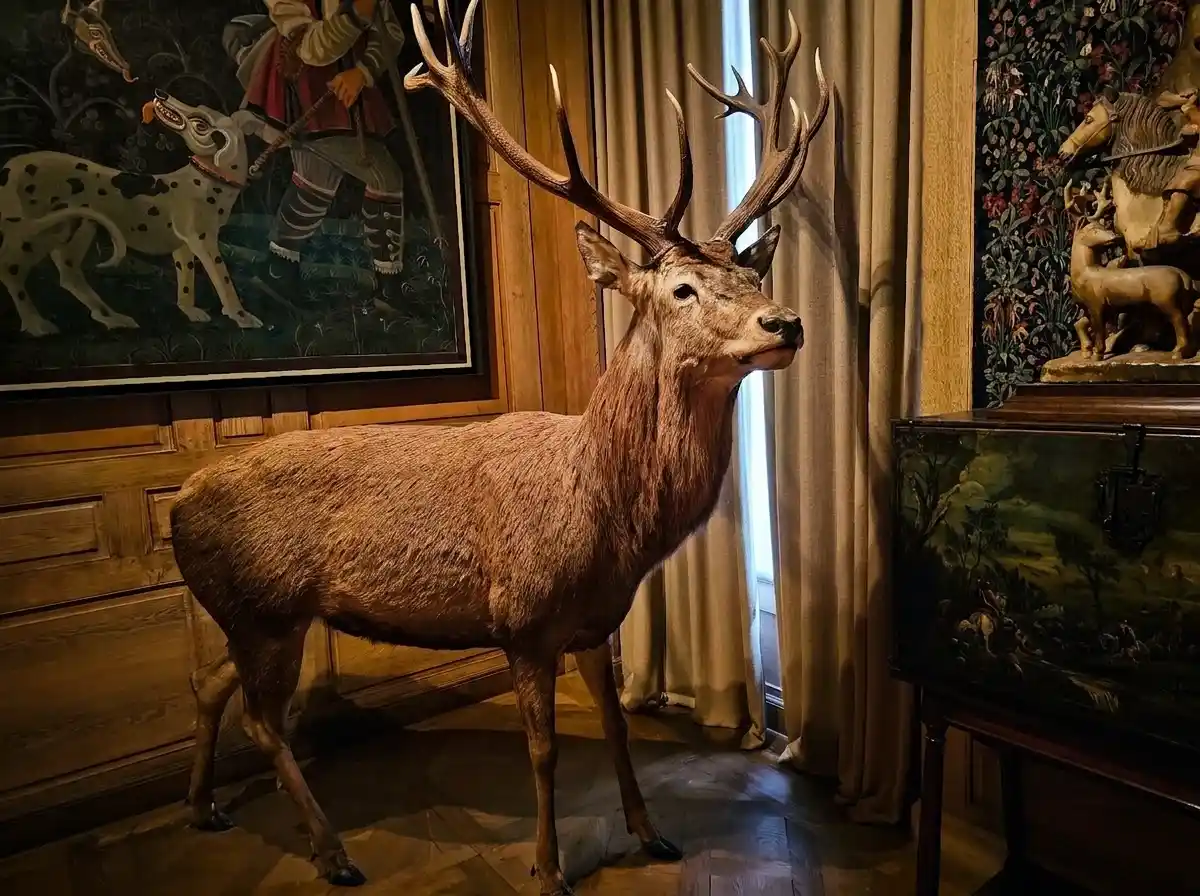
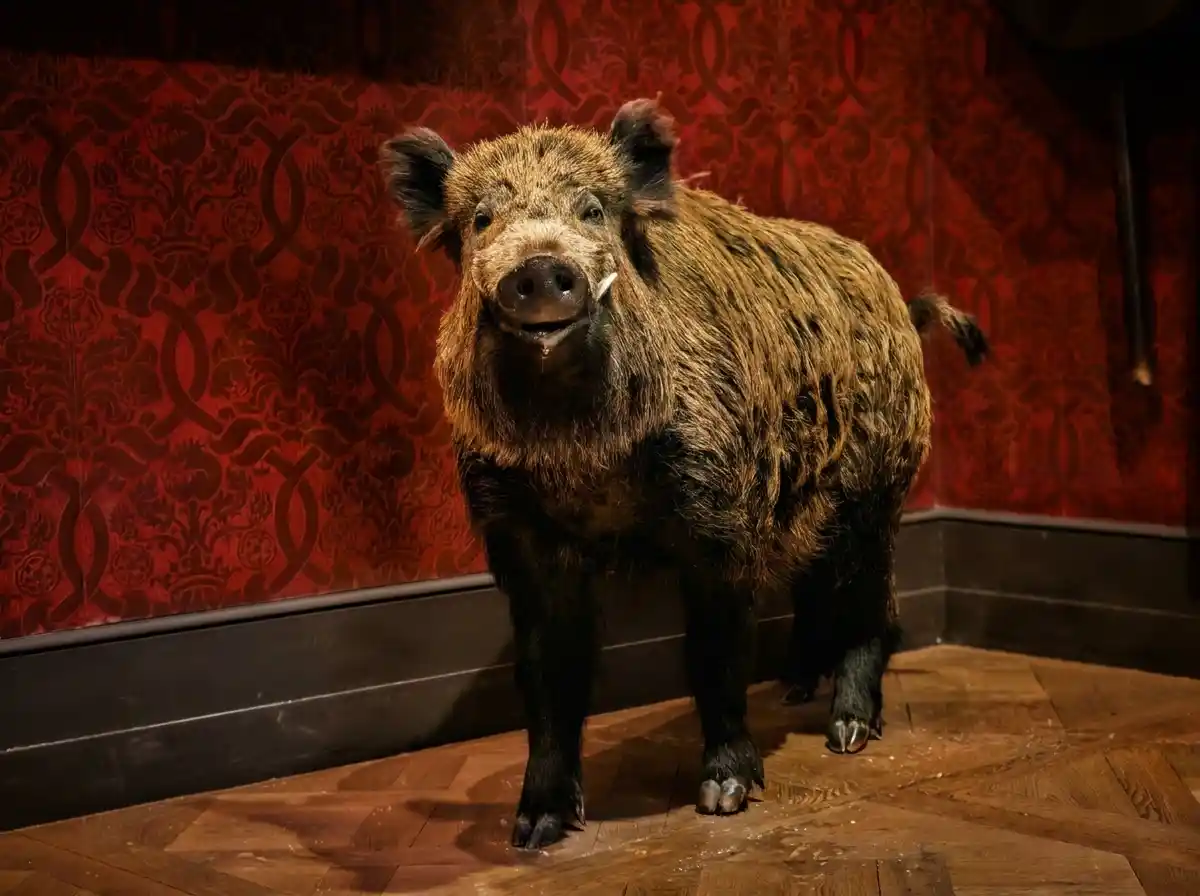
The museum displays taxidermy animals from Europe, Africa, Asia and the Americas, from polar bears to lions. The one that stuck with me the most is the boar, standing against a red wall and staring straight at visitors (mostly because of its tusks).
The weapons collection
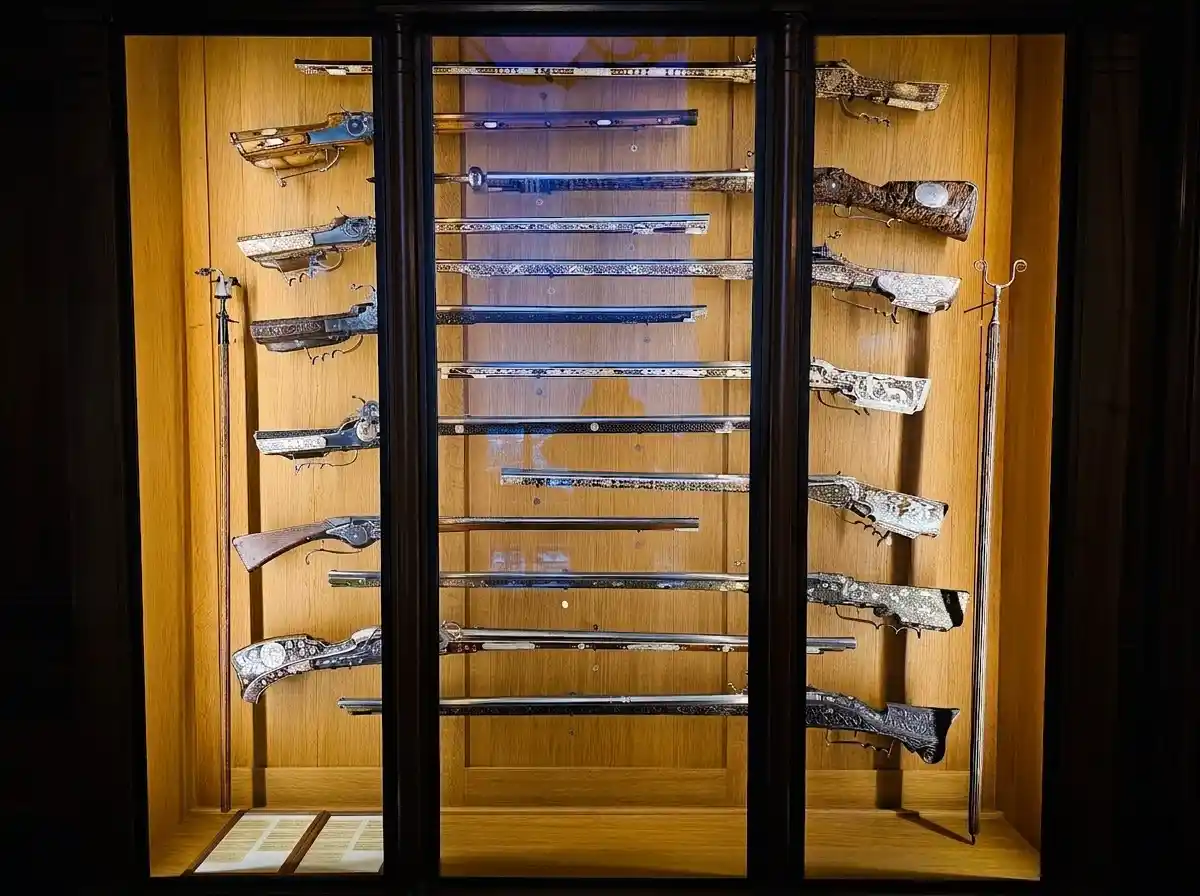
The museum also holds a large collection of hunting weapons. In this display case hang old rifles with stocks decorated in light-toned inlays and delicate engravings, and most of them look more like works of art than weapons.
The cabinets of curiosities and the second floor
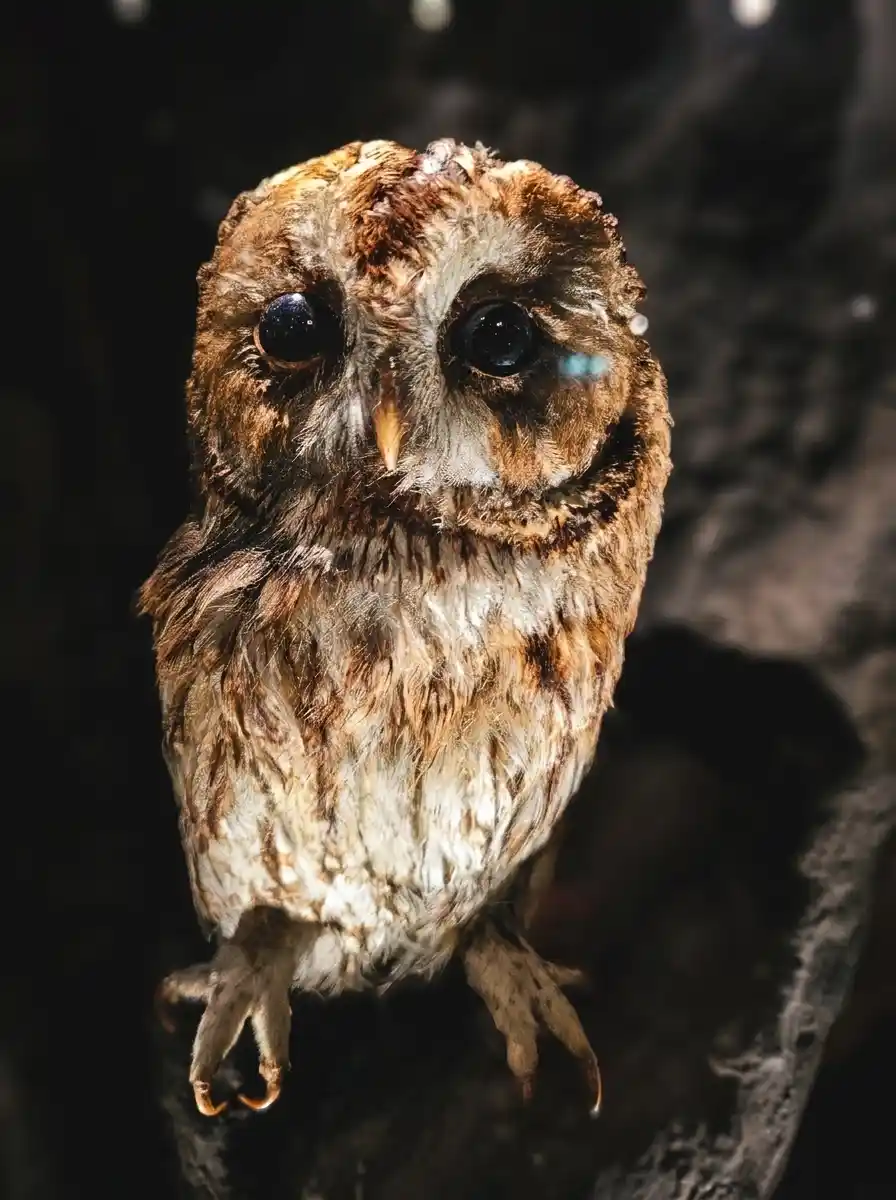
Scattered between the rooms are cabinets of curiosities, and you’re invited to open their drawers and see what’s hiding inside. On the second floor, which opened in 2021, the rooms tackle today’s questions: species extinction, biodiversity, and how animals themselves experience the world. In one display case sits a small owl, watching visitors with its big eyes.
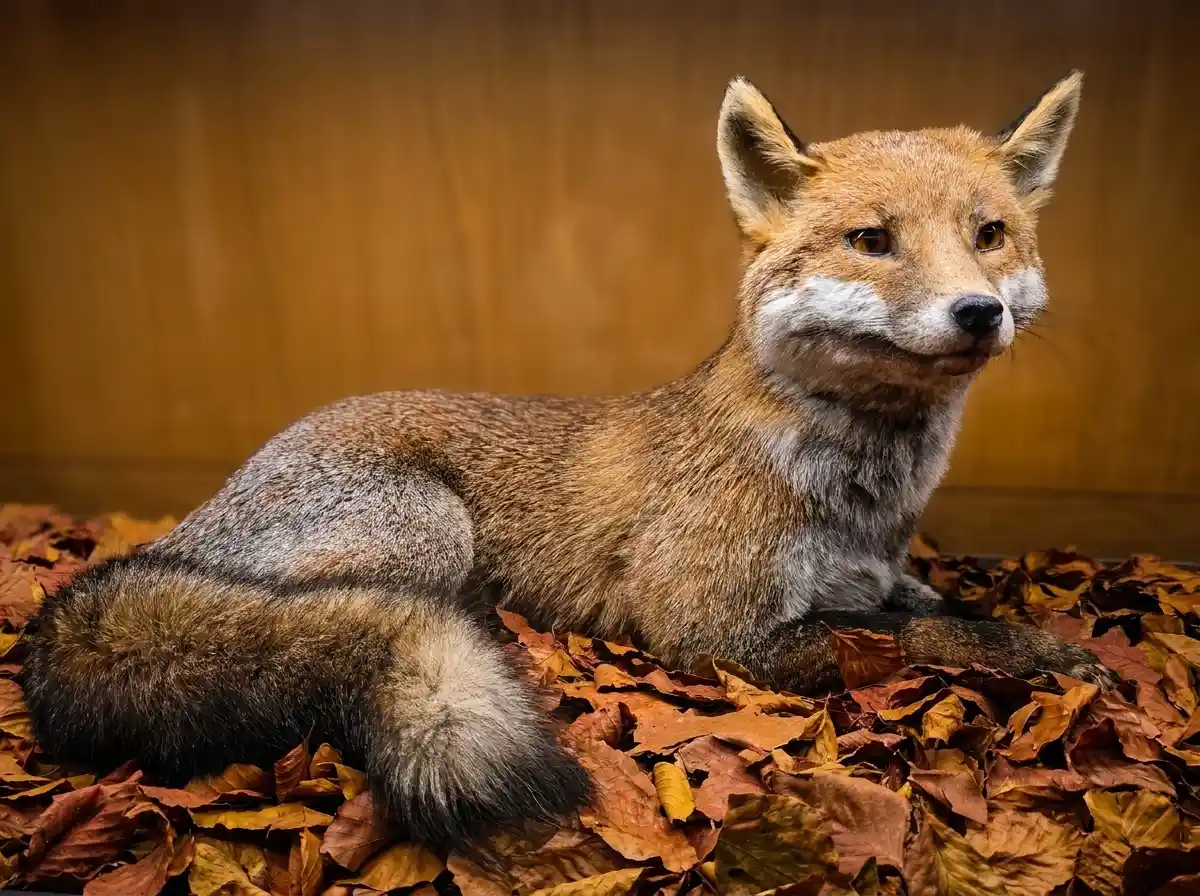
In another display case a fox lies on a bed of fallen leaves, looking as though it might get up and dash off into the forest at any moment.
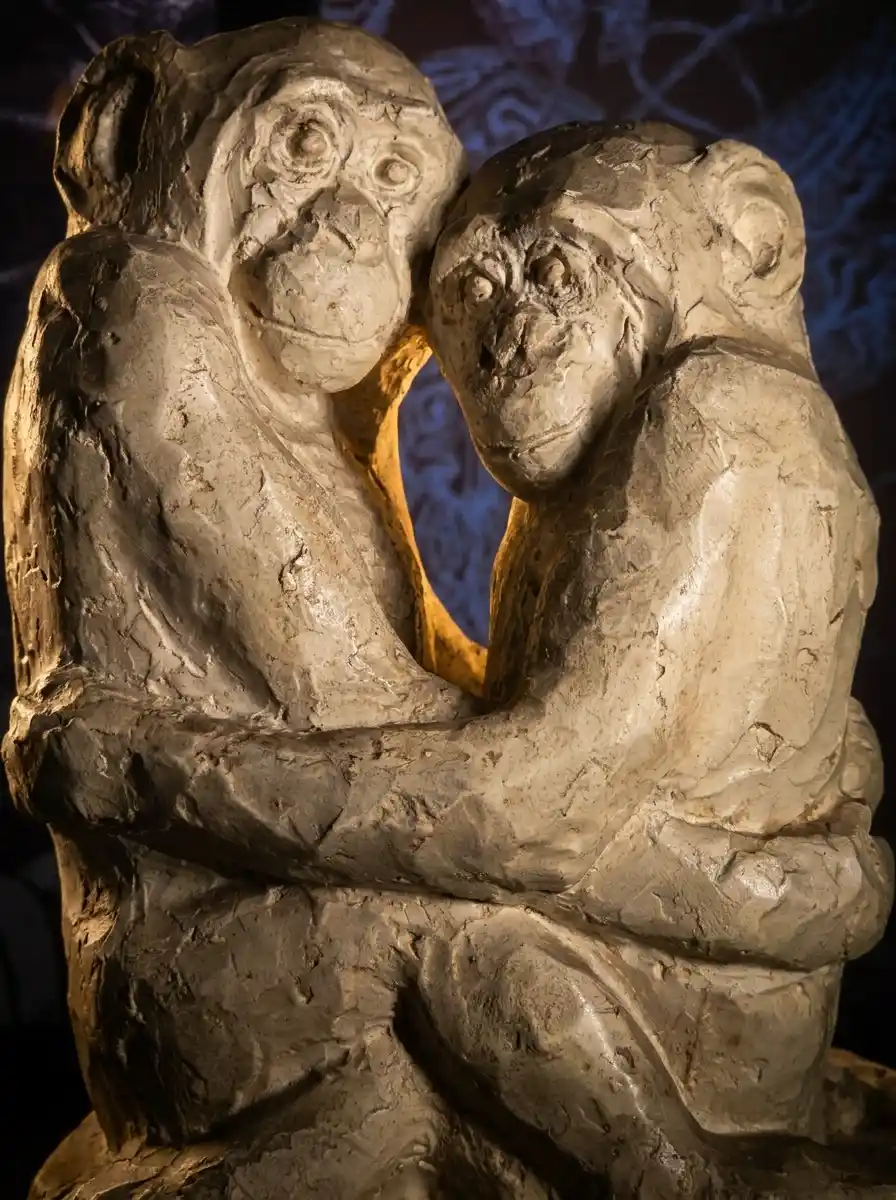
In the final rooms you’ll also find sculptures and works by contemporary artists, like this sculpture of two monkeys embracing each other. After all the hunting paintings and taxidermy, it’s a reminder that the museum today is just as much about the animals themselves as it is about the hunt.
The history of the Musée de la Chasse et de la Nature and Mansart’s house
1652: Mansart’s house and the financier from the Affair of the Poisons
The museum occupies two adjoining mansions, the older of which is the Hôtel de Guénégaud. In 1647, Jean-François de Guénégaud des Brosses (died 1667), a senior official at the king’s audit office (Maître des comptes), bought an old house on the site, and between 1652 and 1653 he had it replaced with a new house built to a design by François Mansart.
Mansart was one of the most important architects in 17th-century France, the man whose name gave us the mansard roof (the gray or black sloped roof with a window built into it). But of all the private mansions he designed in Paris, this is the only one that survived completely intact (at the Musée Carnavalet, he only redesigned an existing building). The house follows the classic layout of a Parisian mansion, set between a courtyard and a garden, and its most famous feature is the main stone staircase, whose lower steps curve in an arc.
Jean-François died in the house in 1667, and it passed to his son Claude de Guénégaud. Between 1673 and 1681, Claude served as ambassador to Portugal, and while he was away from Paris, he rented the house to Pierre-Louis Reich de Pennautier (1635-1711), the chief collector of church revenue in France (receveur général du Clergé) and one of the wealthiest financiers of Louis XIV’s reign. To this day the building is also listed in the heritage registry under the name Hôtel Pennautier, and that name is tied to one of the darkest affairs of the 17th century.
In 1672, police found a box in the belongings of Godin de Sainte-Croix (died 1672) containing vials of poison and letters from his mistress, the Marquise de Brinvilliers (1630-1676), who had confessed to poisoning her own father and brother. In that same box was a power of attorney signed by Pennautier, relating to a loan of 10,000 livres he had sent her through Sainte-Croix. The marquise fled to London and from there to Liège, and was finally arrested in a convent in 1676 and brought back to Paris. During her interrogation she said something that became famous: “If it splashes on me, it will rain down on Pennautier.”
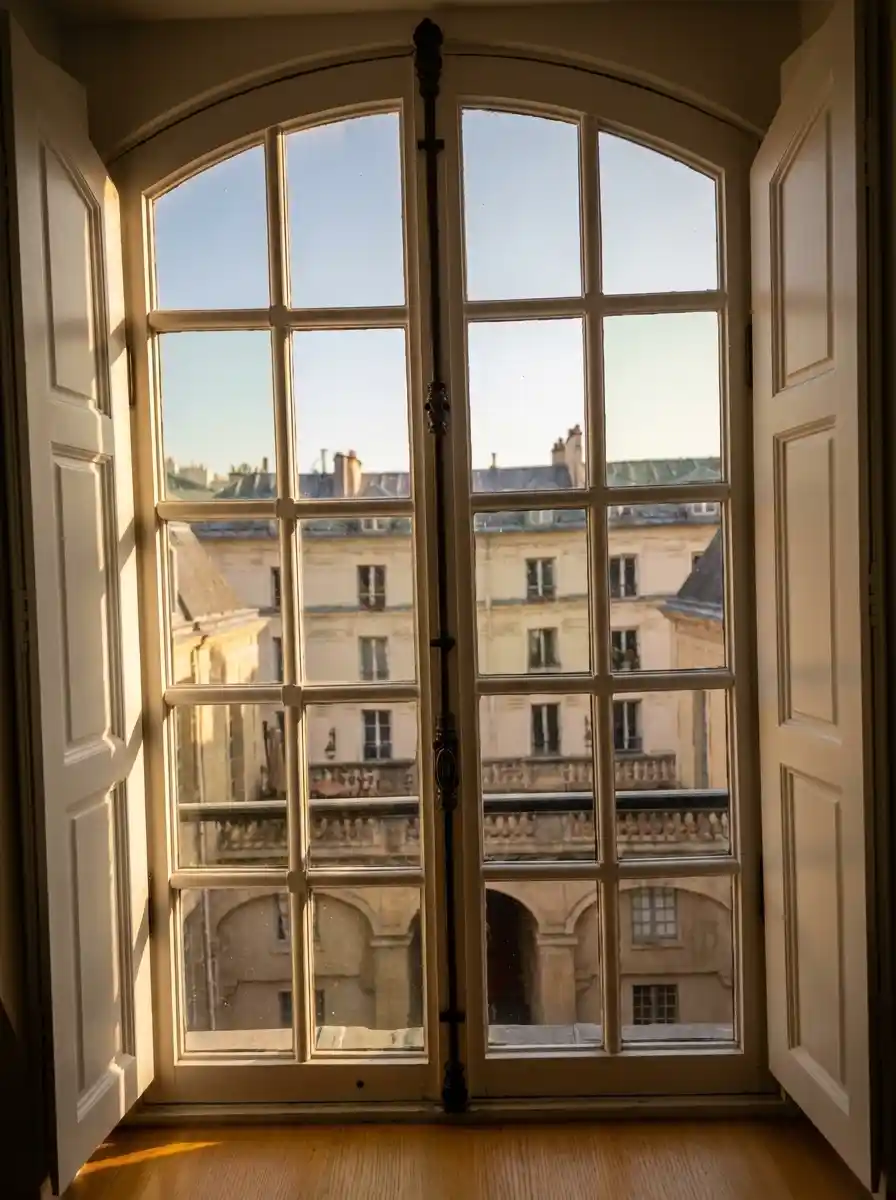
On June 15, 1676, Pennautier was imprisoned at the Conciergerie, where he spent thirteen months. At the same time, he was also accused by the widow of the previous collector of church funds of poisoning her husband, who had died just one month before Pennautier took over his post. The marquise was executed in the summer of 1676, but Pennautier was released after a long line of church officials intervened on his behalf, and the charges against him were never proven.
Either way, after his release, Pennautier lent more than 500,000 livres to Pierre-Paul Riquet (1609-1680) to help dig the Canal du Midi. In 1703, Claude sold the house to Jean Romanet (died 1719), a tax collector who redesigned many of the rooms in the fashion of his time, adding wood paneling, mirrors and fireplaces. In 1766, the house passed to the Thiroux family, who owned it for more than a century and lived there until 1842.
1959: The house that was nearly demolished, and the couple who saved it
From the mid-19th century, the house, like most of the mansions in the Marais, became home to an educational institution and bronze and metalworking workshops. The garden and one side of the courtyard filled up with workshops, and in 1895 the Thiroux family sold the building. In 1929, it was added to the heritage registry, only to be removed from it four years later, and by the late 1950s its owner was considering demolishing it because renovation would have been too expensive.
The house was saved by André Malraux (1901-1976), France’s first Minister of Culture. On June 15, 1962, the house was declared a protected heritage site (Monument historique), the city of Paris bought it, and it became one of the first buildings restored under Malraux’s program to save the entire Marais district. In 1964, the city leased the house for 99 years to a foundation created by François and Jacqueline Sommer, on the condition that the foundation would pay for its restoration.
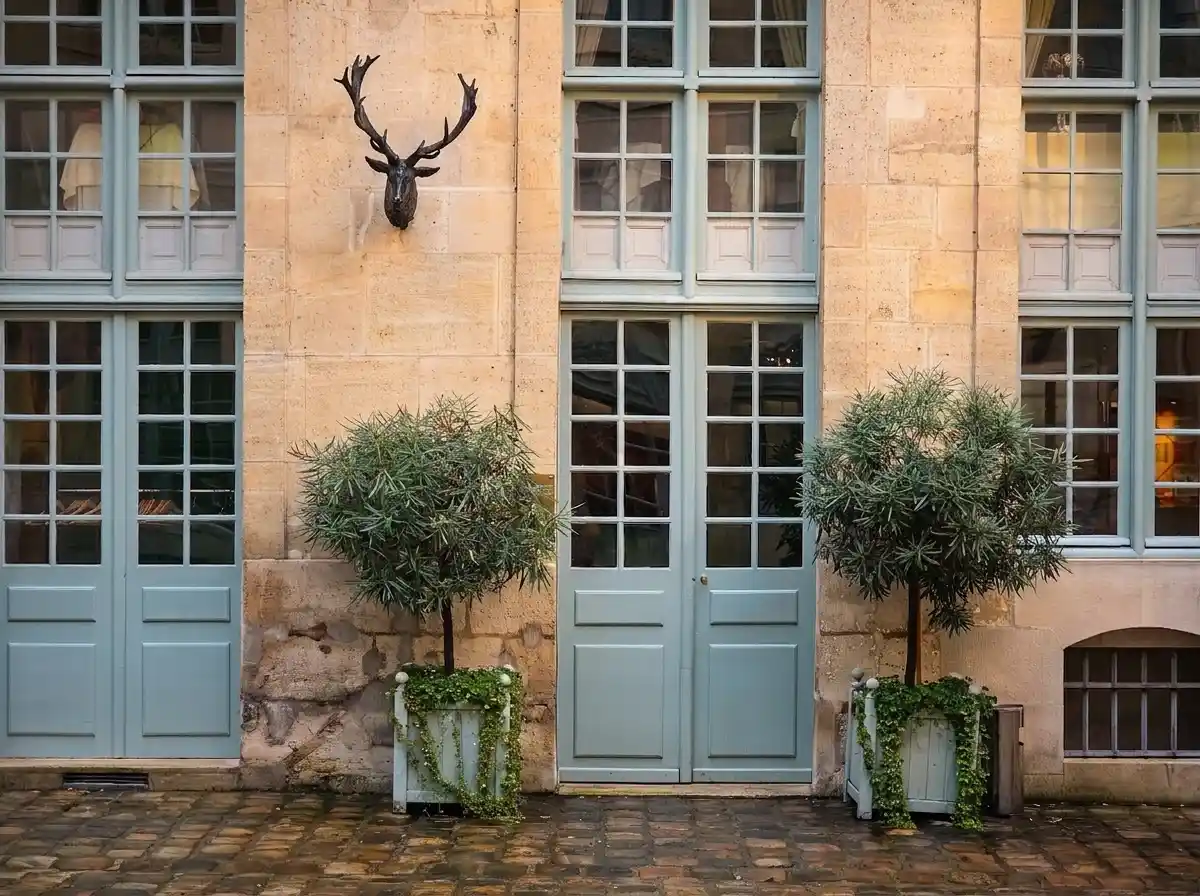
François Sommer (1904-1973) was an industrialist from the Ardennes, heir to the felt factory his grandfather had founded in Mouzon. He was also a pilot and a hunter. During the Second World War, he joined the Free French air force, served as a navigator with the Lorraine bomber group, took part in the invasion of Normandy, and received the title of Companion of the Liberation (Compagnon de la Libération). In 1949, he married the journalist Jacqueline Le Roy des Barres (1913-1993), who shared his passion for hunting and nature.
The couple didn’t stop at hunting. Starting in 1948, on their Belval estate in the Ardennes, they reintroduced species that had nearly vanished from the area, including red deer, roe deer and mouflons, and François Sommer was among the first to push France toward limiting hunting through quota systems. I still don’t like hunting, but it’s hard not to respect that side of their story.
The restoration took place between 1964 and 1966, and on February 21, 1967, Malraux inaugurated the museum. In 2002, the foundation bought the neighboring house, the Hôtel de Mongelas, which had been rebuilt between 1704 and 1707, likely to plans that came out of the office of Jules Hardouin-Mansart (1646-1708), François Mansart’s great-nephew and the architect of the Palace of Versailles. After a complete renovation, a new route connecting both houses opened on February 6, 2007, and ever since, the museum has invited contemporary artists to exhibit alongside its permanent collection.
On July 1, 2019, the museum closed for another round of renovations, and after two years of work and the COVID-19 pandemic, it reopened on July 3, 2021, with an additional floor of 250 square meters and six new rooms connecting the two houses.
Where to stay near the Museum of Hunting and Nature
The museum sits in the northern part of the Marais, in the 3rd arrondissement, a relatively quiet area within walking distance of most central Paris attractions. On most of my trips to Paris I stayed in Oudi’s apartments, and three of them are within walking distance of the museum:
-
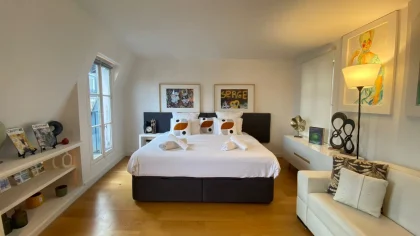
Oudi’s apartments on rue Simon le Franc
A 19th-century landmark building between the Marais and the Centre Pompidou, with three apartments of different sizes and an elevator, which is a rare commodity in Paris. From here you can walk to the museum as well as to the Rambuteau and Hôtel de Ville metro stations.
-
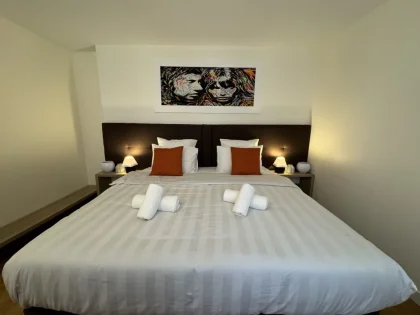
Oudi’s apartment on rue Sainte-Croix-de-la-Bretonnerie
The apartment sits on one of the busiest streets in the Marais, but its windows face an inner courtyard, so it’s very quiet. There’s an elevator, and rue des Archives is right at the end of the street.
-
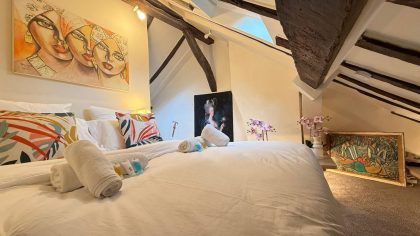
Oudi’s apartment on rue des Rosiers
A nicely designed, well-equipped studio in the heart of the Jewish Quarter, good for a couple planning to spend most of the day out and about. Note that there’s no elevator in the building.
If you’d rather stay in a hotel, here are my recommendations near the museum, including two hotels where I’ve personally stayed:
-
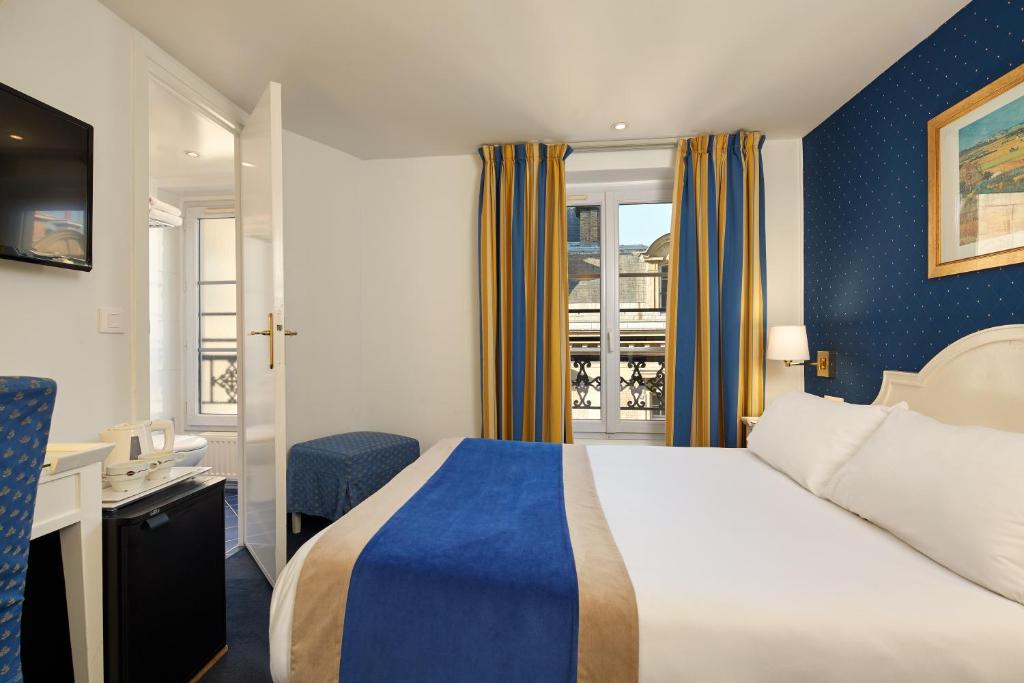
Austin’s Arts Et Metiers
I’ve stayed at this hotel twice and really enjoyed it. It’s thirty meters from the Arts et Métiers station, with lines 3 and 11, and it has 29 rooms. The standard double room is about twelve square meters, so a couple with two large suitcases will want a bigger room.
-

Le Relais du Marais
I stayed here in 2005, and although it’s a fairly modest hotel I enjoyed it a lot. The location is right next to the northern Marais and a metro station, and it has 36 rooms. The price is relatively low because of the room size: a double room is about eleven square meters.
-

La Chambre Du Marais
19 rooms on the same street as the museum, a minute from Carreau du Temple. Breakfast is made on-site and served until noon, with fresh baguette, pain perdu and eggs made to order, and there’s a cocktail bar in the lobby.
-

Hotel Jacques De Molay
Named after Jacques de Molay (1243-1314), the last grand master of the Knights Templar, who was burned at the stake in Paris. 23 rooms on the same street as the museum, with exposed wood beams and stone walls, and a free gym and sauna for guests.
-

Hotel du Petit Moulin
The building was one of the first bakeries in Paris, dating back to the days of Henri IV, and the facade with the Boulangerie sign from 1900 has been preserved exactly as it was. The reception sits inside the old shop, and the 17 rooms were designed by Christian Lacroix, each one completely different from the next.
-

Hotel Georgette
19 rooms a short walk from the Centre Pompidou, with each room dedicated to a different movement in modern art: Pop Art, Dada, Op Art and Land Art. It sounds like a gimmick, and it works because the design is done tastefully.
You’ll find more options on the pages recommended hotels in the northern Marais and recommended apartments in the 3rd arrondissement, and if you’re still not sure which area to sleep in, read the article where to stay in Paris.
Planning to add another museum to your trip? I’ve put together all the museums in Paris in one guide, sorted by type and with links to tickets.
FAQ about the Museum of Hunting and Nature
Answers to common questions about the museum:
How much is a ticket to the Museum of Hunting and Nature?
What are the museum’s opening hours?
How do you get to the Museum of Hunting and Nature?
Is the museum worth visiting if you don’t like hunting?
Is the museum suitable for kids?
What building is the museum in?
Related reading
