
In short
- What’s there: a 126-meter-long Baroque church, a chain of chapels behind the altar, an organ from 1752, and the tombs of Le Nôtre, Corneille, and Diderot
- Status: a protected historic monument since 1914, known as the church of Paris’s artists
- Getting there: 296 rue Saint-Honoré, Métro Tuileries (line 1) or Pyramides (lines 7 and 14)
- Opening hours: every day, including Sunday, from 8:30 a.m. to 7:00 p.m., with no closing day and no midday break
- Price: free admission, no ticket and no reservation needed
- Time needed: twenty minutes for a quick look, an hour for a full visit including the chapels
- History: a chapel from 1521, Louis XIV laying the cornerstone in 1653, the church’s consecration in 1740
- Bonus: Napoleon’s cannon marks from 1795 on the facade, and the 1949 deportation memorial wall in the Chapelle de la Compassion
Saint-Roch Church stands on rue Saint-Honoré, between the Tuileries Garden and the Palais-Royal, and thousands of people walk past it every day without stopping. The facade is gray, closed off, and promises nothing. Behind it hides a building 126 meters long, one of the longest in Paris, where the garden designer of Versailles, the great tragedy playwright of the 17th century, and the editor of the Encyclopédie are all buried.
I have a soft spot for this church. In my article about the ghosts of Paris, I told the story of an Israeli kid who played video games at a café next to Saint-Roch while his parents rested after hours of walking. That kid was me, the café is long gone, and the church still stands exactly where it always has.
Inside waits a sequence of chapels built one after another over the course of a century, a painted dome you’d never guess existed from the street, an organ whose player drew such crowds that the Archbishop of Paris had to step in, a chapel with a tabernacle and two seven-branched menorahs, and a wall where, behind every plaque, soil and ash from a different concentration camp were buried. Admission is free, the church is open every day, and unlike almost every other site in this neighborhood, you won’t wait in line.
So before we head out to visit Saint-Roch, let’s talk about what you’ll find in this article: first the practical information, hours, how to get there, and how much time to set aside, then what not to miss inside, after that the full history from 1521 to today, and finally nearby attractions, lodging recommendations, and answers to the questions I get asked about the church.
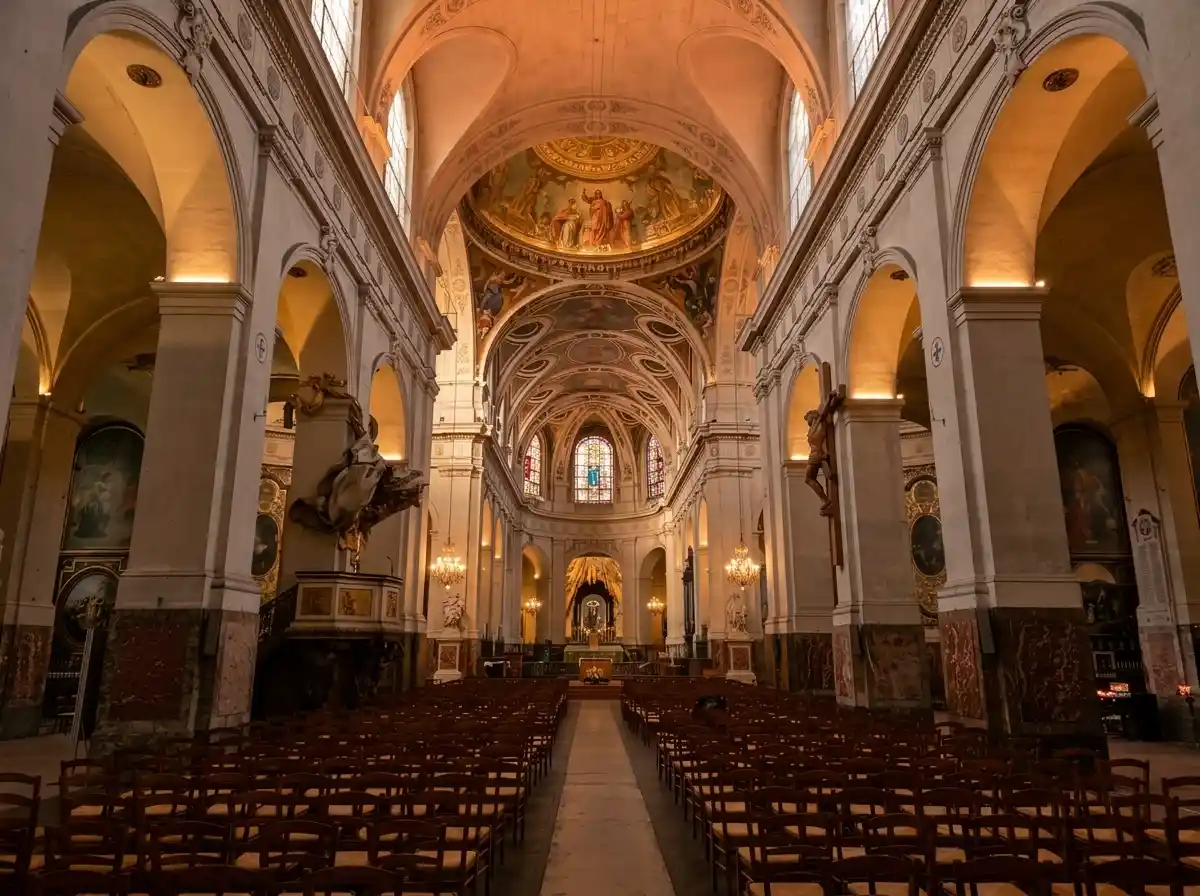
Practical information for visiting Saint-Roch Church
Days and opening hours at Saint-Roch Church
The church is open every day of the week, including Sunday, from 8:30 a.m. to 7:00 p.m. There’s no weekly closing day and no midday break, which is no small advantage in an area where half the sites close on Monday or Tuesday.
Saint-Roch is an active parish church, not a museum, so during Mass, a wedding, or a funeral, some of the spaces are closed to visitors. This happens more often than you’d think, partly because funerals for well-known performers are held here. Before your visit, it’s worth checking the parish’s schedule, and if you happen to walk in during a Mass, just wait about twenty minutes in the gardens across the street.
How to get to Saint-Roch Church
The address is 296 rue Saint-Honoré, at the corner of rue Saint-Roch. The nearest métro stations are Tuileries (line 1), Pyramides (lines 7 and 14), and Palais Royal – Musée du Louvre (lines 1 and 7), all three to five minutes on foot.
Guided tours of the church
The parish runs free guided tours in French on set dates throughout the year, on Thursday afternoons and on Saturdays, meeting under the organ loft. The dates change from year to year and are posted on the parish’s visits page, so it’s worth checking before your trip.
How long to spend, and when to come to Saint-Roch
A quick loop takes about twenty minutes. A real visit, one that also takes you into the Chapel of the Virgin and the Communion chapel behind it and stops at the monuments, takes about an hour (it all depends on your pace and how long you want to linger).
The best time is a weekday morning. Light pours in through the tall windows of the west wing, and the church is nearly empty. In the afternoon, office workers from the neighborhood arrive, and on weekends the whole area gets busy. I prefer to come around ten in the morning, when the nave is still quiet and the Chapel of the Virgin is also well lit.
What not to miss at Saint-Roch Church
The facade, and the 1795 cannon marks
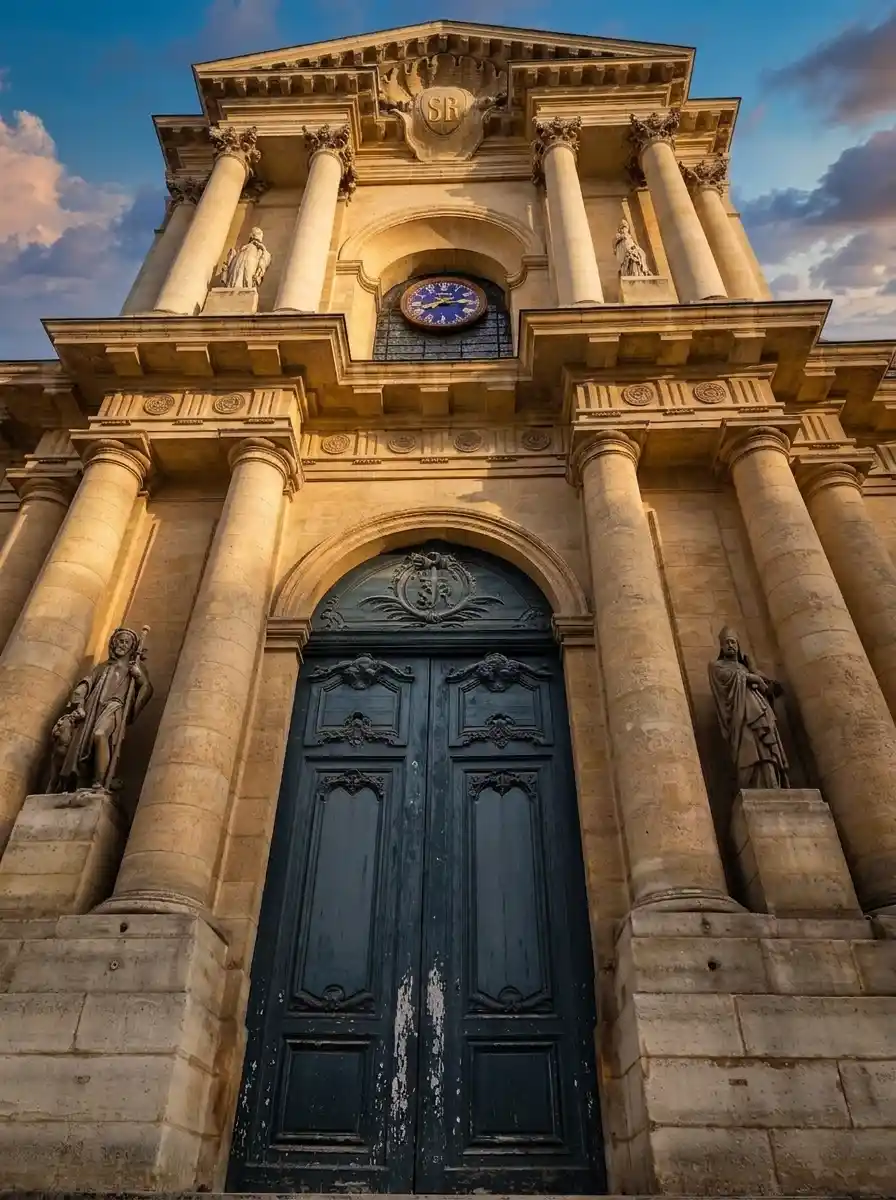
The facade you see today is the last part of the church to be built, going up almost a century after the foundations were laid. The plan was drawn up by the architect Robert de Cotte (1656-1735), and the work was likely completed by his son Jules-Robert de Cotte (1683-1767) in 1739. The lower level carries Doric columns, the upper one Corinthian columns, and the whole thing is topped with a triangular pediment. The model, incidentally, is the Chiesa del Gesù in Rome.
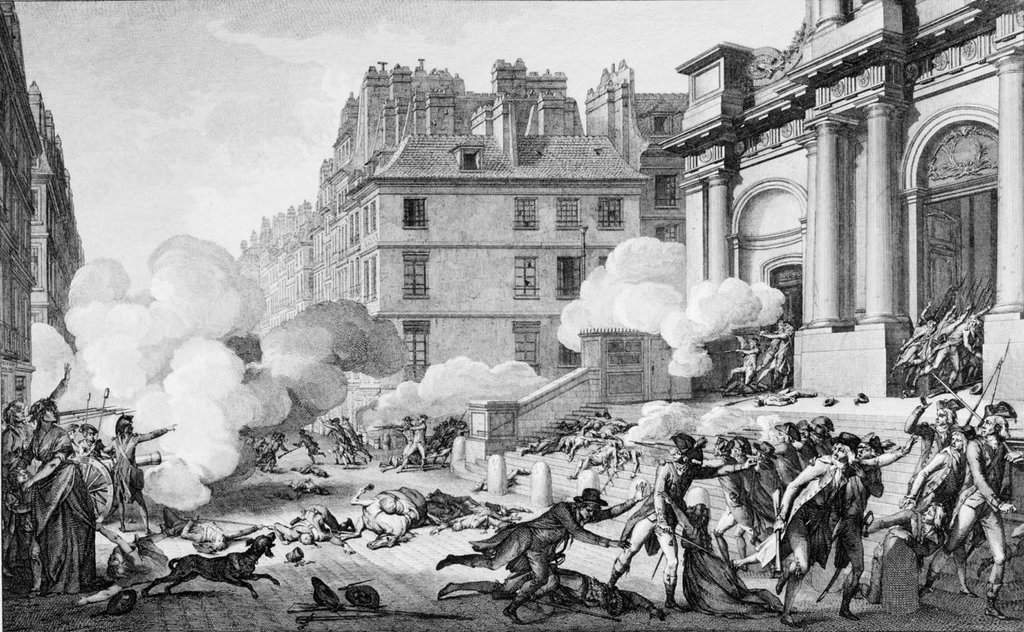
The detail that makes me stop here is carved into the stone itself. On 13 Vendémiaire, Year IV of the Republic, that is, October 5, 1795, royalists rose up against the Directory. The officer assigned to disperse them was none other than Napoleon Bonaparte, then a young artillery officer. He set up cannons in the street and fired on the demonstrators gathered on the church steps, and the marks of the impacts are still visible on the square and round columns on the western side of the facade. What surprises me is that even though this was a major historical event, one that essentially launched Napoleon’s career, there isn’t a single sign nearby that explains it.
The nave: 126 meters in a straight line
Saint-Roch is built as a single long nave, with no columns dividing the middle, and a row of chapels opening off the sides. The idea was that the congregation could hear the sermon from anywhere, a principle the Jesuits brought with them from Rome in the 17th century. The ceiling is one continuous barrel vault, and the whole space feels as though it was built in a single breath, even though it actually took nearly ninety years to complete.
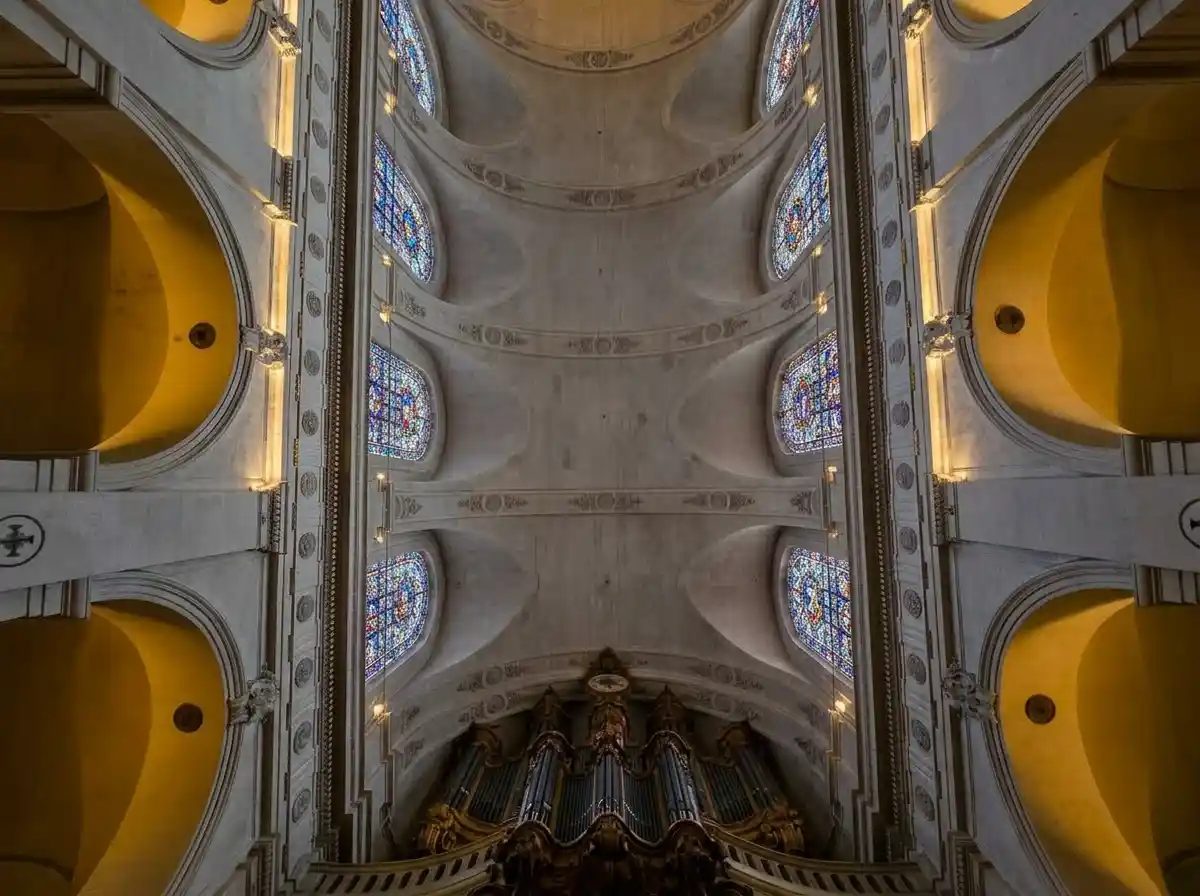
One detail worth knowing before you step inside: the church runs south to north instead of west to east, unlike nearly every other Catholic church. The reason is entirely practical. The hill the church was built on ran long along that axis, and the builders wanted the facade to open onto rue Saint-Honoré, which was Paris’s main commercial street at the time. Saint-Roch is one of the first Parisian churches to break the orientation rule, and the logic behind it was real estate, not theology.
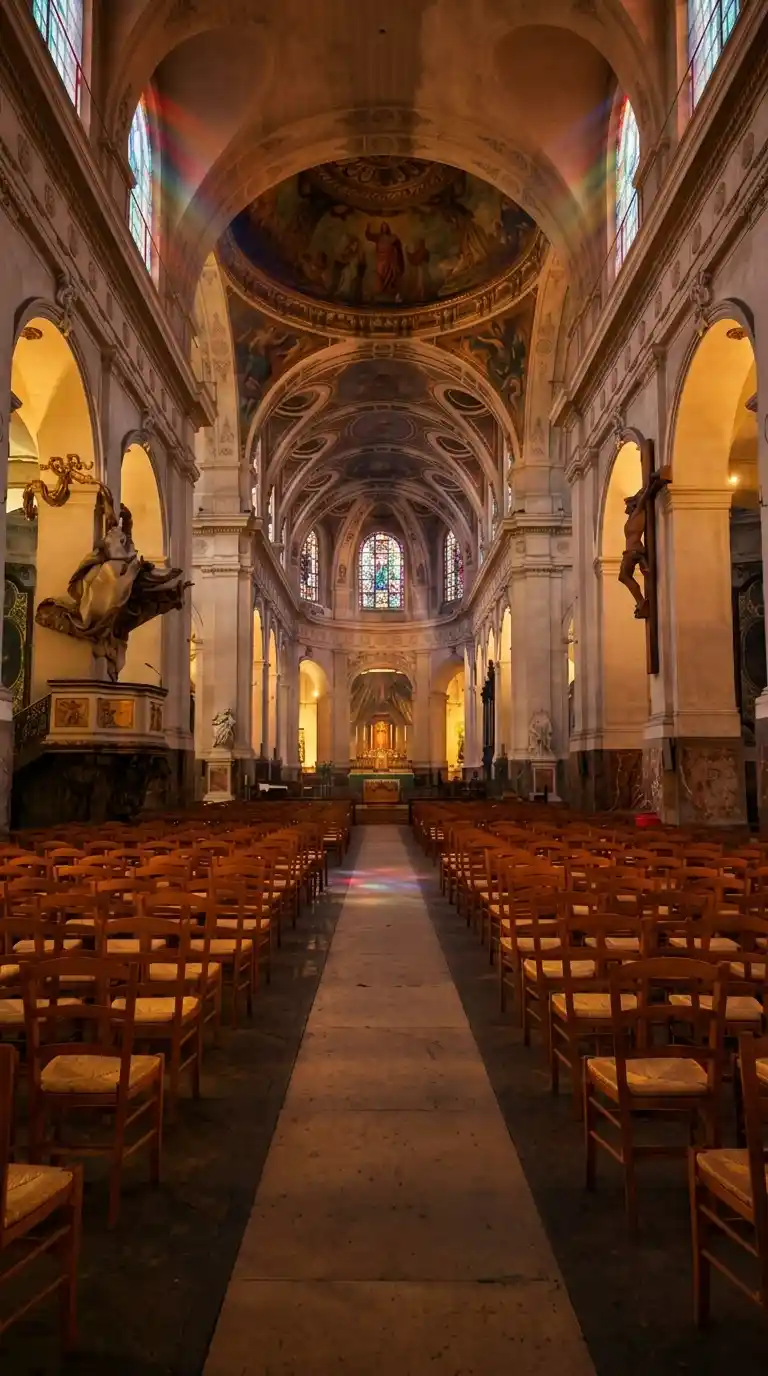
The simple straw and wood chairs that fill the nave are part of the experience. At certain hours, light passing through the tall stained-glass windows breaks apart and falls as a colored strip across the stone floor, right along the central aisle leading to the altar. It’s not a planned effect and you won’t find it mentioned in any guidebook, and it takes a bit of luck, and the right hour, to catch it.
The Chapel of the Virgin, and the chapels behind it
Behind the main altar, the church continues into a chain of chapels, one after another, and this is the one thing about Saint-Roch that has no equal anywhere else in Paris. The first is the Chapel of the Virgin, designed by Jules Hardouin-Mansart (1646-1708), the architect of Versailles. It’s built as an ellipse surrounded by a circular passageway, and the dome above it depicts the Assumption of the Virgin, the work of Jean-Baptiste Marie Pierre (1714-1789), who painted it between 1749 and 1756.
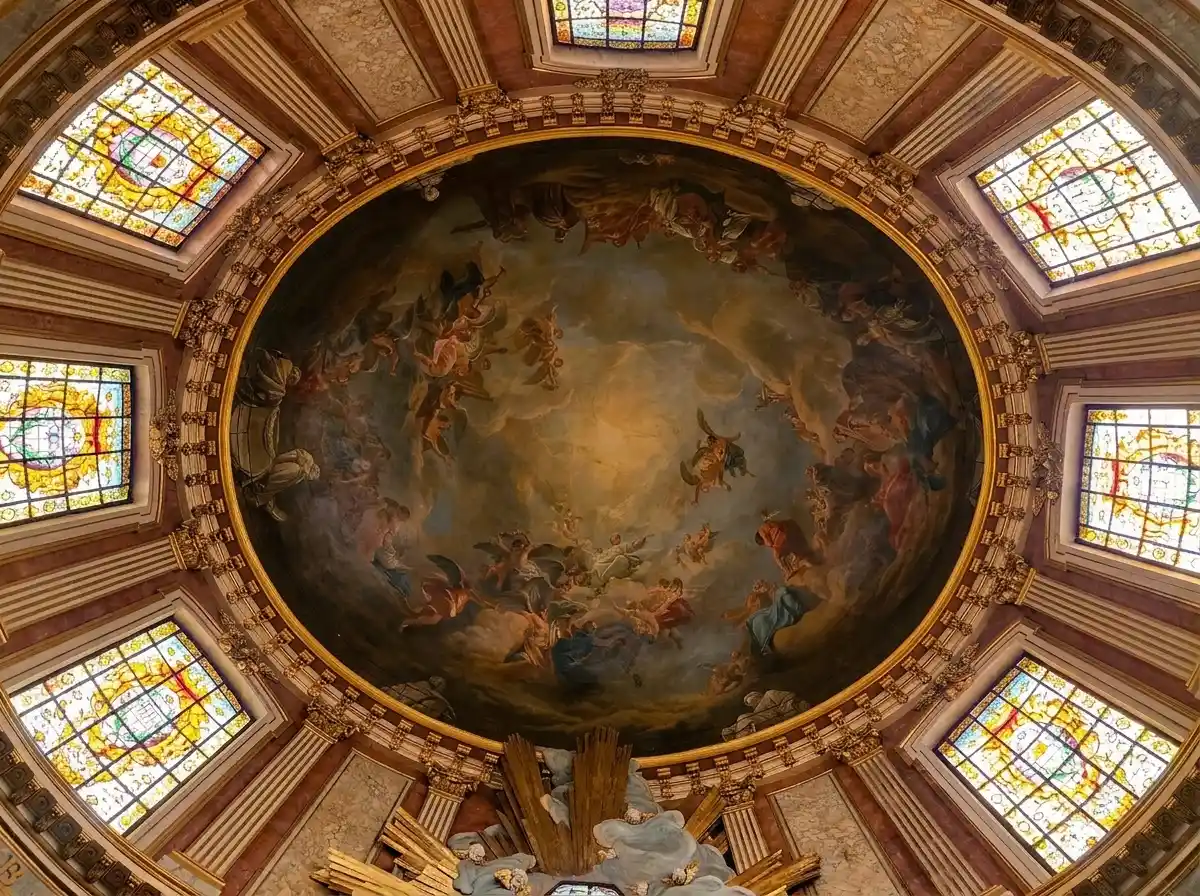
Above the altar spreads a dazzling burst of golden rays and plaster clouds dotted with cherub heads, a work by the sculptor Étienne-Maurice Falconet (1716-1791), who borrowed the idea from St. Peter’s Basilica in Rome. The cherub heads are made of Sèvres biscuit porcelain, from the very manufactory Falconet himself directed in those years.
The next chapel is the Communion chapel, and it’s a complete surprise. The space sits in deliberate half-darkness, lit by only two stained-glass windows, and inside stand a table for the bread of offering, a tabernacle, and two seven-branched menorahs, inspired by the vessels of the Temple in Jerusalem. Beyond it, at the northern end, is the Chapelle du Calvaire, with a cross lit from above. These three chapels were designed as a single journey: birth, sacrifice, and redemption, with each station’s altar set lower than the one before it, so the eye keeps moving forward.
The organ, and the organist the archbishop had to stop
The great organ sits in the loft above the entrance, and its carved case is the only surviving piece of the original instrument. It was built in 1752 by Louis-Alexandre Clicquot (1684-1760), restored in 1769 by his son François-Henri Clicquot (1732-1790), largely destroyed during the Revolution, and rebuilt in 1826. Aristide Cavaillé-Coll (1811-1899), the leading French organ builder of the 19th century, worked on it later. Today it has 53 stops, four manuals and a pedalboard, and 2,832 pipes.
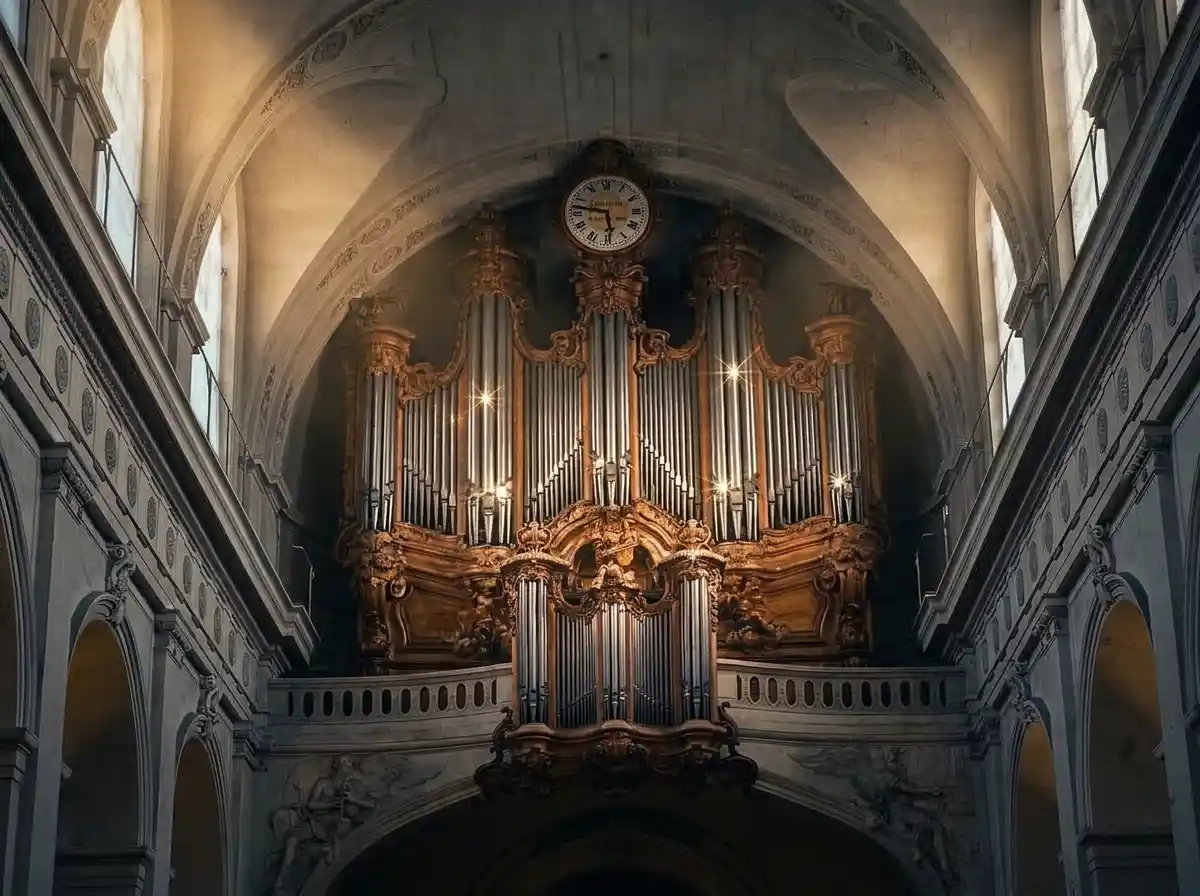
The best story tied to this organ belongs to Claude Balbastre (1724-1799), who served here as organist during the second half of the 18th century. His playing drew such crowds to the church during Advent (the weeks of anticipation before Christmas) that the Archbishop of Paris forbade him from performing his own Christmas compositions there. Here’s one of them, and you’re welcome to judge whether the archbishop overreacted:
Regular concerts still take place here today, organized by an association called Les Heures musicales de Saint-Roch, which also commissions new works. I’ve gathered every way to hear music in Paris’s churches in my article on classical music in Paris.
The tombs and monuments of the artists’ parish
Saint-Roch is known as the artists’ parish, for two reasons. The first is that since the 17th century, it has hosted funerals for creative figures, and the second is that it still serves today as a religious center for performers in Paris. Among those buried here:
- André Le Nôtre (1613-1700), the garden designer of Versailles
- Pierre Corneille (1606-1684), the playwright who wrote “Le Cid”
- Denis Diderot (1713-1784), buried in the Chapel of the Virgin
- Jean-Honoré Fragonard (1732-1806), the painter
- Marie-Anne de Bourbon (1666-1739), the acknowledged daughter of Louis XIV
- Charles-Michel de L’Épée (1712-1789), the inventor of French Sign Language
I should say honestly that most of the actual graves are gone. Looting during the Revolution and later the Paris Commune badly damaged the burial vaults, and what remains today is mostly monuments and memorial plaques. Some of them weren’t even here originally, but were moved to this church from neighboring churches that were closed and demolished during the Revolution.
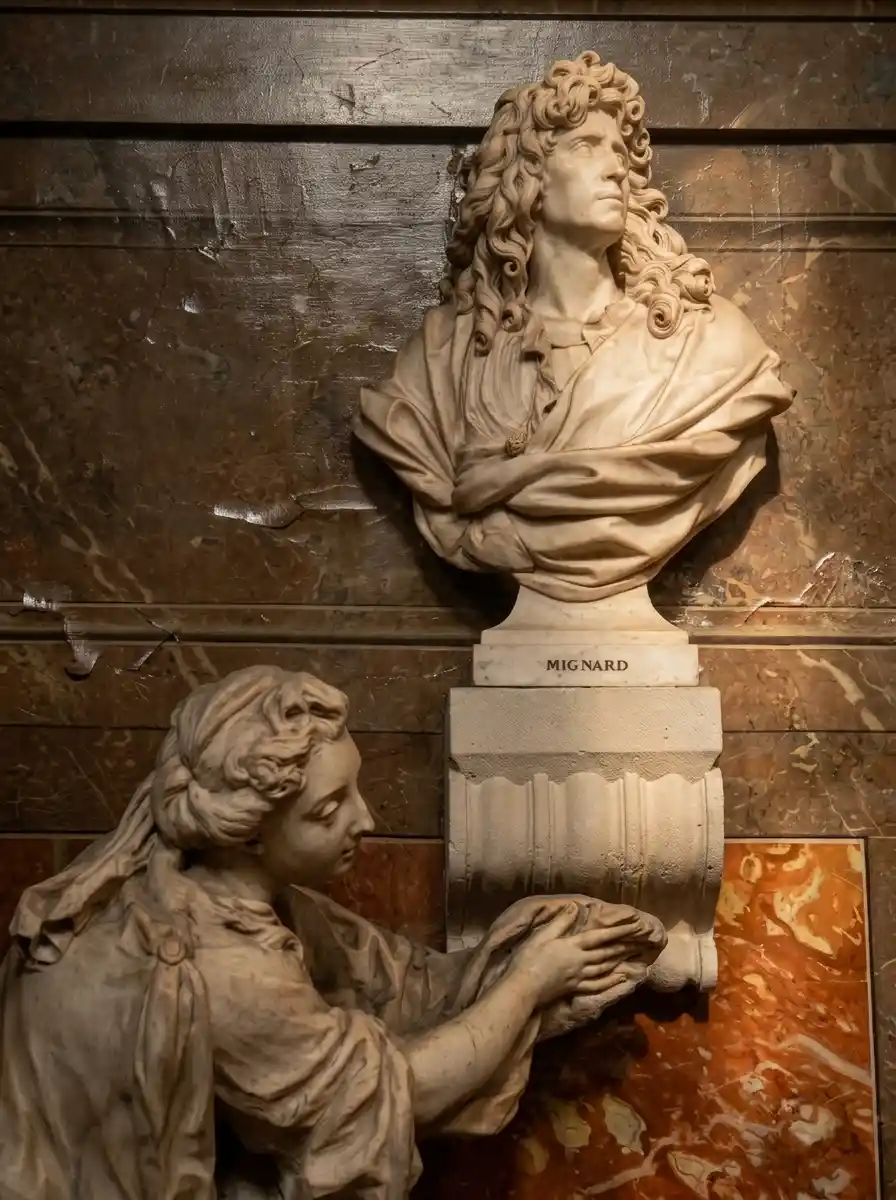
The most impressive monument of all belongs to the painter Pierre Mignard (1612-1695), Louis XIV’s first painter. The bust was sculpted by Martin Desjardins (1637-1694), and kneeling at its base is his daughter Catherine, the Comtesse de Feuquières (1657-1742), herself sculpted by Jean-Baptiste Lemoyne (1704-1778) in 1744. The whole tomb was brought here from the Jacobin monastery on rue Saint-Honoré, which was seized in 1791 by the Jacobin Club.
In total, four tombs arrived at Saint-Roch from closed churches: that of Cardinal Dubois (Guillaume Dubois, 1656-1723) from the Collegiate Church of Saint-Honoré; those of Mignard and Marshal François de Créquy (1629-1687) from the Jacobins; and that of the Comte d’Harcourt, from the Couvent des Feuillants, which once stood on rue Saint-Honoré. As a result, this church holds a collection of 17th- and 18th-century sculpture, much of which was never created for it in the first place.
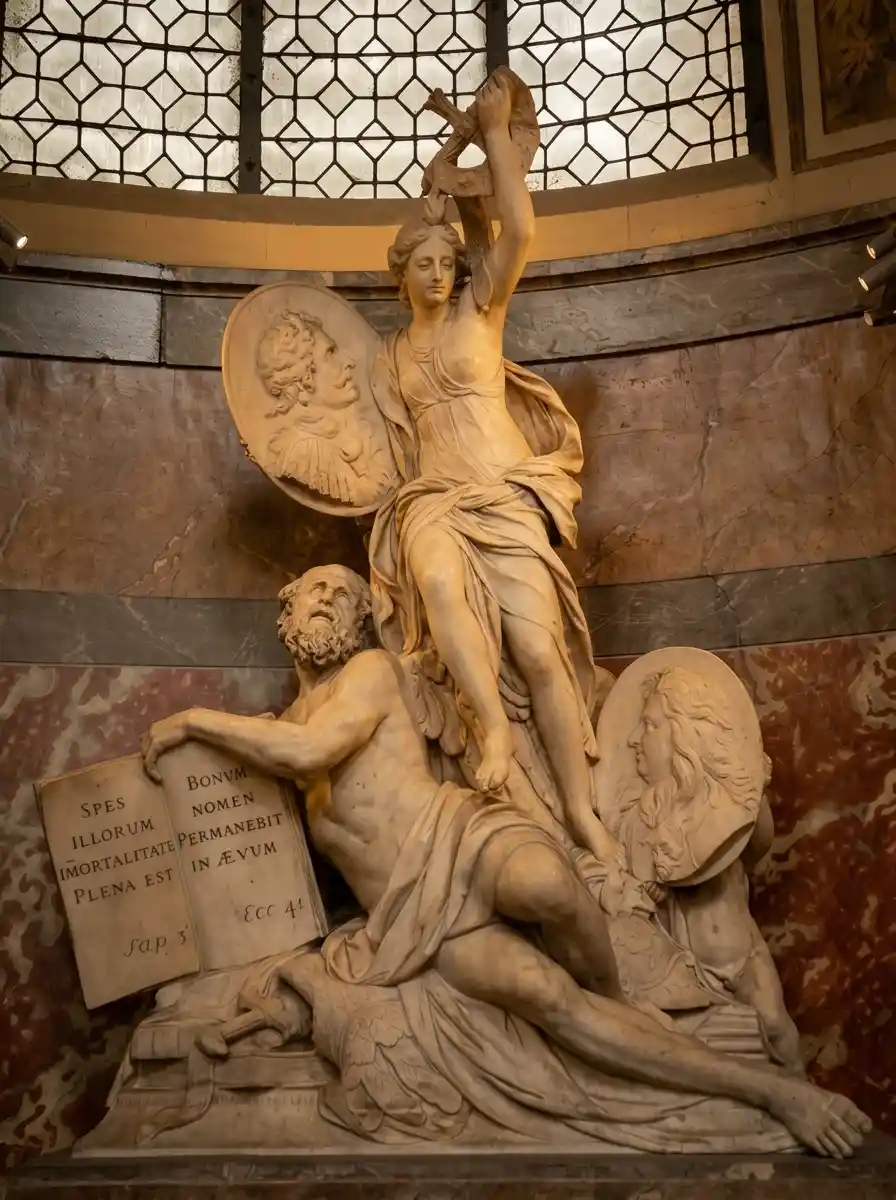
The tomb of Henri de Lorraine, Comte d’Harcourt (1601-1666), is the most dramatic of the sculptures brought here. It was carved in 1695 by the sculptor Nicolas Renard, and the bearded old man lying below represents Time. He holds a tablet inscribed with verses from the Book of Wisdom and Ecclesiastes, and gazes up at the figure of Immortality, already spreading her wings and preparing to take flight, carrying a medallion with the count’s portrait.
Heading north along the west wing, you’ll pass a monument of a completely different character, and it’s worth stopping for even if the name means nothing to you.
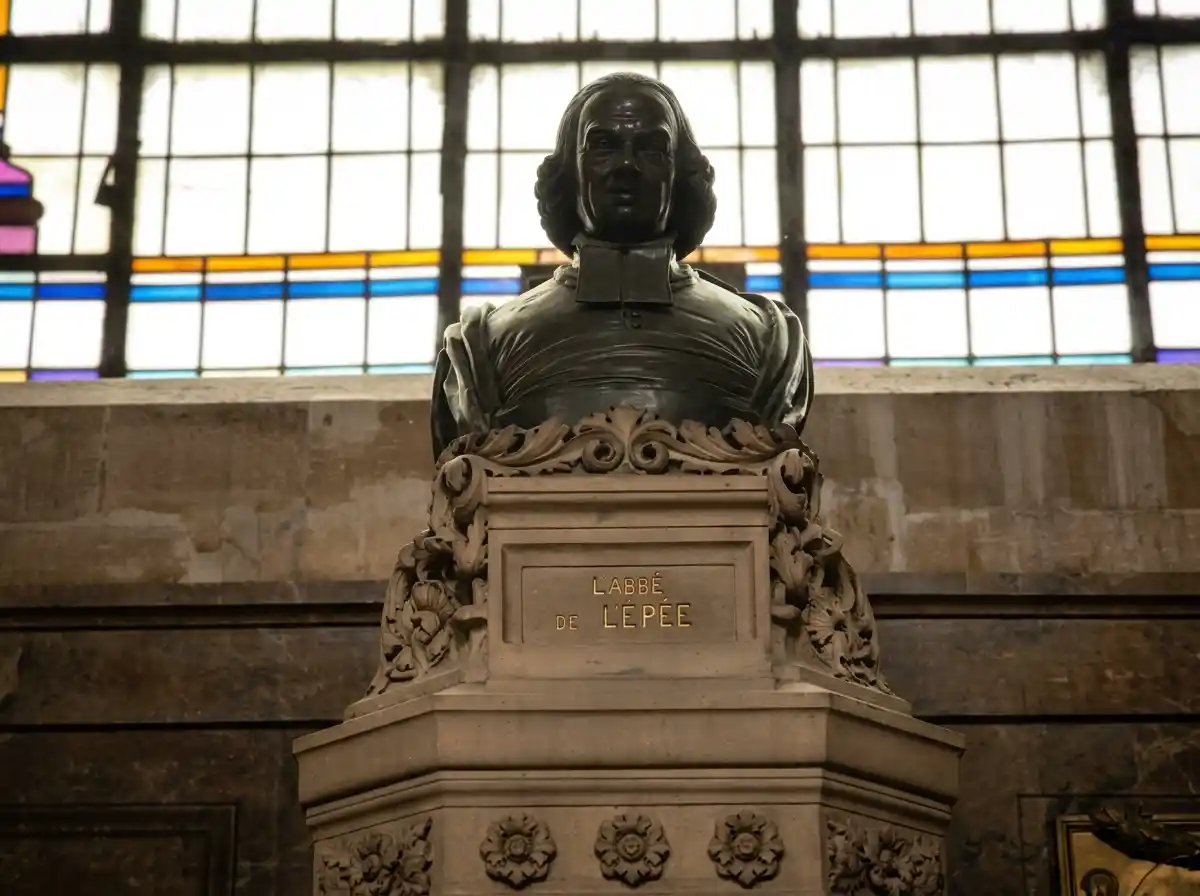
Charles-Michel de L’Épée devoted his life to educating the deaf, developed a systematic sign system, and founded the first public school for the deaf in Paris. He died in 1789, his burial place was forgotten, and it was only rediscovered in 1838 in the crypt of the Chapel of Saint Nicolas. The monument was designed by the architect Jean-Baptiste Lassus (1807-1857) and sculpted by Auguste Préault (1809-1879), and it shows the two children with whom he developed his method. On the engraved panel beside it appear the 24 letters of the alphabet in hand signs, each letter with its sign, and that’s the part I recommend getting close to.
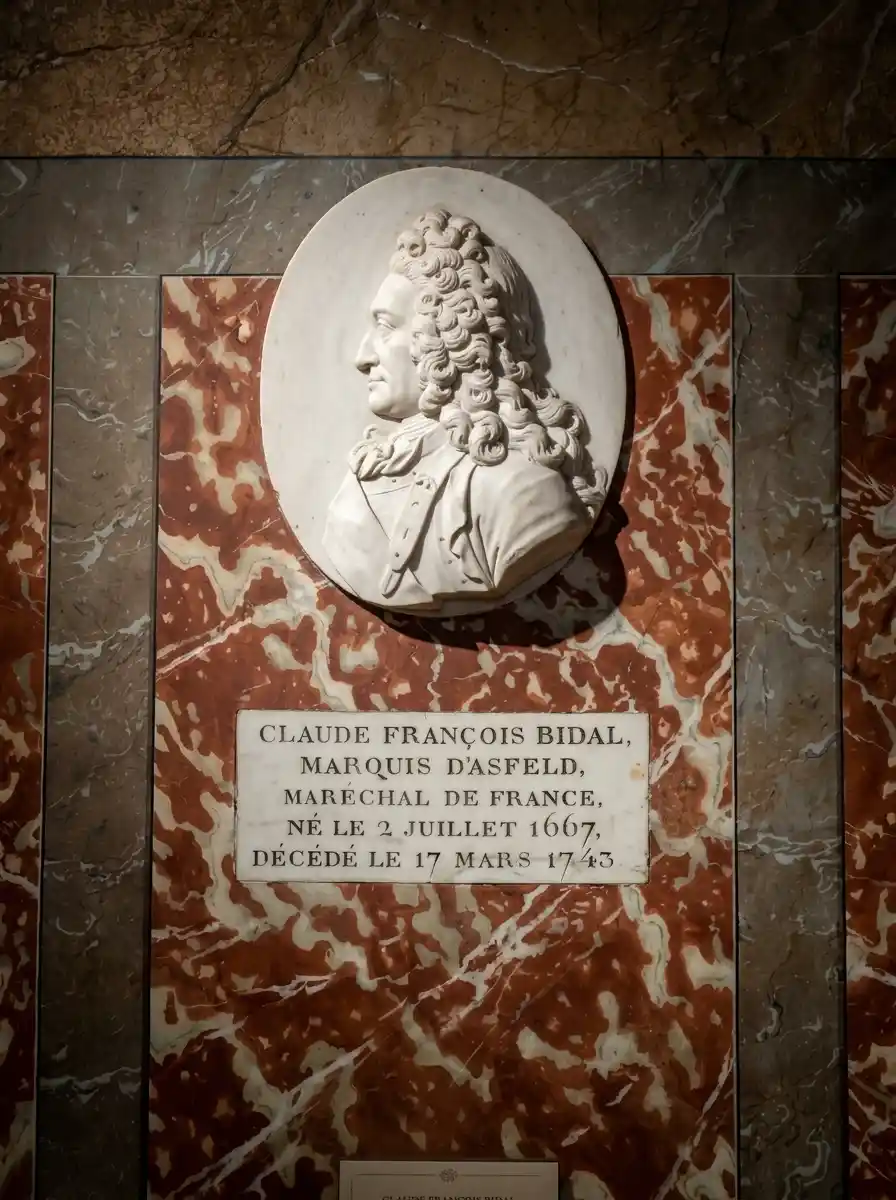
A far more modest example sits near the passage to the chapels: a white marble medallion of Claude François Bidal, Marquis d’Asfeld (1667-1743), a Marshal of France and the leading siege engineer of his day (after Vauban, of course). The inscription below gives his exact birth and death dates, July 2, 1667 and March 17, 1743, and the medallion itself was carved in 1754.
Incidentally, Voltaire’s great rival, Pierre-Louis Moreau de Maupertuis (1698-1759), the man who proved the Earth is flattened at the poles, also received a monument here, with a small angel resting a hand on a globe.
The deportation memorial wall
In the west wing, in the Chapelle de la Compassion, stands the wall that alone is worth coming in for. It was dedicated in 1949 in the presence of Geneviève de Gaulle-Anthonioz (1920-2002), the niece of Charles de Gaulle and a former prisoner of Ravensbrück, and of the German chancellor Konrad Adenauer (1876-1967). Behind each plaque, soil and ash brought from a different camp were buried.
Next to the wall is a plaque commemorating Father Louis Courcel, a priest at the Saint-Roch parish who worked with the Réseau Bourgogne resistance network, smuggling American and British airmen shot down over France out of the occupied zone. He was caught, deported to the Nordhausen camp, and died there in March 1945. One plaque in a Catholic church in the heart of the 1st arrondissement, and behind it an entire story.
The history of Saint-Roch Church
1521 to 1653: from a merchant’s chapel to a king’s cornerstone
At the start of the 16th century, this hill stood outside Paris. In the area north of the Tuileries Palace stood windmills, fields, and a handful of houses, and the whole district was known as the Faubourg Saint-Honoré, the suburb beyond the gate. In 1521, a Parisian merchant named Jean Dinocheau built a small chapel here and dedicated it to Saint Susanna.
In 1577, his nephew Étienne Dinocheau expanded the chapel into a proper church and dedicated it to Saint Roch, the saint people turned to during plagues and also the patron of bakers and millers. The choice was entirely local: the millers of the hill were the community that funded the place.
For about fifty years, the church served as an annex of Saint-Germain-l’Auxerrois for the residents of the faubourg, and it was only on June 13, 1633, that it was recognized as an independent parish. A year later it was granted a huge plot of land, north of the Tuileries Garden and between the wall of Charles V and the fortifications of Charles IX, instantly making it one of the wealthiest parishes in the city.
The plan for a new church on the site was commissioned from Jacques Lemercier (1585-1654), the king’s chief architect, who had built the Sorbonne chapel and the Cardinal’s palace, which later became the Palais-Royal. His plan only got underway once the Fronde, the uprising of the nobility and the parlement against the central government, had calmed down.
In 1653, Louis XIV laid the cornerstone. His mother, Anne d’Autriche (1601-1666), was not present at the ceremony, and according to one version, she refused to meet Jean Rousse (parish priest from 1633 to 1659), who had supported the Fronde. In the new church, a chapel was dedicated to Saint Susanna, in memory of the original structure.
Lemercier died in 1654, a year after laying the cornerstone, and from then on the construction passed from architect to architect for the next eighty years.
1660 to 1740: the construction that stalled, and the banker who converted
The money ran out fast. In 1660, construction stopped with only the transept and the last bay of the nave finished, and the parish had to sell off the side chapels to wealthy families in exchange for funding. Some of the millers and bakers who had made up the original parish disappeared along with the windmills, and the economic base of the place was drained.
By the 1690s, the choir, the transept, most of the chapels, and a bell tower had been finished, but the ceiling was still a temporary wooden one and there was no sign of a facade at all. In 1691, Marshal Vauban (Sébastien Le Prestre de Vauban, 1633-1707), Louis XIV’s fortification engineer, married off his daughter here.
In 1705, the parish financed a charity lottery, and with the money raised, Jules Hardouin-Mansart returned to the site and added the Chapel of the Virgin, the largest of its kind in Paris. Hardouin-Mansart died in 1708 and the work passed to the parish council’s contractor, and when it was finally finished in 1719, only two major gaps remained: the roof and the facade.
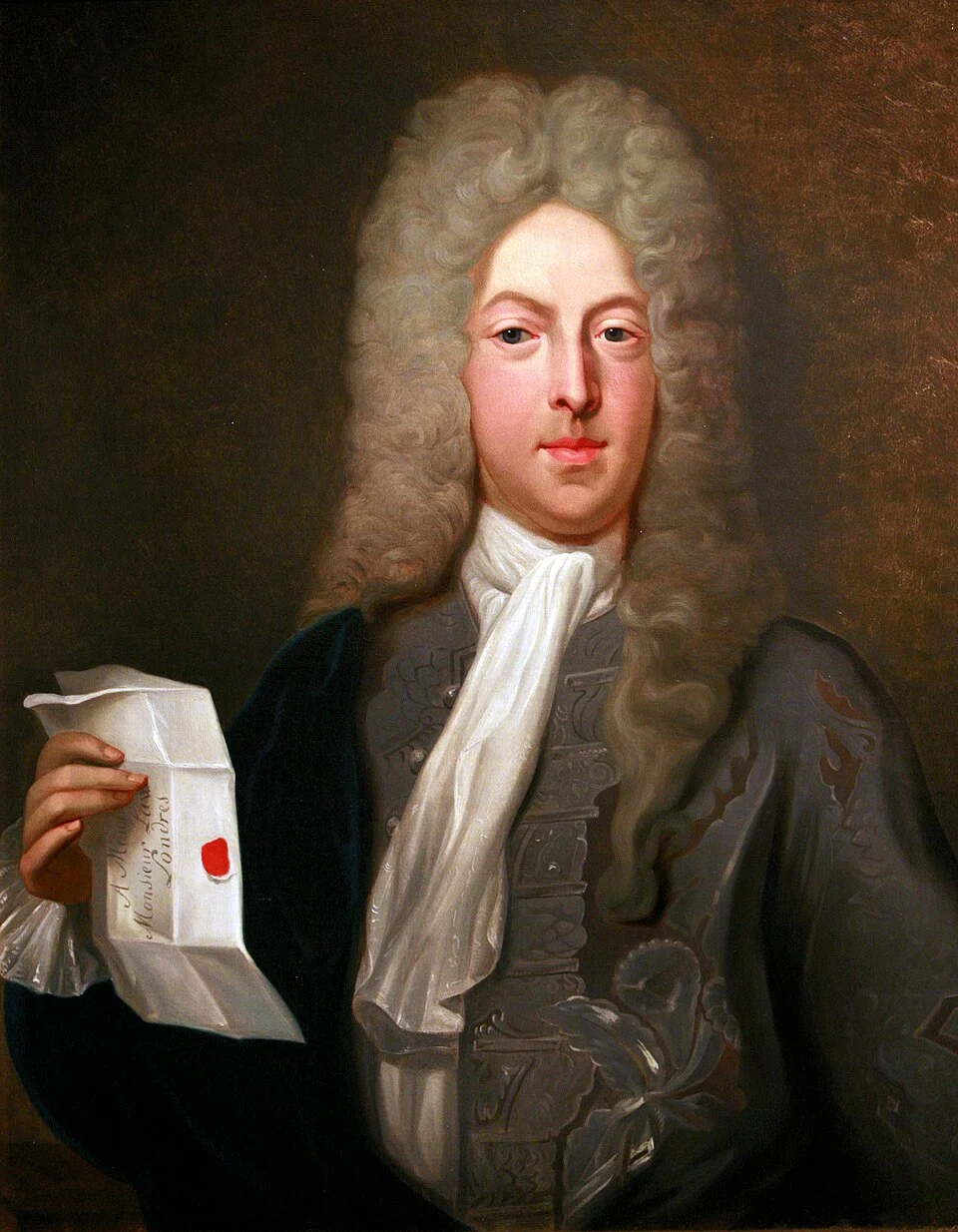
This is where John Law (1671-1729) enters the story, the Scottish banker who invented France’s first paper banknotes and the Mississippi Company. To hold public office in France, he had to convert from Protestantism to Catholicism, which he did in 1719, attending his first Mass as a Catholic right here at Saint-Roch. On that occasion, he donated 100,000 livres to the church.
A few months later, his credit scheme collapsed and brought down a large part of the French economy with it, and Law fled the country and died in Venice, nearly penniless. But his money stayed in the church’s coffers, and the king added another 10,000 livres on top of it. With these two sums, the barrel vault above the nave and the facade were finally completed, with the work wrapping up in 1726.
The story wasn’t over yet. In 1728, Robert de Cotte added a tower on the eastern side of the choir; in 1735, the tower standing at the facade was torn down; and only in 1739 was the double facade we see today erected. On July 10, 1740, the church was officially consecrated, eighty-seven years after the cornerstone was laid.
The finest chapter in the interior’s design actually came later, thanks to one priest. Jean-Baptiste Marduel (parish priest from 1749 to 1787) recruited the finest artists of his generation to turn the chain of chapels into a theatrical experience. Falconet sculpted the burst of glory and the Annunciation group, the young Étienne-Louis Boullée (1728-1799) designed the Chapel of the Crucifixion in 1754 on the site of the old cemetery, and Pierre painted the dome. In 1758, Simon Challe (1719-1765) completed the preacher’s pulpit, from which the carved canopy survives to this day: a swirling drapery raising a figure of Truth holding a trumpet.
From 1789 to today: cannons, looting, and the artists’ parish
Rue Saint-Honoré was the main axis of the Revolution. The Jacobin Club and the Feuillants Club both met in monasteries along it, and down the same street rolled the carts carrying the condemned from the Conciergerie to Place de la Concorde, where the guillotine stood for most of the Terror. Saint-Roch sat right in the middle of it all.
On October 5, 1795, the fighting reached the very steps of the church. Napoleon positioned a cannon in the alley leading off rue Saint-Roch, fired on the royalist rebels for about three-quarters of an hour, and left behind the marks still visible on the facade today.
The more serious damage actually happened inside. Systematic looting emptied the church of ritual objects and works of art, and one of the losses was a portrait of Dinocheau, the church’s founder, which had hung in one of the chapels. In 1798, the church was converted by decree of the Directory into a “Temple of Genius,” and through the 1790s it was repeatedly closed and reopened.
In 1815, a rather theatrical scene unfolded here (quite literally). The church refused to hold a Christian funeral for the actress Mademoiselle Raucourt (Françoise Raucourt, 1756-1815), a star of the Comédie-Française, on the grounds that she had been an actress. Around five thousand protesters stormed the church, shouting against the clergy, and only the intervention of the royal court brought the affair to an end. A hundred and fifty years later, that very same church became the religious center for performers in Paris.
The 19th century brought two more blows to Saint-Roch. In 1849, Boullée’s Chapel of the Crucifixion was converted into a catechism chapel, and its original design was destroyed. In 1879, when the avenue leading to the Opéra was cut through nearby, the tower standing on the right side of the choir was weakened and dismantled. From then until today, Saint-Roch has been a large church without a bell tower, and anyone looking for it from the street can easily miss it.
On December 7, 1914, the church was declared a protected historic monument (monument historique). By then, the nickname “artists’ parish” had already taken hold, and the funerals held here in the 20th and 21st centuries only reinforced it: Yves Saint Laurent in 2008, and Jane Birkin in 2023, among many others.
Today, Saint-Roch is a fully active parish church, with daily Mass, a choir, concerts, and a religious center for performers. If you’d like to combine your visit with a longer walk, the Palais-Royal is just a few minutes away on foot.
Attractions within walking distance of Saint-Roch Church
Saint-Roch sits in the heart of the 1st arrondissement, and from here you can reach almost everything on foot. To the south lies the Tuileries Garden, to the northeast begins the Palais-Royal, and to the west, three minutes away, is Place Vendôme. Here are the attractions I recommend combining with a visit to the church:
-
Must-see

The Louvre Museum
Seven minutes on foot from the church, and the largest museum in the world. Don’t try to see all of it in one day.
-
Free admission

The Tuileries Garden
Paris’s first public garden, two streets south of the church, and a great spot for a break after your visit.
-
Free admission

The Palais-Royal
The palace Cardinal Richelieu built for himself, surrounded by the quietest garden in central Paris and its striped columns.
-
Free admission

Place Vendôme
Three minutes west of the church, Paris’s jewelry square and the column Napoleon cast from captured cannons.
You’ll find a full list of sites in the district on the 1st arrondissement of Paris page.
Where to stay near Saint-Roch Church
Rue Saint-Roch itself is one of the most convenient streets to stay on in Paris: fully central, quiet at night, and minutes from the métro and the Louvre. I personally stay in Udi’s apartments on most of my trips, and right here, at number 14, is one of them, about a hundred meters from the church. Here are my recommendations for hotels in the same area:
-
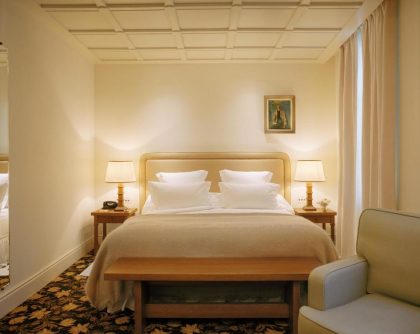
Chateau Voltaire
A small hotel on rue Saint-Roch, just a few doors from the church, and in my opinion the right choice for a couple on a one-weekend trip to Paris. Every detail is beautifully designed, a handwritten note waits in your room, and downstairs there’s a small spa with a pool, a sauna, and a heated stone bench that closes off for private use in 90-minute windows. It’s worth booking the spa in advance, since the slots fill up fast.
-
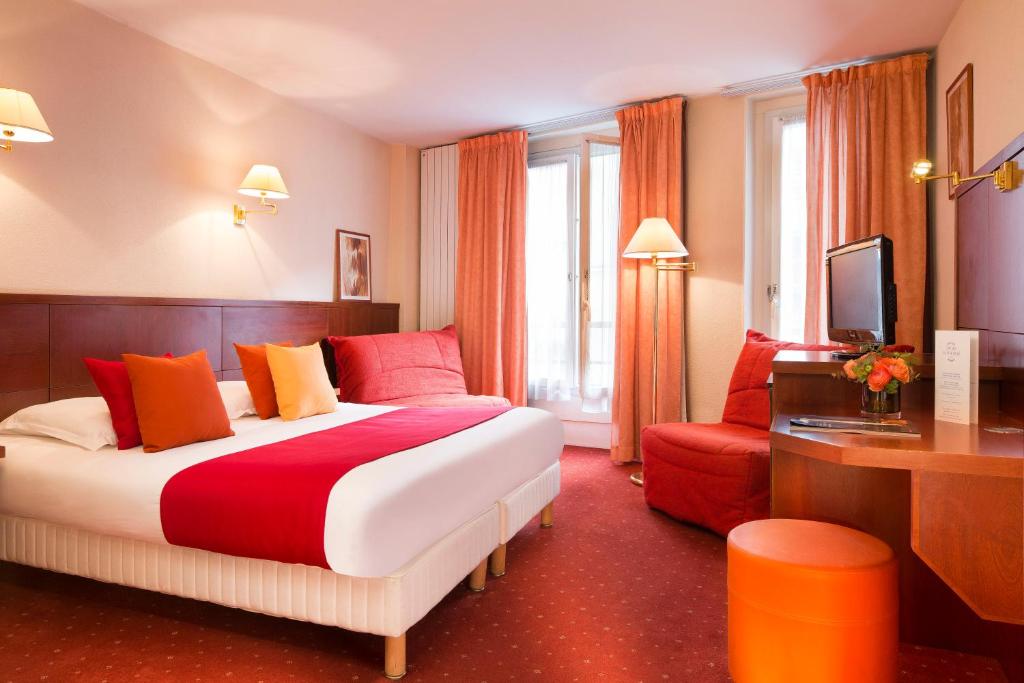
Hôtel Londres St-Honoré
A 17th-century building at the corner of rue Saint-Honoré, turned into a hotel over 150 years ago. Stone walls, exposed wood beams, and just 28 rooms, some with views over the street. The price relative to the location is almost a joke. One warning: the staircase is narrow and spiraling, and the elevator is tiny, so pack light and mention it at booking if you have a heavy suitcase.
-
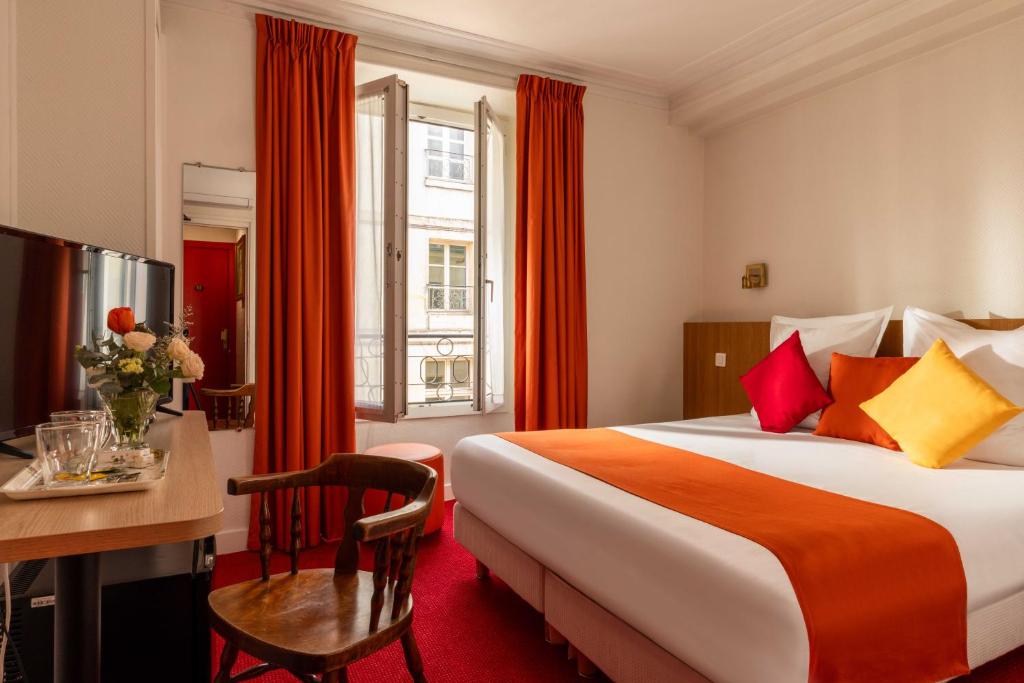
Hôtel Saint Roch
22 rooms in a white Parisian building on rue Saint-Roch, at a price that’s hard to believe for this area. The furniture is simple, and so is breakfast, but the location does all the work here: the church around the corner, Place Vendôme and the Tuileries Garden just minutes away. The staff allow early check-in when possible, and I recommend requesting a room facing the courtyard.
-

Hôtel Molière
I’ve personally stayed here and absolutely loved it. The hotel sits on the quiet rue Molière, seven minutes on foot from the church, and the building has been renovated from top to bottom. There’s a spa with a sauna and steam room you can book for private use, and coffee, drinks, and pastries are available free all day long. The rooms are spacious for Paris, and some have bathtubs.
-
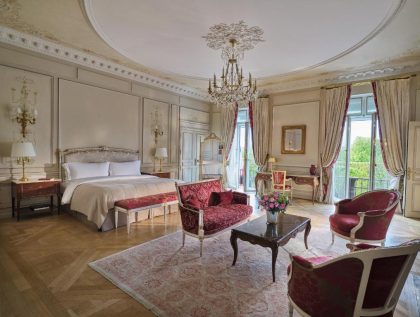
Le Meurice
For those looking for the very top end. The hotel sits on rue de Rivoli across from the Tuileries Garden, five minutes from the church, with a kitchen headed by Alain Ducasse and a spa and swimming pool on the lower floor. The rooms are far larger than is typical for Paris, and from the upper floors you can see the gardens stretching all the way to the Eiffel Tower. Very expensive, but you know exactly what you’re paying for.
You’ll find more options on the hotels in the 1st arrondissement of Paris and recommended apartments in the 1st arrondissement pages, and if you’re still deciding which area to sleep in, read my article on where to stay in Paris.
And if you love Parisian Baroque churches, it’s worth pairing this visit with Saint-Paul-Saint-Louis Church in the Marais, which the Jesuits built decades earlier, and whose dome served as the model for everything that came after it.
FAQ about Saint-Roch Church
Answers to the questions I get asked about the church:
Is admission to Saint-Roch Church free?
What are the opening hours of Saint-Roch Church?
Can you really see Napoleon’s cannon marks on the facade?
Who is buried at Saint-Roch Church?
How much time should I set aside for a visit, and what should I pair it with?
Are there guided tours of Saint-Roch Church?
Related reading
