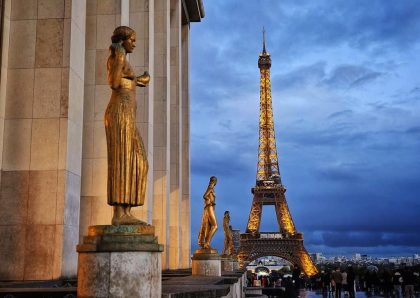
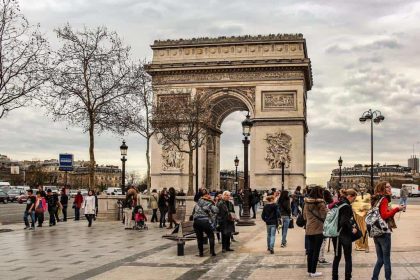
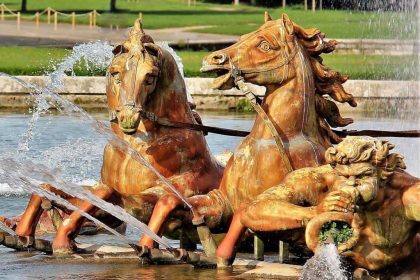
The 16th arrondissement is one of the largest in Paris. It’s a wealthy arrondissement, and part of it lies close to major attractions like the Eiffel Tower and the Bois de Boulogne, yet a good number of tourists miss it entirely and never walk through it.
I’ll admit that for a long time I didn’t really explore it myself, since I often preferred to dig deeper into neighborhoods I already loved, like the Marais. But in April 2024 I decided it was time to give the 16th arrondissement the respect it deserves, and I spent several days walking it from end to end.
These walks made me fall in love with this charming neighborhood, because it has everything that makes me love Paris so much: a fascinating history full of great stories, and stunning aesthetics. Since this is a very large arrondissement, you can’t cover it all in one walking route (or even two), so this time I decided to focus on Passy, a former village that was annexed to Paris in 1860.
This is a very elegant neighborhood, where Paris’s high society lived for many years, and together we’ll uncover quite a few stories that unfolded here during the 18th, 19th and 20th centuries. This walking route is meant for “advanced Francophiles”, since there are no big-name attractions here, but “beginner Francophiles” looking for something to do before or after climbing the Eiffel Tower can enjoy it too.
The starting point
A note about the map: under the heading of each stop you’ll find its address, and every address is a link. Click it, and the spot will open right away in Google Maps.
If you’d like to stay in an apartment in Passy, let me recommend Udi’s apartment on Rue Nicolo, where Dr. Orna Lieberman stayed (you can read her review at this link).
We’ll start our tour outside the Passy metro station, served by line 6. If you want to start the walk “the right way”, I highly recommend riding this line from the Left Bank over the Bir-Hakeim bridge, so you can see the Eiffel Tower in all its glory, and then getting off at the next stop, Passy. That’s a great way to kick off the walk.
Once you’ve come out of the metro at Passy (or walked to the station), it’s time to get going.
The Passy Walking Route
It Doesn’t Start Until the Fat Lady Sings
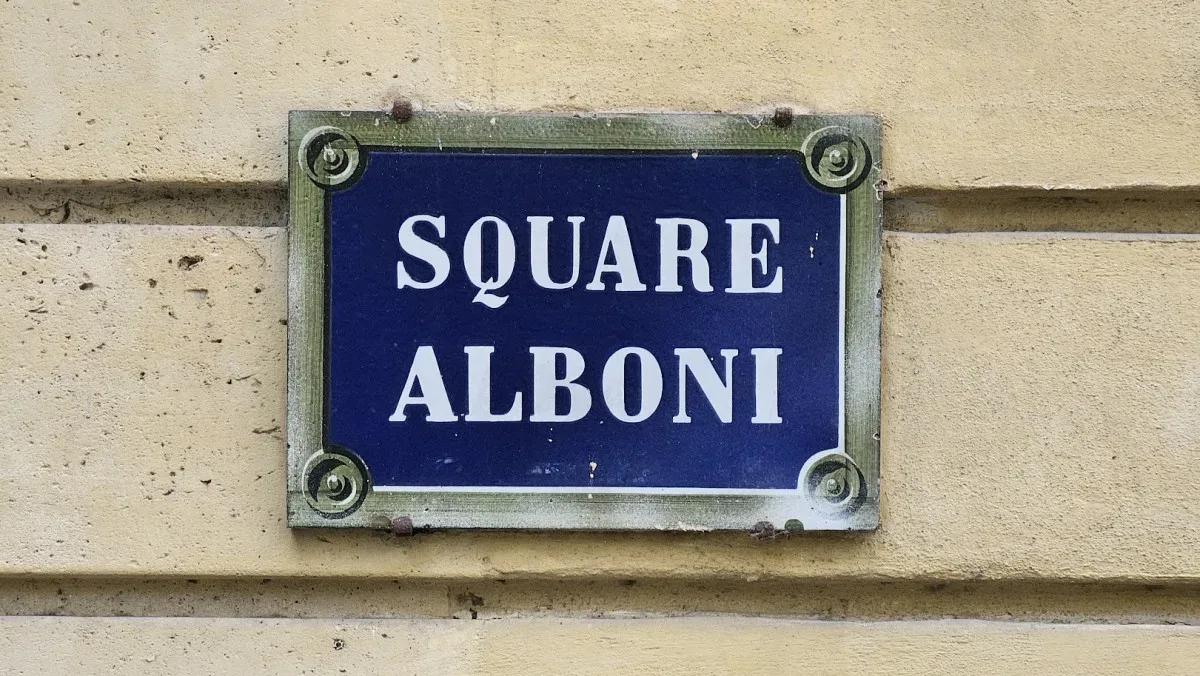
As you’ve seen, the Passy metro station is above ground. As soon as you exit, head down the stairs to the Square de l’Alboni.

The square is named after the singer Marietta Alboni (1826-1894), one of the most successful opera singers in Paris, who was discovered in Italy by none other than the famous composer Rossini.
Alboni had a long international career. Along the way she married a Roman nobleman and, after she was widowed, married again, this time a French officer.
During her career she amassed a considerable fortune, and she left instructions that after her death her money be distributed to various charities. Because of this generosity, and because she herself funded the square you’re standing in, the square was named after her. By the way, if you’d like to lay a wreath on her grave, head to Père Lachaise Cemetery.
If you’d like to raise a glass (virtually) in honor of the noble opera singer, turn right onto Rue des Eaux, named after the healing springs that once existed in Passy (the clean, healthy water is still there, only the spa has closed), until you reach the wine museum.

This is a 19th-century building that is actually an imitation of an 18th-century one (that’s how it was in the 19th century: aside from the Haussmannian buildings, they had no style of their own, and everything else was neo-Gothic, neo-Baroque and so on. To be honest, I don’t say this to belittle the 19th century. Quite the opposite: in my opinion, it’s the century that produced the most beautiful buildings in Paris).
Beneath this lovely building is a 14th-century wine cellar that belonged to the Minim order (Les Minimes), which had a vineyard in the area. Today it houses a museum that tells the history of local winemaking through wax figures. Here’s a short video (in French) that will give you an idea of what’s inside.
The museum is open every day except Sundays and Mondays, from 10:00 to 18:00. Tickets can be purchased on-site or on the museum’s website.
Where a Close Friend of Marie Antoinette (1755-1793) Lived, an Asylum, and the Turkish Embassy (All in One Building)
Backtrack a little and continue to 10 Rue Charles Dickens. This is a rather ugly block of buildings, but if you go inside and cross the courtyard, you’ll find Parc de Passy waiting for you. It’s a modern but pleasant park, and if you feel like it, you’re welcome to stroll through it and sit for a while.
Once you’ve done that, continue straight to the other end of the park, which comes out on Rue d’Ankara. The singer Dalida (1933-1987) lived at number 7, and you can read about her in Dr. Orna Lieberman’s comprehensive article, Dalida Forever.
As you walk along Rue d’Ankara, you’ll probably notice a stone wall and a gate. This is the side entrance to the Turkish embassy, and since it’s an embassy, we can’t go inside, which is a shame.
The embassy is in the Hôtel de Lamballe, which belonged to the Princesse de Lamballe, a close friend of Marie Antoinette, and the house has a fascinating story. If you’d like to hear the princess’s tragic story, watch the following video.
If the princess’s story has caught your interest, check out the article on the Hôtel de Lamballe and read more about this mansion, which later served as an asylum for high-society patients before becoming the Turkish embassy (which, honestly, given the behavior of their president, is a kind of asylum too).
Head north along the street until you reach the charming Rue Breton on your left. Step into it and, as if by magic, you’ll feel like you’ve left the city for a village.
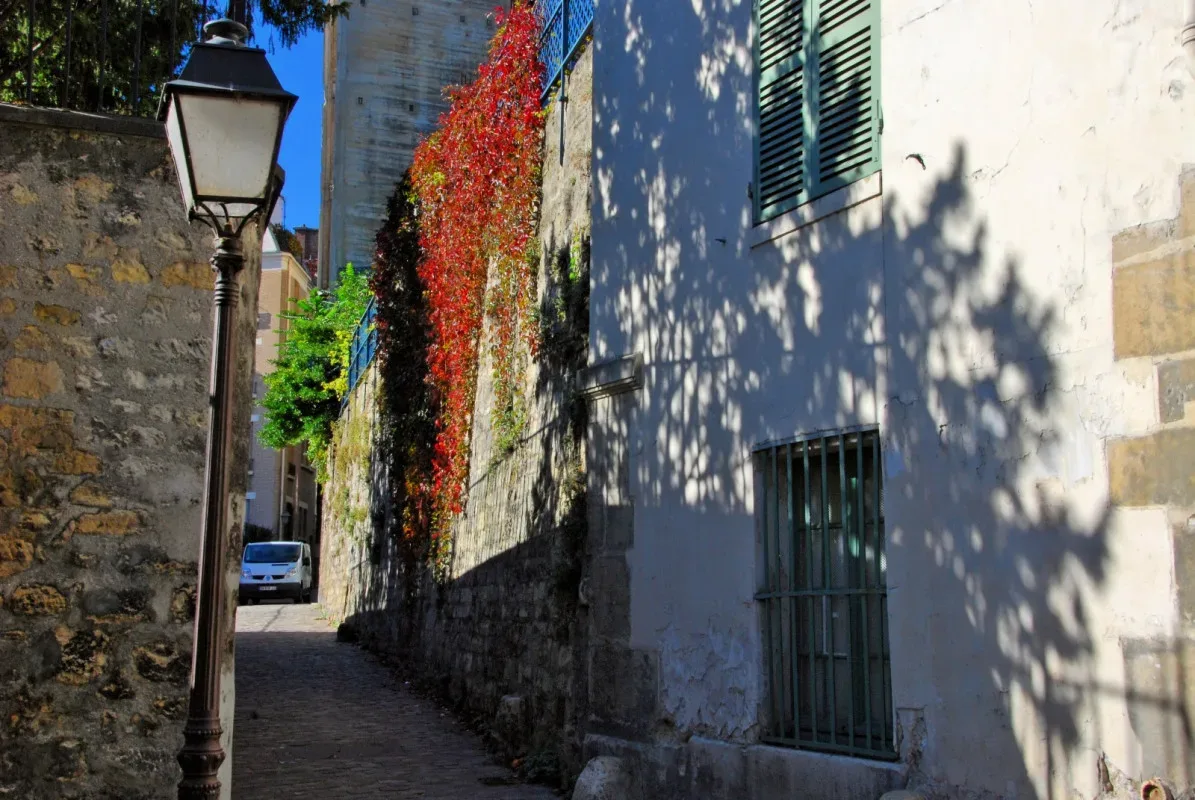
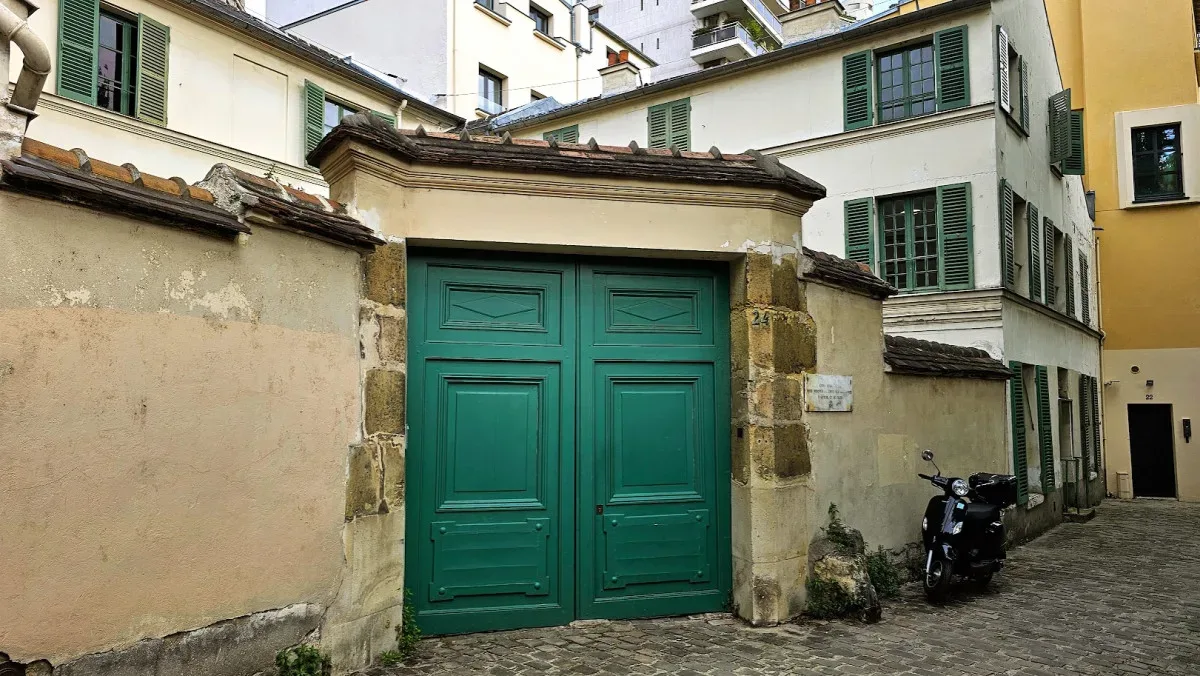
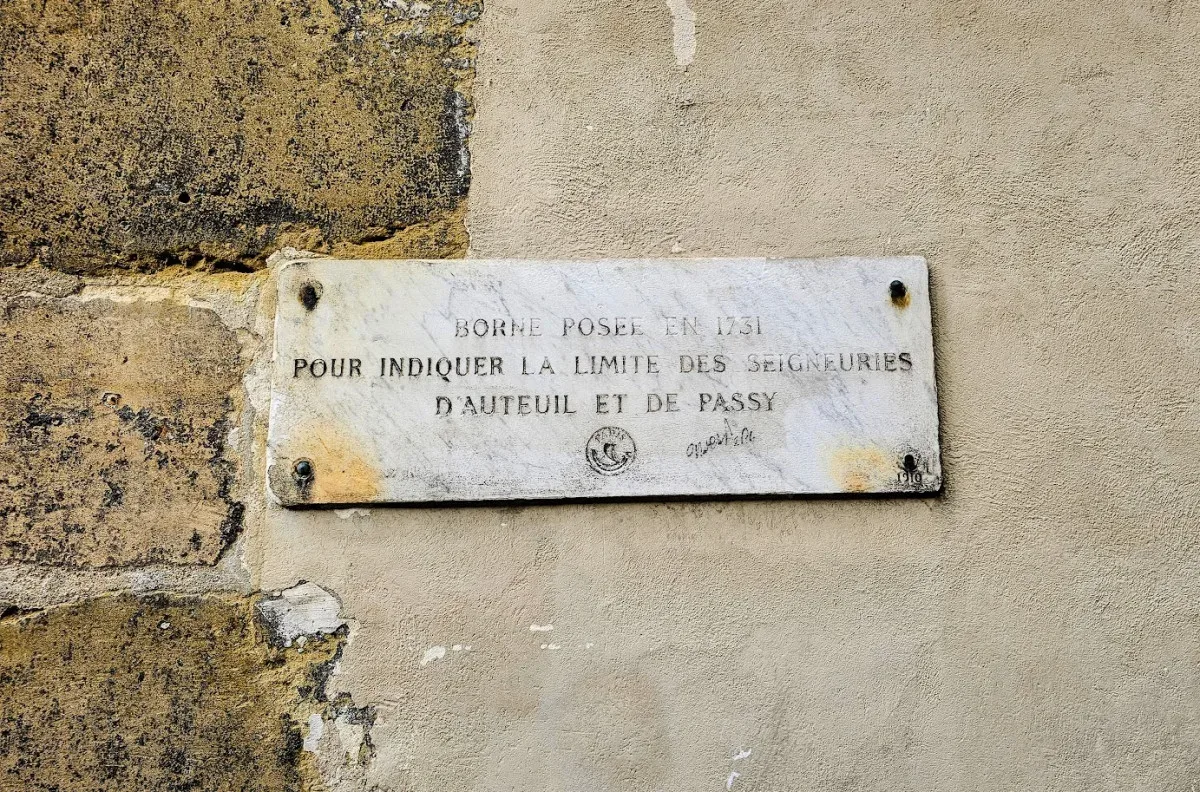
Go to number 24 and you’ll find a sign from 1731 marking the old boundary between Passy and Auteuil. You can get to know the neighborhood on the other side of the sign on the Auteuil walking route.
The Houses of Balzac and Franklin
Continue along Rue Breton and turn right onto the path that leads to Rue Raynouard. There, at number 47, you’ll find the Maison de Balzac.

Honoré de Balzac (1799-1850) lived in this building between 1840 and 1847, and here he wrote some of his greatest works while hiding from creditors. It’s a charming, free museum with a small garden and a shop where you can buy books and other items, and it’s worth visiting even if you’ve never read any of his novels.
There’s a lot to say about this house, so I wrote an entire article about it. If you’d like to get to know the house before your visit, check out my article on Balzac’s house.
When you’ve finished visiting Balzac’s house, go back out to Rue Raynouard and find number 42, more or less across from the museum. Today there’s a Haussmannian building there, but in the 18th century this was the site of the Hôtel de Valentinois, which was rented in 1776 to Benjamin Franklin (1706-1790).

Franklin, the envoy of the colonies that would within a few years become the United States of America, met all the great figures of French culture and politics of the era here. He also conducted scientific experiments here, the most famous being the construction of a lightning rod to study electricity.

During the 19th century, the building where Franklin lived became a boarding school for boys, and it was eventually demolished and replaced with the beautiful building you see today. As you can see, there’s a plaque on the building’s wall noting the distinguished American guest who once lived here.
Clemenceau’s House and the Perfect Spot for an Eiffel Tower Selfie
8 rue Franklin, and avenue de Camoëns
Continue along Rue Raynouard, and as you walk you’ll pass quite a few Art Deco houses. Take, for example, the house at number 15, which has a small, charming garden overlooking the Left Bank.
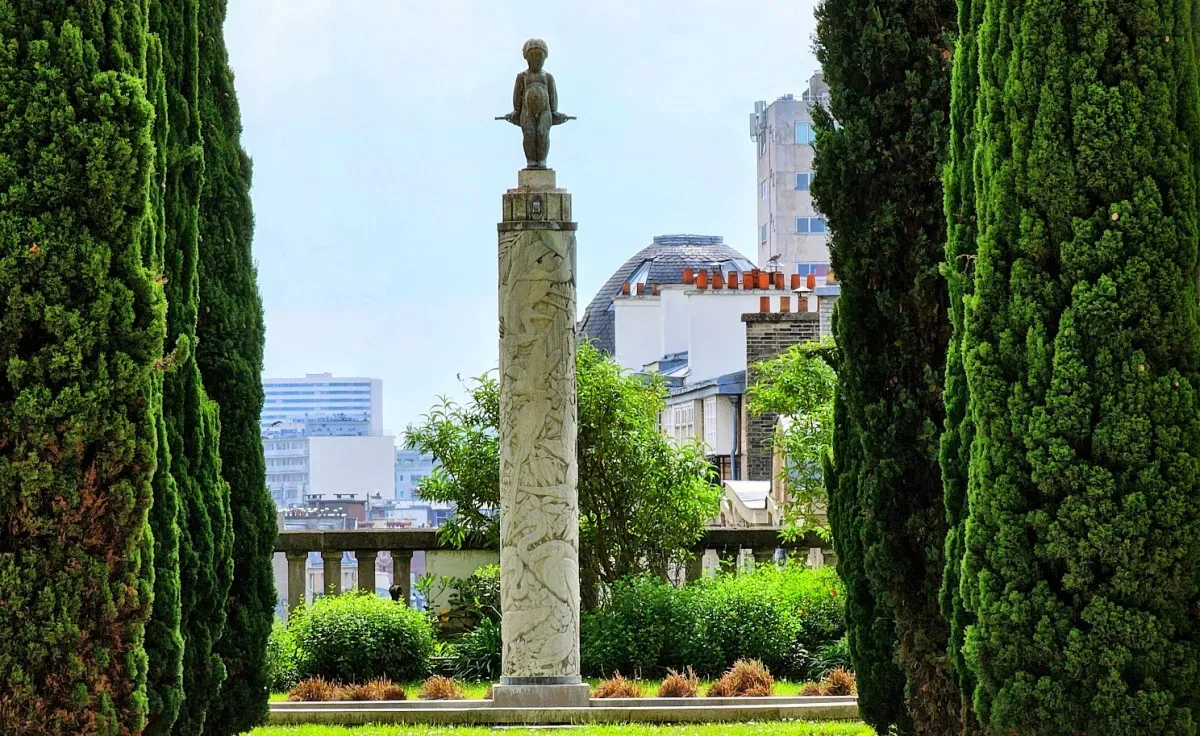
Continue on to Place du Costa Rica and from there to Rue Franklin, where you’ll find the house of Georges Clemenceau (1841-1929). Clemenceau led a long and eventful life, from his days as mayor of Montmartre during the Commune, through his role in the Dreyfus Affair, to his time as prime minister during the most critical period of World War I.
One day I’ll write an article summing up the fascinating life story of “the Tiger” (as he was nicknamed), but until then I highly recommend visiting his house, which has become a museum dedicated to his life.

The museum is open Tuesday through Saturday, from 14:00 to 17:30. It’s closed on Sundays and Mondays, throughout August and on public holidays, so plan your visit carefully. More information about the museum can be found on its official website.
After visiting the museum, continue along Rue Franklin and turn right onto Avenue de Camoëns. The street is named after the Portuguese poet Luís de Camões (1525-1580), and the buildings on it were built in the early 20th century, but that’s not why I brought you here.

This is one of the most beautiful spots to take a photo with the Eiffel Tower perfectly framed. That’s why, if you come here early in the morning, you’ll find a long line of people in their finest outfits waiting to pose, mostly for wedding photos, though I’ve also seen a professional photo shoot of a sweet little Japanese girl in traditional dress.
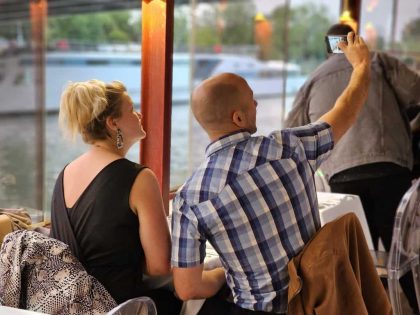
I took a photo of her, but unfortunately, since she’s a minor, I’m not allowed to show it to you. So instead, here’s a photo of two bloggers taking a selfie, and if you’d like to see more photos from the same spot, here are a few couple photos.


In short, if you end up staying in Passy, as I recommended earlier in this article, and you love photography, get up early and head to this little street. I promise you’ll leave with a wonderful set of photos!
Paris’s Aristocratic Necropolis
2 rue du Commandant-Schloesing
Go back to Rue Franklin and continue until you reach Square Yorktown, where you’ll find a statue of Benjamin Franklin, who, as mentioned, lived in Passy.

Right across from this small garden is the Passy Cemetery, also known as Paris’s aristocratic necropolis, since quite a few of the neighborhood’s wealthy residents chose to be buried there.
This is a relatively small and intimate cemetery, with quite a few interesting graves. I highly recommend taking half an hour to an hour to stroll among the graves and enjoy both the morbid aesthetics and the stories behind them.

If you decide to take my advice and visit, feel free to check out the article The Passy Cemetery: A Final Resting Place with a View of the Eiffel Tower, where you’ll find not only practical information (opening hours and so on) but also stories about some of the people buried there.
One More Chance for an Eiffel Tower Selfie
place du Trocadéro-et-du-11-Novembre
When you’ve finished visiting the Passy Cemetery, head to the Palais de Chaillot, just a short distance south of the cemetery.

The site has a few interesting museums, but that’s not why so many people come here every day. The reason, as you’ve probably guessed, is to photograph the Eiffel Tower, and even more importantly, to take a photo with it.
In May 2024, I was here at 7:00 a.m. to film a short video for the site. The cold was almost unbearable, but that didn’t stop brides in light dresses, or even a dancer in minimal attire (for the weather), from calmly posing on the esplanade. They knew that in a few hours it might be warmer and more pleasant, but the crowds by then would make a one-on-one photo with the Eiffel Tower almost impossible. Here are the two best photos I took there:


If you didn’t make it here at seven in the morning to take photos or pose for them, you’ll be glad to know there’s plenty to see and do at the Palais de Chaillot. To learn the fascinating story behind the palace and get all the information you need to visit its museums, read the article The Trocadéro Gardens in Paris: The Untold Stories.
A Musical Love Story Between a Gay Man and a Lesbian
After you finish visiting the museums at the Palais de Chaillot (and maybe even gone up the Eiffel Tower), walk along Avenue Georges Mandel until you reach the point where it crosses Rue du Pasteur Marc Boegner. There you’ll find a magnificent building with quite a story behind it.
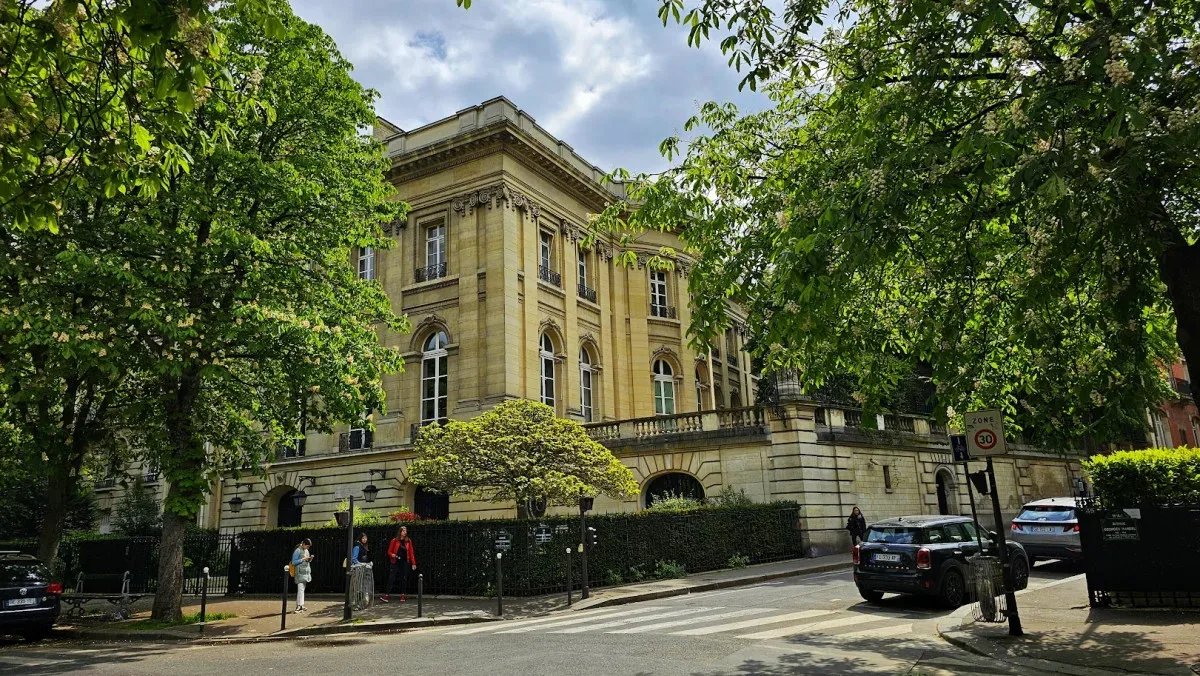
This magnificent building, the Hôtel de Polignac, belonged to Prince Edmond de Polignac (1834-1901) and his wife, Winnaretta Singer (1865-1934). The couple’s story is unusual, since the prince was gay and his wife was a lesbian, and yet (and maybe because of that) they remained close friends until the day the prince died. If you’d like to read more about this remarkable couple, check out the article Happily Ever After.
Both of them loved music deeply. Winnaretta Singer was a patron of some of the most important composers of the 20th century, including Maurice Ravel (1875-1937) and Erik Satie (1866-1925). After her death, the magnificent building passed to the Fondation Singer-Polignac, which Winnaretta Singer had established in 1928.
Since its founding, the foundation has supported young, promising musicians, allowing them to rehearse and perform at the Hôtel de Polignac. Here’s a short video filmed at one of the concerts held there (sharp-eyed viewers might spot Winnaretta Singer’s portrait reflected in the mirror).
If you’d like to enjoy one of these concerts, feel free to visit the foundation’s official website to see which concerts will be held during your stay in Paris.
Continue along Avenue Georges Mandel, which turns into Avenue Henri Martin, and walk to number 71. There you’ll find the grand town hall of the 16th arrondissement.

The town hall was built between 1875 and 1876, and if you go inside you’ll see a number of interesting sculptures, including a bust of the famous writer Prosper Mérimée (1803-1870), the author of the novella Carmen, which Bizet turned into a famous opera.
I visited in April 2024, and as beautiful as the building is, what moved me most was the banner calling for the release of the hostages held in Gaza, which the town hall had hung on its facade.
The Hidden Tower and a Lovely Portuguese Restaurant
Backtrack a little and head toward Rue de la Pompe, continue until the intersection with Rue de la Tour, turn left and continue to number 86.

The building’s facade is rather ugly, and a high school now stands there, but if you’re allowed into the courtyard, you’ll find an impressive tower (which gave the street its name). What you’re looking at is a 19th-century reconstruction of a much older tower that stood here in the 14th century, where King Philip IV, known as “the Fair” (r. 1285-1314), stayed when he visited Passy.
If the sight of the tower, or the miles you’ve covered so far, has made you hungry, you’ll be glad to hear that at number 90 there’s a charming, unpretentiously named bistro, Bistrot Le 90. It’s a family-run restaurant with Portuguese touches, open all day (except Sundays).

I had chicken there with Portuguese seasoning, which was juicy, a bit spicy, and delicious. The service was also very warm, so I recommend eating there if you’re looking for a casual meal, with no Michelin-star pretensions.
Ending the Walk
Continue along Rue de la Tour and turn onto Rue Cortambert. Continue to the intersection with Rue Scheffer and turn left. Walk until you reach number 51, where you’ll find Villa Scheffer.
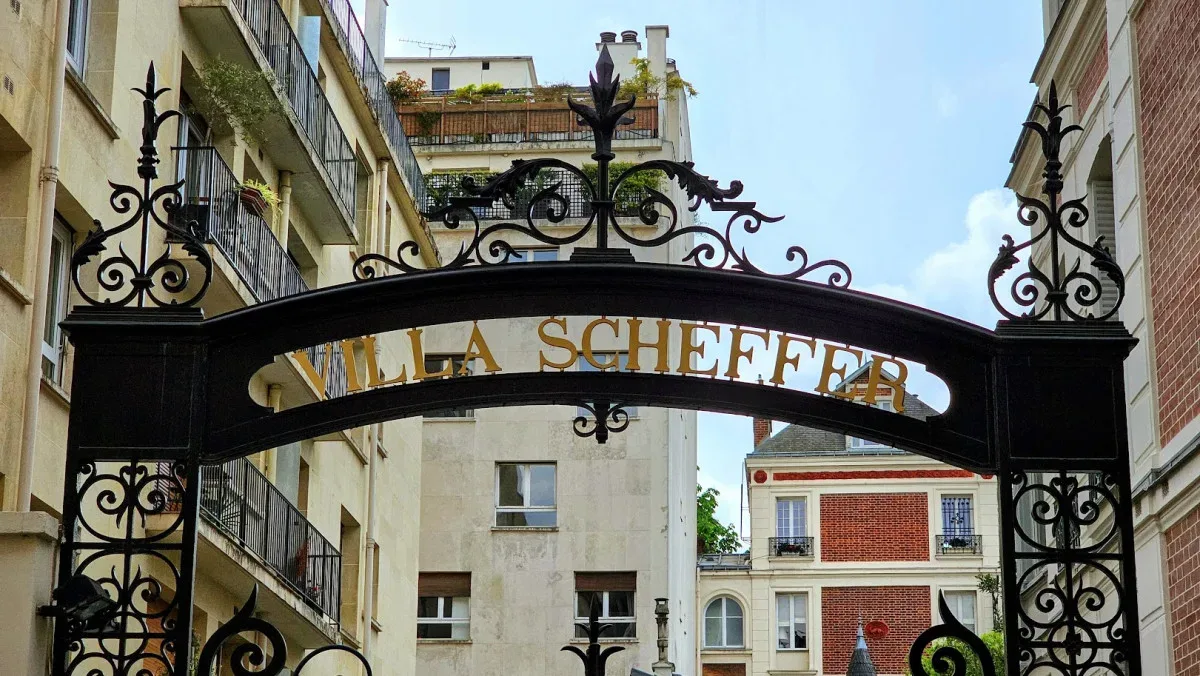
The street and the villa are named after Ary Scheffer (1795-1858), a gifted Dutch painter who made a name for himself not only through his talent, but also as the art teacher of the daughters of the last king of France, Louis Philippe (r. 1830-1848). For some of you, the name Ary Scheffer might sound familiar thanks to the Museum of Romantic Life, which is in the house where he lived and is dedicated to him and George Sand.
If you were expecting a “villa” (meaning a large, grand house), you might be a little disappointed, since a “villa” in French actually refers to a small dead-end alley. But if you peek inside, you’ll find a charming 19th-century building that’s definitely worth a look.
And here, facing this house, we end our walk through the 16th arrondissement. From here, you can easily make your way back to Avenue Georges Mandel, and from there it’s just a few minutes’ walk to the Rue de la Pompe metro station (line 9), which will take you back to central Paris.
I hope this walk made you fall in love with Passy, just as I did, and that it left you wanting more.
Want to visit more of the 16th arrondissement?
Here are more articles about the neighborhood.
- Jardin du Ranelagh: a tour of a green sculpture garden, a paradise where time stands still
- Another day in Paris: visiting the Musée Marmottan Monet
- Paris: green walks in the 16th arrondissement, part 2
- Bois de Boulogne: the complete traveler’s guide
FAQ
Why is the 16th arrondissement of Paris less known to visitors?
When was the Passy neighborhood built and annexed to Paris?
Which metro station is the best starting point for a walking tour of Passy?
Related reading