

Honoré de Balzac (1799-1850) is without question one of the most Parisian writers there is, and not because he was born in the city (he was actually born in Tours, in the Loire Valley). The reason is that Paris is not just the setting for most of his great novels, it’s one of the main characters.
Take, for example, the famous quote about Paris from the opening pages of Balzac’s Le Père Goriot:
Paris is truly an ocean. Cast a line into it and you will never know its depths. Try to survey it, to describe it: however much effort you put into exploring and describing it, however many explorers of this sea there may be, and however keen their interest, they will always come across some untouched spot, some unknown cave, flowers, pearls, monsters, something incredible that the literary divers before them overlooked.

One day I’ll try to put together a full walking route through Balzac’s Paris (or maybe even a whole series of them), but until I do, let me tell you today about the most famous house Balzac ever lived in, a house that would, over time, become a museum dedicated to this great writer.
Before I tell you the story of this building, let me give you all the practical information, for anyone who came here to plan a trip to the City of Light. Once we’ve covered the logistics, we’ll dive into the history of the building and, of course, tell you what’s waiting for you there.
Maison de Balzac: Visitor Information
Address and Directions
The museum’s address is 47 Rue Raynouard, in the 16th arrondissement of Paris.
You can reach the Maison de Balzac by metro (take line 6 and get off at Passy station) or by suburban train (take RER C and get off at Avenue du Président Kennedy station). You can also get there by bus (lines 22, 32 and 52).
Here’s a map showing the Maison de Balzac along with the metro and train stations nearby, so it’s easy to find your way (I’ve also added a few hotels in the area, in case you’d like to stay in this lovely neighborhood).
Open the map in a separate window
Days and Hours
The museum is open Tuesday through Sunday, 10:00–18:00. Last entry is at 17:30. Note that the museum is closed on public holidays, so it’s worth checking the museum’s official website to make sure it’s open when you plan to visit.
How Much Does a Ticket Cost?
This is a free museum 🙂
Balzac’s Hideout
Honoré de Balzac was without doubt one of the greatest French writers of his century (some would say the greatest of all), and at a certain point he began earning a decent amount of money from his books. But his income was never enough, and he lived in chronic debt. There were two main reasons for this.
The first was Balzac’s lack of luck, or perhaps talent, in business, which stood in stark contrast to his talent as a writer. Throughout his life, alongside his writing, Balzac tried his hand at a long list of ventures and nearly always failed. One of the best examples is his attempt to set up a printing house in the 6th arrondissement (you can read about it in the walking route between the Seine and Saint-Germain), which left him deep in debt (oddly enough, the moment he handed the printing house over to the son of the Countess de Berny, the business started to thrive).
The second reason was his inability to manage his money sensibly, and the fact that he constantly felt the need to reward himself for his hard work (he claimed that once he worked a straight 48 hours). When he wasn’t working, he traveled across Europe, chased after women and lived well beyond his financial means.
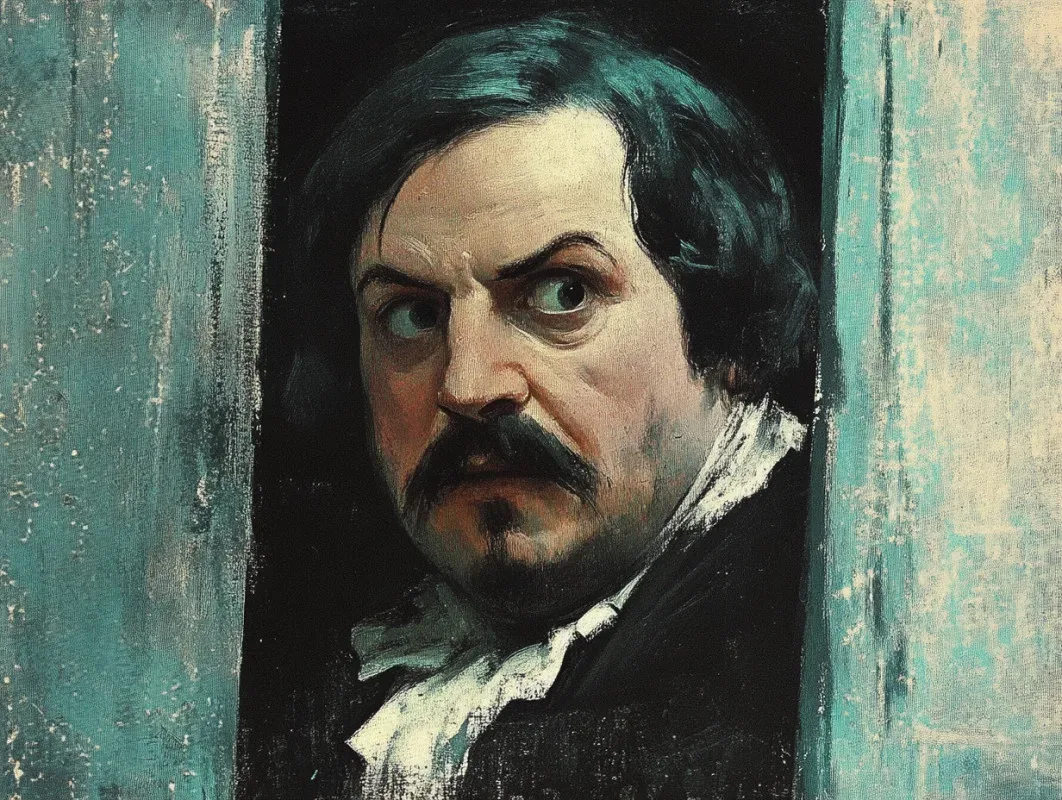
All of this left him, by 1840, with debts of 242,000 francs (roughly 38,000 euros today). As a result, Balzac had to go on the run from his creditors, who threatened to have him thrown into debtors’ prison (a very common practice at the time). About three years earlier, he had already hidden out in an apartment on the Champs-Élysées that belonged to his friends, the Guidoboni-Visconti couple, but his creditors found him there too, and he nearly ended up in prison (he was saved by the fact that Countess Frances Sarah agreed to pay off a debt of his amounting to 3,000 francs).
So now, with his finances even more tangled, Balzac decided to find himself a house that would be very hard to track down. The one he chose was in Passy, which at the time lay outside Paris and had one great advantage: two separate entrances, so if an unwanted visitor managed to get in, Balzac could immediately slip out through the other door.
To make sure no one but his friends knew he lived there, he changed his name to Monsieur de Brugnol, and anyone who wanted to come inside had to say two passwords. The first was “plum season has begun” and the second was “I’m bringing lace from Bruges.”
Balzac’s daily schedule looked like this:
- Waking at midnight and working until eight in the morning.
- 8:00–8:15: breakfast
- 8:15–17:00: dinner, after which he went to sleep, and the cycle started again.
Is it any wonder that with a lifestyle like this he only lived to be 51?

But there was a payoff for Balzac’s grueling work, because it was in this house in Passy that he wrote some of his most important books, including Lost Illusions, Cousin Pons, Cousin Bette and many more. To keep up this punishing pace, Balzac drank an insane amount of coffee, and you can see his famous coffee pot at the museum, right there in his house.
Eventually, after about seven years, Balzac decided to leave this house, partly because his finances had improved somewhat, and partly because his beloved Countess Ewelina Hańska (1805-1882) couldn’t stand the country house and said it looked like a run-down wine tavern (these kinds of inns, usually found outside Paris near a river, are called guinguettes in French).
Balzac bought a house for himself and the countess at 14 Rue Fortunée in the 8th arrondissement (today the street is named after him), but he barely got to enjoy it. His relentless lifestyle destroyed his health, and he died in 1850, just a few months after marrying his beloved Countess Hańska.
After Balzac left the house, it passed through several hands, including those of Count Jean de Limur (1887-1976), who also owned the Hôtel de Lambert, which can be seen from Balzac’s garden. In 1949, the city of Paris bought the house and turned it into one of three museums dedicated to writers (the other two being the Maison de Victor Hugo and the Musée de la Vie Romantique (Museum of Romantic Life), dedicated, among others, to George Sand).
What Will You Find in Balzac’s House?
Much of Balzac’s original furniture was sold off by his widow, but over the years the museum’s curators managed to buy back his writing desk and the chair he sat in while writing his works.
Beyond that, as I mentioned earlier, you’ll find his famous coffee pot and his equally famous walking stick, which he bought in 1834.

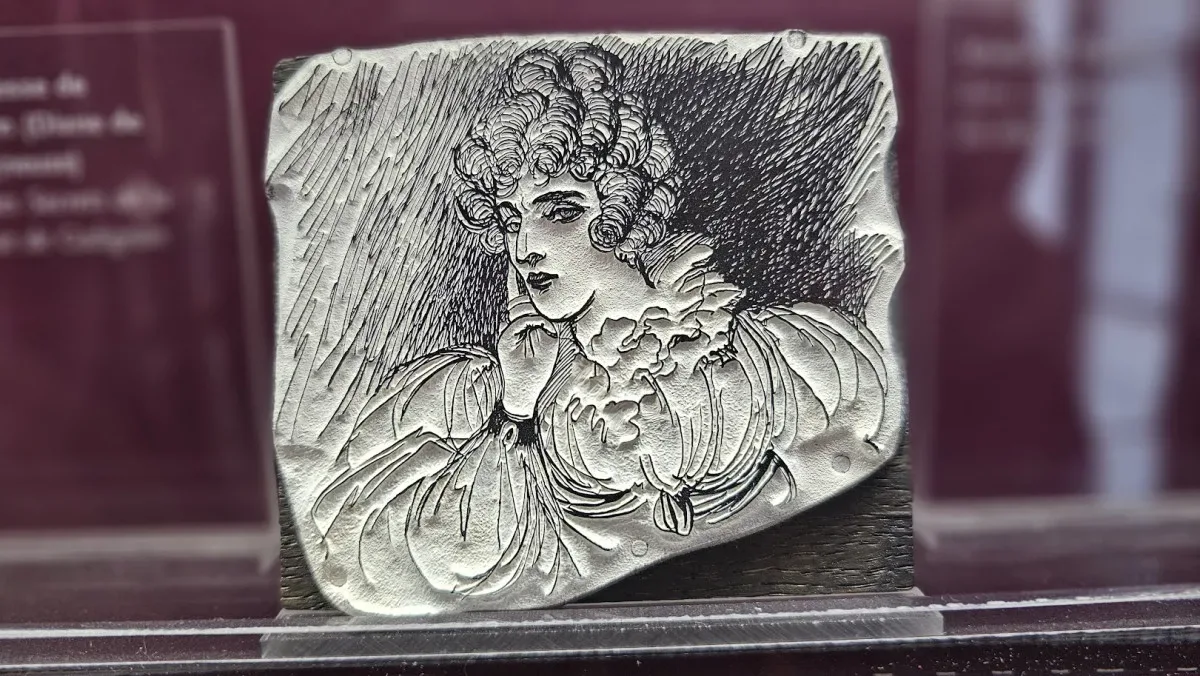
Alongside these you’ll find a photograph of Balzac, pictures of him and his parents, as well as drawings by some of the most famous caricaturists of his time, including Honoré Daumier (1808-1879) and Paul Gavarni (1804-1866).
But in my opinion, the most important exhibits in this house are on the lower floor. There you’ll find his various books, letters he wrote, pictures of characters from his novels, and, best of all, a kind of giant “family tree” that covers an entire wall of the room, showing all his characters and the relationships between them, as well as their ties to historical figures like Napoleon.
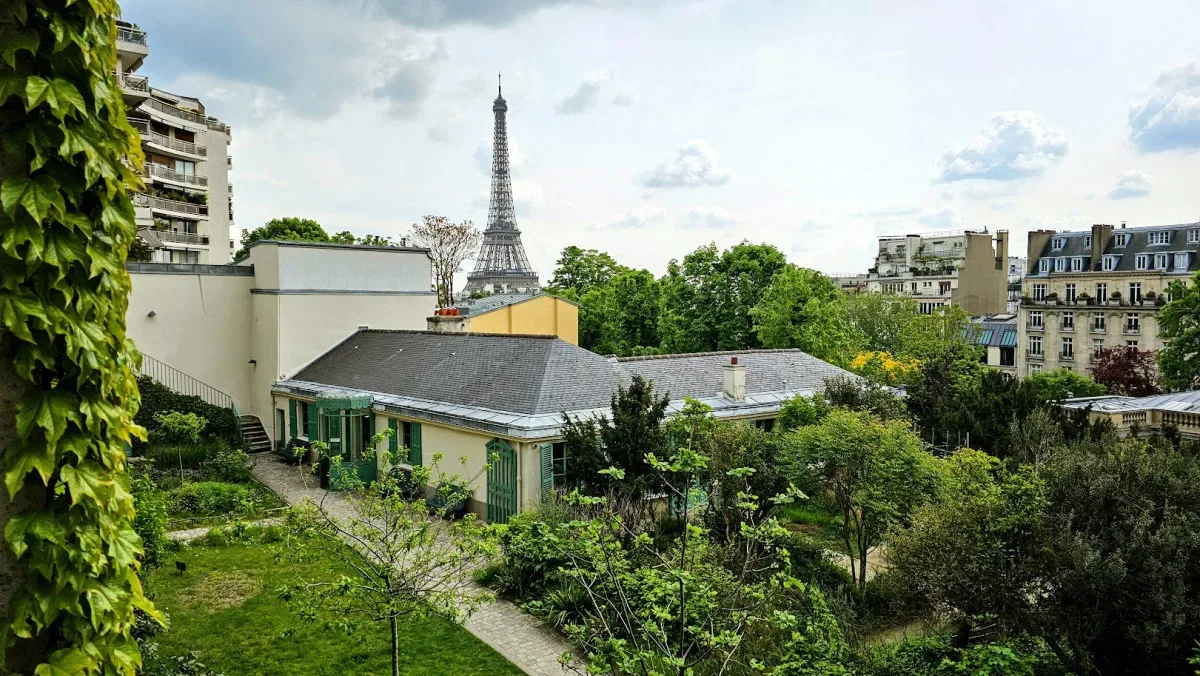
And of course, if you’ve made it this far, don’t miss the small, charming garden, which looks out over the Hôtel de Lambert and the Eiffel Tower, and don’t skip the museum’s lovely little shop either.
Want to Stay in Passy, Not Far from Balzac’s House?
Let me recommend an apartment about a 12-minute walk away. It’s a ground-floor apartment that works well for a couple or a small family, fully furnished, and, just as importantly, privately owned and well cared for.
You can find more information at this link, and if you’d like to read a review of it, take a look at Dr. Orna Liberman’s review, who stayed there with her partner.
Related reading
