
In short
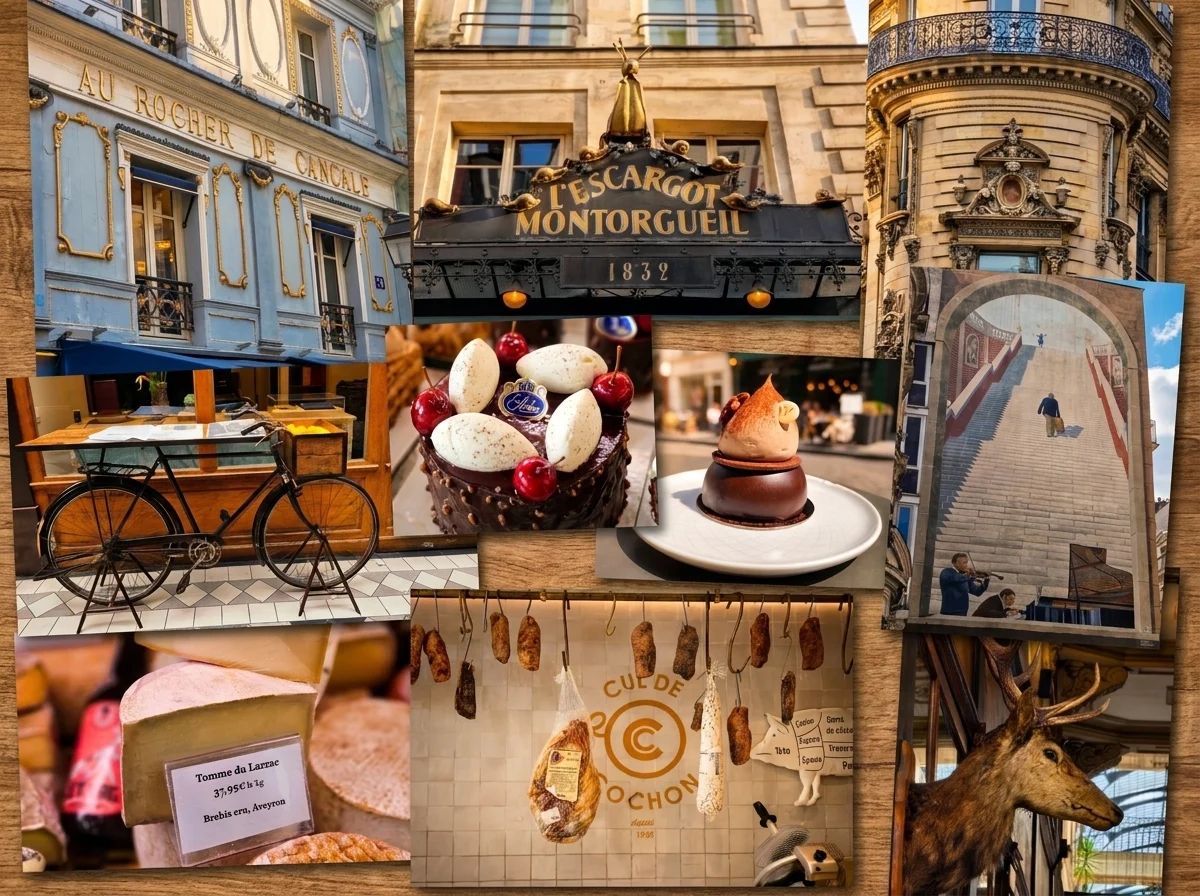
- What’s there: The Stohrer pâtisserie from 1730, 19th-century kitchenware shops, a fromagerie, bakeries, a medieval tower and a covered passage.
- Where to start: At the Église Saint-Eustache, near the Les Halles and Châtelet-Les Halles stations.
- Where to finish: At place du Caire, a few minutes’ walk from the Sentier station.
- Length of the route: About three kilometers.
- How long it takes: About three hours with stops for tastings and shopping.
- When to go: On a Wednesday or Saturday. On Mondays some shops are closed, and on Sundays some are closed or close at midday.
- What it costs: The route itself is free. A ticket is only needed for the Tour Jean-sans-Peur.
Rue Montorgueil is one of the most delicious streets in Paris. Along it and in the side streets around it, you’ll find the oldest pâtisserie in the city, where, according to tradition, the baba au rhum was invented; a restaurant with a giant gilded snail over the entrance; a fromagerie; bakeries; and kitchenware shops where chefs have been shopping for more than two hundred years. In between stands a tower built by a duke after he murdered his own cousin, and at the end of the road waits the ground where the Court of Miracles once stood.
I wrote my first article about this street back in 2015, and even then I decided it was the most delicious street in Paris (after a tough fight with rue Mouffetard). More than ten years later, it’s time to turn it into a real walking route, one that starts at a church I have a soft spot for: Saint-Eustache. And that’s where our walk begins too.
The route has 11 stops. It sets out from Les Halles, passes the kitchenware shops that were born thanks to the market, climbs along rue Montorgueil with stops for baba au rhum, cheese and bread, makes a detour to a medieval tower, a covered passage and a famous 18th-century brothel, passes a 25-meter-high green wall, and ends at the Court of Miracles and the Egyptian facade of place du Caire.
Practical information for the route on rue Montorgueil
Getting there
The starting point is the Église Saint-Eustache, reached by metro line 4 to the Les Halles station, or by RER A, B and D to the Châtelet-Les Halles station. The route ends at place du Caire, from where it’s a few minutes’ walk to the Sentier station (line 3) or the Réaumur-Sébastopol station (lines 3 and 4). Everything you need to know about tickets and the lines is in the article on the Paris metro.
Which days to go
This is a route of shops, so the day you choose matters more here than on other routes. On Mondays, the Terroirs d’Avenir shops on rue du Nil are closed, and the fromagerie La Fermette doesn’t open until 4 p.m. On Sundays, E. Dehillerin and G. Detou are closed, and the shops on rue du Nil close at midday.
If you also want to visit the Tour Jean-sans-Peur, keep in mind that it’s only open to visitors on Wednesdays, Saturdays and Sundays between 1:30 and 6 p.m., and it’s closed in August. So the best day for this route is Wednesday, followed by Saturday.
How long it takes, and when to come
The route is about three kilometers at an easy pace, and with stops for shopping and tastings, it takes about three hours. If you want to visit the tower, start at Saint-Eustache around 12:30 p.m., so you arrive after it opens. If the tower interests you less, it’s better to start in the morning, when the counters are full and the bread is still warm.
The route on rue Montorgueil: from Saint-Eustache to the Court of Miracles
We walk from south to north, from Les Halles toward the line of the old city wall. This is the axis that fed the market: rue Montorgueil continues north as rue des Petits-Carreaux and then as rue Poissonnière, and until 1635 this northern stretch was called the fishermen’s road (chemin des Poissonniers), because it was the route the carts bringing fresh fish from the coast took down to Les Halles. You’re walking the same road, just in the opposite direction.
Instead of a map: under each stop’s heading is its address, and every address is a link. Click it, and the spot opens immediately in Google Maps.
The market’s church
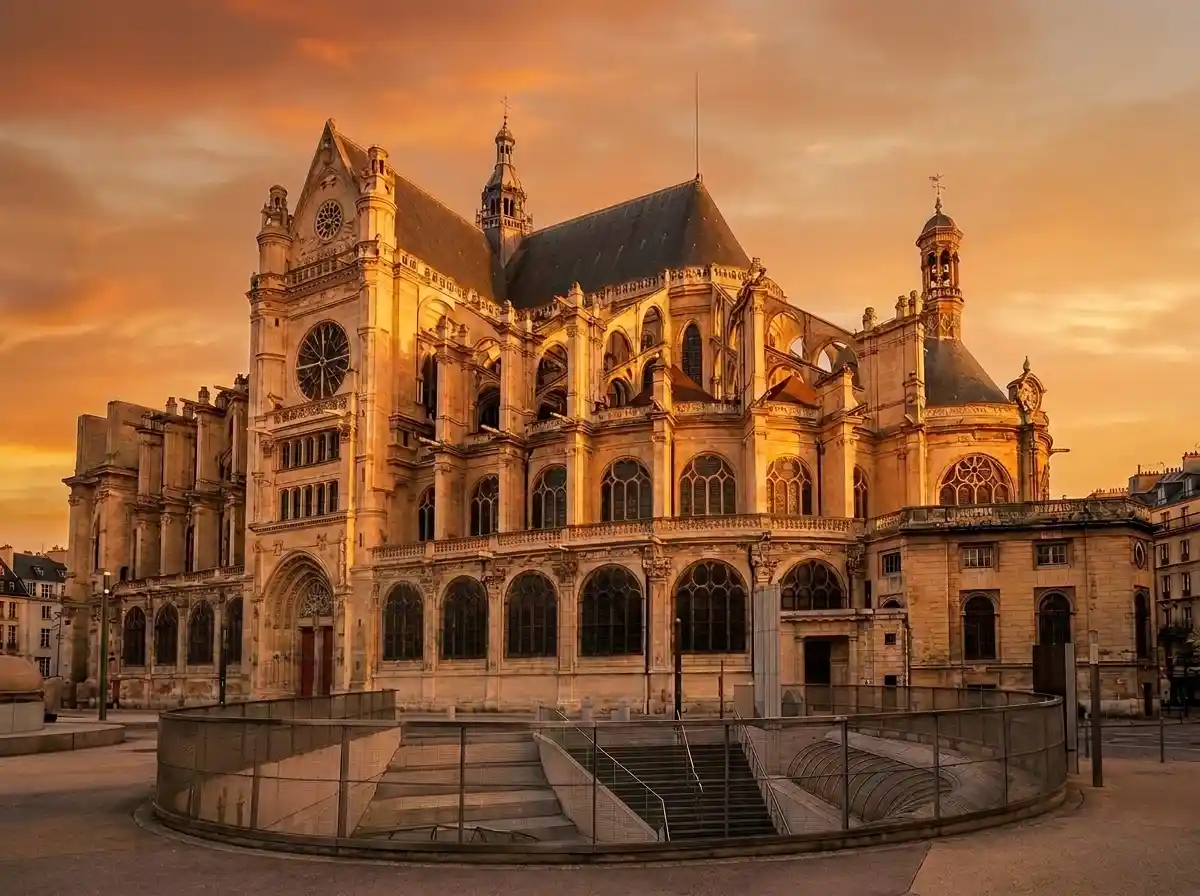
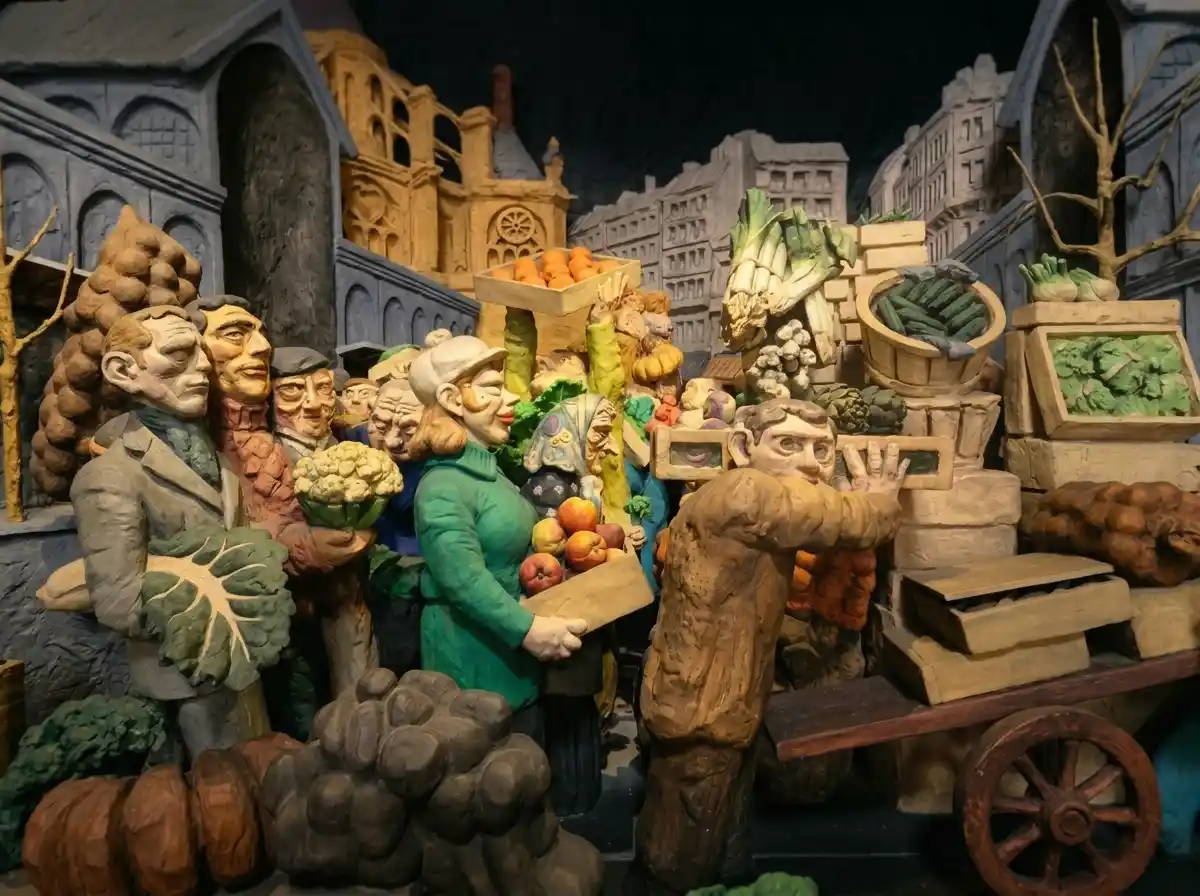
Saint-Eustache was built at the heart of Paris’s wholesale market, and for centuries it was considered the market’s church. Inside is a work that tells the end of that story: “The Departure of the Fruits and Vegetables from the Heart of Paris,” by the sculptor Raymond Mason (1922-2010), which depicts the market workers leaving with their goods when the market moved to Rungis in 1969.
Émile Zola (1840-1902) called the market itself “the belly of Paris” (Le Ventre de Paris), and you can read about its history in the article by Ran Vardi on Les Halles. I’m deliberately not writing more about this lovely church (my favorite in Paris) because there’s a whole article about it on my site, and I still have so much more to show you here.
But before we move on: behind the church, at the edge of the Les Halles gardens, stands the Bourse de Commerce, the round building that today houses the contemporary art collection of François Pinault (b. 1936). I highly recommend fitting it in before or after the route, and booking a ticket in advance through this link 🙂
A cook’s paradise
18-20 rue Coquillière, and 13, 36, 48 and 52 rue Montmartre
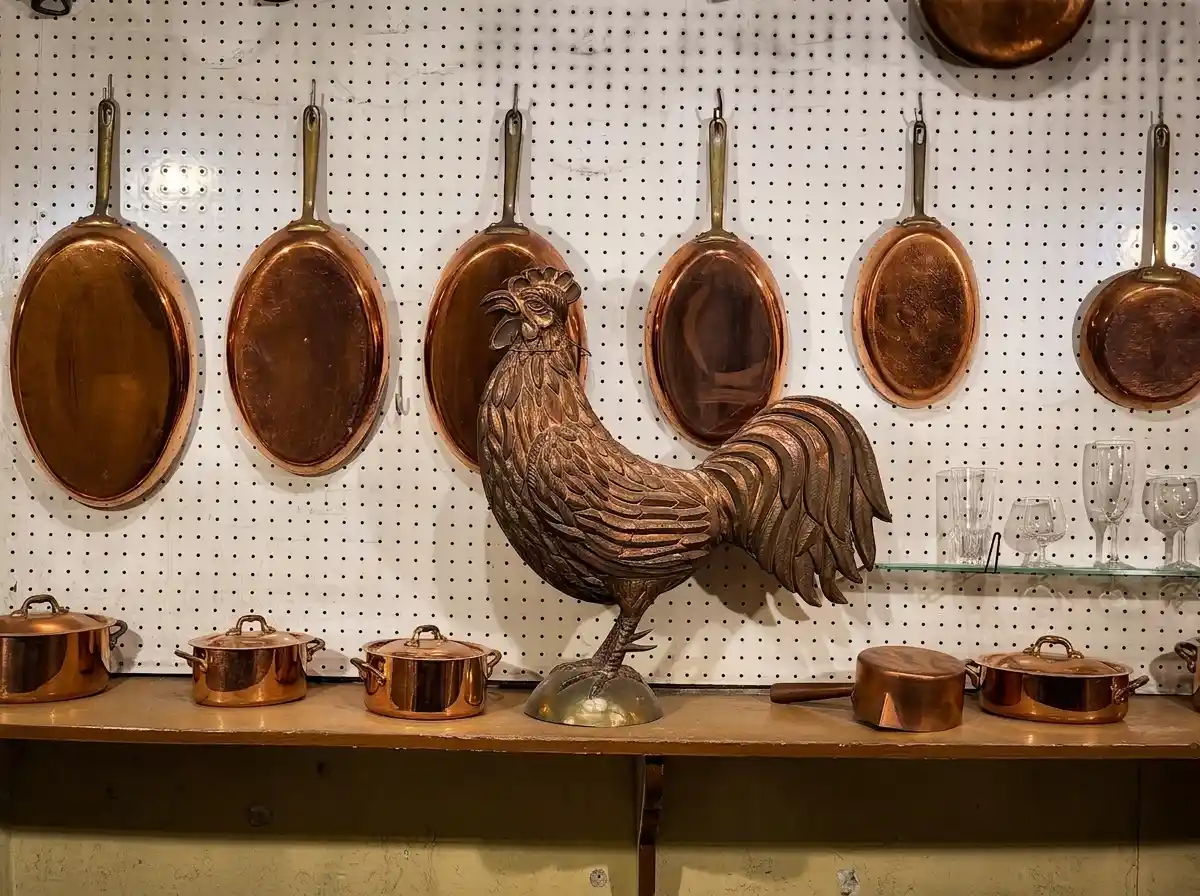
On the north side of the church begins a small district of kitchenware shops, born thanks to the market. E. Dehillerin opened in 1820, and its first customers were the owners of the bistros at Les Halles. Today it’s a shop with shelves piled to the ceiling, copper pots and professional tools for every step of cooking, and most items have no price tag, so you’ll have to ask.
This was the favorite shop of Julia Child (1912-2004), the American writer who brought French cuisine into American kitchens, and you can read about her Paris in the walking route following Julia Child.
A few steps away on rue Montmartre are Mora, which has been selling baking and pastry tools since 1814, and La Bovida, and at numbers 48 and 52 there are two A. Simon shops. Ruth Ofek, who writes the blog “Happy in the Kitchen,” once recommended that readers look for silicone molds and the huge selection of piping bags at Mora, and noted that Dehillerin has an enormous selection, but without prices on the products, comparing them is hard.
The golden snail
The restaurant L’Escargot Montorgueil opened in 1832, and it still keeps its 19th-century sign: a giant golden snail over the entrance. Inside are decorations from the Second Empire, and above the entrance is a ceiling painted in 1900 by Georges Clairin (1843-1919) that came from the home of the actress Sarah Bernhardt (1844-1923). The building is protected as a historic monument (monument historique).
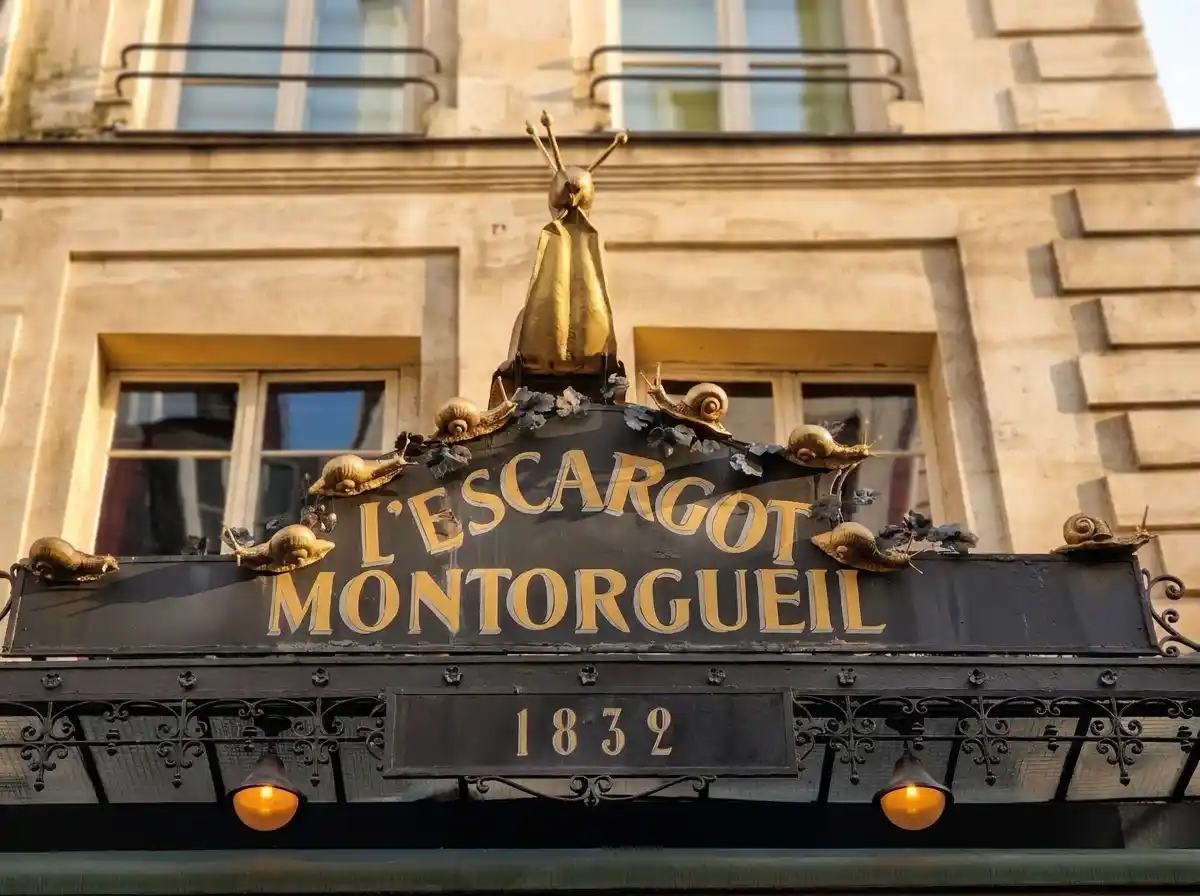
Regular customers included Marcel Proust (1871-1922), Sacha Guitry (1885-1957), Pablo Picasso (1881-1973) and Charlie Chaplin (1889-1977), and you can read about Proust’s Paris in Miriam Adari’s article Proust’s Paris. In 2012 the restaurant made headlines when it was briefly closed after a bag containing 60 grams of cocaine was found inside (was that the chef’s secret ingredient? We’ll probably never know).
The tower of the murderous duke
A few steps after L’Escargot, you cross rue Étienne-Marcel. Here we make a short detour east along rue Étienne-Marcel, and later return the same way to rue Montorgueil.
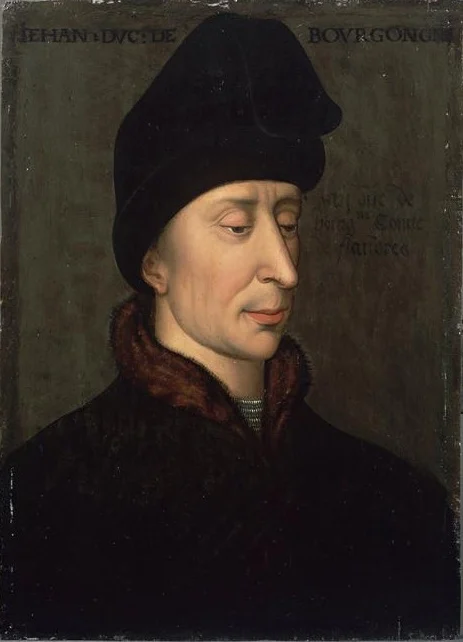
Jean sans Peur (Jean the Fearless, Duke of Burgundy, who ruled between 1404 and 1419) was one of the most powerful men in France at a time when King Charles VI (r. 1380-1422) suffered from bouts of madness. His cousin Louis d’Orléans (1372-1407), the king’s brother, competed with him for control of the kingdom. On November 23, 1407, Jean sans Peur sent assassins who killed Louis on rue Vieille-du-Temple, and the murder sparked a civil war between the Armagnacs and the Burgundians.
Fearing revenge, between 1409 and 1411 the duke built a fortified tower at his family’s mansion, the Hôtel de Bourgogne. The mansion is gone, and the tower is the only part of it that survives. But the tower didn’t save him: in 1419, Jean sans Peur was murdered on the bridge at Montereau, during a meeting with the men of the crown prince.
A theater, also called the Hôtel de Bourgogne, later operated on the grounds of the mansion, and its troupe was Molière’s (1622-1673) great rival. You can read this story in the walking route following Molière, and about other remains of that medieval city in Avital Inbar’s article What’s Left of Medieval Paris.
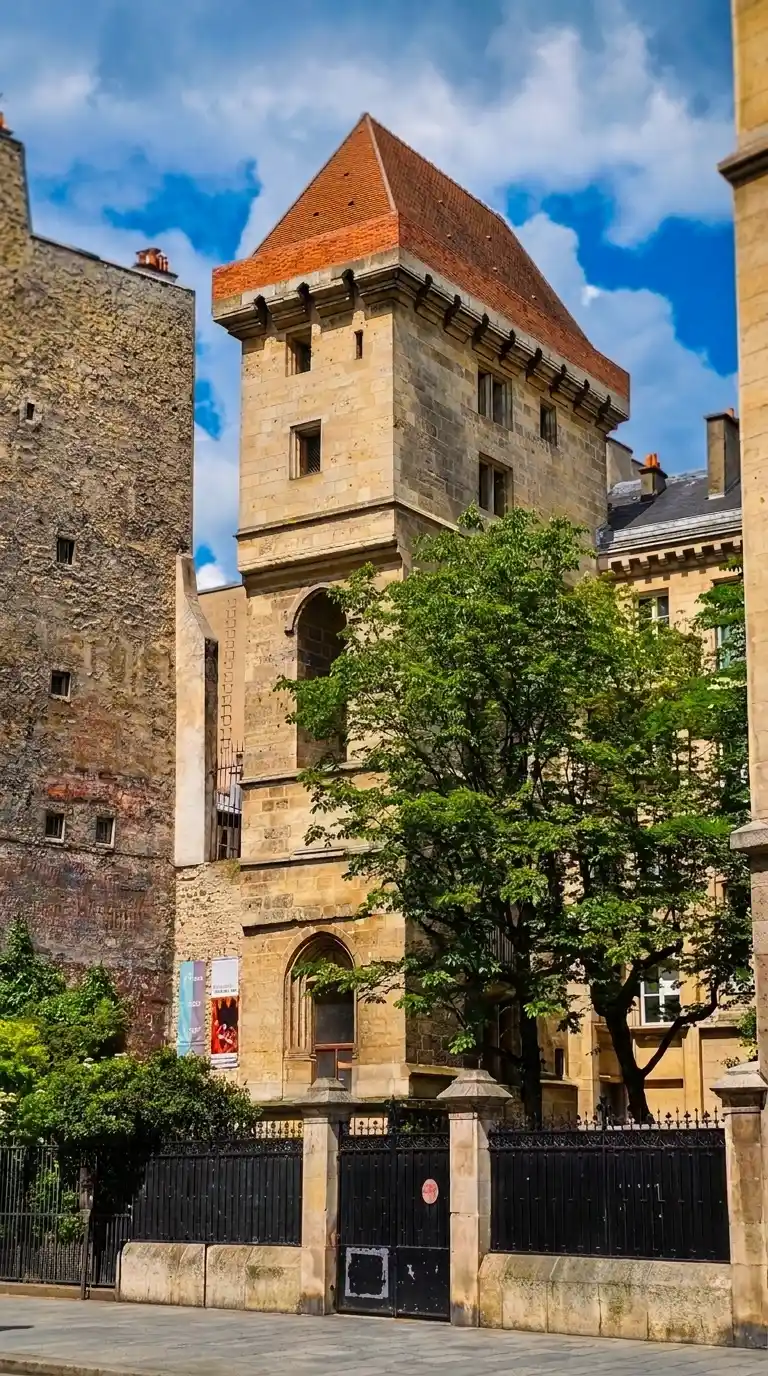
The tower is open to visitors on Wednesdays, Saturdays and Sundays from 1:30 to 6 p.m. Inside is a permanent exhibition on life at the end of the Middle Ages, and until March 7, 2027, it also hosts an exhibition on medieval fashion. You’ll find the current prices on the official website.
Before heading back to rue Montorgueil, it’s worth continuing a few more steps along rue Étienne-Marcel to number 17, near the Étienne Marcel metro station.
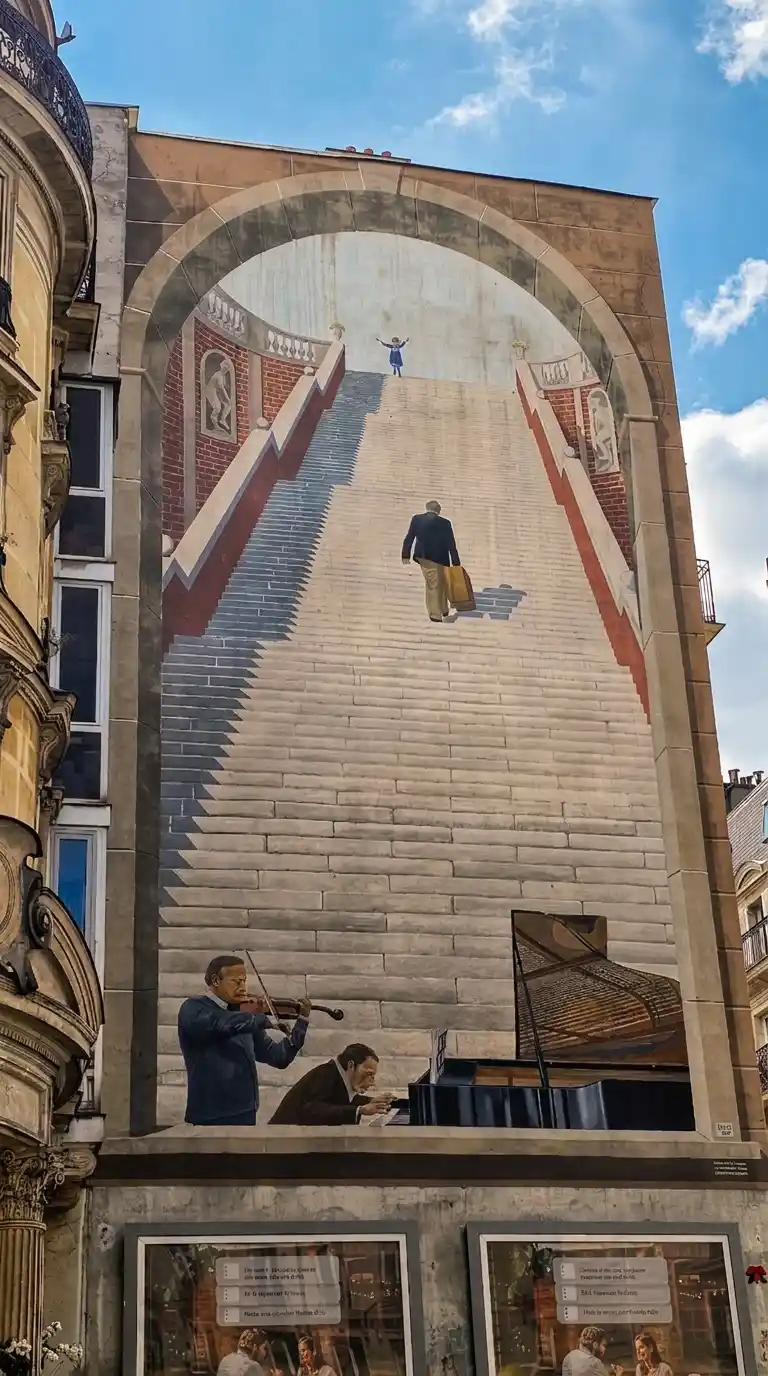
On the wall of the building is a trompe-l’œil painting of a giant staircase: a man with a suitcase climbs toward a small figure waving to him from above, and below, the pianist Glenn Gould (1932-1982) and the violinist Yehudi Menuhin (1916-1999) are playing. The painting, covering about 300 square meters, was painted by the Italian artist Fabio Rieti in the 1980s, and in 2016 it was restored by his daughter and granddaughter.
Baba au rhum at its original address
45 rue Montorgueil (Fou de Pâtisserie) and 51 rue Montorgueil (Stohrer)
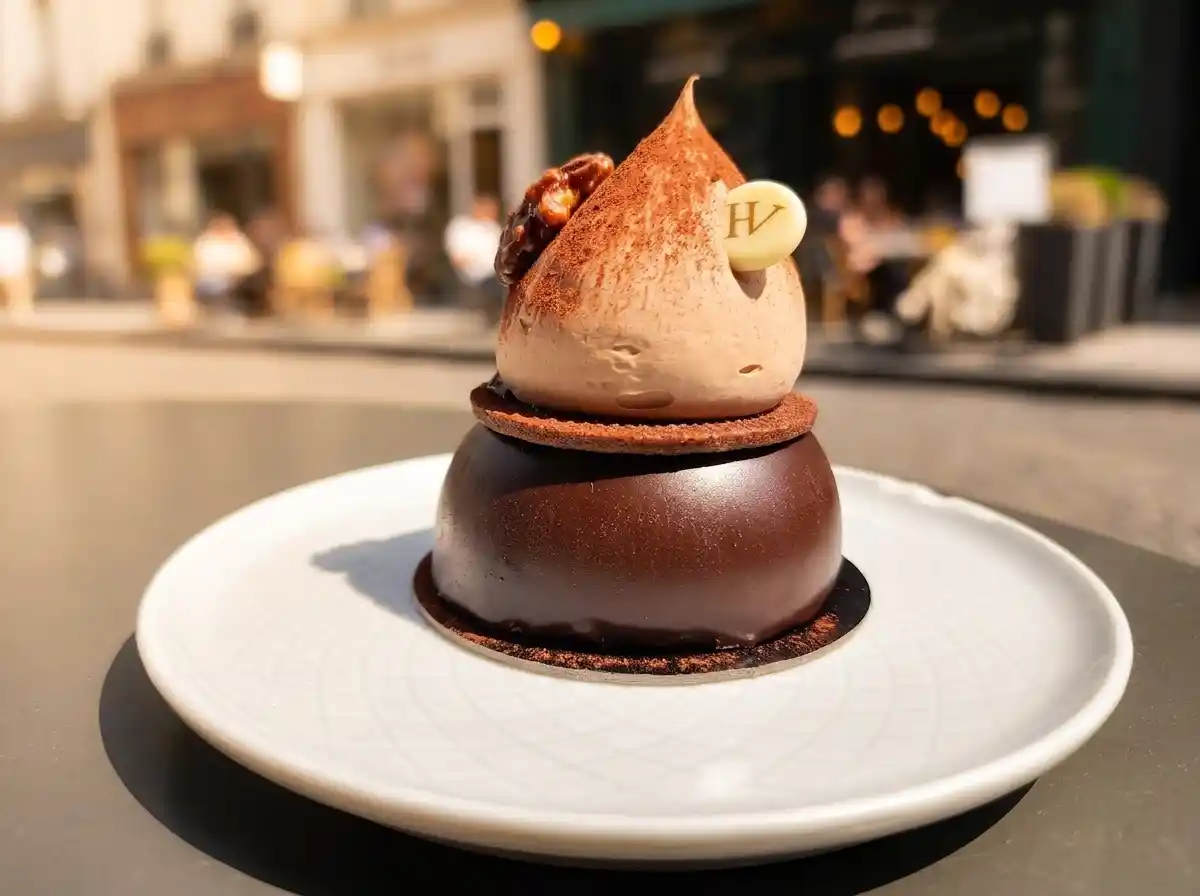
Backtrack a little and turn onto rue Montorgueil. At number 45 is Fou de Pâtisserie, which gathers cakes from some of the most celebrated pastry chefs in Paris under one roof. It’s a great way to sample today’s Parisian pastry scene in one stop, right after tasting the 18th-century kind, and you can also sit with your cake at one of the tables on the street. The chocolate cake in the photo, for example, is from Hugo & Victor, and you can read about them in Gal Steiner’s article Recommended pâtisseries in Paris: Hugo and Victor.
A few doors down you’ll find the oldest pâtisserie in Paris, still in business today. According to tradition, Stohrer invented the baba here, a yeast cake soaked in Malaga wine, and the puits d’amour, a puff pastry filled with cream topped with caramelized sugar. The interior decorations are also worth a look: they were made in the 1860s by a student of the painter Paul Baudry (1828-1886), who decorated the foyer of the Palais Garnier, and they’re protected as a historic monument.
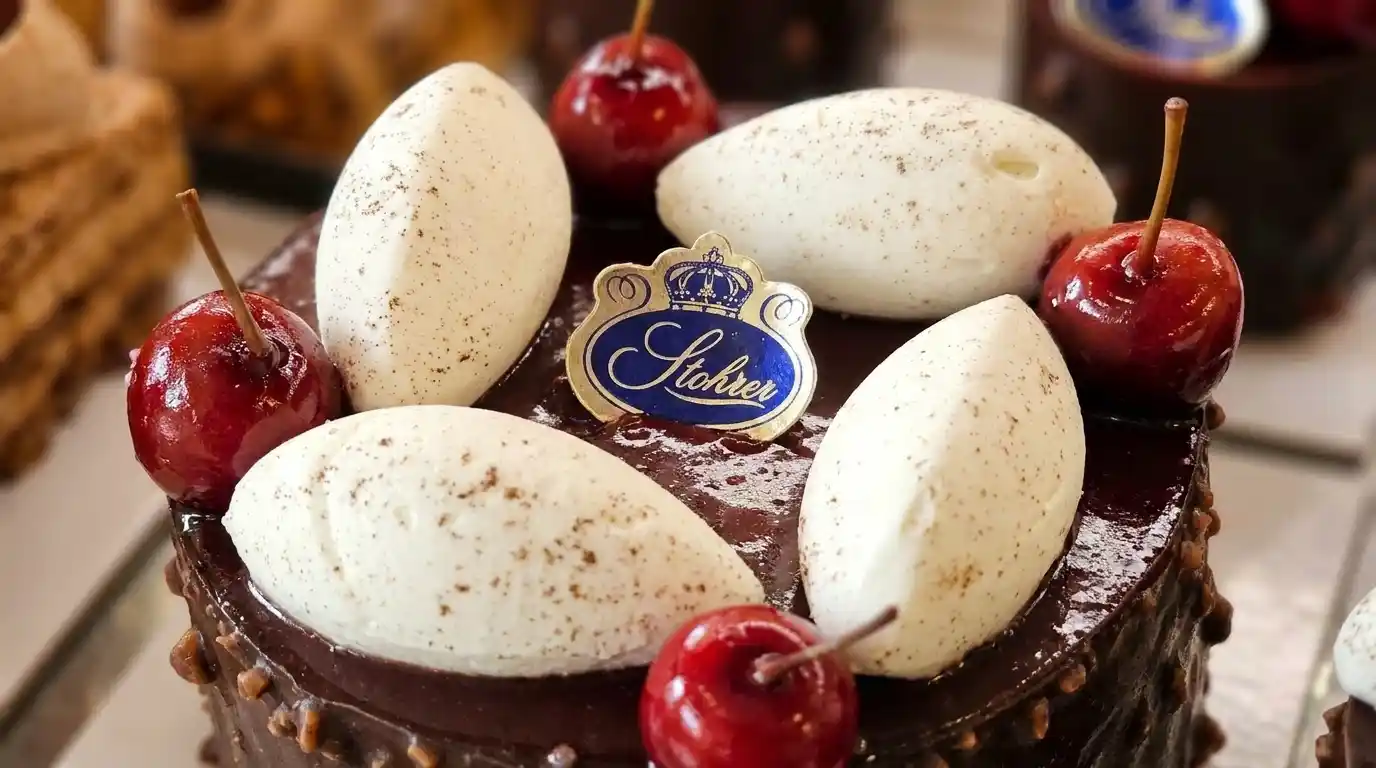
In 1725, Marie Leszczyńska (1703-1768) arrived in France to marry Louis XV (r. 1715-1774), bringing with her the pastry chef of her father, Stanislas Leszczyński (who ruled Poland in 1704-1709 and 1733-1736). That pastry chef, Nicolas Stohrer, opened a shop on rue Montorgueil in 1730, and it still stands at the same address today.
The pastry chefs’ grocery and the Passage of the Deer
58 rue Tiquetonne, and the entrance to the passage at 10 rue Dussoubs
From Stohrer, head to rue Tiquetonne. At number 58 is G. Detou, a grocery opened by Gérard Detou in 1951, back when the wholesale market of Les Halles was still operating right next door. It started out supplying the shops and restaurants of the market, and today it’s the go-to address for professional and amateur pastry makers alike: baking chocolate, nuts, candied fruits and extracts.
Ruth Ofek especially recommended G. Detou’s vanilla beans, which she said were the plumpest she’d seen, and at a reasonable price. On the same street, at number 31, is L’Apibo, a small bistro listed in the Michelin guide. I haven’t managed to eat there yet, but it’s on my “on the radar” list, and if you want to try it, you can book a table here.
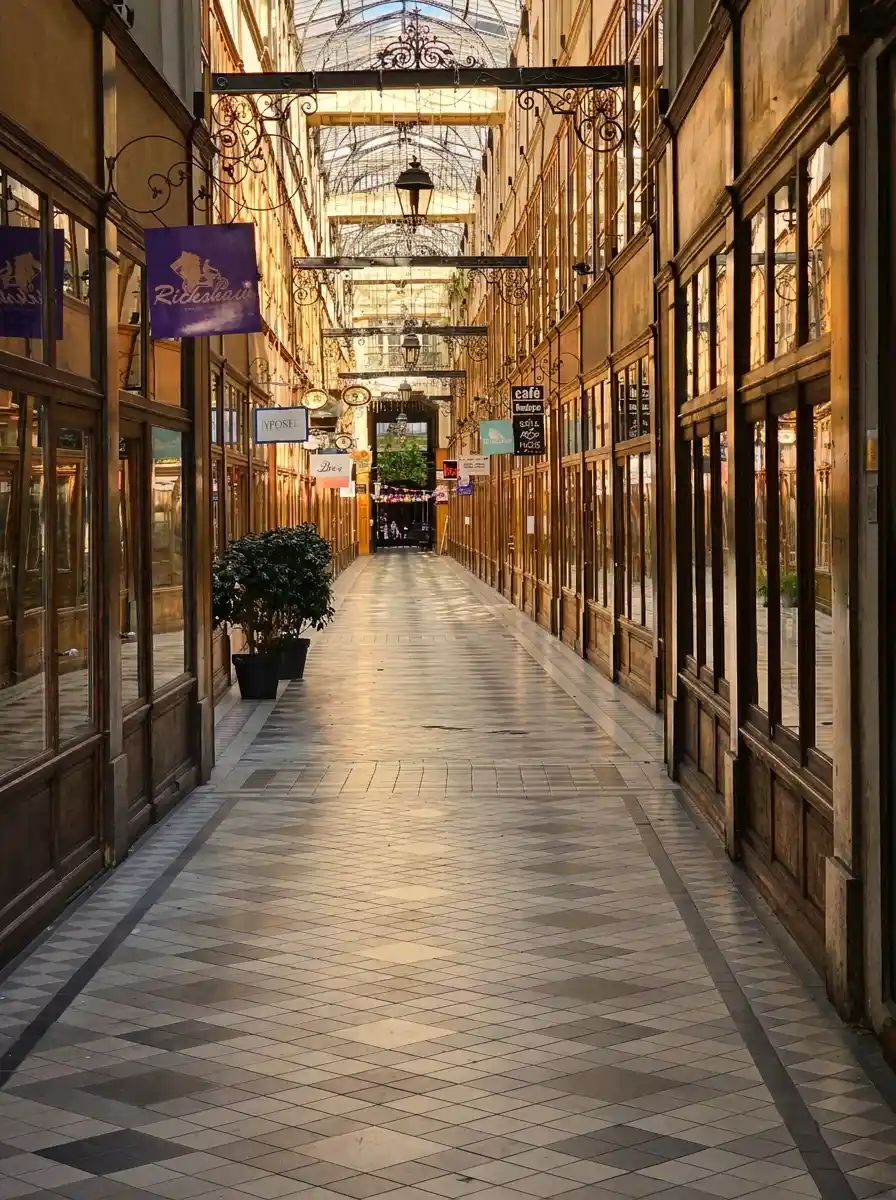
From rue Tiquetonne, continue to rue Dussoubs and enter the Passage du Grand-Cerf. As I mentioned in my article about the passage, I have a special fondness for this place, and not by accident: my name is Zvi, which means “deer” in Hebrew, and “cerf” is French for “deer.” But even without the personal connection, it’s a charming passage of wood, glass and iron running from rue Dussoubs to rue Saint-Denis.
The name comes from an inn called Le Grand Cerf (“The Great Deer”) that stood here before the Revolution and served as a stop for the royal mail coaches. In 1825, bankers bought the site and turned it into a covered passage, with a glass roof rising almost 12 meters, the tallest of any passage in Paris. The first two floors were originally built for craftsmen and workshops, not for luxury shops.
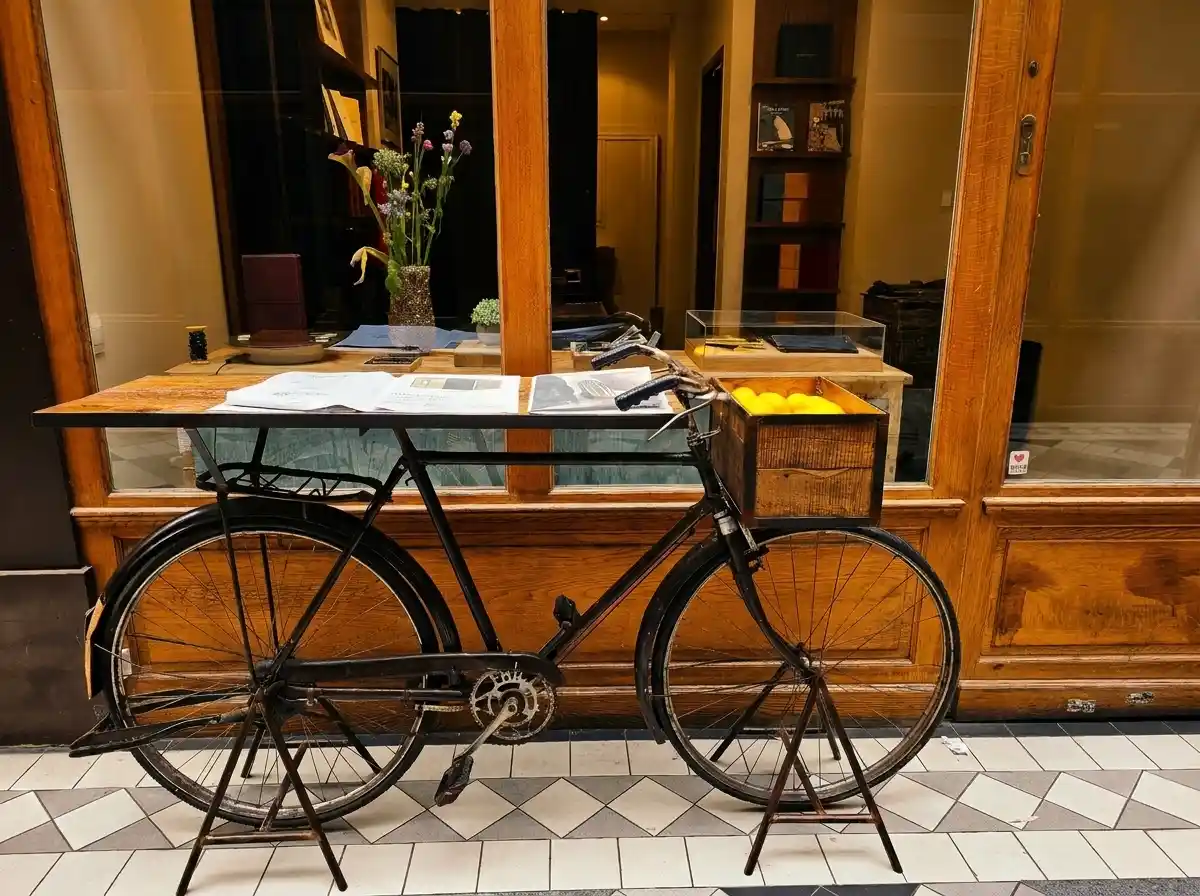
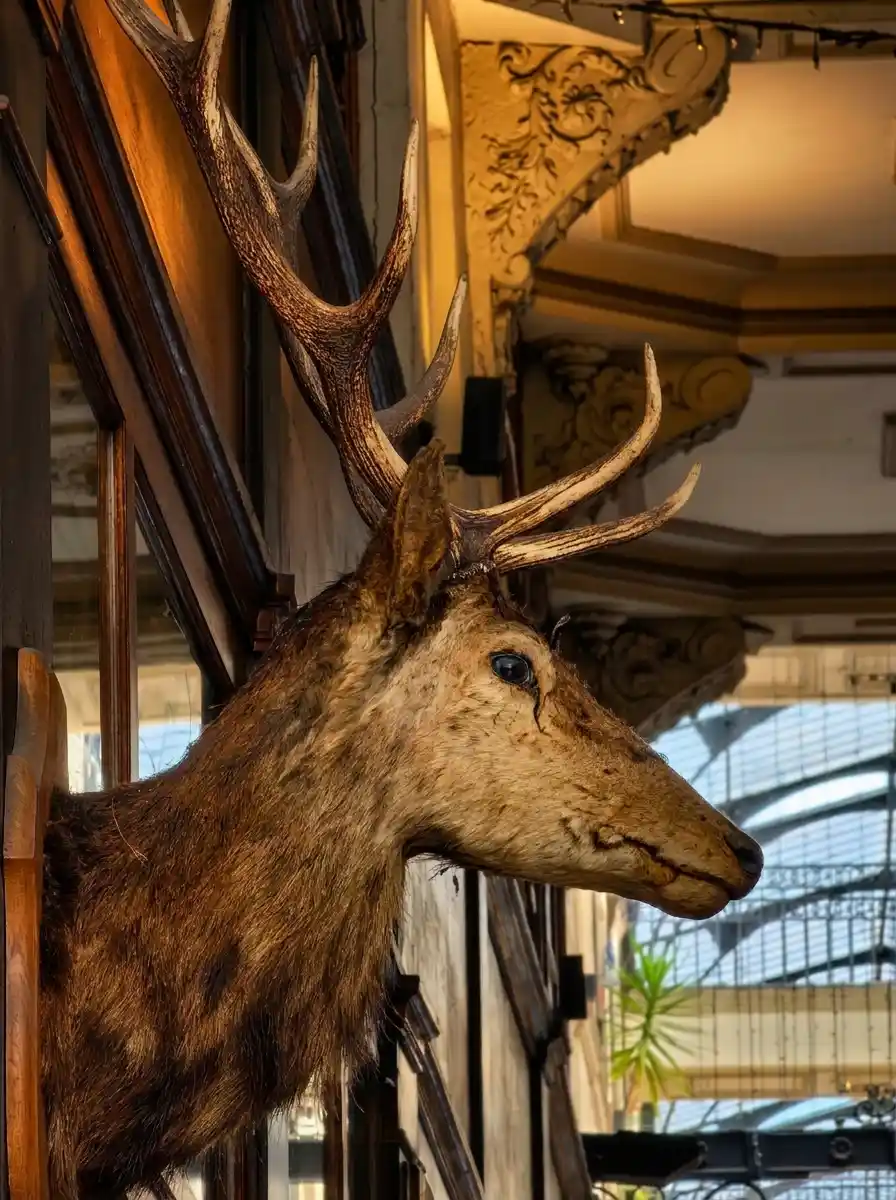
For most of the 20th century, the passage was neglected and nearly forgotten. In 1985 it was declared a protected historic site, and after a thorough renovation it filled up with designers and craftspeople. At the entrance from rue Saint-Denis hangs a deer’s head, a reminder of the inn that gave the place its name, and from there you return through the passage to rue Dussoubs.
If you’d like to learn more about this passage, feel free to read my article about it.
Madame Gourdan’s brothel
23 rue Dussoubs, at the corner of rue Saint-Sauveur
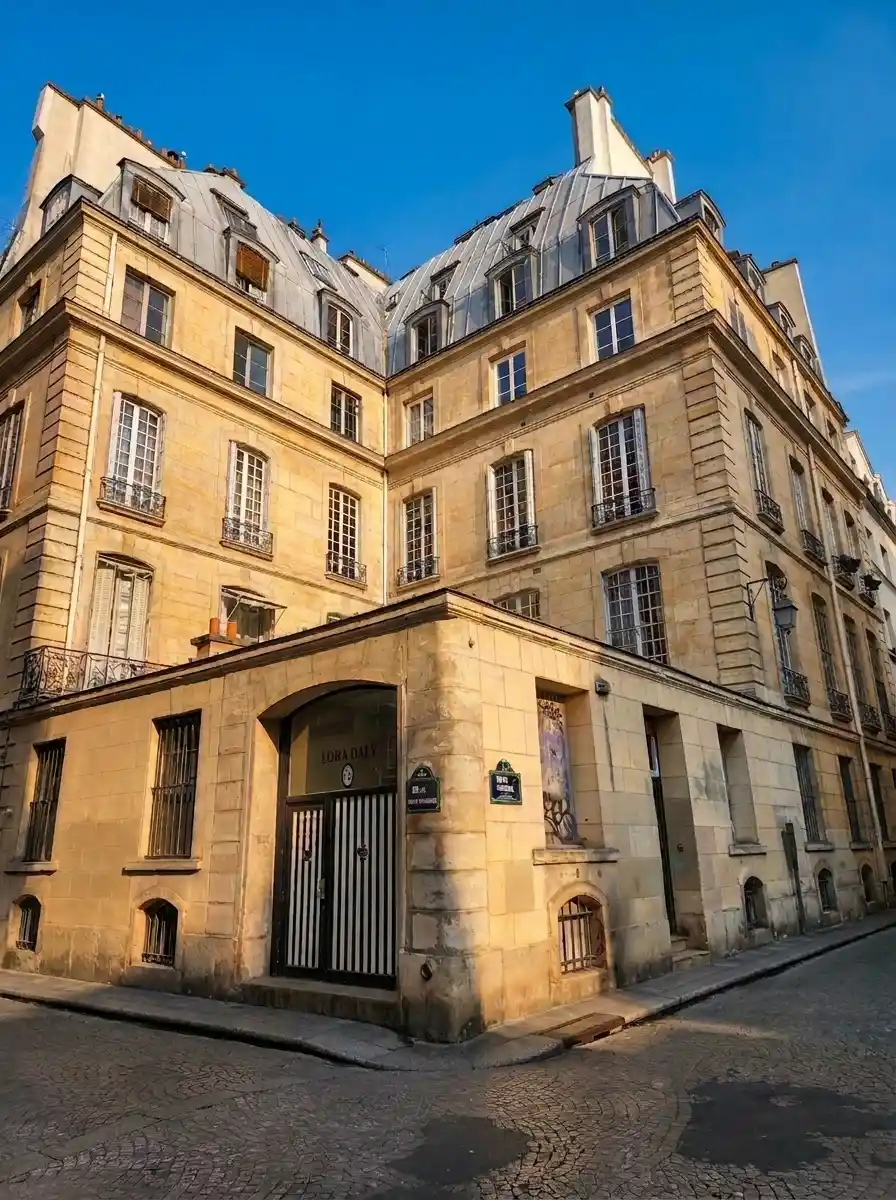
Continue north on rue Dussoubs to the corner with rue Saint-Sauveur. At this corner, one of the most famous brothels in 18th-century Paris once operated, run by Marguerite Gourdan (d. 1783), known as “the little countess.” She moved here in 1774, and her clients included noblemen, financiers, clergy and judges.
So that no one would recognize them, customers could enter and leave through an antique dealer’s shop at 12 rue Saint-Sauveur. A secret passage ran through a wardrobe, and on the other side waited a stock of disguises for anyone wanting to leave unrecognized.
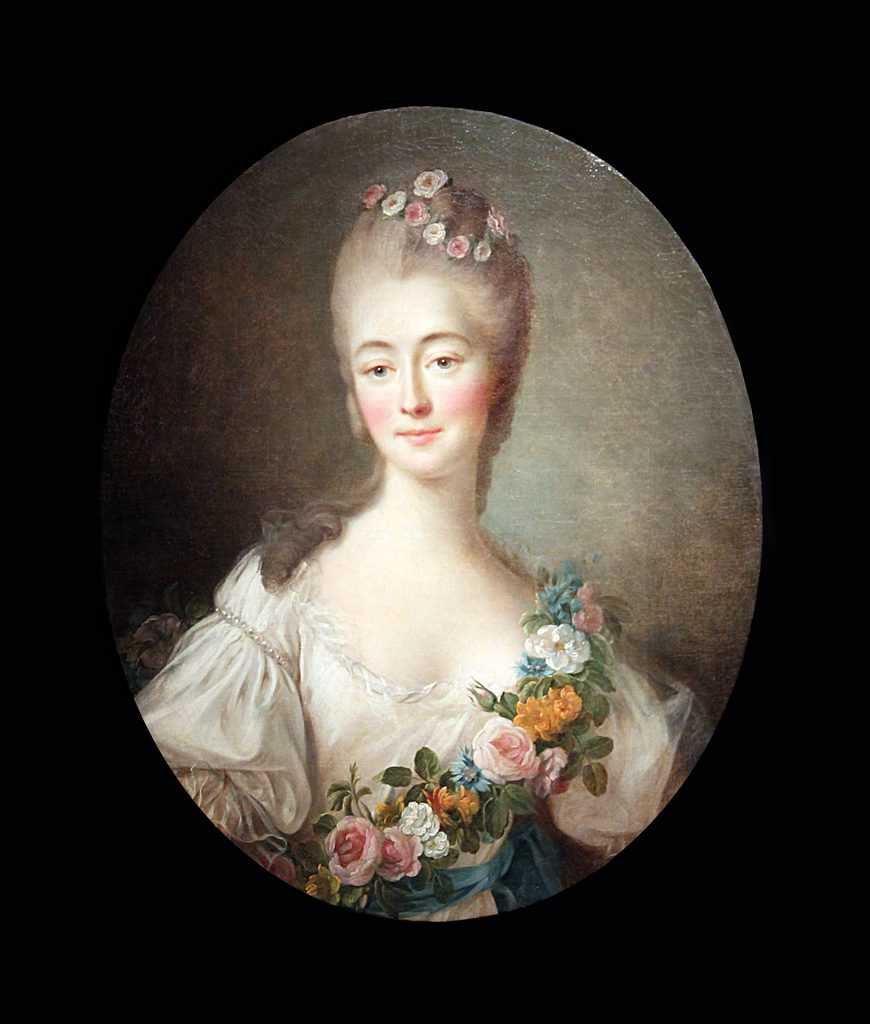
According to tradition, Jeanne Bécu (1743-1793) also worked at this brothel, where she met the Comte Jean-Baptiste du Barry (1723-1794) and later became Madame du Barry, the last official mistress of Louis XV. But the dates don’t quite add up: Jeanne officially became Madame du Barry in 1768, six years before Madame Gourdan moved here. If Jeanne really did work for her, it would have been at the previous location, on rue Comtesse-d’Artois, which today is the southern stretch of rue Montorgueil you already walked through.
By the way, the foie gras brand “Comtesse du Barry” has no connection to her: its founder simply shared the Du Barry family name and used it to promote the business. Jeanne herself was executed by guillotine on December 8, 1793.
Just around the corner, at 4 bis rue Saint-Sauveur, is Tekés, an Israeli vegetarian restaurant listed in the Michelin guide. I haven’t managed to eat there yet either, but it’s on my “on the radar” list, and here’s its website.
Cheese, sausage and bread
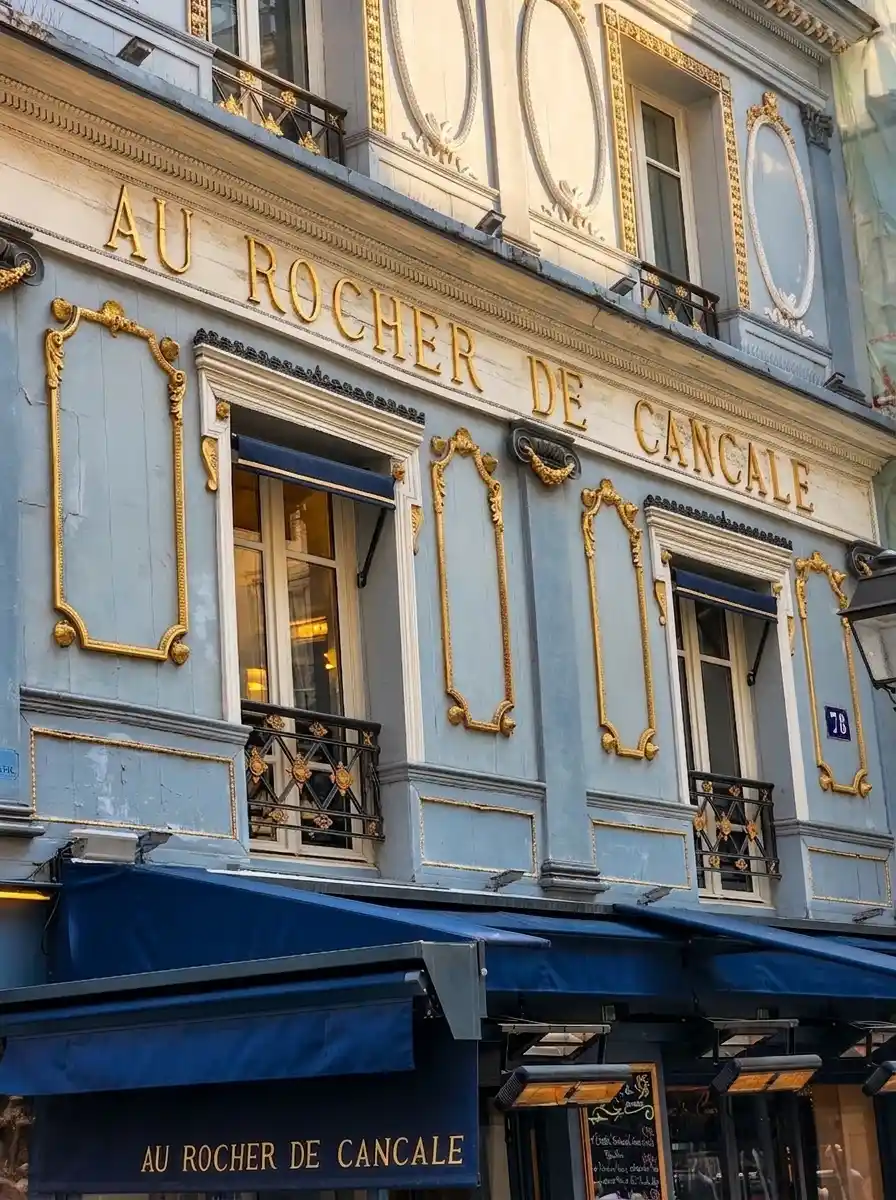
Back on rue Montorgueil. At number 78 stands Au Rocher de Cancale, with a blue and gold facade sometimes described as neo-Renaissance. The name belongs to an oyster restaurant that opened in 1804 right across the street, at number 59, and that was once one of the most famous restaurants in Paris. Honoré de Balzac (1799-1850) sent several of the characters from “The Human Comedy” (La Comédie humaine) to eat there, and diners included Alexandre Dumas (1802-1870), Eugène Sue (1804-1857) and Théophile Gautier (1811-1872). Inside are wall paintings by Paul Gavarni (1804-1866) (you can read about the house where Balzac wrote in the article on Balzac’s house).
A few doors down, at number 86, is the fromagerie La Fermette, which sells cheeses from all over France and can vacuum-pack them for your trip home, and at number 90 there’s a branch of the tea house Mariage Frères.
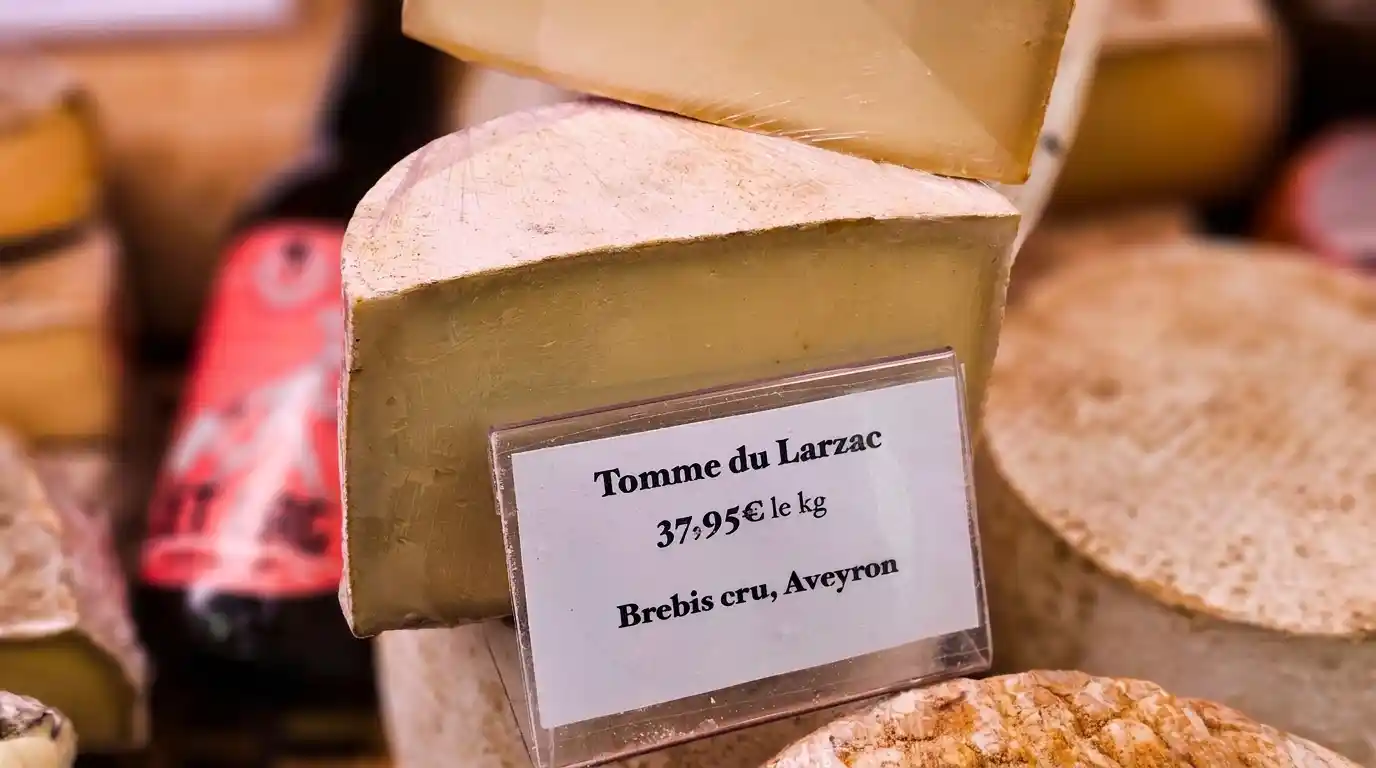
If you want to arrive at the fromagerie prepared, first read Ariel Toito’s article on French cheeses.
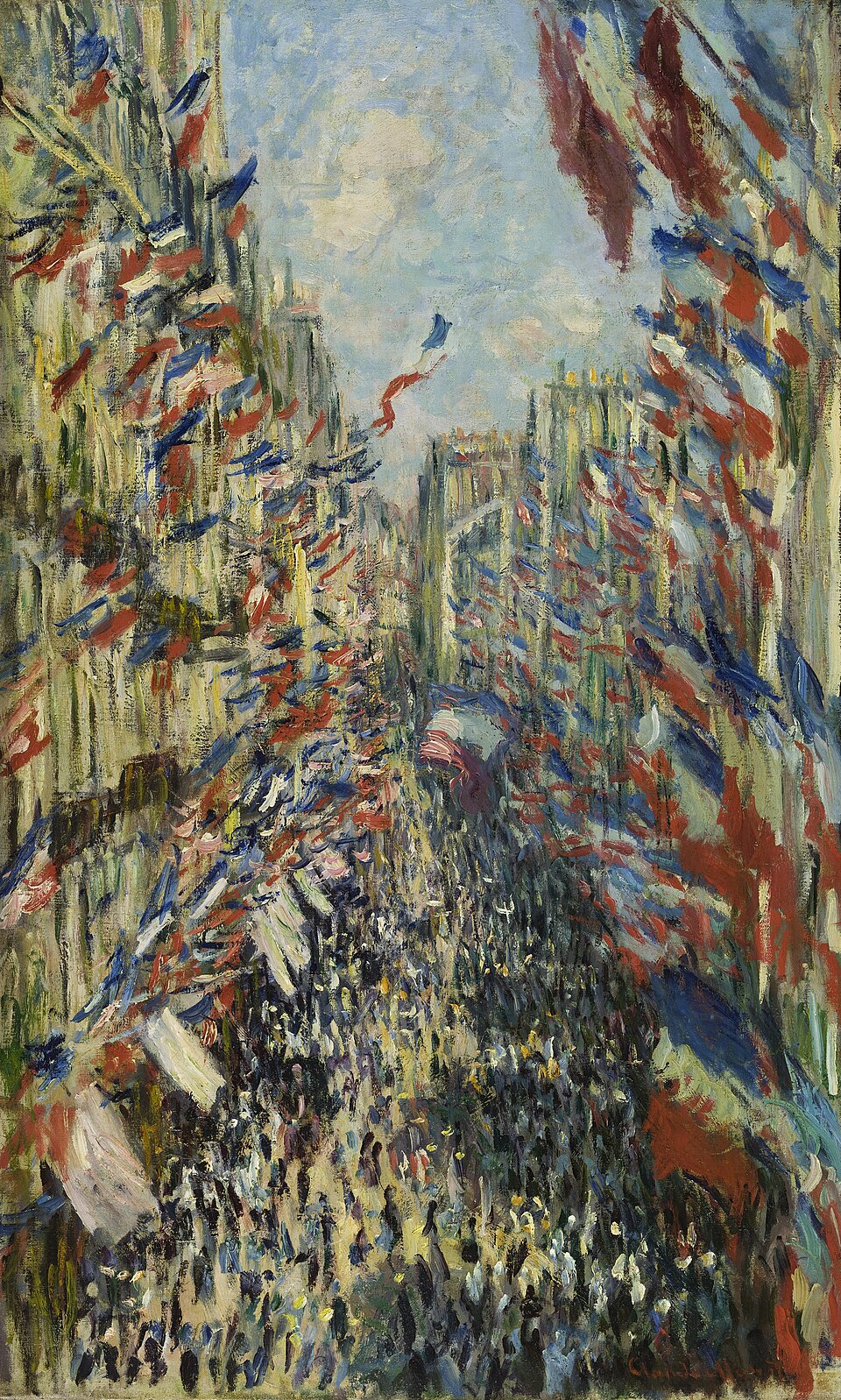
Claude Monet (1840-1926) painted this street decked out in flags, during the celebration of June 30, 1878 (which happens to be my birthday). It was a national holiday held during that year’s World’s Fair, and the painting now hangs in the Musée d’Orsay.
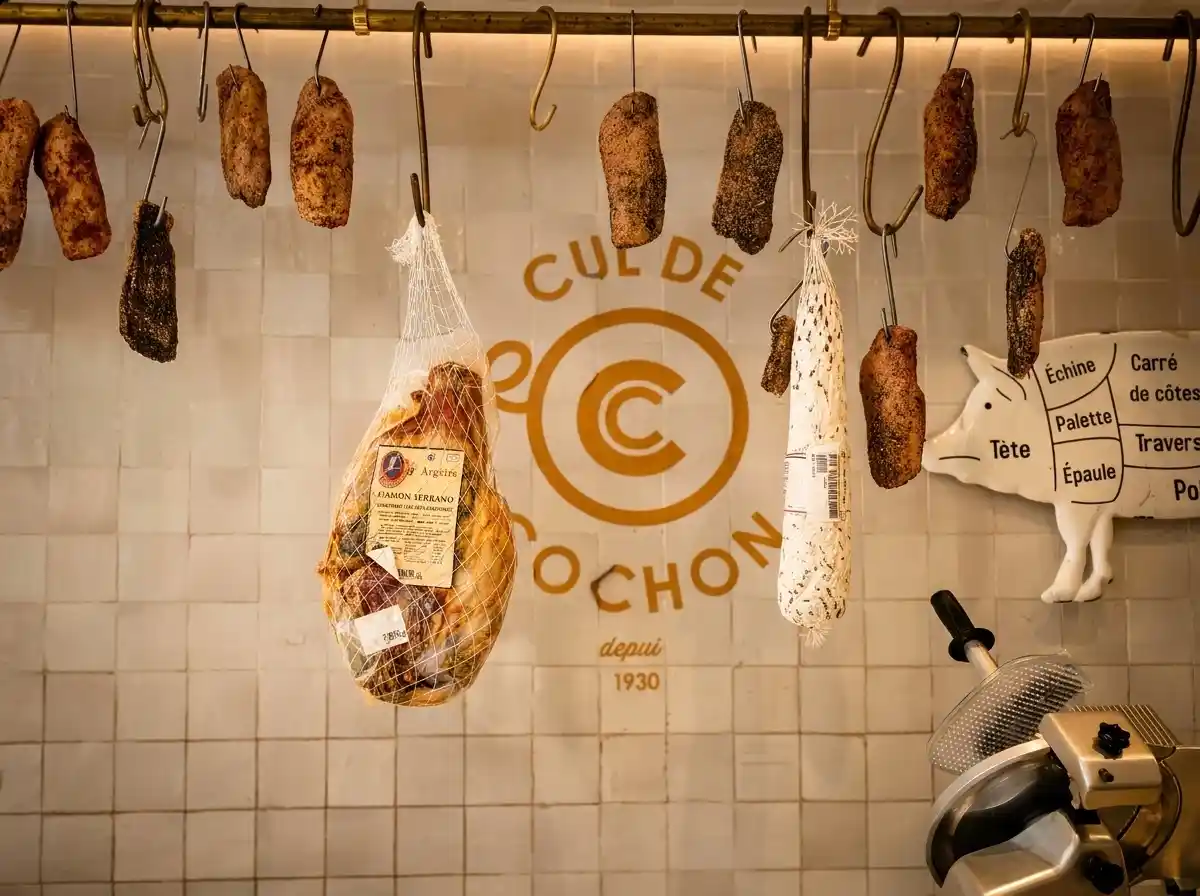
At number 98 is Cul de Cochon, a delicatessen of sausages, cheeses and foie gras, which started as a family business in 1930 under the name Terroir d’Auvergne. At lunchtime they also make sandwiches from the products in the window, a good option for a quick meal on the go.
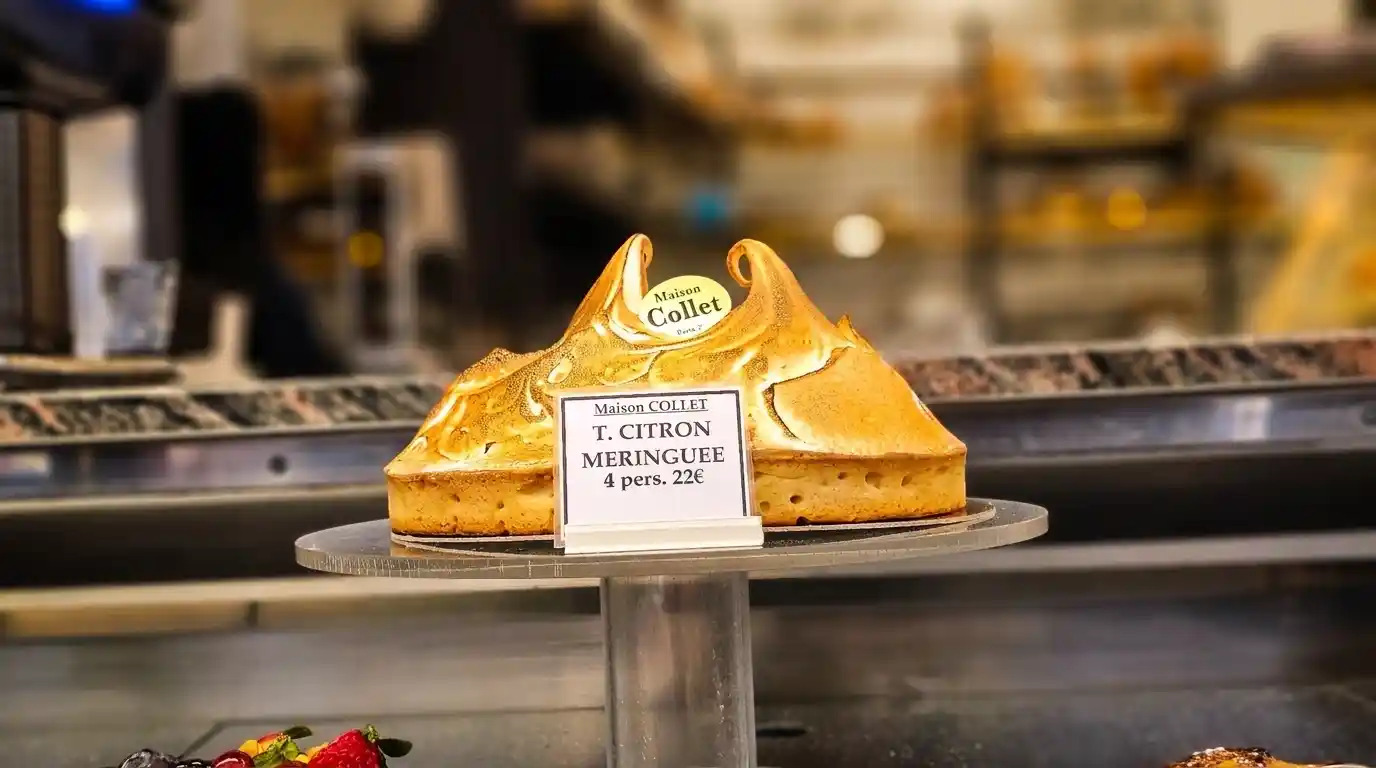
Right next to it, at number 100, is the bakery Maison Collet, with breads, pastries and cakes, including a lemon meringue tart that’s hard to walk past without stopping.
A street that’s a whole market
Further along, rue Montorgueil changes its name to rue des Petits-Carreaux, and from there you turn onto rue du Nil. In 2008, two friends founded Terroirs d’Avenir, a company that started out supplying small farmers’ produce to restaurants across Paris, and its first shops open to the public opened on rue du Nil. A few neighboring buildings here hold:
- A butcher shop
- A fish shop
- A cheese shop
- A bakery
- A greengrocer
Almost all the shops are closed on Mondays, and on Sundays they close at midday.
The street’s name is also part of the story. When a new neighborhood opened here at the end of the 18th century, during Napoleon’s campaign in Egypt, the developers named its streets after places from the campaign: rue du Caire, rue d’Alexandrie, rue du Nil and rue d’Aboukir.
The wall on rue d’Aboukir
83 rue d’Aboukir, at the corner of rue des Petits-Carreaux
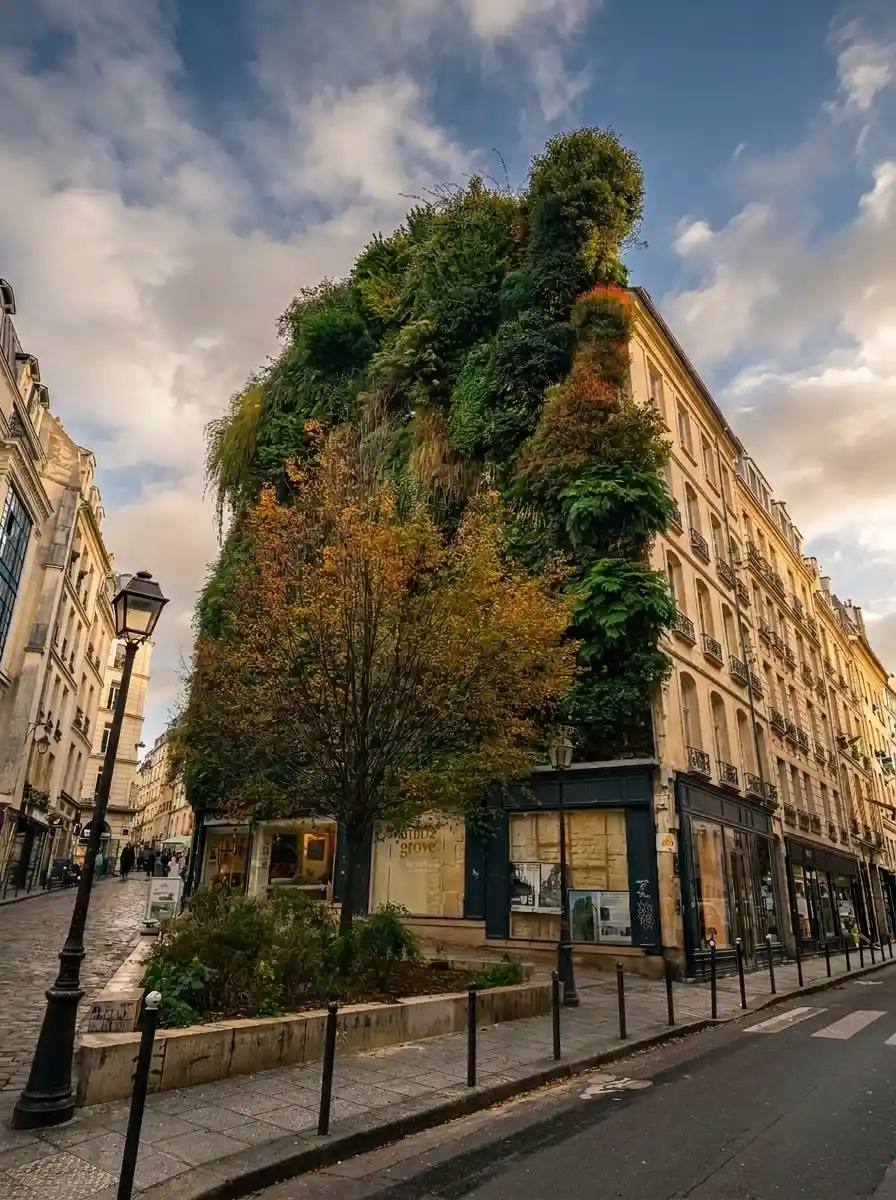
Back on rue des Petits-Carreaux, continue to the corner with rue d’Aboukir. Here, the blank wall of the building is covered by a vertical garden 25 meters high and 250 square meters in area, with about 7,600 plants from 237 species. The botanist Patrick Blanc (b. 1953), who also designed the green wall at the Musée du Quai Branly, created it in 2013 at the request of the building’s owner, and it was inaugurated that September under the name Oasis d’Aboukir.
From here, walk along rue d’Aboukir toward place du Caire, where we’ll reach the last stop of our walk.
The Court of Miracles
The route ends on the ground where Paris’s great “Court of Miracles” once stood. In the 17th century, it stretched between today’s rue du Caire and rue Réaumur, and its entrance was on rue Saint-Sauveur, which you passed earlier. Beggars, thieves and con artists lived there, and the name came from their habit: in the evening, after a day of begging, the blind would see again and the lame would stand up straight, as if by a miracle.
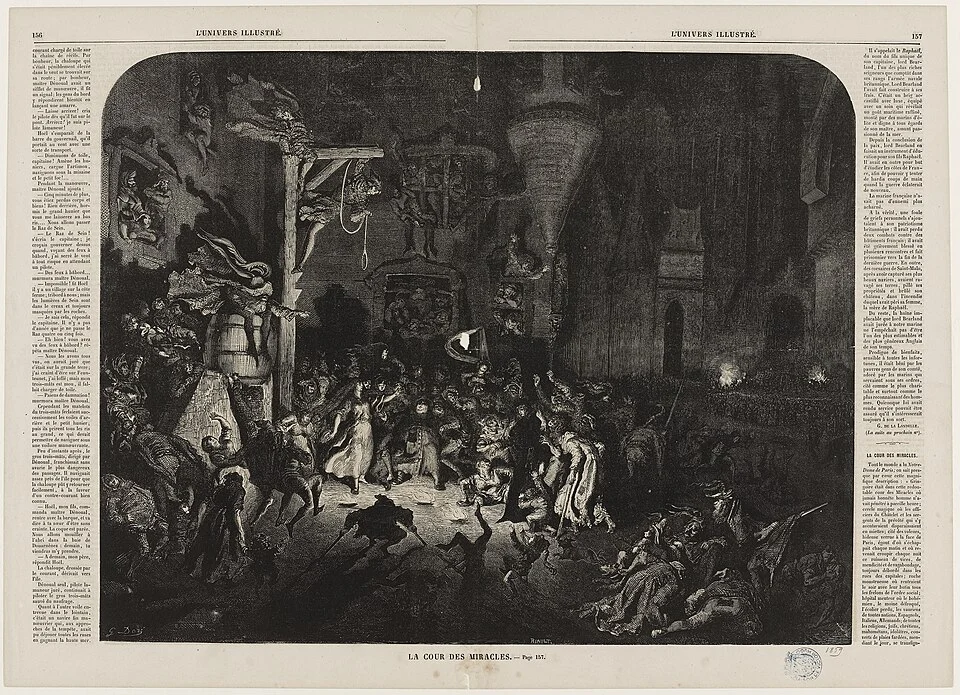
The place “flourished” from the Middle Ages through the 17th century, and Victor Hugo (1802-1885) made the Court of Miracles one of the most famous scenes in “Notre-Dame de Paris” (The Hunchback of Notre-Dame), published in 1831.
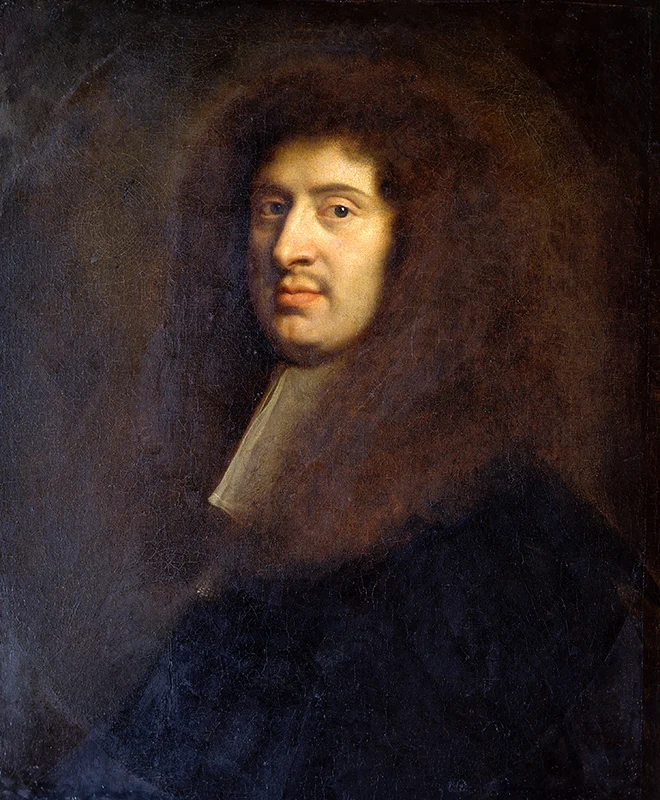
On March 15, 1667, Louis XIV created the office of police chief of Paris (lieutenant général de police), and the first to hold it was Gabriel Nicolas de La Reynie (1625-1709). According to the famous story, La Reynie himself went to the Court of Miracles, broke holes in the wall, positioned his small force to look like the spearhead of a huge army, and announced that the king had ordered the place cleared, and that the last dozen people still there would be hanged or sent to the galleys. The beggars fled, and the place emptied out without a drop of blood spilled.
But this story first appears only in 1844, in a book by Horace Raisson on the history of the Paris police, and it seems Raisson simply invented it. The Court of Miracles, it turns out, kept appearing on maps of Paris well into the first third of the 18th century.
At the edge of this area, in 1798, during Napoleon’s campaign in Egypt, the Passage du Caire was built, one of the oldest covered passages in Paris still standing today, and without question the longest of them (though, as you’ll see, far from the prettiest). It was built on the site of a convent of nuns (Couvent des Filles-Dieu), and according to legend, part of its paving was made from their gravestones.
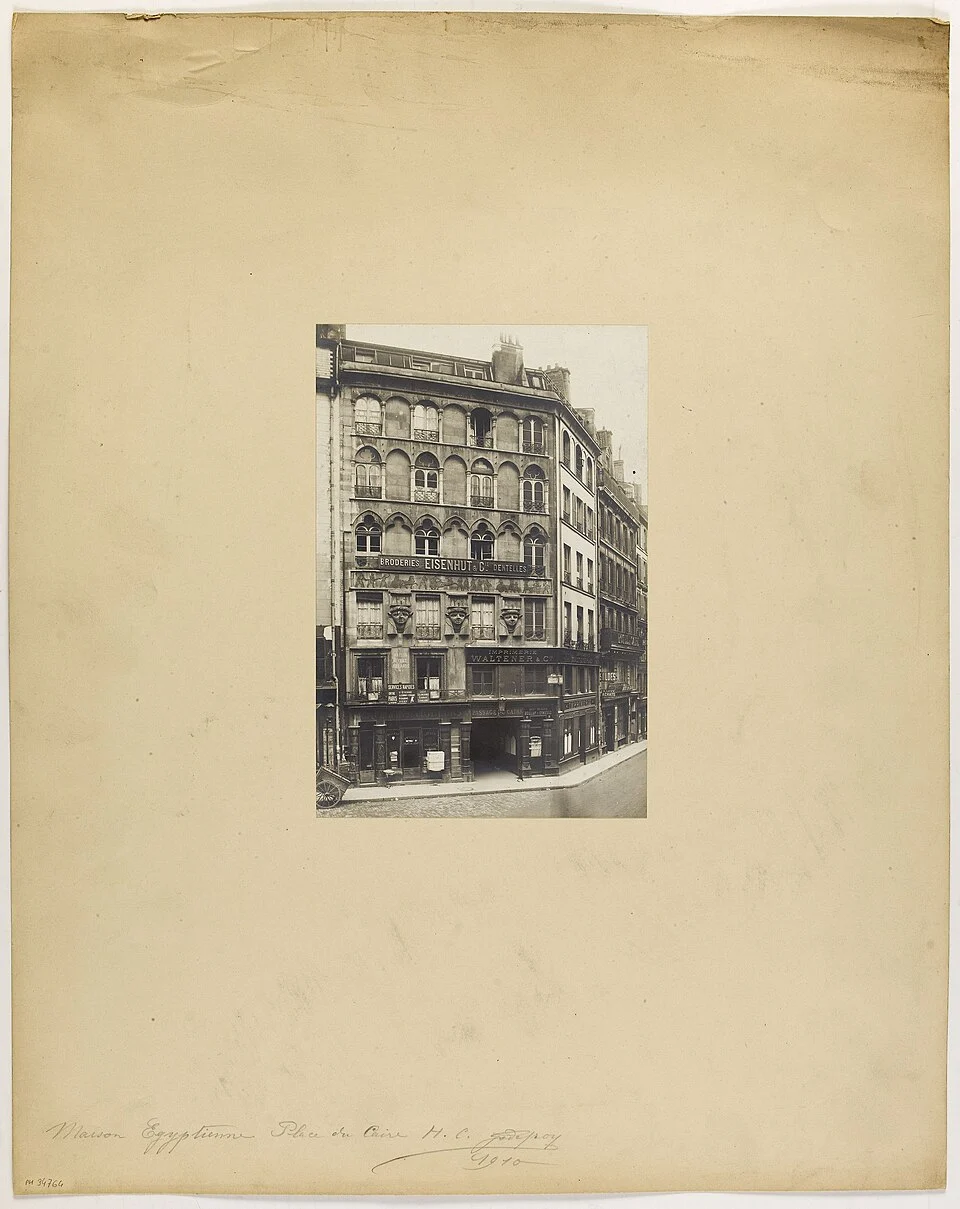
At the entrance from place du Caire, at number 2, you’ll find an Egyptian facade: three heads of the goddess Hathor, recognizable by their cow ears, columns topped with capitals shaped like lotus flowers, and a band of hieroglyphs. The decorations were added to the building in 1828, when Paris was swept up in Egyptomania.
The passage itself is today a world of clothing wholesalers, and so it’s mostly active on weekdays. From here begins the Sentier, Paris’s textile district.
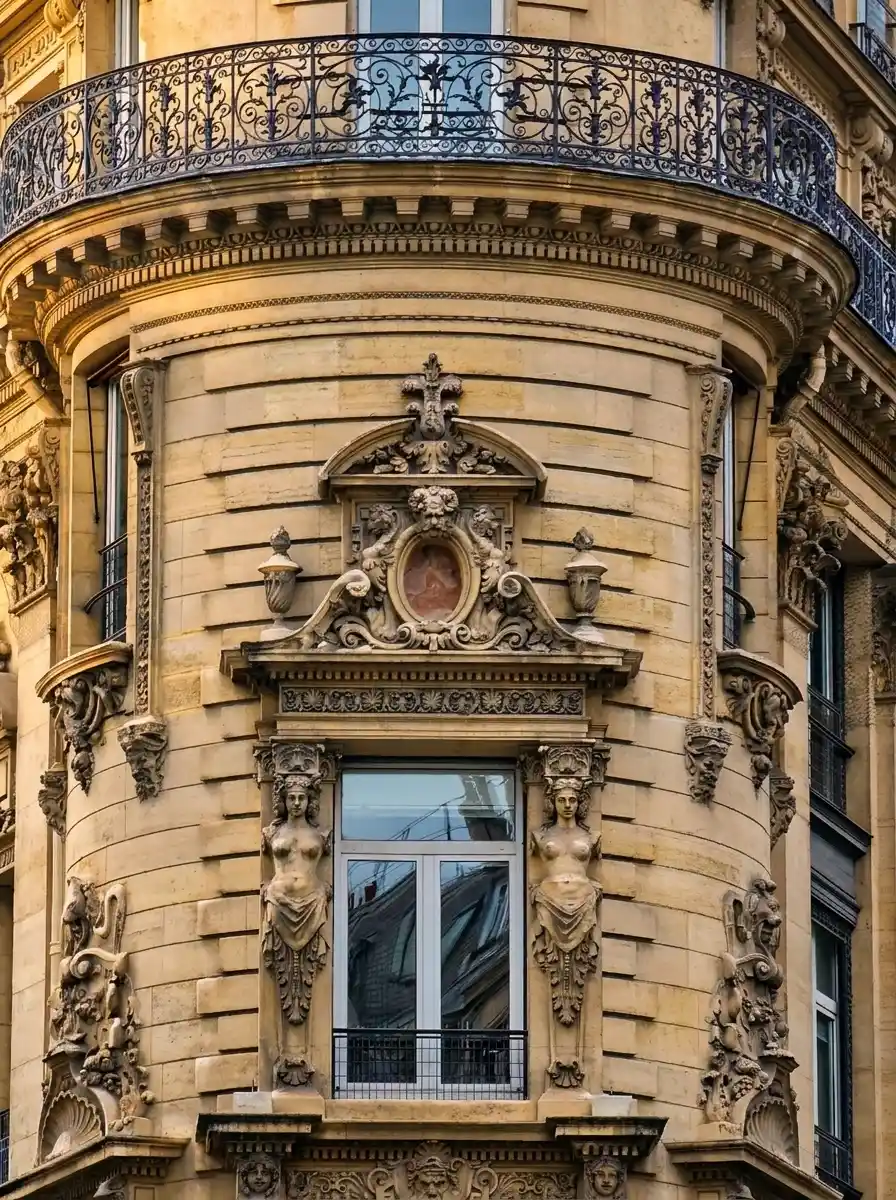
From place du Caire, walk west along rue Réaumur, a street cut through the old streets of the district between 1894 and 1895. In 1897, it was the first street where the city held a competition for original facades, so you’ll find grand commercial buildings from the end of the 19th century along it. One of the loveliest stands at number 101, at the corner of rue de Cléry: a building by the architect Albert Walwein with a corner rotunda, and above the corner window facing rue de Cléry are two caryatids, statues of women holding up the pediment, the work of the sculptor Jacques Perrin. From here, it’s just a few steps to the Sentier metro station.
What else to do near rue Montorgueil
The Louvre Museum is within walking distance of Saint-Eustache, and you really shouldn’t show up there without a ticket booked in advance. This ticket also includes guided access to the Mona Lisa.
From place du Caire, you can continue a few minutes north to the grands boulevards and Le Grand Rex, the largest cinema in Europe, built in Art Deco style. The Rex Studios tour takes visitors behind the screen, and you can book tickets for it here. More attractions in the area are on the page for the 2nd arrondissement of Paris.
If, after Stohrer and G. Detou, you’d like to learn how to make these things yourself, there’s a pastry workshop with a chef from the Ferrandi school. More tours and workshops are in the article on culinary tours in Paris, and if you’ve fallen in love with the passages, you’ll find all of them on the walking route of Paris’s covered passages.
Where to stay near rue Montorgueil
The streets around rue Montorgueil are a comfortable place to stay, especially if you like buying fresh bread in the morning and coming back with full bags in the evening. If you prefer a vacation rental, the closest one is the apartment at 14 rue Saint-Roch, within walking distance of Saint-Eustache, and more options are on the page of recommended apartments in the 2nd arrondissement.
Here are two hotels and two apartments close to the route. For the full list, see the page of recommended hotels in the 2nd arrondissement.
-
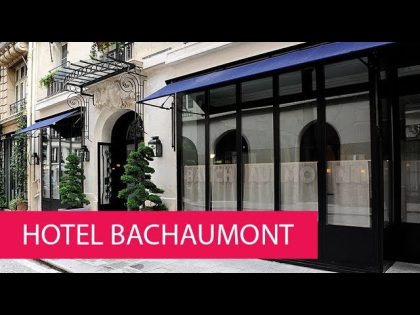
Hotel Bachaumont
On a side street just off rue Montorgueil (a one-minute walk to the Les Halles area) is a charming hotel with 49 rooms designed by Dorothée Meilichzon. The dining room sits under a glass roof, and breakfast there is a good reason to get up. The bar Night Flight stays open late and draws locals too. Rooms range from 17 square meters (a bit small for my taste) to 50 square meters (very spacious), so the gap between categories is large. I’d recommend that anyone who wakes up at the smallest noise ask for a room on a higher floor: in the lower rooms facing the street, you can hear the metro at night.
-
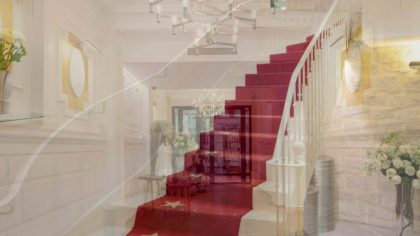
Le 123 Sébastopol – Astotel
Opened in 2013 with a single theme: French cinema. Each floor is dedicated to a different figure: Belmondo, Lelouch, Morricone, and in the basement there’s a small screening room you can book. In the lobby stands a popcorn machine, and the front desk is built like a movie box office. The minibar is free, and like the rest of the chain’s hotels, they hand out snacks and drinks in the lobby in the afternoon. The building sits on a busy avenue, so ask for a room on the courtyard side. It’s two minutes from the Réaumur-Sébastopol metro station, with lines 3 and 4. A good friend of mine and his wife stayed here and loved it, so I recommend it wholeheartedly.
-

Coeur de Paris Montorgueil
An apartment right on rue Montorgueil itself, the liveliest pedestrian street in the arrondissement, lined with vegetable, cheese and pastry stalls at all hours. One bedroom with a double bed, plus a sofa bed in the living room that brings capacity up to four guests, a reasonable solution for a small family willing to trade some privacy for a location that’s hard to beat. The apartment’s name describes it exactly: the heart of Paris, and not just figuratively close to it. Keep in mind that rue Montorgueil is pedestrian-only but very lively until late evening, so windows facing the street aren’t ideal for anyone sensitive to noise before the shops close.
-
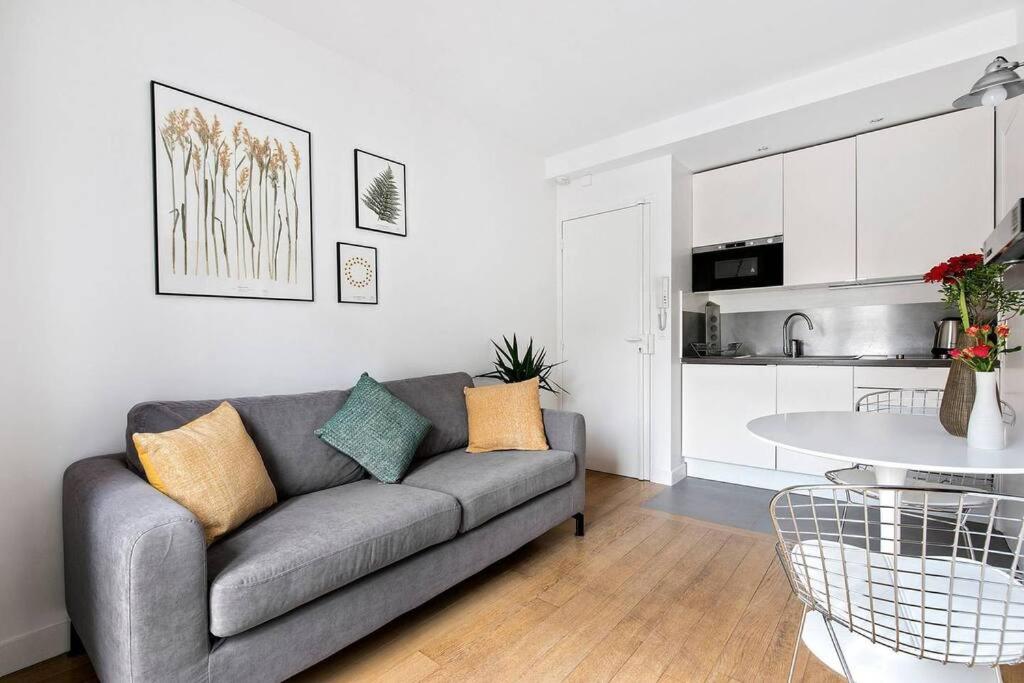
Superbe studio avec balcon au coeur de Montorgueil
A studio with a small balcony on rue Léopold-Bellan, in the heart of rue Montorgueil. This building houses several separate units from the same owner, each with its own character, and this one is the most sought-after thanks to the balcony overlooking a quiet courtyard. The kitchenette is small but complete, and air conditioning makes a big difference in the Parisian summer. The street itself is fairly quiet for how lively the surrounding area is, which makes it possible to sleep at night without giving up a central location. Keep in mind that the building’s elevator is old, so anyone carrying heavy suitcases should be ready for a flight of stairs.
FAQ about the rue Montorgueil route
These are the questions I get the most about this area.
