

In short
- What’s here: 23 exhibitions open in Paris right now, plus 7 more opening in November, December and January.
- How it’s sorted: by closing date. The exhibition that closes first is at the top, and at the end there’s a separate section for exhibitions that haven’t opened yet.
- Closing first: Feathers of Paradise at the Quai Branly on November 8, 2026, and Affinities in the Louvre’s decorative arts wing on December 6, 2026.
- Staying longest: The World of Viktor&Rolf until July 4, 2027 and The Secrets of the Nasrid Alhambra until May 16, 2027, both not open yet. Of the exhibitions open now, Primordial Water at the Louvre runs until March 15, 2027.
- The big one this season: Zurbarán at the Louvre, until January 25, 2027.
- Tickets: for the big exhibitions you have to book ahead, and in most cases the Paris Museum Pass won’t get you into the temporary exhibition.
- When to go: during late openings, when the museum stays open into the evening. At the Louvre that’s Wednesdays and Fridays until 9:45 p.m.
- And a bonus: at the end of the article there’s a search tool that shows every exhibition in town, including the ones I didn’t cover in the cards.
Paris has a nice problem: too many museums. Almost every one of them has, next to its permanent collection, a wing that changes every few months, which means that even if you’ve been to Paris twenty times and seen all the big names, you’ll find something on every trip that wasn’t there the last time.
I update this article every month, and here you’ll find the exhibitions on in Paris right now. Two things worth knowing about the list before you dive in:
- The cards are sorted by closing date. The exhibition that closes first is at the top, and the one that stays longest is at the end. That way you can see at a glance what’s urgent.
- I chose to focus on museums where you can book a ticket in advance, because turning up without a booking at a popular Paris exhibition is a needless gamble. There are more good exhibitions in town, and at the end of the article there’s a search tool that shows all of them. After the exhibitions that are already open, I also added a section on exhibitions about to open, for those of you planning a trip further ahead.
One tip that will save you some nerves at the ticket desk: if you bought the Paris Museum Pass, in most cases it won’t get you into the temporary exhibition. The pass opens the permanent collection, and the temporary exhibition is sold separately.
Exhibitions in Paris closing in the next few weeks
These three exhibitions close by the end of the year, and the first of them as early as November 8. If you’re in Paris in November or December, these are the first ones I’d put in my schedule.
-
My pick

Feathers of Paradise at the Musée du quai Branly
About 190 objects that tell five hundred years of trade in birds of paradise from New Guinea, and of Europe’s obsession with their feathers.
“Feathers of Paradise” (Plumes du paradis) follows a single journey: a bird that lived in the forests of New Guinea, whose skin and feathers reached Europe in the 16th century and became a coveted object there. In the exhibition you’ll find Papuan headdresses, paintings, fashion pieces, illustrated books and preserved specimens, as well as works by contemporary Papuan artists who took part in preparing the exhibition.
The part that made the exhibition for me is actually the European chapter. Women’s hats in Paris and London in those years carried whole feathers, sometimes a whole bird, and that demand nearly wiped out several species. The same industry also gave rise to the first bird protection laws.
-
My pick

Affinities: Islamic Art in the Decorative Arts Wing
About fifty objects from the Department of Islamic Art, from the 9th to the 17th century, placed inside the Louvre’s European decorative arts galleries.
“Affinities” (Affinités) didn’t build a separate exhibition hall. It placed objects from the Islamic art collection straight into the decorative arts galleries of the Richelieu wing, and arranged them along three lines: light, color and sculpture. The idea comes from the Arabic word “aja’ib”, meaning marvels, and it shows how many of the technical and aesthetic inventions of the Islamic world found their way into the decorative arts of Europe.
There’s also a museum story here. These two collections were shown together at the Louvre for more than a hundred years, until the Department of Islamic Art got a wing of its own in the Cour Visconti. The exhibition brings them back to the same space for a few months, and the comparison does the work by itself. The regular museum ticket gets you in at no extra cost.
-
My pick
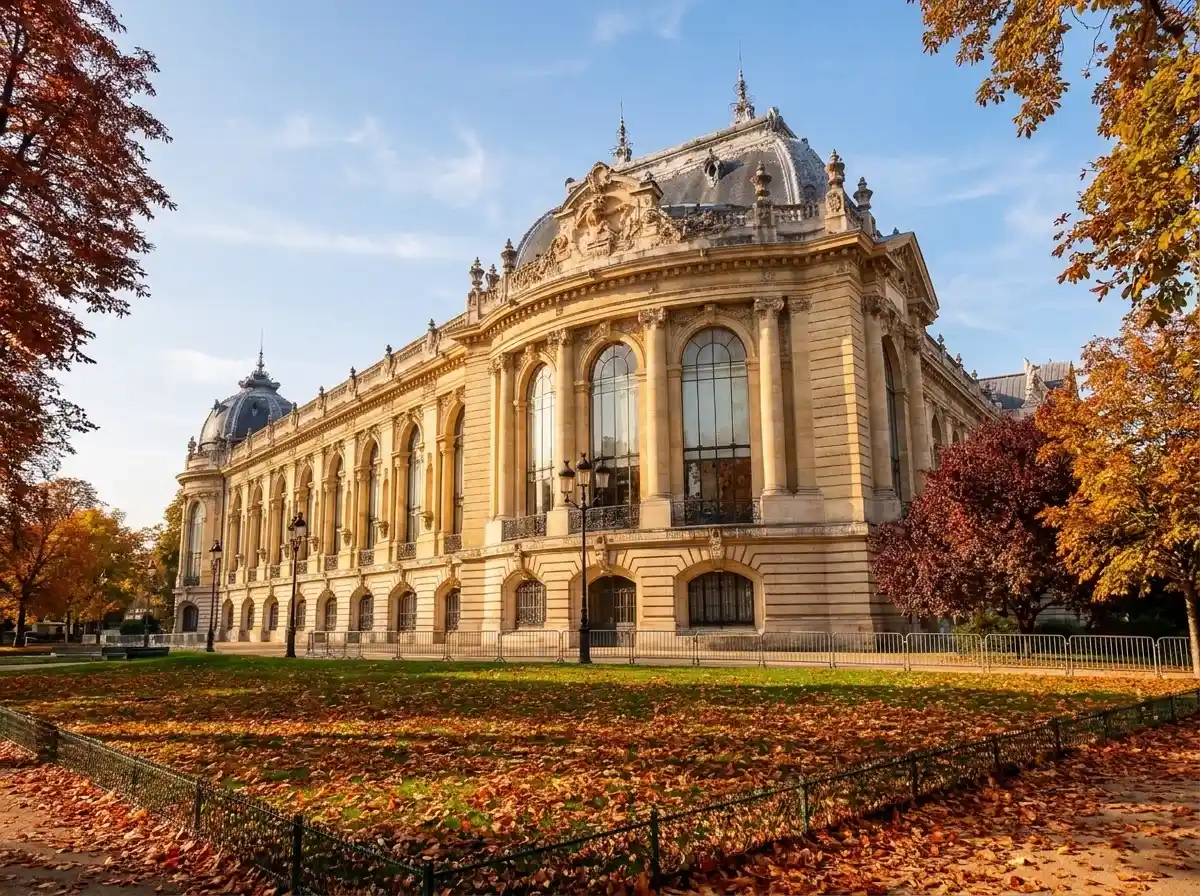
Robert Capa, War Photographer
160 items, including more than sixty press prints from the period, that follow Robert Capa (1913–1954) from Hungarian immigrant to icon of modern photography.
André Friedmann, who invented the name Robert Capa for himself to sound like a successful American photographer, is one of the people who shaped what we expect to see in war photography. The exhibition shows the prints alongside the magazines, books and documents they appeared in, not just the famous picture. That way you see how much of a photo’s meaning is decided on the printed page and not in the field.
The museum itself is worth the trip to the 14th. It sits above the Resistance command post from which the liberation of Paris was run in August 1944, twenty meters below Place Denfert-Rochereau, and the route takes you down into the original bunker. The permanent collection is free, and the temporary exhibition is sold separately.
Exhibitions in Paris that will still be on in 2027
These twenty exhibitions are already open and stay in town into next year, so there’s no need to squeeze them into your next trip. If you’re planning a trip for December or January, you’ll find most of what Paris has on show right here.
-
My pick
Planète Océan at the Atelier des Lumières
A huge new projection over 3,300 square meters of walls and floor, from the reefs down to the glowing depths. According to the Paris tourist office it runs until January 3, 2027.
“Planète Océan” replaced the previous cycle of projections in mid-October. The new show lasts about fifty minutes and uses 3D models of sea creatures at life size, and it plays every day rather than on a rotating schedule like the ones before it.
The Atelier des Lumières sits in a former iron foundry in the 11th, and to me that’s its advantage over other projection venues: the high ceilings and divided walls create a space that the projection really wraps around you, instead of a screen it’s projected onto. If you’re coming with kids, this is the place that works best in Paris.
-
My pick
Knowledge in Trompe-l’Œil: Korea at the Musée Guimet
Korean paintings from the 18th to the 20th century that depict bookshelves and collectors’ objects, in a perspective that widens toward the back instead of narrowing.
“Knowledge in Trompe-l’Œil” (Le savoir en trompe-l’œil) is devoted to one Korean genre: a painting of a crowded bookcase, meant to show off the learning of the owner of the house. The paintings use the reverse of the perspective we’re used to, and the effect takes a moment to get used to, and then it’s hard to stop looking.
The Musée Guimet holds the largest collection of Asian art in France, and it was built around the private collection of Émile Guimet, an industrialist from Lyon who collected on his travels in the East. If you’re coming to the 16th for the Marmottan or the Louis Vuitton, you can combine them, since all three are within reasonable walking distance. The museum is also showing a second Korean exhibition, “Dal Dari”, until February 8, 2027.
-
My pick

Animalia at the Hôtel de la Marine
The exhibition brings out art objects from the Al Thani Collection that are all about animals, real and imaginary.
The Al Thani Collection has been on show in the wings of the Hôtel de la Marine since 2021, and it’s a private collection covering five thousand years of art from all over the world. “Animalia” picks one theme from it and sets gold figurines, jewelry, vessels and manuscripts from different periods and continents side by side. In some cases you can’t tell whether the animal in front of you was drawn from nature or invented.
The building itself, by Ange-Jacques Gabriel (1698–1782), is one of the most rewarding visits in town: the 18th-century rooms have been fully restored, and the balcony looks straight out over Place de la Concorde. In that same square, a few meters away, Marie Antoinette was executed.
-
My pick

Marc Bloch, the Spirit of History
A historian shot by the Gestapo gets an exhibition in the crypt of the Panthéon, a few meters from where he is buried.
Marc Bloch (1886–1944) founded the Annales school with Lucien Febvre (1878–1956), which changed the questions historians asked in the 20th century: fewer kings and battles, more everyday life, beliefs and bread prices. He fought in both world wars, joined the French Resistance, and was shot by the Gestapo on June 16, 1944. In 2026 he was brought into the Panthéon together with his wife.
The exhibition is built from archives: family photos, books marked in his handwriting, a letter he wrote to his daughter Alice in 1943, and documents lent by the National Archives and his descendants. To me there’s a rare match here between the subject of the exhibition and the place where it’s shown, because this was a man who spent his whole life checking whether what he was told was true.
The ticket also gets you into the hall, the dome and Foucault’s pendulum.
-
My pick
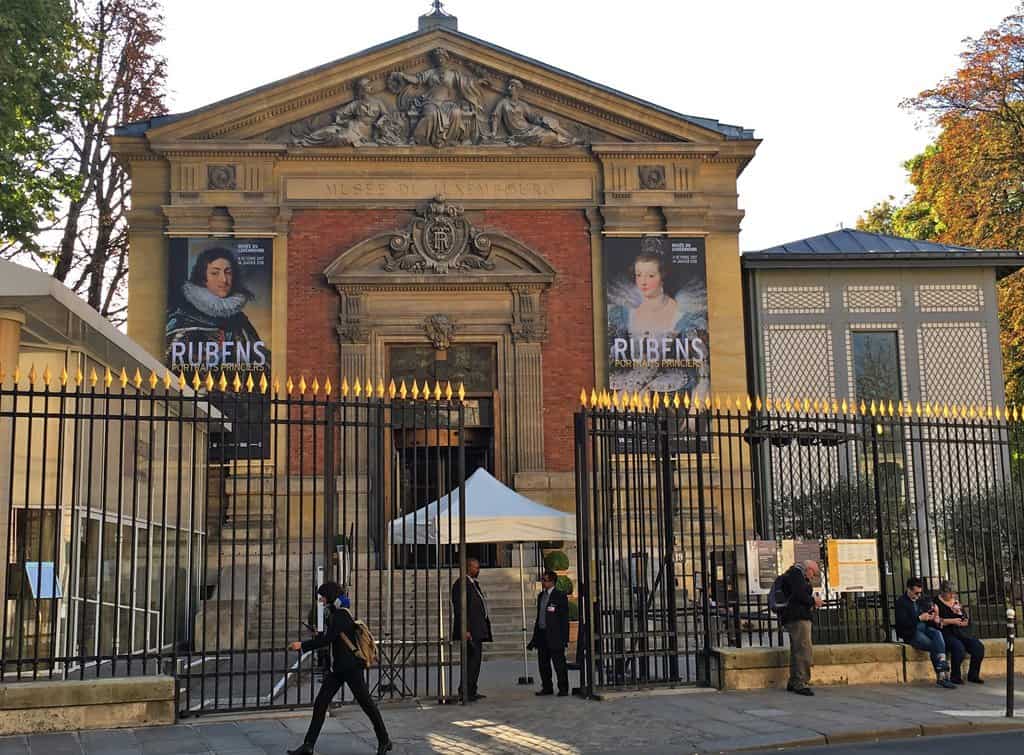
Andy Warhol: The Line and the Image
Andy Warhol (1928–1987) is associated with Pop Art and with printmaking, and this exhibition chooses drawing instead.
The exhibition brings together about 150 works and documents, from the first self-portrait he drew as a teenager to the experiments that went with his last series. The idea behind it is simple: line, repetition and graphic invention were the laboratory that everything else came out of. If you only know the soup cans, you’ll discover here what came before them.
The Musée du Luxembourg was the first French museum to open to the public, in 1750, and it sits on the edge of the Luxembourg Gardens and runs entirely on temporary exhibitions. Booking ahead isn’t required but it’s recommended, and the website adds a 1.5 euro handling fee. On Mondays there’s a late opening and the museum stays open until 10 p.m.
-
My pick
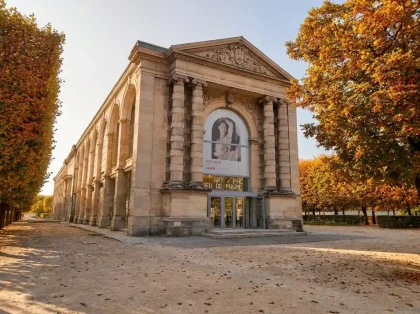
Stan Douglas, Parallax
The largest solo exhibition devoted to Stan Douglas in France in more than thirty years.
“Parallax” was put together with the MACBA museum in Barcelona, and it presents Douglas’s work in photography and video. He has worked with one method for years: he picks a historical moment, recreates it down to the last detail of costume and set, and photographs it as if it were a document. The result looks like an archive and isn’t one, and that’s exactly the point.
The Jeu de Paume sits in the northwest corner of the Tuileries Garden, in a building originally built as a court for jeu de paume (real tennis) and today a center for photography and the moving image.
-
My pick

Cezanne and Us at the Grand Palais
The Grand Palais doesn’t put on a retrospective of Paul Cézanne (1839–1906) but looks at whom he changed after his death.
About 180 works tell how Cézanne was discovered, interpreted and taken in new directions, from Paul Gauguin (1848–1903) and Henri Matisse (1869–1954) through Pablo Picasso (1881–1973) and Piet Mondrian (1872–1944) to Joan Mitchell (1925–1992) and Peter Doig (born 1959).
The exhibition was produced together with the Centre Pompidou and the Musée d’Orsay, which is one of the reasons it comes with loans that are hard to get separately. This is the big exhibition of the fall in Paris, so booking ahead isn’t a recommendation but a condition.
A full-price ticket is 19 euros, and an open ticket that lets you come without reserving a time slot costs 24 euros. Open Tuesday to Sunday, and on Fridays until 10 p.m.
-
My pick

Vertigo: Richard Peduzzi at the Orsay
Richard Peduzzi built the models of the Opéra Garnier that have welcomed visitors to the Orsay since 1986, and here his work is shown in full.
Peduzzi is a set designer, and his long collaboration with the director Patrice Chéreau is one of the well-known chapters of French theater. The exhibition shows paintings, drawings, sculptures and set models, including the models for Alban Berg’s “Lulu” and Christopher Marlowe’s “The Massacre at Paris”.
The interesting part is that Peduzzi himself chose drawings from the collection of the Musée d’Orsay to show alongside his own work, including drawings by Eugène Viollet-le-Duc, Hippolyte Le Bas and Gustave Eiffel. If you’ve always stopped by the model of the Opéra district on the ground floor, you’ll understand here where it came from.
-
My pick
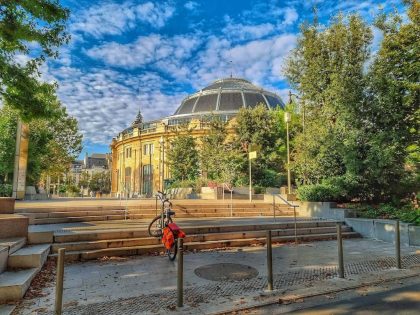
Remember Me: Two Hundred Years of Photography
About 700 works by more than seventy artists from the Pinault Collection, spanning two hundred years of photography. The exhibition runs until January 18, 2027.
“Remember Me” opens the new season at the Bourse de Commerce to mark two hundred years since the invention of photography, and it spreads across every floor of the building. François Pinault’s photography collection is one of the largest in the world in the field, and this is the most extensive showing of it so far.
At the same time, the Rotunda is showing Barbara Kruger’s “The History of Tears”, made especially for the hall’s 24 display cases, with quotes from George Orwell’s “1984” and Aimé Césaire’s “Notebook of a Return to the Native Land”. The same ticket gets you into both. The building itself, once the Paris grain exchange, is one of the most successful renovations I’ve seen in the city.
-
My pick

Timeless Tintoretto
Jacopo Tintoretto (1518–1594) was one of the most prolific painters of the Venetian Renaissance, and about 40 of his works are coming to the 8th arrondissement.
“Timeless Tintoretto” (Éternel Tintoret) shows paintings and works on paper chosen around three lines: the dramatic force of the big scenes, the sense of movement he put into every figure, and the sharp light that separates the figures from the background. Alongside the monumental compositions there are more intimate drawings, where it’s easy to see how the work was built.
The best part of the Musée Jacquemart-André is that it isn’t quite a museum but a home: a private mansion on Boulevard Haussmann built by Édouard André and Nélie Jacquemart, where the collection and the furniture stayed almost as they were. In the permanent collection you’ll find Rembrandt’s “The Pilgrims at Emmaus” and works by Sandro Botticelli.
-
My pick
Eva Gonzalès at the Petit Palais
Eva Gonzalès (1847–1883) was Édouard Manet’s only pupil, and this is the first retrospective devoted to her.
Gonzalès is usually presented as an appendix to the women Impressionists, even though she never showed in their exhibitions. She died at 34, a few weeks after giving birth to her son, and her name got lost between Berthe Morisot (1841–1895) and Mary Cassatt (1844–1926).
The Petit Palais gathered close to a hundred works, paintings, pastels and prints, from the museums of Chicago, Dallas and Denver, the National Gallery in London and private collections. This is her first major exhibition since 1885. After Paris it moves to the Van Gogh Museum in Amsterdam.
The permanent collection of the Petit Palais is free, and the temporary exhibition is sold separately. The museum is closed on Mondays.
-
My pick

Monet, Painting Time
A hundred years after the death of Claude Monet (1840–1926), the Orangerie doesn’t put on a retrospective but asks one question: how do you paint time?
The exhibition brings together about 40 paintings, mostly from the collections of the Musée d’Orsay and the Musée Marmottan Monet, plus other private and public collections. The route goes through the series of the 1890s, in which Monet returned again and again to the same motif at different times of day: “Haystacks” (Les Meules, 1888–1891), “Poplars on the Epte” (Les Peupliers au bord de l’Epte, 1891–1892), “Morning on the Seine” (Matinée sur la Seine, 1896–1897) and “Rouen Cathedral” (La Cathédrale de Rouen, 1892–1898).
All of this leads to “Water Lilies” (Les Nymphéas), the series that occupied him until 1926, and here the advantage of the Orangerie is total: the large decorations are in the same building, in a space designed especially for them. The route ends with a virtual reality experience called “Monet, au fil de l’eau”, which isn’t included in the regular ticket. Admission is 12.5 euros, and on the first Sunday of every month it’s free with a time slot booked in advance.
-
My pick
Zurbarán at the Louvre
A retrospective of Francisco de Zurbarán (1598–1664), in seven chapters, from the Andalusian religious orders to his influence on Manet and Picasso.
Zurbarán worked in Seville and Extremadura and painted mostly on commission for monastic orders: huge series of saints, heavy white fabrics and an almost empty black background. The exhibition is arranged in seven chapters, from the monumental compositions to the portraits and still lifes, and it also includes works by his son Juan de Zurbarán (1620–1649). It was put together with the National Gallery in London and the Art Institute of Chicago.
The final room is about what came after. Édouard Manet (1832–1883) and Pablo Picasso (1881–1973) both looked at Zurbarán, and the Louvre makes that explicit. Note that the exhibition is sold on a separate ticket from regular admission, and the same ticket also gets you into “Sculpting Color”, Spanish painted wood sculpture from Valladolid, which opened the same day.
-
My pick
Bartholdi, Liberty Enlightening the World
The Statue of Liberty was built in Paris before it sailed to New York, and the Orsay devotes an exhibition to the man behind it.
Auguste Bartholdi (1834–1904) was an Alsatian sculptor who worked with Eugène Viollet-le-Duc (1814–1879) and Gustave Eiffel (1832–1923). The exhibition marks 250 years since the American Declaration of Independence.
The statue was assembled in Paris in the 17th arrondissement and towered over the rooftops of the neighborhood before it was taken apart and shipped in pieces across the ocean. That’s the chapter of the story I like best, because it reminds you that the most recognizable American symbol was born on a Paris street.
At the Musée d’Orsay the regular ticket includes the temporary exhibitions on the day of your visit. The museum is closed on Mondays and open late on Thursdays.
-
My pick

Stories of Landscape, from Monet to Hockney
The Musée Marmottan Monet holds the largest Monet collection in the world, and this is the last chance to see it before a long closure.
“Stories of Landscape, from Monet to Hockney” (Histoires de paysages, de Monet à Hockney) looks at what painters of the 20th and 21st centuries did with what Monet discovered. The line runs from 1890 to 2025 and reaches all the way to David Hockney, and along the way it turns out that landscape was a laboratory for these painters and not just a subject.
The Musée Marmottan Monet is also home to “Impression, Sunrise” (Impression, soleil levant), the painting that gave Impressionism its name, and to the largest public collection of Berthe Morisot in the world. One point I want to stress: the museum’s renovation starts in early 2027 and it will close for several years. If you’ve never been, this is your window.
-
My pick
Tiny Lives in the Nave of the Panthéon
The Centre Pompidou, closed for renovation, sends thirty artists from its collection to fill the nave of the Panthéon.
“Tiny Lives” (Vies minuscules) is about anonymous existence, the people whose names history didn’t keep. Choosing to put it in a building whose whole job is to remember great names is the exhibition’s serious joke.
It spreads across the whole nave, and you don’t need any ticket beyond regular admission to the Panthéon. If you’re also going up to the colonnade under the dome, allow an hour and a half for the whole visit.
-
My pick
Mary Cassatt, the Independent
Mary Cassatt (1844–1926) was the only American who exhibited with the Impressionists, and only now is she getting a major exhibition in France.
About 80 paintings, pastels and prints cover her whole career. Cassatt came from Philadelphia, settled in Paris and became a close friend of Edgar Degas (1834–1917), who invited her to exhibit with the group.
It took a hundred years after her death for the national museums of France to give her an exhibition of her own. If you’re also going to the Eva Gonzalès exhibition at the Petit Palais, you’ll get two halves of an answer to the same question about the place of women painters in the 19th century.
The regular Orsay ticket includes the temporary exhibitions on the day of your visit. The exhibition opened three weeks after the Bartholdi exhibition, and you can see both on the same visit.
-
My pick

Paris Torn Off: Jacques Villeglé and Street Art
A hundred years since the birth of Jacques Villeglé (1926–2022), who tore posters off the walls of Paris and turned them into works of art.
For decades Villeglé collected “affiches lacérées”, torn posters he peeled off the billboards of Paris, and hung them just as they were. The result is an unintended archive of the city: film titles, election slogans, death notices, all torn and layered on top of one another. The exhibition sets his work against today’s street art and adds archives, photographs, sound recordings and interviews.
The Musée Carnavalet is my favorite museum in Paris, and it tells the history of the city through more than 625,000 objects, from Marcel Proust’s bedroom to 18th-century shop signs. The permanent collection is free, and the temporary exhibition is sold separately.
-
My pick
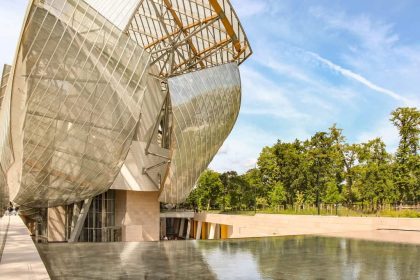
Gustave Fayet, Collector and Creator
Ten paintings by Van Gogh, 78 by Gauguin and 86 by Odilon Redon, from one collection of one collector.
Gustave Fayet (1865–1925) was a winemaker from the Languedoc who became one of the sharpest collectors of his time. The exhibition comes in two parts: the collection, more than 250 works including Van Gogh, Gauguin, Redon, Degas, Cézanne, Toulouse-Lautrec, Renoir, Morisot, Signac, Bonnard, Vuillard and Matisse; and the creator, 375 works by Fayet himself, including 49 ceramics and 87 watercolors.
The Fondation Louis Vuitton reopened on October 9, 2026 with this exhibition. Book ahead, and book early, because some of the time slots sold out in the first week of sales. At the same time the museum is showing the first solo exhibition in France of Mohammad Alfaraj, who works in Al-Ahsa in Saudi Arabia, and the same ticket gets you in.
-
My pick
Primordial Water: Lessons from Mesopotamia
The Louvre takes a fresh look at its Near Eastern antiquities wing through a single theme: water.
Mesopotamia, the land between the Euphrates and the Tigris, is where irrigation was invented, and with it the first canals, dams, bridges and artificial lakes we know of. On tablets inscribed in Sumerian you can read about the first water dispute recorded in history, and the same documents show how much a ruler’s legitimacy depended on the harvest.
The exhibition was built entirely from the Louvre’s own collections, and it doesn’t sit in a separate hall but is planted inside the Near Eastern antiquities galleries, between the Richelieu and Sully wings, with Room 230 as its anchor. Admission is included in the regular ticket to the Louvre. Note that the museum is closed on Tuesdays, and on Wednesdays and Fridays it’s open until 9:45 p.m., which is the best time to be there.
Exhibitions about to open in Paris
Seven exhibitions open in Paris between November and the end of January. They aren’t open to the public yet, so if you’re arriving soon, check the opening date before you plan a day around them.
-
My pick
Louvre Photo: The Museum Through the Camera Lens
More than 300 photographs on two hundred years of the relationship between the Louvre and photography, from the galleries to the spaces visitors never see.
“Louvre Photo” doesn’t present photography as art but the Louvre as a subject. It has architectural photographs from the early days of photography, records of galleries that no longer exist in their original form, portraits of museum staff and visitors, and contemporary work too, including by Robert Polidori.
The exhibition is in the Mezzanine Napoléon. As with any visit to the Louvre, it’s worth booking a timed ticket on the museum’s website in advance. If you’re at the Louvre anyway, this is an exhibition that changes the way you look at the museum itself.
-
My pick
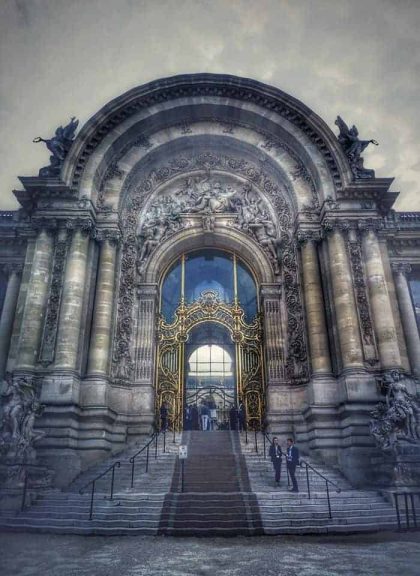
Brussels 1900 at the Petit Palais
More than 250 works on Art Nouveau Brussels, on an unusual loan from three royal institutions in Belgium.
“Brussels 1900” (Bruxelles 1900) covers painting, sculpture, decorative arts, posters, jewelry, photography, architecture and graphic art. The loans come from the Royal Museums of Fine Arts of Belgium, the Royal Museums of Art and History and the Royal Library, and that’s not a combination you see in Paris very often.
Brussels in those years was one of the most important laboratories of Art Nouveau, mainly through Victor Horta and the houses he built there. The exhibition at the Petit Palais lets you see the context without traveling, but if it works its magic on you, the train from Paris to Brussels takes less than two hours. Note that the permanent collection of the Petit Palais is free, and the temporary exhibition is sold separately.
-
My pick
Treasures of Sanxingdui and Jinsha at the Musée Guimet
Bronze Age finds from Sichuan in China, most of them shown outside China for the first time.
“Treasures of Sanxingdui and Jinsha” (Trésors de Sanxingdui et Jinsha) shows finds from two sites in Sichuan, dating from roughly 1600 to 800 BC. The exhibition is built in eight chapters, from the first discovery in 1927 to the excavations of recent years.
Its heart is the bronze, jade and gold objects from six pits excavated between 2020 and 2022. Among the highlights: a bronze head 51.6 cm tall with a gold mask, a gold mask found in 2021 and part of a bronze sacred tree with a bird on it. The objects are on loan from the Sanxingdui Museum and the Jinsha Site Museum, and if the terracotta warriors of Xi’an are all you know, you’ll discover a completely different China here.
-
My pick
The Secrets of the Nasrid Alhambra at the Institut du monde arabe
A reconstruction of the Alhambra in its heyday in the 14th century, not of the fortress as it looks today.
“The Secrets of the Nasrid Alhambra” (Les secrets de l’Alhambra nasride) takes the palace of Granada back to the days of Sultan Muhammad V, in the 14th century. The chapters cover the Fountain of the Lions and the role of water, the geometric decoration and the inscriptions, court festivities and gardens, and also the cultural exchange that crossed the battle lines.
Historical objects are shown alongside digital reconstructions, so the visit feels like walking through the palace. And at the end of your visit, go up to the roof of the Institut du monde arabe: it’s free, and the view over the Seine and Notre-Dame is one of the most beautiful in the city.
-
My pick
Girls: Adolescence, Fashion and Rebellion
Five chapters on how teenage girls have been portrayed in art, fashion and film, from Louise Bourgeois to Sofia Coppola.
“Girls” (Girls. Adolescence, mode et rébellion) brings together artworks, clothes, accessories, photographs, film clips, archives and everyday objects. Among the names in it are Louise Bourgeois, Sofia Coppola, Martin Margiela, Simone Rocha and Jenny Fax.
The Grand Palais is back in business after a long renovation, and the halls under the glass roof are among the most impressive spaces in the city, whatever happens to be hanging in them. Tickets are already on sale on the Grand Palais website.
-
My pick
Mika Ninagawa: Alive with Shadows at the Grand Palais
Photography, video and huge installations of flowers, light and fragments of the city, in saturated colors.
The Japanese photographer and filmmaker Mika Ninagawa (born 1972) shows here with her collective EiM, short for Eternity in a Moment. The works combine photography, video and installation in large spaces you walk into, and the themes that keep coming back are memory, nostalgia and passing time.
The exhibition is open Tuesday to Sunday from 9:30 a.m. to 8 p.m., and on Fridays until 10:30 p.m. If you’re at the Grand Palais in December, you can combine it with “Girls” on the same day.
-
My pick

The World of Viktor&Rolf at the Musée des Arts Décoratifs
A retrospective of thirty years of haute couture by the Dutch duo, with more than a hundred pieces.
Viktor Horsting and Rolf Snoeren have been working together for more than thirty years. The exhibition shows more than a hundred haute couture pieces, alongside the dolls they dress in miniature copies of the clothes, archive material and installations.
Among the collections given pride of place: “Russian Doll” from fall-winter 1999–2000, and “Fashion Statements” from spring 2019, with the dresses that have sentences written on them. The exhibition is based on a show first presented at the Kunsthalle München.
More exhibitions on in Paris right now
If the recommendations above weren’t enough for you, the tool below shows every exhibition on in Paris right now, including those in museums I didn’t cover in this article.
Exhibitions in Paris: questions and answers
Does the Paris Museum Pass get you into temporary exhibitions?
In most cases, no. The Museum Pass opens the permanent collections, and the temporary exhibition is almost always sold separately. There are exceptions, the most notable being the Musée d’Orsay, where the regular ticket includes the temporary exhibitions on the day of your visit. Before you buy a combined ticket, check exactly what it includes.
Do I have to book an exhibition ticket in advance?
For the big exhibitions, yes. At museums like the Louvre, the Orsay or the Fondation Louis Vuitton, booking ahead isn’t a recommendation but a practical requirement, especially on weekends and holidays. At the smaller museums you can usually buy at the desk, but booking ahead still saves you the line.
How much time should I allow for a temporary exhibition in Paris?
An hour to an hour and a half for a medium-sized exhibition, and two hours for a big retrospective like Cezanne at the Grand Palais. Think about it separately from the permanent collection, because the common mistake is to plan two hours for a whole museum and find out the exhibition alone took all of it.
When are Paris museums least crowded?
During late openings, meaning the evenings when a museum stays open late. At the Louvre that’s Wednesdays and Fridays until 9:45 p.m., and other museums have one evening a week. In October and November, after Parisians come back from vacation, the first weeks of a new exhibition are actually the busiest.
How do I know the list here is up to date?
Most cards show the closing date, and the open exhibitions are sorted by it. In the section on exhibitions that haven’t opened yet, the order is by opening date. I go over the page once a month and take out whatever has closed. If a date you see has already passed, you probably caught me between updates, and I’d be glad if you let me know in the comments.
Related reading
