
In short
- What’s there: A Benedictine abbey that began construction in the 8th century, with the hanging cloister and the Knights’ Hall, a fortified village with fewer than fifty residents, and ramparts with seven watchtowers.
- Status: A UNESCO World Heritage Site since 1979, and the abbey is managed by the French Centre des monuments nationaux.
- Getting there: About four hours’ drive from Paris, or a train from Montparnasse to Rennes or Pontorson and then a bus. From the parking lot to the rock, a free shuttle of about 12 minutes, or a walk of about 45 minutes across the bridge.
- How much it costs: Admission to the village and the rock is free. Admission to the abbey is 16 euros in high season and 13 euros in low season, free under age 18. Parking runs 10 to 28 euros a day depending on the season.
- Hours: 9:00 a.m. to 7:00 p.m. from May 1 to August 31, and 9:30 a.m. to 6:00 p.m. the rest of the year. Closed January 1, May 1 and December 25.
- How much time: An hour and a half to two hours at the abbey, plus another 45 minutes to an hour from the parking lot to the gate. A full day isn’t overkill.
- When to go: Outside of July and August, and within the day, early morning or late afternoon, after the tour buses leave.
- And a bonus: The tidal range in the bay reaches up to about 14 meters, and on days of the highest tides the rock becomes an island again.
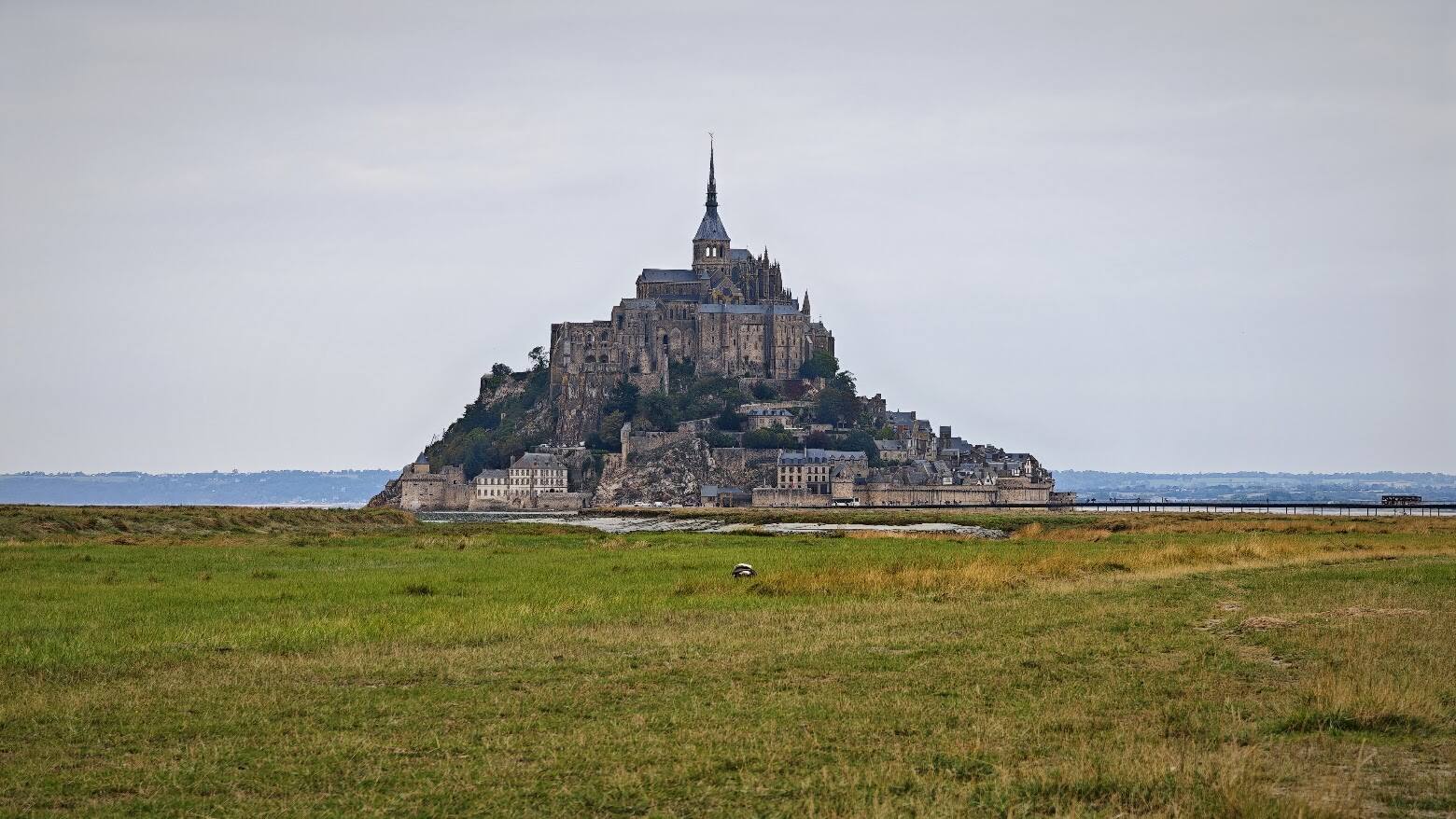
There are moments in life when reality outdoes anything you could have imagined. The first time I saw Mont-Saint-Michel was exactly one of those moments. After a long drive through the green, peaceful landscapes of Brittany (Bretagne), it suddenly appeared on the horizon, a fantastical silhouette rising out of the sea, almost like a mirage. A Gothic abbey scraping the sky, an ancient village clinging to the rock, all of it surrounded by stretches of water and sand as far as you can see. It feels like something not entirely of this world, a true wonder.
But let me tell you a little secret, one that travel guides don’t always mention. The truth is, my path to really getting to know Mont-Saint-Michel was paved with lessons learned from mistakes.
The first time, I came on a day trip from the Loire Valley (Val de Loire), an exhausting drive of almost four hours each way. I barely had time to taste the magic before I had to turn around and head back.
The second time, I was smarter and stayed overnight in nearby Brittany, which gave me more time, but then I fell into the classic tourist trap and arrived during peak hours. The main street, the Grande Rue, felt like a Disneyland branch in the heart of the Middle Ages. Loud souvenir shops, overpriced tourist restaurants, and crowds packing every free inch. For a moment I worried Mickey Mouse himself might jump out of some alley and offer me a piece of plastic Camembert.
Only on my most recent visit, when I stayed really close by (I was at the Mercure Mont Saint Michel), did I manage to arrive early in the morning, before the wave of tourists swept through the alleys, and discover the real Mont-Saint-Michel.
This is the great contradiction of Mont-Saint-Michel: a place of supreme holiness and breathtaking history, wrapped in a thick layer of commercialism. But that’s exactly where I come in. This guide isn’t meant just to hand you a list of sights, but to give you the key to peel back the touristy layer and discover the rock’s authentic, beating heart.
I want to show you how to escape the crowds, find the secret alleys, hear the stories the stones whisper, and feel what the pilgrims, knights and prisoners felt as they walked here centuries ago. Let’s set out together on a journey to the real Mont-Saint-Michel.
A short history, so you know what you’re standing on
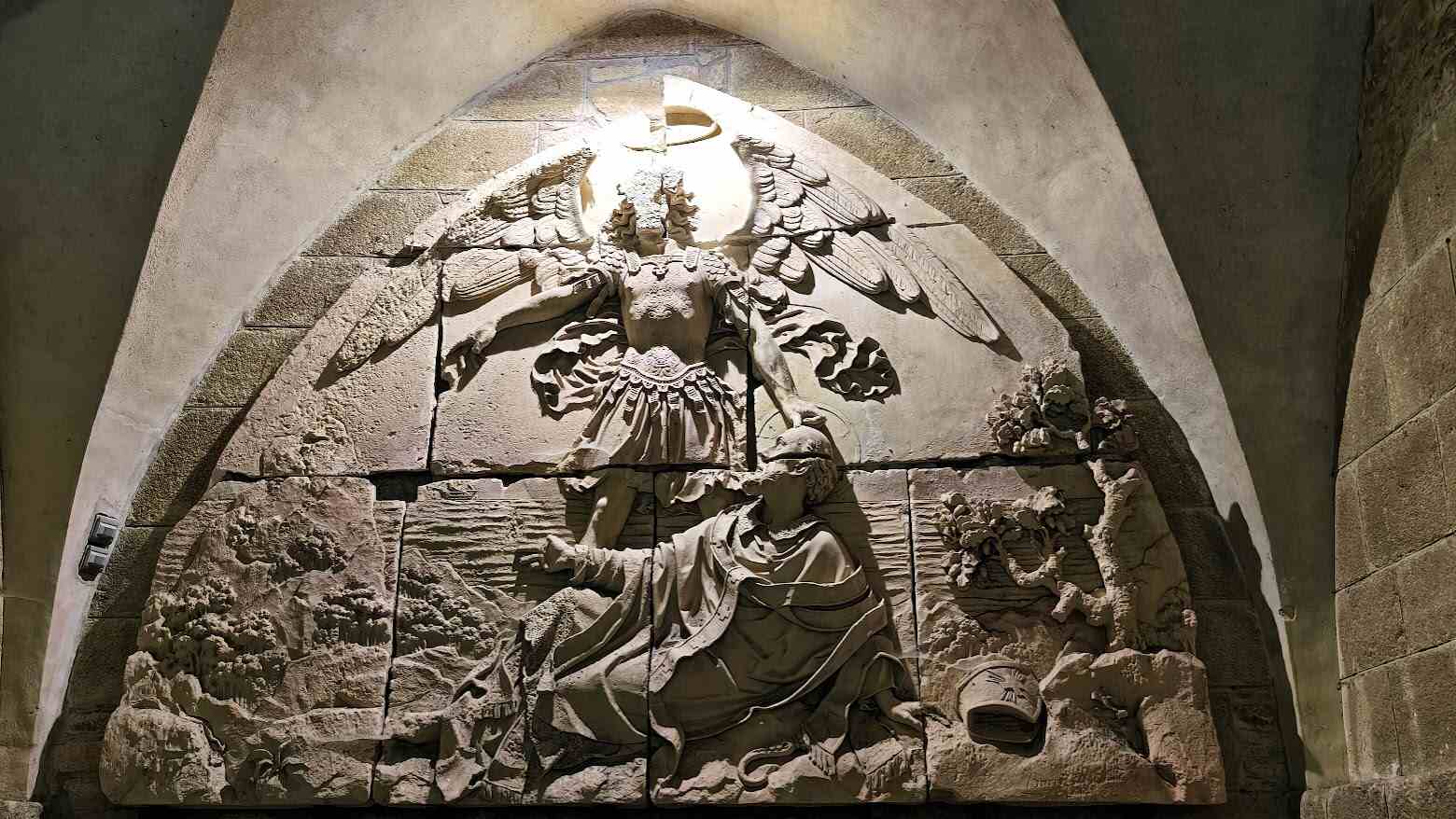
It all began in the year 708, when Aubert of Avranches (Aubert d’Avranches, c. 660-725), the bishop of nearby Avranches, built a small shrine on a solitary rock then called “Mont Tombe,” the Mountain of the Tomb. According to legend, he did so only after the Archangel Michael appeared to him in a dream three times, and on the third time pressed a finger into his head, leaving a hole. The perforated skull is still kept in Avranches today, and it remains one of the more convincing pieces of evidence in the history of religious marketing.
In 966, Richard I (Richard I, 933-996), Duke of Normandy, brought Benedictine monks to the rock, and the abbey became a center of pilgrimage as well as an intellectual hub that copied and illustrated manuscripts. After a fire damaged the abbey in 1204, King Philip Augustus (r. 1180-1223) funded its restoration, and between 1211 and 1228 “La Merveille” (the Marvel) was built, the Gothic structure with two facades and three levels that you climb through today. During the Hundred Years’ War the site became a fortress, and in 1434, at the height of the siege, 119 knights under the command of Louis d’Estouteville (Louis d’Estouteville, c. 1400-1464) repelled the English army. The two cannons the English left behind still stand at the entrance today.
And then came the dark chapter. Louis XI (r. 1461-1483) turned the isolated abbey into a state prison, and after the French Revolution it served as an ordinary prison, earning it the nickname “the Bastille of the Sea.” The prison closed in 1863, the site was recognized as a historic monument in 1874 and restoration began, and in 1966, a thousand years after the Benedictines first arrived, monks returned to the rock.
That’s the gist of it. I wrote the full story separately, with the legends, the knights, Louis XI’s iron cages, and what historical research actually says about them: the wonderful history of Mont-Saint-Michel. And if you’re planning a wider trip through the region, I have a two-week itinerary through Normandy, with a recommended stop along the way at Coutances.
So what exactly is Mont-Saint-Michel
Before getting into the details, a few words on what you’re about to see. Mont-Saint-Michel is a granite rock about 92 meters high, at the edge of a bay that separates Normandy from Brittany. A Benedictine abbey sits on top of the rock, and beneath it a tiny village is squeezed in, really just one street, walls and stairs. It’s also an independent commune, meaning a fully recognized municipality, with a mayor and fewer than fifty registered residents. If that sounds a little absurd to you, you’re right.
The abbey itself is not a dead archaeological site. It’s managed by the French Centre des monuments nationaux, and inside it, to this day, a monastic community from the Fraternités monastiques de Jérusalem holds prayers and masses open to the public. The entire bay was recognized as a UNESCO World Heritage Site in 1979.
And what truly makes this place extraordinary is the sea. The tidal range in the bay reaches up to about 14 meters, among the largest in Europe, and on days of the highest tides the rock becomes a cut-off island again. In 2014 a raised bridge opened here, replacing the old causeway, specifically to let the water flow around the rock the way it once did.
One moment before we start: why it matters to know the history of Mont-Saint-Michel
I know, I know. You want to get to the practical tips and the itinerary itself already. But give me a minute, because this might be the most important tip I can give you. To really understand Mont-Saint-Michel, to feel its power, you need to know, even just a little, its story.
This place wasn’t just an abbey. It was a mighty fortress that held out against the English for thirty years and was never conquered, it was a fearsome prison known as “the Bastille of the Sea,” and it was a national symbol of French resilience and courage. Every stone here is soaked in drama, faith and blood. Without knowing these stories, you’ll just see a pretty abbey.
With these stories, every corner, every wall and every step will take on deep meaning. So take a few minutes and read the article I put together on the wonderful history of Mont-Saint-Michel. I promise you, it will make your experience a thousand times richer.
Practical Information: Everything You Need to Plan the Perfect Visit
Now that we understand the historical background, let’s dive into the practical part, the part that will make sure your day goes smoothly, pleasantly and headache-free.
Opening Hours and Recommended Times
The abbey itself, the main attraction, has different opening hours depending on the season:
- Peak season (May 1 to August 31): open daily from 9:00 a.m. to 7:00 p.m.
- Rest of the year (September 1 to April 30): open daily from 9:30 a.m. to 6:00 p.m.
Important to remember: the last entry to the abbey is one hour before closing time. The abbey is closed three days a year: January 1, May 1 and December 25.
How much time should you set aside? For a self-guided visit to the abbey, plan on an hour and a half to two hours. Add another 45 minutes to an hour for the walk from the parking lot to the abbey gate, depending on how crowded it is, plus more time for the village, the ramparts and a meal. In practice, a full day at Mont-Saint-Michel isn’t excessive, and half a day feels rushed.
And speaking of hours: during the summer months, the abbey also opens in the evening, as part of “Les Nocturnes,” a nighttime visit with a light and music installation inside its halls. The dates and times change from year to year, so it’s worth checking them on the official ticket site before you plan a whole evening around them. If you get the chance, do it. The cloister in the dark is a completely different experience.
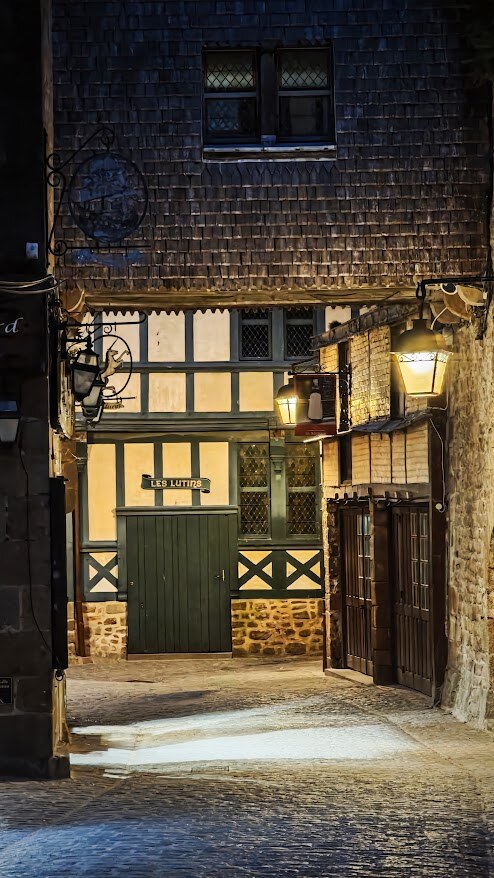
Francophile tip: Want to experience the real magic? Arrive early in the morning, right at opening, or stay until the late afternoon, after most of the tour buses have already left.
That way you can wander the lanes almost alone, without swarms of tourists photobombing you, and really feel the mystical atmosphere of the place. If you follow my advice, I promise you’ll thank me for it.
Getting There: How Do You Reach the Eighth Wonder of the World?
Day Tours from Paris: A Convenient Option If You’d Rather Not Drive
The trip to Mont-Saint-Michel and back in a single day can be exhausting. If you’d rather skip the driving and the logistics, an organized tour from Paris is an excellent, worry-free option. I have a few warm recommendations for you, all through GetYourGuide, a company I work with and trust:
- The full guided experience: For anyone who wants to really understand everything you’re seeing, this tour is an excellent choice. It includes comfortable transportation, an admission ticket to the abbey, and a professional English-speaking guide who stays with you and tells all the fascinating stories.Click here for details and booking.
- An intimate small-group experience: If you prefer a more personal atmosphere, I recommend this tour. It takes place in a small minibus, which makes the whole experience calmer and more pleasant, and it even includes a tasting of local Normandy (Normandie) cider.Click here for details and booking.
By Private Car
This is the most flexible option, and it’s excellent if you want to combine Mont-Saint-Michel with a broader trip through Normandy (I wouldn’t recommend renting a car for just one day just to drive to Mont-Saint-Michel and back, that’s too much of a headache).
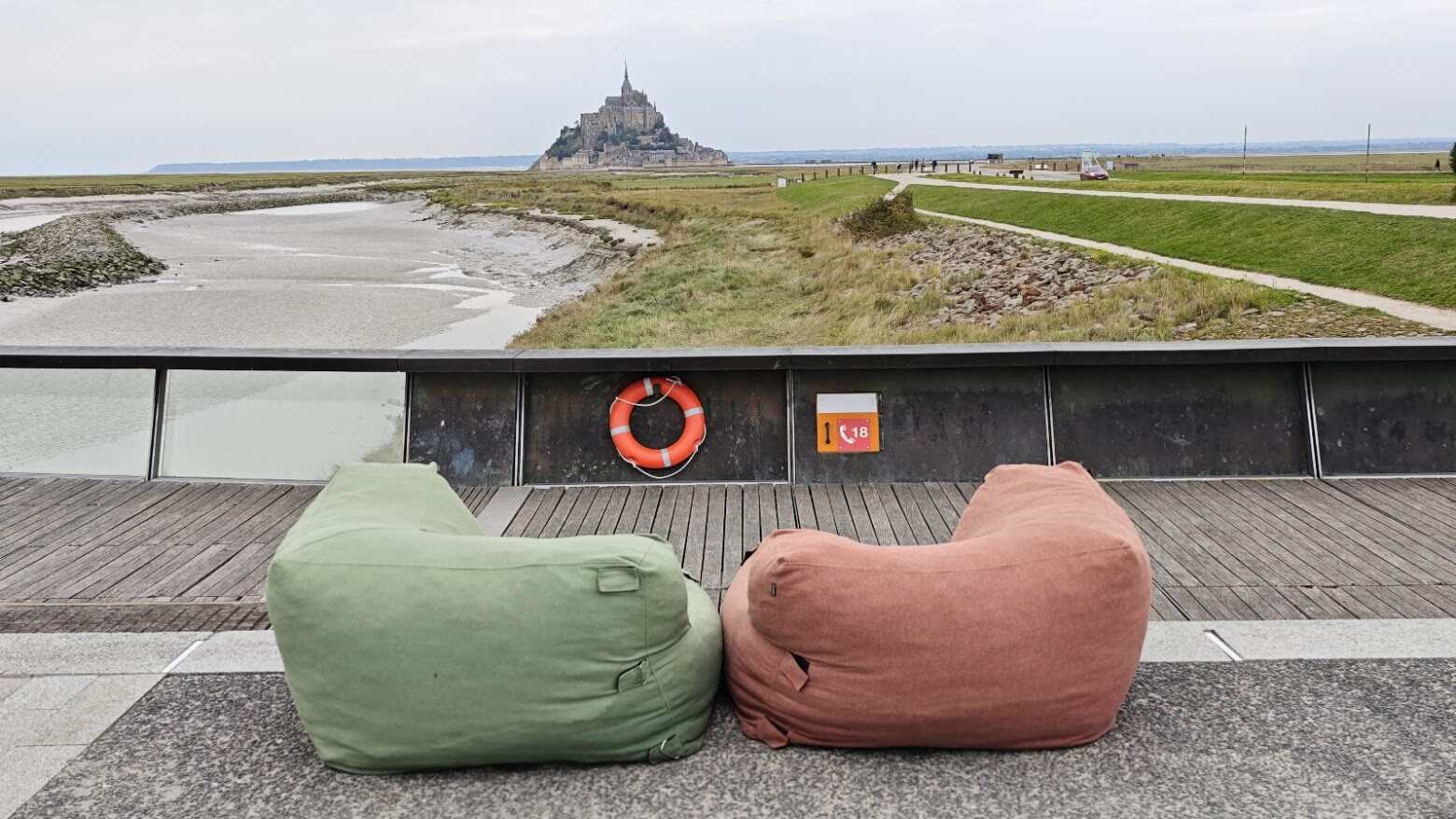
From Paris, the drive takes about 4 hours. Take the A13 highway toward Caen (Caen) and then the A84 directly to Mont-Saint-Michel. Note: the parking lots aren’t at the foot of the hill, but about 2.5 kilometers away from it. From the parking lot, you can take a free shuttle called “Le Passeur” (the ferryman), or walk across the special bridge, a worthwhile experience in itself that takes about 45 minutes and offers stunning photos of the hill as it draws closer.
If you’ve decided to rent a car, you can compare prices across a range of rental sites on my recommended booking sites page, since prices can vary significantly from one site to another.
By Train
The eco-friendly option, and also the one that requires the most planning. The nearest train station is in Pontorson (Pontorson), about 9 km from the hill, and no train goes all the way to the hill itself. These are the main combinations from Paris: the Nomad train from Montparnasse (Montparnasse) station to Villedieu-les-Poêles (Villedieu-les-Poêles), then a bus from there; a high-speed train from Montparnasse to Rennes (Rennes), then a bus; a high-speed train from Montparnasse to Dol-de-Bretagne (Dol-de-Bretagne), then on to Pontorson; and a train from Saint-Lazare (Saint-Lazare) station to Caen (Caen), then a regional train to Pontorson. During tourist season, there’s also a direct line called “the Mont-Saint-Michel train” (Le train du Mont Saint-Michel), from Montparnasse to Pontorson, and the ticket includes the connecting bus to the hill.
It’s convenient to book train tickets in advance through Omio, which brings together train and bus operators on one screen and saves you the hassle of dealing with French websites. Check times and prices on Omio. If you want to compare more options, I also have my recommended booking sites page.
By Bus
The real public transportation option for the area is Keolis Armor, which runs direct lines to Mont-Saint-Michel from Rennes and from Saint-Malo (Saint-Malo), with connections to the high-speed trains from Paris. From Rennes there are several trips a day, and from Saint-Malo just one, so it’s worth checking which days it runs. During tourist season, direct bus lines from Paris also appear, run by companies like Flixbus and BlaBlaCar Bus, but they change from year to year, so I wouldn’t rely on them without checking again.
Parking, the Shuttle, and the Way to the Gate
Here’s a common misconception to correct. Entry to the village and the hill is completely free, at any hour and on any day, but parking is not. The parking lots are run by a concessionaire, and the price varies by season and by length of stay. The first half hour is free year-round, and between September and June, parking is also free from 6:30 p.m. to 3:00 a.m., which makes dinner on the hill a much better deal.
- July and August: up to three hours €20, up to six hours €24, up to 24 hours €28.
- March to June, and September to early November: €16, €19 and €22 respectively.
- Winter: €10, €12 and €14 respectively.
- The tip that saves money: booking online in advance saves two euros, and guests staying at hotels in the La Caserne area get a special reduced rate through the hotel. It’s worth asking at reception before you drive into the parking lot.
There are three ways from the parking lot to the hill. The first is the free shuttle “Le Passeur” (the ferryman), which leaves from the station area near the information center, takes about 12 minutes, and stops at a final stop that’s still about 350 meters from the walls. In other words, even with the shuttle you’ll finish with a short walk. It runs year-round, and in summer until 1:00 a.m.
The second is walking across the bridge, about 2.5 kilometers, which takes about three quarters of an hour and, in my opinion, is worth every minute. The hill grows in front of you step by step, and that’s the image that will stay with you. The third, for anyone dragging a suitcase or a stroller, is to combine the two: shuttle on the way in, walk on the way back, once you’re no longer in a hurry to get anywhere.
Tickets to the Abbey: How to Save Time and Headaches
The line to buy tickets at the abbey entrance can be long and discouraging, especially in summer. It’s a shame to waste precious time on that. The secret is simple: buy tickets online in advance. That lets you skip the line and go straight in.
Prices for 2026, according to the Centre des Monuments Nationaux: €16 for an adult ticket between April 1 and September 30, and €13 between October 1 and March 31. Admission is free up to age 18, and also for ages 18 to 25 who are EU citizens or permanent residents of France, as well as on the first Sunday of January, February, March, November and December. One ticket covers all the abbey’s rooms, including temporary exhibitions.
And if you’re arriving by train, here’s a detail almost nobody tells you: anyone who shows a Nomad network train ticket on the Paris, Mont-Saint-Michel route, within five days of the trip, gets the abbey ticket for €13 instead of €16. Worth keeping that ticket in your pocket.
- To buy tickets in advance (and skip the line) through Tiqets, I recommend clicking here.
- Another excellent option is to book through GetYourGuide, which you can do through this link.
What You Can’t Bring Into the Abbey, and What’s Worth Knowing Before You Go In
This is the part nobody reads, and then gets stuck at the gate. There’s a security check and a visual inspection of bags at the abbey entrance, and you’re not allowed to enter with suitcases or large bags. A shoulder bag or a small bag the size of a carry-on is fine, a suitcase isn’t, and the abbey doesn’t offer storage for belongings. The solution is at the tourist information center near the parking lots, where there are storage lockers for two euros and also a kennel, since pets aren’t allowed inside the abbey, even in a bag. Guide dogs and service dogs are allowed.
A few more things worth knowing: strollers can only enter folded, eating and smoking aren’t allowed in the abbey, there are free restrooms at the start and in the middle of the route, and there’s a bookstore you can enter even without a ticket.
And accessibility, with all due respect to the truth: the abbey is officially classified as a site with very difficult access for anyone who has trouble walking. It sits at the top of a rocky outcrop, and the way there and inside it is full of stairs, and even the village itself is all stairs and cobblestones. The shuttle, on the other hand, is accessible, with ramps and marked spaces for wheelchairs, and you can definitely get as far as the gates and see the hill up close. But the cloister, without stairs, isn’t possible.
Tides, and Why They Matter to You
The tide here isn’t just an atmospheric detail, it’s the schedule of the place. On days of the great tide, called in French grandes marées, the water surrounds the rock and turns it back into an island. It’s spectacular, and it’s also the time when access to some of the nearby parking lots gets blocked and traffic is rerouted. The tide chart and weather forecast are published on the official website of the bay, and I recommend checking them before you set your arrival time. It’s worth planning your visit around the peak of the tide.
And one warning I’m not joking about: you must never go out onto the bay’s sands alone. There’s real quicksand there, and the water rises fast and from several directions at once. The sands can only be crossed with a certified guide, and I’ll go into that more later in the article.
A detailed one-day itinerary: secret alleys, ancient legends and the secrets of kings
Now that we’ve covered all the logistics, it’s time to set out on the walk. This itinerary is built so you can experience the best of Mont-Saint-Michel in a single day, while escaping the crowds and discovering its hidden corners.
The entrance to the rock and the Grande Rue: how to escape the crowds and find the magic
Whether you arrive by shuttle or on foot, the sight of the rock towering above you as you cross the bridge is unforgettable. You enter through a sequence of three impressive gates, one after another: the entrance gate (Porte de l’Avancée), the boulevard gate (Porte du Boulevard) and finally the most fortified and imposing of them all, the King’s Gate (Porte du Roi), complete with a drawbridge and guard towers. You immediately feel like you’ve stepped into a medieval fortress.
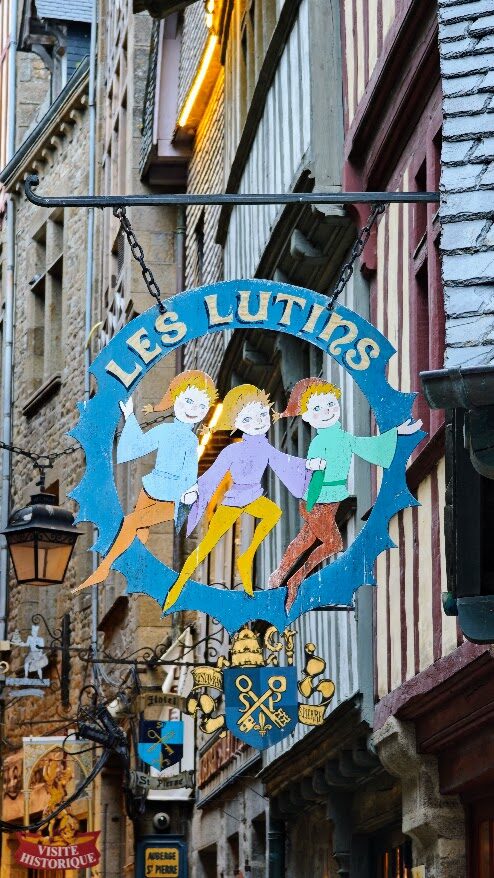
Right after the gates, you’ll land on the main street, the Grande Rue. And here, as I mentioned, the dilemma begins. The street is narrow, steep and packed to the brim with souvenir shops, restaurants and rather pointless little museums (while I was climbing up toward the abbey, my mother was in one of them and told me it was nothing more than a tourist trap).
On your left you’ll see the famous inn of “La Mère Poulard,” known for its giant omelets cooked over an open flame. It’s certainly a charming sight, but don’t be tempted to linger here, because for the price of one omelet there, you could get a business lunch at a Michelin-starred restaurant elsewhere in Normandy.
My secret: don’t waste your precious time fighting the crowds. Step in, soak up the initial atmosphere, and then escape! The best way to do that is to turn right immediately after the King’s Gate and climb straight up to the ramparts. Another option is to walk a bit further up the street, and right after the post office, turn left up the stairs into the quieter alleys.
The ramparts and the hidden alleys: escaping the crowds and discovering the real magic
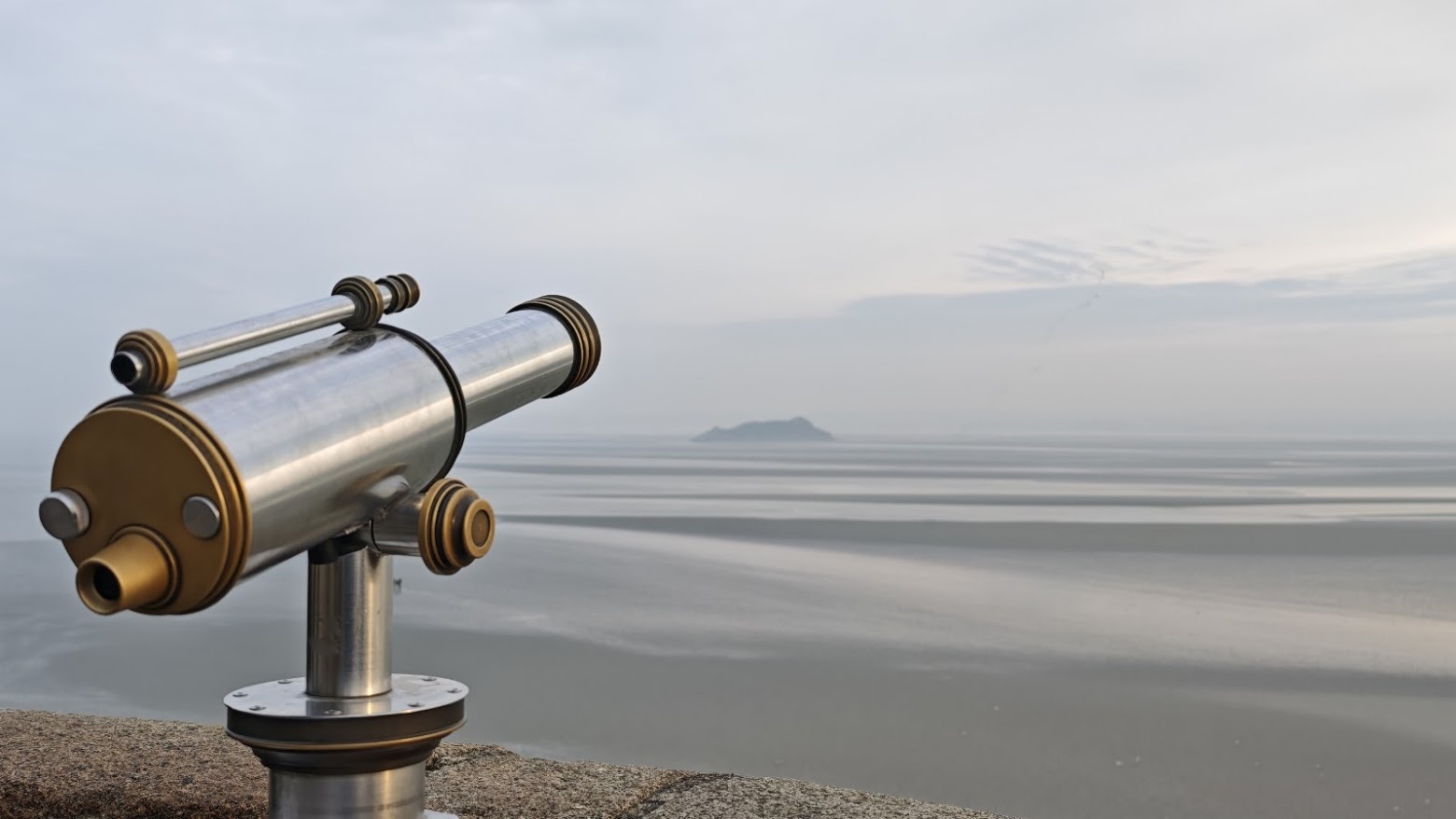
Climbing up to the ramparts (Chemin de Ronde) is like entering another world. The noise of the main street disappears, replaced by silence and breathtaking views of the vast bay. From here you can see the slate roofs of the village houses, the abbey rising above, and the tides, which here reach a difference of up to about 14 meters, among the largest in Europe. These walls, with their seven watchtowers, are what turned the rock into an impenetrable fortress, one that was never conquered, not even at the height of the English sieges of 1423-1424 and 1433-1434, during the Hundred Years’ War (1337-1453).
As you walk along the ramparts, look for the secret corners. One of them is Venelle du Guet (Watch Alley). To find it, come down from the ramparts back to the main street and look for the Hôtel La Croix Blanche. Across from it you’ll see a tiny opening with steps. This is the narrowest alley in Mont-Saint-Michel.
Its popular nickname is “Ruelle des cocus,” the alley of cuckolded husbands. Legend has it that the alley is so narrow that a man wearing the horns of a cuckold couldn’t fit through it. A juicy little story that adds a lot of charm to the place. I walked through it, and even though my name is Zvi, and I’m supposedly entitled to a pair of horns, I managed to get through easily (though after two weeks of calorie-rich meals in Normandy, that task might have gotten a lot harder).
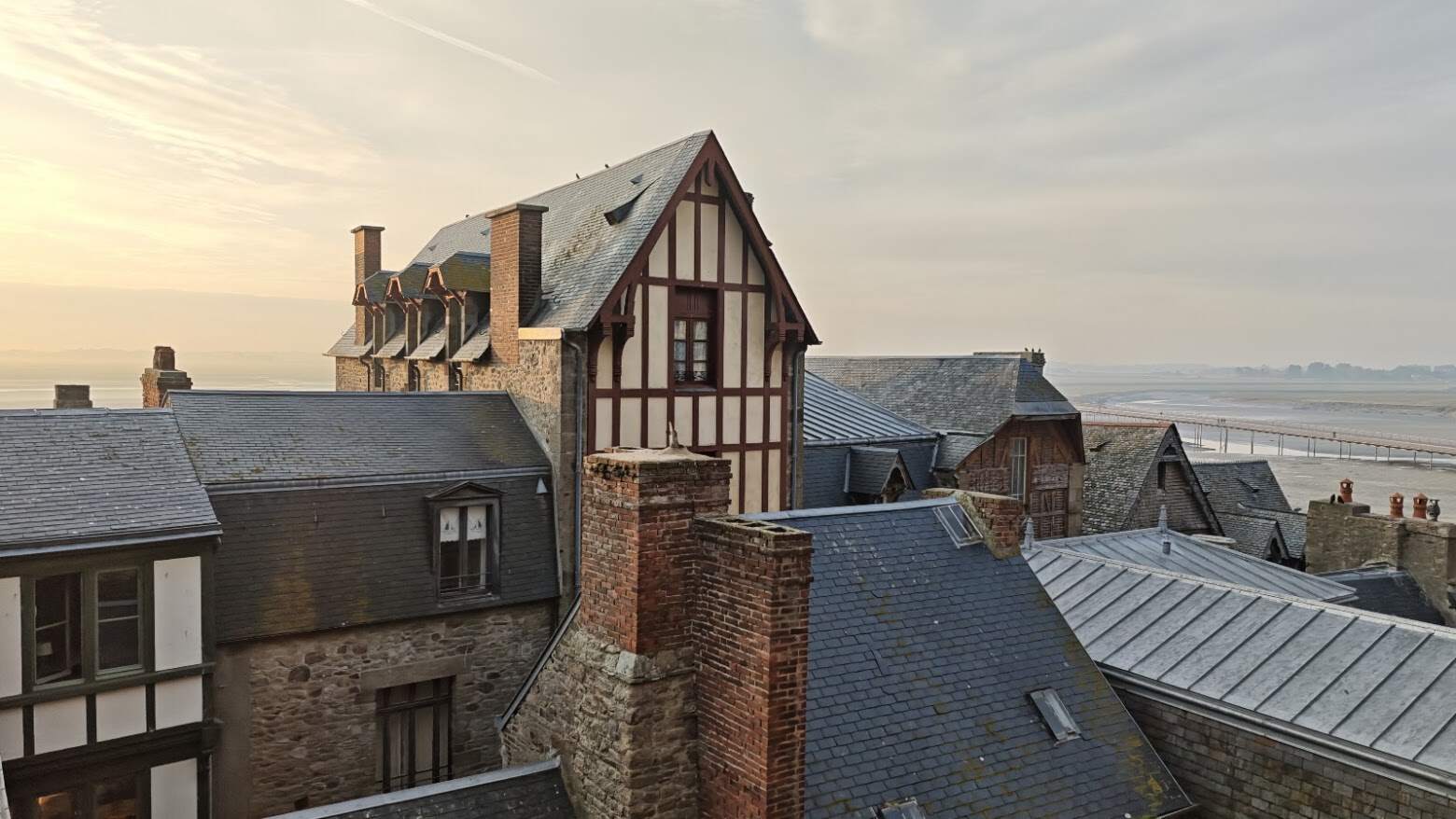
Not far from there, you’ll find another refuge from the crowds: Église Saint-Pierre. This is a small, charming parish church dedicated to Saint Peter, patron saint of fishermen. Step inside for a few quiet moments. Inside, you can admire a beautiful silver statue of the Archangel Michael slaying the dragon.
The climb to the abbey: a journey into the heart of “the Marvel” (La Merveille)
The climb to the abbey isn’t just physical, it’s a symbolic journey upward, from the earthly world to the spiritual one. At the heart of the abbey stands a breathtaking Gothic structure known as “La Merveille,” “the Marvel.” It’s an enormous complex with two facades and three levels, built on the steep northern flank of the rock, an almost unimaginable engineering and architectural feat for the 13th century.
Each level represented a different tier in the social and spiritual hierarchy:
- Level 1 (the earthly world): here stood the almonry (Aumônerie), where poor pilgrims received shelter and food, and the enormous cellar (Cellier) for storing food and wine.
- Level 2 (the intellectual and social world): this level hosted the “public” life of the abbey. Here you’ll find the grand Guest Hall (Salle des Hôtes), where high-ranking guests such as kings and nobles were received. Next to it is the Knights’ Hall (Salle des Chevaliers).
- The secret of the Knights’ Hall: let me let you in on a secret. Despite its romantic name, this hall was never used for knightly feasts. It was actually the scriptorium, the monks’ workroom. Here, in the cold light streaming through the large windows, they sat for hours on end copying and illuminating by hand sacred texts and classical writings, an ant’s work that preserved the knowledge of the ancient world. It only got its misleading name in the 15th century, after King Louis XI (r. 1461-1483) founded the Order of Saint-Michel (Ordre de Saint-Michel) here in 1469.
- Level 3 (the spiritual world): the top level, closest to God. Here you’ll find the monks’ refectory (Réfectoire), where they dined in complete silence, and finally, the jewel in the crown: the cloister (Cloître).
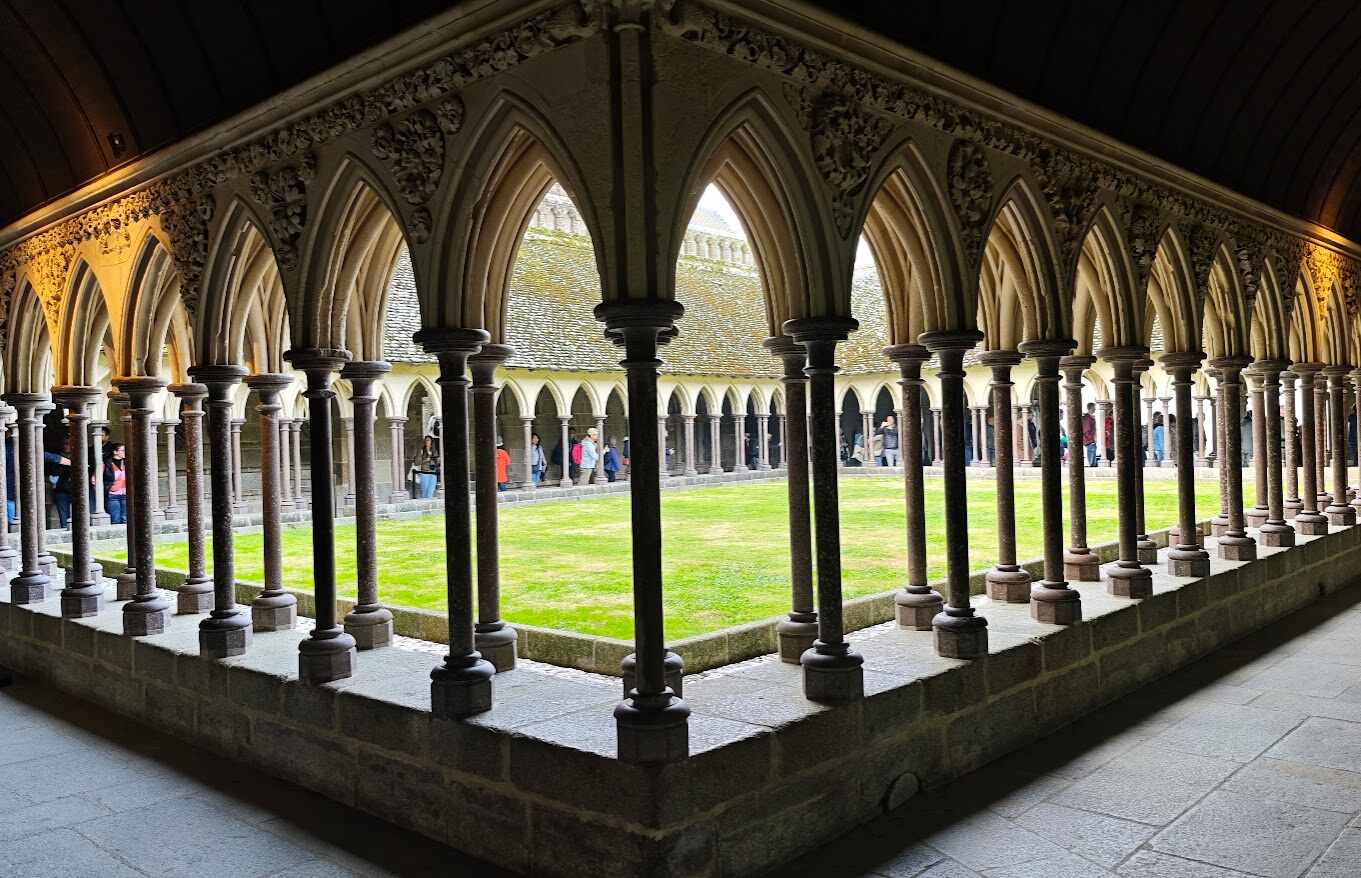
The cloister is a garden suspended between heaven and earth. Unlike any other abbey, it’s not located at the center of the buildings, but right on the roof of “La Merveille.” With its rows of delicate double columns and its garden open to the sky, it was designed as a place for meditation and connection to the divine, far from the noise of the world below. It’s one of the most beautiful and moving places I’ve seen in France.
Crossing the bay on foot: the thing most tourists never do
If there’s one recommendation that turns the visit from “we saw Mont-Saint-Michel” into “we were at Mont-Saint-Michel,” it’s this one. You head out onto the sands with a certified guide, descend into the bay and walk around the rock at low tide, sometimes through puddles, almost always barefoot and in mud up to your ankles. From there, the rock looks the way pilgrims once saw it: from below and from afar, with no parking lot and no bridge.
The public body that manages the bay runs guided nature walks called “Les Belles Découvertes” (The Beautiful Discoveries), year round and on rotating themes: birds, plant life, astronomy. The walks run from fifteen minutes to three hours, the price for an adult ranges from 6 to 12 euros depending on the length of the walk, and children up to age 8 get in free. Group size is limited to about 20 people per walk, so advance booking isn’t a suggestion, it’s a requirement. Walking shoes, weather-appropriate clothing, and that’s it.
And again, because it matters: never head out onto the sands alone. Not even “just a hundred meters, for the photo.”
Where to stay at Mont-Saint-Michel and nearby: where should you sleep to experience the magic?
One of the most common questions I get is whether it’s worth sleeping on the rock itself. My answer is yes, absolutely, at least once! Experiencing Mont-Saint-Michel after the last tourist has left on the evening shuttle, hearing only the cries of the seagulls and the murmur of the waves, is an experience I still remember to this day. Wandering the empty alleys lit by dim streetlamps feels like traveling back in time. But it’s important to understand the different options and the pros and cons of each one.
Staying on the rock itself (Intra-Muros)
This is without a doubt the most authentic experience. You sleep within the walls, in buildings centuries old, and get to see the rock wake up to life in the morning before everyone else.
- Pros: a magical, unique atmosphere, complete quiet in the evening and morning, instant access to every site.
- Cons: very expensive, rooms are usually small with basic comfort, no car access (you’ll need to haul your bags up steep alleys and stairs), and… you can’t see the view of Mont-Saint-Michel, because you’re standing on it!
Staying in the mainland hotel area (La Caserne)
Right across from the bridge leading to the rock is an area known as “La Caserne” (the barracks), home to several modern hotels.
- Pros: convenient car access and private parking, more spacious and modern rooms, and some hotels (like the Relais Saint Michel) offer a stunning panoramic view of the rock right from your room. The free shuttle to the rock stops nearby.
- Cons: less magical and distinctive than staying on the rock, still a fairly touristy area.
To help you choose, I put together an article with hotel recommendations at Mont-Saint-Michel itself and right next to it. I personally stayed at the Mercure Mont Saint Michel and really enjoyed it, including an excellent dinner at its restaurant.
What to eat at Mont-Saint-Michel, and what to skip
Let’s start with the omelet, since everyone asks about it. The inn of La Mère Poulard exists thanks to Annette Poulard (1851-1931), who arrived on the rock as a servant in the house of the architect responsible for restoring the abbey, married Victor Poulard, son of the local baker, in 1873, and opened an inn for pilgrims with him. Her problem was that guests arrived at unpredictable hours, since the tides determined when it was even possible to cross the sands. Her solution was a frothy omelet cooked over an open flame and served quickly as a first course, to curb hunger until the main dish was ready. And that’s how the dish most identified with this place was born.
It’s a great story. Does it justify the price charged today for beaten eggs? In my opinion, no, and I say that as someone who loves historic institutions and is willing to pay for them. If you want the experience for the story and for the sound of the whisks coming from the kitchen, order the omelet on its own and don’t build a whole meal around it.
What is absolutely worth it is salt meadow lamb (agneau de pré-salé). The sheep graze in the areas around the bay, which the sea covers during the highest tides and leaves salty grass behind. The meat comes out with a flavor nothing else matches, and it carries a protected designation of origin that requires the sheep to graze there for at least 70 days. Contrary to what you might expect, the meat itself isn’t any saltier than regular lamb. Alongside it, you’ll find local rope-grown mussels, oysters, whelks (bulot, a sea snail), andouille sausage, and of course galettes and cider.
My practical tip: eat the good meal off the rock. In Pontorson, Avranches and the surrounding villages, you get the same ingredients for half the price and with no line. And for anyone who wants to go deeper, I wrote a whole article on the history and cuisine of Normandy, and I also have a full itinerary along Normandy’s cider route.
The Mont-Saint-Michel I keep coming back to
At the end of the day, as you head back down from the rock, tired but full of memories, I hope you’ll feel that you’ve met the real Mont-Saint-Michel.
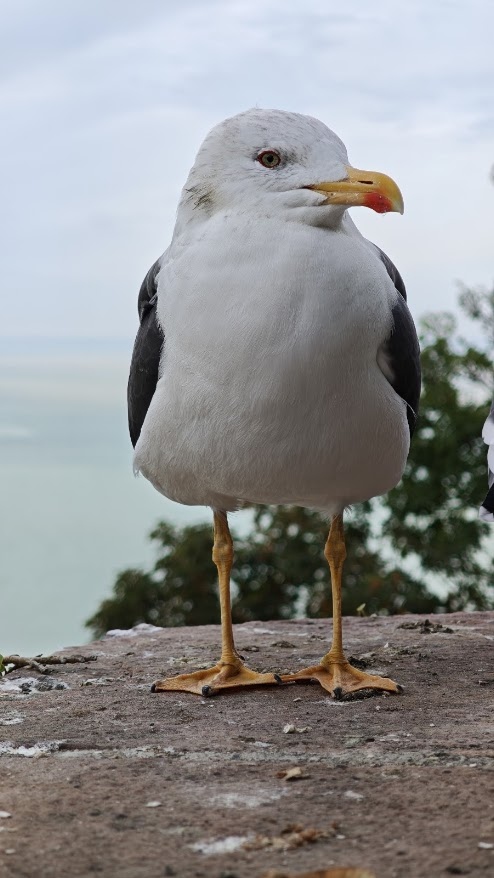
This place is a microcosm of all of human history: a place of supreme faith, of sublime artistic creation, and of crude commercialization that makes you think the Disney corporation bought it.
In the end, though, to me it’s a marvel of architecture, but even more than that, a marvel of the human spirit. Don’t let the crowds scare you off. Look for the quiet corners, listen to the stories, and let the magic of the rock sink deep into your soul. I promise you, it’s an experience that stays with you.
Disclosure: the links to Omio, GetYourGuide, Tiqets and Booking.com are affiliate links. If you book through them, the site earns a small commission at no extra cost to you, and it helps me keep writing here.
Frequently asked questions about Mont-Saint-Michel
How much does it cost to visit Mont-Saint-Michel?
How much time do you need for a visit to Mont-Saint-Michel?
Is it worth sleeping on the mount itself?
How do you get to Mont-Saint-Michel from Paris without a car?
Is parking free, and what do you do with luggage?
When is the best time to visit Mont-Saint-Michel?
Related reading