

In September 2025 we visited Mont-Saint-Michel, and since we had stayed there the evening before and already had the chance to see it, we wrapped up our visit fairly early. Our next stop was Deauville, where we had the wonderful apartment belonging to Yael and her brother, which became our base for exploring Normandy. Since we didn’t want to arrive too early, we decided to look for somewhere along the way, and we settled on Coutances.
I had no idea at the time that this change of plan would take us on a journey through time, into one of the most fascinating and least known towns in Normandy. I never imagined that this peaceful-looking little town held stories of brutal Vikings, warrior bishops, martyred saints, and bombs that destroyed almost everything. Coutances turned out to be a real gem, and I’m happy to share this secret with you.
A journey into the beating heart of Coutances: a stormy, dramatic history
To understand Coutances, you have to dive into its history. This isn’t the calm history of a sleepy Norman town. It’s an epic tale of destruction and rebirth, of faith and fire, a story that turned the town into a symbol of resilience and endurance.
From Roman times to the Viking sword: the birth of a city
Our story begins almost 2,000 years ago. A Gallic tribe called the Unelli built a fortified settlement here on a strategic hill. When the Romans arrived, they recognized the potential and founded a city here called Cosedia. At the end of the 3rd century, Emperor Constantius Chlorus (250-306) refortified it, and the city was renamed Constantia in his honor, the name from which its modern name is derived.
As Christianity spread, Coutances became an important religious center. Around the year 430, its first bishop, Saint Éreptiole, built the city’s first cathedral. For centuries the city flourished, until darker days arrived. In the 9th century, waves of Viking raiders began attacking the Normandy coast.
In the year 866, a fleet of longships sailed up the nearby Soulles river. The Vikings climbed the hill, seized Coutances, plundered it to the ground, and burned the cathedral to ashes. The destruction was so total that the bishops of Coutances abandoned the ruined city and fled to Rouen, where they remained in exile for more than a hundred years. Coutances was left wounded, almost erased from the pages of history.

Geoffroy de Montbray: the warrior bishop who helped conquer England and built a cathedral
The rebirth of Coutances from the ashes is tied inseparably to one of the most colorful and powerful figures in Norman history: Geoffroy de Montbray (died 1093). He was no gentle, fragile churchman, but a typical Norman aristocrat: ambitious, ruthless, a shrewd statesman and a fearless warrior, who felt just as at home in the saddle of his horse in battle as he did standing before the altar.
When he was appointed bishop of Coutances in 1049, he found a ruined city and an impoverished diocese. But Geoffroy had big plans, and he had a little secret that gave him the means to carry them out. His relatives were among the adventurous Norman knights who had headed south and conquered southern Italy and Sicily. Through these connections, he raised a fortune from the new Norman lords of Calabria. He brought this money, which came from the plunder of the south, north to fund the construction of a splendid new Romanesque cathedral in Coutances, which was dedicated in a grand ceremony in 1056, attended by Duke William the Conqueror (1028-1087).

Geoffroy was one of William’s closest advisors. In 1066, he joined the invasion of England, not as a bystander in prayer, but as a key figure. At the decisive Battle of Hastings, he delivered rousing speeches to encourage the troops, and after the victory, it was he who conducted William’s coronation ceremony as King of England at Westminster Abbey. For his loyalty, he was rewarded with 280 estates across England, and became one of the richest and most powerful men in the new kingdom. He kept channeling his English wealth back into Coutances, turning it once again into a center of power and influence.
The Gothic golden age, the wars of religion, and the Protestant martyr
Geoffroy’s Romanesque cathedral stood for about 150 years, but a new spirit was sweeping across Europe: the Gothic spirit, which aspired to build higher, closer to God, and to flood churches with light. In 1208, construction began on the Gothic cathedral we see today, a masterpiece of stone and light. Its architects were so daring that, according to legend, when the Marquis de Vauban, the brilliant military engineer of Louis XIV, saw its central lantern tower, he exclaimed: “Who is the sublime madman who threw this magnificent mass into the air?”
But this golden age didn’t last forever. In the 16th century, Europe was torn apart by the wars of religion between Catholics and Protestants, and Normandy was one of the flashpoints of the conflict. In Coutances, this drama took on a human face in the story of Pierre de Camprond (?-1557), a local landowner and one of the pioneers of the Protestant Reformation in the region.
De Camprond embraced Martin Luther’s ideas and began spreading them. For the powerful Catholic establishment of Coutances, this was unforgivable heresy. He was arrested, put on trial for the gravest of crimes, heresy, and found guilty. His sentence was brutal: he was condemned to be strangled and then burned at the stake. You can picture the terrible scene in the town square, with the cathedral’s Gothic spires rising behind it, a symbol of the unchallenged power of the church he had dared to defy.

From the French Revolution to the horrors of 1944: ashes and rebirth
The stormy history of Coutances wasn’t over yet. During the French Revolution, the city had its own “reign of terror.” In 1794, 24 citizens suspected of being royalist sympathizers were sent from their homes in Coutances to the guillotine in Paris, in an event that became known as “La Fournée de Coutances” (the Coutances batch). The cathedral itself was desecrated and turned into a “Temple of Reason.”
But the greatest disaster still lay ahead. In June 1944, following the invasion of Normandy, Coutances found itself on the front line. For several days, the city was heavily bombed by American and British aircraft, aiming to disrupt the movement of German forces. The result was catastrophic.
Between June 6 and June 14, bombs destroyed three-quarters of the city. 612 houses were completely wiped out and another 1,300 were badly damaged. More than 300 civilians were killed, and thousands were left homeless. Coutances became a field of ruins, a ghost town wrapped in smoke. But amid this destruction, a miracle happened. The cathedral, the largest and most obvious target, was left standing almost untouched, a mighty symbol of hope and survival in the midst of the darkness.
On July 28, 1944, the U.S. Army’s 4th Armored Division entered the city and liberated it as part of Operation Cobra. Because the city of Saint-Lô had been completely destroyed, Coutances served temporarily as the capital of the Manche department until 1953. In the postwar years, a massive 20-year restoration project began, which restored the city’s beauty, always centered around the cathedral that had been miraculously spared.

What should you see in Coutances? The jewels of the Cotentin capital
Now that we’ve dug deep into the history, it’s easier to appreciate the treasures the town offers today. Walking its streets isn’t just a pleasant stroll, it’s an encounter with the stories we just heard.
Notre-Dame de Coutances Cathedral: a mass of stone and light
There’s no doubt the cathedral is the undisputed star of the town. It’s visible from every corner, and its two spires, rising to 78 meters, are the first thing you’ll see as you approach Coutances. From the outside, it’s a masterpiece of Norman Gothic architecture, but the real magic reveals itself inside.

The interior simply takes your breath away. Light pours through the tall windows and floods the main nave, which rises about 22 meters high. Don’t miss the original 13th-century stained-glass windows, the “Last Judgment” window from the 16th century, and the moving modern window commemorating the 1944 bombings.
Now let me share a little secret, a tip from true Francophiles: don’t settle for visiting just the ground floor. Head to the tourist office and find out when the guided tour of the cathedral’s upper sections (“visite des parties hautes”) is offered. It’s one of the most fascinating tours I’ve done in France.

This tour isn’t just a chance for a stunning view. The guide leads you up hidden spiral staircases into the upper galleries. There, behind the Gothic walls, you’ll discover the original Romanesque walls of Geoffroy de Montbray’s 11th-century cathedral, which the Gothic architects left in place and skillfully concealed.
It’s an experience that lets you physically touch the layers of the site’s history. The high point is walking around the base of the central bell tower, looking down into the church from a dizzying height of 40 meters.
Practical information
- Opening hours: The cathedral is open every day. From April 1 to October 30, 8:00 a.m. to 7:00 p.m. From November 1 to March 31, 8:00 a.m. to 6:00 p.m. Hours may change due to religious ceremonies.
- Tickets and more information: Admission to the cathedral is free. The guided tour of the upper sections (highly recommended!) is organized by “Pays d’art et d’histoire du Coutançais” and must be booked in advance through the Coutances tourist office.
The Botanical Garden (Jardin des Plantes): an oasis of calm
Just a few steps from the cathedral is a place with a completely different atmosphere: the botanical garden of Coutances, one of the oldest and most beautiful public gardens in Normandy. The garden is the legacy of a local benefactor, Jean-Jacques Quesnel-Morinière, who left his land to the town in his will so that a garden could be created for public benefit.

The garden, which opened in 1855, is a harmonious and charming mix of styles: there are symmetrical flower beds in the classic French style, romantic groves in the English style, and terraced levels in the Italian style.
It’s a wonderful place to wander, discover rare trees from around the world, admire the colorful flower beds arranged like mosaics (“mosaïculture”), and even challenge yourself with a small maze. This garden represents another side of Coutances: one of tranquility, beauty, and 19th-century civic pride.
Practical information
- Opening hours: The garden is open every day. November-January: 9:00 a.m.-5:00 p.m. February-March: 9:00 a.m.-6:00 p.m. April-June: 9:00 a.m.-8:00 p.m. July-August: 9:00 a.m.-11:00 p.m. September: 9:00 a.m.-8:00 p.m. October: 9:00 a.m.-6:00 p.m.
- Tickets and more information: Admission to the garden is free. For more information, visit the tourist office website.
The Quesnel-Morinière Museum and other churches worth knowing
Right at the entrance to the botanical garden stands the impressive mansion that once belonged to Quesnel-Morinière, now serving as the town’s museum of art and history. Visiting it rounds out the garden experience and offers a glimpse into local bourgeois life in the 19th century. The museum, which opened to the public in 1874, is housed in a striking historic mansion (Hôtel particulier) of granite stone, built in the 17th and 18th centuries.

The museum displays its permanent collections across seven exhibition spaces, offering a route that combines chronological order with various themes. Among the notable rooms is the grand gallery devoted to 19th-century art, which includes sculptures by local artist Ernest Hulin, and a room devoted to the 17th century featuring works from the French, Italian, and Flemish schools, including paintings by Simon Vouet and 16th-century sculptures of musical angels. There’s also a “bishop’s salon” decorated with 18th-century wood paneling, a cabinet of graphic arts displaying 60 works from a collection of around 1,500 drawings and engravings, and a room for modern and contemporary art featuring, among other things, works from the local art movement “Le Pou Qui Grimpe.”
One of the museum’s unique highlights is its remarkable collection of Norman ceramics, much of it donated by a collector named Dr. Stephen-Chauvet. This collection illustrates everyday life in the Cotentin region during the 18th and 19th centuries, displaying household items, decorative objects, and even roof ornaments that retain a rustic yet artistic character. Alongside these, the museum displays traditional Norman furniture, objects uncovered in local archaeological excavations, and mementos related to prominent local figures.
.
Practical information (Quesnel-Morinière Museum)
- Opening hours: Open from May 13 to December 20. Tuesday-Saturday: 2:00-6:00 p.m. Thursday: open starting at 12:00 p.m. In July-August, also open Sundays, 2:00-6:00 p.m.
- Tickets and more information: Admission to the museum is free. For information on rotating exhibitions, visit the museum’s official website.
Where to stay in Coutances
Even though on this particular trip I chose to stay at Yael and her brother’s apartment in Deauville, Coutances charmed me so much that I went back and did some in-depth research. I have no doubt this little town can serve as an excellent, much quieter base for exploring the Cotentin peninsula. Here are 4 places to stay that I found, suited to different styles and budgets.
For history and luxury lovers (high-end): Hôtel Tanquerey de La Rochaisière
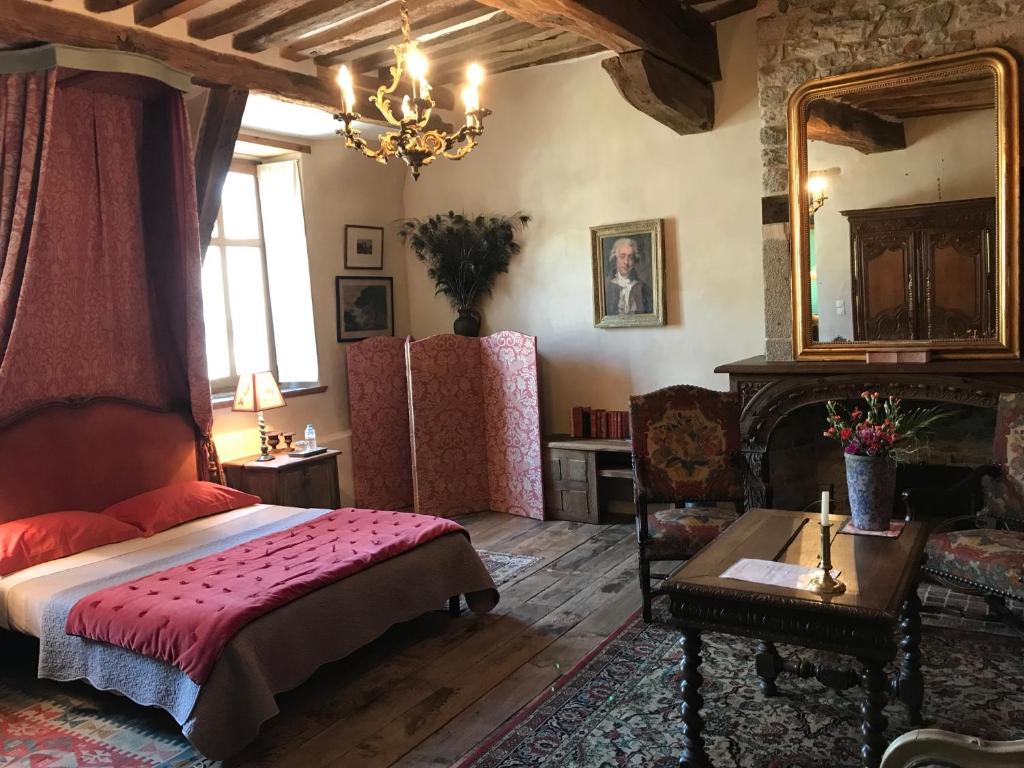
This isn’t just a hotel, it’s an experience. It’s a private mansion (hôtel particulier) from the 17th and 18th centuries, converted into a guesthouse with just a few rooms. The place is run by a charming and knowledgeable host, and staying there feels like sleeping inside a living museum. Every corner tells a story. Perfect for couples looking for a romantic, unforgettable getaway.
For more details and to book on Booking.com, use this link.
For design lovers and connoisseurs (boutique): La Villégiature

A true gem. This is a 19th-century mansion renovated with real inspiration, surrounded by a vast green park. The owners are professional chefs and offer guests shared dinners (“table d’hôtes”) based on local produce. It’s a perfect combination of chic design, warm hospitality, gourmet food, and a homey atmosphere.
For more details and to book on Booking.com, use this link.
The safe and comfortable choice (mid-range): Hôtel La Pocatière
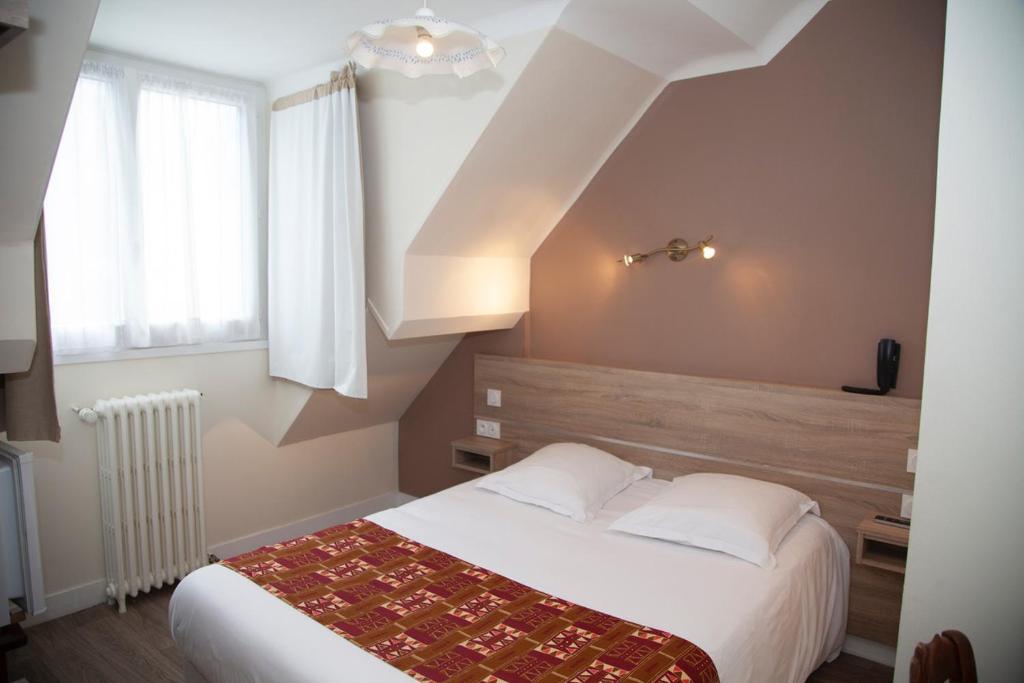
A classic, well-rated French hotel located in the heart of town, within walking distance of the cathedral and the shopping areas. Guests praise it again and again for its great location, exceptionally friendly staff, comfortable and clean rooms, and good breakfast. The perfect choice for anyone looking for comfort, reliability, and a central location.
For more details and to book on Booking.com, use this link.
The smart, budget-friendly choice: Ibis budget Coutances
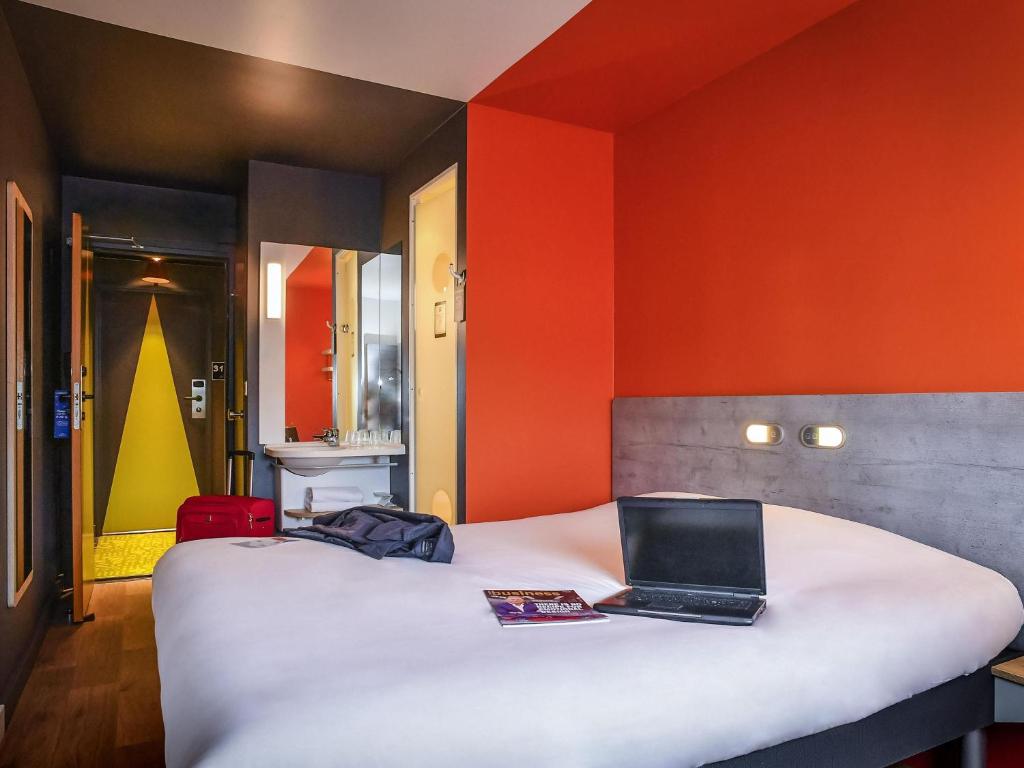
Clean, modern, and functional. Ibis budget hotels are always a great choice for anyone looking for good value for their money. This hotel, located just outside the center, offers everything a traveler on the road needs: a comfortable bed, a clean room, free parking, Wi-Fi, and a reliable breakfast, all at a very reasonable price.
For more details and to book on Booking.com, use this link.
For the full list of places to stay in Coutances and the surrounding area, I recommend checking this link.
Related reading