
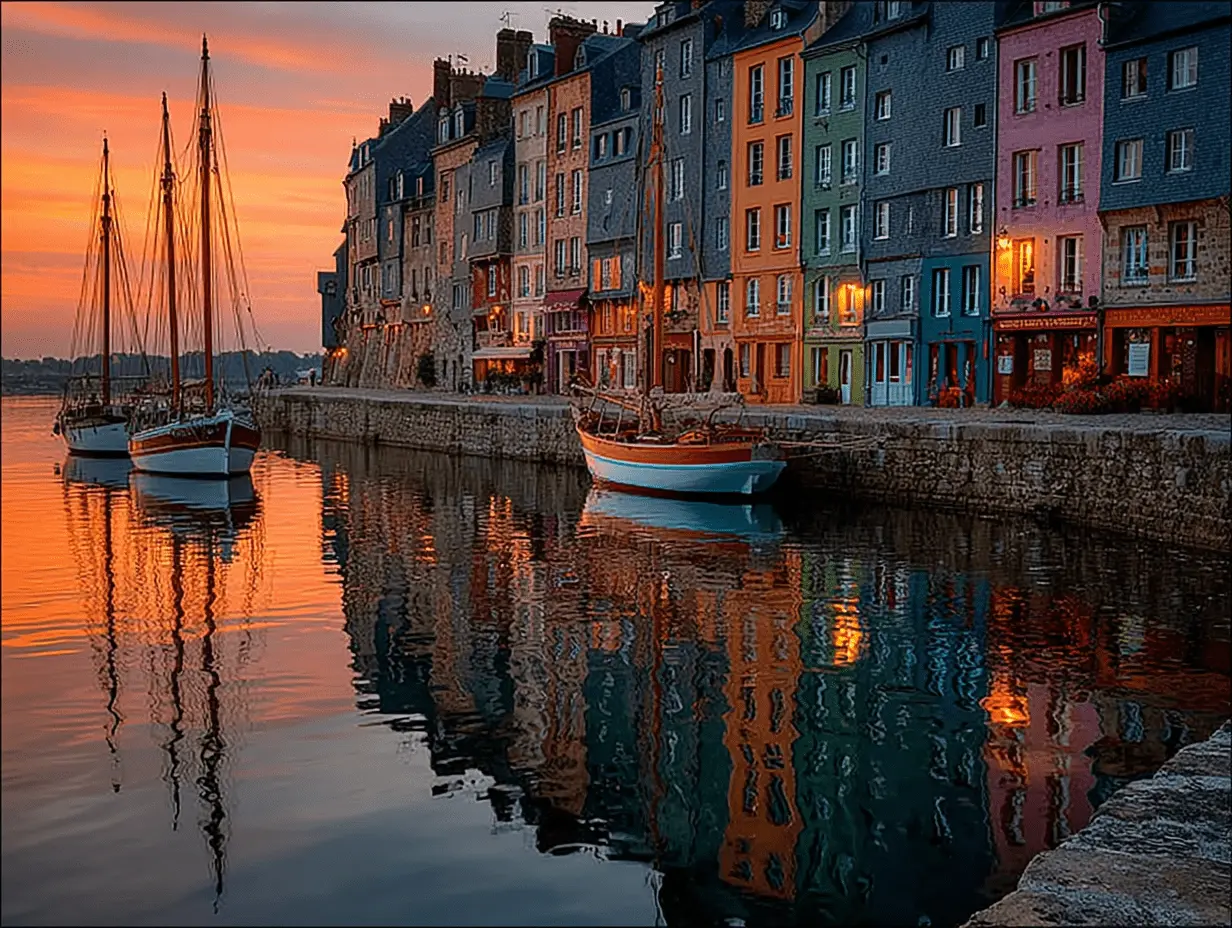
Some places call to you before you’ve ever set foot in them. For me, Honfleur is one of those places. I’m planning my trip there for September 2025, and the more I dig into its story, the more my anticipation grows. I picture myself standing at the edge of the “Vieux Bassin,” the old harbor, feeling the pulse of centuries of history beating from the tall houses, the swaying sailboats, and the famous light that danced across Monet’s canvases.
It’s easy to fall in love with the picture-postcard image of Honfleur, but let me share a secret I’ve learned: to truly understand Honfleur means diving into its stories before your feet ever touch its old cobblestones.
This town isn’t just beautiful, it’s a miracle. It’s one of the few Normandy towns that survived the horrific bombings of World War II almost untouched. While cities like Caen, Rouen, and Le Havre were rebuilt from ashes, Honfleur has stayed nearly as it was for centuries.
It’s a living museum, a time capsule offering us a rare glimpse into the Normandy of old. That’s why knowing its history isn’t just trivia; it’s the key that lets you see the ghosts of the Vikings, the explorers, the artists, and the revolutionaries who still walk its alleyways. Let’s take a trip through time and uncover together the true soul of this gem of Normandy.
From Vikings to Fortresses: The Birth of a Strategic Port
To understand Honfleur, you have to go back to the time when it all began. This town wasn’t born by chance; it’s the product of geography, strategy, and an adventurous spirit.
The Secret Hidden in the Name
Many people think the name “Honfleur” is somehow related to flowers (fleur), but the truth is far more fascinating and reveals the town’s real DNA. The name itself is a historical document, encoding the story of its founding. The first written mention of the place appears in a document from 1025, written by Richard III (997-1027).
The name is made up of two ancient words, most likely from Old Norse or Anglo-Saxon, brought here by the Vikings who settled and founded the port. The first part, “Hon,” probably comes from the Norse personal name “Húni,” or from the word “Honne,” meaning a small cove or village.
The second part, “fleur,” is a corruption of the word “fleu” or “flēot,” meaning a stream or river mouth. So “Honfleur” actually means “Húni’s stream” or “the village at the river mouth.” The name perfectly describes its strategic location: a small, sheltered settlement on a tidal creek, right at the entrance to the mighty Seine estuary. The Vikings, master navigators of sea and river, knew exactly what they were doing.
The Hundred Years’ War: The Fortress That Wouldn’t Fall
This strategic position, so useful to the Vikings, made Honfleur a critical point in the long and bloody struggle between France and England: the Hundred Years’ War. Honfleur was the key to controlling the entrance to the Seine, and through it, the route to Paris. King Charles V (r. 1364-1380) understood this well, and around 1373 ordered the town fortified with massive stone walls. The ambitious project was overseen by none other than Admiral Jean de Vienne (c. 1341-1396), one of France’s greatest naval commanders.
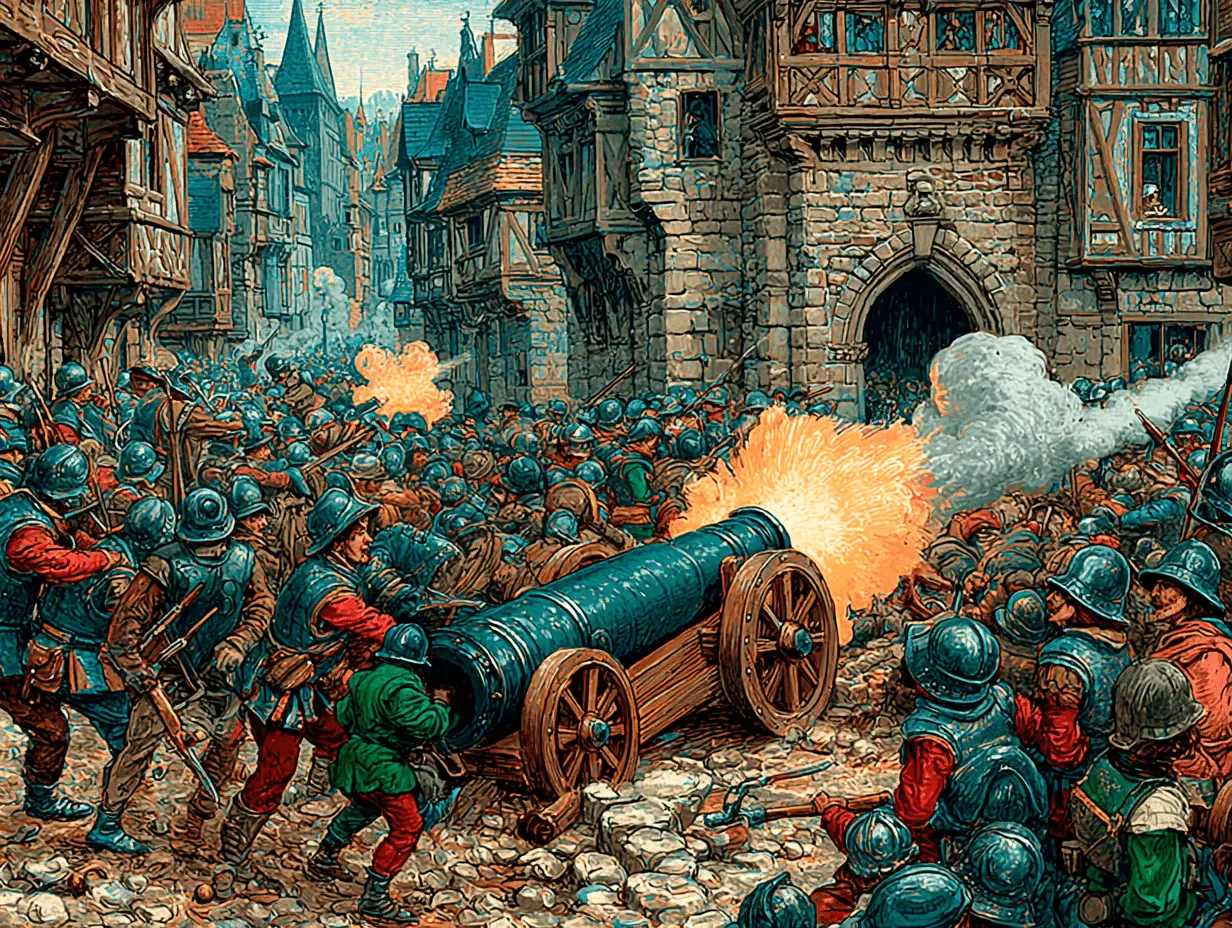
Despite the fortifications, the town eventually fell to the English. Its liberation in 1450 was a pivotal moment in the reconquest of Normandy. The French army, commanded by Jean de Dunois (1402-1468), laid siege to the town. And here, friends, lies a juicy little story.
If you visit the Musée d’Ethnographie in Honfleur, you’ll see a stunning stained-glass window depicting a bloody, heroic hand-to-hand battle on the town walls. But the historical truth, as often happens, is less photogenic. According to historian Thomas Basin, the French brought heavy artillery, “bombard cannons, culverins, and flying machines,” and pounded the walls mercilessly.
The English garrison, realizing it couldn’t withstand the firepower, simply surrendered. The heroic battle in the stained glass is likely “artistic license” meant to glorify the victory. After its liberation, Honfleur didn’t stay quiet for long. Its bold sailors launched their own raids on the English coast, and in one of them even partially destroyed the town of Sandwich in Kent.
The victory at Honfleur, like other Normandy victories, strengthened Charles VII’s position, but behind the scenes of the royal court another drama was unfolding. This was the era of Agnès Sorel (c. 1422-1450), the first official royal mistress in French history.
She wasn’t just a beautiful woman, but also a shrewd political advisor who held real power and influenced the king to take a more active role in the war against the English. Her sudden, mysterious death shortly after Normandy’s liberation gave rise to rumors of poisoning, rumors that added a layer of intrigue and tragedy to this turbulent period.
The Age of Discovery: When Honfleur Sailed to the Ends of the Earth
With the Hundred Years’ War over, Honfleur’s warlike energy turned outward, toward the vast Atlantic Ocean. The small town became a launching point for bold expeditions that redrew the map of the world.
Samuel de Champlain and the Dream of New France
The name most associated with Honfleur’s age of discovery is undoubtedly Samuel de Champlain (c. 1567-1635), the “Father of New France.” But it’s important to understand why Honfleur, specifically, became the base for his voyages. It wasn’t by chance.
For more than a hundred years before Champlain, Honfleur’s sailors were already experts at navigating the North Atlantic. They regularly sailed to the rich fishing grounds of Newfoundland to catch cod, a major economic sector for the town. They developed the ships, the knowledge, and the courage needed to survive the dangerous journey.
When the French crown decided to fund settlement expeditions in North America, Honfleur was the natural choice. It had the human and material resources. Between 1603 and 1620, Champlain set sail from Honfleur at least eight times. His most pivotal voyage set out in 1608. Champlain sailed from the port aboard the ship “Don-de-Dieu” (“Gift of God”), and on July 3 of that year founded the city of Québec. So, from Honfleur’s humble docks, the French presence in North America was born.
The Du Val Conspiracy
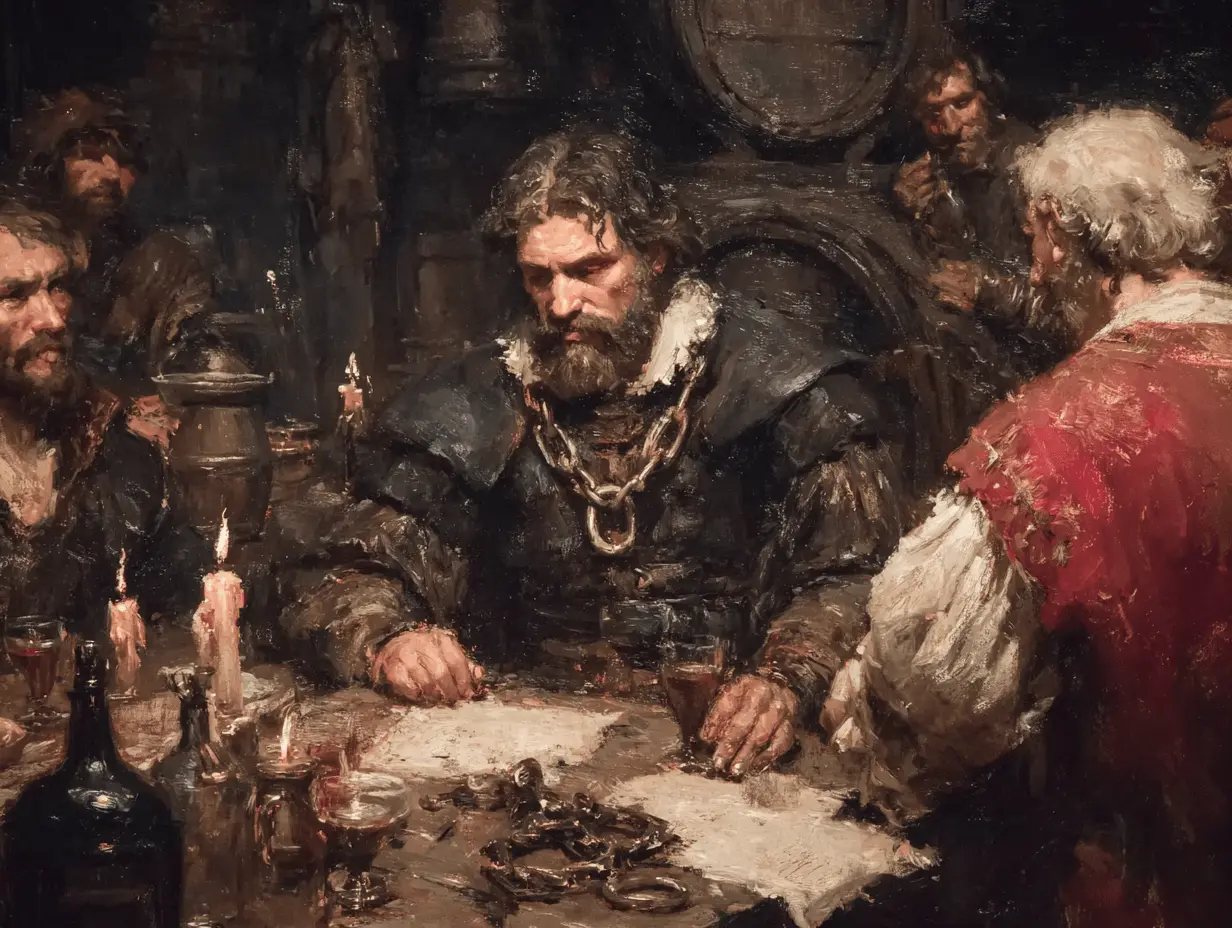
Life in the young colony was far from idyllic. Shortly after Québec’s founding in 1608, a plot was hatched to murder Champlain. This story reveals the brutal reality of those days. The leader of the conspirators was a locksmith named Jean Du Val, who plotted with three others to kill Champlain and hand the fort over to rival Spanish or Basque forces in exchange for payment.
But someone informed on the plot. Champlain, with great cunning, lured the four main conspirators onto a boat under some pretext, and arrested them there. The punishment was swift and brutal, meant to make an example. Jean Du Val “was strangled and hanged at Québec, and his head was displayed in the most prominent spot in Champlain’s fort.” His three accomplices were sent back to France for trial. It’s a chilling reminder that the great history of continental discovery was also written in blood, betrayal, and small, brutal power struggles.
The Dark Side of the Golden Age: The Slave Trade
Alongside the heroic tales of explorers, Honfleur’s history has a dark and painful side that can’t be ignored: its deep involvement in the transatlantic slave trade. In the 18th century, Honfleur was France’s fifth most important slaving port, and it often worked in partnership with its larger neighbor, Le Havre.
Between 1763 and 1792 alone, at least 114 documented slave ship expeditions left Honfleur. Respected local families, such as the Lacoudrais family, were ship owners (armateurs) who financed and organized these horrific voyages.
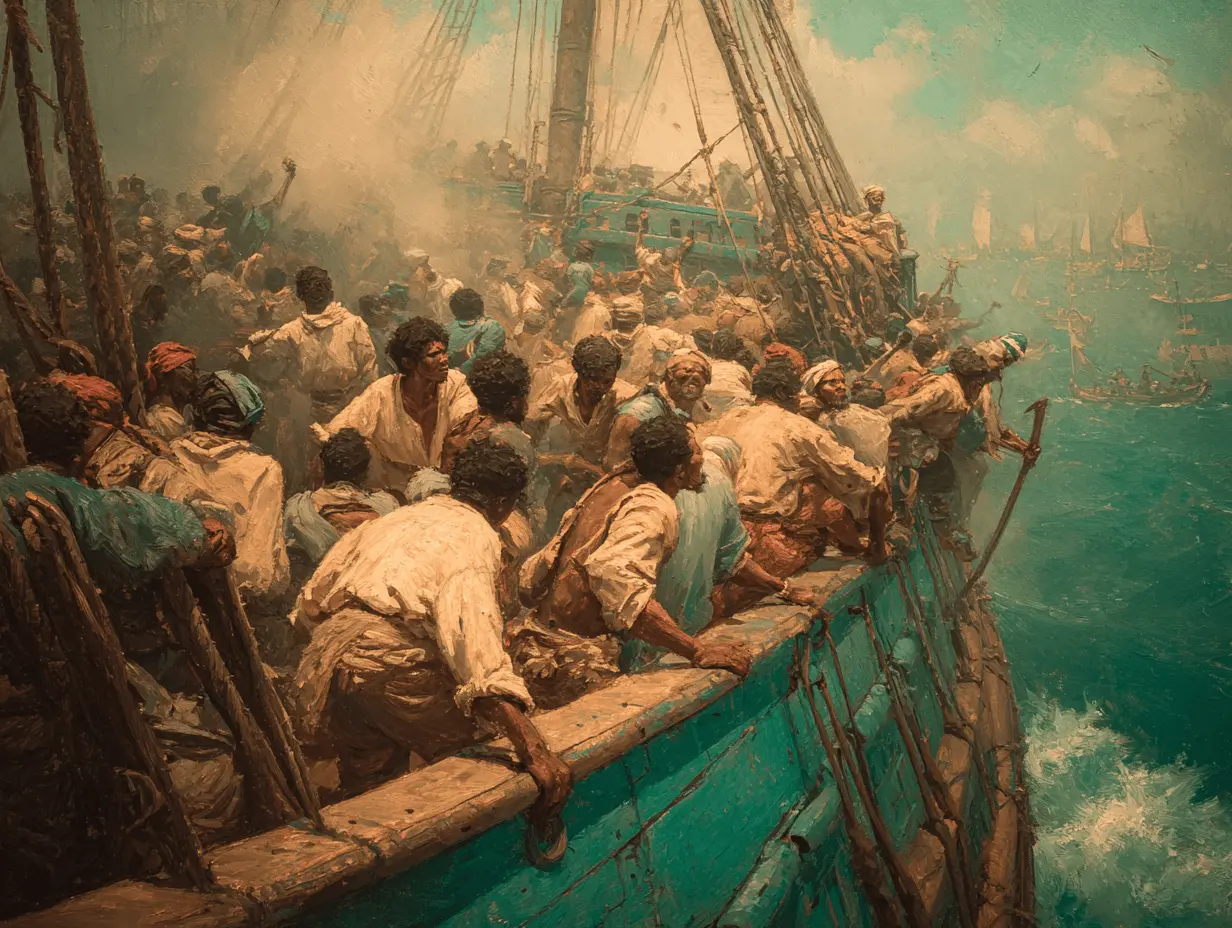
The archives of the Calvados department preserve chilling records from these voyages, turning an abstract horror into concrete reality. One of the most dramatic stories involves a revolt that broke out aboard the ship “La Flore” from Honfleur in 1787.
The captain’s report describes how, during lunch, the captives, who had managed to free themselves from their chains during a stormy night, rose up. They used oars and the carpenter’s tools as weapons. The crew responded with gunfire. A single cannon shot hit three captives: one, described in the report with chilling detachment as “a very good-looking man” (un très bel homme), was killed and fell into the sea, and two others were wounded.
To identify the leaders of the revolt, the “most guilty” were whipped 50 times each. This story, with its small details: the lunch hour, the improvised weapons, the detached description of the dead man, lets us touch, if only for a moment, the horrific human reality of the “triangular trade,” which was an inseparable part of Honfleur’s economic prosperity at the time.
Life in the Port: Between Cod Fishing and Superstition
Honfleur’s prosperity didn’t come only from distant voyages and controversial trade. The town’s daily life was inseparably tied to the sea, and above all to one economic sector that defined it for centuries: the great cod fishery (La Grande Pêche) off the coast of Newfoundland.
The Hard Life of Cod Fishermen
Long before Champlain dreamed of Québec, Honfleur’s sailors already knew the dangerous routes of the North Atlantic like the back of their hand. Every year, usually in February or March, the “Terre-neuviers” ships would leave the port for a months-long voyage, leaving worried families behind. Life aboard these ships was grueling. The fishermen worked endless hours in freezing cold, exposed to sudden storms and the constant danger of drowning.
The food on board was basic and monotonous, consisting mainly of hard biscuits, salted meat, dried vegetables, and of course, fish as fresh as could be managed. The work itself was exhausting: lowering small fishing boats (dories) into icy waters, casting and hauling nets or lines hundreds of meters long, and processing the fish on deck: gutting, cleaning, and heavily salting it to preserve the catch until the return to port. The whole town’s economy revolved around this fishery, which made Honfleur one of the most important cod ports in France.
Sailors’ Superstitions
A life of constant danger gave rise to a rich culture of superstitions, meant to ward off bad luck and ensure a safe return. Norman sailors, like their counterparts everywhere, had a long list of dos and don’ts. One of the most common beliefs was an absolute ban on saying the word “rabbit” (lapin) aboard ship. The reason was surprisingly practical: in the past, rabbits brought aboard as live food would gnaw through the ship’s hemp ropes, putting the vessel at risk.
Setting sail on a Friday was also considered a bad omen, a belief probably linked to the day of Christ’s crucifixion. Certain words, like “rope” (corde), were replaced with nautical terms like “bout,” since the only rope aboard with that name was the one used to hang mutineers. These beliefs weren’t just folklore; they were part of the psychological mechanism that helped sailors cope with the constant fear and anxiety of life on the open sea.
The Birth of Impressionism: When Honfleur’s Light Conquered the Art World
In the 19th century, Honfleur once again became the stage for a historic event, but this time not on a battlefield or the open sea, but on an easel. The special, ever-changing light of the Seine estuary drew in painters who would go on to revolutionize the art world.
The Ferme Saint-Siméon Inn: A Revolution with an Easel
On the hills overlooking Honfleur and the river mouth stood a modest inn called “Ferme Saint-Siméon.” The place became a pilgrimage site, the unofficial headquarters of a group of artists fed up with the rigid rules of the Paris Académie des Beaux-Arts. This group, which included Eugène Boudin (1824-1898), Claude Monet (1840-1926), Gustave Courbet (1819-1877), Johan Barthold Jongkind (1819-1891), and others, is known today as the “École de Honfleur,” and is considered a direct forerunner of the Impressionist movement. They came here to paint outdoors (en plein air), to capture the fleeting moment, the light and atmosphere: ideas that were revolutionary at the time.
Eugène Boudin and Claude Monet: Master and Student
At the heart of this revolution was one defining relationship: between Eugène Boudin (1824-1898), a native of Honfleur, and the young Claude Monet (1840-1926). Boudin was a pioneer of outdoor painting, an artist who devoted his life to painting the ever-changing skies and waters of Normandy. In 1856, he met a talented young man from nearby Le Havre, Claude Monet, who at the time was making a good living drawing caricatures. Boudin convinced the skeptical Monet to come outside with him and try painting landscapes.
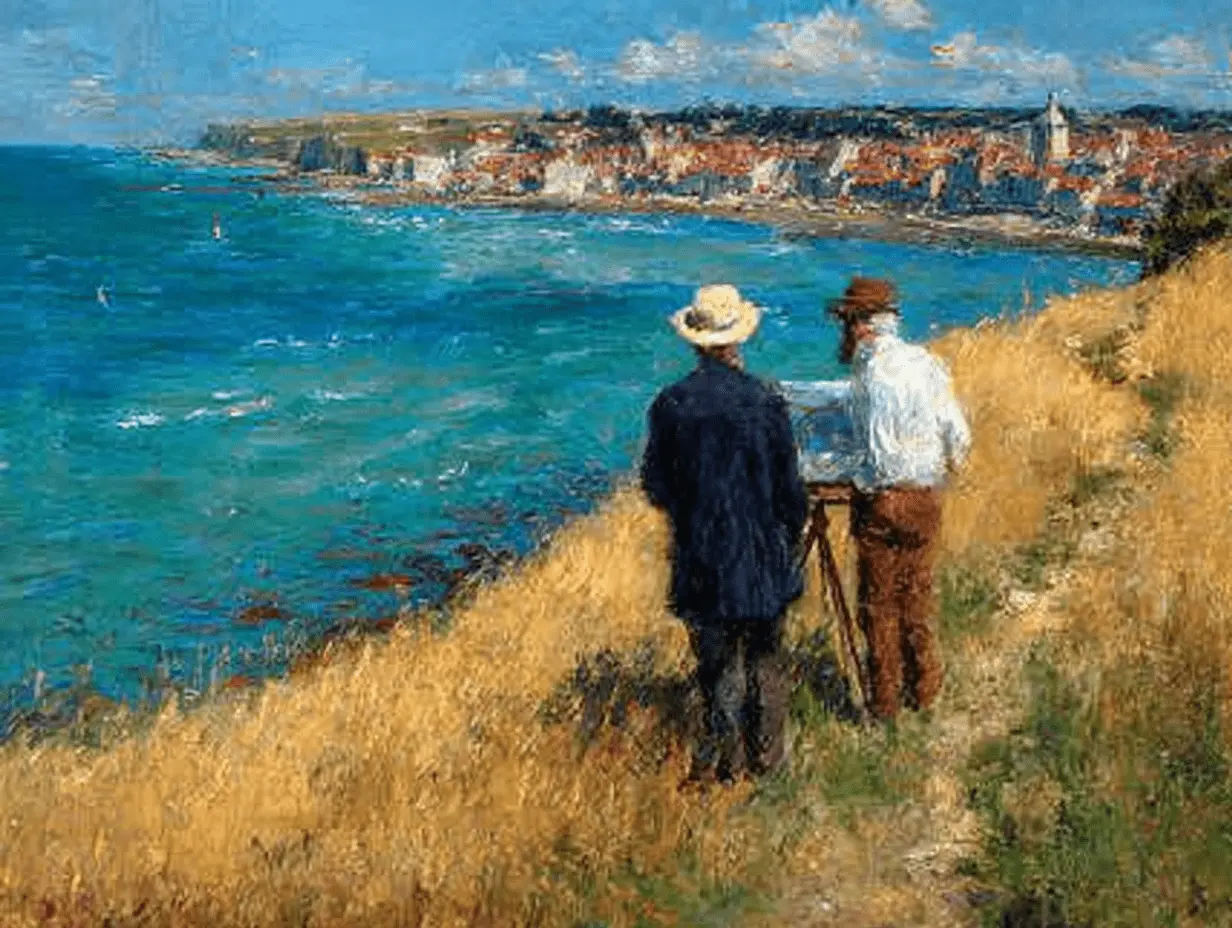
This meeting changed the history of art. Monet himself said late in life, “I owe everything to Boudin” (“Je dois tout à Boudin”). But I think the relationship was mutual. Boudin gave Monet the philosophy and the technique, but Monet’s arrival, along with other artists, created a lively, supportive community at the Ferme Saint-Siméon.
This community gave legitimacy to Boudin’s radical approach, and provided the incubator in which the ideas that would soon become Impressionism took root. Honfleur didn’t just give Monet a teacher; it gave the whole world a new art movement.
Honfleur’s Bohemians: Eccentric Geniuses
Honfleur’s special atmosphere didn’t only attract painters. The town was also home to two of the most eccentric and original creators in French culture, each of whom left an indelible mark.
Erik Satie: The Velvet Gentleman and His Somber Youth
Composer Erik Satie (1866-1925) was born in Honfleur, and his avant-garde, minimalist music is deeply connected to his childhood in the town. Satie’s childhood was tragic. It was marked by his mother’s death, and later his grandmother’s death, who drowned on a nearby beach. He was sent to boarding school and spent many days in loneliness.
This experience left a deep scar on him, and he expressed it well in his famous statement about his hometown: “It never rains in Honfleur, but it sometimes rains on your childhood” (“il ne pleut jamais à Honfleur mais il pleut quelquefois sur votre enfance”). When I listen to his most famous works, like the “Gymnopédies,” I can’t help but hear the melancholy, the quiet, fragile beauty, the footsteps of that lonely boy walking through Honfleur’s alleyways.
Alphonse Allais: The Father of Nonsense (and Instant Coffee)
Honfleur’s second eccentric genius is Alphonse Allais (1854-1905), a writer, journalist, and humorist considered the father of French nonsense humor. He was born in Honfleur to a family of pharmacists, and quickly left for Paris to become one of the biggest stars of the Belle Époque cabaret scene, especially at “Le Chat Noir.”
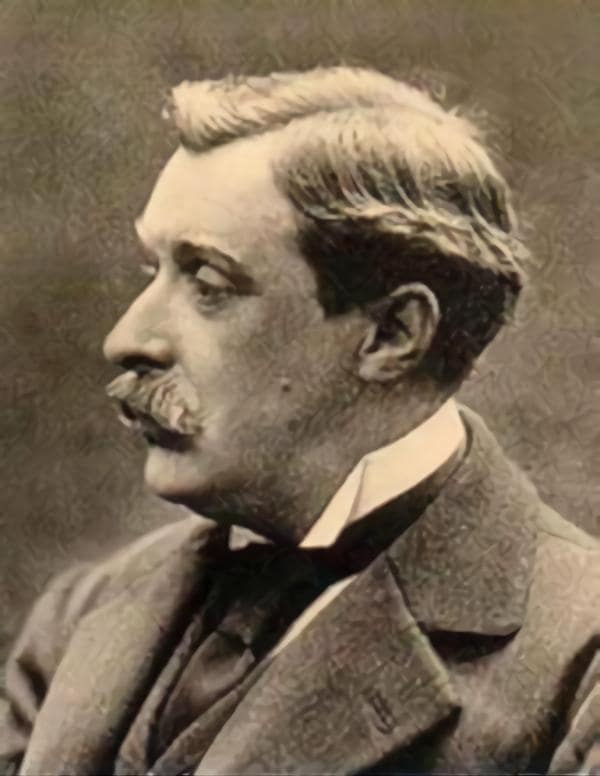
Allais was known for his absurdist wit. He composed a musical piece that was completely silent, titled “Funeral March for the Obsequies of a Great Deaf Man,” and painted monochrome works decades before Malevich. But the most astonishing secret about him, an anecdote I love to tell, actually has to do with his family background.
In 1881, as a young pharmacy student, Alphonse Allais filed a patent for a revolutionary invention: “soluble coffee” (café soluble), the first version of the instant coffee we know today. The man who devoted his life to absurdity accidentally invented one of the most practical and widespread products in the world. You couldn’t make this story up.
So the next time you stand at the edge of the “Vieux Bassin,” I hope you’ll see more than just a pretty harbor. I hope you’ll see the stage on which a thousand years of history played out. From the Vikings’ small stream to Champlain’s great voyages; from the soaring timbers of the builders of Sainte-Catherine Church to the revolutionary light in Monet’s paintings; from a locksmith’s betrayal to the laboratory of the humorist who invented instant coffee.
Go to Honfleur. Find a café on the harbor, order a glass of Calvados, and just watch. But this time, you won’t just watch. You’ll see. And you’ll listen. The ghosts of this remarkable town still have so many stories left to tell, and now, you know how to listen to them.
A One-Day Walking Route in Honfleur
Read the article and feeling the pull to visit Honfleur? You’ll be glad to hear I’ve put together a one-day walking route for you, covering the places most worth seeing there, and of course there’s also a restaurant recommendation, and even a shop that sells “seagull droppings” (it’s tastier than it sounds).
Related reading