

I’ve had the chance to visit Giverny twice in my life. The first time, in 2018, I got there by train from Paris, and the second time, in 2024, I went as part of an organized tour from Paris. Both times I was left speechless by the beauty I saw, and both times I came away with a few insights that can help you plan your own visit.
This is a “practical” article, dealing with all the logistics of visiting Giverny (how to get there, where to buy tickets, what else is worth doing in Giverny, and so on). It does not cover the fascinating history of the house and the paintings Monet created while he lived there. For that, let me point you to Dr. Orna Liberman’s wonderful article Giverny: Claude Monet’s House and Garden.
Now that you’ve read that article, it’s time to give you all the information you need to make the most of your visit to Giverny.
What are the opening hours of Monet’s house in Giverny?
Monet’s house is open to the public every day between March 31 and November 1, from 8:30 a.m. to 6:00 p.m. (last entry at 5:00 p.m.). The garden is closed to the public during the winter.
How do you get to Giverny?
There are three main ways to get to Giverny, and each one has its own advantages and drawbacks.
Getting to Giverny by rental car
This is without a doubt the most convenient and fastest way to get to Giverny, but the drawback is both the price and the time it takes to pick up and return the car to the rental agency.
If you’ve decided to get to Giverny by rental car, the first thing you need to do is rent one. To help you find the car that suits you best at the lowest price, I’ve put together all the recommended car rental sites on the The Francophile’s Toolkit page, under the “Car Rental” category. All that’s left for you to do now is compare prices and pick what works best for you.
Already have a car? Great! Leave Paris and head northwest on the A13 highway. Take the exit toward Vernon, and from there continue on the D5 road until you reach Giverny.

Public transportation
The advantage of taking public transportation is the price, but the drawback is the time it takes to reach Giverny (about two hours). Beyond that, if you decide to go by train, you’ll need to book round-trip tickets (assuming you’re not planning to stay overnight there). This can create some pressure, since you’ll need to get back to the train station in Vernon on time, which can put a damper on your visit and keep you from fully enjoying it (at least that’s how I felt the first time I visited Giverny using public transportation).
If you decide to get to Giverny from Paris by public transportation, take a train from Gare Saint-Lazare and get off in the town of Vernon. From there, take a taxi or a tourist shuttle train that will take you to Giverny.
I highly recommend booking your round-trip train tickets as early as possible, since prices tend to go up as the travel date gets closer. Here are a few booking sites I like to use:
A guided tour to Giverny
The big advantage of a guided tour like this is convenience. You’ll ride in a tour bus with comfortable seats and even an outlet to charge your phone. The price isn’t bad at all either, once you factor in the cost of the train tickets and entry tickets to Monet’s house that you’ll save. Another advantage is that you’ll enter along with your guide through an entrance reserved for groups, so you won’t waste time standing in line (even if you buy your ticket in advance, you’ll still need to wait in the entry line; this only saves you the line at the ticket counter).
A guided tour has two main drawbacks. The first is that, on the cheaper tours, the guide’s knowledge tends to be average at best. This isn’t that big of a problem, since I already gave you a link at the start of this article to Dr. Orna Liberman’s article, which will give you all the historical background you need for your visit.
The second drawback is that the time you get for the visit is limited to about two and a half hours. That should be enough to visit Monet’s house, wander a bit through the village (maybe even grab a quick bite), but it won’t let you stroll through the village at a relaxed pace, visit the Museum of Impressionisms, or sit down for a proper lunch. If your only goal is to visit Monet’s house, this drawback is pretty minor.
Since the advantages of an organized tour far outweigh the drawbacks, after trying both the organized tour and getting there by public transportation myself, I highly recommend taking an organized tour.
If you’ve decided to take an organized tour, here are two options:
- Guided tour to Giverny (this is the tour I took)
- Tour to Giverny and the Palace of Versailles
If you’re interested in more tours to Giverny from Paris, you can find them on this page.
Tickets to Monet’s house in Giverny
If you’ve decided to get to Giverny by private car or public transportation, you’ll need to buy a ticket to Monet’s house in advance (if you don’t, you risk waiting in a long line at best, or finding out the tickets have sold out at worst).
You can book a ticket in advance through this link.
What else is worth seeing in Giverny?
After you’re done visiting Monet’s house, I highly recommend heading out to walk along the village’s main street, which will take you to the following attractions:
The Museum of Impressionisms

This museum is dedicated entirely to Impressionist art and sits in a modern building at the heart of Giverny. You’ll find rotating exhibitions dedicated to the Impressionist school. The site also has a magical garden and a brasserie.
For information on the museum’s exhibitions and ticket bookings, click here
Ancien Hôtel Baudy

At the former Hôtel Baudy, where painters (mostly Americans) once stayed to soak up inspiration from being near the master, you can still see the original dining room where they ate and the studio where they worked. Today it’s a good restaurant (if you stay in Giverny, you’ll get to eat there too).
Link to the restaurant’s website
The village church

The village church, dedicated to Sainte-Radegonde, is a Romanesque church built between the 11th and 15th centuries.
Inside the church you’ll find a 16th-century wooden statue of John the Baptist (what you see in the photo), along with a series of artworks from the 17th and 18th centuries.
But the church’s biggest draw is actually found outside it. I mean, of course, the grave of Claude Monet and his second wife Alice, located in the cemetery adjoining the church, which has become a kind of pilgrimage site.

By the way, not far at all from the grave of Monet and his family, there’s a memorial to a British bomber crew that crashed in Giverny in 1944. The crew did not survive, but the memorial reminded me of a film about a different bomber crew, one with much better luck. I’m talking, of course, about La Grande Vadrouille, released in English as “Don’t Look Now… We’re Being Shot At!”, one of the best comedies made by Louis de Funès (1914-1983). Here’s the trailer:
A train ride back in time: the Eure Valley Railway
This 19th-century train lets you ride along and enjoy the scenery of the valley, following the old Rouen-Chartres-Orléans rail line. Ride length varies between an hour and fifteen minutes and two and a half hours. There are also themed rides, like a Halloween train, a Santa Claus train, and more.
Where to stay in Giverny
If you want to visit Monet’s house before the crowds of tourists arrive, I highly recommend spending a night in Giverny itself or nearby, so you can visit the house as early as possible in the morning. Staying overnight in Giverny will also let you explore the village itself at a relaxed pace and even enjoy one of the local restaurants. So, if you’ve decided to take a trip through Normandy, I’d definitely recommend renting a car in Paris, arriving in Giverny in the afternoon, exploring the village, and then, the next day, after a good night’s sleep, visiting Monet’s house before continuing on to other places in Normandy.
Here are a few recommended places to stay in Giverny:
La Pluie de Roses
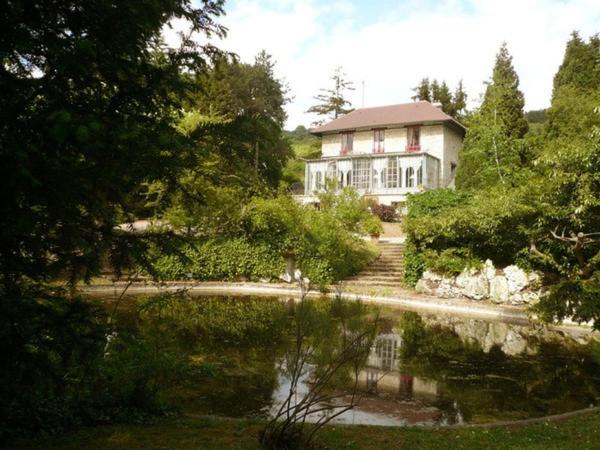
The hotel is housed in a 19th-century building with a stunning view by the pond. You’ll get spacious, nicely designed rooms here, along with an excellent breakfast. The place also offers free parking.
It’s not quite in the heart of the village, but it’s about a 15-minute walk from Monet’s house, which to me isn’t bad at all.
A l’Ombre du Tilleul

A charming, well-equipped garden apartment located in the heart of Giverny, just a short walk from Monet’s house. The owners are very friendly and even provide breakfast (although you could easily make your own in the apartment).
La Dime de Giverny

A bed and breakfast housed in a 13th-century building at the heart of Giverny, offering a range of beautifully designed rooms. The place has a magical, private garden, WiFi (not something you can do without these days), and if you’d like, they can arrange bike tours or horseback riding for you.
More places to stay in Giverny
If none of these places are available or don’t suit your needs, feel free to click this link to find dozens more places to stay.
Related reading