

Some cities are made for a day trip, and some demand that you stay, slow down and listen to the stories whispered by the stones. Rouen is the second kind. At first glance, it will charm you with its crooked half-timbered houses and its Gothic cathedral, but its real magic only reveals itself once you understand the drama, the upheavals and the sheer human genius that played out here over nearly two thousand years.
I believe that understanding the history of a place is the key to upgrading any trip, and it can turn a simple stroll into a deep experience. So let me take you on a journey through time to the beating heart of Rouen, so we can discover together why this city is the distilled essence of the Norman story.
Just before we start: Rouen has a rich history (no less rich than the sauces of Norman cuisine), and to let you taste even a little of all that richness, I had to write at some length. The result is a fairly deep, not especially short article, so grab yourself a glass of cider (Calvados will put you to sleep before you reach the end), take your time, and let’s get started.
From Rotomagus to Rouen: the birth of a city on the banks of the Seine
Under the rule of the Roman eagle
Our story begins, like many European stories, with the Romans. But even before them, a Gallic tribe called the Veliocasses had already settled here on the banks of the Seine. When Julius Caesar’s legions arrived, they recognized the site’s enormous strategic potential. They named the city Rotomagus, and it quickly became the second most important city in all of Gaul, after Lugdunum (today’s Lyon).
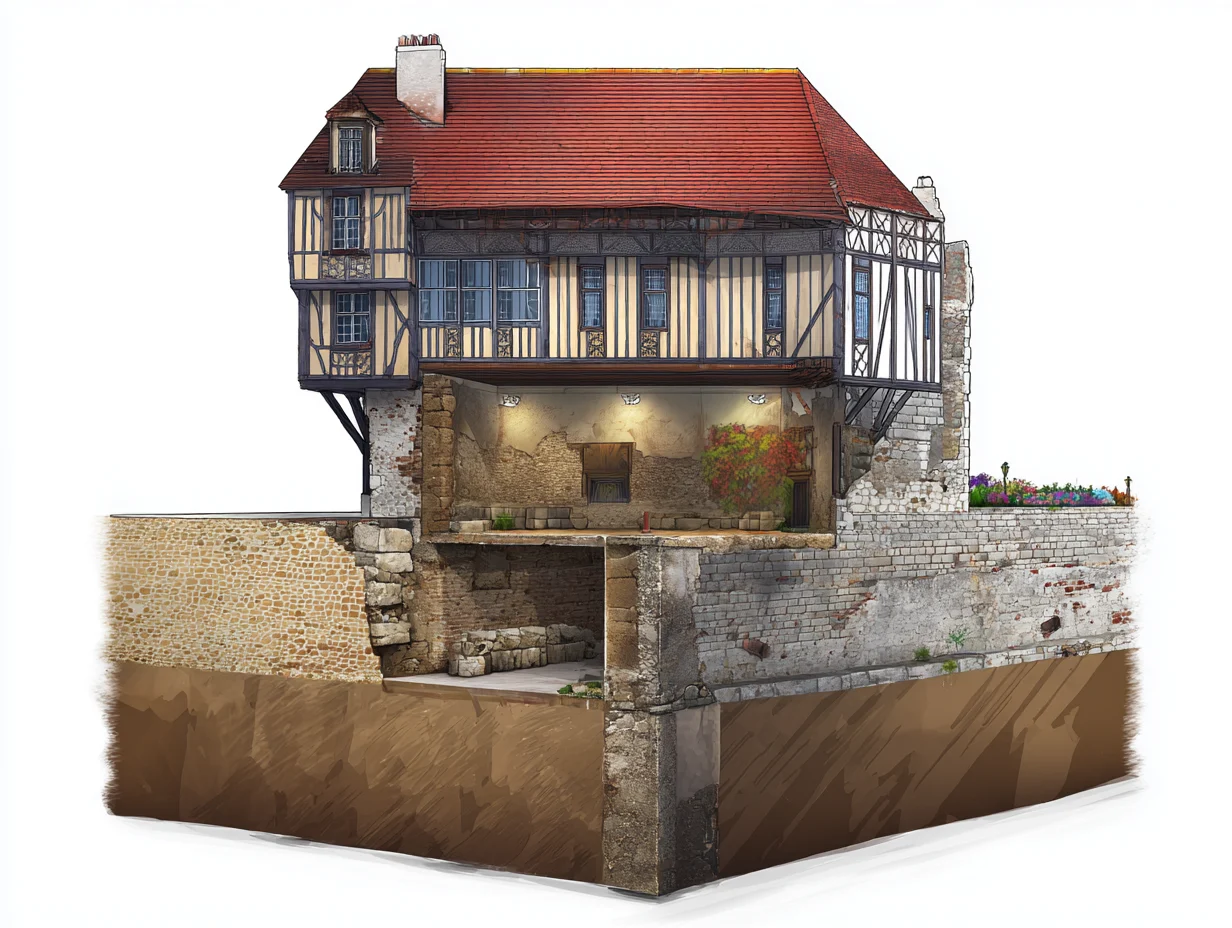
Try to picture Rotomagus at the height of its glory: a classic Roman city with streets laid out in a grid, a central forum, grand baths, temples and even a large amphitheater. Something of all that remains today, because when you walk down Rue du Gros-Horloge, one of the most famous streets in Europe, or along Rue aux Juifs, know that you are walking the exact route of the original Roman streets, the decumanus and the cardo, laid out 2,000 years ago.
Which means that history here isn’t something you look at in a museum, it’s something you walk on. That same period also laid the foundations for Rouen’s future identity as a religious center, with the founding of its first Christian community and its early cathedral.
Between the eagle and the dragon: Rouen under the Merovingians and Carolingians
The collapse of the Roman Empire in the 5th century did not spell the end for Rouen. Quite the opposite: the city adapted to the new reality and became an important center in the Frankish kingdom of Neustria. Its location, downstream from Paris, made it a relatively protected area from the threats coming out of the east, and it kept on thriving.
The city remained a busy trading hub on the Seine, and it even minted its own coins starting in the late 6th century, proof of its economic strength. At the same time, Christianity took root in the city and it became an influential religious center. This period saw the rise of powerful monasteries, such as the Abbey of Saint-Ouen, and the city was led by a series of dominant bishops, some of whom became saints and patrons of the city, such as Saint Ouen (died c. 684) and Saint Romain (died c. 640).
The saint, the dragon and the condemned man
One of the most colorful stories from that period is the tale of Saint Romain and the dragon, known as “the Gargoyle” (La Gargouille). Legend tells of a dragon-like monster that terrorized Rouen, flooding the city with the waters of the Seine and hurling “offensive things” over the walls.
No one dared face it. Saint Romain, the brave bishop, decided to put an end to it. He walked into the city prison and offered a pardon to a condemned man who would agree to come with him. The condemned man, who had nothing left to lose, agreed. Together they went out to the monster’s lair. Instead of an epic battle, Saint Romain simply made the sign of the cross, and the fearsome dragon lay down at his feet like a kitten. He wrapped his priestly stole around the monster’s neck, and the condemned man led it back into the city, where it was burned at the stake.
King Dagobert I (603-639), deeply impressed, granted the bishops of Rouen a unique privilege: the right to free one prisoner every year. This story, even if it is legend, shows the rising power of the Church and the way heroic tales shaped the city’s identity.
From raid to duchy: the Vikings make Rouen their capital
Rollo, the Viking who became a duke
The relative calm of the Carolingian era shattered in the 9th century. Picture the screams, the panic, as the long, terrifying dragon ships of the Vikings began sailing up the Seine. In 841 they raided Rouen, looted and burned it to the ground, and turned the lives of its residents into an ongoing nightmare. For decades, Rouen was a city gripped by terror.
But then a figure appeared on the stage of history who would change the fate of Rouen, of France and of England forever: Rollo (c. 835/870-933), a charismatic and ruthless Viking leader. The king of France, Charles III, known as “the Simple” (Charles III Le Simple, 879-929), was exhausted by the endless raids and decided on a brilliant move.
Instead of fighting the Vikings, he decided to “buy” them off. In 911, in a historic agreement signed in a small town called Saint Clair sur Epte, the king granted Rollo the lands around Rouen and the mouth of the Seine. The terms were simple: Rollo and his men would convert to Christianity, would protect the kingdom from other Viking invaders, and in exchange, the land would be theirs.
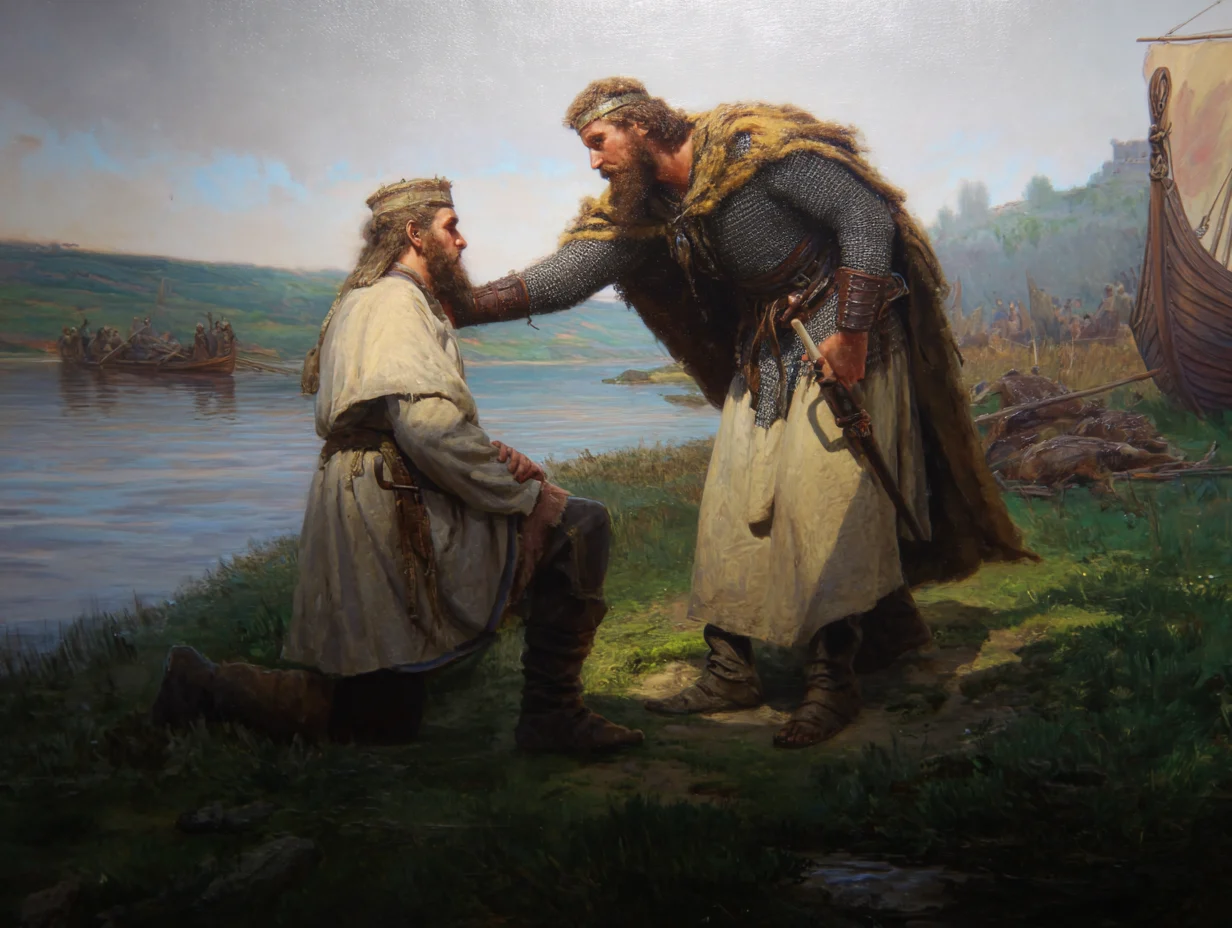
And so, in a single moment, Rouen went from a plundered city to the proud capital of a new and powerful political entity: the Duchy of Normandy, “the land of the men of the north.” The Vikings became the Normans. The invaders became the rulers. They adopted the local language, religion and customs, but they brought with them their energy, their boldness and their Viking spirit of adventure.
“The Sublime House”: the hidden story of Rouen’s Jewish community
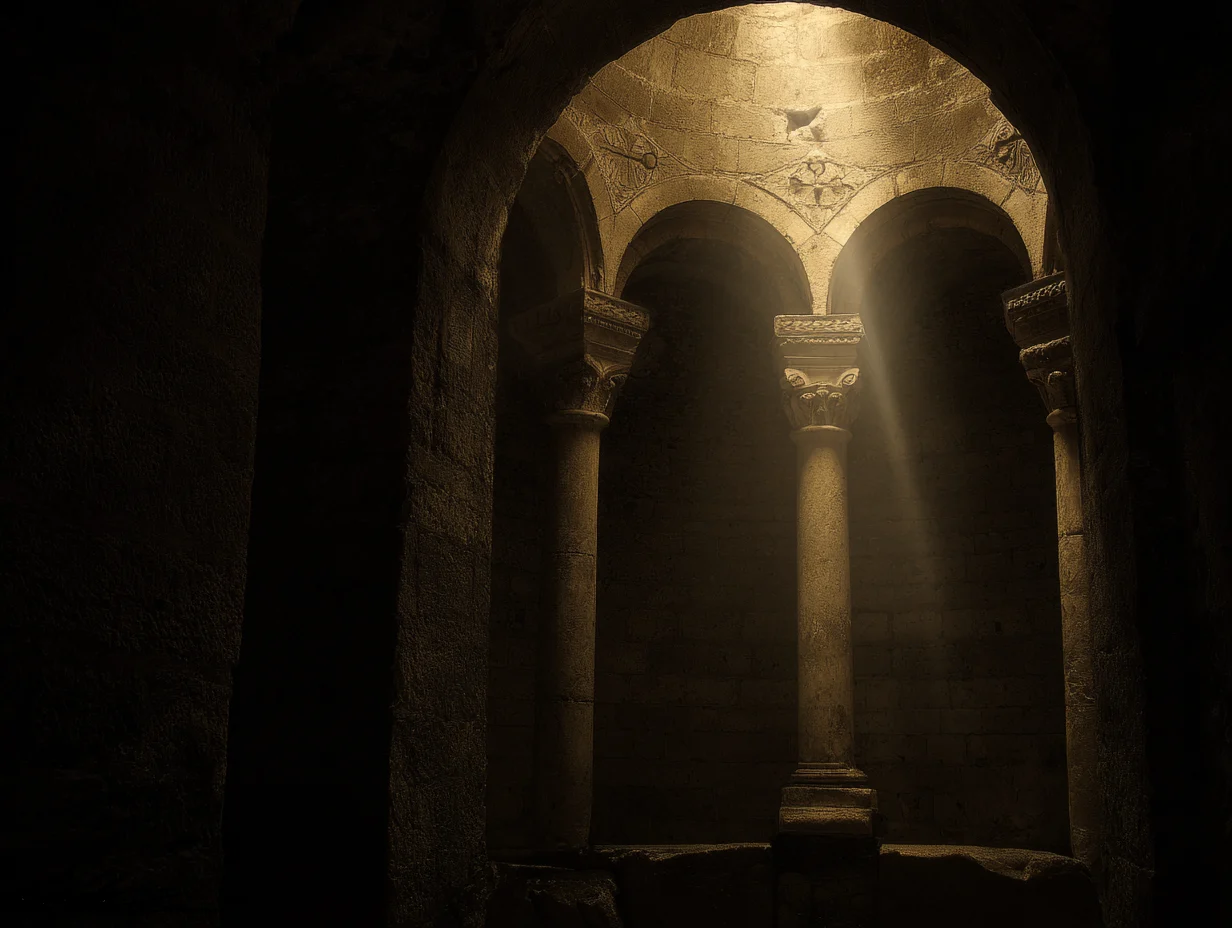
Now let me take you to one of Rouen’s most fascinating discoveries, one tied to the Jewish people. It’s a story few people know, and one that was found entirely by accident. In 1976, during renovations in the courtyard of the city’s grand Palais de Justice, workers came across an impressive and ancient stone structure. Archaeologists rushed to the site and were stunned to find Hebrew inscriptions on the walls.
One of them, a quote from the Book of Kings, declared: “And this house shall be exalted.” This is how “the Sublime House” (La Maison Sublime) was uncovered, the oldest Jewish building found in France, and perhaps in all of Europe, dating to around the year 1100.
The discovery was not just another archaeological find; it was a key that opened a door to a lost world, a forgotten golden age. It turned out that in the Middle Ages, Rouen was one of the most important Jewish centers in Europe. The city’s Jewish community was so large and influential that at its peak it made up about 20% of the entire population. They were not a marginal community, but a pillar of the city’s life.
“The Sublime House” itself, whose exact purpose scholars still debate to this day (a study hall? a synagogue? a rabbinical court?), stands as solid proof of the community’s confidence and prosperity. In any case, Rouen was home to a famous yeshiva, a rabbinical academy that drew some of the brightest minds of its time. Among its teachers was none other than Rashbam, the grandson of the great Rashi.
Rouen was an intellectual crossroads where Jewish and Christian ideas met and enriched one another. But as in so many stories in Jewish history, this golden age did not last forever. The First Crusade in 1096 brought with it a brutal pogrom. After Normandy was annexed to France in 1204, the status of the Jews steadily worsened, until in 1306, King Philip IV, known as “the Fair” (Philippe IV le Bel, 1268-1314), expelled all the Jews of France, and Rouen’s magnificent community came to its end.
The story of Rouen’s Jewish community was erased from the pages of history, until that chance renovation in the courtyard of the Palais de Justice brought it back to life. To stand today in the cellars of “the Sublime House” is to feel the pulse of a lost Jewish world rising back up.
Capital of the dukes: tales of power, love and scandal
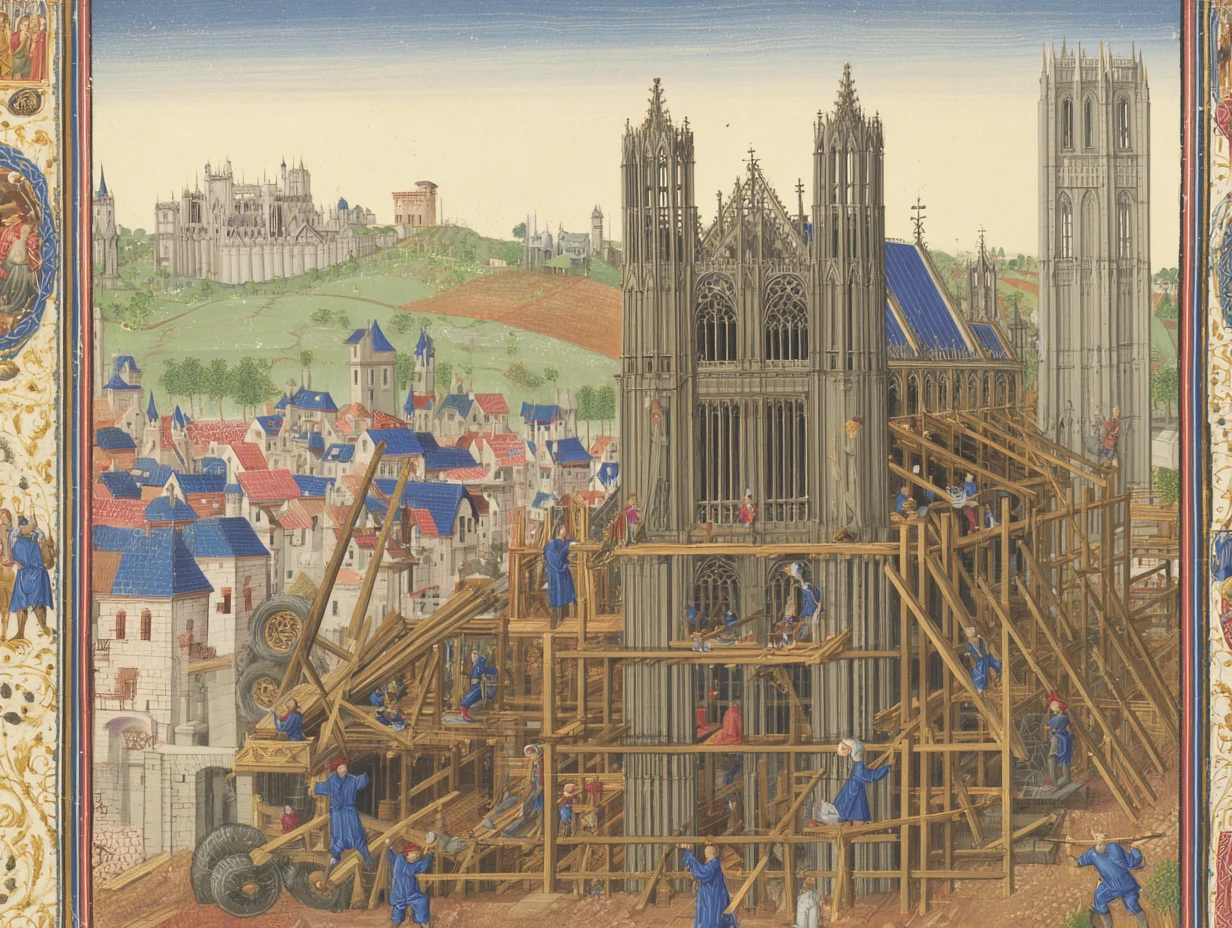
Once the Normans were established, Rouen surged forward and became one of the most important cities in Europe. It was the capital not only of the Duchy of Normandy, but of an entire empire that stretched over England (after its conquest in 1066) and large parts of what is now France. It was an age of immense wealth, political power and a building boom that gave Rouen the nickname that still sticks to it today: “the city of a hundred spires.”
A royal scandal: when the king slept with his son’s fiancée
William’s famous descendant, Richard I, known as “the Lionheart” (Richard I Coeur de Lion, 1157-1199), was no less colorful a figure. He loved Rouen so much that in his will he asked for his heart to be buried in its cathedral after his death, and it remains there to this day. But his life was also full of scandal.
For years, he was engaged to Alys (Aélis), a French princess and the sister of his great rival, King Philip Augustus. Yet Richard stubbornly refused to go through with the marriage. The reason, as he claimed to Philip, was scandalous: his own father, King Henry II, had taken the young Alys as his mistress and had even fathered a son with her. Whether the story was true or just a clever excuse to get out of an unwanted political match, it reveals the world of intrigue and passion that churned through the royal courts of the time.
“In God’s name, onward!”: the trial and death of Joan of Arc
You cannot tell the story of Rouen without telling the story of Joan of Arc (1412-1431). In fact, the two stories are inseparably woven together. Here, on these very streets, the astonishing epic of the peasant girl who led armies and saved France came to its tragic end.
During the Hundred Years’ War, Rouen was captured by the English under the rule of Henry V (1386-1422) and became the center of English power in France. So when the English finally got their hands on Joan of Arc, it was only natural that they would bring her here for trial. They locked her up in a tower of the Château de Bouvreuil, of which only the keep survives today, known as the “Tour Jeanne d’Arc.”
This was not a fair trial. It was a political show trial, meant to prove that the girl who had defeated them was a witch and a heretic, and in doing so to undermine the legitimacy of the French king she had crowned. For months, she stood alone against dozens of learned theologians and jurists, most of them from the Sorbonne, trying to defend herself. Sadly, this was neither the first nor the last time academia chose the wrong side of history, as you can read in my article about the Sorbonne.
In the end, her fate was sealed. On May 30, 1431, at the Place du Vieux Marché, she was put to the stake and burned alive. To stand in that square today, facing the tall cross that marks the spot of the pyre, is a deeply moving experience. You are standing on the exact spot where history, faith and politics collided in flames.

But Joan’s story in Rouen did not end there. Twenty-five years later, in that very same city, a retrial cleared her of all guilt and recognized her sainthood. Rouen, the city where she died as a heretic, is also the city where she was reborn as the national heroine of France. If you’d like to read more about Joan of Arc and her trial, feel free to check out my article Joan of Arc: witch or saint.
The golden age and the flames: from the Renaissance to the world wars
A city of art, trade and… butter
After the horrors of the Hundred Years’ War, Rouen, like a phoenix, rose from the ashes into a new and dazzling era: the Renaissance. The city grew enormously rich from its booming cloth trade and its busy port, which maintained extensive trading ties even with what would become Brazil. All that wealth translated into breathtaking beauty. This was the era that gave Rouen some of its grandest buildings, such as the Palais de Justice in the Flamboyant Gothic style and the magnificent private mansion, the Hôtel de Bourgtheroulde.
And here, friends, I want to share with you one of my favorite anecdotes, one I came across while researching this article.
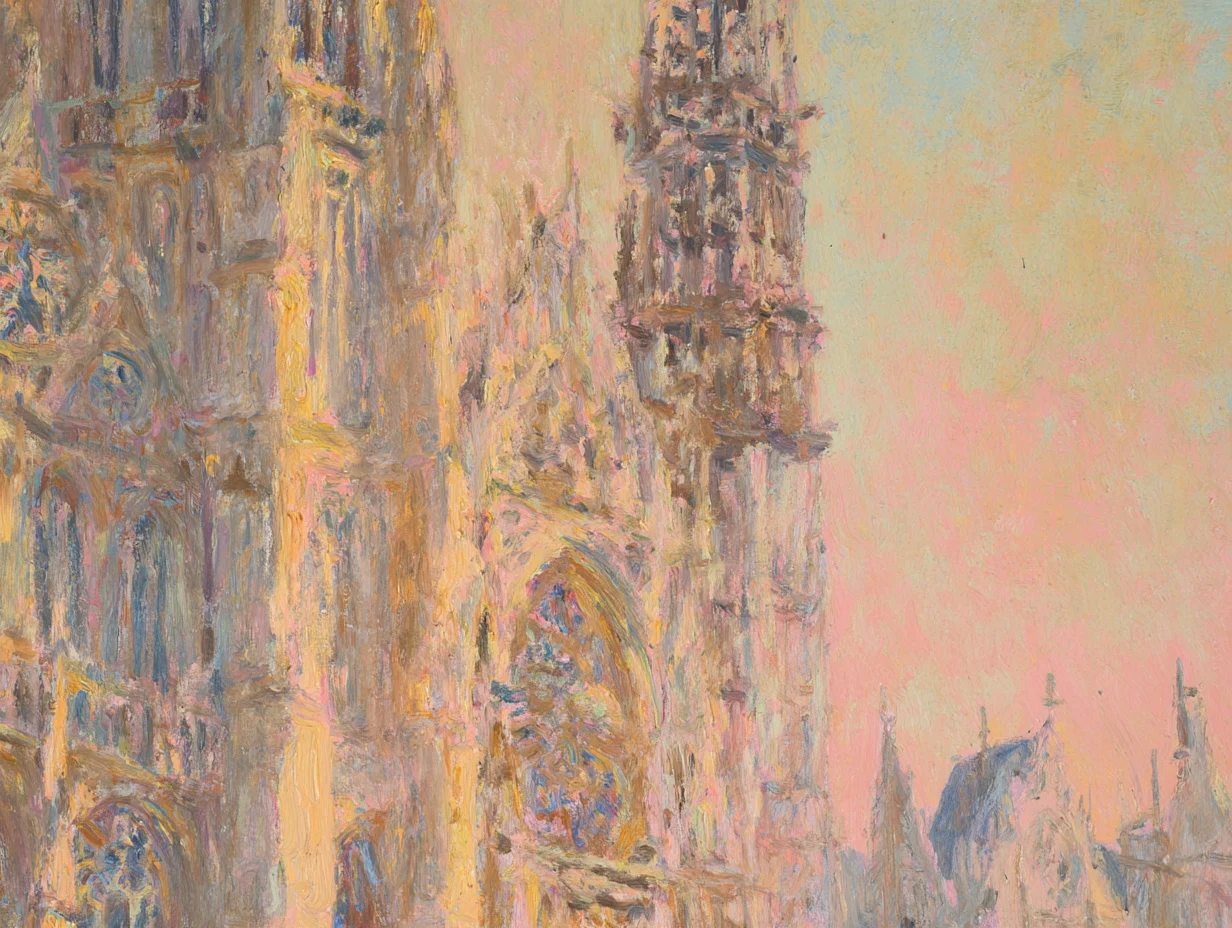
If you look at the cathedral’s facade, you’ll notice that its two towers aren’t identical. The right tower, grander and more ornate, is known as the “Tour de Beurre” (the Butter Tower).
Legend has it (and there is more than a grain of truth to it) that it was funded by selling “letters of indulgence” to wealthy citizens. In exchange for a generous donation toward the tower’s construction, the church allowed them to eat butter during the Lenten fast leading up to Easter, a period when dairy products were normally forbidden.
It’s a perfectly French story: a blend of faith, art, money and culinary passion! This beauty is what turned Rouen into a magnet for artists. The painter Claude Monet was so obsessed with the cathedral that he painted it some thirty times, trying to capture the changing light on its stone facade at every hour of the day.
The cemetery’s dark secret: a mysterious cat among the dead
One of the most fascinating and chilling places in Rouen is the Aître Saint-Maclou, a former mass burial ground established after the Black Death of 1348. The buildings surrounding the courtyard are decorated with macabre wood carvings of skulls, bones and burial tools.
But the strangest secret of the place sits inside a small display case: a mummified black cat. Local legend says the cat was sealed alive inside the wall during construction to ward off the devil and bad luck. This superstition was common in the Middle Ages. There is, however, another juicier version of the story, which claims the whole thing is one big prank.
According to this version, the mummified cat isn’t medieval at all, but was “found” in the studio of a Parisian sculptor in the 20th century by an art professor from Rouen, who brought it back to the city and left it at the school of fine arts that stood on the site at the time. Whether it’s a victim of an ancient superstition or a student’s joke, the cat of Saint-Maclou adds an extra layer of mystery to this unique place.
“The Red Week”: Rouen under fire
Paris has its “Bloody Week” (Semaine sanglante), which took place between May 21 and 28, 1871, during which tens of thousands were killed as government forces retook the city from the Commune. Rouen has its Red Week…
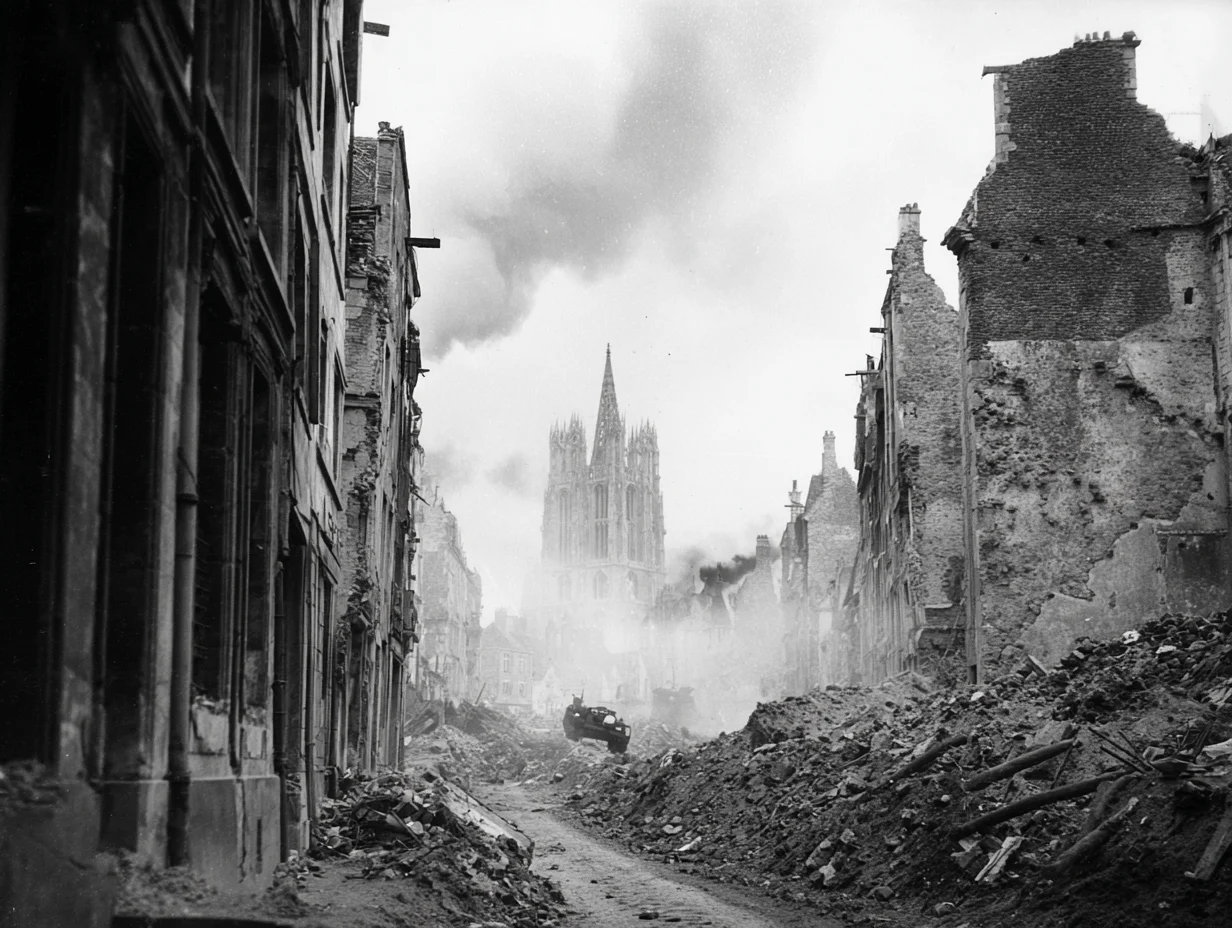
That long golden age, which began in the early Renaissance, met its violent end in the 20th century, and in World War II Rouen paid a terrible price. In June 1940, as the German army moved in, a massive fire broke out (set by the retreating Germans) that destroyed the entire old quarter between the cathedral and the Seine. But that was only the beginning.
The tragic irony is that it was precisely Rouen’s strategic importance, its bridges over the Seine and its large railway station, that made it a key target for the Allies ahead of the invasion of Normandy. In the spring of 1944, for weeks on end, the city was mercilessly bombed from the air.
The peak came during the “Red Week” (la semaine rouge) in late May and early June 1944, a week of heavy bombing meant to paralyze German troop movements. The results were catastrophic. Nearly 45% of the city was destroyed. The cathedral was badly damaged, the église Saint-Maclou and the Palais de Justice went up in flames, and thousands of civilians were killed. When Canadian forces liberated Rouen on August 30, 1944, they found a ruined city, a field of rubble and smoke. “The city of a hundred spires” had become a city of broken spires.
Rouen today: a phoenix rising from the ashes
And here, in my opinion, lies Rouen’s greatest miracle. After the war, facing near total destruction, the city’s leaders had two options: erase the past and build a modern, functional city, or take on the nearly impossible task of restoration and reconstruction. They chose the second path.
Over the course of decades, in a stunning feat of engineering and artistry, Rouen was rebuilt stone by stone. They didn’t just rebuild; they brought the city’s soul back to life. Under the leadership of the legendary mayor Jean Lecanuet (1920-1993), Rouen became a worldwide model of urban restoration. It was the first city in France to create a pedestrian street, the Rue du Gros-Horloge, turning its historic center into a paradise for pedestrians.
The result is what you see today: a vibrant, lively city where history is not a burden but an asset. Walking the streets of Rouen today means experiencing all its eras at once. It means sitting at a café in the square where Joan of Arc was burned, buying cheese at a market that has operated since the Middle Ages, and marveling at a modern shop window reflected in the facade of a 500-year-old timber house.
Rouen is living proof of the resilience of the human spirit and the ability to build a future while honoring the past. It’s a city that teaches us that scars can become a source of beauty and strength. So the next time you’re planning a trip to France, let me highly recommend this: take the train from Paris, head north, and let yourself get lost in the streets of Rouen. Let the city tell you its stories. I promise you, you’ll come back an even more enthusiastic Francophile.
Want to visit Rouen?
I’ve put together a two-day itinerary for you, one that will let you discover the most famous spots, but also a few secret ones.
And by the way, if you’re thinking about staying in Rouen (highly recommended), I’ve also put together a whole article on where to stay there, with a list of recommended hotels across a range of prices.
Related reading