

For years, I have to admit, Normandy was a kind of blind spot in my Francophile education. I visited only a handful of times, and I always found myself drawn, almost automatically, to the big stars: Monet’s magical gardens at Giverny, the old lanes of Rouen, or the moving D-Day beaches. In September 2025 I decided it was time to fix that, and I spent two full weeks exploring this beautiful region in depth.
During the planning, the name Évreux kept coming up. This time, instead of dismissing it as “just another gray provincial town,” I decided to give it a real chance. What I found there was a charming and warm city , small and pleasant in size , but with a huge heart and a turbulent history that has shaped every stone and every corner of it. I found a place that is the perfect answer for anyone tired of the endless lines and crowds at the famous tourist sites. Here, instead of elbowing your way through, you can breathe. Instead of running from site to site, you can simply wander. Here, you can feel the real pulse of Normandy.
So come with me. I want to take you on a journey through this mostly small and lovable town, and share with you the stories, secrets and places that make Évreux a must-see destination for anyone who loves France.
Normandy’s Phoenix: the fascinating and turbulent history of Évreux
To understand Évreux, you have to understand its past. This is not a city with history; it’s a city shaped by its history, a city that has risen again and again from the ashes of destruction, like a phoenix. Walking its streets is like flipping through a living, breathing history book, full of drama, intrigue, and inspiring human resilience.
The dawn of Normandy: Vikings, dukes, and a legendary marriage
Our story begins, as in so many places in France, back in the Gallo-Roman period, at the impressive archaeological site of Gisacum, located right next to the town. But the real drama starts with the arrival of the Norsemen. In 911, the French king Charles III, known as “the Simple” (Charles III le Simple, 879-929), worn down by relentless Viking raids, made a brilliant move: he granted their leader, Rollo (c. 846-c. 930), an entire territory around the Seine, in exchange for Rollo converting to Christianity and defending the kingdom against other invaders. That is how Normandy was born.
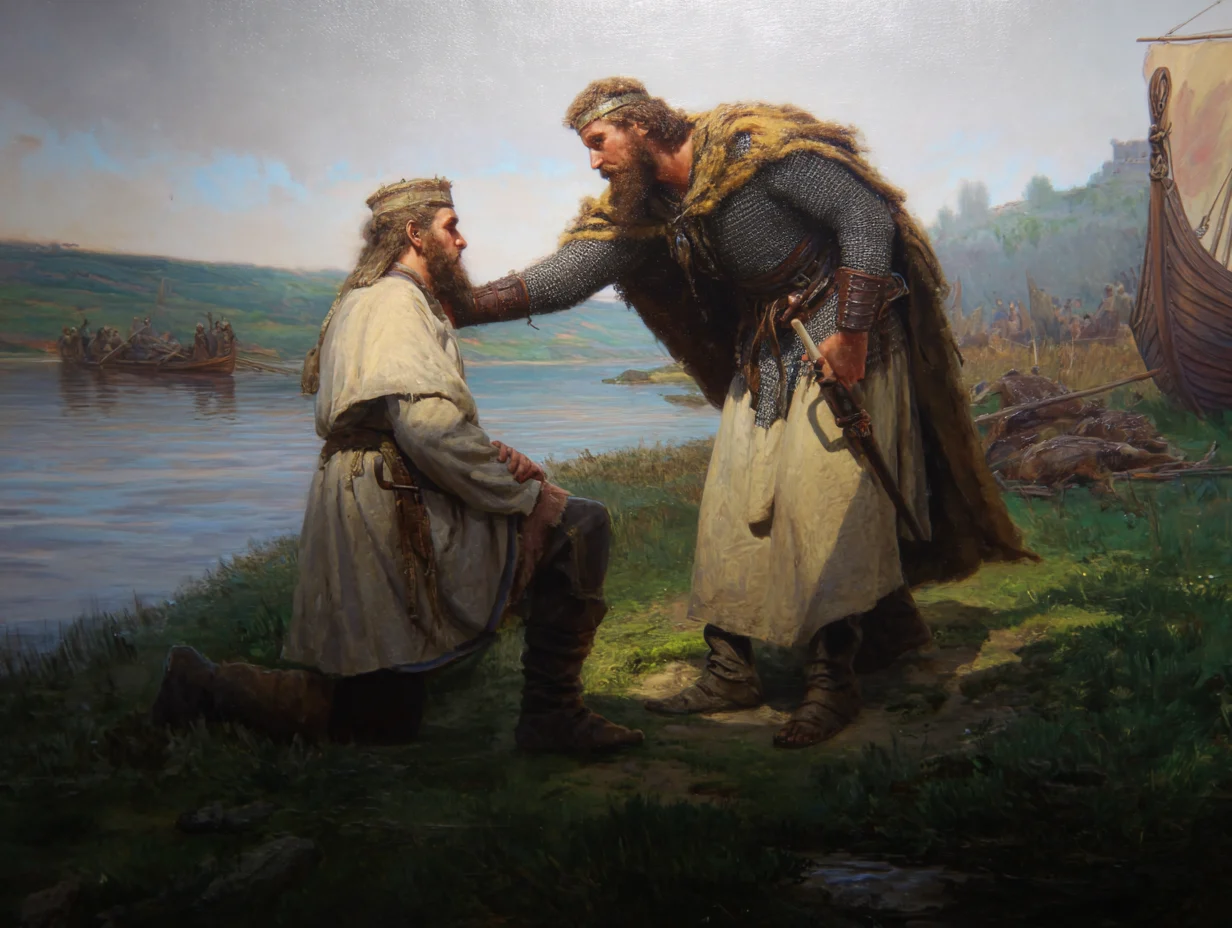
Rollo’s son, Robert le Danois (died 1037), received from his father the title “Count of Évreux” around the year 990, founding a noble dynasty that would rule the city for centuries. To add a romantic touch to the story, tradition holds that Rollo married Gisela, daughter of King Charles, a marriage meant to seal the alliance between the Vikings and the Franks. That said, it’s worth noting that many historians doubt this story, and Gisela may be a legend created later to glorify the agreement.
A flame at the heart of the kingdom
Even before the Hundred Years’ War left its bloody mark on Normandy, Évreux had already known destruction at the hands of a French king. In 1195, during the endless struggles between King Philippe II “Auguste” of France (Philippe II Auguste, 1165-1223) and Richard the Lionheart, King of England and Duke of Normandy, the King of England invited his French loyalists to the castle of Évreux and massacred them there. In response, Philippe Auguste besieged the city and in 1198 burned it to the ground as punishment for supporting his English enemy. This traumatic event was only a prelude to the next hundred and fifty years.

A hornet’s nest: medieval counts and Charles “the Bad”
The Middle Ages in Évreux were a time of power and intrigue, and the city became the seat of powerful and influential counts. The most notable were members of a junior branch of the French royal family, the House of Capet. Philippe d’Évreux (1306-1343), grandson of the King of France, married Jeanne II de Navarre (1312-1349), Queen of Navarre. This marriage made the counts of Évreux also kings of the small but important kingdom of Navarre in the Pyrenees.

But the real star of the era, or rather its villain, was their son, Charles II (Charles II de Navarre, 1332-1387), who earned the unflattering nickname Charles “the Bad” (Charles le Mauvais).
Charles, who was born right here in Évreux, was an ambitious, cunning and reckless man. He saw himself as a rightful heir to the French crown and spent his entire life weaving plots, alliances and betrayals against his cousins, the kings of France. His endless scheming brought destruction and violence to Normandy, turning Évreux’s story into a real political thriller.
Burned and reborn: the Hundred Years’ War and the king’s gratitude
Évreux’s strategic location made it a prestigious prize (and a punching bag) during the Hundred Years’ War. The city was captured, burned and looted countless times by both the English and the French.
But it was precisely out of these ruins that one of the city’s most important symbols grew. After the war ended, as a reward for the city’s loyalty, King Louis XI (Louis XI, 1423-1483) granted it, in 1490, the right to establish an independent municipal government and to build its magnificent bell tower, the Beffroi. As tangible proof of that bond, you can find in the cathedral a stunning 15th-century stained-glass window depicting the coronation of Louis XI.
From the Reformation to the Revolution: anecdotes from the 16th through 19th centuries
The period between the Middle Ages and the 20th century was no less turbulent. In the 16th century, the winds of the Protestant Reformation reached Évreux too. A key local figure was Guillaume Costeley (c. 1530-1606), organist to King Charles IX, who lived in the city and helped spread the ideas of the Reformation.
The city also saw royal visits; in 1535, following a visit from King Francis I (1494-1547), the inn “La Biche” (the Doe) was built, named, according to legend, because the king watched a doe give birth nearby. Sadly, this historic building, along with the hotel later built on its ruins, burned down completely in 2008 and no longer exists.

In the 17th century, the city became the starting point for one of the most fascinating stories of the new France. François de Laval (1623-1708), who was archdeacon of Évreux, left from here to become the first bishop of Quebec, a key figure in shaping French Canada. The 18th century brought urban and industrial development, with the founding of the royal manufactory for coutil (a sturdy cotton fabric), which marked the beginning of the city’s thriving textile industry.
The 19th century, in turn, was eventful: tragic train accidents, the founding of musical societies, and even amusing logistical headaches, like housing 600 reservist soldiers who arrived in the city all at once.
A double trauma: the scars of the 20th century
It seemed Évreux had already seen everything, but the 20th century saved its hardest blows for last. In June 1940, during the German invasion, bombs sparked a massive fire in the cathedral, completely destroying its wooden roof and its magnificent 18th-century organ.
But the real devastation came four years later, in the summer of 1944. As part of the preparations for the invasion of Normandy, Allied planes bombed the city for weeks, aiming to disrupt the rail junction and German forces. Between June 6 and August 14, a series of heavy bombardments, mostly British and American, almost completely wiped out the historic city center. Nearly 200 civilians were killed, and many more were wounded. The city, liberated on August 23, 1944, lay in ruins.
This history is the key to understanding today’s Évreux. The cathedral, often called “a catalog of styles” , stands as a testament to these cycles of destruction and rebuilding. The city center, with its 1950s and 1960s architecture, is a living reminder of the trauma of 1944 and the remarkable resilience of its residents, who rebuilt their city from the ground up. It’s a story told not only in a museum, but on every street corner.

My personal pilgrimage: the must-see sights of Évreux
Now that we understand the soul of the city, let’s head out on a tour. But this won’t be just any tour: it will be a personal journey through the places that won my heart. I invite you to follow in my footsteps and discover Évreux through my eyes.
The soul of the city: Notre-Dame Cathedral and its golden light
The first and unavoidable stop is the Cathédrale Notre-Dame. You can’t miss it; it stands in full glory in the heart of the city. Standing before it, you immediately understand its turbulent story. This is not a cathedral built in one uniform style, but a stunning architectural mosaic, “a catalog of architectural styles from the Romanesque period to the Renaissance.”

The main nave with its rounded arches is Romanesque, while the magnificent Gothic choir and the flamboyant Gothic north facade bring in later eras. Every period, every fire and every restoration left its mark.
But let me share with you the real secret of the cathedral, a secret few people know. Look for the fourth stained-glass window up the choir, on the north side.
There, you’ll find a figure of the Madonna and Child, wrapped in a robe of a particularly glowing yellow-gold hue. This is the “Jaune d’Évreux” (the Yellow of Évreux), a unique stained-glass color invented here in the 14th century by a local glass artist, using silver stain.

The extraordinary quality of this shade made the cathedral famous among experts across France. Standing there, as the sun pours through this golden glass, is an almost mystical experience.
- Opening hours: Usually open daily from 9:00 a.m. to 8:00 p.m., but it’s best to check the parish website for Mass times and special events.
- Official website: https://www.paroisse-ndst.fr
The Bishop’s Palace and its treasures
If you’re like me and love art but not the crowds packed into the big museums, the Musée d’Art, Histoire et Archéologie is the perfect place for you. The museum is housed in the former Bishop’s Palace, a stunning Gothic building right next to the cathedral.

Inside, you’ll travel through time. Starting with Gallo-Roman archaeological finds discovered nearby at Gisacum, moving through moving religious art from the Middle Ages and the Renaissance, and ending with a surprising collection of modern painting, including works by major artists like Pierre Soulages and Zao Wou-Ki. It’s a wonderful opportunity to soak up high culture in a calm, intimate setting.
Visitor information
- Opening hours: Open Tuesday through Friday from 9:30 a.m. to 12:00 p.m. and 2:00 p.m. to 6:00 p.m. Saturday and Sunday from 10:00 a.m. to 12:30 p.m. and 2:00 p.m. to 6:00 p.m. Closed on Mondays and certain holidays.
- Official website: https://culture.evreux.fr/lieux/musee/
The saint’s treasure: the quiet marvel of the Église Saint-Taurin
A short walk from the bustling cathedral, you’ll find a quieter, more intimate spot, no less fascinating: the Église Abbatiale Saint-Taurin.

This church is a true gem, and it too shows a fascinating mix of styles: a 12th-century Romanesque nave, a 15th-century Gothic choir and classical 17th-century exterior elements.
Local legend tells of Saint Taurin, who came to Christianize the region and fought off a mischievous goblin that had dried up the river. But the real treasure, the reason you must visit here, is found inside. It’s the “Châsse de Saint-Taurin,” a 13th-century reliquary box, a masterpiece of medieval goldsmithing, entirely covered in gold leaf and set with precious stones. The detail and delicacy of the work are simply breathtaking, and it’s one of the most beautiful reliquaries to survive anywhere in France.

- Opening hours: The church is open for visits, but hours may vary. It’s best to check the parish website or the tourist office before visiting.
- Official website: https://www.paroisse-ndst.fr
Whispers of the past: strolling by the Beffroi and along the Iton river
From the Église Saint-Taurin, let’s continue our leisurely stroll. We’ll arrive at the belfry (Beffroi), also known as the clock tower. As I mentioned, this tower isn’t just a beautiful building, it’s a symbol of the city’s independence, a gift from King Louis XI after the hardships of the Hundred Years’ War. From here, I highly recommend the Promenade de l’Iton, a lovely walking path that follows the line of the old city walls.

Along the way you’ll see the old lavoirs (public washhouses) once used by the women of the city, and you’ll reach a moving modern statue of an English soldier trapped inside a wall, a tribute to a soldier who was walled up alive within the city’s ramparts during the Hundred Years’ War. This combination of pastoral beauty and painful historical memory is the essence of Évreux’s charm.
- Opening hours: The tower is viewed from outside and the promenade is always open. For information about possible tours inside the tower, contact the tourist office.
- More information: Évreux tourist office website
Want to stay in Évreux?
Although I stayed in Yael and her brother’s lovely apartment in Deauville, I was impressed by Évreux, and there’s no doubt it can serve as a great base for exploring Normandy. It offers a calmer atmosphere than the big cities, while still being accessible and convenient. I’ve put together a few hotel recommendations across a range of styles and budgets.
Using the links below to book won’t cost you anything extra, but it will support my work on the blog and let me keep bringing you quality content.
Erawan Boutique Hôtel
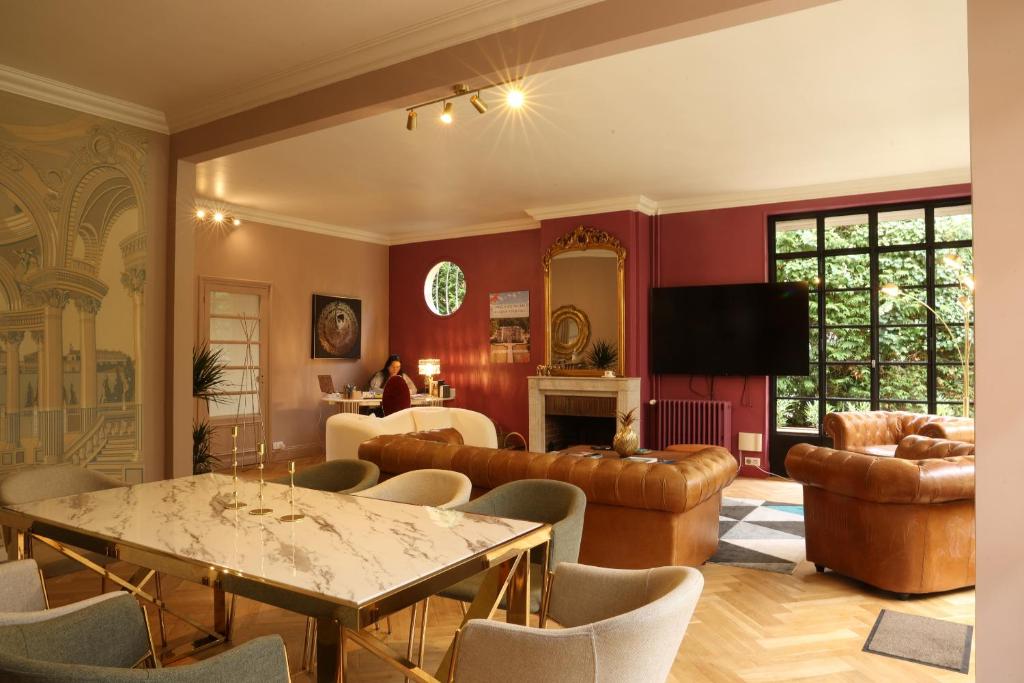
If you’re looking for indulgence, luxury and careful design, this is the place for you. A stunning 4-star boutique hotel, with elegant rooms, a jacuzzi, and a pleasant garden. The hotel is praised for its attention to detail and family-friendly atmosphere. Perfect for a romantic getaway or anyone looking to treat themselves.
Click here to check availability and prices
Le Château du Boulay Morin
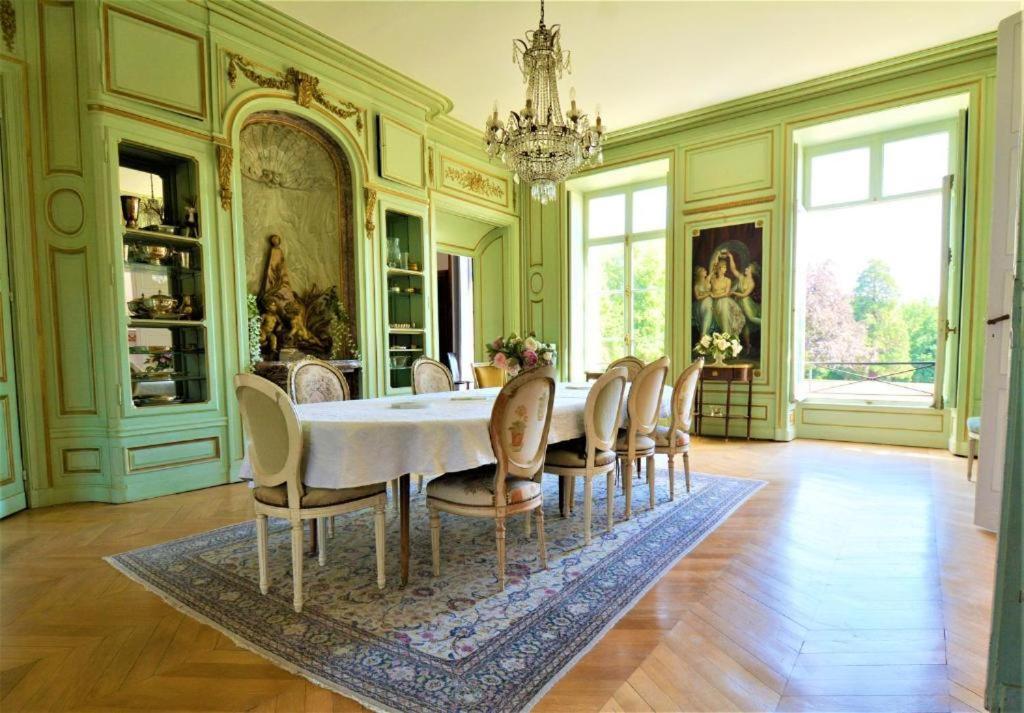
For those arriving by car and looking for something a bit different, this château is a magical option. Located a short drive from the city, it offers not just a place to stay but a full experience of staying in a real château, with sprawling grounds, a heated pool, and activities like tennis, billiards and biking.
Click here to check availability and prices
Best Western Plus Evreux Palais Des Congrès

If you’re looking for the familiar comfort and reliability of an international chain, this hotel is an excellent choice. The rooms are spacious and modern, the service is professional, and there’s convenient parking. It’s an ideal, worry-free base for exploring the area, about a 15-minute walk from the cathedral.
Click here to check availability and prices
Hotel de Normandie

This hotel is housed in a classic, charming building in the heart of the city, and offers an authentic Normandy experience. It combines old-world atmosphere with modern comfort, and makes an excellent starting point for exploring the city on foot, with private parking that’s a big advantage in the city center.
Click here to check availability and prices
Greet Hotel Evreux Centre by Accor
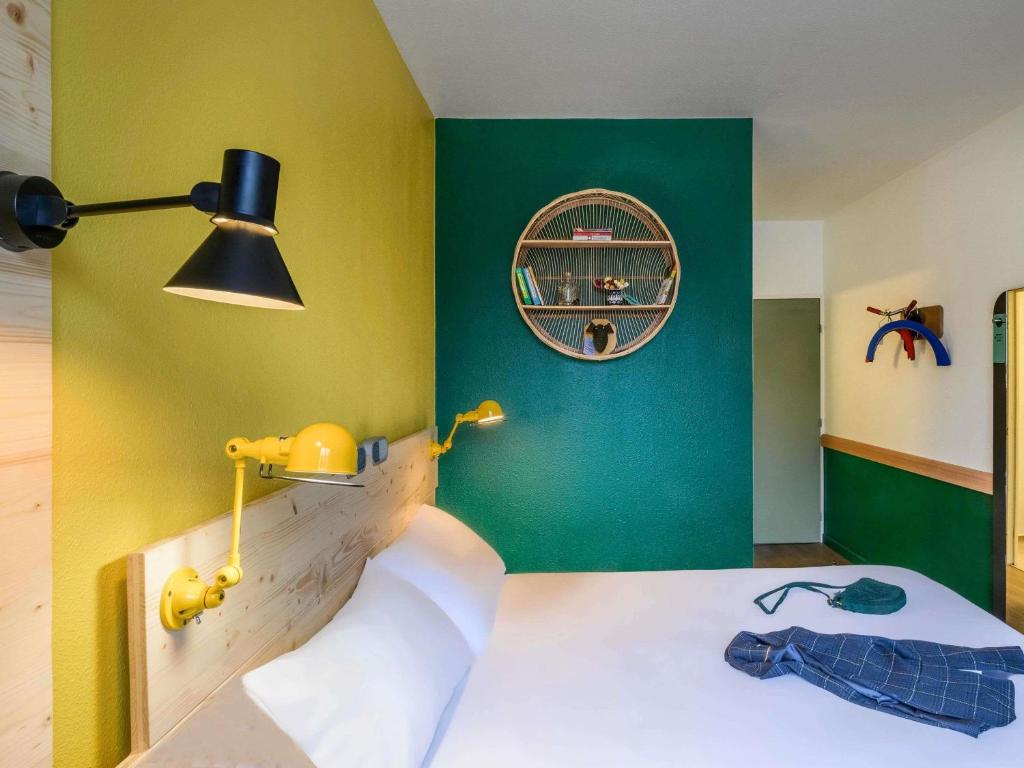
A modern hotel with a youthful, colorful and eco-friendly concept (it holds a Green Key certification). It offers a relaxed, community-minded atmosphere, with an emphasis on recycled design and local character. A great choice for anyone looking for something fresh, different, and centrally located.
Click here to check availability and prices
And if you’re looking for more lodging options in the city, I recommend checking out the wide range of hotels in Évreux. Click here to search for more hotels in Évreux.
FAQ
Who was Philippe d’Évreux?
Who was Charles “the Bad” and what was his connection to Évreux?
What happened to Évreux Cathedral during World War II?
Related reading