

I still remember the first time I visited Château de Chenonceau. I was 8 or 9 years old, an age when the word “castle” immediately conjures up images of grim stone fortresses, thick jagged walls, maybe a moat full of crocodiles and some tired dragon guarding a bored princess in a tower. But then, after a short walk through a long avenue of ancient plane trees, Chenonceau appeared before me. It didn’t look like a menacing fortress built to repel armies. It looked like a delicate fairy palace, floating with impossible elegance right above the quiet waters of the Cher river. Its perfect arches reflected in the water like a mirror, swans drifted calmly between the pillars, and that image has stayed etched in my memory ever since. I fell in love instantly.
Since that magical day in my childhood, I’ve gone back to Château de Chenonceau several more times. Every time I visit, I find myself amazed all over again by its unique architecture (who even thinks of building a castle on a bridge, over a river?). But as I got older, I understood that the real magic of this place isn’t just in the carved stone or the symmetrical gardens. The magic is in the soul of the building. I get swept up in the fascinating stories, the intrigues, the dramas and the secrets hidden within its walls.
Unlike other châteaux in the Loire Valley (like Chambord or Blois), which were masculine strongholds of kings and armored knights, Chenonceau is known as “the Ladies’ Castle” (Le Château des Dames). Its history was written, shaped and steered for 400 years by a line of strong, brilliant women, sometimes sworn rivals, who turned it into a jewel of the French Renaissance. Women who were mistresses, queens, widows silenced by grief, and enlightened women of high society.
In this article, I’m inviting you to join me on a journey through time. We’ll walk the corridors once walked by queens and mistresses, discover how this château escaped destruction through some creative solutions, and tour the magnificent rooms that smell of fresh flowers every single day. But first, since I know some of you are practical people, let me start with all the information you’ll need for a visit, whether you’re planning a full trip through the Loire Valley or a day trip from Paris (it’s much easier than you think).
Before we start, I recommend taking a peek at this short and beautiful video to get you in the mood.
Practical Information for Travelers: Opening Hours, Tickets and How to Get There (Without the Hassle)
Before we dive into the passion-filled intrigues of the French royal court, let’s talk logistics for a moment. One of the biggest advantages of Château de Chenonceau is how accessible it is. If you’re staying in Paris and want to experience the magic of the Loire Valley châteaux, you don’t have to rent a car and drive for hours each way. In fact, Château de Chenonceau is perfectly suited for a day trip from Paris.
How to Get from Paris to Chenonceau?
To answer that question, I need to ask you a simple one in return: are you based in Paris and want to pop over for a single day to visit Chenonceau and/or other Loire Valley châteaux and come back, or are you planning to visit Chenonceau as part of a multi-day trip through the Loire Valley?
A One-Day Trip from Paris
If you’ve decided to do a short trip from Paris and back, let me give you a small tip that will save you a lot of headaches, money and even frustration: don’t rent a car in Paris. Instead, book a guided tour that leaves Paris in the morning and returns in the evening. I did this a few years ago and it saved me the whole hassle of driving in and out of Paris (plus hunting for a gas station before returning the car). Instead, I was taken on a tour of Château de Chenonceau and Amboise, I didn’t have to do anything except enjoy myself, and I still got enough time to explore each château at my own pace (I took some of the photos you see in this article during that trip). I booked the tour through GetYourGuide, one of the leading companies for guided tours, and if you’d like to see a few options for day trips that will take you to Chenonceau, you can find them here:
Those were just a few of the guided tours I picked out for you. If you’d like a few more options, you can find them at this link.
Visiting Chenonceau by Train
Another option, a bit less convenient but cheaper, for a one-day trip to Chenonceau is by train.
All you need to do is hop on the fast TGV train from Paris-Montparnasse station (or even directly from Charles de Gaulle Airport) to Saint-Pierre-des-Corps station, near the city of Tours. That ride takes only about an hour! From there, you switch to a local regional train (TER) on the Tours-Chenonceaux line for a short, scenic 25-minute ride. The tiny train station of the village of Chenonceaux (Chenonceaux Châteaux) sits a laughably short 400 meters or so from the château’s ticket office. All in all, in just over two hours you go from the bustle of Paris to the green, romantic heart of France.
Of course, you’ll need to book tickets in advance, and the earlier you book, the lower the ticket price. If you’re looking for a site to book train tickets, you can find one at this link.
Visiting the Château by Private Car
If you’ve decided to get to Chenonceau by private car after all, keep in mind that it’s about a two and a half hour drive from Paris via the A10 toll highway (toward Aquitaine). Take the exit for Blois or Amboise and follow the signs from there. There’s a large, well-organized parking lot (free of charge) right at the entrance to the grounds.
If you’re looking for recommendations on renting a car, I recommend checking out that article, where you’ll find my preferred booking sites and a few tips that will save you some frustration.
Opening Hours and Buying Tickets
Château de Chenonceau is open to visitors every single day of the year, including national holidays. This is an important point to remember, because unlike museums in Paris that close on Tuesdays or Mondays, Chenonceau will always be waiting for you. Opening hours vary by season: in winter the château is generally open from 9:30 a.m. to 5:00 p.m., and during the busy summer season (July-August) the hours extend from 9:00 a.m. to 7:00 p.m. or even 7:30 p.m.
It’s essential (and I mean essential) to book tickets in advance, especially if you’re visiting during the busy summer months. Chenonceau is the second most visited château in France (after the Palace of Versailles), and the lines at the ticket counter can be exhausting. By the way, if you’re planning to visit several châteaux, it might be worth buying the Loire Valley Châteaux Pass, since it can genuinely save you money.
Top tip: if you can, plan your arrival for early morning hours (right at opening) or late afternoon (a couple of hours before closing). That way you can walk through the gallery over the water without feeling like a sardine in a can, and you can photograph the gardens when the “golden hour” light is simply perfect, instead of fighting the crowds of tourists for your spot in the frame.
The history of Château de Chenonceau
Here we are. We’ve reached the most important, fascinating and juicy part of this article. If the walls of Chenonceau could talk, they’d tell a story that makes soap operas look like reruns of a cooking show. The history of this château was written over 400 years by six remarkable women who steered it with a firm hand, and each of them left an indelible mark on its stone, its water and its gardens. Meet the heroines (and villains) of the French Renaissance: the women who made Chenonceau what it is.
The founder: Katherine Briçonnet, a vision floating on water
Our story begins in the early 16th century, in 1513. Originally, a fortified old flour mill and a medieval castle stood on this site, belonging to the Marques family, who had sunk deep into debt. Thomas Bohier (1460-1523), the shrewd finance minister of King Francis I, bought the property hoping to build a dazzling new estate that would reflect his newfound power and status. But Thomas was a busy man, usually off financing the king’s endless wars in Italy or accompanying him on his travels. The person who took charge of this grand construction project, from start to finish, was his wife, Katherine Briçonnet.
Katherine made a dramatic architectural decision, almost audacious for her time: she ordered the complete demolition of the old flour mill and the gloomy old castle, keeping only a single round tower as a memory of the Marques family (the Tour des Marques, which still stands today in the forecourt and greets visitors). But her true genius lay in the location she chose. Rather than build on the safe bank, she decided to build a modern Italian Renaissance château directly on top of the mill’s massive old support pillars, right in the river’s waters.
Under her direction, a square, symmetrical building went up, with huge windows that let in plenty of light (unlike the narrow arrow slits common in medieval buildings), and a straight, wide staircase, a genuine architectural innovation for France at the time, instead of the familiar spiral staircases. Katherine, fully aware of the scale of her achievement, carved the couple’s motto into one of the heavy wooden doors: “S’il vient à point, me souviendra” (“If it is completed, I will be remembered forever”). She was absolutely right. But ironically, after both Thomas and Katherine died, King Francis I (yes, the very king Thomas had served so loyally) seized the château from their heirs in 1535, citing “financial irregularities and unpaid taxes” (it turns out that even in the Renaissance, the fastest way to lose your house was to get on the wrong side of the tax authorities).
The royal mistress: Diane de Poitiers, beauty, power and a sweet illusion
The château passed into the possession of the French crown, and when Francis’s son, King Henri II (1519-1559), took the throne in 1547, he did something that shook the royal court. He did not give the magnificent Chenonceau to his lawful wife, Queen Catherine de’ Medici. No, he gave it, with a ribbon and a bow, to the love of his life and his official mistress, Diane de Poitiers.

Diane was no ordinary mistress. She was a powerful, brilliant woman and a shrewd businesswoman. She was 20 years older than King Henri (!), yet she kept a magnetic beauty and seemingly eternal youth (rumor has it she used to drink solutions of pure gold to preserve her pale complexion, which likely also ended up poisoning her).
Diane loved Chenonceau with all her heart, and under her rule the château became a center of culture, hunting and glamour. Her contribution to Chenonceau was unprecedented. First, she created breathtaking geometric gardens on the grounds (covering 12,000 square meters!), planted on raised artificial islands to protect them from the river’s floods. These gardens were considered the most advanced and beautiful in France at the time.
But her greatest architectural legacy was the bold vision to build a bridge connecting the château to the opposite bank of the river. She hired the famous architect Philibert de l’Orme (1514-1570), and together they created a stunning five-arch stone bridge that would later become the foundation of the Chenonceau we know today. Diane lived the dream, hosted enormous parties, and effectively ruled the French court through the besotted king, while the lawful queen was left to bite her tongue in the shadows.
The vengeful queen: Catherine de’ Medici, revenge served cold
While Diane de Poitiers drank her gold elixirs and strolled through her gardens at Chenonceau, the lawful queen, Catherine de’ Medici, sat on the sidelines, swallowed the humiliation, and seethed with rage. She waited with the patience of a predator. Her chance came in the summer of 1559. During a jousting tournament in which the king took part, a splinter from the lance’s wood pierced his helmet and struck him in the eye. King Henri II died in agony, and the moment he drew his last breath, Catherine set out on a sweet and cold campaign of revenge, true to her Medici upbringing in Florence.

Even before the king was buried, Catherine demanded that Diane immediately hand over the keys to the château and the crown jewels. She expelled Diane in disgrace from Chenonceau, sending her off to the “less attractive” Château de Chaumont-sur-Loire further up the Loire (a deal Diane, of course, could not refuse).
Now that Chenonceau was finally hers, Catherine was not satisfied with simply banishing her rival. She wanted to erase every trace of the mistress and, at the same time, make the château even more magnificent. Her first move was to build a grand two-story gallery directly on top of the bridge Diane had built. In doing so, she created the iconic image of the château as we know it today: a palace that spans the river from bank to bank. In this 60-meter-long gallery, Catherine held “victory parties” and the most extravagant, wild masked balls France had ever seen.
Beyond the celebrations, Catherine, who became regent of the kingdom, ran all of France from her small “Green Study” (Le Cabinet Vert) at Chenonceau, maneuvering between Protestant and Catholic factions during the bloody Wars of Religion. To make it crystal clear who was now mistress of the house, she created her own garden on the opposite side of the château, smaller and more intimate than Diane’s, just so she could look out the window without ever having to see the garden of the rival she despised. Drama, through and through.
The White Widow: Louise de Lorraine, tears in silver
After Catherine’s death, the château passed to her daughter-in-law, Louise de Lorraine, wife of King Henri III (r. 1574-1589). But Louise’s fate was tragic. In 1589, just months after receiving the château, her husband the king was assassinated by a fanatical monk (Jacques Clément). Louise received the bitter news while staying at Chenonceau, and from that moment on, her life came to a standstill.

She retreated to the second floor of the château and turned it into a hall of mournful grief. In keeping with royal mourning customs, she wore only white (hence her nickname, “the White Queen”), but she had her bedroom decorated in a particularly macabre and chilling style: she ordered the walls and ceiling painted coal black, and decorated them with images of crossed bones, silver tears, gravediggers’ shovels, widow’s feathers and crowns of thorns.
Louise wandered the halls of the château like a pale ghost for more than a decade, sunk in prayer and grief, until her death. With her passing, the royal golden age of Chenonceau came to an end. The royal court lost interest in the château, and it was left largely abandoned, used mainly by minor noble families.
The enlightened savior: Louise Dupin, a literary salon and a stunning rescue
We jump forward to the 18th century, the age of the Enlightenment. In 1733, the château was bought by Claude Dupin (1686-1769), a wealthy tax collector, but the person who truly breathed new life into it was his wife, Louise Dupin (Louise Marie Madeleine Guillaume de Fontaine, Madame Dupin, 1706-1799). Louise was a remarkably intelligent, charming and wealthy socialite, whose grandmother was none other than the famous theater actress Marie-Aurore de Saxe. Louise turned Chenonceau from an abandoned monument into one of the leading literary and philosophical salons in France.

She hosted the greatest minds of the era in the galleries of Chenonceau: Voltaire, Montesquieu, Buffon, and even the philosopher Jean-Jacques Rousseau, who served as her personal secretary and tutor to her children (Rousseau even mentioned his happy time at Chenonceau in his book, “Confessions”).
But Louise Dupin’s greatest and most real test came with the outbreak of the French Revolution in 1789. Revolutionary committees made it their mission to destroy every symbol of the old, corrupt monarchy, and Château de Chenonceau was a prime target. Revolutionaries marched toward the château with torches and axes, ready to burn it down. But Louise Dupin, who was greatly beloved by the local peasants (known as a generous and fair woman), did not lose her composure.
She used her sharp mind and a simple, strategic argument of pure genius: she told the furious revolutionaries that destroying the château would be a serious economic and infrastructural disaster for the new Republic. Why? Because the château’s gallery, built by Catherine de’ Medici, was in fact the only bridge crossing the Cher River for many kilometers around! Destroying the château would mean halting trade and the free movement of the Republic’s citizens!
This practical argument worked. The château was saved from total destruction. (By the way, Louise had one more trick up her sleeve: she turned the château’s ornate royal chapel into a “firewood storage shed,” hiding all the religious symbols and the altar from the eyes of the anti-religious revolutionaries. Did we mention she was brilliant?). Louise ended her days peacefully at Chenonceau, and, at her request, was buried in the château’s park.
The ruined restorer and the merciful sister: Pelouze and the Menier family
In the 19th century, the wealthy industrialist Marguerite Pelouze (1836-1902) bought the château and devoted her life (and her entire fortune) to restoring Chenonceau to its exact Renaissance appearance, before the additions made by Catherine de’ Medici. She threw enormous parties there (including gondola rides brought in especially from Venice), but eventually became embroiled in a political scandal, went bankrupt, and had the château seized by the bank.
In 1913, the château was bought by its current owners: the Menier family, famous for their French chocolate empire. And here too, women continued to play a dramatic role. During World War I, at the family’s request, Chenonceau became a military hospital. Simonne Menier (1881-1972), the wife of the château’s owner at the time, energetically ran the hospital set up in the grand gallery over the river, personally caring for more than 2,200 wounded French soldiers there.
But an equally dramatic story unfolded during World War II. After the Nazi occupation of France, the Cher River was declared the “Demarcation Line.” The northern bank of the river (where the château’s main entrance is located) was under direct Nazi occupation, while the southern bank (reached via the château’s bridge and gallery) lay within “Free France” (the Vichy government). This created a completely absurd geopolitical situation: the château’s front door stood on strict German territory, while its back door, at the far end of the gallery, opened onto freedom!
Simonne Menier and the local resistance unit did not waste any time. They used the château’s gallery as a secret escape route. At night, right under the noses of the Nazi guards patrolling the northern bank, Simonne helped smuggle members of the French resistance, spies, refugee families and Jews from the occupied zone, through the château’s dark corridors, straight across to the opposite bank and to freedom. A true heroine.
What can you see inside the château? A virtual tour of its rooms and gardens
When you tour the château today, it doesn’t feel like visiting a silent archaeological museum. It feels like visiting a living, breathing home. “The beauty of Chenonceau forces itself on us like a tender bond to the heart,” wrote the French author Marguerite Yourcenar (1903-1987), and she was so right. Here are the rooms, areas and details you absolutely shouldn’t miss during your visit (don’t forget to grab the audio guide, it does a wonderful job):
Ground floor: centers of power and prayer
Entering through the original carved wooden doors from the days of Francis I, you’ll reach the Guards’ Room (La Salle des Gardes). This room kept watch over the owners’ safety, and it’s decorated with stunning antique 16th-century Flemish tapestries depicting hunting and noble scenes. From there you’ll move on to the Chapel (La Chapelle).
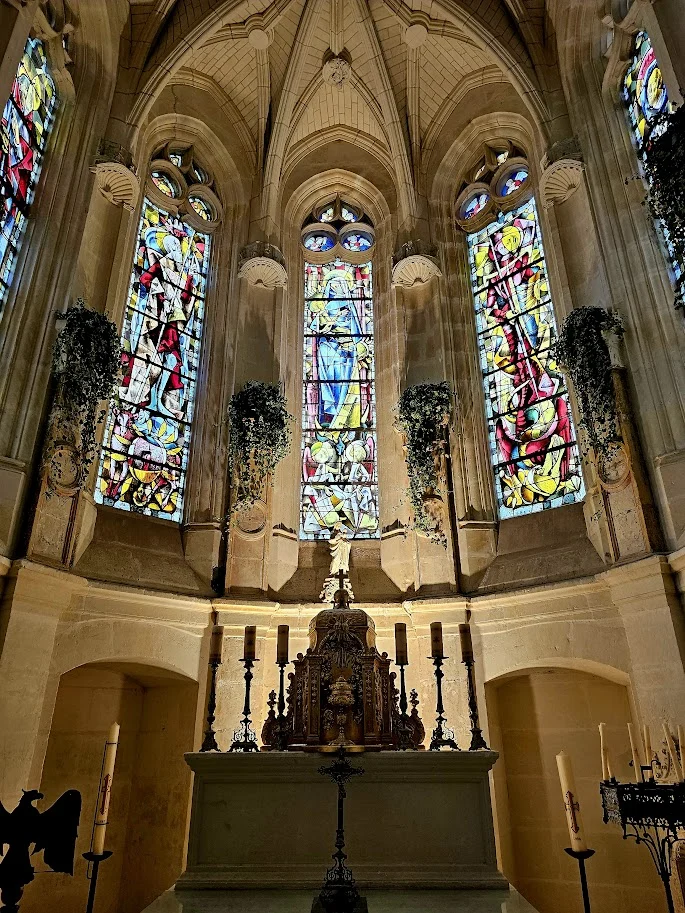
This is the same sacred room that Louise Dupin saved from destruction by turning it into a woodshed. Take a look at the modern, colorful stained glass windows (the original stained glass was destroyed by the blast of a German bomb in 1944). In the gallery leading to the chapel, you’ll find signatures and graffiti carved into the stone by Scottish guards of the king’s guard sometime in the 16th century.
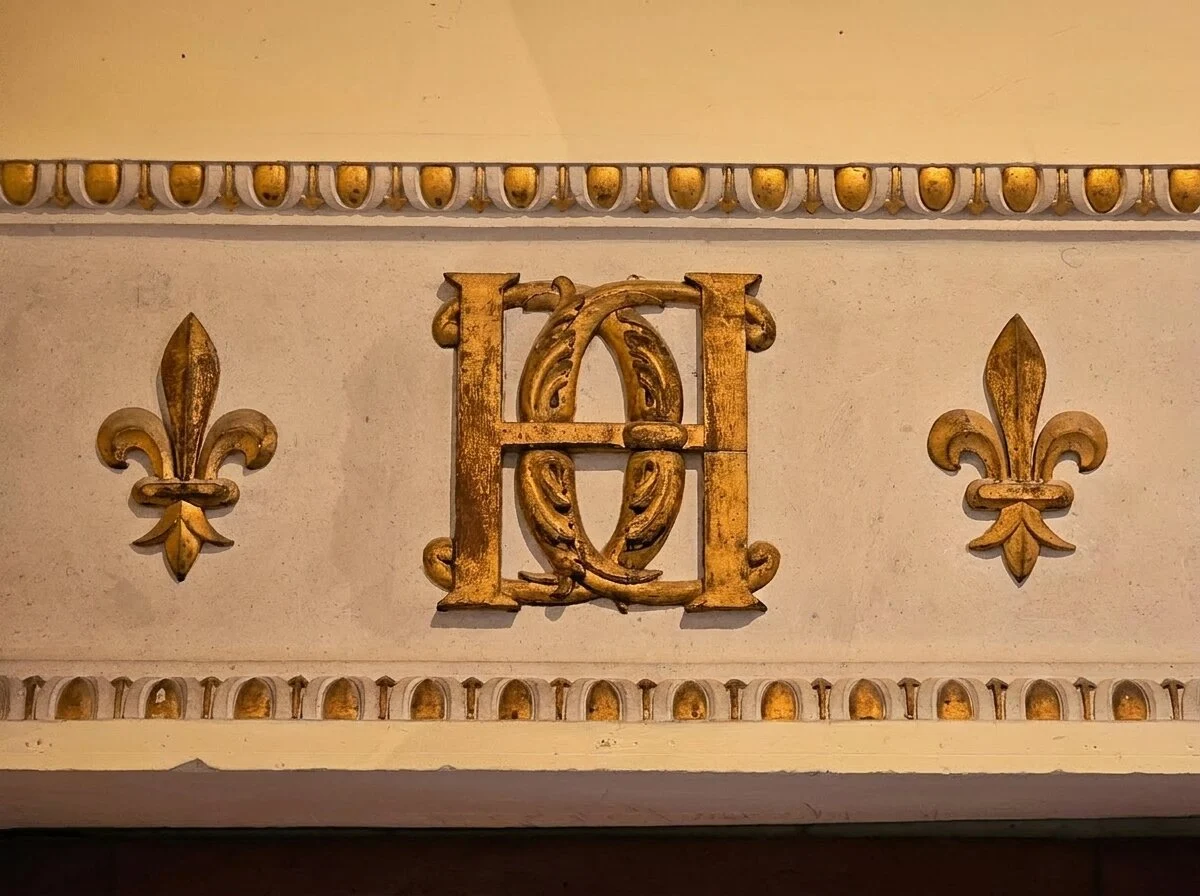
The highlight of the ground floor is, without question, Diane de Poitiers’s bedroom. This is a breathtaking room, dominated by a massive and ornate fireplace designed by the sculptor Jean Goujon. If you look closely at the fireplace, you’ll see the famous intertwined initials of King Henri II and Queen Catherine: an H and a C combined. But, not entirely by accident, the combination of letters also forms the eye of a D (for Diane). The most brazen royal troll in history! The bed in the room is covered in luxurious velvet, and the tapestries depict mythological scenes.
Right next to it is the Green Study (Le Cabinet Vert). This is the room from which Catherine de’ Medici governed the fractured kingdom of France as queen regent. It’s a small, intimate space, with emerald green walls and a marvelous tapestry depicting the discovery of America by Columbus. It’s fascinating to think that decrees that changed the face of Europe were signed right here.
The main gallery and the kitchens
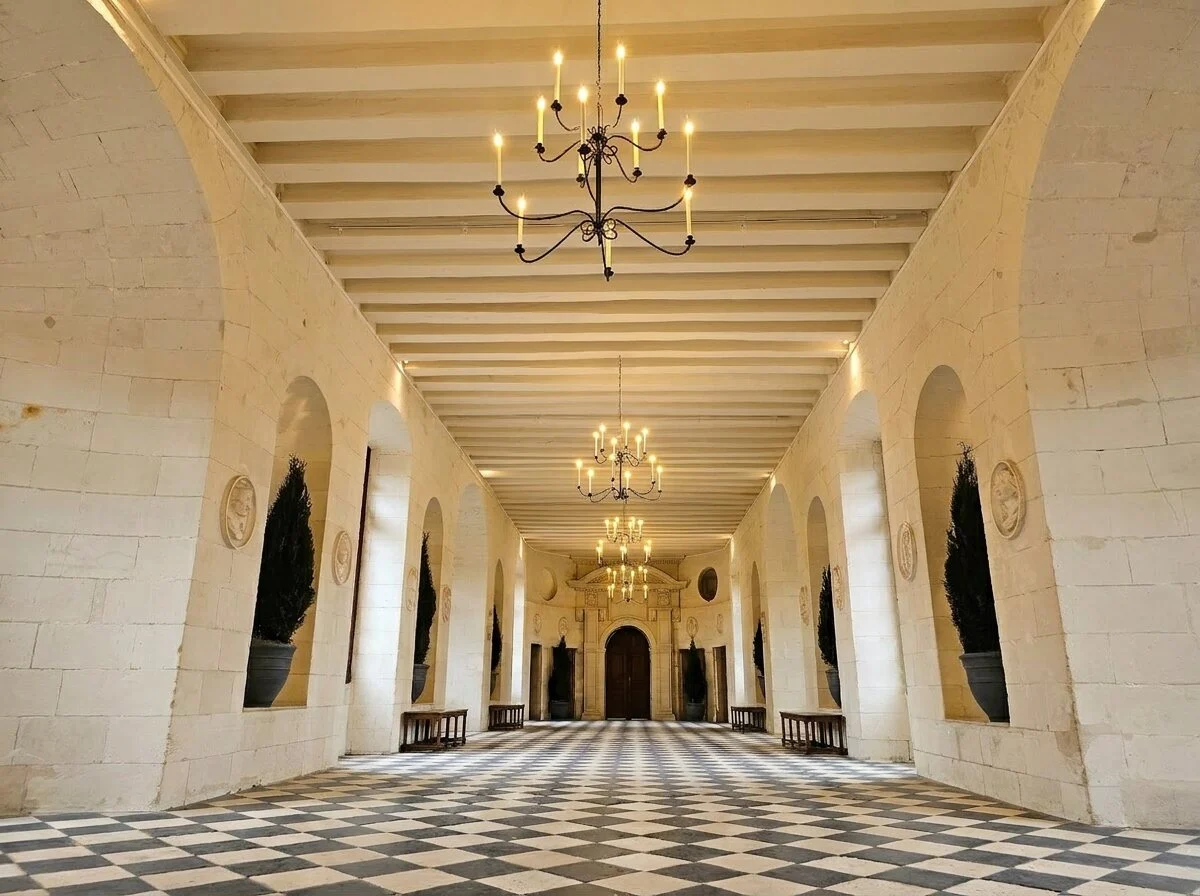
From Diane’s room you’ll step into the main Gallery (La Galerie). This is an almost unimaginable architectural space, 60 meters long and 6 meters wide, suspended right over the river and lit by 18 large windows. The black and white checkerboard floor is mesmerizing. This is where the grand balls were held, where the wounded of World War I once lay, and where refugees crossed during World War II. At each end of the gallery you’ll find massive Renaissance fireplaces that once heated the enormous space.
Make sure to go down the narrow staircase to the Kitchens (Les Cuisines). Chenonceau’s kitchens sit in the massive piers of the bridge, right at water level. It’s a wonderful space for anyone who loves culinary history. You’ll find a huge pantry, a butcher’s room with an imposing chopping block, and an enormous oven once used to roast whole oxen for feasts. The stone walls are lined with a gleaming, complete collection of copper pots and pans. One more architectural touch of genius: supply boats used to arrive by river and dock right beneath a hatch in the kitchen, through which the goods were hauled up inside.
The second floor and the apothecary
On the second floor you’ll pass through Louise de Lorraine’s bedroom. Though it’s been partly restored, it still sends a chill down your spine. The walls are painted coal black, decorated with silver motifs of sorrow feathers, torn ropes (a symbol of widowhood) and crowns of thorns. It’s a silent testimony to grief that never ended.
On this floor you’ll also find the Room of the Five Queens (dedicated to Catherine de’ Medici’s two daughters and three daughters-in-law, all of whom became queens of Europe). In addition, the Queen’s Apothecary (L’Apothicairerie) has recently been restored. This is a fascinating room located in a separate building (“the Dome Building”), displaying a rare collection of Italian ceramic medicine jars (Albarelli), apothecary scales, mortars, dishes and Renaissance remedies. Catherine de’ Medici was known to be deeply interested in herbal preparations, remedies (and, some would say, poisons too), and this room offers a rare glimpse into 16th-century medicine.

The gardens and the famous flower workshop
Don’t leave Chenonceau before spending real time wandering the estate and its gardens:
- Diane de Poitiers’s Garden: an impressive French park, precise and expansive, laid out in marvelous geometry. It sits on a raised terrace that Diane ordered built to keep the flower beds from flooding from the Cher river.
- Catherine de’ Medici’s Garden: a smaller, more elegant and intimate garden (about 5,500 square meters), looking directly onto the château’s western facade, with a beautiful round pool at its center.
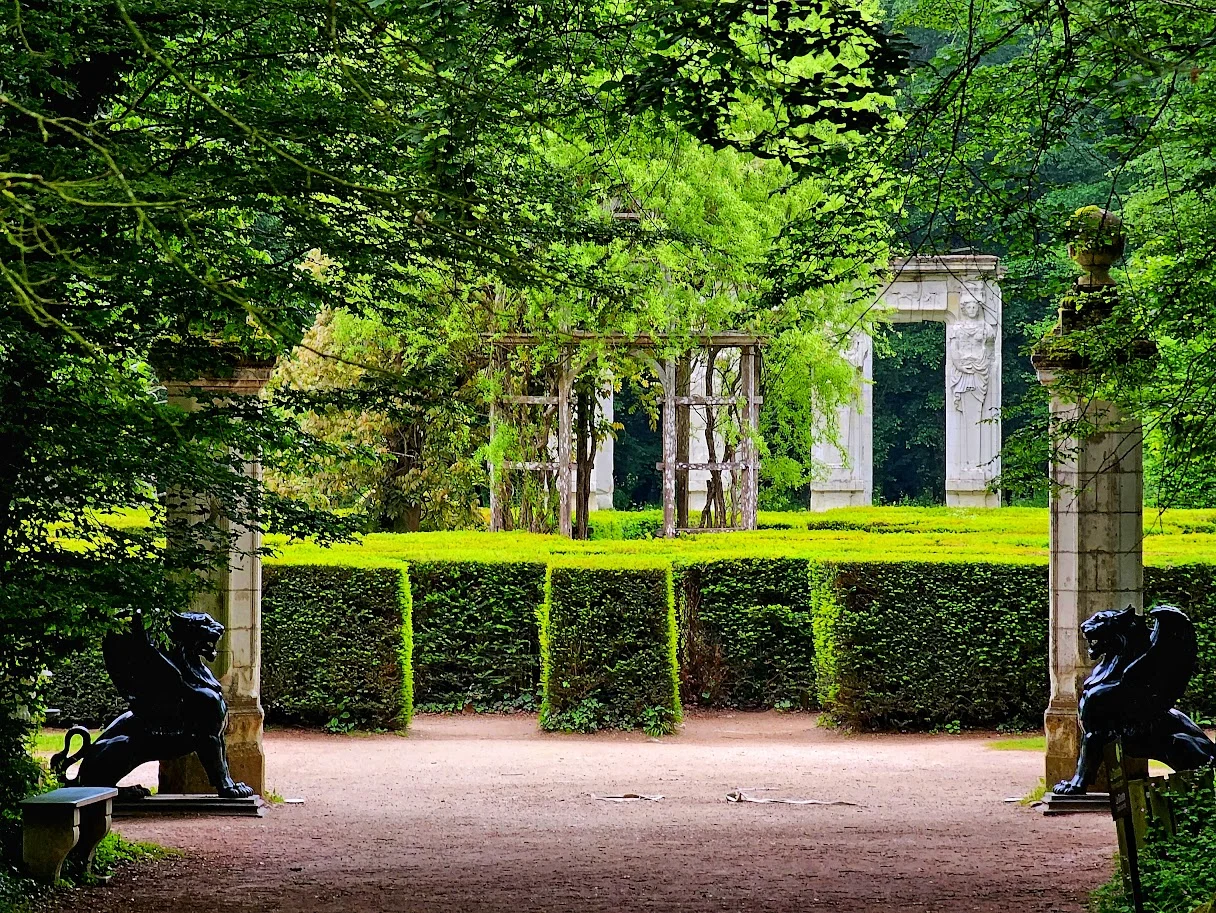
- The Labyrinth: a classic Italian maze made of 2,000 meticulously trimmed yew trees. At its center stands a wicker gazebo (Gloriette). A wonderful attraction if you’re traveling with kids.
- Russell Page Garden: a relatively new, more modern garden, designed as a tribute to the famous British landscape architect Russell Page, based on his archival sketches.
- The Flower Workshop (Atelier Floral) and the kitchen garden (Potager): this is probably the feature that sets Chenonceau apart from every other château in the world. The estate runs a professional flower workshop, led by a florist who holds the prestigious title “Meilleur Ouvrier de France” (Best Craftsman in France). The team grows more than 100 different flower varieties in the château’s kitchen garden. Every morning, fresh flowers are cut, and the team arranges lavish, enormous flower displays placed in every single room of the château. The scent that hits you when you walk into a room with one of these fresh arrangements is simply intoxicating and adds so much to the experience of the visit.
Where should you rest your head? Where to stay in Chenonceau and the area
If you’ve decided not to do this as a day trip from Paris but instead to savor the region, drink the local wine (AOC Touraine-Chenonceaux) and spend a magical night in the Loire Valley (a very smart decision that will let you comfortably visit another château or two the next day), you should know that the village of Chenonceaux (the village is spelled with an x at the end, the château itself is not) offers wonderful, romantic places to stay, nearly within walking distance of the château. I’ve put together the best places in the area for you, so you can wake up in the morning feeling like royalty:
Le Clos Mony: a romantic B&B stay with a family atmosphere (9.0 rating on Booking.com)
A Bed & Breakfast style place that offers a wonderfully rural, authentic and pleasant experience. It’s located only about 350 meters from the village’s train station, so if you arrived by train, this is a fantastically simple option. Guests have given it a score of 9.5 for its perfect location. It offers spotless cleanliness, warm and welcoming personal hospitality from the hosts, and a small, charming garden where you can relax with a cup of coffee after a long day of admiring architecture. Perfect for couples looking for a relaxed, authentic atmosphere at a reasonable price.
For more information, photos and booking at Le Clos Mony, click here
Hotel La Roseraie: classic French comfort right in the middle of it all (8.4 rating on Booking.com)
A charming, classic 3-star hotel in an ideal location (only about 150 meters from the Chenonceau train station, and walking distance to the château). The exterior is covered in lush greenery and blends beautifully into the Loire atmosphere, with a traditional design style. The rooms are very comfortable, and there’s free wireless internet (quite important these days). You’ll find excellent value for the price here, a very friendly staff happy to help book tickets or a restaurant table, and an environment well suited to both families and couples looking for an indulgent, well-organized stay close to everything.
For more information, photos and booking at Hotel La Roseraie, click here
Auberge du Bon Laboureur: a Michelin star and a tradition of luxury (recommended by Booking.com and the Michelin Guide!)
If you’re looking to take your trip to a whole different level and feel (almost) like Diane de Poitiers, this is the place for you. This historic and magnificent inn has been welcoming guests since 1786! It’s located just a short walk from the château and is a culinary and tourism institution in its own right in the Loire Valley. The hotel features elegantly designed, carefully appointed rooms, a large and relaxing garden with a lounge area and a pool, and, the cherry on top: a Michelin-starred restaurant serving refined, carefully prepared French cuisine. If you’d like something lighter, the property also has a more casual “Petit Bistrot” restaurant, where you can enjoy terrines, salads and wonderful wines. This is the ultimate choice for lovers of good living and gastronomy.
For more information, photos and booking at Auberge du Bon Laboureur, click here
Looking for more information about the Loire Valley?
Head over to my Loire Valley travel guide page, where you’ll find plenty of useful information about other châteaux, walking routes and places to stay.
Did you enjoy the journey through time and the historical intrigue of Château de Chenonceau?
Sign up for my newsletter and you won’t miss a single article, because every weekend the best articles go straight to your inbox (no unnecessary spam, I promise).
Click here to join our newsletter now (it’s completely free)!
Related reading