

Some châteaux in the Loire Valley tell one single, clean story (like the Château de Chambord). The Château de Blois tells four, and all four stand across from each other, in the very same courtyard.
Most of the palaces in the valley were built gradually over generations, but in most cases the rulers who came later took the trouble to “fix” and unify what came before them. At Blois, that simply never happened. Each ruler built an entirely new wing for himself, almost without touching what already stood there. The result is a courtyard where, turning 180 degrees, you’ll see: the remains of a 13th-century fortress, a flamboyant Gothic wing, a lavish Renaissance wing, and a classical wing. Four architectural styles, four eras, and a parade of entirely different royal personalities who filled these rooms with intrigue, poetry, and blood.
If you came here to plan a trip to Blois, skip ahead to the next section. If you’re here for the juicy historical stories (and there are plenty), jump straight to “Four Wings, Four Personalities.”
One last thing before we continue: the last time I visited the Château de Blois and took photos was back in 2014. Unfortunately, most of the pictures I took were lost, so unlike my other articles, you’ll find relatively few photos here. To make up for it, though, I found a lovely 7-minute video that shows you the Château de Blois in all its glory. Take a few minutes, watch the video, and keep reading afterward.
Château de Blois: Visitor Information
Hours and Prices (2026)
Palace Opening Hours
- January 1 – February 28: 10:00 – 17:00
- March 1 – March 31: 10:00 – 17:30
- April 1 – September 30: 09:00 – 18:30
- October 1 – October 16: 09:00 – 18:00
- October 17 – November 1: 09:00 – 18:30
- November 2 – December 18: 10:00 – 17:00
- December 19 – January 3: 10:00 – 18:00
Tickets and Prices
Adults: 16 euros (as of 2026). Children 6-17: 8 euros. Under 6: free. Since this is a very popular château during tourist season, I highly recommend booking tickets in advance through the following links:
- Book château admission tickets
- Book tickets for the sound and light show (running from April to November)
- Book the Loire Valley Châteaux Pass (especially worthwhile if you’ve decided to visit several châteaux)
Getting There
There are several convenient ways to get to the Château de Blois from Paris. Here are the main options available to you:
Guided Tour from Paris
If you’ve decided to leave Paris for just one day to visit the Loire Valley, I highly recommend not renting a car, but simply taking an organized tour instead. This will let you see more than one château in a day and save you a lot of headaches (and honestly, once you factor in the cost of the car rental, gas, tolls, and admission tickets, it really does pay off).
If you’ve decided to take my advice, here are some excellent tours that include the Château de Blois and depart directly from Paris:
Getting There by Train
You can reach Blois by direct train from the Paris-Austerlitz station to the Blois-Chambord station (the trip takes about an hour and a half to two hours), and from there it’s about a 10 to 15 minute relaxed walk to the château. If you’re looking for a good site for booking train tickets, my standard recommendation is Rail Europe. If you’d like to find more good sites for booking trips, feel free to check out my toolkit.
Rental Car
If you’ve decided to rent a car in Paris and drive to the Château de Blois on your own, the fastest route is heading south on the A10 toll highway. The route involves getting onto the A10 as you leave Paris, then exiting at exit 16 (Mer) to continue on the local roads D205 and D112 straight to the town of Blois.
As I said before, I really don’t recommend driving from Paris to Blois just for a single day. That said, if you’ve decided to make the town of Blois a convenient home base for exploring the rest of the châteaux in the Loire Valley, you’ll find some highly recommended hotels in the article dedicated to this topic: Where to Stay in Blois and the Surrounding Area.
How Much Time Should You Spend on a Visit?
A full day, if you want to see the château at a relaxed pace and also stroll through the old town. Half a day, if you’re on your way to other châteaux in the area (like Chenonceau or Chambord) and you’re folding Blois into a packed itinerary.
What You Shouldn’t Miss at the Château
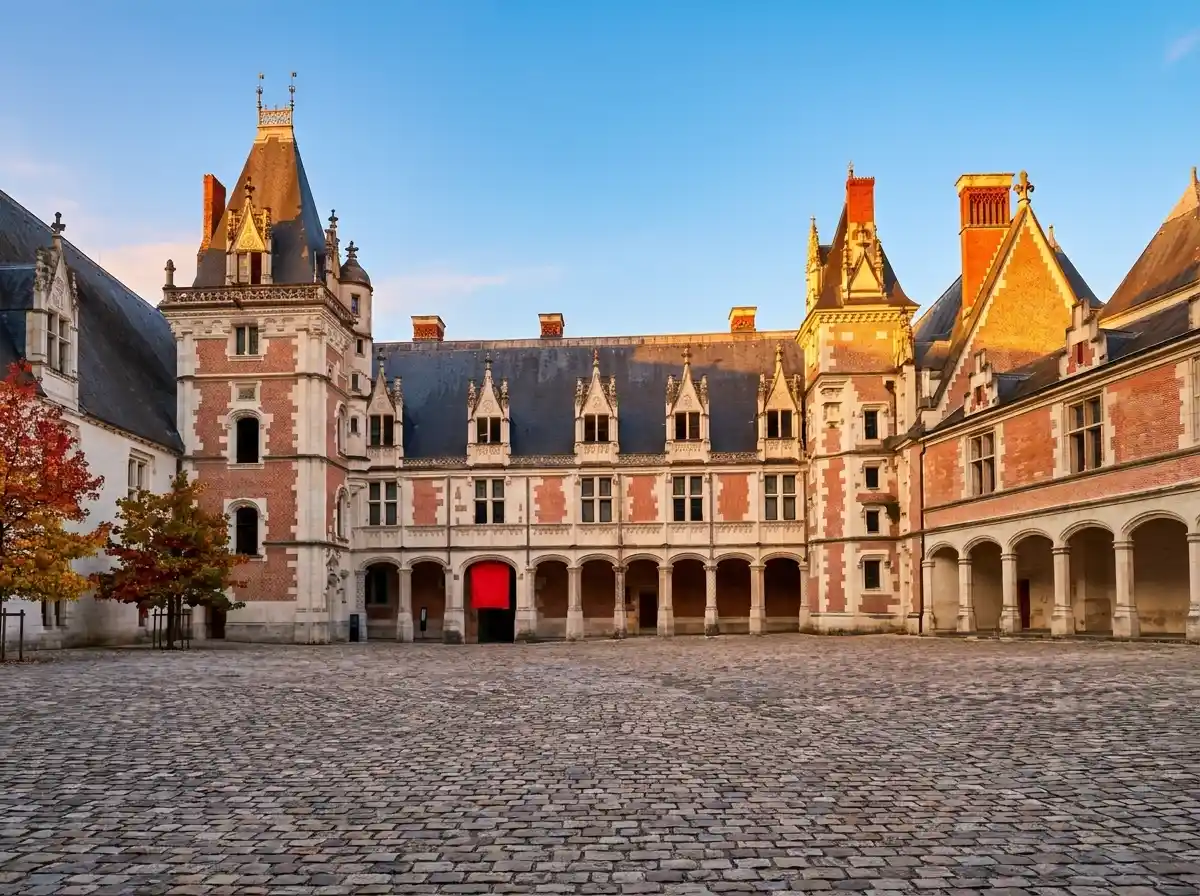
- The courtyard itself: stand at its center before you go into the rooms, and let the four wings close in around you. That’s the moment you realize something here is completely out of the ordinary.
- The spiral staircase of Francis I (r. 1515-1547)
- The bloody assassination room of Henri I, Duke of Guise (1550-1588)
- The summer sound and light show, which tells this entire history in colors and lights projected right onto the facades themselves. You can book a ticket for the show through this link.

Best Season to Visit
Spring and fall, mainly for the sound and light show (running from April to September) and for the blooms across the Loire Valley in general. September is probably the single best month: fewer tourists, the greenery still lush all around, and the afternoon light on the château’s white stones is simply worth every photo.
Where to Stay in Blois
Just before we dive into the fascinating story of the Château de Blois, I have to say that the town of Blois is a wonderful base for exploring the whole Loire Valley, since quite a few châteaux sit nearby. Beyond that, if you decide to stay in Blois, you’ll also enjoy a charming old town, and you won’t have to travel far in the evening after watching the sound and light show at the château.
So, if you’ve decided to take my advice and make Blois your home base for trips around the Loire Valley, all you need to do is check out the article Where to Stay in Blois to discover a list of recommended hotels and vacation rentals.
Four wings, four personalities (and a whole lot of drama)
To really understand the Château de Blois, you need to know the people who shaped it. Here’s a historical overview of this fascinating building, told through the figures who molded it (and sometimes met their end there):
The counts of Blois in the Middle Ages: the wooden fortress, the Vikings and “the Trickster”
Before it became an architectural gem and a stage for Renaissance royal intrigue, the Château de Blois began its life as a grim, well-fortified military stronghold in the early Middle Ages. The first historical evidence of a fortress on the site dates to 854, under the reign of King Charles the Bald (Charles le Chauve). In those days this was no grand stone palace, just a simple, strategically placed wooden fort, built on top of the rocky cliff overlooking the Loire. But that excellent location also attracted trouble: Viking warriors raided the area, attacked the fortress and burned it to the ground.
In the 10th century the site was rebuilt and became a major center of political power thanks to the powerful, wealthy counts of Blois (Comtes de Blois). Count Thibaud I (Thibaud Ier de Blois, 910-978), who earned the less than flattering but rather witty nickname “the Trickster” or “the Cheat” (Le Tricheur), understood the potential of the place.
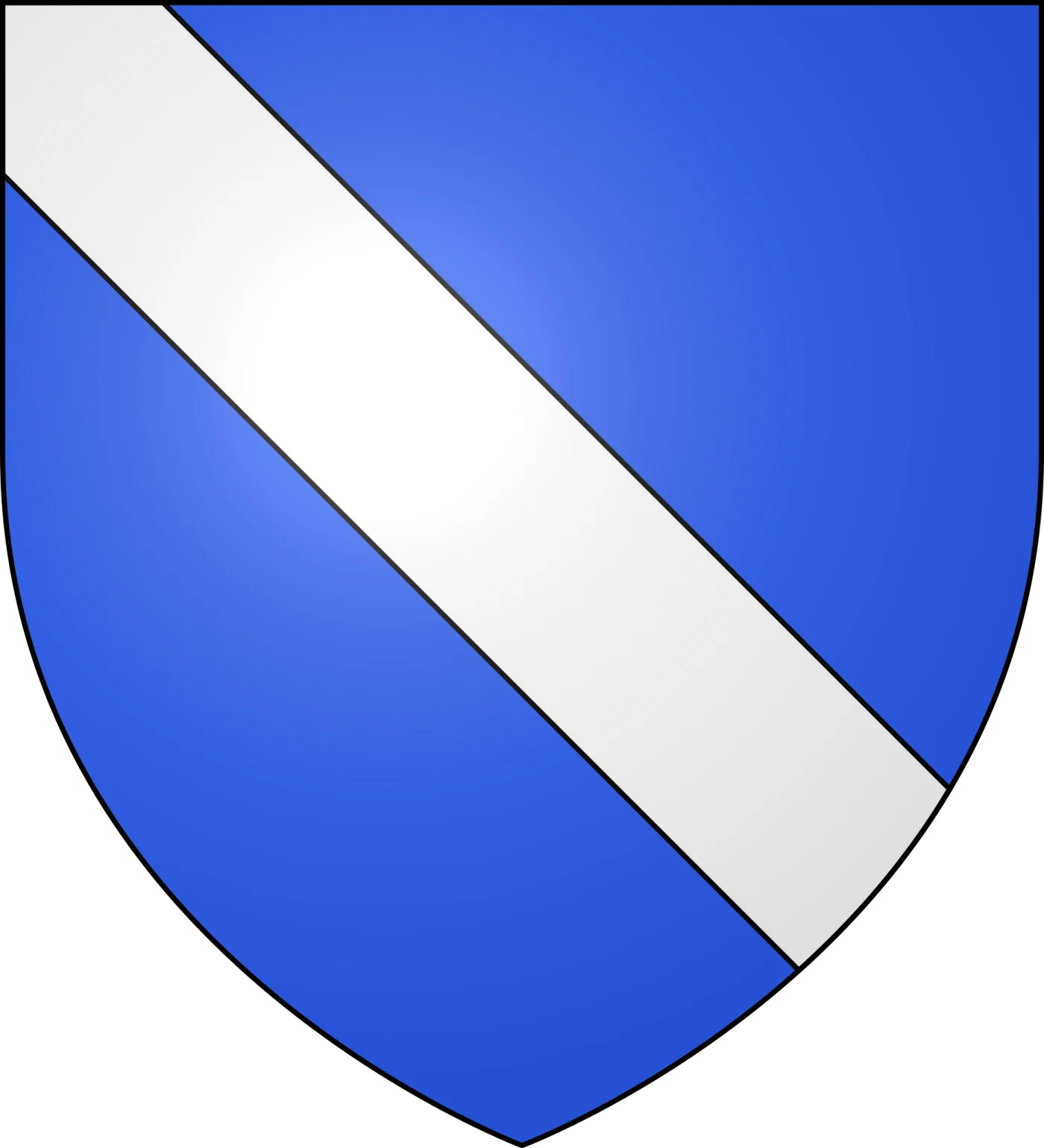
He decided to replace the vulnerable timber walls with a watchtower and a massive stone fortress. Thibaud and his descendants became one of the most influential dynasties in feudal France, to the point that they also ruled over the wealthy region of Champagne and posed a real, constant threat to the early kings of France from the Capetian dynasty.
For centuries the château served as a tough feudal seat of power, until 1218, when Thibaud VI (Thibaut VI), the last count from the House of Champagne, died without leaving a male heir. Control of the region and the château passed to the House of Châtillon. Toward the end of the 14th century, Count Guy II de Châtillon (1346-1397) sank into heavy debt following prolonged wars and family tragedies (including the death of his only son).
In desperation, and with no real choice left, in 1391 he made a decision that changed the course of French history: he sold the county of Blois and the château to Louis I, Duke of Orléans (Louis Ier d’Orléans), the younger brother of King Charles VI, for the enormous sum of 200,000 gold écus. This sale brought the royal House of Orléans to the château, and laid the groundwork for turning Blois from a medieval feudal stronghold into a magnificent Renaissance royal palace.
The Estates Hall (13th century) and Joan of Arc
The oldest part still standing in the château is the Estates Hall (Salle des États) from the 13th century, a remnant of the medieval fortress of the counts of Blois. It is in fact the oldest civil Gothic hall in all of France. And speaking of the Middle Ages: in 1429, none other than Joan of Arc (Jeanne d’Arc) came here to receive the blessing of the Archbishop of Reims in the château’s chapel, just before setting out at the head of an army to liberate the city of Orléans from the English siege.
If you walk into this monumental hall, you’ll find an enormous space divided into two long aisles by a row of central stone columns supporting a magnificent wooden ceiling (precisely and beautifully restored in the 19th century by Félix Duban). This hall was not used only for feasts by the counts of the region; it was the beating political heart of France at some especially critical moments.

During the 16th century, when the Wars of Religion threatened to tear the kingdom apart, this hall served as the meeting place of the famous Estates-General (États généraux) in 1576 and 1588, under the reign of Henri III. Here, within these stone walls, representatives of the nobility, the clergy and the common people tried to dictate terms to the king, political plots were hatched in the open, and tension reached its peak mere moments before the dramatic murder that took place just one floor above.
Charles d’Orléans: the poet prince
Before it became an official royal residence, the château belonged to Charles, Duke of Orléans (1394-1465). Charles was captured by the English at the famous Battle of Agincourt (1415) and spent no less than 25 long years in English captivity, where he found comfort in writing sorrowful, beautiful poetry. When he finally returned to France, he settled in Blois and turned the grim military fortress into a lively cultural hub. He used to hold prestigious poetry contests here (one of them attended by the renowned poet François Villon). His son would change the château’s fate forever.
Charles, who was the nephew of King Charles VI, returned from English captivity already 50 years old, a very advanced age for that period (not to mention that his beloved wife, Bonne d’Armagnac, had died while he was still imprisoned across the Channel, without his ever getting to say goodbye to her).
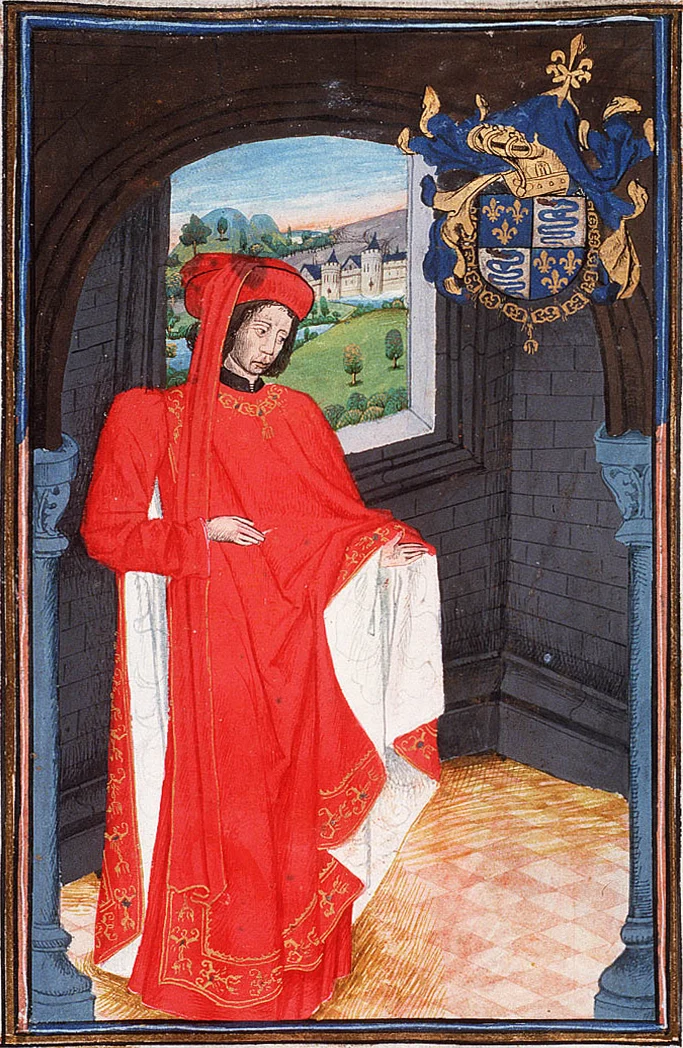
Instead of sinking into bitterness or setting out on a military campaign of revenge, he chose to bring to Blois the refined, cultured atmosphere he had absorbed. He tore down part of the old fortress walls to let in light, built more comfortable living quarters, and established a magnificent library that was one of the largest of its time.
His court at the château became a magnet for artists, philosophers and intellectuals. The most charming story is about the famous Blois poetry contest he organized in 1457: Charles gave participants a fixed opening line (“I am dying of thirst beside the fountain”) and asked them to compose a poem around it. François Villon, the rebellious, brilliant poet, came to the château, wrote an immortal ballad, and won first place. At age 68, Charles married for a third time, to the young Marie de Clèves (1426-1487), and, almost miraculously, they had a small son named Louis, who would go on to become king of France and change the château’s standing forever.
Louis XII: the royal hedgehog

Charles’s son became king of France in 1498 under the name Louis XII (Louis XII). He and his wife, Anne de Bretagne, decided to make Blois their main royal residence. The wing he built marks the architectural turning point between late Gothic architecture (the “Flamboyant” style) and the start of the French Renaissance. Here you’ll see alternating facades of red brick and white stone, ornate dormer windows (lucarnes), and a large equestrian statue of the king set in a niche above the main entrance.
(If you look closely at the emblems decorating the wing, you’ll spot a hedgehog. That was Louis XII’s personal emblem, and in case you were wondering, someone at the palace apparently thought it was a great idea to carve hedgehogs into every possible corner of the building!)

You can’t talk about the Louis XII wing without giving proper credit to his influential wife, Anne de Bretagne. Anne, who was a formidable political figure and Duchess of Brittany in her own right, ran a magnificent, strict and extraordinary royal court at the Château de Blois.
She was the first queen of France to establish her own personal guard of “ladies” (young noblewomen who received a strict education and close chaperoning). Here at the château she gave birth to her daughter, Claude of France (who would later marry the next king, Francis I). Anne’s life was marked by a string of tragedies, the loss of children, and on January 9, 1514, she died in that same château in Blois, at only 36 years old, after suffering from kidney stones.
Her death struck King Louis XII with such deep grief that he ordered an unprecedented royal funeral lasting a full 15 days. Per her will, Anne’s heart was placed in a magnificent gold case (a reliquary) and sent to her hometown of Nantes, as a token of her eternal loyalty to Brittany, while her body was buried in the Basilica of Saint-Denis in Paris.
Francis I: salamanders and theatrical staircases
Francis I (François Ier), who inherited the crown in 1515, was definitely not the type to settle for what was already there. He built a magnificent Renaissance wing that includes one of the most photographed elements in the entire Loire Valley: the monumental spiral staircase.

These are semi-open stairs facing the courtyard, designed to serve as a genuine theatrical stage: here members of the royal court could go up, come down, watch and be seen in their finest outfits. Francis’s personal emblem, the salamander that “lives in fire”, decorates this entire part of the château.
If you step outside the inner courtyard and look at the château from the direction of the town and the valley, you’ll discover the stunning Loggia Façade (Façade des Loges) of the Francis I wing. This is an extraordinary display of architectural power, built inspired by the famous loggias of Donato Bramante at the Vatican in Rome. Francis I wanted to show all the residents of Blois, and the whole world, that he was a modern, enlightened king connected to the Italian Renaissance. The facade features rows of open balconies, galleries and deep niches that create stunning effects of light and shadow, and it looks proudly over the rooftops of the old town and the Loire River flowing below.
Catherine de’ Medici’s room of secrets and poisons (Studiolo)
Inside the Francis I wing, on the second floor, is one of the most mysterious and fascinating rooms in the château: the “Studiolo”, or the study of Queen Catherine de’ Medici. This room boasts 237 oak wood panels carved with stunning Renaissance decorations, behind which hide four completely secret wall cabinets that open through a hidden pressure mechanism.

According to popular legend and the “wagging tongues” of the French royal court, Catherine, who earned the dark reputation of “the Queen of Poison”, used these cabinets to hide her famous vials of poison, which she supposedly used to eliminate political rivals.
Modern historians tend to spoil the fun and explain that these cabinets were probably used to store secret state documents, valuable works of art or rare books. But the combination of dark wood panels and hidden mechanisms still sends a chill down the spine of anyone who sets foot in this room.
5. Gaston d’Orléans: the money ran out halfway through
In the 17th century, Blois was given as a wedding gift to Gaston d’Orléans (1608-1660), the younger and scheming brother of King Louis XIII (r. 1610-1643). Gaston hired the celebrated architect François Mansart (1598-1666) to tear down the old château and build a classical, symmetrical and restrained palace in its place. He managed to demolish about a quarter of the wing of Francis I (r. 1515-1547) and start construction, but then he simply ran out of money (and lost his political support at court as well). The wing has remained unfinished to this day: an impressive classical puzzle piece stuck mid-construction, still waiting to be completed.

If you look closely at the Gaston d’Orléans wing, you can see the genius of Mansart, the architect who gave the world the famous “mansard” roofs of Paris. Even though the building was never completed (it was originally designed to enclose the entire courtyard and create a perfect classical square), the part that was built shows a flawless combination of the three classical orders: Doric columns on the ground floor, Ionic columns on the first floor and Corinthian columns on the second floor.
The architectural highlight is the spectacular central staircase, topped by a unique double dome that lets natural daylight flood the space in an almost heavenly way. Gaston’s lack of money (along with the fact that his nephew, the future Louis XIV, was finally born, which ended his chances of inheriting the French crown and the vast budgets that came with it) left us with a silent but fascinating testament to the clash between grand political ambition and harsh budgetary reality.
Blood in the bedroom and midnight escapes
The assassination of the Duke of Guise (1588)
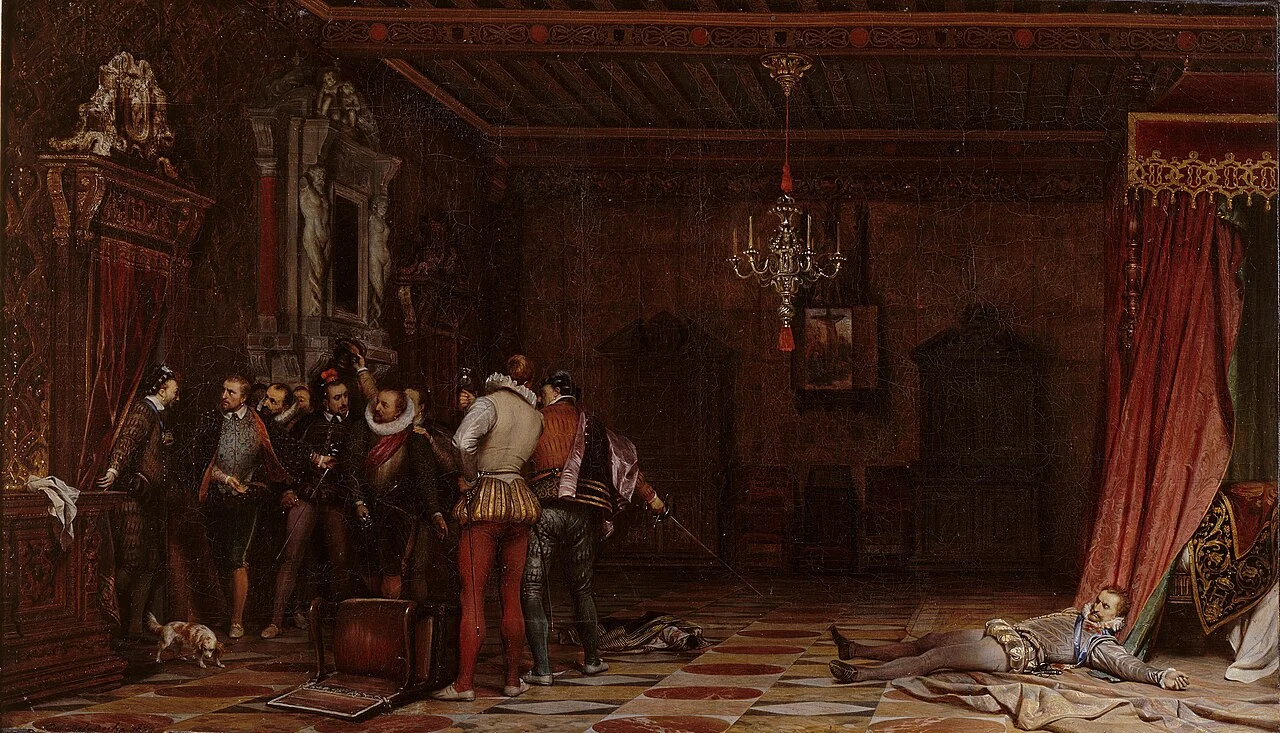
Blois isn’t just stunning architecture, it’s also the scene of a famous murder. In 1588, France was torn apart by brutal wars of religion. The Catholic League, led by Henri I, Duke of Guise (1550-1588), had managed to drive King Henri III out of his own Paris. The duke felt so secure that when his advisors warned him the king might harm him, he brushed off the warning with contempt, saying confidently: “He wouldn’t dare.”
He was dead wrong.
On the snowy winter morning of December 23, 1588, the duke was summoned to a meeting at the king’s residence. He entered the room, but instead of the king, eight of Henri III’s personal bodyguards were waiting for him (a group known as “the Forty-Five”). They attacked him and stabbed him again and again. The assault was so sudden that the duke, a towering man and a famed fighter, never even managed to draw his dagger before he collapsed dead on the floor.
According to legend (historians still debate it), Henri III waited the whole time in the next room. Afterward he went to look at the body of his rival, who stood nearly two meters tall, and muttered: “My God, how big he is! He looks even bigger dead than alive.” The next morning, the duke’s brother, Cardinal Louis de Guise, was also brutally murdered. The two men’s bodies were burned and their ashes thrown into the Loire River, to keep their graves from becoming pilgrimage sites for furious Catholics.
One floor below, lay the king’s ailing mother, Catherine de’ Medici (1519-1589). When she heard what her son had done, she is said to have responded with a chilling remark: “That’s well stitched, my son, now it must be mended.” But the mending never happened. Catherine died just days later (on January 5, 1589) in that very château, and a few months after that, the king himself was assassinated by a fanatical monk seeking to avenge the deaths of the Guise brothers.
The great escape of Marie de’ Medici

If you thought the drama at Blois ended there, wait for this next story. In 1617, the young King Louis XIII grew tired of his mother Marie de’ Medici’s (1575-1642) total control over him, seized power by force, and exiled her to the Château de Blois under strict guard. But Marie had no intention of giving up or spending the rest of her life there.
On the night of February 21 to 22, 1619, in a daring escape that’s hard to picture a queen mother pulling off herself, she fled the château under cover of darkness! She lowered herself out a window using a rope ladder into the château’s moat, from there joined up with her supporters, escaped by carriage that was waiting for her, and launched an open revolt against her own son.
Today, after all that blood and drama, you can simply come to Blois in the summer and see that very same courtyard, those same four magnificent wings, lit up by a sound-and-light show that tells the whole story, without anyone having to escape out a window or die all over again.
FAQ about the Château de Blois
How long do you need to visit the Château de Blois?
At least an hour and a half, and up to three hours if you’re the kind of person (like me) who stops at every painted ceiling panel, hunts for the porcupines and salamanders, and wonders what Gaston d’Orléans was thinking when he tore down an entire wing and then simply ran out of money halfway through.
Can you visit Blois from Paris in a day?
Absolutely. A train from Gare d’Austerlitz, an hour and a half to two hours of relaxed travel, and you’re there. You can (and it’s even recommended) combine it with the Château de Chambord, if you’re the kind of traveler who wants to fit in two châteaux in a day and head back to Paris tired but satisfied.
Is the sound-and-light show worth it?
Very much so, but only if you come to it after reading up on the local history. Because then, when the light falls on the assassination room and someone starts dramatically narrating the story of the Duke of Guise, it stops being just another tourist show. It takes on a chilling, vivid sense of context.
What’s the difference between the Château de Blois and the other châteaux in the Loire Valley?
Most châteaux in the valley are large, beautiful, and tell a single historical or architectural story. Blois tells four stories at once, and they all stare back at you from the same inner courtyard. It may not be the most grandiose from the outside, the way Chambord is, but it’s without a doubt the one most packed with drama, blood, and history on the inside.
Is Blois a good fit for kids?
Very much so. Kids under 6 get in free, and there’s plenty to see and explore inside. Just hunting for Louis XII’s porcupines and the fantastical animals on the walls is an experience in itself, well worth a visit for curious kids.
Related reading