

Anyone who has strolled along the Seine in Paris has surely seen those sellers of antique books known as the bouquinistes (Les Bouquinistes), standing beside their green metal boxes. There’s no doubt these bouquinistes have become a symbol of Paris every bit as much as the Eiffel Tower, and quite a few urban legends have grown up around them, some of them even true.
The best known legend is about people stumbling onto real treasures for just a few coins, and it’s easy to see why: who hasn’t browsed the bouquinistes’ stalls near Notre-Dame hoping to stumble on a lost Vincent van Gogh (1853-1890) or Paul Gauguin (1848-1903)?
And the truth is, that’s not just a legend: the most valuable and oldest book in the National Library of France in Paris was once bought at a bouquiniste’s stall for a few francs, because the seller had no idea of its true worth and just wanted to get rid of it. But what few people know is that history assigned these bouquinistes a far more subversive role than selling paperbacks or Parisian postcards.
The Bouquinistes: Twitter and Facebook of the 17th Century
The bouquinistes got their start in the 16th century, selling their wares near the Pont Neuf. In their early days they were called Estaleurs, meaning peddlers, and were seen as the lowest rung of street vendors.
From the very beginning they became known for the subversive literature they sold. The first bouquinistes specialized in Protestant pamphlets during the Wars of Religion (1562-1598), even though most of the Paris population was Catholic. During the 18th century, these peddlers gained a more respectable status as more and more students began visiting their stalls in search of textbooks.
Around that time they got their familiar name, bouquinistes, which came from the Flemish word boekin, meaning little book. It was also around then that they spread out along the Seine until they reached the spots where you can still find them today. Alongside the bouquinistes were the colporteurs, peddlers who carried their books on their bodies. Unlike the bouquinistes, they didn’t stay in one place but wandered all over Paris, selling their wares in cafés and on the street.

The Paris police didn’t care for the bouquinistes and did everything they could to get rid of them, luckily without success. And honestly, that’s no surprise: as far back as the 16th century, when the bouquinistes sold Protestant propaganda, they had already earned a reputation as agents of subversion. In the days before Twitter and Facebook, it was the bouquinistes who could set the streets on fire with the political pamphlets they sold. And indeed, starting in the 17th century, there was hardly a riot or a revolution that didn’t begin with political messages that came out of their stalls.
The best example was the Fronde uprising of 1648, when the Parisian mob took to the streets and built barricades after pamphlets circulated by the bouquinistes announced the arrest of the parliamentarian Pierre Broussel (c. 1575-1654). But with all due respect to subversive literature, what truly captured the interest of Parisians from every walk of life, and what turned the bouquinistes into a real force, was a completely different kind of merchandise….
Talking Cunts: French Porn as Hero of Paris’s Fringe Culture
I don’t know how many of you know the open secret that porn is responsible for quite a few technological breakthroughs on the internet (for example, the technology that lets sites like YouTube stream video to us, the faster browsing speeds we all enjoy, and more). But what most of you probably don’t know is that porn, and the culture that grew up around it, helped Paris’s bookshops and bouquinistes thrive and grow.
The roots of Parisian porn go back to the 12th century, with erotic poems such as La Demoisele qui ne pooit oir parler de foutre (The Girl Who Couldn’t Stand to Hear Talk of Fucking) or the poem La Veuve (The Widow), which, despite its proper-sounding title, was filled with far less proper language…
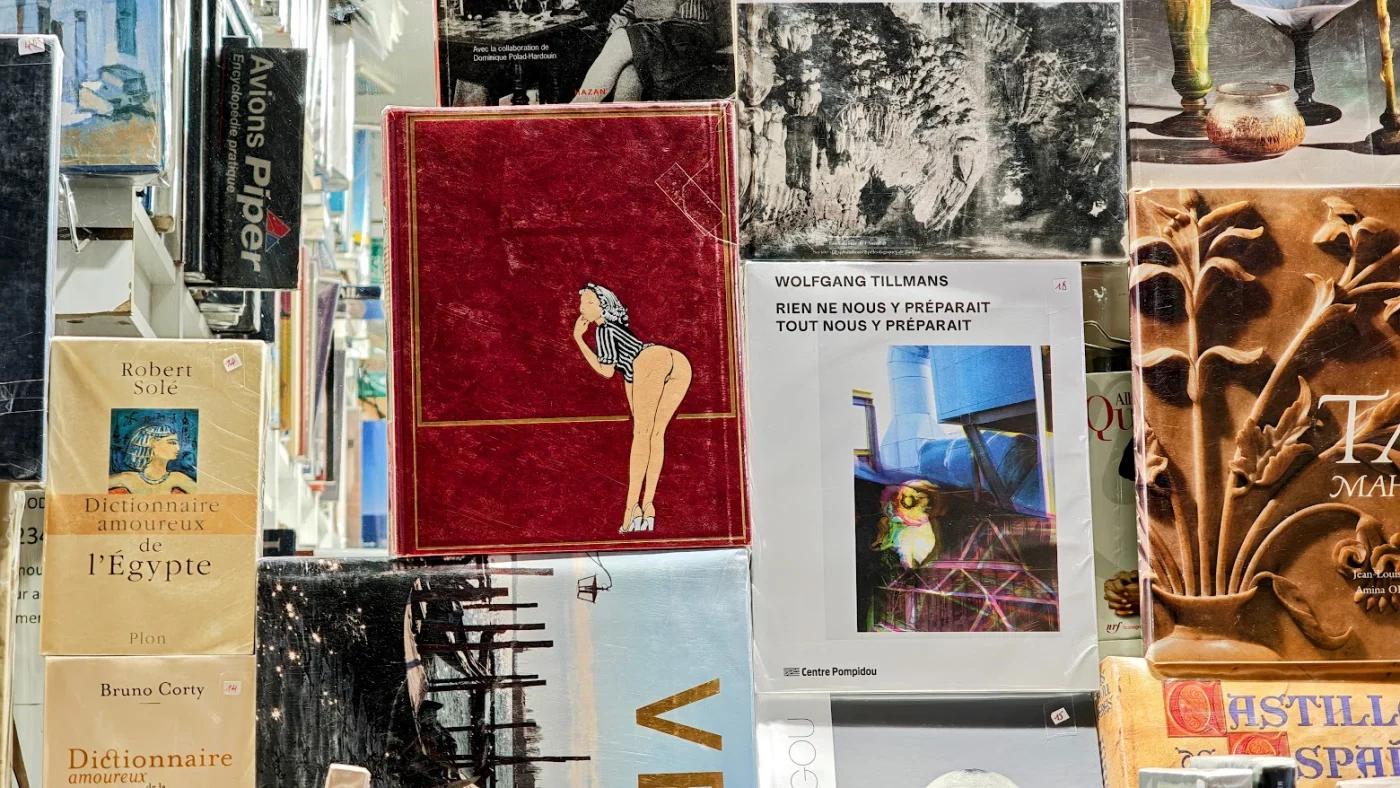
The names of the authors of those poems have long been forgotten, but the poems themselves became part of Parisian folklore, with works like Le Chevalier qui fist parler les cons (The Knight Who Made Cunts Talk), which charmed Parisian audiences not just for their erotic content, but for their wit.
The poem about the knight and the talking nether parts inspired the famous 18th century philosopher Denis Diderot (1713-1784) when he wrote his famous 1748 erotic novel Les Bijoux indiscrets (The Indiscreet Jewels). The novel tells of a king who obtains a ring that makes the genitals of the women at his court talk and reveal their bedroom secrets. But beyond its erotic content, the work was a biting critique of everything happening at the court of Louis XV (reigned 1715-1774), and it shows how the pornographic culture of the time took on a political edge and became part of a subversive culture.

These novels were a huge success and in turn fueled the growth of bookshops and bouquiniste stalls. The most famous erotic bookshops of the 18th and 19th centuries were the ones found at the Palais-Royal. These shops didn’t just sell erotic literature, they were the “Tinder” of the 18th century, where men and women went looking for a hookup.
They would meet there, read erotic literature together, and once they felt sufficiently “warmed up,” they would rush off to one of the nearby hotels to put what they had read into practice. Since the Palais-Royal was, for a time, also a center of Parisian prostitution, it’s no surprise that the bookshops there also sold catalogs of all the working girls in Paris, serving as an early version of the classifieds for Paris’s “meat market.”
Porn culture kept thriving in Paris into the 20th century too, when movie theaters showing erotic films joined the scene. And if you ask modern French philosophers like Guy Debord (1931-1994) or Jean Baudrillard (1929-2007), you’ll understand that sex and sexual freedom go hand in hand (other organs aside) with individual liberty. That’s why eroticism and pornography, despite every effort by the authorities to stamp them out, remain an inseparable part of Paris even today.
Today, in the 21st Century
In March 2026, with the spotlight on Paris’s living heritage, the bouquinistes were back in the headlines. “The Seine is the only river in the world that flows between two rows of books,” wrote the author Blaise Cendrars (1887-1961) in his 1948 book Bourlinguer.
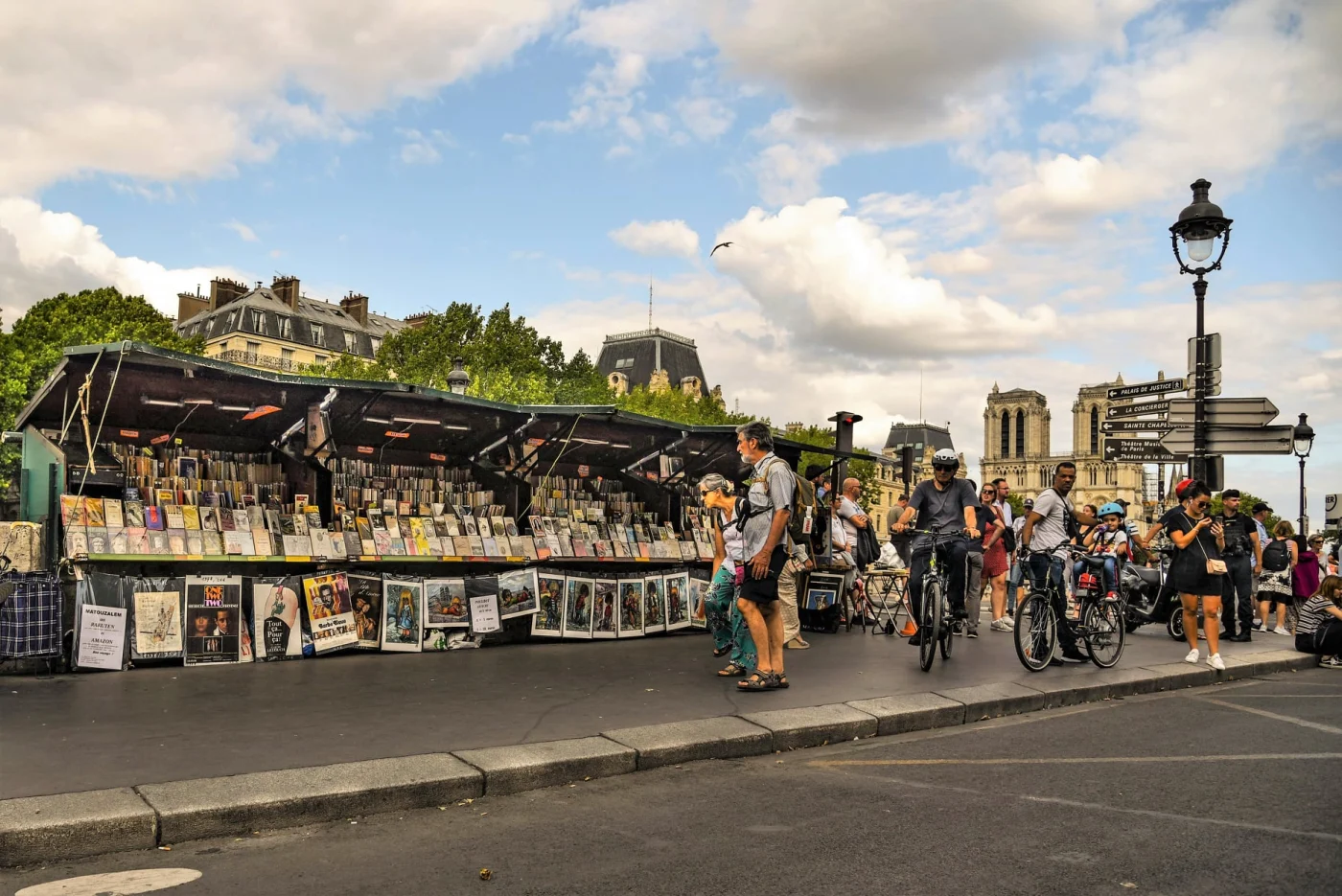
That quote perfectly captures the spirit of the conference “The Bouquinistes of Paris: A Living Heritage,” led by Jérôme Callais, president of the Paris bouquinistes’ association. The journalist Clémentine Duverly wrote an article quoting Jérôme Callais, whose explanations shed light on the profession in our own time. The bouquinistes, he says, are still full of passion.
It was a chance to remind people that we exist, to revisit our history, and to inspire the next generation, since the profession is struggling to attract new recruits. It’s hard to find good bouquinistes who won’t sell photographs or colorful reproductions,
explained Jérôme Callais at the conference. He also said:
A bouquiniste is a book dealer, and has to stay one. A bouquiniste offers books that are no longer available from new booksellers and that aren’t rare enough for dealers who cater to bibliophiles. Bouquinistes are also able to judge the quality of a binding, assess a book’s true value, protect it, and display it properly.
The passionate professional declared with a laugh that bouquinistes need to know how to read the sky and adapt to the weather. The profession is at risk, according to him.
We’re one of the jewels in the Parisian crown; we need to be valued. For example, we’ve been asking for 135 years for a winter shelter,” Jérôme Callais points out. “The profession is fighting for more green space (more plantings), more security, and a more attentive ear from decision-makers.
The profession of bouquiniste, 475 years old, unique of its kind and specific to Paris, has been listed on France’s National Inventory of Intangible Cultural Heritage since 2019. While the number of bouquinistes surged in the 19th century, today it stands at just over two hundred. Even though Jérôme Callais believes freedom is the finest reward of all, he stresses firmly that exemption from rent is essential to the bouquinistes’ survival. Remember, their numbers have shrunk, and not many people are eager to carry on the tradition.
The photographer Alain Cornu, working with Jérôme Callais, went to talk to the bouquinistes and photographed 171 of them for a beautiful book published not long ago, in March 2025. Link to an interview with him and a link to his book. He originally intended just to take photographs, but his conversations with these “fascinating cultural agents,” as he calls them, grew into firsthand accounts that he preserved in his book alongside their portraits and their stalls.
A Walking Route Following the Bouquinistes of Paris
Today, a little over 200 bouquinistes operate in Paris, running about 900 green “boxes” (boîtes) along the Seine. Together they offer around 300,000 used and antique books, along with magazines, prints, and collectibles.
The bouquinistes stretch along a route of about 3 kilometers on both banks of the river, around the Île de la Cité and Île Saint-Louis. Since each bouquiniste is independent and reflects their own taste in their stall, here’s a suggested walking route past the most important quays and the unique specialties you’ll find at each:
Part 1: The Left Bank (Rive Gauche): East to West
The route begins near Pont Sully and continues to Pont Royal. This stretch is the most historic for book dealers, and it borders the Latin Quarter.
- Stop 1: Quai de la Tournelle: Here, look for Bernard, considered a great expert in thriller and science fiction books, and Michel, a literature lover who offers original editions of major texts. There’s also a bouquiniste named Mathias here, selling his own original paintings and drawings.
- Stop 2: Quai des Grands-Augustins: Further along the river, you’ll find Stéphane, who specializes in comic books (bande dessinée), and Sylvie, whose stalls are devoted to philosophy books.
- Stop 3: Quai de Conti: A quay with a notably male presence (16 men and only 3 women). Here you’ll find Jean-Paul, an expert in the Lettrist movement, and Jérôme (president of the bouquinistes’ association), who specializes in book arts. You’ll also find Pascal here, a bouquiniste who also sells his own original drawings.
- Stop 4: Quai Voltaire: This quay, by contrast, has a stronger female presence. Here you can also find Bernard C., a bouquiniste and painter who sells his original paintings right from his stalls.
Part 2: The Right Bank (Rive Droite): West to East
Now you can cross the river via the beautiful Pont des Arts and continue along the Right Bank, from the Quai du Louvre to Pont Marie.
- Stop 5: Quai du Louvre and Quai de la Mégisserie: After crossing the river, visit Ghislaine at the Quai de la Mégisserie, whose stall specializes in fashion from 1900 to 2010.
- Stop 6: Quai de Gesvres: Here you’ll find Jacky, who specializes in French slang (argot) and in the writings of the author Louis-Ferdinand Céline (1894-1961). You’ll also find the bouquiniste Thaï-Luc here.
- Stop 7: Quai de l’Hôtel de Ville: The final stop is right by the Paris city hall. Here, be sure to visit Jean-Marc, whose specialty is rock music and the Bob Morane book series.
All along the route, the traditional dark “wagon green” boxes form a pastoral backdrop framing some of Paris’s most important landmarks, like Notre-Dame Cathedral, the Louvre Museum, the Conciergerie, and the Fontaine Saint-Michel. The bouquinistes (many of whom hold advanced academic degrees) are always happy to chat and share their vast knowledge with passersby, so wandering among them isn’t just a shopping trip, it’s a cultural and human experience.
Related reading
