

Paris in winter. Cold, gray, but the sun is out and shining. I love Paris at any time of year, but especially in winter. During this season there are very few tourists in the City of Light, and it lives its normal, everyday, bustling life, the life of local French people, not of tourists.
In 1936, the socialist government in France, led by Léon Blum (1872-1950) (yes, one of ours), passed the “paid vacation” law, the first of its kind anywhere in the world (“Congés Payés”), covering every worker, no matter who they were. A similar law had already been passed in 1853 under Napoleon III, but it only applied to government employees. This model was later adopted by many other countries, though even today it still doesn’t cover every worker in the economy.
The world of vacations and tourism has changed since then. New habits have taken over, and today most of the world goes on vacation in summer, meaning July and August, mainly because of school holidays. The situation is reversed in the southern hemisphere, in Australia, South America and so on, where the yearly vacation falls in January-February: Christmas without snow, with Santa Claus surfing the waves in shorts.
Naturally, most of the world’s tourists know Paris in summer, in July and August. A smaller share knows it in spring (April, May, June), and an even smaller share knows the City of Light in autumn (September, October, maybe November). How many of you know Paris in winter? And I don’t mean the people invited to a medical conference or some trade show. Those folks barely experience the city as tourists at all, just rushing from a lecture to a meeting, from a restaurant to a cocktail.
I lived there for several years straight, through summer and winter and everything in between, and I learned to love Paris especially in this season of the year, when everything is gray and the sky feels “low.” There’s a French expression, “Ciel de Plomb,” “sky of lead,” for when the clouds hang low, gray, even black, casting a heavy, oppressive, grayish mood over everyone, full of somber clouds and the threat of steady rain.

It can feel as though the city is wrapped in night, even in broad daylight. Surprisingly (unlike London or Brussels), Paris doesn’t get much rain, and snow is even rarer. When there’s no “leaden sky” over the Arc de Triomphe or the Eiffel Tower, the sky is clear and the cold in the city is freezing, somewhere between 1 and 6 degrees Celsius, sometimes even less.
Daylight breaks hesitantly around nine in the morning, and by four in the afternoon the streets are already dark again. But during the day, if you’re lucky, the sun comes out. Even though the cold is freezing and forces everyone to dig heavy coats and colorful scarves out of the closet, the sun shines with its full light, bright enough to pull your sunglasses out of your bag.
These are my favorite days. And these are the days I traveled on this time, in January 2025.
I’m not going to describe historical sites or tourist attractions in the city. You’ll hear about those from the summer crowd. What I want to tell you are winter experiences: small stories of cold and sun, cold biting iron, bright gray days among bare trees and fallen leaves scattered across the sidewalks. I’ll try to season it with a few facts and stories that maybe not everyone knows about the most beautiful city in the world.
I went out for a walk in a city that was cold and gleaming in the sun. Above the pharmacy on the corner, a green cross towered, glittering and blinking, as in almost every pharmacy across Paris, flashing the date, time and temperature every five seconds. I stopped and stared at it for a long while… “January 14, 2025, 09:12, 5°C” (translated; in reality it read “Janvier”).
True, “5 below” is relatively rare, and in the photos I took over the following days I had to “settle” for just “1°,” or sometimes “3°.” I pulled out my camera and captured a few buildings at street corners. The sun gleamed on Paris’s gray walls, and for a moment, when I opened my coat to reach the camera, my hands shook and my fingers froze.
It’s really an exercise against common sense. You walk around the city wearing sunglasses, the light gleaming off the white building walls, and logic refuses to accept that the thermometer shows a single-digit number. Paris in winter. And joining all this were the trees so characteristic of the City of Light (or, on a day like this, the City of Gray), a web of trees and branches growing into one another, thin and bare without a single leaf to speak of, as delicate as a sculpture by Alberto Giacometti (1901-1966)…

Time for a coffee and croissant combo. I sat down at a corner café, nicely heated of course. The owner was running the show in a short-sleeved t-shirt. I took off my coat and waited for my steaming coffee and fresh croissant. Through the window, I watched passersby hurrying along the sidewalks.
Most of them, bundled up, wrapped and hunched into themselves, were busy taking their kids to daycare or school on this morning. The children were wrapped in puffy nylon coats (Uniqlo or similar), in every possible color and pattern, looking like walking balloons. You could only make out a pair of eyes to see where they were going, maybe a reddish nose to breathe through… and that was it.
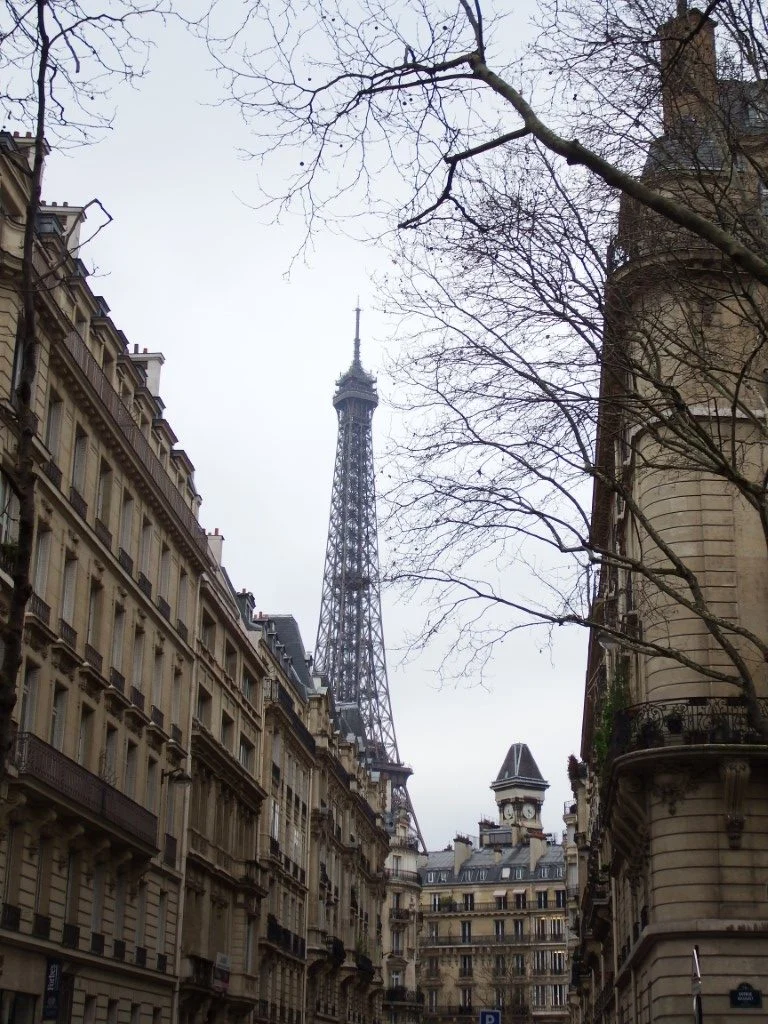
Everyone else was covered and wrapped almost hermetically. The parents were a bit more exposed: bare hands to hold their child’s hand at the crosswalk, faces uncovered to glance left and right. Every so often, a mother would tuck her hand into her coat pocket while keeping both eyes on the child sitting on a small bike, or a father would lift his hand to his face and blow warm breath onto his frozen fingers, a cloud of steam blooming around him.
I wondered what this scene would look like in the rain, everything wet, water running and seeping into every fold and crack no one noticed while bundling up at home before closing the door. But as I mentioned, there isn’t much rain in Paris. For this trip, I checked the weather forecast for the next two weeks: rain was expected on only one day, and even then only briefly in the morning. That’s the time to visit a museum, or maybe wander through the covered passages, the shopping arcades of the 19th century.
The Hôtel de Ville, Paris
One day, I took a long, thorough and detailed walk through the Marais district, from Place des Vosges, through Saint-Antoine, to the Hôtel de Ville, the grand building many consider the most beautiful in Paris. Every time I come to Paris I plan to go inside for a guided tour of its treasures (there’s no self-guided visiting), but I always miss the available dates, and I’ve learned that over the last two years these tours have been discontinued entirely.
Many documentaries about this building repeat the claim that the office of the mayor of Paris is bigger and grander than the office of the president of France at the Élysée Palace. I approached the building’s guards at one of the entrances and told them, politely and respectfully, that I knew visits weren’t allowed and that I’d just love to peek into the entrance courtyard without going into the building itself.
My pleading didn’t help, even with my fluent French, and they refused. Many people don’t know that Paris didn’t have a mayor for many years. Until the French Revolution of 1789, the city’s administration was actually run by the head of the merchants’ guild council, and there was no such position, or title, as “mayor” in Paris at all.
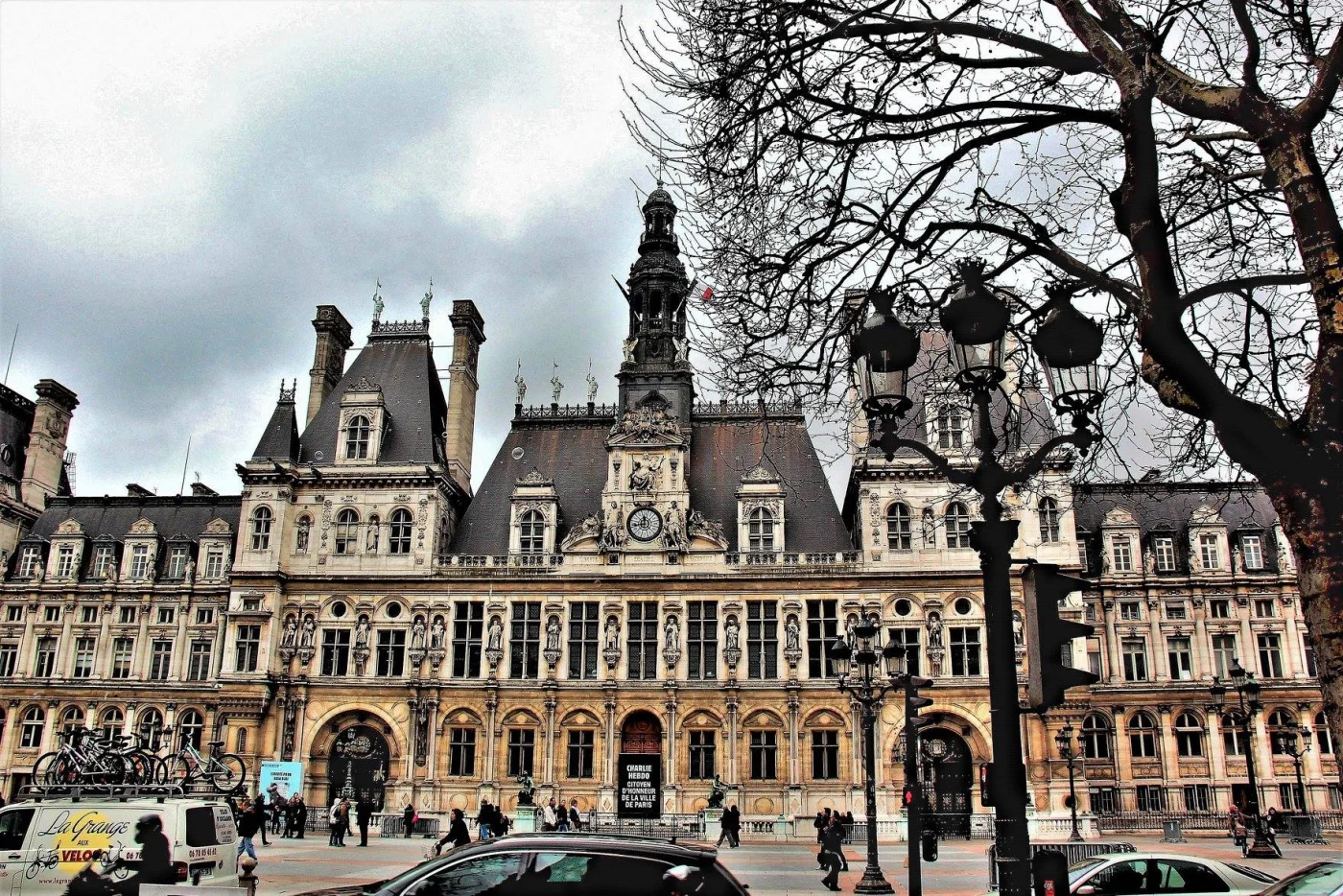
The last head of the merchants’ council was murdered during the French Revolution, and the very next day the first mayor of Paris was appointed. After the unrest of the Paris Commune (1870), during which many layers of government institutions were dismantled, the position of mayor of Paris was abolished, and the city was run by a city council made up of the heads of its various arrondissements.
Under the municipal law of 1795, the city was divided into 12 arrondissements. Over the years, as the wall around the city came down and nearby villages were “annexed,” Belleville, Montmartre, Passy and others became new arrondissements, forming today’s Paris, now made up of 20 arrondissements.
20 arrondissement heads ran the city in a kind of council, like a parliament with 20 seats. In 1977, the need for a single “senior” mayor to oversee the city council was recognized, and Jacques Chirac (1932-2019) was elected the first mayor of the modern era. It’s worth noting that in 2014 the first woman was elected mayor, Anne Hidalgo (b. 1959), who still holds the position today, more than ten years later.
Where the city hall now stands once stood the merchants’ guild hall, since that was the site of the city’s river port. River boats arrived there with all their goods, everything was unloaded there, and various taxes and fees were collected there too. During the unrest of the Commune (see above), the building burned to the ground, and once the unrest died down, a new, grander and larger city hall was built in its place.
Either way, as I already mentioned, there are no guided tours at the grand city hall anymore, tours that in the past had to be booked months in advance. Today, Paris’s city hall is presented through online videos (virtual tours):
If you’d like to learn more about the Hôtel de Ville, feel free to read the article Hôtel de Ville: because the Paris city government needs a palace too.
Clipped Building Corners and Iron Gateposts (Porche)
During my many walks around the city, in winter and in summer too, I like to follow the advice of many guides, written and human, and look up at the walls of houses and buildings. I notice a lot of beautiful things, and some less so, but over time I noticed that in many Parisian buildings, the corner is clipped, “cut” at a 45-degree angle where two streets meet.
After noticing a few buildings like this, my curiosity got the better of me and I went digging. During Baron Haussmann’s era, meaning the mid-19th century, there weren’t many cars on the streets, in fact there weren’t any yet, and the most common form of transportation was carts pulled by horses. A horse, as we know, does whatever it wants, even if its owner talks to it nicely, harshly, or with a whip.
When a cart or a carriage reached a street corner and turned right or left, it sometimes happened that the horse ran into the wall of the building standing at the corner (don’t forget, carriage horses like these usually wore blinders so they’d only look forward and not get distracted to the sides). Sometimes the horse got hurt, sometimes the carriage was damaged, and sometimes the building itself was damaged.
So Baron Haussmann (1809-1891) set a regulation requiring that the corners of buildings be clipped at a 45-degree angle, so the horse could “take” the turn without major damage…
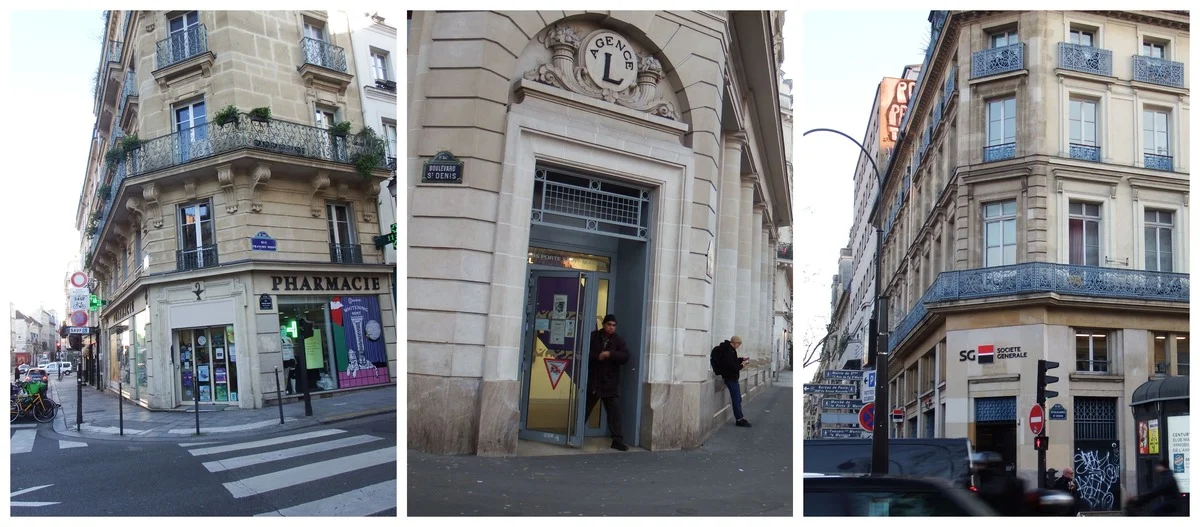
Many characteristic buildings from that period kept this clipped corner. Over the years, though, it came to be seen as a decorative feature of the building, and even after motor cars entered our lives, the habit of clipping building corners stuck around. Even in modern buildings built in recent decades, deep into the 20th century, you still find clipped corners, even when the sidewalk itself sits far back from the building wall.
What’s more, in that same period, because of the use of carts and horses, it was customary to put up iron posts, or carved stone posts, on either side of entrance gates to inner courtyards (porche), to keep the cart or horse from damaging the gateposts or the wooden gate itself, usually carved. In many buildings with inner courtyards that today serve as parking areas (for cars!) for the building and its residents, these posts are still put up, out of sheer aesthetic “habit.”
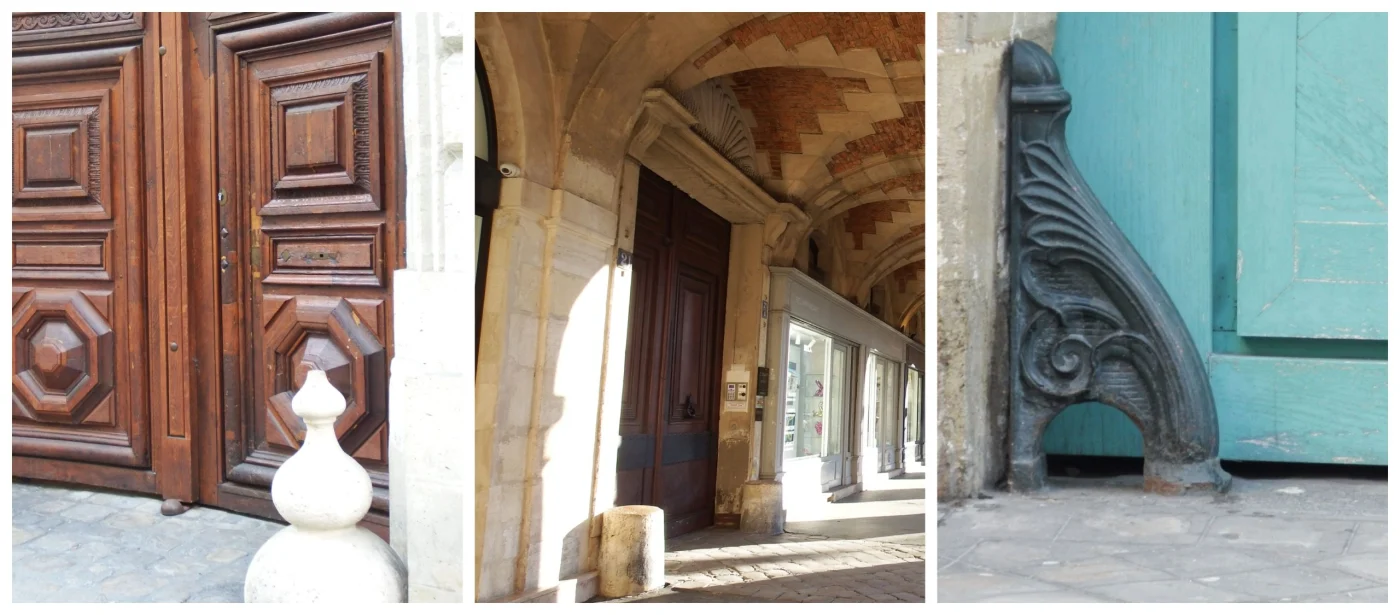
Ask many Parisians about the use and reasoning behind these posts, or the clipped corners of buildings, and in their eyes, that’s just how it’s always been done. They don’t actually know the real explanation behind this style of building.
The Post Office in Paris
One day I headed out for another walk around the city. Only after I stepped out of the house, passed through the building gate and reached the sidewalk did I start to regret it. The cold outside hit my face like an icy slap, to the point that heretical thoughts pushed me to go back to the warm room. I glanced at the green cross of the pharmacy on the corner.
A single digit on the display would have sufficed. On the green cross, glittering and blinking, the number “1” proudly appeared. I can’t say I’d gotten used to the cold, but I was already outside, and besides, I’d come to Paris to explore, not to sit around warming up in a room. I could do that at home. (I checked. In Tel Aviv it was 11 degrees that same day. Oddly enough, that number was also made up of a “1”….)
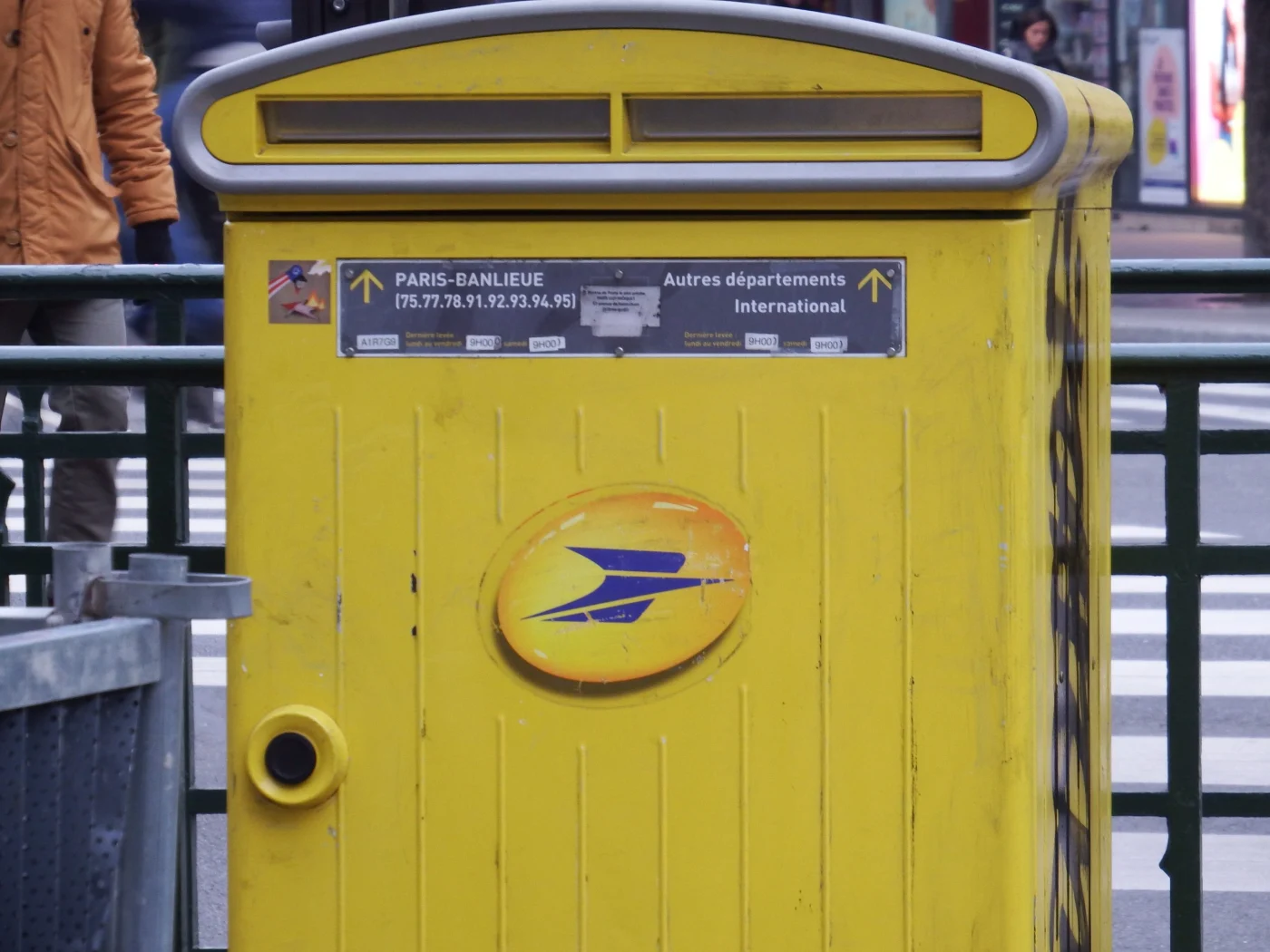
I pushed my hands deep into my coat pockets but stayed ready to raise my camera the moment I needed to. At the street corner I saw a postal worker, dressed in uniform (blue and yellow, the colors of the postal company), fiddling with a yellow metal mailbox, jangling his bunch of keys, opening the box and pulling out a stack of letters, which he tucked into a bag he was holding: outgoing mail.
His movements were a little stiff, a little shaky… understandable, it was almost 0 degrees outside. Ever tried touching metal at that temperature? No wonder the worker wore thick leather gloves, with the logo, in yellow of course, “La Poste.”

Yes, people in Paris still drop letters into mailboxes. Less than before, sure, but they still do.
No one thought about it before, but King Louis XI (r. 1461-1483) was looking for a fast and reliable way to send royal messages to his representatives and soldiers across the kingdom. Remember, in the 15th century no one had thought of the internet yet, let alone the telegraph…
Only at the start of the 17th century (meaning, after the king’s death) was the “General Postal Farm” created, a kind of royal company that ran horse farms and rest and transfer stations. A rider with royal authority carried a letter from station to station, switching horses, or even stopping to rest while another rider took over if the route was especially long. It’s worth noting that at this time, the recipient was responsible for payment: no payment, no letter.
During the French Revolution, at the end of the 18th century, all royal services were nationalized, and the postal service became a national service covering the entire territory of the French Republic, with 1,400 stations and about 16,000 horses. In 1849, the first postage stamp appeared in France, and from then on, the sender was the one who paid for the postage. Since payment was collected in advance, the postal service opened up to the general public, not just to the king’s loyal servants (who by then no longer held official posts, and some of whom had lost more than just their jobs…).
By the mid-19th century, the electric telegraph had already developed, and the load on the telegraph lines kept growing. When stockbrokers in Paris tried to send their buy and sell orders to the trading floor, they ran into a problem: they had to wait in line because so many telegrams were already ahead of them, and as everyone knows, the stock exchange doesn’t wait.
In the 1850s, a service of carriages and horses developed whose whole job was to carry instructions between the telegraph center (Rue de Grenelle) and the stock exchange (Place de la Bourse). But even though the horses set off every 15 minutes, traffic in the city kept them from arriving on time, and the exchange was far from satisfied.
Against this backdrop, French inventor Ambroise Ador proposed, in 1852, using pneumatic tubes. At a terminal station, a telegram form or small package was placed inside a sealed cylinder, and by creating pressure in the pneumatic channels, the cylinder was “sucked” to the next station at very high speed.
Here’s a short but very interesting video explaining how this system worked:
Over short distances within the city, this was an excellent solution, and it was used in Paris (and in other major cities around the world) until the late 20th century. Today, this public service has disappeared, but it’s still used by private organizations, mainly banks and hospitals (Ichilov Hospital in Tel Aviv still runs a system like this today, to transfer documents, medications and samples).
One more thing: until the early 1980s, letters in Paris were delivered to every house twice a day, once in the morning and again in the afternoon (3:00 p.m. to 6:00 p.m.). With a bit of luck, you could receive at home, that same day, a letter sent that very morning in Paris!
A “wormhole” in the 17th arrondissement
I don’t know how many of my readers are into science fiction (for those who aren’t, here’s a very short and simplified explanation). In the middle of the 20th century, several astrophysicists came up with a revolutionary hypothesis: just as there is a “black hole” in space that “swallows” everything into it (matter, empty space, everything else), there should logically be, as a kind of counterpart, something able to move the swallowed matter, the mass, from one place to another at a speed many times faster than the speed of light, so as not to violate the principle that matter cannot simply disappear and must exist somewhere.
This theory, never proven, was given the name “wormhole,” and science fiction writers fell for it immediately. In simple terms for the general public, it is said to be an invisible tunnel in space that can move any mass from one end of space to the other, across an immeasurable distance, in the blink of an eye, essentially at the very same instant, with no time gap at all. One moment you’re here, and the next you’re there.
And why am I telling you all this?
That’s exactly how I feel when I step into the Paris metro. I left this morning (I made sure to glance up at the green pharmacy cross: 0 degrees) from the studio apartment where I’m staying in the heart of Paris, in the 10th arrondissement, went down into the underground tunnels of the City of Light, and a few minutes later came out into a completely different world.

I emerged at a metro station I’d never been to before, not now and not in any of my previous visits here. Métro Brochant. I hadn’t even heard the name, and I didn’t know such a station existed. A fairly anonymous station, with no connections, one entrance and one exit. Its special charm is simply that it sits in the 17th arrondissement of Paris.
I don’t know how well you know Paris and its arrondissements, but to me, the 17th arrondissement is one of the most magical in the city. It doesn’t fit any single description. Call it a “commercial district” and you’d be ignoring the huge number of homes there. Call it a “residential district” and you’d be ignoring the many shops, restaurants and cafés, even if they’re all quiet and discreet. It also has plenty of office buildings, schools and more.
And yet it’s a district all its own. The buildings on its streets are the most classic Haussmann style you’ll find anywhere. The streets are quiet, very dignified. You won’t see teenagers running around here, no wild young people shouting and racing by. After a few hours of walking, I sat down outside, on a café terrace, and ordered a coffee and a glass of red wine.
At the table across from me, also on the terrace, outside (0 degrees!), wrapped in a red coat, jeans and green boots, sat a woman (not a girl, but not very old either) lingering with a cigarette in hand and a drink on the table. I’m on vacation and my schedule is my own, but her? Doesn’t anyone work in Paris?
I kept walking toward Cité des Fleurs, which you might loosely translate as “the City of Flowers.” I’ve written here before about charming little corners I’ve found in the city (the unknown Paris), lost and little-known spots, unexpected in a busy, noisy, dusty city. And here was another one.
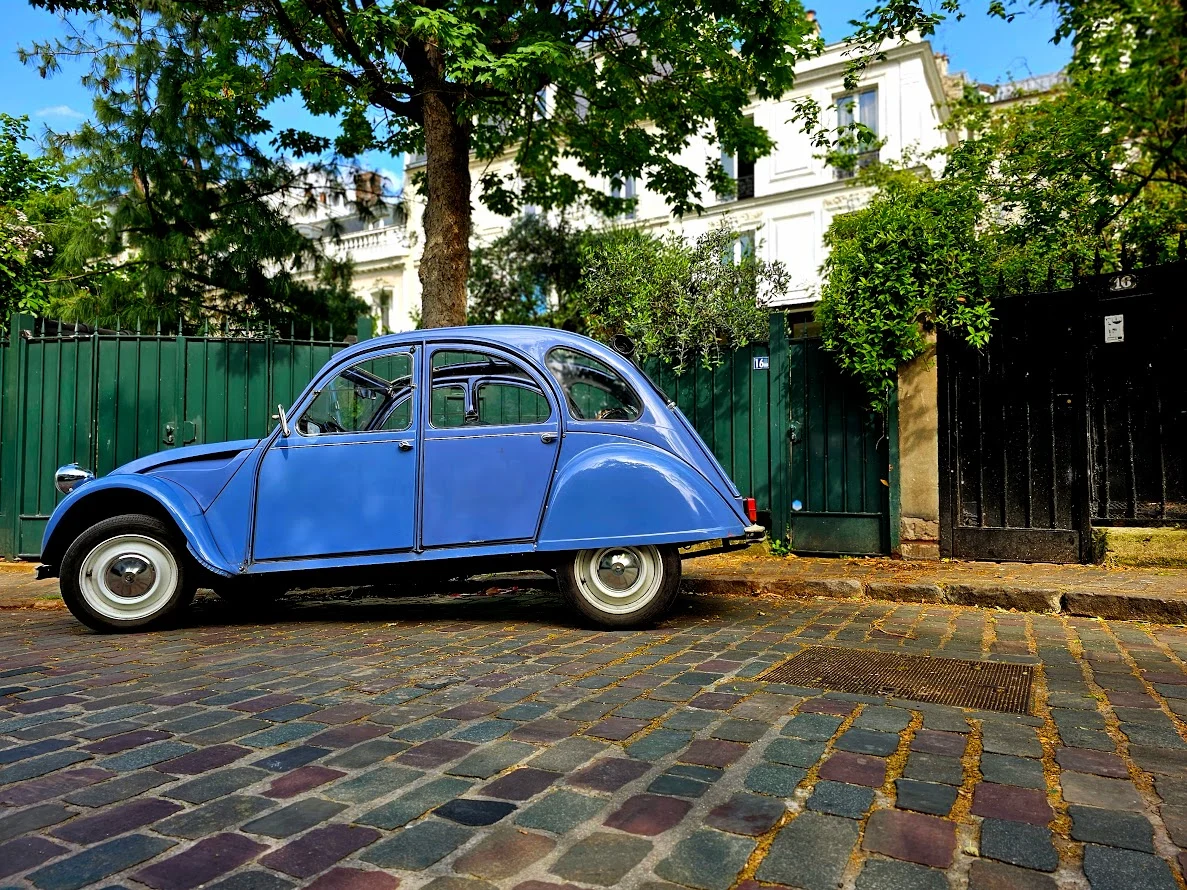
A path straight out of the past, paved with stones, a private lane closed to cars, about 5 meters wide and roughly 300 meters long. On both sides, stone and iron fences hide private courtyards, though the fences aren’t quite tall enough to hide everything.
Behind each metal fence, about ten meters of courtyard, a garden if you like, carpeted now with somewhat sparse vegetation (it’s winter!), and only beyond that, the beautiful houses, most of them from the 19th century, though here and there a few have gone through what we’d call a teardown and rebuild: a modern house, a bit out of place in the scenery, but somehow still keeping with the overall character.
The roofline doesn’t rise above the rest, the courtyard keeps its share of greenery, the fence has the same shape and structure as the ones next to it. Let’s call it a “culture of building,” or if you prefer, “preserving the character of the neighborhood.” And this is just one 300-meter lane. Winter is unmistakable here too.
The vegetation is sparse, the trees are green but have few branches and no leaves, only a handful of bushes still show green branches. I don’t know enough about gardening or botany to be precise about it, but maybe someone here matched the planting to the season? And if so, why not across the whole city?
Inside the courtyards, wherever I could peek in (yes, I like peeking into courtyards like this, whether through gaps in the fences, through bars and keyholes, or even through the slots of mailboxes), you could make out an overgrown yard, here and there faint traces of flower beds blurred by winter, and among them a round, decoratively designed metal table with four metal chairs leaning against it at an angle, clearly unused for quite some time.
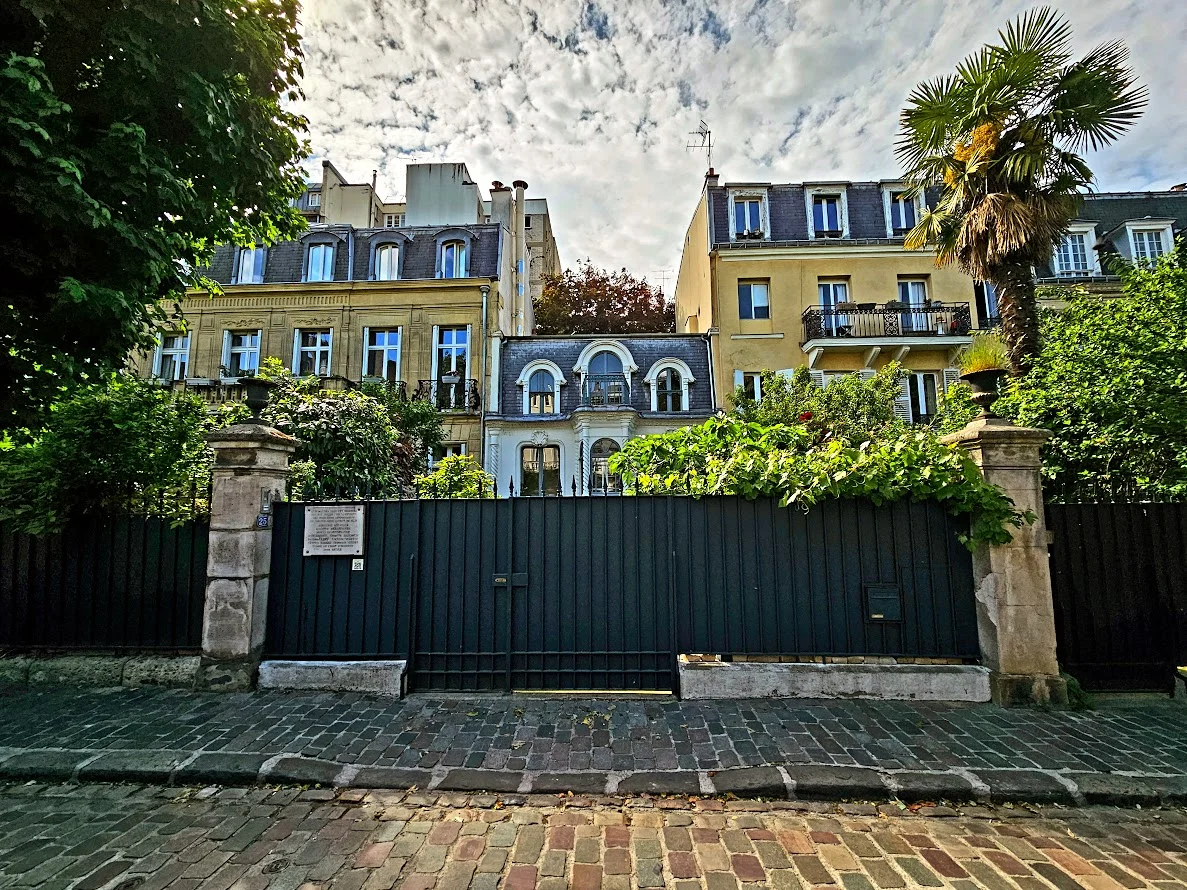
Above the table, a parasol, folded up this time of year, and further on, a few meters away, the entrance path, two or three stone steps, and then the house itself. Each house has its own garden, its own private courtyard, though the other courtyards are visible too. I’d guess the neighbors know each other and are fairly close.
Quiet, peaceful, gray, a lamp lit in a window, a blanket airing out on a windowsill here and there, a cat stretching on a doorstep. As I passed one of the metal fences, pausing to take a photo over the top of it, a young Black woman stopped by one of the gates, and from inside her scarves and buttoned-up coat, she slipped out a single finger and pressed the intercom button, and when someone answered, she muttered in French, “Can you let me in, I’m absolutely frozen.” Probably a housekeeper, cook or nanny showing up for her workday. It really is freezing in Paris. On the way out of “the City of Flowers,” another pharmacy. The green cross now reads “1.” Warming up.
Want more tips for winter in Paris?
I recommend reading Paris in winter, which has recommendations for what’s worth doing when the thermometer at the pharmacy shows the temperature is near zero (or if you’re unlucky enough to land on an especially rainy day).
Related reading
