

A few steps from the Seine, across from Notre-Dame and at the edge of the Latin Quarter, stands a small bookshop, one that seems almost too modest for the legend attached to it. A traditional green facade, a sign in English, shop windows and a crowd that sometimes waits outside, all of this creates a feeling familiar to anyone who loves Paris: a small place carrying a big story. Shakespeare and Company is not just another charming stop on the route between Notre-Dame and Saint-Michel. It is one of those Parisian spots where tourism, literature, exile, modernism and commercialization all live under one roof.
Today the shop is a highly sought-after tourist destination, photographed endlessly and at times quite crowded. But anyone who walks in just to check it off a list of “pretty shops in Paris” misses the point. This bookshop tells the story of how Paris became, over more than a century, a city of refuge for foreign writers.
The shop in its current form, at 37 Rue de la Bûcherie, opened in 1951, founded by George Whitman (1913-2011), an eccentric American who saw a bookshop not just as a business but as a way of life. It sits in the heart of Paris, on the banks of the Seine and across from Notre-Dame, and calls itself an independent institution of books, readers and writers. But to really understand it, we need to start somewhere else: not at today’s well-known tourist stronghold, but at the first shop to carry that demanding name, Shakespeare and Company.
Sylvia Beach and the First Shop
The story begins in 1919, when Sylvia Beach (1887-1962), an American living in Paris, opened an English-language bookshop and lending library on the Left Bank. The shop was called Shakespeare and Company, and it quickly became the center of literary expatriate life in the city.

At first it stood at 8 Rue Dupuytren, and in 1921 it moved to 12 Rue de l’Odéon, across from the French bookshop run by Adrienne Monnier, La Maison des Amis des Livres. Monnier, worth noting, was also Beach’s life partner.
In an age of glittering, Instagram-ready tourist traps, it’s worth stressing: the original shop was not a tourist destination in the sense we know today. The original Shakespeare and Company was a cultural infrastructure. For English-speaking writers and intellectuals in Paris, it provided books, connections, credit, recommendations, conversation, and sometimes a kind of temporary home. Beach did not just sell books; she created a space where Americans, Irish, British and French could meet around new and experimental literature, writing that was often considered problematic by the conservative literary establishment of the time.
This is one reason the shop became so central to understanding Paris between the two world wars. The city was not just a pretty backdrop of cafés and wide boulevards. It was a space where foreigners could live and breathe a different atmosphere: write in English, speak French, escape censorship, dodge social conservatism, and find an intellectual community that was harder to come by back home.
Ulysses: The Moment a Bookshop Changed Literature
For many, the most significant episode in the history of Shakespeare and Company is the publication of the modernist masterpiece Ulysses, by the Irish writer James Joyce (1882-1941). It’s hard to overstate the importance of this moment. Ulysses is now considered one of the central novels of the twentieth century, but at the time it was seen as a dangerous book: experimental, sexually explicit, difficult to read, and in the eyes of many, immoral. The book had previously appeared in installments in the American journal The Little Review, but ran into censorship trouble and obscenity charges. The English-speaking world was in no hurry to publish it. That’s where Sylvia Beach came in.
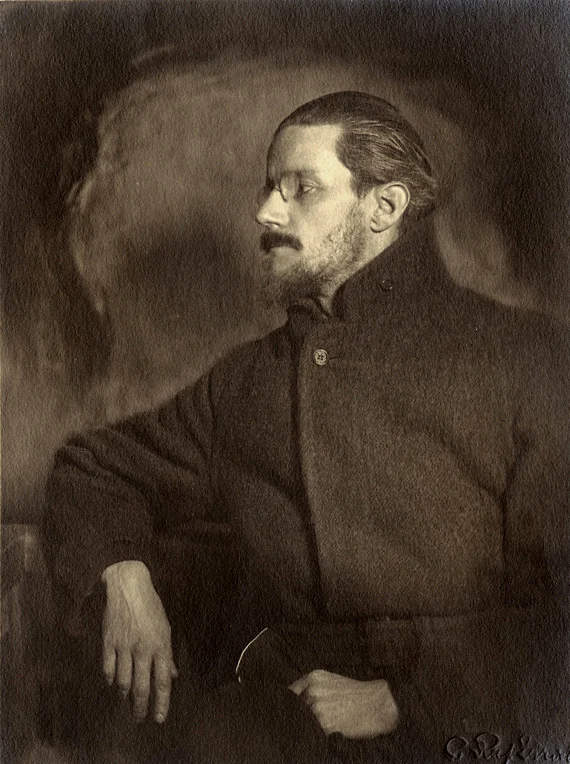
She wasn’t a famous publisher, didn’t run a major publishing house, and had no international distribution network. She was the owner of a bookshop in Paris, and yet she was the one who agreed to take the risk.
On February 2, 1922, Joyce’s fortieth birthday, the first edition of Ulysses was published under the Shakespeare and Company imprint, in a limited run of 1,000 copies, printed in Dijon. It was a dramatic moment: a small bookshop in Paris did what the major publishing houses of the Anglo-American world did not dare to do.
This reveals one of the secrets of literary Paris’s power. The city didn’t always create the writers itself, but it knew how to give them room to maneuver, to experiment, and to act. Joyce was Irish, Beach was American, the book was written in English, yet the breakthrough happened in Paris. That is exactly the formula that turned the city into an international legend: not just local French culture, but a cultural magnetism that crossed languages, countries and borders.
The Lost Generation: Paris as a City of Refuge
Around Beach’s shop gathered figures who, over the years, became symbols of 1920s Paris: Ernest Hemingway (1899-1961), F. Scott Fitzgerald (1896-1940), Ezra Pound (1885-1972), Gertrude Stein (1874-1946), T. S. Eliot (1888-1965), James Joyce and others. The original shop was a meeting place for exiled writers, readers, translators, publishers and artists; some were already well known, others were still trying to make their way into the world’s consciousness.

The phrase “the Lost Generation,” coined by Gertrude Stein, is usually linked to the American writers who lived through the First World War and the cultural crisis that followed. But in Paris they weren’t just lost; they were also ambitious, hardworking, competitive, and often quite poor.
They wrote, argued, drank, read and visited each other, building a social network that later became literary mythology. Shakespeare and Company was part of that network. Not the only part, of course: there were cafés, salons, journals, small apartments, independent publishing houses and other bookshops. But Beach’s shop gave this world a clear focal point. It was a place where literature wasn’t an abstract idea but a daily practice: who read what, who owed money to whom, who needed a mailing address, who was looking for a copy of a banned book, and who needed someone to believe in them before the established world would.
The War, the Closure, and the Name That Remained
Sylvia Beach’s shop closed in 1941, during the German occupation of Paris. According to the story associated with the shop, a Nazi officer demanded to buy the last copy of Finnegans Wake, a work even more experimental than Ulysses. Beach refused, and he threatened to return and confiscate the contents of the shop. She hurried to move the books and belongings to the apartment upstairs. She was later interned for several months at a detention camp in Vittel, and the shop never reopened.
This is the breaking point of the story. The original Shakespeare and Company did not survive as a continuous physical institution. Anyone visiting the shop near Notre-Dame today is not entering the same shop where Beach published Ulysses. It is not the same place, not the same owners, and not the same era. But the name survived, and like many things in Paris, it went through a transformation: from an actual place to a cultural icon, and from there to a new place.
George Whitman and the Shop Reborn
In 1951, George Whitman opened a bookshop and lending library in a 17th-century building near the Seine, across from Notre-Dame. At first the shop was called Le Mistral. Only in 1964, to mark the 400th anniversary of Shakespeare’s birth and as a tribute to Sylvia Beach, did Whitman adopt the name Shakespeare and Company. Here begins the second chapter of the legend. Whitman’s shop was not a museum-style recreation of the original. It was an entirely different institution: wilder, more subversive, closer to the spirit of the counterculture that followed the Second World War.
If Beach is associated with high modernism and the Lost Generation, Whitman is associated with the Beat Generation, with literary wanderers and with young writers who came to Paris to live among books, even when they didn’t have enough money to fund the adventure. Over the years, Whitman’s shop drew figures like Allen Ginsberg (1926-1997), William S. Burroughs (1914-1997), Anaïs Nin (1903-1977), Richard Wright (1908-1960), Henry Miller (1891-1980), James Baldwin (1924-1987), Julio Cortázar (1914-1984) and others. In doing so, it became a bridge between two literary worlds: on one side, the Paris of Joyce, Beach and Hemingway; on the other, the Paris of the Beat Generation, counterculture, and the idea of the writer as an anti-establishment wanderer.
Literature as a Cultural Torch
It’s worth pausing here on a small, almost incidental detail that says a lot about George Whitman. The building that houses the current shop, across from Notre-Dame, was originally part of a 17th-century monastery. Whitman liked to entertain the idea that he was a link in an ancient chain of duty: not just a bookseller, but a kind of last monk whose job was to keep alive the local ember of cultural Paris. According to the shop’s history, he identified with the figure of the frère lampier, the monk responsible for lighting the lamps at night.
This image is more than biographical decoration. It reveals something significant about Whitman’s outlook: the shop was never meant to be just a place to buy books, but a place where a small flame of reading, hospitality and literary life was kept alive. When his daughter Sylvia took over running the business, Whitman wrote on the shop’s shutters that for fifty years he had been the one to light the lamps, and now it was her turn. In that moment, the legend passed from one generation to the next, not through a business statement, but through an almost religious gesture: someone has to keep carrying the torch.
The Tumbleweeds: Sleeping Among the Shelves
One of the most famous traditions of the current shop is the Tumbleweeds, guests, usually young writers or literary travelers, who are allowed to sleep among the bookshelves. George Whitman saw this as an extension of his philosophy of hospitality. According to the shop’s own figures, more than thirty thousand people have stayed there over the years.
In return, they were asked to read one book a day, contribute a few hours to running the shop, and write a short one-page autobiography for the archive. This is more than a colorful anecdote; it’s a detail of real historical significance. It explains why Shakespeare and Company is not just a shop. Whitman tried to create an institution where literature isn’t a fossil sitting on a shelf, but a way of life. Not everyone needs to want to live that way, and the reality was probably less romantic than the story at times. And yet the idea is romantic and appealing: a bookshop as an international waystation, almost a secular monastery for readers and writers.

The Shop Today: Between Literature and Tourism
Today, Shakespeare and Company exists within a built-in tension. On one hand, it’s still an active bookshop, an independent institution that hosts literary events, sells new and used books, and keeps its ties to its literary tradition. On the other hand, it has become one of the best-known stops in Paris for book-loving tourists, sometimes even for those just looking for a pretty picture and nothing more.
The orderly scene outside turns into chaotic charm once you step inside. Narrow stairs, crowded shelves, small reading corners, modest signs, new books next to used ones, and a feeling that the place was never meant to hold crowds, but to hide a handful of readers from the world. Precisely because of this, the best way to visit isn’t the kind of visit meant for photos, but one meant for slowing down.
The shop itself is aware of the tension between its historical depth and its touristic significance. On its official website, it asks visitors not to take photos or video inside, in order to preserve the experience of reading and browsing. It also notes that because it occupies a small 17th-century building, the number of visitors allowed inside at any given moment is limited, so a line may form at the entrance during busy hours. This is exactly where it’s worth keeping a clear head.
True, the place is touristy and crowded at times, and there’s something ironic about a shop that was once an avant-garde symbol of exiles, outsiders and experimental literature becoming a mainstream stop on the Paris tourist circuit. But the touristic commercialization doesn’t necessarily erase its value. On the contrary: the very fact that an English-language bookshop in Paris still makes tourists willing to stand in long lines shows that the literary legend isn’t entirely dead. It has simply passed through the machinery of twenty-first-century tourism and kitsch.

How Should You Visit?
Anyone coming to Shakespeare and Company should keep two things in mind. First: this isn’t Sylvia Beach’s original shop. That shop stood on the Left Bank, on Rue de l’Odéon, and closed during the German occupation. The current shop is a reincarnation under George Whitman, a spiritual heir, not a continuous physical successor.
The second thing, which applies just as well to other tourist landmarks: it’s worth arriving with some background knowledge. Without knowing the history of the place, you’ll find a pretty shop near Notre-Dame. Once you bring the history along with you, you’ll discover a cultural gem that shows how Paris built itself into a city of refuge for foreign writers, starting with Joyce and Beach, continuing through Hemingway and the Lost Generation, and on to Ginsberg, Whitman and the literary wanderers of the modern shop.
The address is 37 Rue de la Bûcherie, in the 5th arrondissement. The most convenient metro stations are Saint-Michel or Cité (line 4), and Cluny-La Sorbonne (line 10); you can also get there via RER B or C to Saint-Michel Notre-Dame.
As of this writing, according to the official website, opening hours are Monday through Wednesday from 10:00 to 20:00, Thursday through Saturday from 10:00 to 21:00, and Sunday from 12:00 to 19:00. Hours may change on days of special events, so it’s best to check the shop’s official website for the latest information.
My best advice is not to rush. Walk in, put your phone away, go up to the second floor if it’s open, browse, read the notes and signs, and pick one book that has a connection to the place: Joyce, Hemingway, Baldwin, Nin, Ginsberg, or even a contemporary book that happens to catch your eye. A shop like this isn’t meant to be visited just to look around and “steal” a photo. You visit to join, if only for a brief moment, a long line of readers, writers and people of letters.
In Summary: Not Just a Shop, but a Gateway to Paris
Shakespeare and Company is interesting not because it’s “the prettiest shop in Paris,” and not just because it appears on countless recommendation lists. It’s interesting because it’s a gateway to understanding Paris as a remarkable cultural machine: a city that draws foreigners in, grants them relative freedom, lets them build a community, and then turns their story into part of its own legend.
In its first incarnation, under Sylvia Beach, it was a place where literary modernism found practical support. In its second incarnation, under George Whitman, it became a home for literary wanderers and figures of the counterculture. In its current incarnation, it stands amid bookshelves, lines, a ban on photography, literary events and crowds of excited tourists.
Maybe that’s a little less pure than the legend, but it’s also more interesting. Because Paris was never a city of sterile, detached beauty. It was always a city of mediation: between languages, between exiles and locals, between art and money, between literature and tourism, between memory and brand. Shakespeare and Company gathers all that historical tension into one bookshop, seemingly too small, yet still big enough to hold a century of literary fantasy.
FAQ
When did the original Shakespeare and Company open, and who founded it?
The original shop opened in 1919, founded by Sylvia Beach, an American living in Paris, and it became the center of literary expatriate life in the city.
Who founded the current shop, and when did it open?
The shop in its current form was founded in 1951 by George Whitman. At first it was called Le Mistral, and only in 1964 did it adopt the name it’s known by today.
Where is the shop located today?
The shop is located in the heart of Paris, at 37 Rue de la Bûcherie in the 5th arrondissement, on the banks of the Seine and across from Notre-Dame Cathedral.
What is the Tumbleweeds tradition?
These are guests, mostly young writers or travelers, who are allowed to sleep among the bookshelves in exchange for reading one book a day, helping run the shop, and writing a short autobiography for the archive.
Related reading
