

Wandering among timber-frame houses with sloping roofs, walking past decorated shutters and flower boxes, stepping into a family-run restaurant to enjoy fine sausages and beer straight from the barrel… are you thinking of Germany? Welcome to Alsace, in France. Well, at least as of this writing…
Alsace, a cultural region and a historic province of France (until the decentralizing regional reform), has become known in recent years as a tourist hotspot thanks to its scenery and the atmosphere that fills many of its villages. Christmas markets, agricultural festivals, and church bells complete a deceptive picture of stability untouched by upheaval. And yet, the homogeneity you see in the timber houses is far removed from the experience of residents steeped in the area’s history.
To understand this duality, listen to two locals talking in the main square: one speaks French with a rough accent, the other answers in Alsatian, a language that sounds like ancient German. Both know the double heritage, but each feels at home in his own way. At the bakery nearby, you’ll find both a baguette and a pretzel, a combination that represents the region better than any history book.
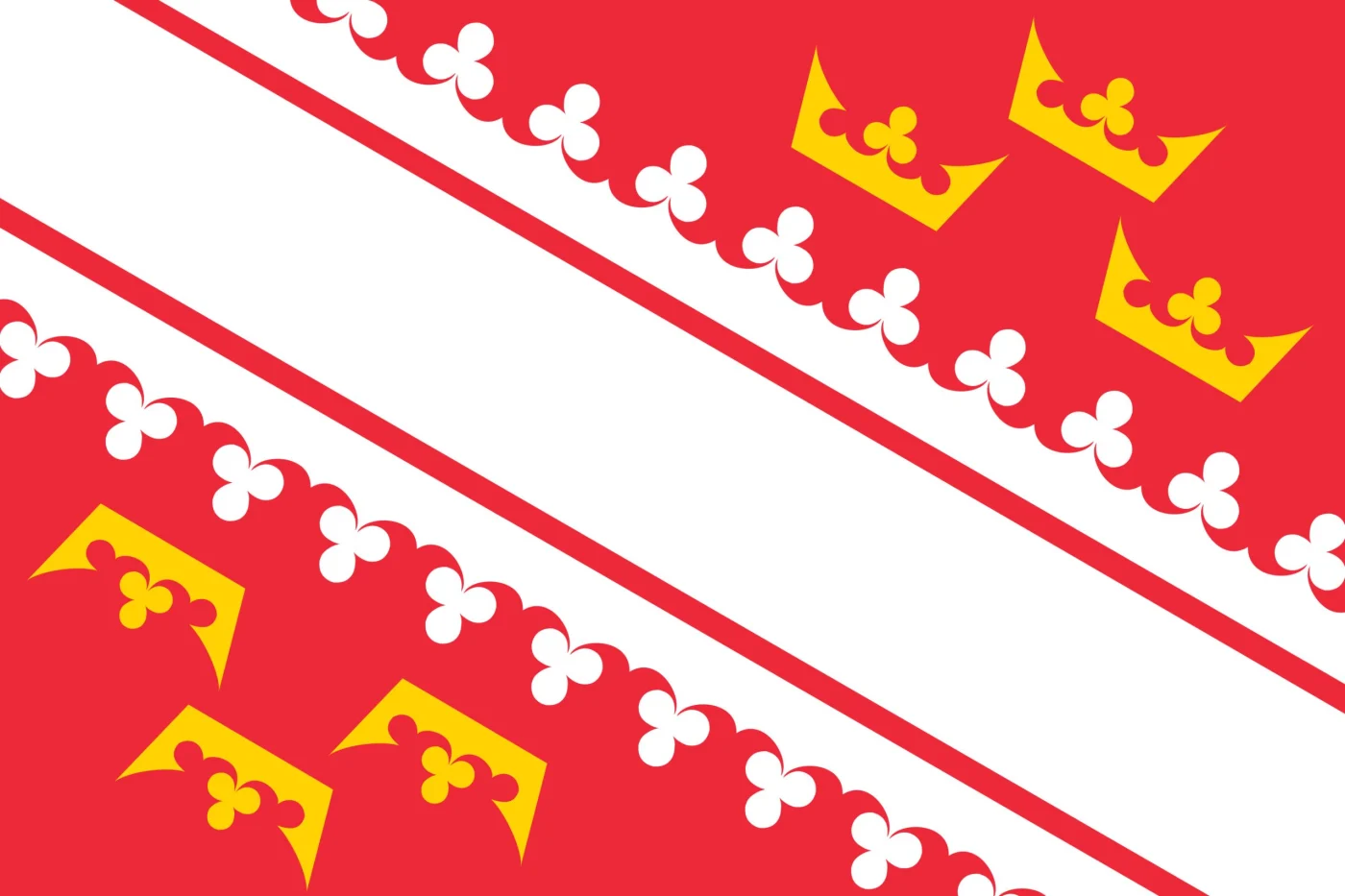
Today Alsace prides itself on international institutions and its residents’ affection for the European vision, but a closer look reveals hints of a long history of struggles for control.
The etymology offers an early clue: the name “Alsace” comes from “Ali-saz,” meaning “foreign territory” in Old High German. In fact, every wooden beam and every cobblestone bears silent witness to the roar of cannons, the gallop of horsemen, and the experience of estrangement and disconnection felt by residents, who were handed from one ruler to the next like tribute to the victors.
The alleys were scorched by the boots of Roman, German, French, and other soldiers. For the Alsatians, their land was home; for others, it was the spoils of war. The pastoral facade takes on a different light when you consider the generations that came before: how many empires rose and fell! How many fates were decided in these very alleys!
Of Vines and Fortresses
While the agricultural history of Alsace dates back to 1500 BCE, and nomadic hunters left documented traces as early as prehistoric times, it was the Romans who turned Alsace into a strategic asset. In the early stages of the Gallic Wars, the Romans conquered the region. A soldier standing atop a hill overlooking the Rhine saw before him more than just new land.
For the Romans, Alsace represented a promising future, a vital zone of control, a hope for raising the empire’s fortunes. For the locals, the conquest was a cultural asset: admission into a social order that demanded loyalty but paid out in stability.
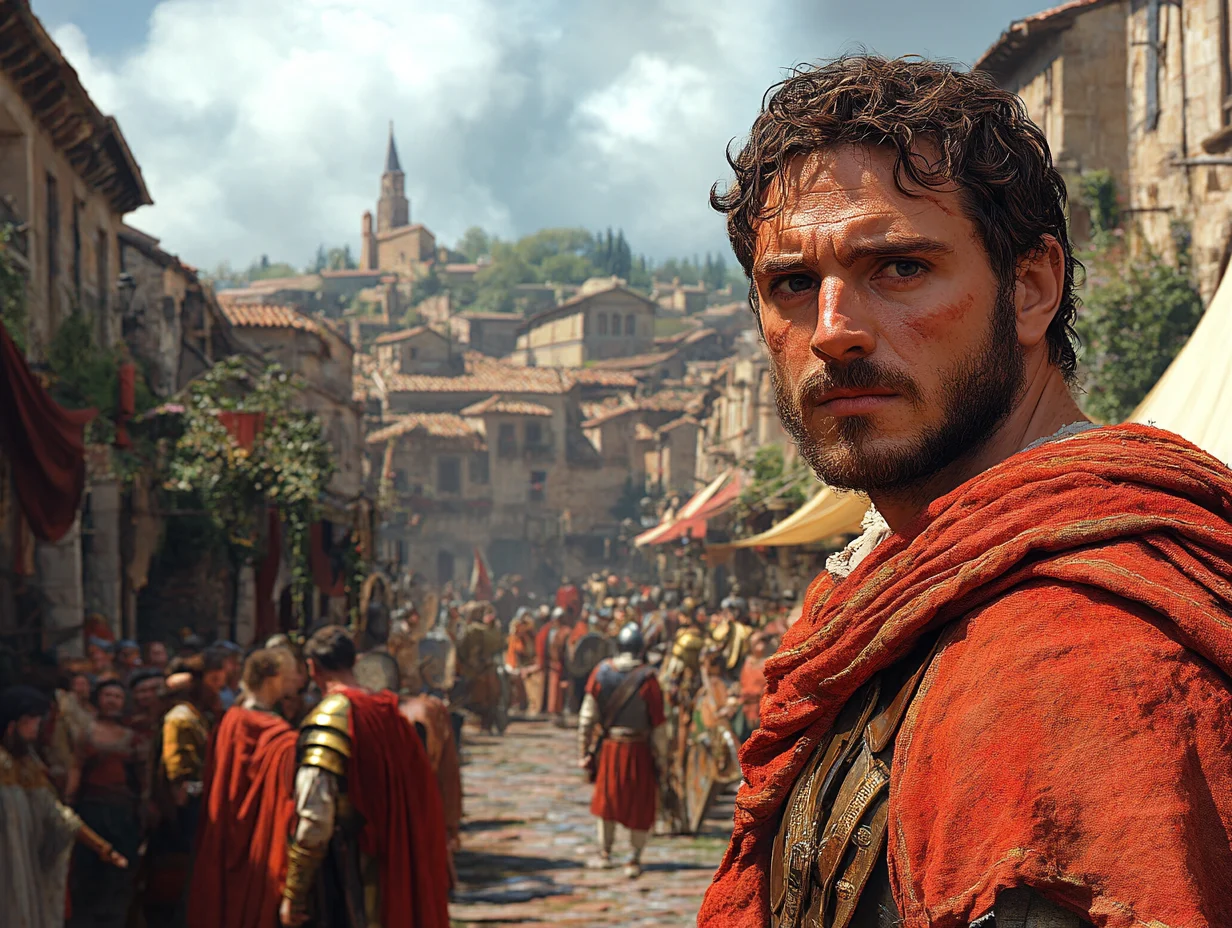
In the first century, Alsace was incorporated into Germania Superior, a Roman province in the region of Germania, south of the Rhine. Strasbourg, then known by its earlier name “Argentoratum,” served as a military camp for soldiers of Augustus’s Eighth Legion. In the second century, urbanization reached its peak, and the population kept growing until the middle of the fourth century. Even then, hinting at things to come, timber houses were common in the region, contrary to the broader urbanization trend, likely due to the lack of accessible stone in the Rhine valley.
Despite evidence of grapevine cultivation, there is no historical consensus on how widespread local wine production was. On the other hand, it is known that large quantities of wine were imported from the Iberian Peninsula, along with oil and salted meats. Grain grew in Alsace’s fertile soil, providing local residents with a means of subsistence.
Alemannic Alsace
Rome wasn’t built in a day, and Roman rule over Alsace didn’t end overnight either, but over the years the empire’s grip weakened. The Alemanni, a confederation of Germanic Swabian tribes, took over the region.
Pagan traditions were devoutly preserved until the seventh century CE, when the Alemanni began converting to Christianity. Traces of their era are still visible today, thanks to their language, which formed the basis for modern German dialects, including Alsatian.
For residents, history became a lived, existential experience: the Latin signs came down, the language shifted to the rough German of Alemannic warriors, the streets, the houses, the alleys, and the timber buildings all stayed the same, but the rulers changed. The regional culture was torn apart once again, in exchange for whatever the new conqueror offered.
Frankish Alsace
A historian’s work resembles an archaeologist’s: like a palimpsest, one historical layer is written over the previous one, blurring it, preserving it, and adding yet another layer.
Traces of the Frankish period in Alsace aren’t hard to find. During the fifth century, the Franks challenged Alemannic rule. The Battle of Tolbiac, led by Clovis I (c. 466-511, king of the Franks), marked the end of the old order. Legend has it that as he watched defeat unfolding before him, Clovis looked up and swore that if he won, he would convert to the religion of his wife, Clotilde (c. 475-545), a Catholic Christian.
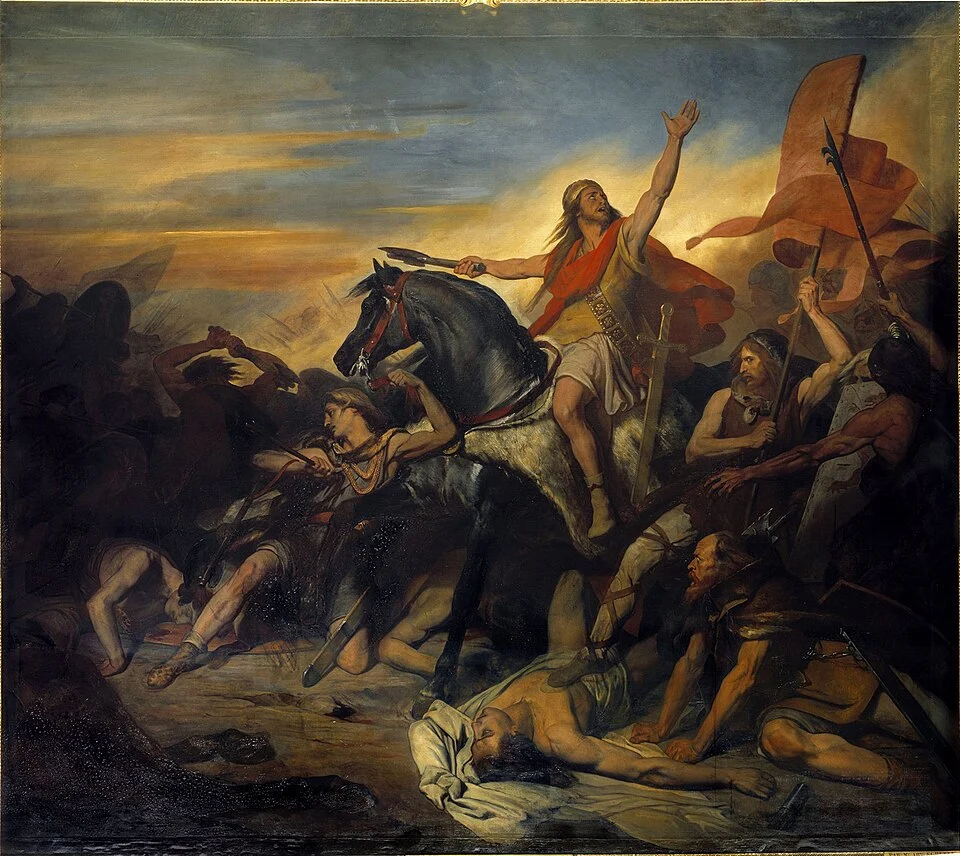
The battle was decided in favor of the Franks, and change followed: local temples were converted into churches; Frankish monks spread their teachings among residents, urging them to replace the local gods with a new one. Alsace was annexed to Austrasia and remained part of Merovingian and Carolingian Francia until its breakup.
Beyond the religious shifts, class dynamics developed: monasteries were founded by prominent families, strengthening their status and economic importance. A Christian elite formed with the backing of Frankish kings, contributing to the rise of essential learning in the post-Roman world.
The death of Louis the Pious (778-840) marked a new chapter in the history of Alsace. As a key figure in European history, his departure from the scene opened the door to prolonged succession struggles. Because of its position, Alsace was exposed to many of the consequences: in a short span, it belonged successively to Middle Francia, the Kingdom of Lotharingia, and East Francia.
The Holy Roman Empire
The next stage in Alsace’s transformation was its transfer to the patronage of what Samuel von Pufendorf (1632-1694) called “an irregular body, something like a monster.” The Holy Roman Empire, which was “neither Holy, nor Roman, nor an Empire” (Voltaire, 1694-1778), gained Alsace in 870.
The political reforms brought deep changes: Alsace was split into small feudal territories, but under the Hohenstaufen dynasty it enjoyed a revival, particularly under the rule of Frederick I (Barbarossa, Holy Roman Emperor r. 1155-1190), who designated it as a province under his authority. The system of government included an administrative class, headed by people who were not of noble birth.
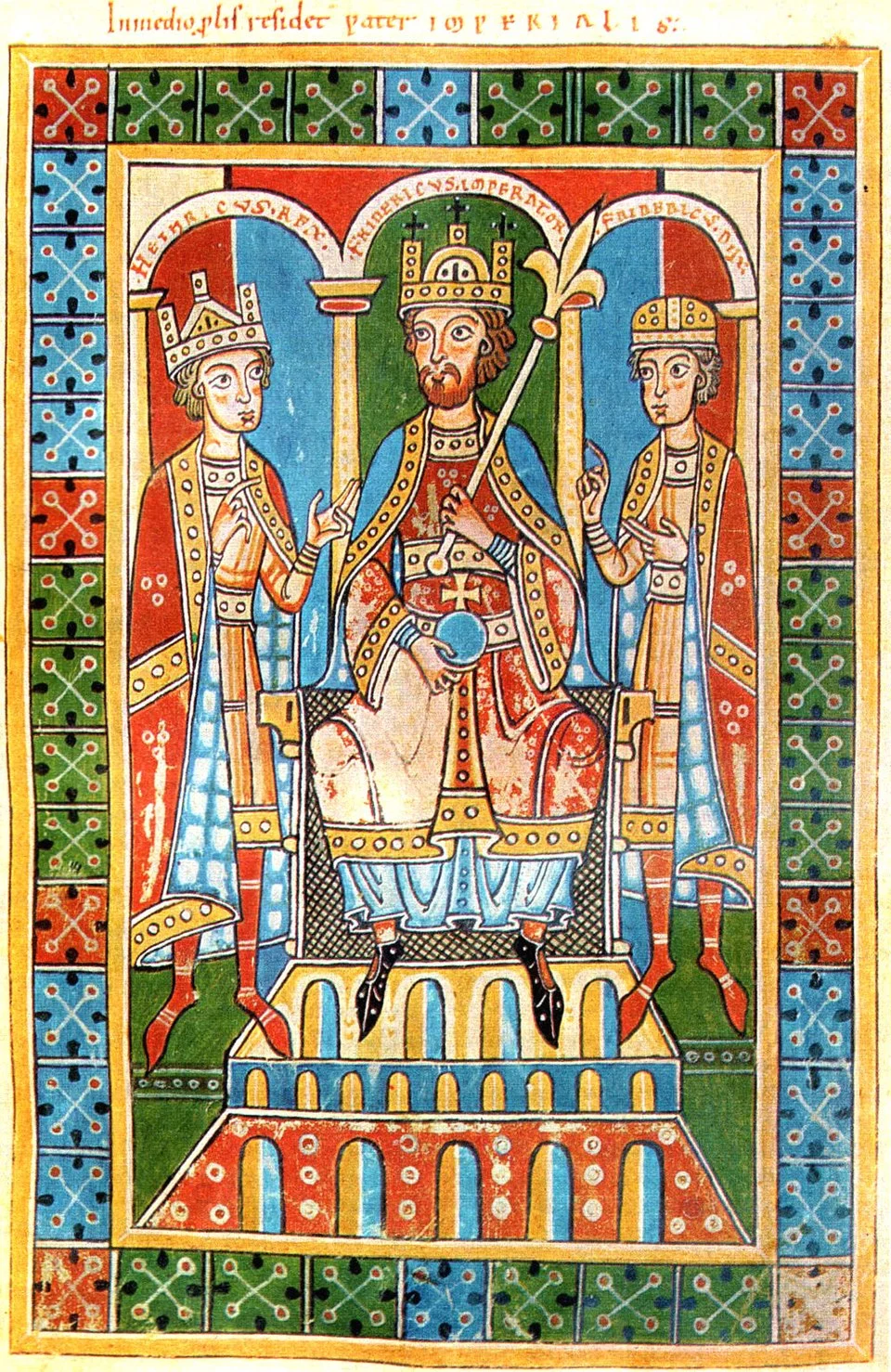
The move stemmed from a series of conflicts between feudal lords and the Church. The underlying assumption was that an independent bureaucratic class would reduce the risk of ambition and ease friction with Christian institutions.
Institutional changes followed: a court was established alongside other governing bodies; the Bishop of Strasbourg received most administrative powers, but his standing was challenged by Count Rudolf I, who claimed ruling rights of his own. Strasbourg emerged as the leading city of Alsace, the most populated and the most important. The political struggle brought residents a diplomatic achievement: Strasbourg was recognized as a free imperial city, directly subject to the emperor, and gained autonomy along with representation in the Diet (the parliamentary assembly).
The Well Poisoners
Historical records offer valuable information about the Jewish community of Alsace. At this point, many Jews worked in the “national sport” of moneylending at interest; the emperor favored them, and the local community flourished.
The utopia didn’t last long. After years of calm, the ground trembled beneath the feet of Alsace’s Jews. In the 14th century, a series of harsh winters began; poor harvests were gathered and famine spread across the continent. The Black Death struck Alsace, and as in other parts of Europe, cries of plague terror mixed with the cries of pogroms against Jews.
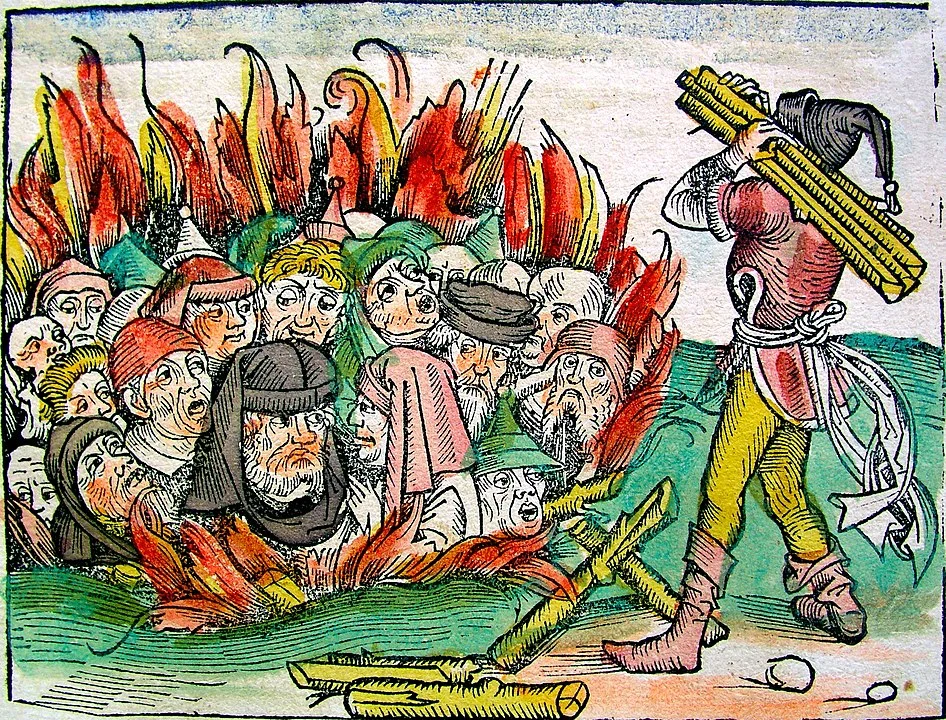
Commissions of inquiry led to predictable, unavoidable conclusions about who was to blame: in the years that followed, thousands of Jews were murdered as “well poisoners,” according to the well-reasoned scientific opinion of the time, during the Strasbourg massacre. Even afterward, life did not return to normal: Jews were banned from resettling, which, surprisingly, did not prevent yet another natural disaster: the earthquake in the Rhine Graben, in 1356.
Musical Chairs
Like many empires, the core power of the Holy Roman Empire thinned out through campaigns of conquest. German rule kept hold of certain strongholds, but the dominant seat of power in Europe shifted to France, which began its own expansion.
Over the following centuries, a game of “musical chairs” developed, in which Alsace was offered and passed along as a dowry from hand to hand. In 1299, Blanche of France (1278-1305), of the House of Capet and sister of Philip IV (r. 1285-1314), King of France, sought to enter a marriage alliance with Rudolf, who would later become Rudolf I, King of Bohemia and Poland.
As a friendly gesture, Alsace was offered by the French crown, a move that could have brought further upheaval to residents already well acquainted with change. The hoped-for marriage did indeed take place, but the deal tied to it never materialized.
The French drift toward the Rhine was halted by the Hundred Years’ War. Over the course of 116 years of fighting, the House of Valois was kept on the defensive. The fighting took shape as an exhausting struggle at home. Holding ground became the top priority; conquering additional territory no longer looked like a sound strategic bet.
The end of the war with the House of Plantagenet marked the resumption of France’s ambition to expand to the Rhine. In 1444, the sound of soldiers’ boots rang out once again. History, ever circular, came back for another visit. French forces demanded the surrender of Metz and Strasbourg, vital strategic assets, and even launched an assault on Basel.
Diplomacy Is the Continuation of War by Other Means
*A paraphrase of Clausewitz, who said that war is the continuation of diplomacy by other means.
In 1469 a new chapter was written in the tangled story of Alsace. The Austrian duke Sigismund signed the Treaty of Saint-Omer. The Duke of Burgundy, Charles the Bold, received as a pledge the Habsburg territories of Upper Alsace, Breisach, the county of Pfirt, the county of Hauenstein, Ortenberg and the four Forest Towns on the Rhine: Rheinfelden, Säckingen, Laufenburg and Waldshut.

In exchange for the arrangement, a defensive alliance was sealed between the two leaders, a top priority for Sigismund, who was desperately struggling against the expansion of the Swiss Confederation into his territories. On top of the defense pact, Charles paid 50,000 florins for the lands transferred to him.
The change wasn’t felt in the immediate term. The makeup of the population stayed the same and daily life went on almost unchanged. In the long run, though, the effects of the move became clear: the Bold Duke became a border neighbor of the Swiss; the economic privileges of the local residents came to an end; and the seeds of rebellion were sown in the territories of the Upper Rhine.
Despite the change of ownership, the Holy Roman Empire retained the right to collect taxes. Frederick III, Archduke of Austria, profited financially from the patchwork deal. Over the years, partial control and clever use of dynastic marriages returned control of Upper Alsace and Belfort to the House of Habsburg. But several towns remained under French rule. The town of Mulhouse, on the other hand, joined the Swiss Confederation in 1515 and stayed a member until the late 18th century.
The Reformation as a Turning Point
During the Protestant Reformation, prosperity returned to Alsace. Strasbourg became an economically and culturally thriving community. Its citizens embraced Protestant Christianity in 1523, a further step that set them apart from Catholic France. A fierce struggle unfolded: Martin Luther, one of the leading early reformers, led the push for conversion. Opposing him were the forces of the Holy Roman Empire, Catholic in character, trying to stamp out the sprouting heresy. The fruits of this struggle were a colorful, uneven patchwork.
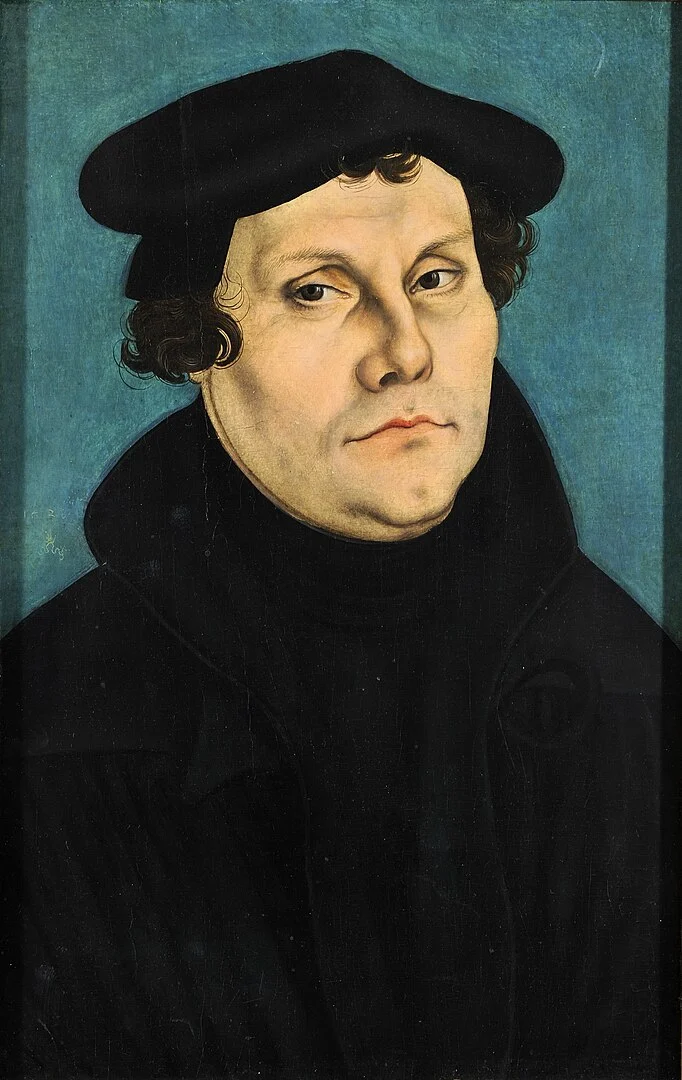
An Alsatian farmer who walked into his village church would find the statues and paintings gone, a mark of the Protestant iconoclasm, the altars bare, and the prayers spoken in a different tongue. Where the priest once spoke in Latin, he now spoke plain, direct German, following Protestant principles.
Some residents embraced the change with enthusiasm, while others muttered in frustration. Before long, the tension would erupt into violence. The town of Montbéliard, southwest of Alsace, was the only place where relative uniformity was preserved: it remained a distinctly Protestant enclave until 1793.
Spain Enters the Picture
After a long run of French-German back and forth, a new (semi) player entered the equation: the Spanish, or more precisely, the Spanish branch of the House of Habsburg. Between 1516 and 1700, Catholic Spain was ruled by kings from the House of Habsburg, an offshoot of the Austrian branch. In 1617, a secret agreement was signed between Philip III, king of Spain and head of the senior Habsburg branch, and the Austrian archduke Ferdinand II, head of the junior branch, concerning the allocation of several contested key holdings.
Under this agreement, known as the Oñate Treaty, Ferdinand gave Philip full control over Habsburg territories along the “Spanish Road,” a loose territorial chain of sovereign lands stretching from Upper Italy, through Alsace and the Free County of Burgundy, all the way to the Spanish Netherlands.

At this point, Cardinal Richelieu stepped in. A man of extraordinary skill with clear political theories (and a less than fair portrayal in Alexandre Dumas’s (1802-1870) great work “The Three Musketeers”), the Cardinal devoted considerable effort to fighting the growing power of the Austro-Spanish dynasty. His policy was pure realism: every value gave way before the interest of the state. The Habsburg bridge linking Spain to the Low Countries, Richelieu understood, did not serve France’s interests.
In 1639, French forces conquered most of Alsace. The conquest took place during the Thirty Years’ War, which polarized Europe and led to far-reaching consequences. The Habsburgs, tied up fighting in Hungary, sold Alsace to the French in 1646 for 1.2 million thalers.
Seeds of Peace
The Peace of Westphalia is seen as a turning point in old Europe’s history. A regional war came to an end and borders were redrawn overnight, but the Alsatians, well versed in change by now, didn’t see any major shift in their status. Most of Alsace’s territory was recognized as part of France, but the terms of the agreement were vague and tangled. Some towns kept their independence, and even in towns that were annexed, it was decided to preserve local community patterns rather than shake things up. The vagueness was essential: in a region with such a diverse population, the language of the law had to leave room for the necessary give and take.
The French customs border stayed unchanged and ran along the Vosges mountains, which gave the local economy a German orientation; the German language remained in use in local administration, in schools and at the (Lutheran) University of Strasbourg, which kept attracting students from neighboring countries. Another layer was added to the region’s cultural fabric.
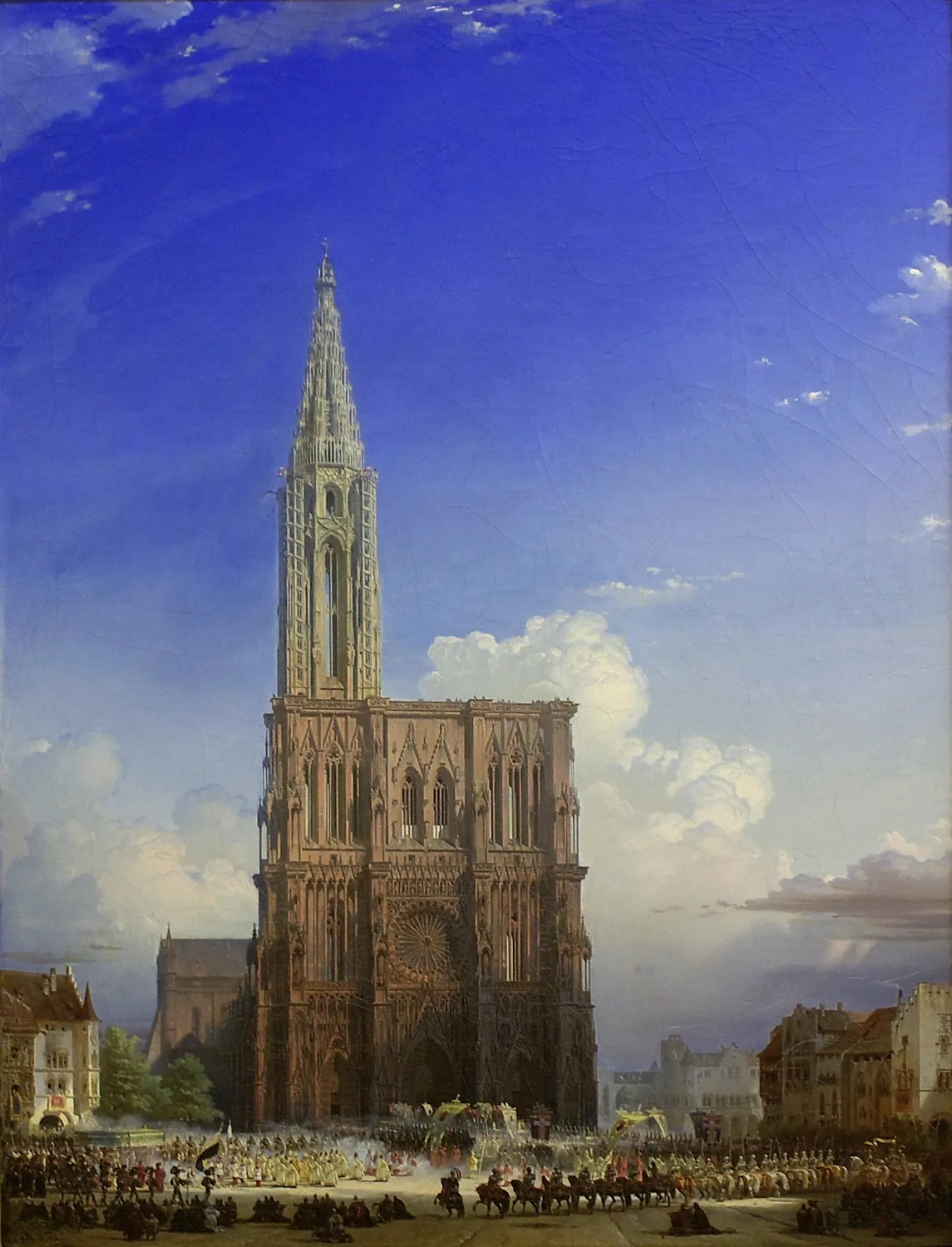
Strasbourg Cathedral, a stunning monument of Romanesque-Gothic architecture, did become Catholic again, as part of the Edict of Fontainebleau and the suppression of Protestantism in Catholic France. But religious pluralism was largely preserved, and the overall climate remained tolerant and inclusive.
France tightened its grip with the Treaties of Nijmegen, which brought most of the local towns under its control, and after a series of sweeping shifts, it took Strasbourg without a fight. These territorial changes were confirmed by the Treaty of Ryswick, which ended the Nine Years’ War.
The Spirit of Revolution
But economic prosperity is no guarantee of regional stability. The year 1789 brought with it news for the modern world: the French Revolution. The Alsatians didn’t sit quietly either: when news of the fall of the Bastille reached Strasbourg, an angry crowd stormed the city hall. The city’s leaders fled; the feudal system came to a symbolic end. The following year, Alsace was split for the first time into two départements, Bas-Rhin and Haut-Rhin, as part of France’s division into 83 départements.
In 1792, after a public dinner, Rouget de Lisle, a patriotic officer stationed in Strasbourg, sat down, his heart burning with the wish to make his own contribution to the nation. Fired up, he wrote the words of a marching song, “War Song for the Army of the Rhine,” which later became “La Marseillaise,” France’s national anthem to this day (you can read more about the Marseillaise in this article).
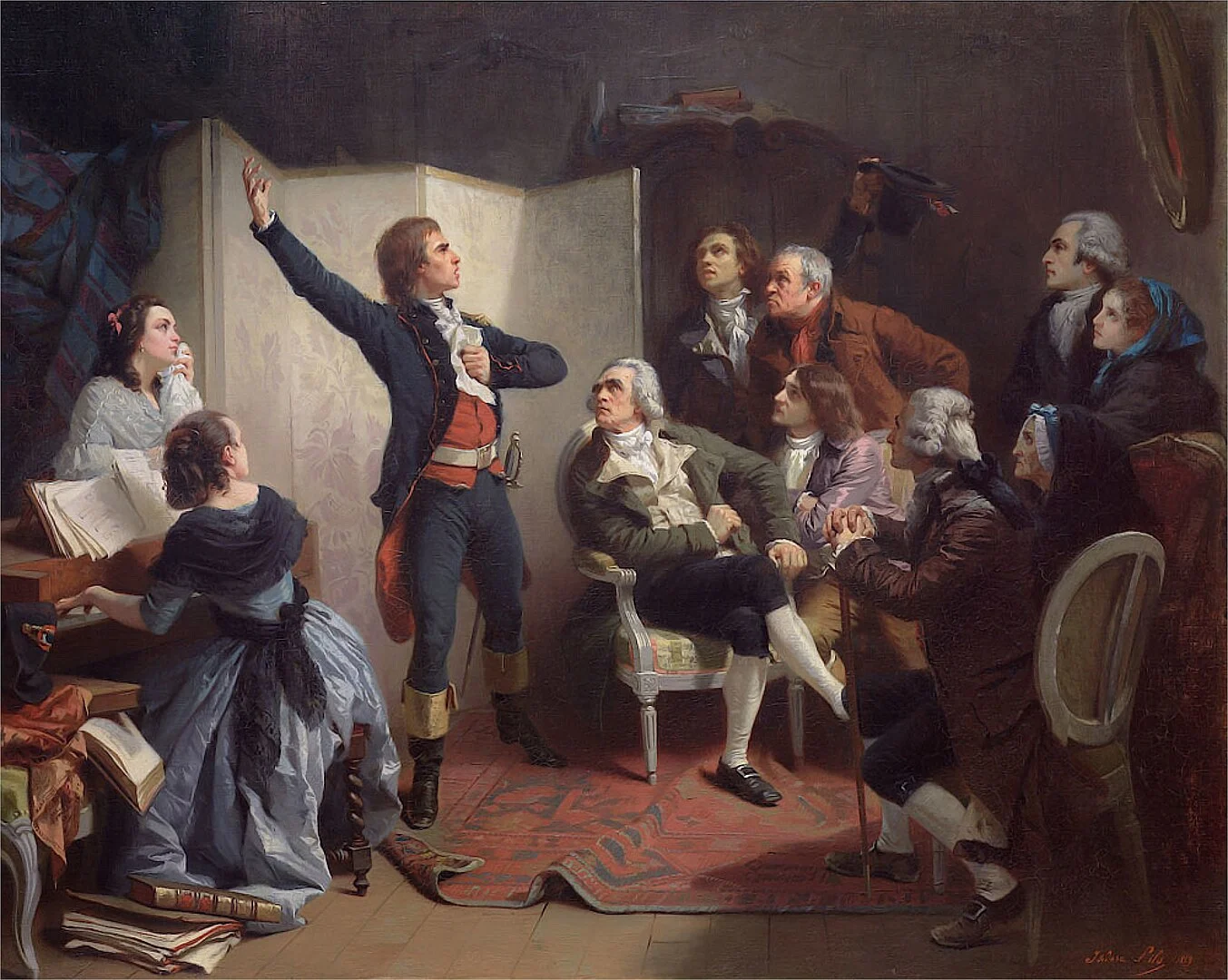
De Lisle wasn’t a radical revolutionary republican, but rather a loyal supporter of a liberal constitutional monarchy, in the spirit of moderate Enlightenment thinking. He opposed the radicalization of the Revolution and was wary of the Reign of Terror. At one point he was even arrested on suspicion of holding “hostile” political views, and narrowly escaped the guillotine.
Important revolutionaries came out of Strasbourg, but many of the residents opposed the Jacobins and supported the restoration of the monarchy. Residents of the Sundgau area, in southern Alsace, made “pilgrimages” to religious sites across the French border. In particular, residents flocked to the Mariastein monastery, near Basel, to hold baptisms and weddings, sacraments that the regime, busy persecuting religious institutions, no longer allowed.
The Long Road Home
When the French revolutionary Army of the Rhine won, tens of thousands fled eastward. Later they were allowed to return, but the theme of a delayed homecoming became an everyday struggle for these exiles, who sometimes discovered that their land and homes had been confiscated.
Picture the anguish of those returning: a mother holding her child’s hand, the child looking around in confusion, searching with young eyes for something familiar. A father carrying a small bundle on his back, the last remnant of a life lost along the way. They stand there, speechless, staring at what’s left of their past. The home they longed so badly to return to no longer exists, and in its place they find a harsh reality of loss. They know there’s nothing left to go back to, but nowhere else to go. This tragedy, incidentally, was recorded by Goethe, the great poet of the age, in his poem “Hermann and Dorothea.”
Once Again, “Foreign Territory”
After the defeat at Waterloo (1815), the coalition of European powers decided that, to make sure Napoleon or his supporters wouldn’t try to seize power again, foreign troops needed to be stationed on French soil, especially in the border regions.
In Alsace, especially in the Bas-Rhin area, the military presence was enormous: more than 280,000 foreign soldiers and 90,000 horses! The impact on the economy, infrastructure and trade was massive, but nothing compared to the social consequences: the military presence created internal tension and tore at the fabric of daily life, which was already fragile after decades of war.
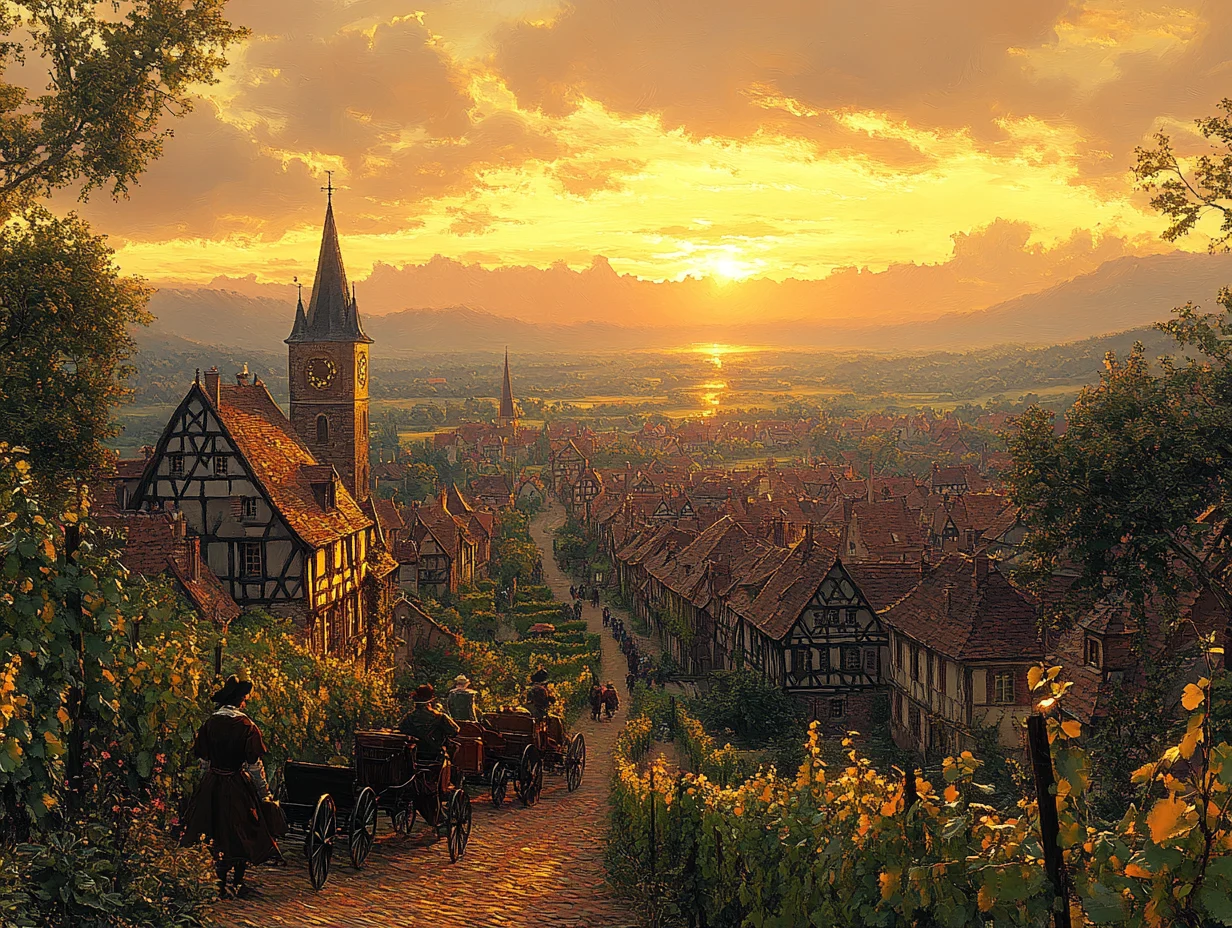
Despite the occupation, the population grew at a rate that would put a Malthusian catastrophe to shame: from 800,000 residents to 1,067,000 in just 32 years! Demographic shifts in a region battered by war rarely bode well. Rising hunger, housing shortages and lack of jobs led to waves of emigration. Paris was the most likely destination (Baron Haussmann (1809-1891) was a prominent member of the Alsatian community in Paris), but Russia, the Austrian Empire, the United States and Canada were also possible destinations for hopeful migrants.
The Franco-Prussian War
In 1870, Napoleon III launched a war between the Second French Empire and the Kingdom of Prussia. The Germans had the advantage in numbers, organization and technology, and defeated France was forced, under the Treaty of Frankfurt, to hand over most of Alsace and about a quarter of Lorraine to Germany. Alsace-Lorraine became a territorial entity within the new German Empire.
While other member states of the federation were governed by their own governments, Alsace-Lorraine was administered directly from Berlin. Out of a population of about a million and a half, between 100,000 and 130,000 Alsatians chose to remain under French rule and leave their homes. Many of them emigrated to Algeria and later became known as “pieds-noirs” (literally: black feet).
The illusion of tolerance toward the conquered territory (it was granted a measure of autonomy, reflected in its own flag and anthem) shattered about two years later. A German soldier stationed in the town of Saverne, in northwestern Alsace, routinely humiliated the local residents, and in response, they rose up against the German army, which answered the uprising with harsh measures.
World War I
At the outbreak of World War I, many Alsatians chose to serve in the German Imperial Navy. Near the end of the war, a mutiny broke out among the sailors: many of the mutineers were from Alsace, whose identity had never been free of internal conflict. The mutiny triggered a severe crisis, and under mounting political pressure, Kaiser Wilhelm II was forced to abdicate, a move that marked the end of the Empire and the birth of the Weimar Republic.
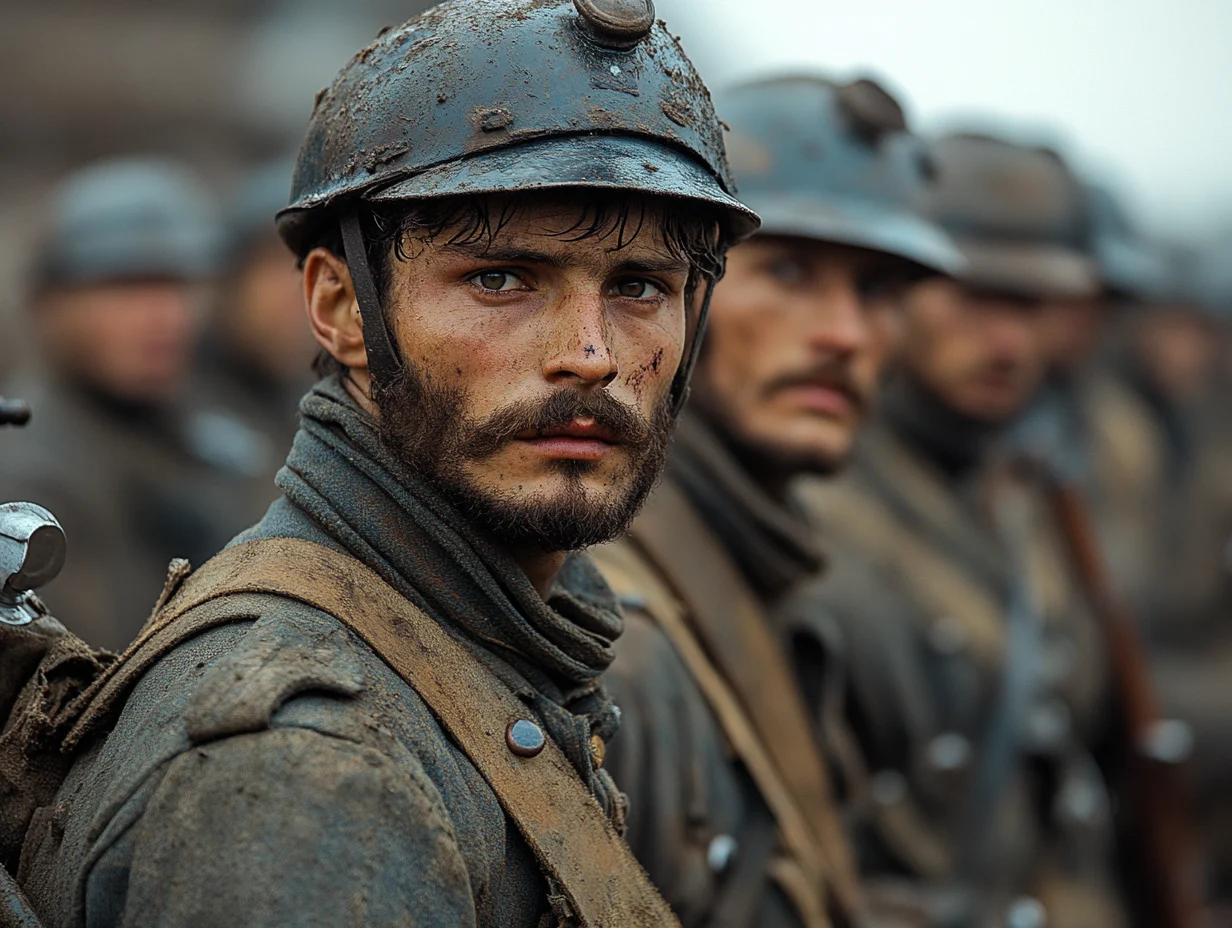
The people of Alsace, direct subjects of the Kaiser, were left without a head of state, and the returning sailors set out to establish an independent republic. Jacques Peirotes was elected mayor of Strasbourg and declared the end of the German Empire and the founding of the “French Republic.” This self-declared independence gave rise to the “Republic of Alsace-Lorraine,” a government of local figures influenced by revolutionary and socialist ideas, operating alongside a Soviet-style organization of workers and revolutionaries.
France Takes the Initiative
France, for its part, saw Alsace-Lorraine as territory that had to be returned to its control, and so it opposed any local declaration of independence. When French forces entered the region, their goal was to crush the workers’ movements and dismantle any unilaterally declared government, including the “Republic of Alsace-Lorraine.” It took less than two weeks to end the workers’ strikes and remove the Soviets and revolutionaries from power. When French soldiers arrived, many Alsatians welcomed the restoration of order and the end of the chaos.
Woodrow Wilson, the American president and a naive liberal, insisted that the region’s history gave it a right to independent legal status, but France refused to hold a local referendum on the matter, remaining true to its self-image as liberator of the territory from German occupation. Under the Treaty of Versailles, the change was ratified: the territory was handed over by the Germans and placed under French control.
French policy was strict: the German language was pushed out of most public life, with the sole exception of using German translations for election campaigning (until 2008). To avoid stirring up resentment among the residents, the region was exempted from several legal changes that took place in the rest of France, such as the law separating church and state.
World War II
During World War II, Alsace was occupied by German forces (1940). At dawn, German tanks rolled through the streets and fields of Alsace-Lorraine, shattering the morning silence and changing the region’s fate forever. French flags were taken down and Nazi symbols hung on the old city buildings, silent proof of the dramatic change. Many residents woke up to a new reality, one where their French language was suppressed and their cultural identity crushed.
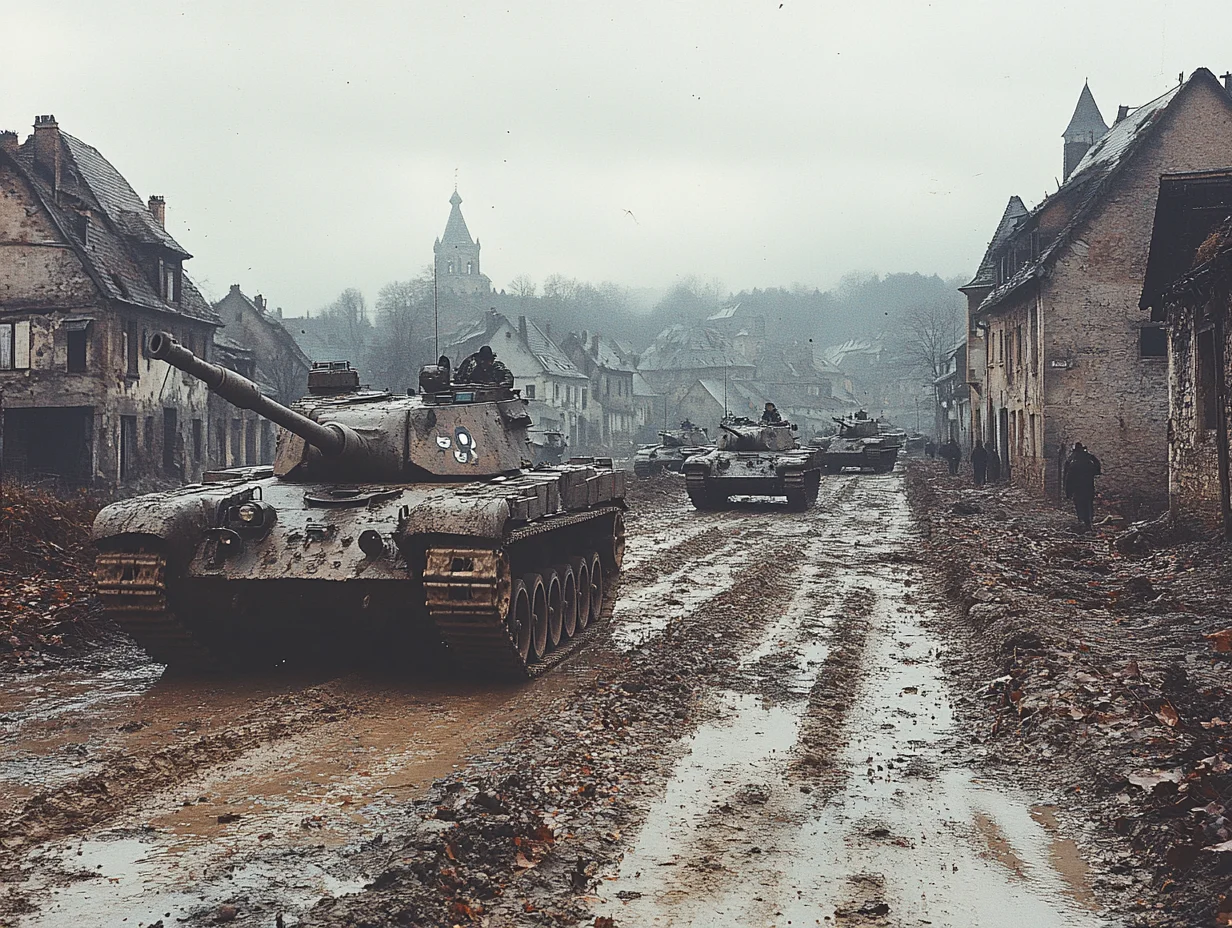
130,000 young men were forced to put on German uniforms and fight under a foreign flag, for a country that was never theirs. The German occupation became a deep wound, leaving the region’s residents trapped between forced loyalties and a war that tore their identity apart.
Many fighters never returned. The frozen ground swallowed them without a grave. A few managed to escape to Switzerland, while others joined the resistance. In a rare act of redemption, 1,500 soldiers were freed from Soviet captivity and sent to Algiers, where they joined the ranks of “Free France,” determined to restore their homeland’s honor.
After the War
Today, the Alsace-Lorraine region is governed by a local legal system that differs substantially from the general legislation of the rest of France, a phenomenon known as “le droit local” (local law). This difference comes from recognizing the region’s history of annexation and occupation, and it remains in place in areas such as labor law, health insurance and the management of religious institutions.
In recent years, local authorities and even the European Union have made efforts to promote the Alsatian language as part of the region’s cultural identity. The language is taught in schools, as part of the national policy to protect regional languages, alongside German, which is taught as a foreign language in local preschools and schools.
That said, the French constitution still states that French is the only official language of the Republic, which limits the legal standing of regional languages, even when they receive institutional support.
Hope on the Horizon
The history of Alsace is not just a patchwork of changing rulers, conquests and cultural rifts, it’s also remarkable proof of how a human identity can survive the upheavals of time. What was once “foreign territory” became an arena of reconciliation between East and West, between tradition and progress.
Today, in an era of European peace, Alsace stands as a symbol of the possibility of living together, of respecting difference while preserving civic unity. The challenge that remains is making sure that, in the future too, this multitude of voices, memories and narratives is preserved. If France can find a way to balance recognition of the past with openness to the future, and if the European Union can find a way to support diversity without unraveling unity, then maybe Alsace can be more than just a picturesque postcard of a complicated past. Maybe it can be a cultural model for a united future.