

The Musée d’Orsay is one of the most important, beautiful, sought-after and leading museums in Paris, and in the world. Most of its works arrived when the museum was founded in 1986, transferred from the Louvre Museum, the Jeu de Paume museum and the Palais de Tokyo. The paintings represent the period between 1848 and 1914.
The fifth floor (the top one) is the museum’s showcase and its main draw. The crown jewel. I count myself among the regular visitors to the Musée d’Orsay who head straight up to the top floor. On my last trip to Paris, I spent half a day there and still left wanting more. If I could stay the night here, I wouldn’t hesitate for a second.
This is the Impressionists’ floor, home to a rich and stunning art collection that includes prestigious, famous paintings by the finest artists of the second half of the 19th century and the early 20th century.
The collection is remarkable in its quality and importance, and it contains some of the best-known Impressionist and Post-Impressionist works, by giants of painting such as Claude Monet (1840-1926), Édouard Manet, Paul Cézanne, Camille Pissarro, Edgar Degas, Auguste Renoir, Vincent van Gogh (1853-1890), Paul Gauguin, Alfred Sisley, Henri de Toulouse-Lautrec and others. This is without a doubt a rare concentration of treasures in galleries that are mesmerizing and rich with everything good.
A short list like this one can’t cover every star and every famous work found here, but a brief tour of the fifth floor will introduce us to a few unforgettable masterpieces.
Claude Monet
The Musée d’Orsay owns more than ninety works by Claude Monet, one of the founders and leaders of the Impressionist movement in art. Many of them are part of the permanent collection.
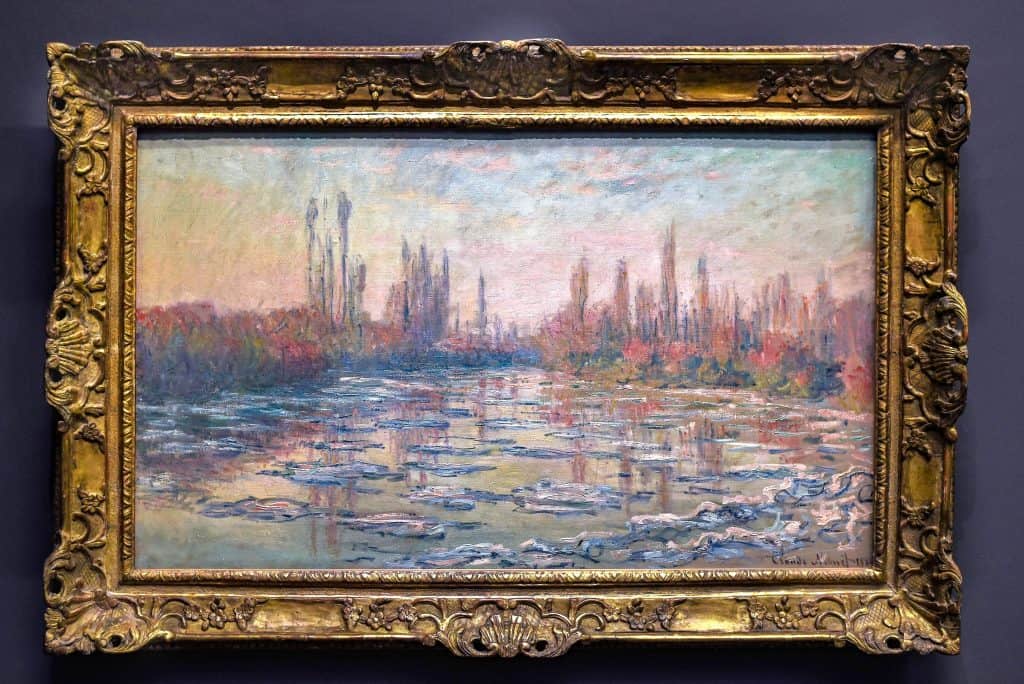
Monet painted several impressive series, the most famous of which is the “Water Lilies” series. The “Rouen Cathedral” (La Cathédrale de Rouen) also went through several versions and is shown here with an emphasis on paintings depicting the same location at different times of day, with great variation in light, shadow and tone.
Among Monet’s unforgettable works on the fifth floor, you can find “Gare Saint-Lazare” (La Gare Saint-Lazare), “Poppies” (Coquelicots), “Rue Montorgueil in Paris” (La Rue Montorgueil à Paris) and “Ice Floes” (Les Glaçons).
Édouard Manet
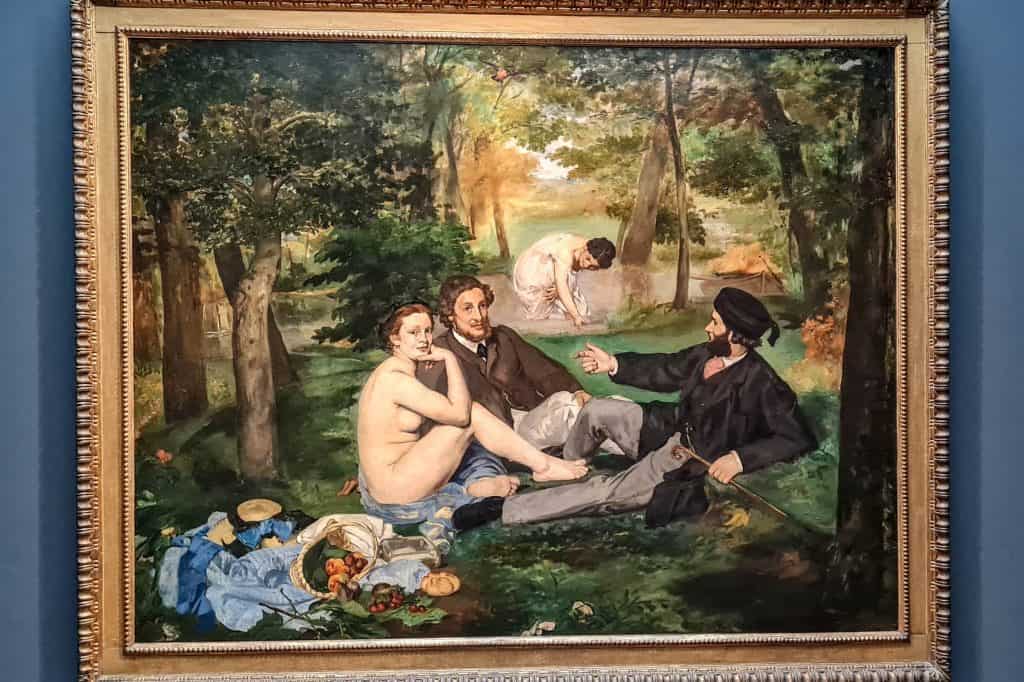
“Luncheon on the Grass” (Le Déjeuner sur l’herbe): Manet presented this wonderful painting at the “Salon des Refusés”, held in Paris in 1863, and it caused a fierce controversy. Two men and two women are enjoying a meal in a grove of trees, picnic-style. One of the women is nude, the other is bathing. The men are fully dressed. This disparity between the men and the women caused a huge scandal, which is exactly what turned the painting into one of the most famous in the world.
Manet painted Berthe Morisot often. Morisot was a French Impressionist painter. She was married to Manet’s brother. One of the works on display on the fifth floor is “Berthe Morisot with a Fan” (Berthe Morisot à l’éventail).
If you’d like to get to know the art of Manet and Berthe Morisot better, I recommend reading Dr. Orna Liberman’s article Édouard Manet and Berthe Morisot: The Passion of Art.
Auguste Renoir
“Dance at the Moulin de la Galette” (Le Bal du Moulin de la Galette): a complex and ambitious work by Renoir featuring many figures, some dancing and others seated. The painting depicts a dance held by the bourgeois class, taking place in Montmartre at the Moulin de la Galette, on a Sunday afternoon.
Renoir pays close attention to the behavior of the joyful crowd and is captivated by the festive beauty of the scene. In the painting you’ll find brushstrokes and plays of light and shadow that illustrate the Impressionist ideas beautifully. If you’d like to visit the places Renoir painted in Montmartre, I recommend using the walking route Montmartre of the Great Artists, which I created.
Like Monet, Renoir is also well represented on the fifth floor. The Musée d’Orsay owns ninety-eight works by Renoir. Many of them are on permanent display here. Renoir was one of the few Impressionist painters who painted nudes. This theme shows up on the fifth floor in several fuller-figured nude paintings.
In addition, your visit will show you several more of his very famous works, such as “Young Girls at the Piano” (Jeunes Filles au Piano) and “The Swing” (La Balançoire).
Paul Cézanne
“The Card Players” (Les Joueurs de Cartes): in the 1890s, Paul Cézanne created a series of five paintings depicting card players. The works in the series differ in size, in the number of players at the table and in the location of the game. In the Musée d’Orsay’s version, the player on the left is shown in full, while the player on the right is shown only partially. The painting is relatively small, but the interest it holds is great.
Another painting by Cézanne that achieved worldwide fame and is on display here is “The Bathers” (Les Baigneurs). This one, too, is part of a series, this time of three paintings. In the version on display at the Musée d’Orsay, the number of bathers is the largest of the three.
Edgar Degas
Degas, considered one of the fathers of Impressionism, painted dance often. His most famous paintings are of ballet dancers. On the fifth floor you’ll find, among others, “The Blue Dancers” (Les Danseuses Bleues), “The Ironing Women” (Les Repasseuses), “The Orchestra of the Opera” (L’Orchestre de l’Opéra) and “In a Café” (Dans un Café).
Camille Pissarro
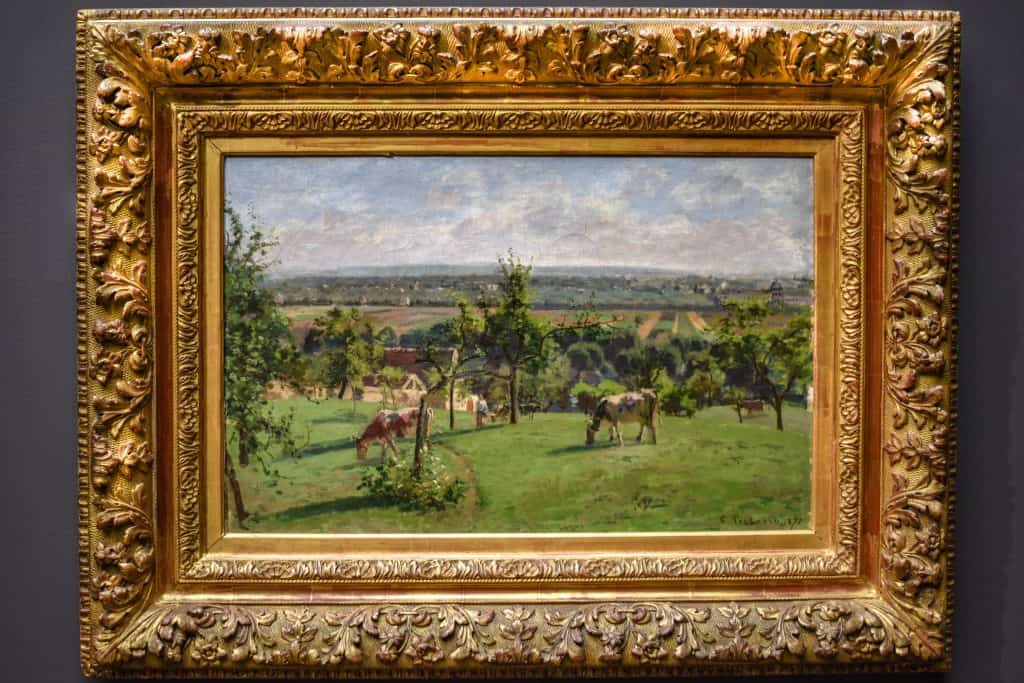
The wonderful painter Camille Pissarro has a fine and well-deserved presence here. As you wander the fifth floor, you’ll find, among others, “The Red Roofs” (Les Toits Rouges), “The Seine and the Louvre” (La Seine et le Louvre) and “The Hills of Le Vésinet” (Les Coteaux du Vésinet).
If you’d like to read more about Camille Pissarro and get better acquainted with his art, I recommend reading Dr. Orna Liberman’s article: Camille Pissarro, the First Impressionist.
Vincent van Gogh
Van Gogh’s distinctive works take center stage on the fifth floor. Some of the most famous ones include “Van Gogh’s Bedroom in Arles” (La Chambre de Van Gogh à Arles), “The Church at Auvers-sur-Oise” (L’Église à Auvers-sur-Oise), “Starry Night” (La Nuit Étoilée) and a self-portrait from 1889 (Portrait de l’Artiste).
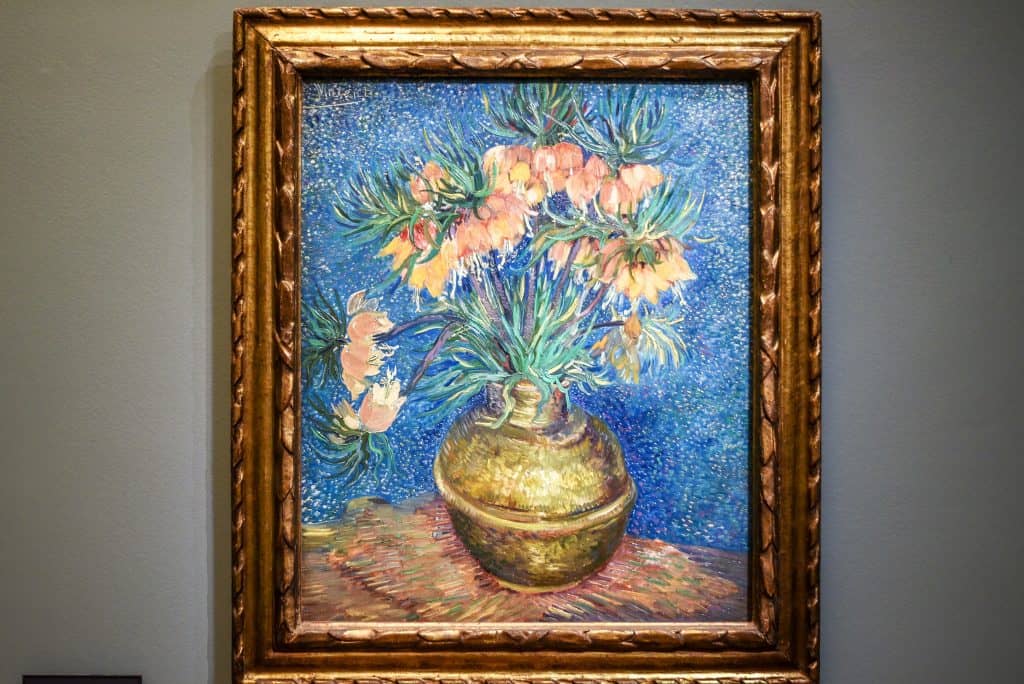
There are also a few less famous but equally interesting works by Van Gogh here, such as his painting of crown fritillaries in a copper vase, called in French: Fritillaires Couronne Impériale dans un Vase de Cuivre.
Henri de Toulouse-Lautrec
Toulouse-Lautrec was disabled and short in stature, but he had an enormous talent. He became one of the most important Post-Impressionist painters, known especially for documenting the bohemian life of Paris. His paintings depicted life at the Moulin Rouge, as well as other cabaret clubs, theaters, cafés and brothels.
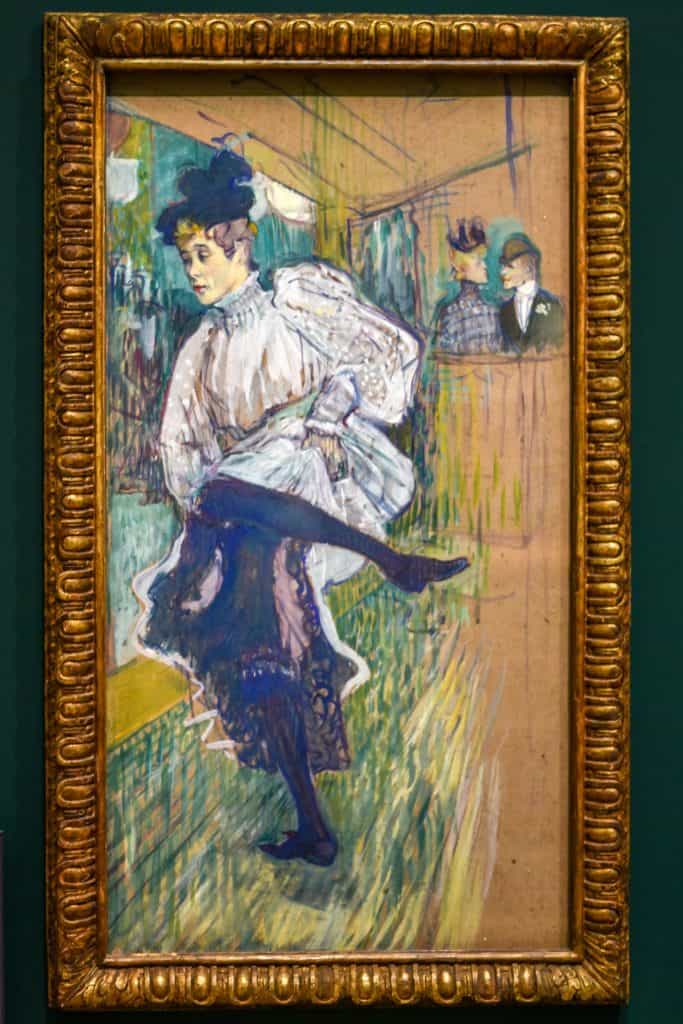
Many of his works grace the walls of the fifth floor. The most famous of them all is probably “Jane Avril Dancing” (Jane Avril Dansant). Jane Avril was the lead dancer at the Moulin Rouge at the time, and in this wonderful oil painting she performs a wild can-can dance, typical of the venue and the era.
Some of the paintings on display here traveled a fairly long road, from the “Salon des Refusés” all the way to the prestigious walls of the fifth floor. Today it’s hard to grasp that these dazzling gems once drew the mockery and scorn of conservative art critics, and that their creators were treated as pitiful amateurs chasing illusions, simply because they dared to set new standards.
The remarkable fifth floor is, without a doubt, a dreamlike floor. It’s also one of the most visited floors in any museum in the world. It shows Impressionism at its best, and it lets you grasp the full scope and meaning of the era. A visit here is a must for anyone interested in the artistic harvest of this hugely important period.
The collection is enormous, stunning and, above all, beloved. Most of the paintings are joyful and glow with color. The fifth floor provides a magnificent frame and backdrop for dozens of masterpieces by the greatest painters of the Impressionist era. This is the largest collection in the world of Impressionist and Post-Impressionist art, and because of it, many visitors report enjoying their visit to the Musée d’Orsay even more than their visit to the Louvre.
Related reading
