

The Latin Quarter is without a doubt one of the places with the longest history in Paris. A historical journey through this neighborhood starts in the cheerful days of Lutetia, when the mix of Christians and lions was the ultimate reality show with a 90 percent rating. It continues through the days when the place became an intellectual hub with the creation of the university (which gave the area its name), and ends with the student revolt of 1968, which pushed much of the university’s faculties out of Paris itself.
In short, we are dealing with more than 2,000 years of long and fascinating history, and since most of you don’t have time to read through hundreds of books written about the events that took place here, I decided to tell you the story of this magical and captivating neighborhood myself, so you can get more out of your visit there.
The Cheerful Days of Lutetia
It’s true that Paris was born as a fishing village where the Bercy neighborhood stands today, but apart from the remains of a few fishing boats, now kept at the Musée Carnavalet, nothing is left of that village.
The real story of Paris begins in the Gallic period, when a tribe called the Parisii founded a small settlement on the Île de la Cité (and possibly also in the Nanterre area). In 52 BCE the Romans conquered the Gallic settlement and decided to build a grand Roman city on a hill on the Left Bank of the Seine.
Why did the Romans choose to build their settlement on a hill (which would later become the hill of Sainte-Geneviève, where you can find the Panthéon today)? First, because a hilltop settlement is easier to defend, and second, to deal with the Seine’s frequent flooding, which turned the Right Bank into marshland, giving its name to the Marais (marais means “marsh” in French).
It was a Roman city “by the book,” with a grid of streets, bathhouses, markets and, of course, an amphitheater. The main street (the Cardo Maximus) ran where Rue Saint Jacques runs today, crossing the city from north to south. Another main street was laid more or less along the path of Boulevard Saint Michel.
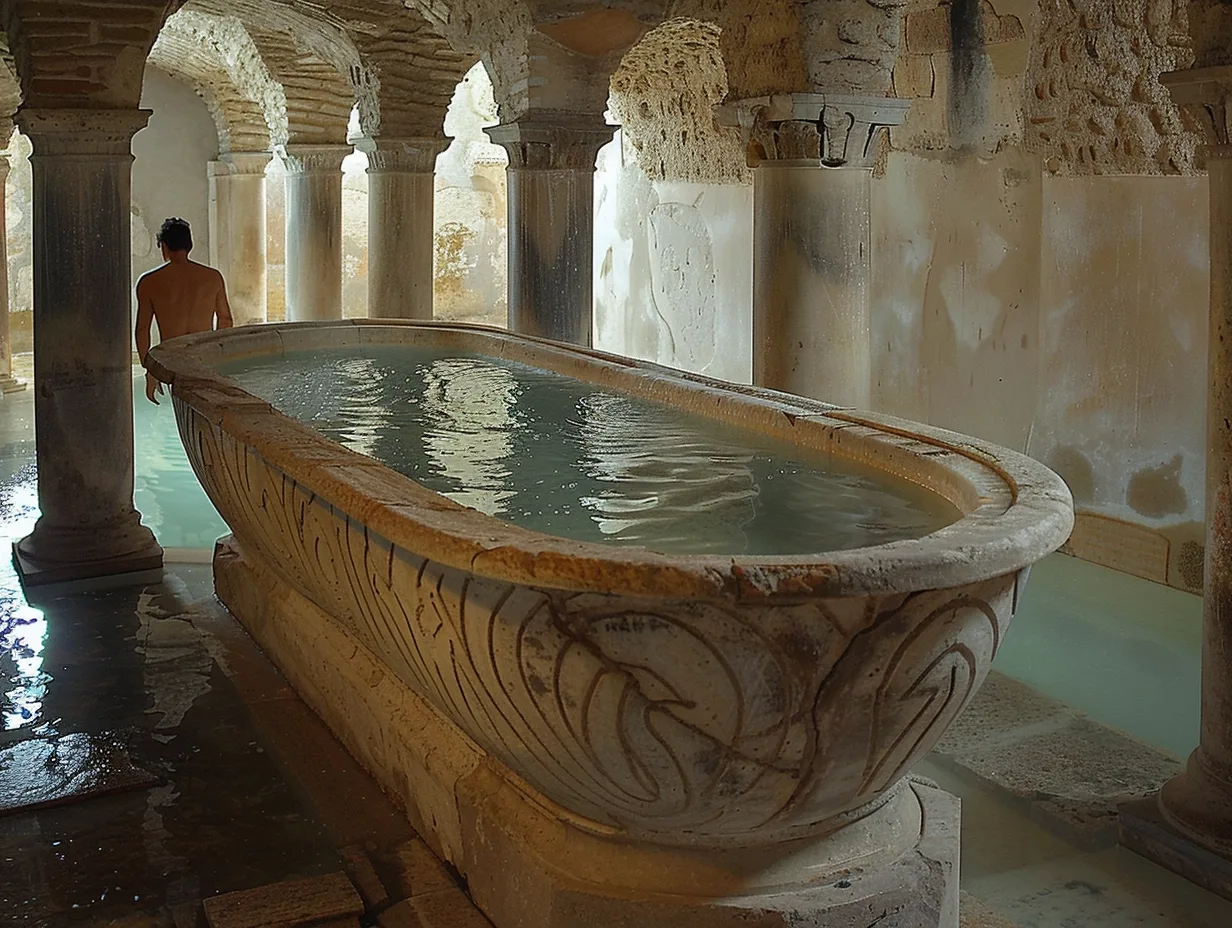
The Roman settlement in Lutetia reached its peak in the late 2nd century CE, and a few remains still survive today, the most important being the baths at the Musée de Cluny (Hôtel de Cluny) and the amphitheater on Rue Monge, known as the Arènes de Lutèce.
Invasions by Germanic tribes during the 3rd century forced the population to concentrate on the Île de la Cité, and the city of Lutetia was gradually destroyed over the following centuries, until it became little more than a distant memory (the amphitheater, for instance, disappeared entirely and became something of a legend, until it was discovered by chance during work to pave Rue Monge).
During the 5th century, Attila the Hun arrived in the area with his army and laid siege to the city. Everyone was certain this was the end, but a noblewoman from Nanterre named Geneviève (c. 419-512) promised that the city would not fall, and indeed a miracle occurred: the Hunnic army decided to leave Lutetia alone and went to sack Orléans instead (there’s a rumor that the reason was a story spreading through the Hunnic camp that the women of Lutetia were ugly and therefore not worth the trouble of conquest, pillage, and rape).
Lutetia may have managed to escape one potential conqueror, but it did not keep its independence for long, since a few decades after the Huns’ visit, a Germanic tribe called the Franks arrived in the area, and they easily conquered what is today France and Belgium.
The Frankish leader Clovis I (c. 466-511) made his home in Lutetia, whose name was now changed to “Paris,” after the Parisii tribe that founded the city. He was deeply impressed by Geneviève, who, together with his wife Clotilde (c. 475-545), managed to convince him to convert to Christianity. One result of Clovis’s conversion (he became King Clovis I) was the founding of a monastery on top of the hill on the Left Bank, and his timing was excellent: he died shortly after the monastery was founded, just in time for his bones to be laid to rest in its crypt.

Geneviève died, it seems, about a year later, and since she had saved the city from the Huns and also helped convert Clovis to Christianity, she quickly earned the title of “saint” and even became the patron saint of Paris (alongside Saint Denis). She was buried in the same monastery as Clovis and gave her name to the hill where the monastery stood (Montagne Sainte-Geneviève).
In the 7th century, Saint Eligius (588-660), who worked as a goldsmith, created a gold reliquary set with precious stones to hold the remains of Saint Geneviève. These relics were kept in the monastery on top of the hill, and whenever disaster struck Paris (war, plague, and so on), the relics would be carried out of the monastery in a procession through the city. All of this ended during the French Revolution, when Saint Geneviève’s remains were burned in a square near the Hôtel de Ville, and the reliquary itself was melted down.
The monastery where Saint Geneviève was buried is also gone; all that remains of it is a bell tower, now standing in the courtyard of the prestigious school named after King Henri IV (r. 1589-1610).
The Intellectual Bread Oven of the Latin World
A few centuries later, during the 9th century, the Vikings appeared at the gates of Paris, and the city’s residents were forced once again to retreat to the Île de la Cité and abandon the Left Bank. After the Vikings were driven out and the Capetian dynasty rose to power (ruling France between 987 and 1328), the Right Bank began to develop and became the commercial center of Paris, but until the 13th century the Left Bank remained mostly empty.
King Philippe Auguste (r. 1180-1223) decided in 1203 to begin settling the Left Bank of the Seine, and to strengthen the sense of security he built a new wall that also surrounded part of the Left Bank (today you can find a small section of it on Rue Clovis, not far from where it crosses Rue Descartes).
The merchants of Paris weren’t exactly thrilled to move to the Left Bank, but members of the clergy were quite happy to go, especially once they received free land from the king. In those years there were three monasteries on the Left Bank, which had been founded earlier but grew considerably during the reign of Philippe Auguste and his successors.
The first was the Abbey of Saint-Germain-des-Prés, located in today’s 6th arrondissement. The second was the abbey of Sainte-Geneviève, which we already discussed, and the third was the abbey of Saint-Victor, located at the foot of the hill named for Saint Geneviève, not far from where Place Jussieu stands today. Some members of this abbey became famous theology lecturers during the Middle Ages.
It’s no surprise that higher education in Paris began here, since members of the clergy were nearly the only people who could read and write, and there was a need to keep training people to understand Christian theology and the Latin language (the language of Christian liturgy at the time). This is how the neighborhood got its nickname, “the Latin Quarter,” after the language in which students were taught.
The first member of the abbey of Saint-Victor to take on students was Gilduin (died 1155), and after him came Pierre Abélard (1079-1142), known to us for his famous love story with Héloïse (if you’d like to read more about him, see Dani Eshkenazi’s article).
The monks originally taught on a street not far from Notre-Dame Cathedral, where the lecturers stood at a podium while the students sat on piles of straw. These piles are called fouarre in French, so it’s no surprise that one of the streets on the Left Bank, very close to Notre-Dame, is called Rue du Fouarre.
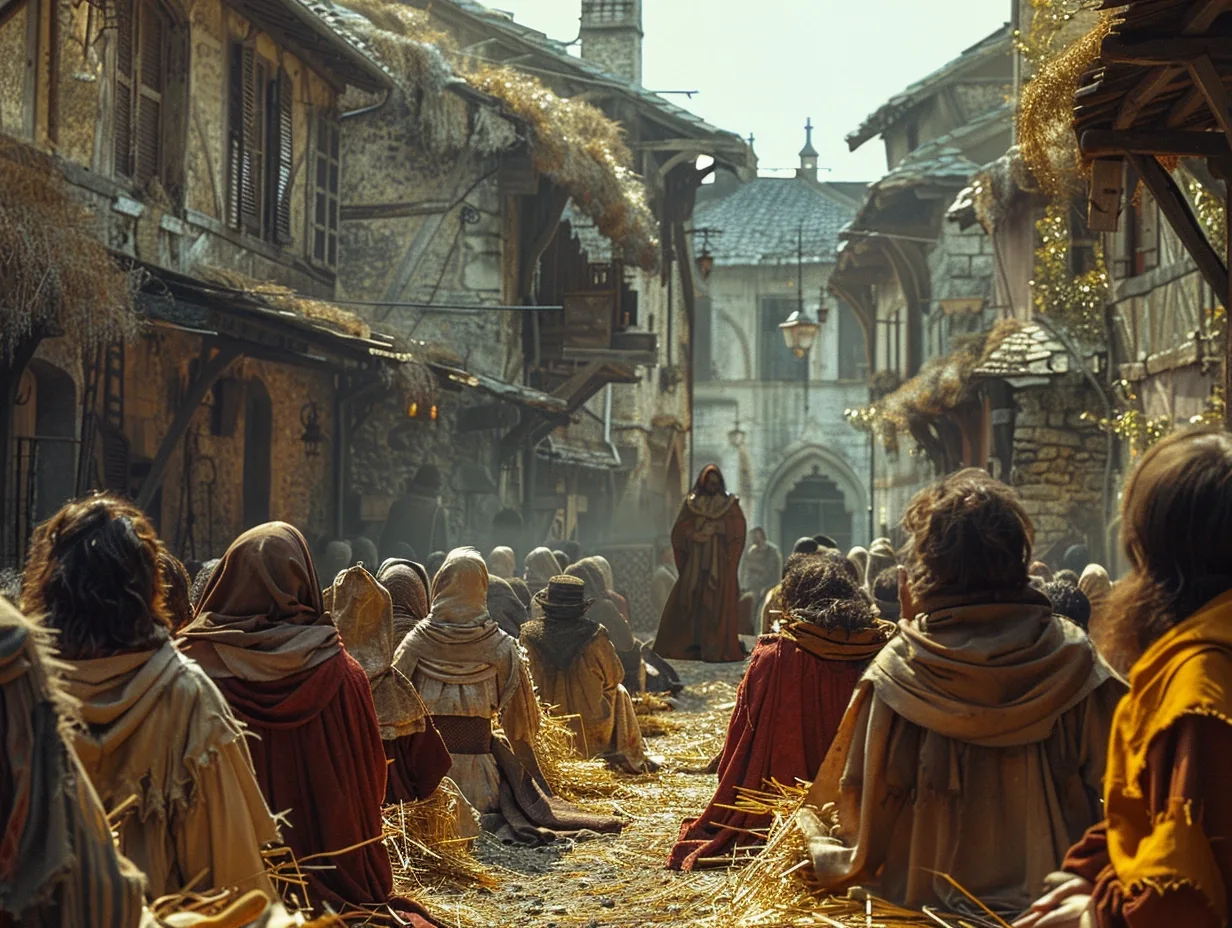
But don’t think that on this street, where Dante Alighieri (1265-1321) lived during his studies, people were only busy with their lessons. Parisian students earned a reputation as wild characters, and when they weren’t visiting the brothels in the area, they got drunk in the taverns of the Latin Quarter and then caused riots. That’s the reason why, in 1358, the regent Charles, Duke of Normandy (the future King Charles V, r. 1364-1380), decided to block off the street with iron chains.
In the 13th century, a clergyman named Robert de Sorbon (1201-1274), who came from the village of Sorbon, appeared at the royal court. Despite his humble origins, his vast knowledge and conversational skill impressed the king so much that the king took to dining with him almost every evening.
In 1253, Robert decided to found a college, that is, a building where students could live and study, and this college became the basis for the famous University of Paris, which is named after him (the Sorbonne). The university had close ties to the Church, so it’s no surprise that Pope Gregory IX (r. 1227-1241) said of the University of Paris that it was the oven in which the intellectual bread of the Latin world was baked.
The university has a fascinating and unexpected history, and since I still have plenty more to say about the Latin Quarter, I’ll point anyone who wants to know more to the article on the Sorbonne University, while we keep moving forward here.
Alongside the Sorbonne, a long list of colleges sprang up over the years, each usually tied to a particular country that sent students and teachers to Paris. For instance, the Collège de Navarre was founded in 1305 by the wife of King Philip IV (r. 1285-1314), who came from the kingdom of Navarre in the Pyrenees, and students who arrived from there lived there at first.
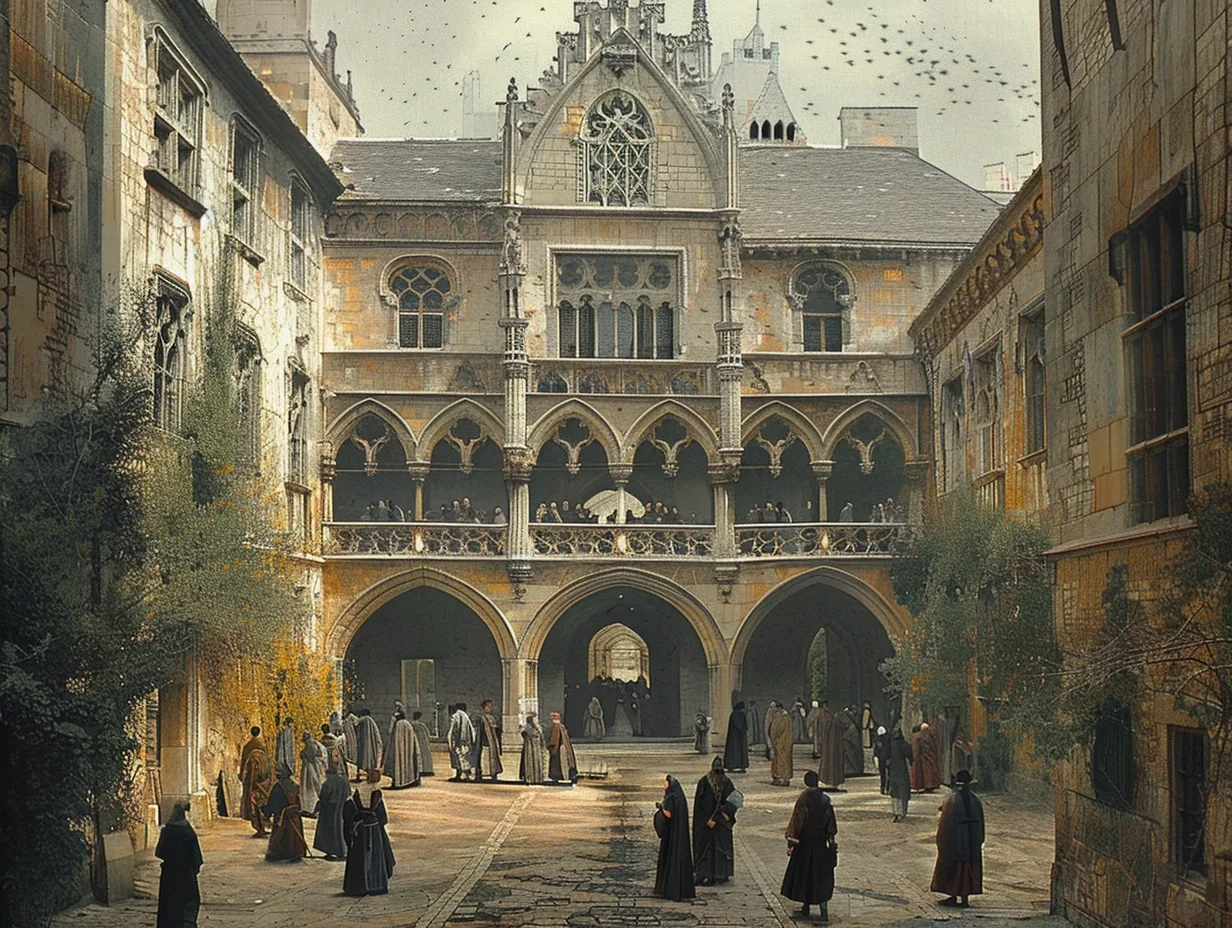
One of the most famous lecturers at the university was a man named Albertus Magnus (c. 1200-1280), who came from what is today Germany. Over the years his name was distorted, and from “Albert” it became “Maubert,” which is why a small square in the Latin Quarter is called Place Maubert today. There you can find one of the best cheese shops in Paris (Laurent Dubois) and a bakery that makes wonderful croissants (according to foreign reviews), called Maison d’Isabelle (somehow, on every trip, I mean to go there, and on every trip, I forget to).
The university reached the height of its influence at the start of the Hundred Years’ War, but its standing then began to erode. The reason was that it supported the English, who even conquered Paris and ruled it for a time, and the kings of France never forgot it.
That’s the reason King Francis I (r. 1515-1547) decided to found a rival institution in 1530 called the Collège de France. There, students studied not only Latin but also French, and even Hebrew! Alongside religious studies, students could also study secular subjects in the spirit of the Italian Renaissance, which the king admired so much.
From this institution, where tuition was free (and still is today), came some of France’s greatest scholars, including the physicist André-Marie Ampère (1775-1836) and the man who deciphered hieroglyphics, Jean-François Champollion (1790-1832), whom you can read about in this article.
About a century later, during the reign of King Louis XIII (r. 1610-1643), yet another rival research institution was founded: the botanical gardens, which still stand today on the eastern edge of the 5th arrondissement. The goal of the gardens was to study the medicinal properties of various plants, and one of the institution’s first directors was none other than Dr. Fagon (1638-1718), whose “medicine” managed to wipe out nearly the entire family of Louis XIV.
The University Leaves Paris
The French Revolution destroyed the monasteries, which, as mentioned, formed the foundation from which the university had grown. But the Revolution also created a new kind of institution of higher learning called the “grandes écoles,” where France’s elite still studies today.
The most famous of the grandes écoles is the École normale supérieure, founded in 1794 to train teachers. During the 20th century it became a place where future leaders are trained (a good number of French presidents, politicians and top civil servants have studied there, alongside famous intellectuals such as Jean-Paul Sartre (1905-1980)).
The second famous grande école was founded by Napoleon and is called the École Polytechnique, with the goal of training the next generation of technical officers and engineers. This school, built on the ruins of the Collège de Navarre, produced quite a few famous scientists, including the physicist Ampère, the mathematician Gaspard Monge (1746-1818), and even one president of France, Valéry Giscard d’Estaing (1926-2020).

These institutions continued operating alongside the university’s various faculties within Paris itself, until 1968, when the famous student revolt broke out. I won’t go into the causes and course of the revolt here, since that alone deserves its own article, but after months of street fighting and unrest, during which Charles de Gaulle (1890-1970) fled France, the revolt finally settled down.
The revolt had two main effects on Paris itself. First, the cobblestones that had paved much of its streets were replaced by the city with asphalt, to keep students from ever again prying up the stones and throwing them at police officers (as they had done during the revolt).
The second effect was the decision to move much of the Sorbonne’s faculties out of Paris entirely, to fairly unattractive campuses in the suburbs. Along with these faculties, the École Polytechnique also moved during the 1970s to the suburb of Palaiseau, southwest of Paris.
At the same time, the Latin Quarter went through gentrification and became a highly desirable neighborhood. Gone were the days when Place Maubert was known, according to the famous Renaissance figure Desiderius Erasmus (1468-1536), as the sewer pit of Paris.

Gone, too, were the days when Rue Mouffetard was known as a neighborhood where people like the writer George Orwell (1903-1950) lived in grinding poverty, and when gangs of “Apaches” roamed Place de la Contrescarpe, ready to strangle or stab you for a few francs (and here you thought today’s Paris was dangerous).
In place of all that, the Latin Quarter became home to intellectuals and politicians (President François Mitterrand (1916-1996) had a house on Rue Bièvre), who live both in the Haussmannian buildings built in the 19th century and in much older buildings they renovated themselves. This gentrification, which brought economic, culinary and cultural growth, turned the Latin Quarter into one of the most desirable neighborhoods in Paris, and therefore also one of the most expensive.
Today, the Latin Quarter has become one of the neighborhoods most sought after by tourists, both because of its central location and because of the sheer number of cafés and places to go out. If you’ve decided to stay there, or at least to explore the area, I recommend checking out the Latin Quarter travel guide page, where you’ll find all the practical information you need.
Related reading
