

People come to Marseille to see Notre-Dame de la Garde, the basilica towering over the city, Cosquer Méditerranée, a replica of a prehistoric cave at the museum by the Old Port, and… Maison Empereur, a historic shop.
Maison Empereur is well known to every resident of Marseille, but it’s still a secret to outsiders. This article will reveal the wonders of this unique place. Walk through its doors and you step into another world, an organized bazaar where a neat jumble of everyday objects sits alongside rare and unusual ones, from floor to ceiling, catching your eye. Products cover the walls, crowd the shelves, fill display cabinets, squeeze into nooks, hang from the ceiling and spill toward the floor. It’s a flea market where everything is brand new. This is the general store of the oldest house in France.
The History of the Shop
In the late 18th century, the first and second generations of the Empereur family were craftsmen. The first generation made nails in their workshop on Place de la Bourse, and the second made knives and sharp tools. In 1827, François Empereur, the third generation, bought the first shop on Place de la Bourse, next to his ancestors’ workshop. That’s how the family moved into retail. In 1831, François Empereur rented the current shop in the Noailles neighborhood, known as “the belly of Marseille” for its daily market. The shop has never stopped growing and expanding since.
Those were different times. Goods arrived by horse-drawn carriage. But the past has been preserved within the shop’s walls: the floor is old and worn smooth, the stone walls are exposed, the ceilings are vaulted. The shop, with its abundance of space spread today over fourteen hundred square meters, carries visitors back in time through its maze of rooms.
The Store’s Manager, Laurence Renaux Empereur: Growing While Preserving
The shop’s current manager is Laurence Renaux Empereur, the seventh generation of the family and the first woman to lead the business. When Laurence’s father died more than twenty years ago, in 2003, she took the reins at age 35. Since then, this active entrepreneur has enjoyed making her mark on the business and hopes to keep going for a long time before passing the torch to the next generation. They’ll have to wait.
As soon as she became manager, Laurence moved quickly to buy the property, which had been rented until then, to make sure it could never be taken away from her. At the same time, she renovated the façades in harmony with the original style, reorganized the departments, and expanded the shop without betraying its heritage.
“We had 12 employees on 600 square meters when I took over; today we have 34 on 1,400 square meters,” Laurence sums up. She is a woman who has succeeded not only in her professional life but in her family life as well. Laurence is a mother of three, and her oldest son, Martin, is already learning the shop’s secrets from a veteran employee who is about to retire. His little sister, Lili, is waiting for her turn to keep writing the family story, and Tom, the middle child, has shown interest too.
Luck is on Laurence’s side. An agent from overseas came to the shop and offered to market the “Empereur” brand in his country. So the younger generation is set to take on America, but “in the spirit of the existing shop,” Laurence stresses. “They can build on what already exists, grow it and expand it, but if they want to start a revolution, they’ll have to open their own shop.” Words to live by.
The Empereur Family’s Philosophy of Life
Laurence was not pampered by her family. She started working in the shop at age 16. After school, she would sort merchandise, check drawers, go over accounts, and stick on labels. Back then, she didn’t much like the male-dominated world of the dusty shop, run under the authority of earlier generations whose outlook was different from her own. The young woman shed plenty of tears over the strict treatment she got from her father and uncle, who, as the boss’s daughter, demanded more of her than of the hired staff.
Things are different today. Laurence is free to do as she pleases, but she respects the family’s values and so preserves the soul of the place. She even thanks her youth’s harsh discipline. From her father she inherited her entrepreneurial instinct, and from her mother the talent for building relationships with customers. It’s a family with a philosophy of life rooted in hard work, diligence and action.
And all of it works, thrives, passes from generation to generation and bears fruit. Each generation has left its mark and built its own corner of the world. “These old walls, which have always been here, speak to me, support me, carry me. I feel good among them,” Laurence says.
The veteran employee who is teaching Laurence’s oldest son the secrets of the trade is retiring after forty-two years on the job. He joined the business at sixteen and has climbed the ranks ever since. Laurence leads a team of thirty people, each of whom spends ten, twenty, thirty years in the shop, their second home (very few leave after a short time).
This isn’t a shop like any other; the family-run space makes you want to linger. Between Laurence and her staff there is a story of friendship, and even more than that. “I love them all,” she says. “Each one of them was chosen with the heart.” Every department has its own person in charge, someone who knows how to advise customers and make them feel welcome. On my last visit to the shop, I heard several of them speaking fluent English with tourists from abroad.
I should mention, though, that I recently came across (after reading Laurence’s words), to my great surprise and deep disappointment, an article on the site le Ravi (dedicated to the region, which stopped publishing a few years ago) laying out complaints from employees about disgraceful working conditions and very low pay. Since I don’t know the truth of who is right here, Laurence Renaux at Maison Empereur or the employees who are complaining, I’ll leave the question open.
A Temple of Past and Present Craftsmanship
Pieces from the past and pieces from today: across all its floors, the shop holds more than fifty thousand products. No new product that comes into the shop pushes out another. Everything stays, and that is why the place has grown and expanded. In 2012, Laurence bought the dance halls on the building’s first floor and converted them to their new purpose. Every space has its role. People come to buy something useful or to find a rare gift.
Professional equipment, knives, pots, pans, are on the ground floor; delicate and fragile items like plates and other tableware, tablecloths, fabrics and toys (new, but recreating the styles of the past: Victorian houses, a 1923 streetcar, a fire truck, a mechanical dog, a pirate princess costume) are upstairs. A dozen departments, a dozen worlds. Each generation added its own contribution: one the garden department, another the weapons department (Laurence’s parents), and Laurence herself planted the lifestyle department: tablecloths, tableware, lamps, design.
The range is impressive: do you want sturdy cotton work pants that soften with time, following the best French tradition? Natural leather gaiters from the Camargue? A light, warm scarf made of mohair wool from a Spanish workshop? A traditional wide-brimmed Provençal straw hat that will protect you from the sun and won’t fly off in the wind thanks to its tie ribbons? A poker set in a walnut wood case? A leather travel sewing kit? An aluminum ironing board with a wooden handle? A nonstick crêpe pan? A retro-futuristic stainless steel oil bottle with a perfect pouring spout and a comfortable handle, available in four sizes? A glass pitcher for hot drinks? A sugar bowl? A sauce boat? A caviar dish? A luxury Champagne bottle opener? A stainless steel mango slicer? A small, sturdy manual sausage slicer with a base that grips the table with four suction cups for complete stability while slicing? A beechwood mustard spoon? A potato ricer? A silicone mold for making chocolate sardines? An insulated ice bucket? A bag for safely storing onions and garlic? Wooden clothespins for attaching plants to stakes? A garden bird feeder where you can, for instance, skewer an apple? A fly-swatter stick, or maybe for… more intimate use? A natural, extra-soft feather brush for dusting delicate objects? A curtain of blue beechwood beads, the color of the sky, that blocks heat, insects and curious looks, made in the Jura mountains, for hanging on doors?

A beechwood bead curtain, rot-resistant wood with stainless steel rings connecting its strands. Source: Maison Empereur website
Do you want a woven kitchen towel in natural colors, vintage style, made in northern France? An enamel teapot? Stick-on labels for jam jars, reminiscent of childhood afternoon snacks? Refreshing lavender-blossom cologne? Eau de toilette from the Camargue, chestnut scented, a symbol of generosity, strength and simplicity, values the Empereur family has upheld for two hundred years? A more exotic eau de toilette, “Russian Leather”? A stylish nail brush made of acetate and wild boar bristle? A light laundry spray with a delicate lemon scent that freshens clothes and fabrics, called “Water for the Modest,” made especially for Maison Empereur as a tribute to the family’s values? Rare items or everyday ones, chances are you’ll find what you’re looking for.

The spray bottle, “Water for the Modest,” wrapped in a cotton sleeve stamped with the shop’s logo. Source: Maison Empereur website
This lovely approach, staying loyal to the past and never pushing out the old for the new, lets Maison Empereur keep faithfully serving its professional customers while reaching out to new ones. That’s how a space for traditional clothing and accessories came about: a pure sheep’s wool shepherd’s coat, a shepherd’s bag made on the Larzac plateau (famous for its goats and cheeses), a horse trader’s smock, a striped shirt from Brittany, padded slippers… a tribute to tradition and expertise.
Historic Manufacturers
Laurence does business with two hundred historic manufacturers, mostly in France but also abroad. Every day she spends hours searching for authentic products. For example, she travels to Salon-de-Provence to check an order at a family factory where the daughters, the fifth generation, make Marseille soap the same way their ancestors did in the 19th century. The daughters are thrilled that their soaps are sold at Maison Empereur, a great honor and a mark of quality.
The soaps are made at the family factory, Rampal Latour, from pure ingredients, following the traditional method, which was carefully refined over three years to meet today’s environmental standards. At the heart of the soap, three percent glycerin is preserved, like a moisturizing cream, produced naturally during the manufacturing process.
Marseille soap contains no more than six ingredients. Beware of a “long” ingredient list, the factory’s management warns as a tip for spotting fakes: make sure to check for the following list: vegetable oils (olive, coconut, palm) at least 72 percent, water, soda, salt.

Marseille soap made with olive oil. Source: Rampal Latour website
The factory opens its doors for free tours all year round, in a warm and friendly atmosphere, at its two sites: the historic site built in 1907 and the modern site built in 2016. Guided by family members, you’ll discover the craft that began there in 1828, learn the secrets of the soap maker’s trade over the years, and step into a unique world that weaves together authenticity, respect for people and respect for nature.
Breathe in the delicate scents of lavender, rose, verbena, fig, peach, grapefruit, orange blossom, almond, honey and patchouli, and learn how pure laundry soap flakes are made and dried, gentle on fabric fibers and on skin. The historic saponification vats, still in use today, the legendary black soap, shower gel, liquid soap, shampoo: an extraordinary world that blends tradition and innovation, timeless.
Orders at this link or by phone at 93 60 71 70 09.
Another example of a historic manufacturer whose excellent, renowned products you’ll find on the shelves of Maison Empereur is Peugeot. Long before it made cars, starting in 1810 it sold grain, coffee, salt and pepper mills made of porcelain, metal, Bakelite and wood.
The Peugeot brothers forged ahead with high-quality, innovative developments that led to a unique mechanism for grinding spices, coffee, sugar, salt, pepper, nutmeg and oats, guaranteed for life. While coffee beans were traditionally crushed or heated, Peugeot’s new mill cut them into thin slices to preserve all their aroma.
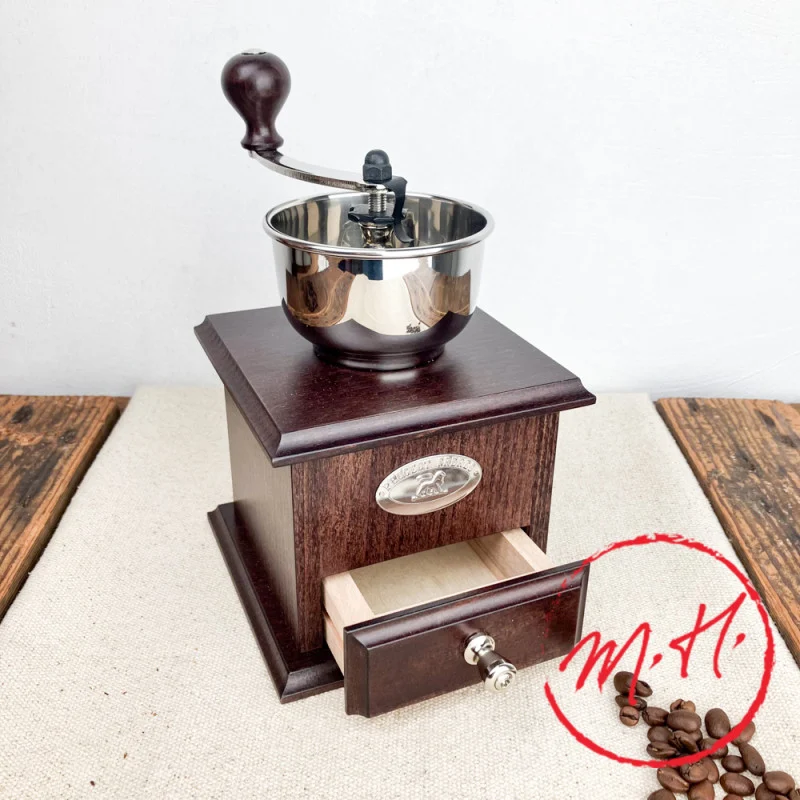
Peugeot coffee mill, Brazil. Source: Maison Empereur website
A culture of excellence, precision, technology, design and variety (a wide choice of materials, colors, sizes, shapes) proves itself in the kitchens of great chefs, all equipped with Peugeot mills. The link between past and present is embodied in the modern remake of the first pepper mill model the Peugeot brothers introduced in 1874. This silver-plated masterpiece, which once graced the most prestigious banquet tables of its time, is now offered for sale for the pleasure of history lovers and fans of elegant products.

Peugeot pepper mill, 1874, model Z. Source: Maison Empereur website
Do you have a taste for original jewelry? What do you think of this bracelet, made of gilded copper, decorated with delicately carved floral motifs framing a royal peacock? The peacock embodies the song of nature. A symbol of immortality, beauty and renewal, the graceful bird is an allegory rich in meaning. The bracelet’s open, adjustable design wraps gracefully around the wrist. This exceptional piece, made in France by a historic manufacturer, draws its inspiration from a two-hundred-year-old collection of prints that embody a unique art form.
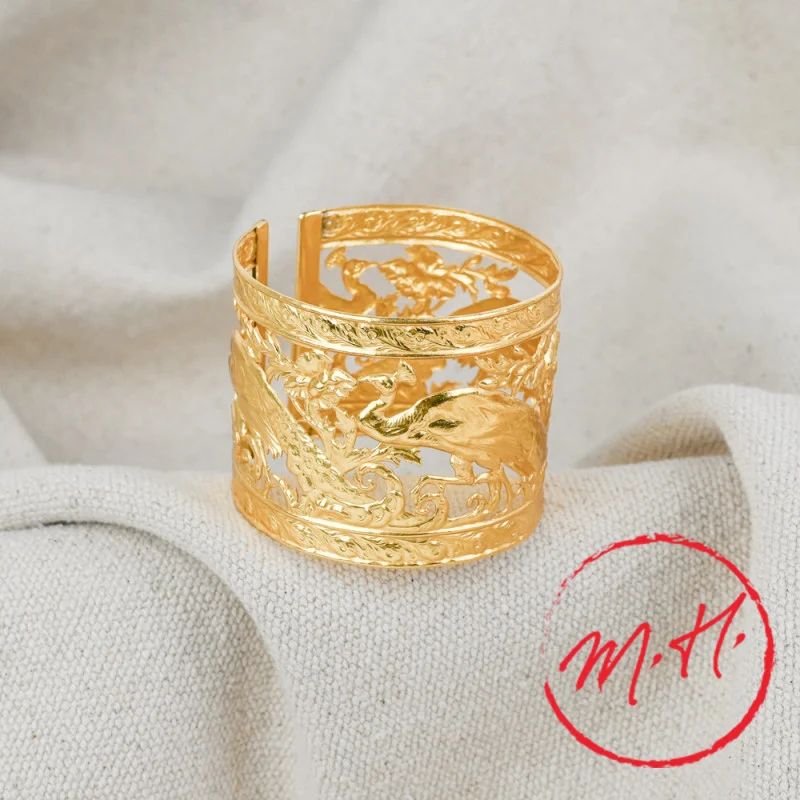
Wide bracelet, gilded peacock. Source: Maison Empereur website
On the top floor you’ll also find the necklace typical of Marseille, the Marseille necklace (le collier marseillais). Its fascinating story began in the 18th century, when the market women decorated themselves with necklaces of gold beads. The length of the necklace and the size of the beads indicated how much money they had made. These were the wives of fishermen, who sold the fish their husbands caught at the market in the Old Port. The husbands would come back with their catch, go clean the boat, and then go have some fun. The wives would set up a stall at the market with scales to sell the fish.
Every time, the women would buy a bead, depending on how good the catch was. This way they kept their husbands from spending all the money on wine, gambling and who knows what else. And more importantly, they set up a kind of savings account, not at a bank but on a cotton ribbon. The gold beads also served as a sort of life insurance. A woman widowed by her fisherman husband risked being thrown out of her home by her husband’s family if she had no children. With the gold beads, she could find herself another place to live. It really was a savings account: the woman bought beads when she had money and sold them in times of trouble.
The cotton ribbon was later replaced by a flexible gold cord, and what makes this necklace unique is that the beads are not fixed in place but movable, you can slide them along. Starting in the 19th century, the idea and the custom spread to the middle class as well. With the birth of every daughter, the family would open a “list” at the jewelry shop, and beads were added year after year. At every occasion, the grandfather, the grandmother, the godfather, the godmother, the uncle, the aunt, would buy another bead for the lucky girl. When she turned 16, she received the necklace, a sign that she had come of age. Here the necklace wasn’t a “savings account” but a sign of the family’s wealth and also a mark of identity: I am from Marseille. A necklace typical of Marseille. It’s important that the beads move; otherwise it isn’t a real Marseille necklace. The beads are hollow. The necklace is part of the traditional Marseille dress.
The necklace later evolved into bracelets and earrings too, but the traditional piece of jewelry has remained the necklace. On the top floor you’ll also find bracelets, rings and earrings with the motif of the “Camargue cross,” la croix de Camargue, which embodies the spirit and Christian faith of that region.
On the wall hangs a Provençal bench called a radassier, made of three straw chairs joined together. In the shop, the bench hangs on the wall so no one sits on it, but in Provençal homes it takes pride of place next to the fireplace. Provence, France, and abroad too. It’s all here, in this wonderful shop.
Because Maison Empereur represents not only French expertise but foreign excellence as well. What do you say to this elegant glass, decorated with blue leaves, a glass vessel for storing and serving candy, blown by hand at a two-hundred-year-old workshop in Portugal.

Glass vessel for storing and serving candy. Source: Maison Empereur website
Most of the products come from France’s various regions, but the glass candy jars, as we’ve seen, as well as the flat earthenware plates in raw, brown or green tones, come from Portugal; the pandoro mold, for the sweet yeast bread that originated in Verona, made of tin-coated sheet metal, comes from Italy; the porcelain serving board, perfect for tapas, from Spain; the black cast-iron spring-loaded nutcracker, from England; the wooden clogs, from Sweden; the colorful paper bookmarks for children (Napoleon, a clown, a peasant woman…), from Germany.

Paper bookmarks for children. Source: Maison Empereur website
And would you like to wrap yourself in a pure wool vest or cardigan, fine and comfortable, made at a hundred-year-old Scottish mill, originally for fishermen? 153 euros for the vest, 189 for the cardigan, but the quality and softness are exceptional.
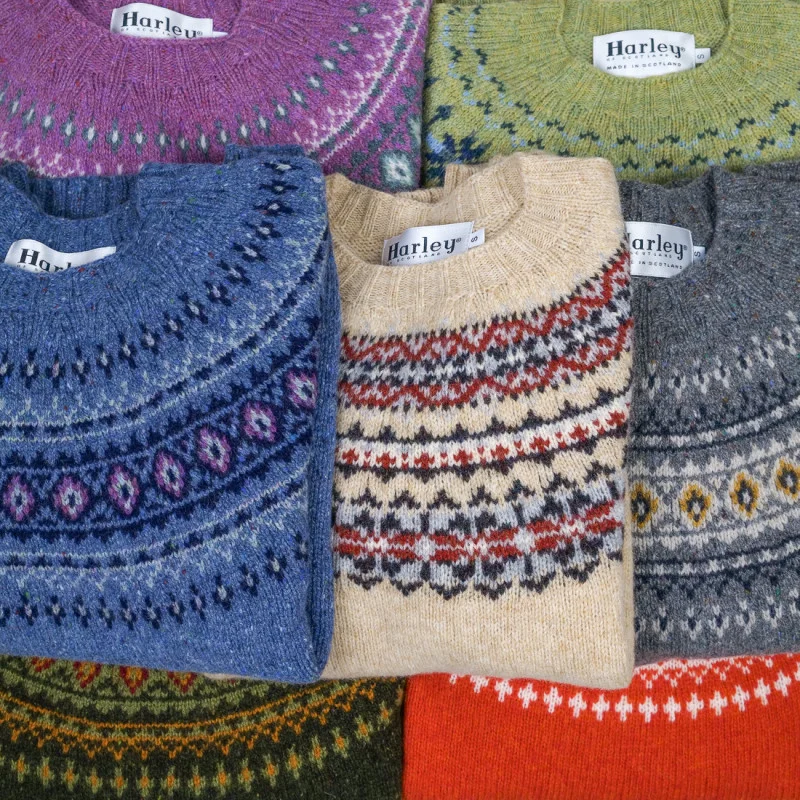
Scottish fishermen’s vests. Source: Maison Empereur website
Fair Trade, Friendly Service, Educational Explanations, Wishes Fulfilled
Laurence is proud of her warm, welcoming shop, familiar and well known to every resident of Marseille. Some have been coming since childhood into old age, bringing their grandchildren just as their own grandparents once brought them. On the ground floor, as in other spots around the shop, there’s a chair, one of the shop’s symbols, that connects the staff with the customers. Laurence takes the time to sit down next to a customer, talk, explain, advise. She knows how to do things, and she knows how to simply be there. How important that homey atmosphere is, where everyone is welcomed warmly, every customer, regardless of age or budget, where the customer’s wishes are discussed and respected.
Customers wander through the maze of the place, enchanted, discovering products from their childhood that can’t be found anywhere else. Adults wander around with a child’s eyes, traveling back a few decades, while children look on in wonder, moved not only by the toys but by displays they’ve never seen before.
Laurence wants to keep fulfilling the wishes of both adults and children, as much as she can. In the small museum above the café, you can see the “Wish Table,” covered with cards bearing requests, impressions and opinions. Even today, just as back then, customers tell the sales staff what item they long for, and the staff note it down and pass it along to management.
The museum space is also Laurence’s contribution, and through it she wants to convey to customers “the value of things.” The two hundred French manufacturers (we’ve mentioned two of them here, Rampal Latour and Peugeot) whose products are sold in the shop are invited to display their creations in this space. And visitors to the shop are welcome to sit down and leaf through books and pamphlets.
Laurence often looks through a book kept on her desk, always within reach, “the shop’s Bible,” in which her father and grandfather recorded every product. Everything customers need to know is written in the book that Laurence always saw on her father’s and grandfather’s desks.
Another historical record is the shop’s periodical, stamped with its coat of arms: three wolves standing guard over it, a crown, the symbol of Marseille, and an olive branch, a symbol of abundance, prosperity and long life.
So why not make these one-of-a-kind historical records accessible in a book that anyone could buy? The shop’s Bible and the periodical are unique copies that not everyone can leaf through, but a book that recreates their contents, along with much more, printed in plenty of copies to meet demand, would be a wonderful idea.
The First Book of Maison Empereur
Another one of Laurence’s projects came to fruition on September 2, 2023. It was a special Saturday, when the book launched with today’s staff, past staff, and of course, the family: the sixth, seventh, and eighth generations. Everyone came and stayed all day to talk, reminisce, laugh, tell stories, answer questions, and write dedications for the readers who bought the book.
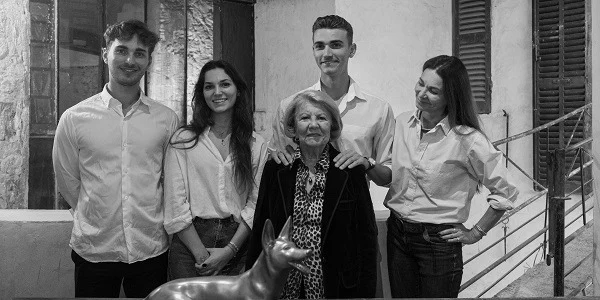
Laurence and her three children surround the grandmother and mother. Below is the wolf, the family’s emblem. Source: the Maison Empereur website.
The first book of Maison Empereur, 258 bound pages, tells the history of the store, of the family that runs it, of the manufacturers that supply its goods, and of the tens of thousands of items and products offered within its walls. A whole archive of documents and manuscripts was pulled out of boxes and drawers to document the book and enrich it with thousands of anecdotes.
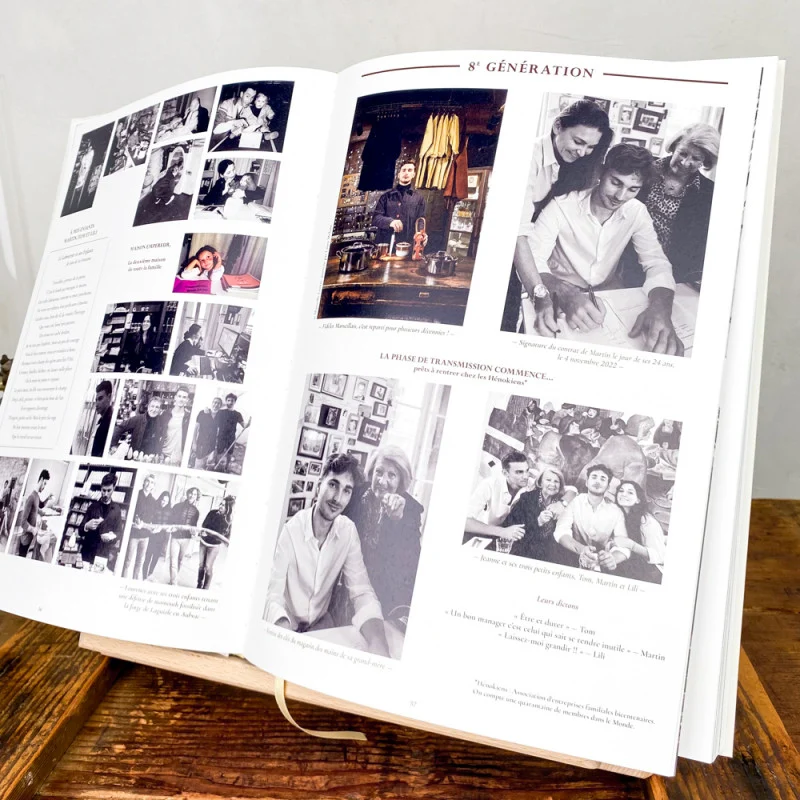
Texts and photos in the esteemed family’s first book. Source: the Maison Empereur website.
The idea for the book was born ahead of the store’s 300th anniversary. A Provençal, human family story that has gone on for so many years. Laurence wanted to celebrate this rare longevity and thank the store’s loyal customers with a written record, preserving and passing on the traditions, the expertise, the legacy. Learning from the lessons of the forebears.
Family members opened drawers, dug through boxes, pored over manuscripts, and published a rich book whose number of anecdotes is no smaller than the number of products on the shelves. Because the book is like the store itself: a cheerful, surprising maze, studded with stories and archival documents just like the objects that fill it from floor to ceiling, and the framed old photographs hanging on its walls. Tips and tricks, like how to avoid moths or muscle cramps, and for gastronomy lovers, recipes like soups of all kinds and stuffed vegetables straight from the region’s purest traditions.
Through the eight generations of the Empereur family, through the dozen worlds and departments that make up the store, the reader discovers the love for the manufacturers, the historic suppliers, the people who run them, and the products that come out of their hands.
A book for the people of Marseille, for those who draw inspiration from it, for the knowledgeable, for the curious, for the newcomers. A love story spanning generations, Provençal and French. And now, international too.
A virtual store, yes, but second place
In 2012, Laurence reached out to Google’s digital workshop to set up a website for the store. The connection between the store’s team and the young tech people worked out very well. Every year, new customers join thanks to the store’s website, some of them from far-off countries, such as Australia and Japan.
This is also how tourists who visited the store while in Marseille stay in touch. But the virtual store will never replace the customers who come in and choose their purchases according to their own wishes and preferences. Without customers, “who pull us upward and scold us kindly when needed,” says Laurence, “the store would not exist.”
Laurence’s words are surprising in today’s context: “The further back I go, the better I feel. Modernism demands performance, and what I know how to do is bring joy to customers, while in many other stores they’re maneuvered for the sake of profitability. I’m interested in the customers. We’re a real home here, not a business.”
A night out of time
In 2018, Laurence bought a 90-square-meter apartment on the second floor of the historic building where the store is located and turned it into a guesthouse-museum, devoted to the family’s history. It’s another magical place, the likes of which you won’t find anywhere else in the world.
The apartment, which sleeps two, invites its guests to live in the company of seven generations and immerse themselves in their world. The store’s magazine is available for reading the family’s fascinating stories.
The apartment is furnished in 19th-century style but is comfortable enough, displaying on its dark walls photographs of the store from past years, portraits of the family’s forebears, and decorations made of iron and wood tools. It’s a quiet, calm journey through time in the heart of the lively, bubbling Marseille.
Laurence bought furniture, objects, and accessories at the flea market, but much of it is family property, like, for example, her grandfather’s toolbox, the anvil that is one of the store’s emblems, and other tools she always saw in her forebears’ workshop. These family objects recall, on one hand, that the store supplied the needs of the city’s builders, and on the other, they speak to the photos on the wall. The stuffed pheasant in the kitchen, a symbol of hunting (Laurence’s parents founded the store’s weapons department), looks, for example, like a picture set against the brown wall.
The main thing, Laurence emphasizes, isn’t design for design’s sake but the stories. Archives and albums were moved from Laurence’s workshop to the apartment, so guests can also immerse themselves in reading without forgetting the Maison Empereur magazine, which is available to them.
From the apartment’s page on the Maison Empereur website or from its page on Airbnb, or from the bottom of the page I’ve brought here, you can look at photos and book a stay, if you’re after a rare, out-of-this-world kind of hospitality. Most reviews highlight the enchanting uniqueness of the spacious apartment, with no television and no internet, oil lamps, fragrant linen sheets, an original design found nowhere else in the world, and the hosts’ warmth and devotion.
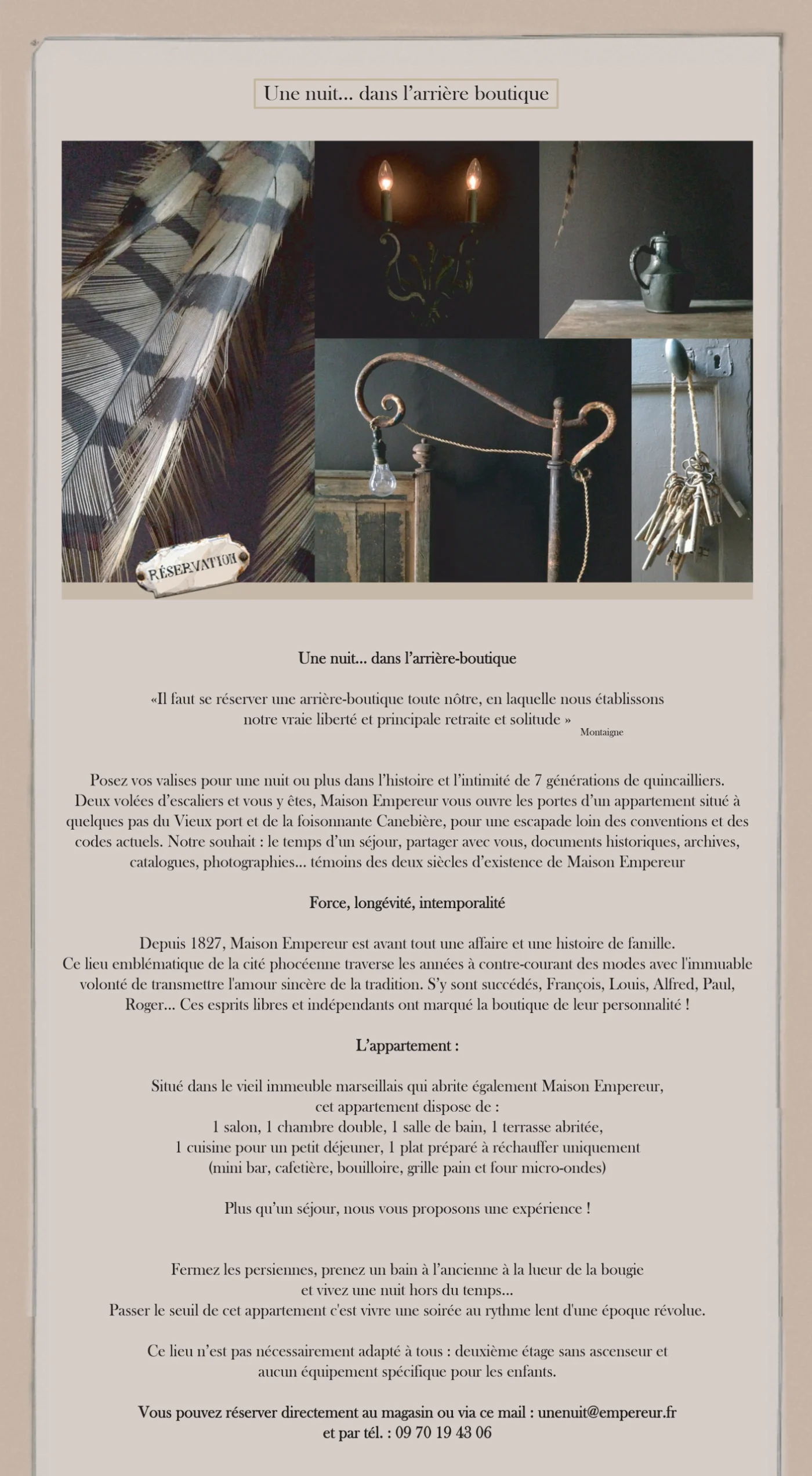
That said, keep in mind, the apartment is on the second floor with no elevator, the kitchen isn’t set up for cooking, and the zinc and wood bathtub requires a bit of agility to climb into. The cost per night is around 200 euros for two people, including breakfast on the terrace overflowing with greenery. You can stay for more than one night. For exact prices, contact the store or the booking site.
There’s an interesting video below, with a tour of the apartment at the end. I highly recommend watching the whole thing.
Visiting the store is already a journey through time
Let’s go back to the start of this article to wrap up. Authenticity, admiration, and enchantment take hold of anyone who steps through the entrance of this special store, which once supplied equipment to Marseille’s builders and reflects the city’s popular character over the past two hundred years. As joyful and cheerful as a Provençal market, as deep as a family memory.
Every product, every object, was chosen with love by Laurence because it touches her, stirs feelings in her, brings up a story. It feels as if the soul of Provence is stored in the floors of this complex, its traditional art of living. Clothes, hats, bed linens, distinctive jewelry, soaps, perfumes, santons (traditional figurines from the Nativity scene), old-fashioned toys, gifts, serving and kitchen items, but also ordinary objects: knives, handles, locks, cleaning and pest-control supplies.
Objects, things that the soul desires and longs for. And Laurence longs to delight her guests, as we’ve already seen, to bring them satisfaction. That’s why she doesn’t hesitate to place, here and there on the shelves, old-fashioned products that not many people want, what’s called in French slang “rossignols” (“nightingales”).
Just as the nightingale sings from the treetops, these rare objects, from another era, sit on the top shelf, and to reach them you need to climb a step stool. But for some visitors, these unloved “nightingales” spark something, stirring up a nostalgic memory or a hidden association. For the sake of that spark in a customer’s eye, Laurence brings them into the store.
In her own words: “Do you know what a rossignol is? I’m not talking about the bird. A rossignol, in trade language, is an object that’s gone out of fashion, that’s hard to sell, that gathers dust at the back of a shelf.
But we’re proud of our rossignols, we value them, we look for them! Why, you might wonder? Because who cares if the object lingers, unsold, if it lights a spark of joy and excitement in the eyes of a visitor who never thought they’d get to see it. No, the object hasn’t disappeared!
Our two-hundred-year-old home allows itself the luxury and the space for the sake of that spark in someone’s eyes, no matter if one product sells after a day while another lingers for three months. Nothing can stand against the charm of a rossignol!”
Related reading