

Valletta was built after the Great Siege of Malta by the Ottomans in 1565, and it is one of the finest examples of Renaissance city planning anywhere. You’ll find grand palaces, beautiful churches (one of which, in my opinion, belongs in the top five of all Europe), stunning views over the harbor, and plenty of lesser-known but fascinating spots along the way.
In my opinion, Valletta deserves at least a full day, and if you want to see every single attraction, I’d set aside two days. To make sure you don’t miss a thing, I put together a walking itinerary that starts at the city gates and ends with a stunning view over Valletta’s main harbor.
Before we set out, let me give you a small tip that will upgrade the whole experience: learn a bit about the history of Valletta first. Knowing the history will give everything you see a broader context and help you understand what you’re experiencing there.
To save you some time, I did the work for you and put together an article that sums up the history of Valletta. Finished reading it? Great, let’s get going!
The walking route through Valletta
The Triton Fountain, a destroyed opera house, and a parliament building that deserved to be destroyed
We start at the entrance gate to Valletta, near the main bus station, from which you can reach almost anywhere in Malta cheaply. In the plaza facing the gate you’ll find the Triton Fountain, built by Vincent Ap
We start at the entrance gate to Valletta, near the main bus station, from which you can reach almost anywhere in Malta at a low cost. In the plaza facing the gate you’ll find the Triton Fountain, built by Vincent Apap (1909-2003) and Victor Anastasi (1913-1992) and inaugurated in 1959.
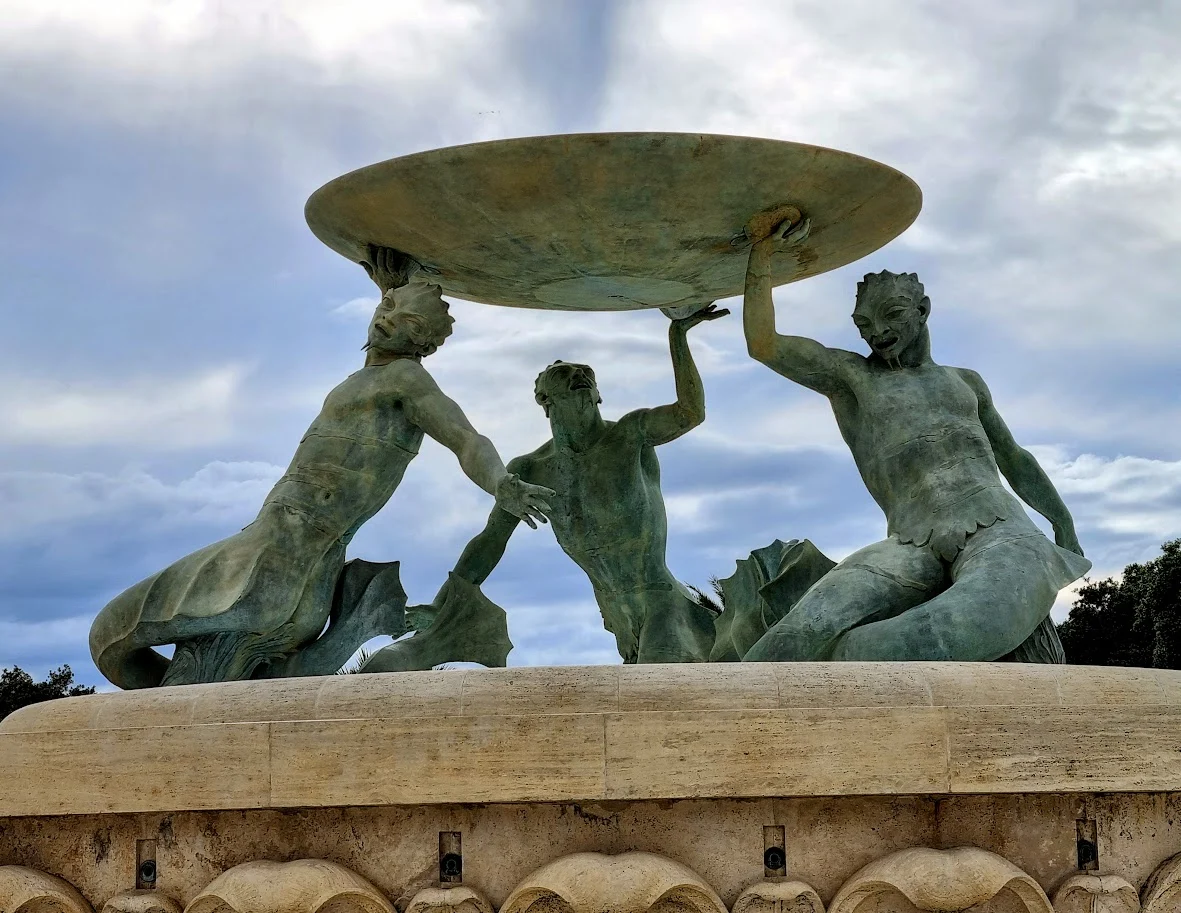
This fountain symbolizes the maritime past of Malta through the three Tritons holding up a water basin (which in 1978 suddenly collapsed, requiring major restoration).
Once you’ve finished admiring the bronze and concrete fountain, go ahead and enter the main gate of Valletta, taking in the thick, impenetrable walls that the Knights of Malta built as a lesson learned from the Great Siege of 1565 (you can read about it in the article on the history of Valletta).
On your right you’ll notice a modern, rather ugly brutalist structure. This is the Parliament House of Malta, built between 2011 and 2015 at a cost of about 90 million euros to Maltese taxpayers. The building was designed by an architect familiar to anyone who loves French architecture (for better or worse, depending on how much you love or hate modern architecture): I mean, of course, Renzo Piano, who also designed the Centre Pompidou in Paris.
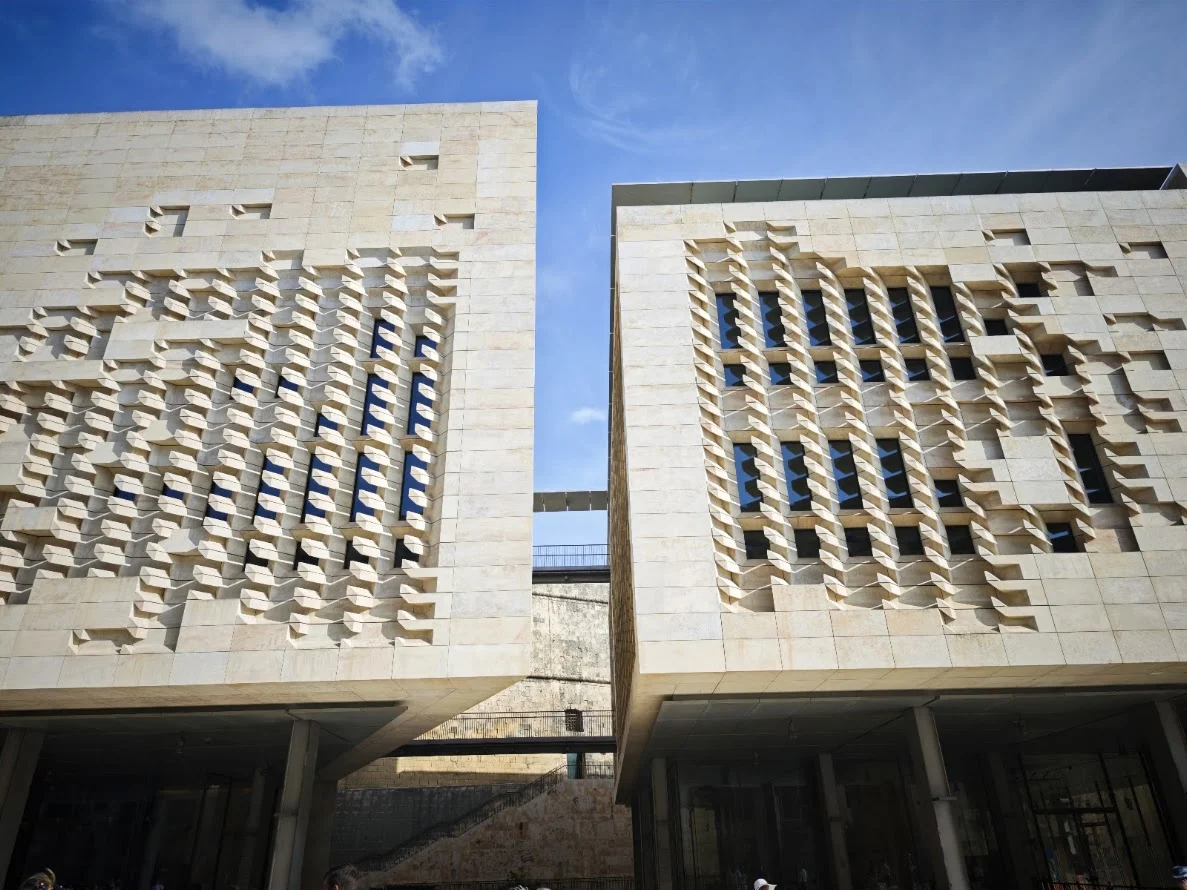
Still, you can say two good things about this building:
- There was no need to demolish historic buildings to construct it (that job had already been done by the Nazis, who bombed the area during World War II).
- Before it was built, parliament was housed in the palace of the Grand Master of the Knights of Malta, which I’ll get to later. Since the new parliament building opened, the palace has become a museum and opened to the public, which means you can visit it.
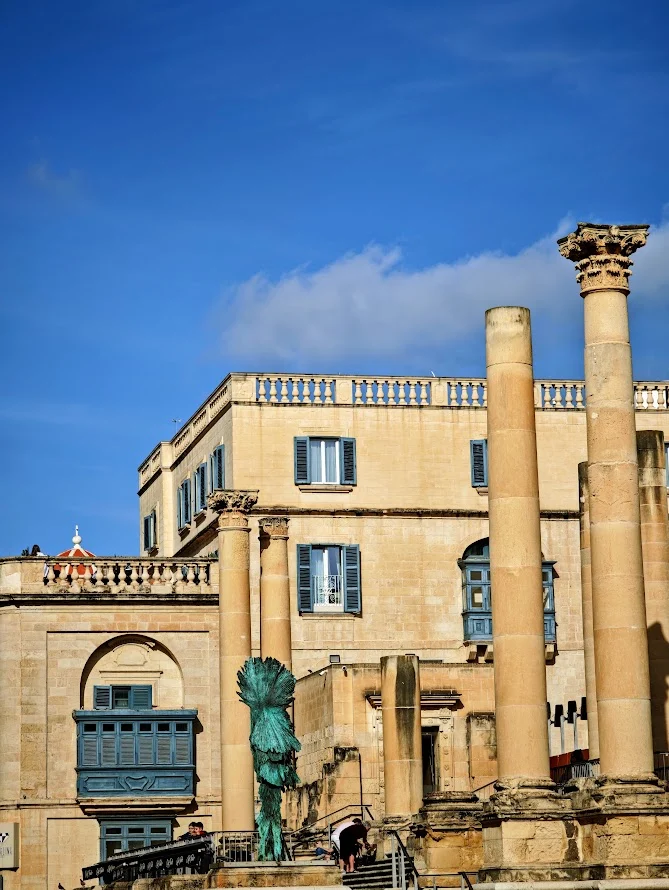
Continue a bit further along Republic Street, and you’ll see a structure that looks like a ruined Roman temple. Despite its appearance, it’s actually not that old: it’s the Royal Opera House of Malta, built between 1862 and 1866 by Edward Middleton Barry (1830-1880), who also designed London’s famous Covent Garden opera house.
This building was bombed by the Luftwaffe during World War II, and after the war there weren’t enough resources to rebuild it. Instead, it was decided to turn what remained of it into an open-air theater. If you’d like to know what’s playing there, you can check at this link.
One of the most beautiful cathedrals in Europe
Continue along Republic Street until you reach St. John’s Cathedral. Don’t let the rather unimpressive exterior fool you: this is one of the most beautiful churches in Europe, and a must-visit.
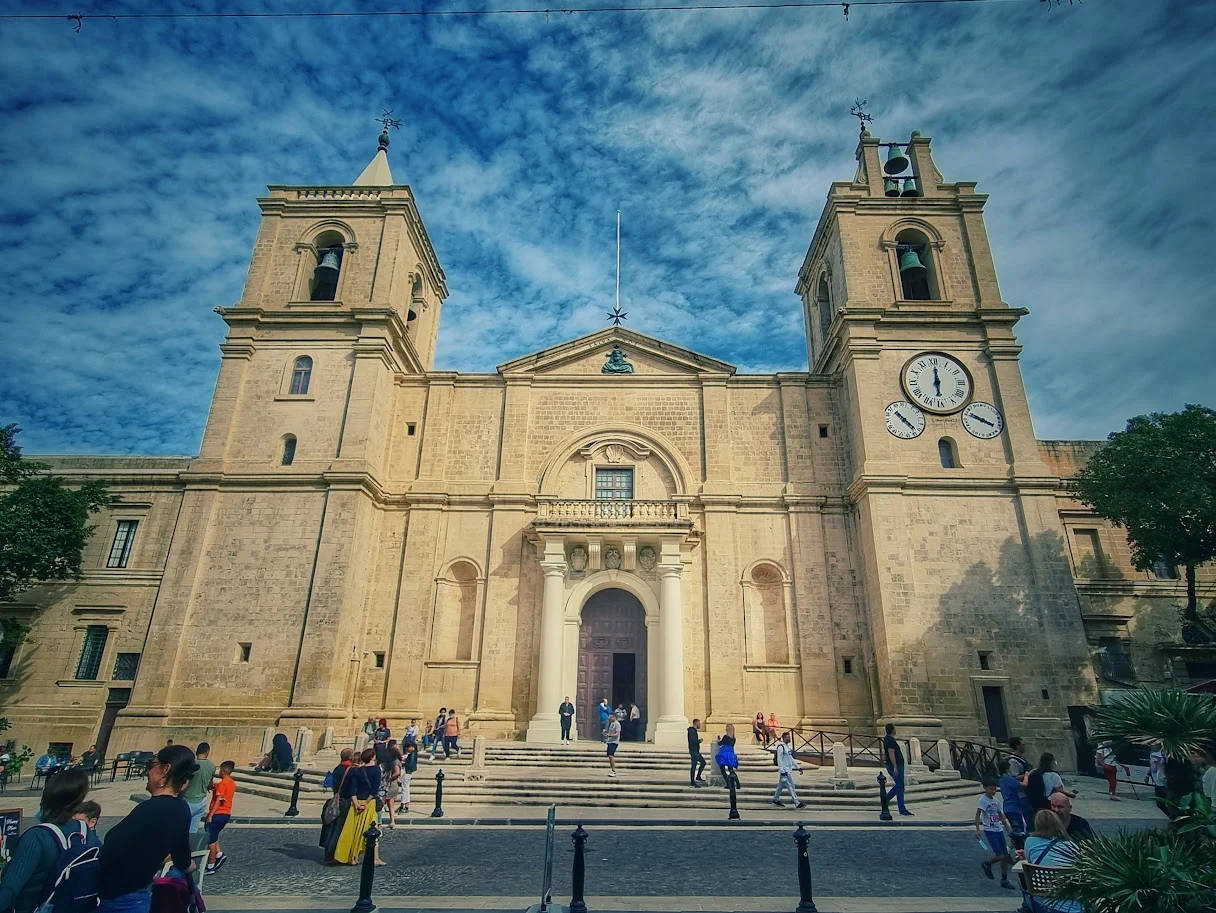
This church was built between 1573 and 1578 by the famous Maltese architect Girolamo Cassar (1520-1592) for the Knights of Malta. During the 17th century it was decorated by the renowned Neapolitan painter Mattia Preti (1613-1699), who is responsible for its stunning interior design.
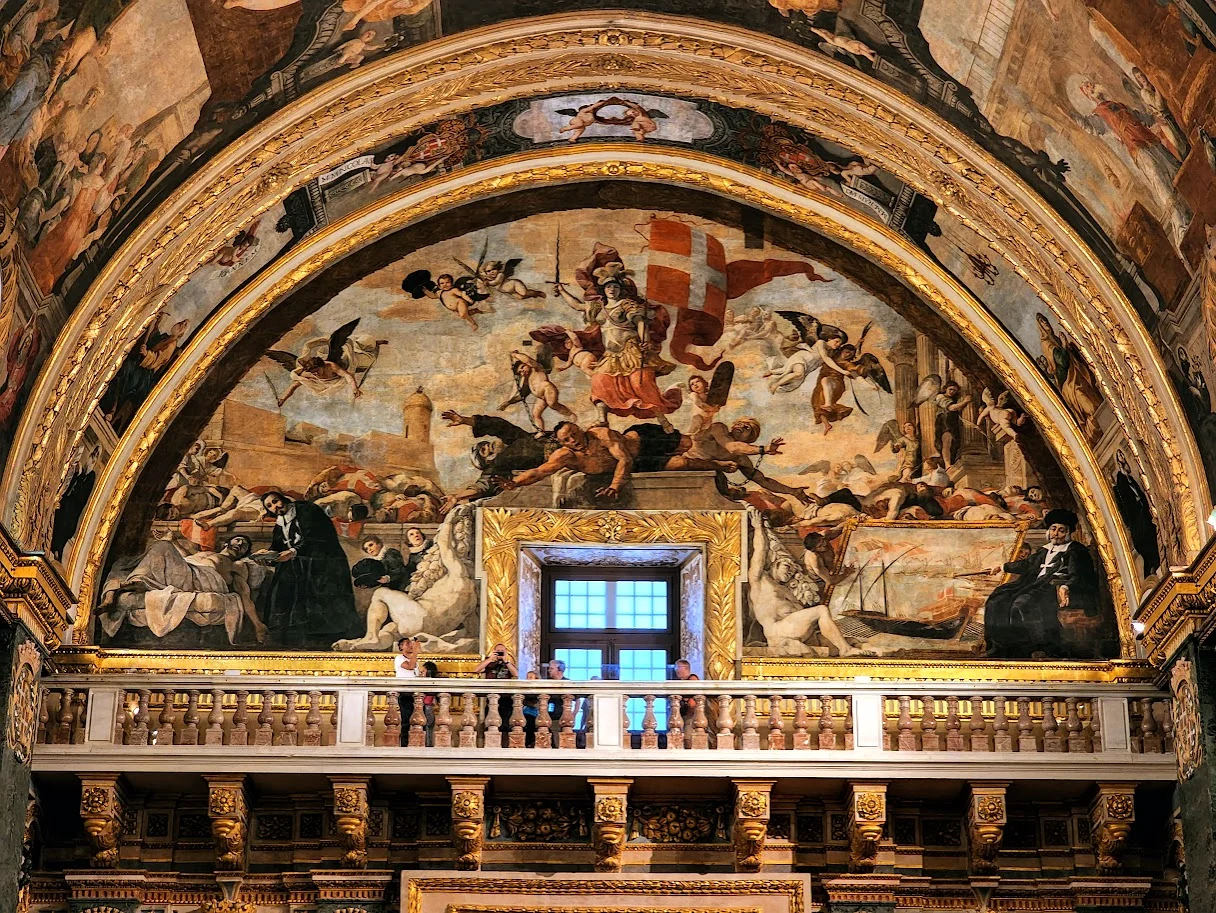
Take your time and wander among the chapels, each one dedicated to a different division of the Knights of Malta. Each chapel is more beautiful and ornate than the last, and your eyes won’t stop marveling at the splendor.
Those of you who love French culture will notice that the chapel belonging to the French division of the Order holds the grave of the brother of Louis Philippe, who reigned as king of France from 1830 to 1848.
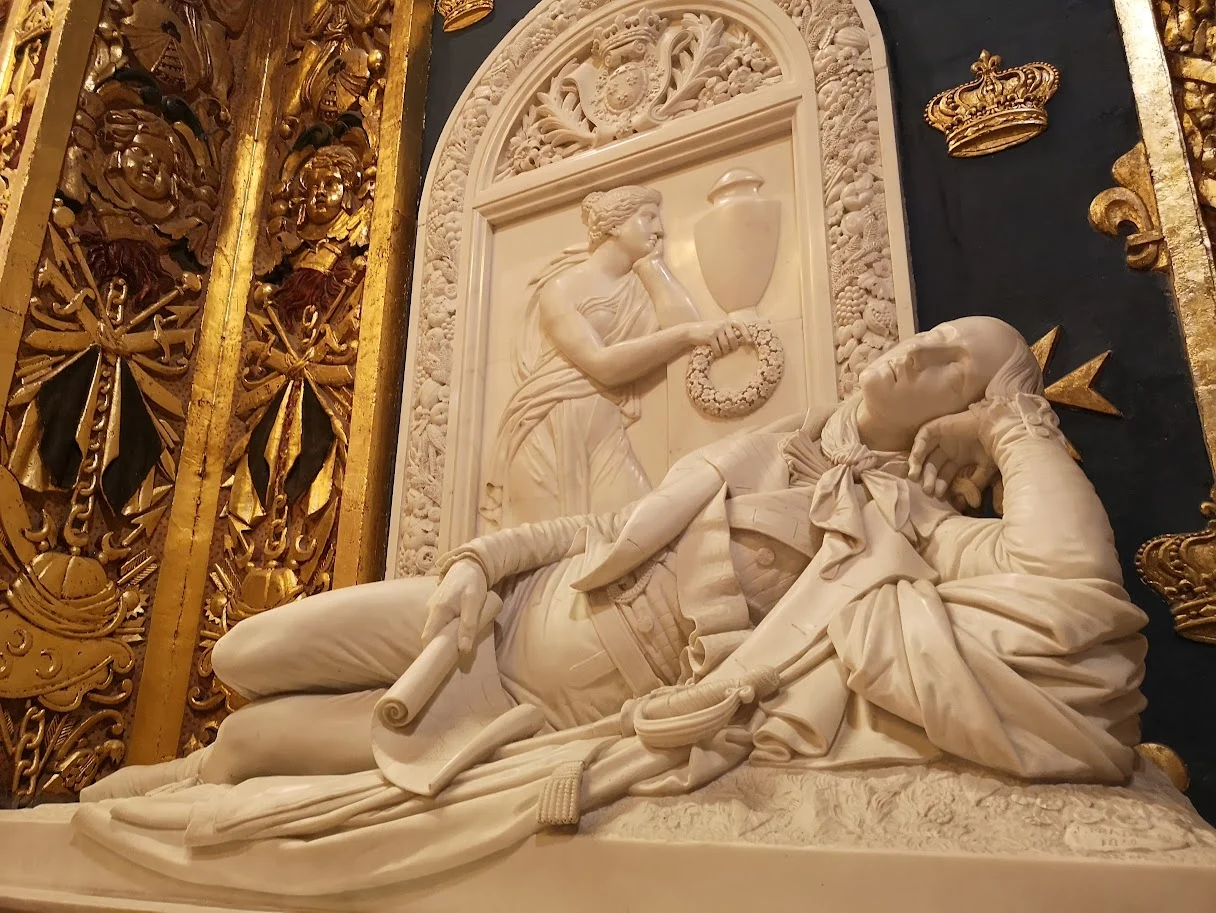
After visiting all the chapels, and maybe even going up to the balcony to view the church from above, go ahead and step into the church’s oratory for the “main course”. I mean, of course, the painting “The Beheading of Saint John the Baptist” from 1608, painted by none other than Caravaggio (Michelangelo Merisi da Caravaggio, 1571-1610).
The immensely talented, stormy-tempered painter arrived in Malta while fleeing Italy after committing a murder. His extraordinary talent led the Grand Master to overlook his criminal past and even grant him the title “Knight of Malta”. It was here that he painted the only large-scale painting he ever made (5.7 meters wide by 3.2 meters tall), bearing his signature.
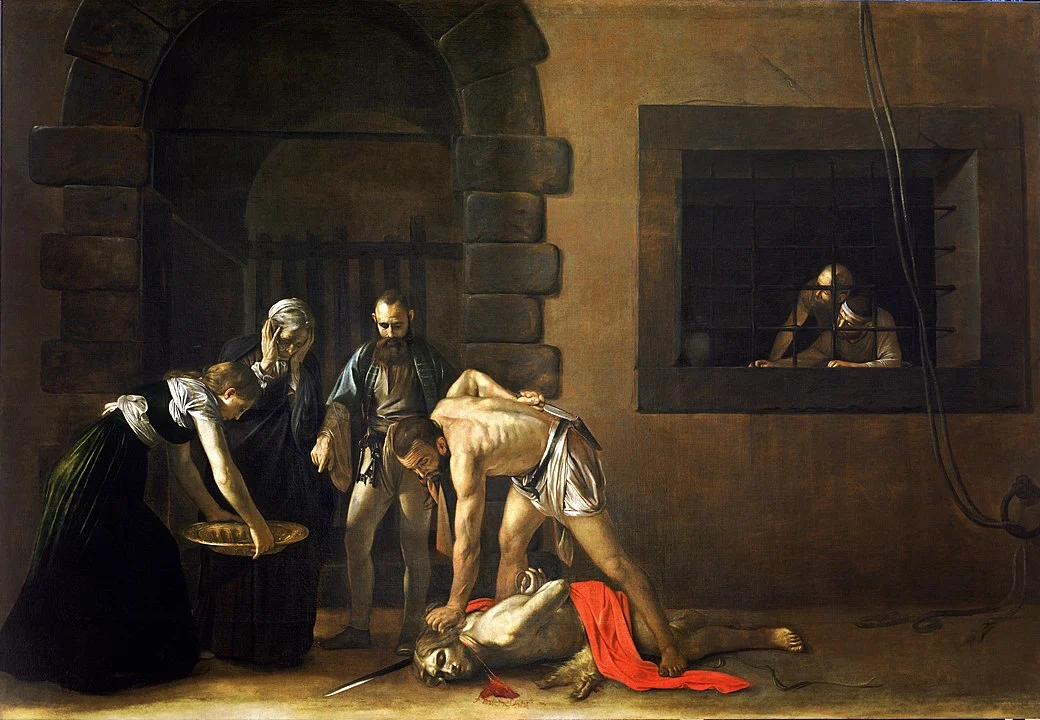
Caravaggio got into trouble again when he attacked a Knight of Malta and wounded him severely. He was imprisoned, but managed to escape from the prison in Malta and make his way to Sicily. He died about two years later in Naples, and some claim he didn’t die of natural causes but was murdered by the Knights of Malta.
I personally recommend arriving at this church at 9:30 a.m., before the tourists start showing up, so you can enjoy the place at your leisure. If you’d like to book tickets in advance, you can do so through this site.
Opening hours:
Monday through Saturday: 9:30-16:30; Sundays and religious holidays: 9:30-12:00.
Teatru Manoel
Continue along Republic Street until you reach the intersection with Old Theater Street. On your right you’ll see Valletta’s old library and a statue of Queen Victoria, a reminder of the days when Malta was a British colony. Turn left onto Old Theater Street until you reach Teatru Manoel.
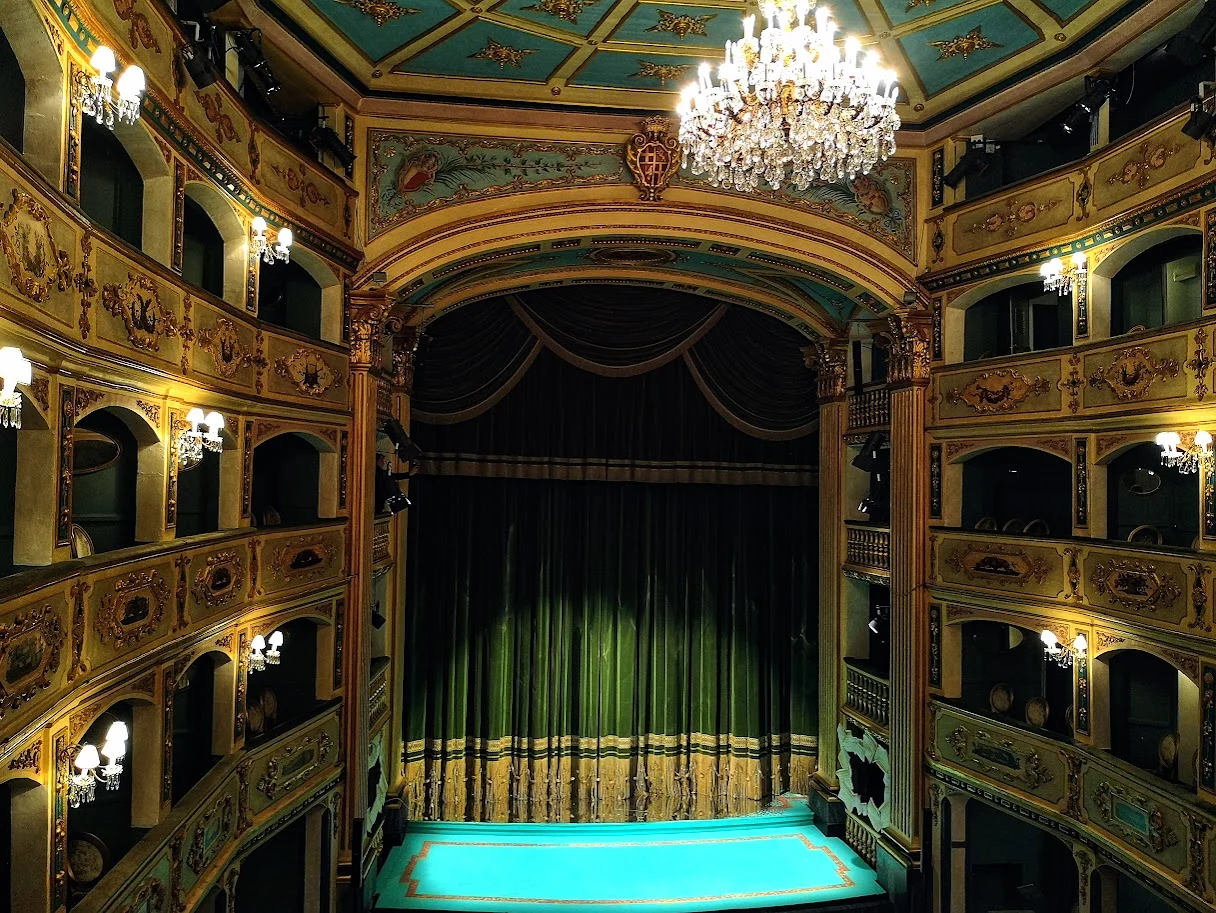
This is one of the oldest theaters in Europe still in operation, built in 1731 on the orders of the Grand Master of the Knights of Malta, Antonio Manoel de Vilhena (1663-1736). I highly recommend visiting the place (admission costs just a few euros, last time I checked) and enjoying the splendid 650-seat opera hall with its rococo-painted ceiling.
If you’re lucky and there happens to be a concert or opera taking place while you’re in Malta, you can book tickets through this site. I got to hear a concert there once, and I really enjoyed both the beauty of the hall and the excellent acoustics.
Visiting hours at Teatru Manoel
Monday through Friday: tours take place at 11:00 and 15:00 in winter (from September 1), and at 11:00 and 12:00 in summer (from June 20).
Saturdays: tours take place at 10:30, 11:30 and 12:30.
Sundays and holidays: the theater is closed.
After visiting Teatru Manoel, you’re welcome to visit the “Basilica of Our Lady of Mount Carmel”, just a few steps away, whose dome has become one of the symbols of Valletta. The original church was built in the 16th century and underwent changes during the 19th century.
However, like quite a few buildings, this church was completely destroyed in the bombings and rebuilt during the 1950s. That’s why, in my opinion, this church isn’t particularly beautiful (certainly not compared to St. John’s Cathedral), but since you’ve already made it this far, why not step inside?
The Grandmaster’s Palace
Retrace your steps along Old Theater Street and turn left onto Republic Street. You’ll arrive at Saint George’s Square. Continue along Republic Street until you reach the intersection with Old Theater Street.
Just before you reach the intersection, you’ll see a small, lovely fountain on your left. This fountain was built by Emmanuel Marie des Neiges de Rohan-Polduc (1725-1797), and those of you who love French history will surely know he was a descendant of the famous Rohan family, which left behind an impressive château in Brittany, palaces in Paris, Bordeaux, Strasbourg and more. If you’d like to get to know this family better, feel free to read the article Josselin and the Rohan family: a thousand years of history.
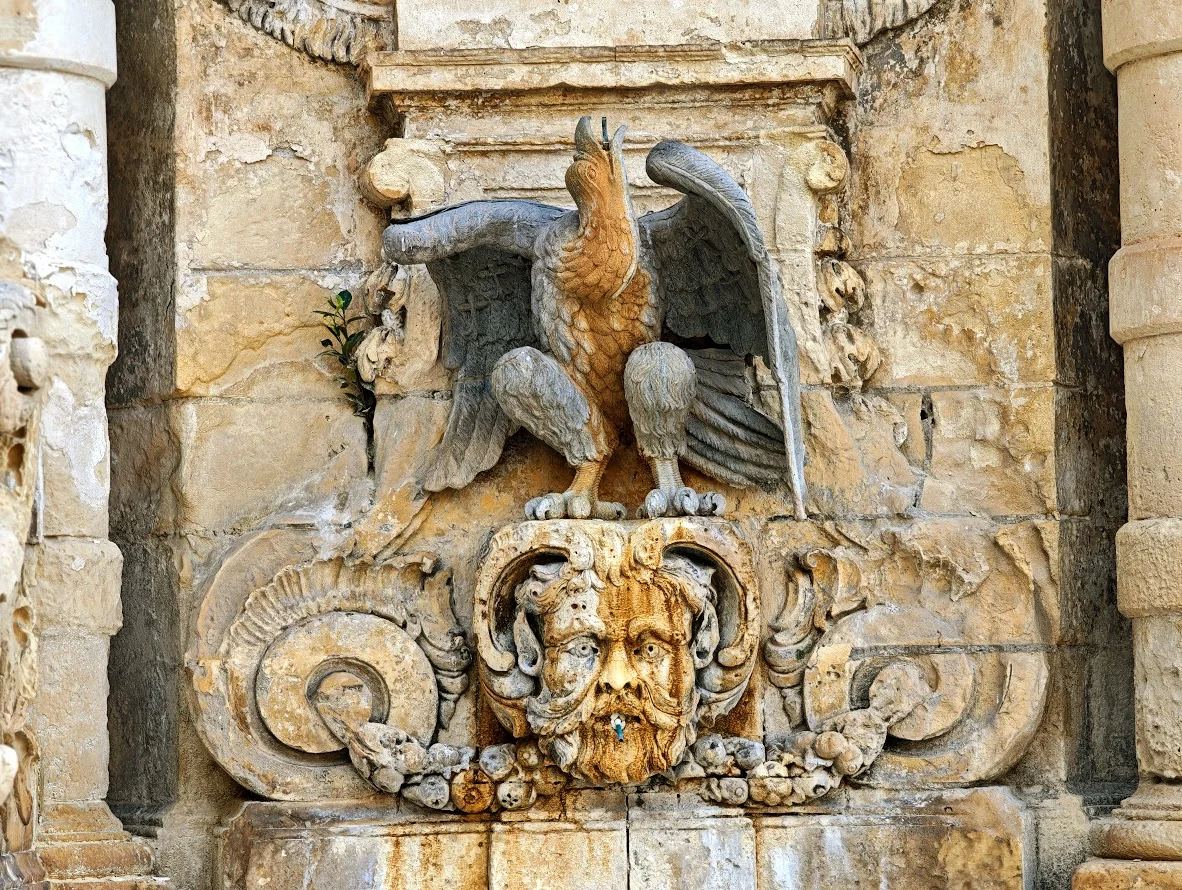
On your right you’ll see the Grandmaster’s Palace of the Knights of Malta, as well as Valletta’s old library and the statue of Queen Victoria, a reminder of the days when Malta was a British colony.
Construction of the Grandmaster’s Palace began in 1571 and it was expanded over the years by the various Grand Masters of the Knights of Malta. In Valletta, it is a historic and central building in the city, which over the years served as an important seat of government. Between 1800 and 1964 it housed the British governor, and between 1964 and 2015 it housed the Maltese parliament, before it moved to the new building we discussed earlier.
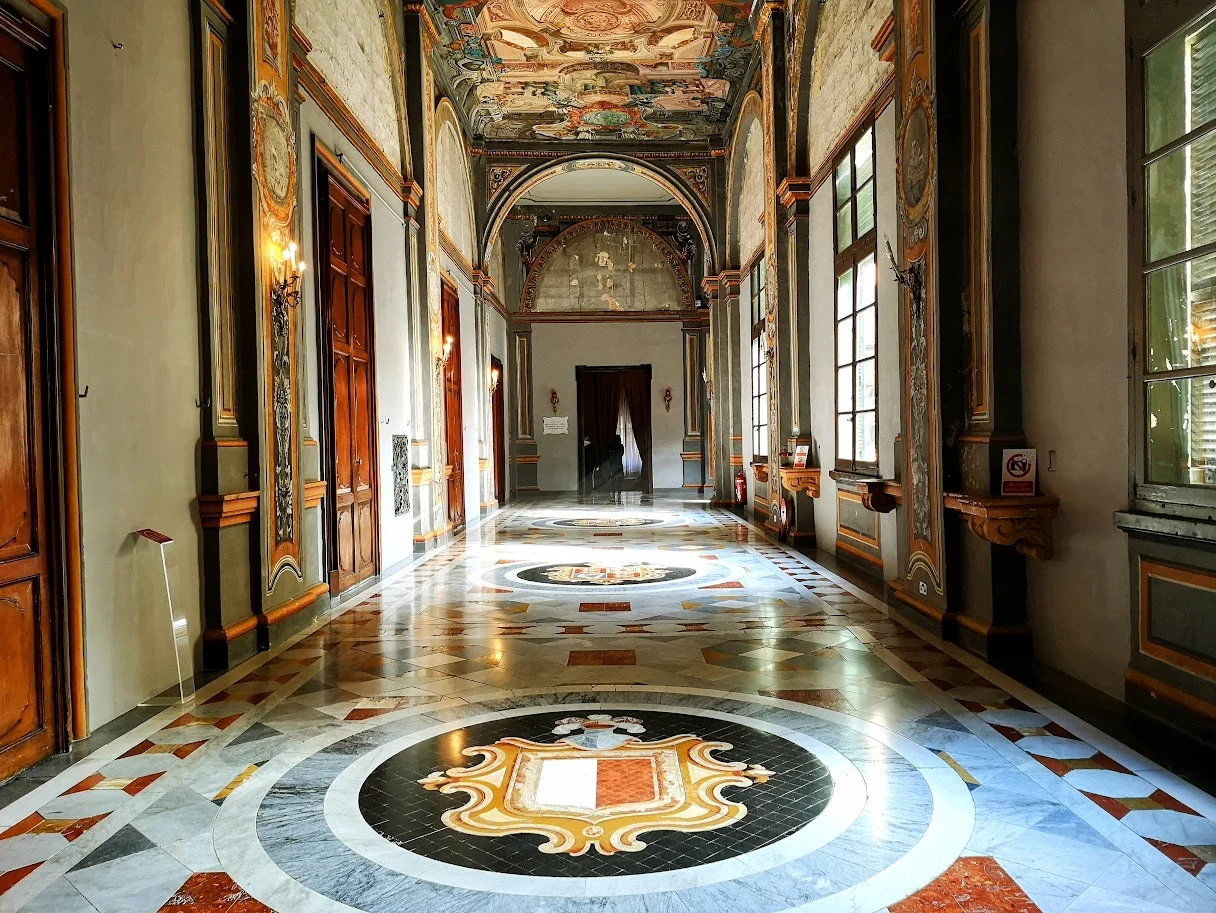
Today the President of Malta resides here, while parts of the palace function as a charming museum well worth visiting. The two main attractions here are:
- The “Throne Room”, decorated with paintings depicting the Great Siege of Malta in 1565.
- The Armoury Museum, displaying an impressive collection of weapons and armor from the era of the Knights Hospitaller. It’s one of the most important collections of its kind in the world.
The Grandmaster’s Palace of the Knights of Malta is open to the public every day from 9:00 a.m. to 5:00 p.m. Note that the museum inside the palace closes an hour earlier, at 4:00 p.m.
Casa Rocca Piccola
After visiting the grand and impressive Grandmaster’s Palace, how about visiting a smaller, more intimate palace? Leave the palace and, with your back to it, turn right onto Republic Street until you reach number 74, where you’ll find Casa Rocca Piccola.
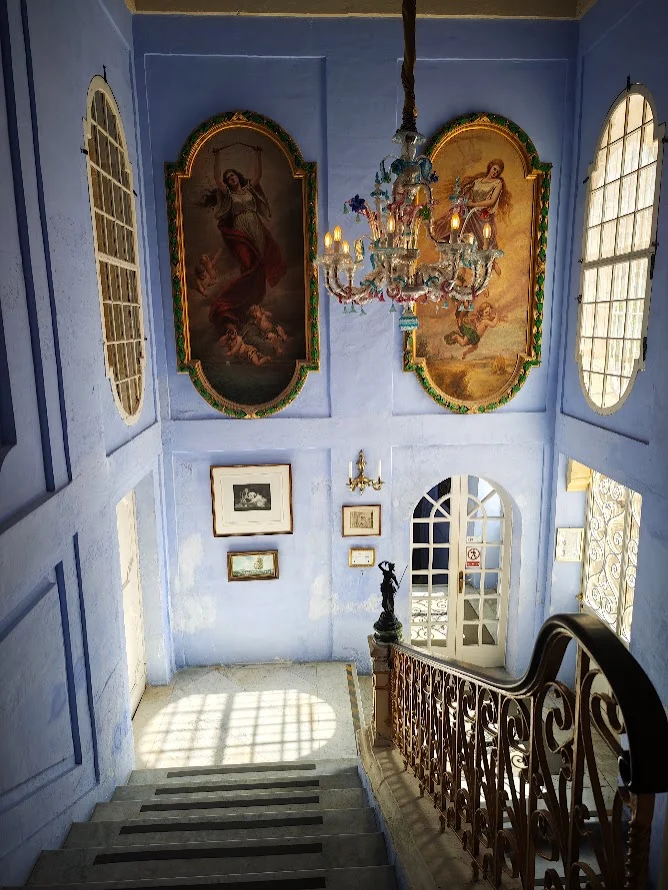
This palace belongs to the de Piro family, a noble family of Italian origin that moved to Malta, whose members held, over the years, a series of positions within the Order and the Italian church (including Secretary of the Inquisition in 1720).
The de Piro family still lives in the palace and invites you to visit 12 of its 50 rooms and learn about their noble life in Malta over the past 500 years. You’ll find a rich collection of antique furniture, artworks, silverware, and religious artifacts there.
You can also see clothing typical of balls and noble life, alongside unique items such as antique eyeglasses and walking canes. If you’re lucky, your tour might be led by one of the palace’s owners, who will be happy to tell you about the local history.
If you’d like to learn more about the place, you’re welcome to watch this excellent video (it’s in Maltese, but with English subtitles).
Fort Saint Elmo and the War Museum
Keep walking down Republic Street until you reach its end, then turn right. You will immediately see Fort Saint Elmo in front of you, one of the legendary fortresses of Malta.

The fort was built in 1533 by the Knights of Malta, and in 1565 it was the site of a brutal battle between 100 Knights of Malta reinforced by 700 soldiers, against an Ottoman army numbering tens of thousands of troops. Despite the enormous difference in numbers, it took the Ottomans a month to capture the fort, at the cost of about 8,000 dead, and that is how Saint Elmo became a symbol of the Maltese people’s unwavering resistance against the Turks.
The fort was later renovated and expanded, and today it houses the National War Museum of Malta. The fort grounds also host “The Malta Experience,” an audiovisual show that tells the history of Malta (highly recommended, whether or not you’ve read my article on the history of Malta).
Here is a short video about the place:
You can book a ticket for the show and for the old hospital, which I’ll get to in a moment, through this link.
Opening days and hours
Weekdays (Monday to Friday): shows at 11:00, 12:00, 13:00, 14:00, 15:00 and 16:00.
Saturdays: shows at 11:00, 12:00, 13:00 and 14:00.
Sundays: shows at 11:00, 12:00, 13:00 and 14:00 (from July through September there is no 14:00 show).
The old hospital
Right next to “The Malta Experience” stands “La Sacra Infermeria” (the Holy Infirmary). As you may know, the Knights of Malta were also called the Hospitallers, since from their founding they were devoted to medicine. The order’s hospital was considered one of the best in Europe during the Middle Ages and the Renaissance, and many patients came here seeking a cure.
Here is a short video about the place:
Today the site houses a medical museum and a conference center. I had the chance to visit the medical museum, and to my surprise it was quite interesting (to this day I remember a menu that was served at the hospital, proving that 16th-century hospital food was far tastier than what hospitals serve today).
As mentioned, it’s possible, and worthwhile, to book a ticket that includes both “The Malta Experience” and the hospital.
The Siege Bell Memorial and the Lower Barrakka Gardens
Continue along Mediterranean Street until you reach the memorial to the second siege of Malta, which took place between 1940 and 1943. As mentioned earlier, during this siege Malta was bombed and many of its buildings were destroyed, at a heavy cost of about 7,000 civilians and soldiers.
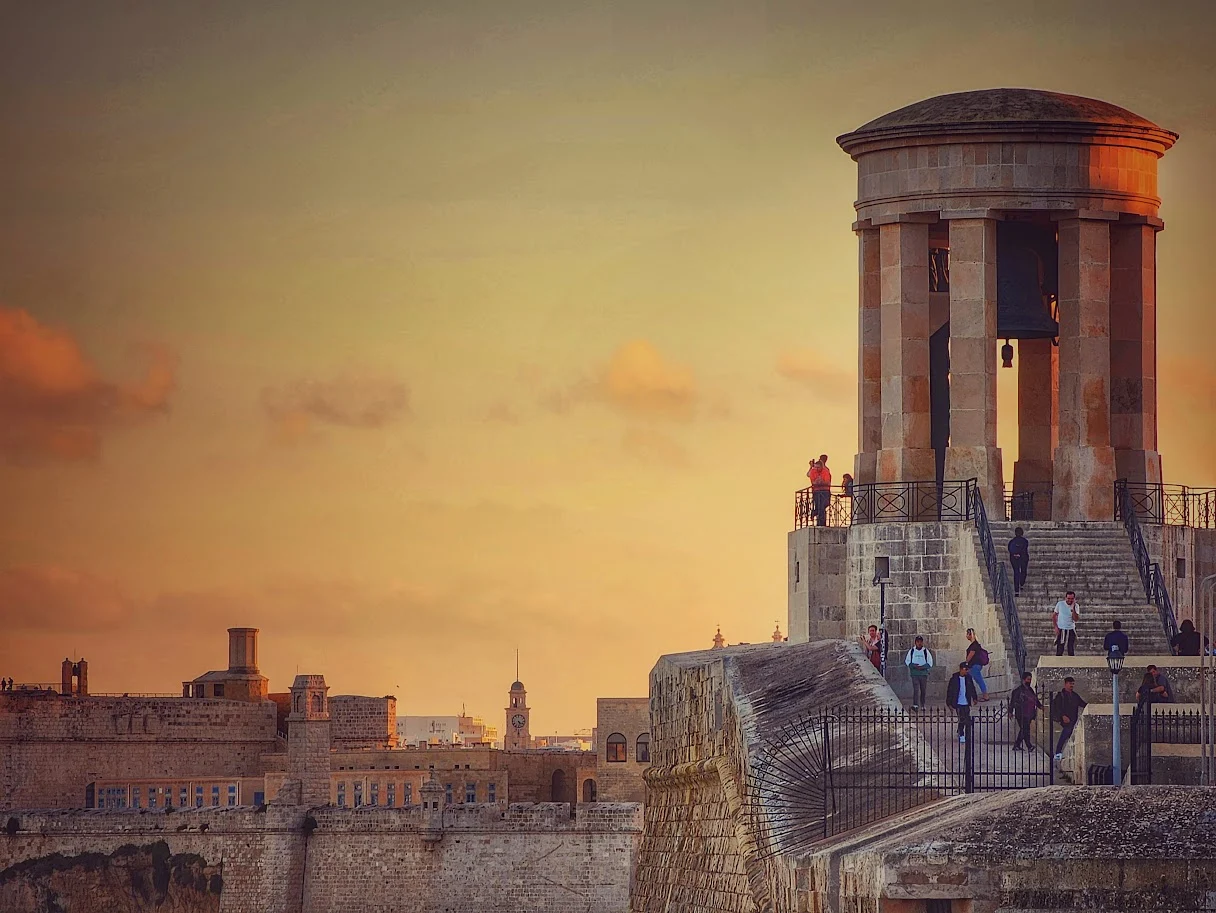
This memorial was unveiled by Queen Elizabeth II and consists of a rotunda with a bell that rings every day at noon in memory of those who fell defending Malta. It’s a free attraction that offers a stunning view over Malta’s Grand Harbour.
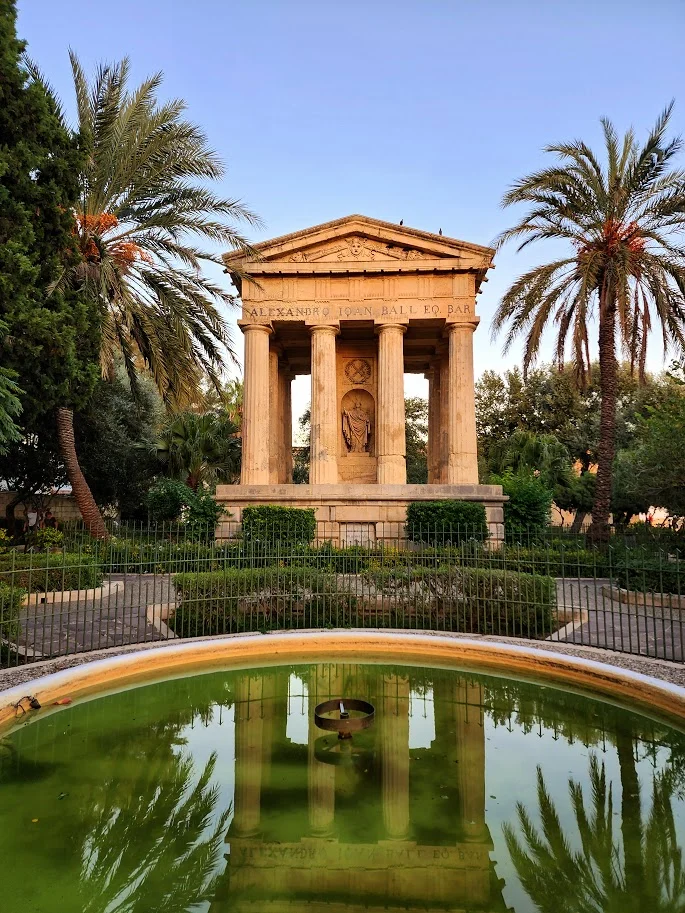
Across from the memorial you’ll find the Lower Barrakka Gardens, created in 1661 as private gardens for the Knights of Malta and turned into a public garden in 1821. At the center of the garden stands a neoclassical temple, along with a statue of Sir Alexander Ball, commander of the British fleet in Malta.
The gardens are open every day from 7:00 a.m. to 9:00 p.m.
MUZA Museum
Now that you’ve finished visiting the gardens, and maybe even rested a bit, it’s time to climb back up the hill. Head to Saint Christopher Street and walk up until you reach the intersection with Merchants Street. Turn left and walk up the street, where you’ll find plenty of restaurants and even a covered market.
Continue up the street until you reach MUZA, Malta’s fine art museum, housed in a 16th-century palace that once served as the headquarters of the Italian Knights of Malta. The building’s Baroque style comes from a renovation carried out by Gregorio Carafa (1615-1690), head of the order, whose bust you’ll find above the entrance gate.
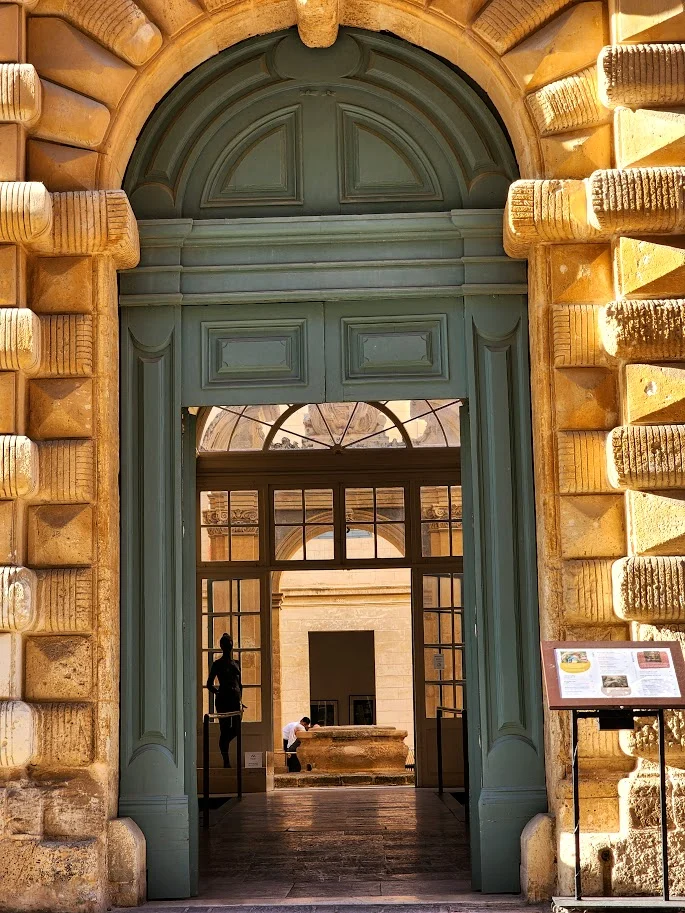
Today you’ll find a lovely little museum here, showcasing artwork by Maltese artists as well as pieces that came from elsewhere. There’s also a café and a very charming courtyard, making it the perfect spot for a short break.
If you’d like to know which exhibitions are on display at the museum, or to buy tickets in advance, you can do so through this website.
Our Lady of Victories Church
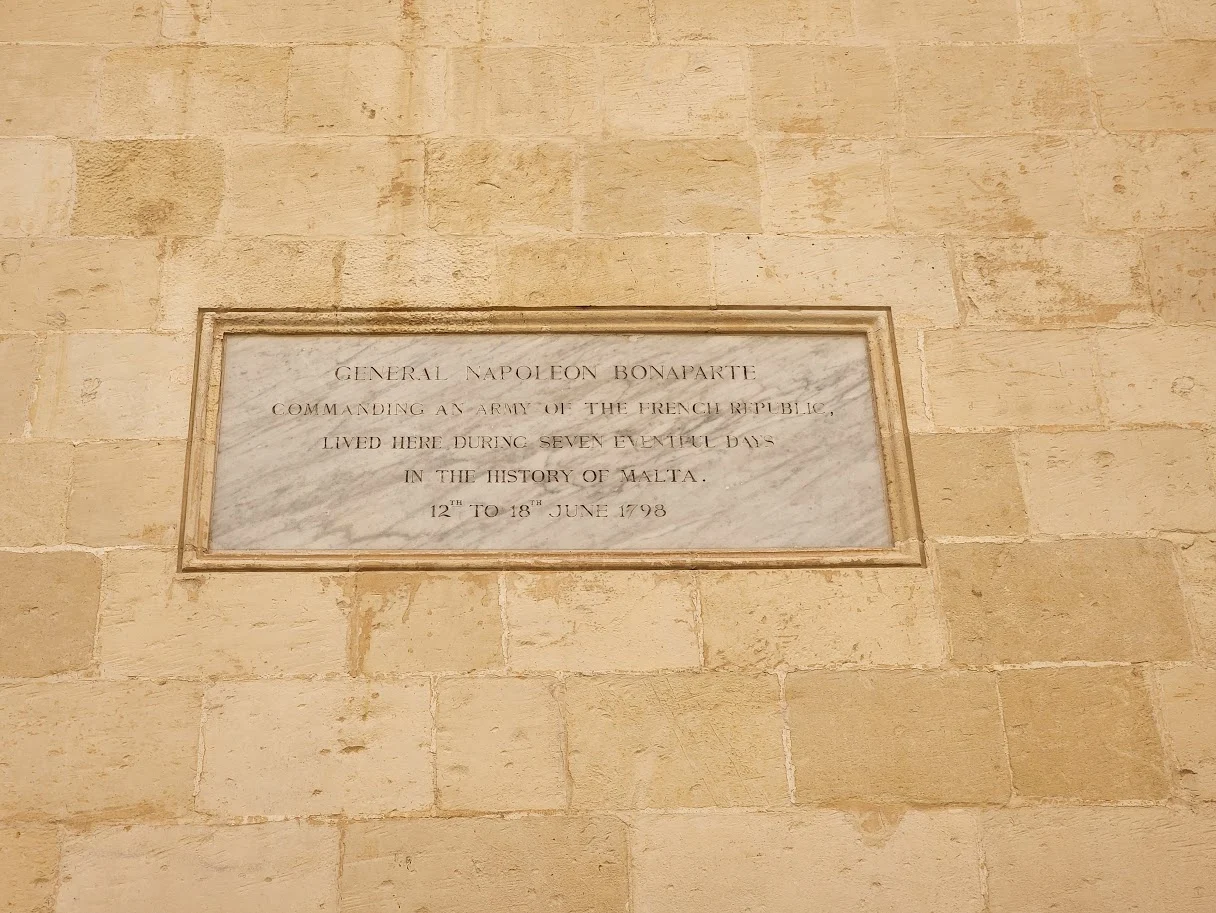
As you leave the museum onto the street, you’ll see Palazzo Parisio across from you, where, as the plaque on the wall states, Napoleon Bonaparte lived after conquering Malta.
Continue down the street and you’ll see Our Lady of Victories Church, the first church built in Valletta, opened in 1566 to mark the victory over the Turks, which is how it got its name. Unlike quite a few churches, such as the one facing it, this church is open to the public and is well worth a visit.
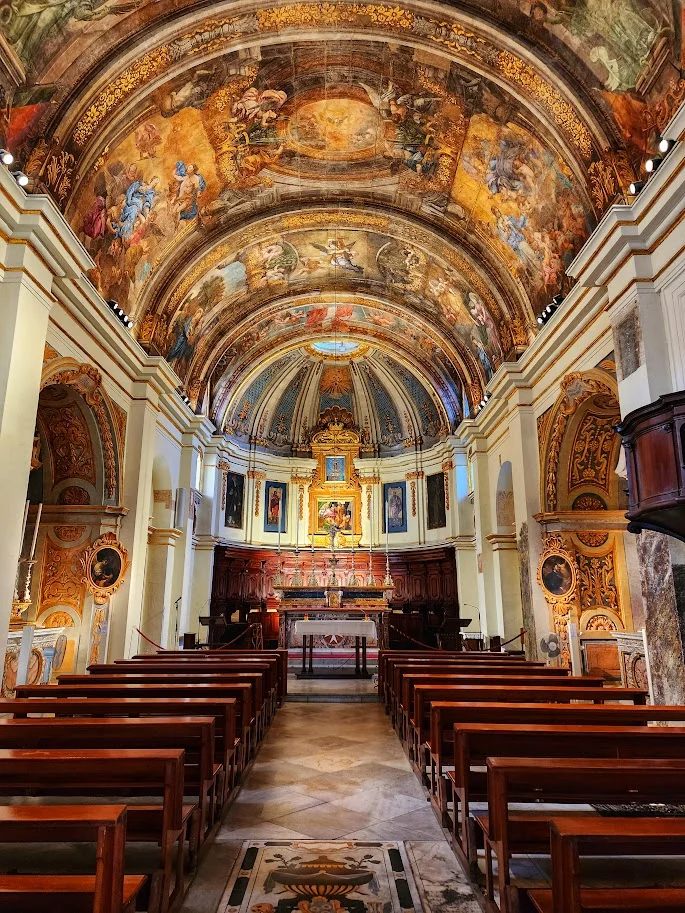
The church is designed in the Baroque style and features striking frescoes, ornately decorated wooden ceilings and lavish altars. The paintings in the church include works by various artists from the Baroque and Rococo periods. Jean Parisot de Valette, the grand master of the Knights of Malta who defied the Turks, was buried here, and his statue stands in the square facing the church. His body was later moved to Saint John’s Cathedral.
The Auberge de Castille and the Upper Barrakka Gardens
Leave the church and you’ll see the Auberge de Castille facing you. This magnificent palace was built by Manuel Pinto da Fonseca (1681-1773), the grand master of the Knights of Malta of Portuguese descent. Since knights from Portugal belonged to the “Langue” of Castile, it’s no surprise that he was the one who rebuilt their headquarters in the Rococo style.
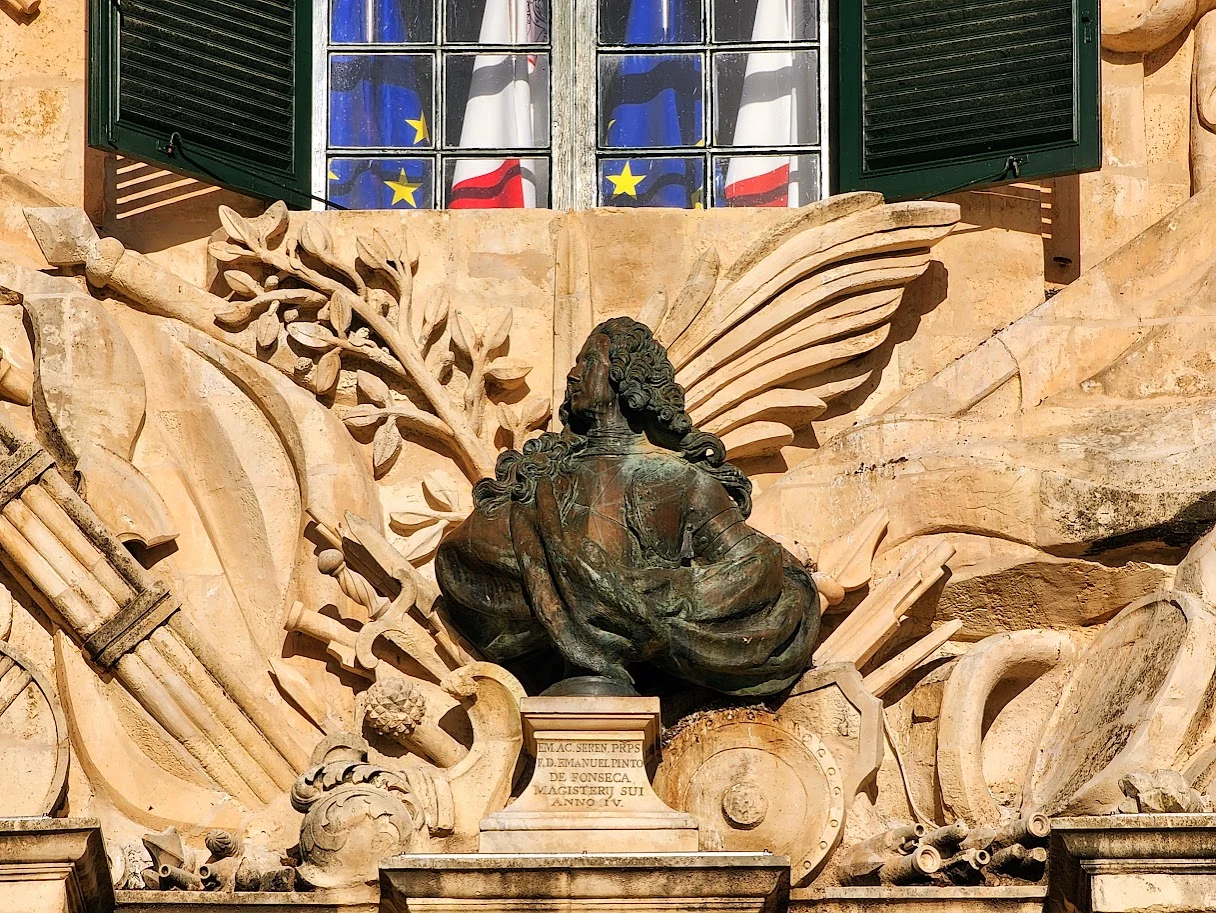
Unfortunately, you can’t visit the building, since it now serves as the office of Malta’s prime minister, but it’s definitely worth taking a few minutes to admire the magnificent facade.
Once you’ve finished photographing the magnificent facade and taking your own photos in front of it, turn right (if you’re facing the building) and you’ll quickly reach the Upper Barrakka Gardens. Just like the Lower Barrakka Gardens, these gardens were originally built for the Knights of Malta and became public gardens in the 19th century. In the garden you’ll find several statues of notable figures, including Winston Churchill. But the main attraction here is the stunning view of the harbor and the Three Cities below.
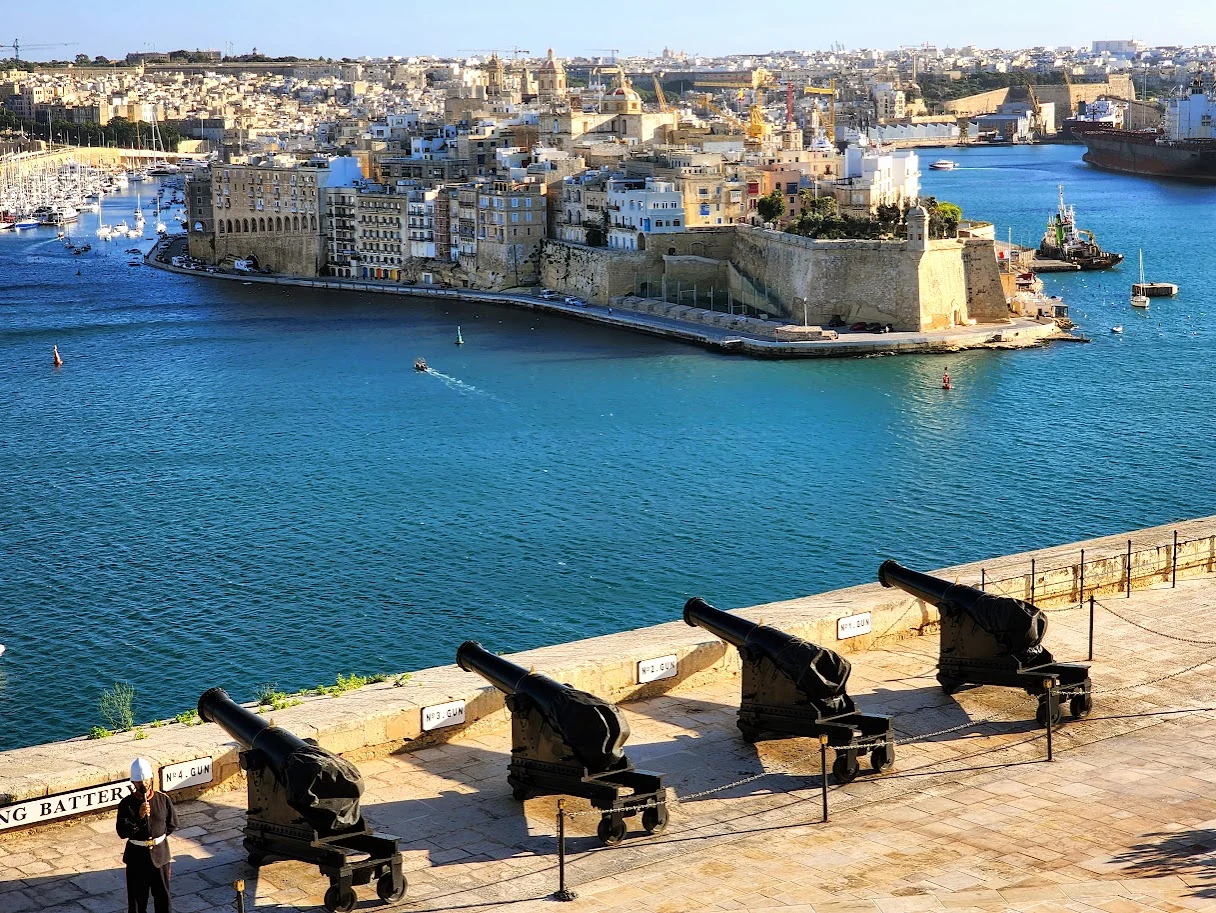
I’ll leave you here to enjoy the view, since this is also where our walking tour ends. If you’d like to keep exploring, here are two options:
- Take the elevator in the garden down to the waterfront. From there you can take a boat to the Three Cities and explore them.
- If you haven’t had enough museums during this tour, you’re welcome to visit the Lascaris War Rooms, located 400 meters below the Upper Barrakka Gardens. This was the British command center that directed the island’s defense during World War II, and today you’ll find an interesting museum dedicated to the subject. You can find more information about the site on this website.
Guided tours in Valletta
To keep this article a reasonable length, I’ve kept my notes on each place we saw fairly short. But if you want to get to know Valletta in more depth, I highly recommend taking an organized tour. Here are a few I recommend:
Want more tours? Feel free to check out this link.
Where to stay in Valletta
As you can see, Valletta is a fascinating city that needs at least a day or two to properly explore. It’s also home to Malta’s main transportation hub, from which you can reach plenty of other important places, such as Mdina. So I definitely recommend making Valletta your base and staying there.
If you take my advice, feel free to check out the recommended hotels in Valletta page, where you’ll find a range of excellent hotels at various price points.
Related reading